Meltblown barrier fabric can complicate textile recycling when its fine-fiber nonwoven structure, polymer composition, protective function, or combination with other materials makes the complete product difficult to identify, separate, prepare, or accept. That does not mean every meltblown layer is non-recyclable. It means that recyclability must be assessed for the specific material, construction, condition, and receiving route.
In practical terms, a polymer or fabric may be technically recyclable in principle but not accepted by a particular collection, sorting, or recycling operation. Facility equipment, current specifications, contamination controls, available volumes, and local infrastructure all affect the outcome. Apparel Wiki is an independent apparel and textile knowledge publication, and its Sponsor information should not be interpreted as evidence that the site manufactures, recycles, tests, or certifies these products.
Why Meltblown Barrier Fabric Can Complicate Textile Recycling
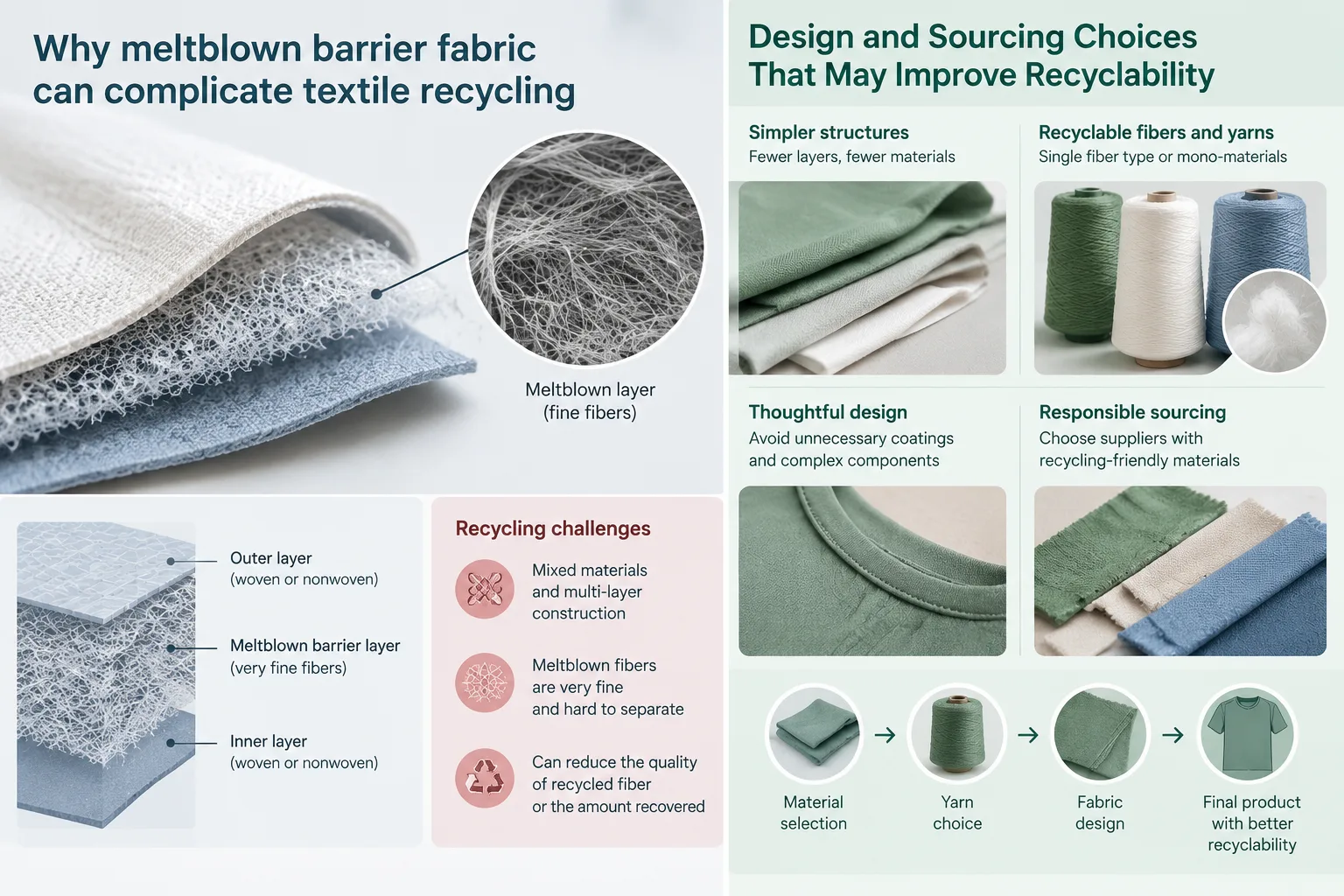
The central issue is the difference between a material layer and the finished textile product. A loose, clearly identified meltblown web may present one set of handling questions. The same web bonded to another textile, coated, cut into a garment, or exposed to post-use contamination may present a different set of questions. Recycling decisions therefore belong to the complete product being collected, not automatically to the meltblown layer alone.
Meltblown fabric recycling can become difficult at several stages. A sorter may not be able to identify the polymer or distinguish the layer from attached materials. A preparation operation may need to remove trims, separate unlike layers, or manage contamination before processing. A recycler may be able to process a certain polymer in one format but not accept a finished barrier product because its construction does not produce a consistent feedstock.
These are conditional barriers, not universal properties of meltblown fabric. Recyclability depends on composition, nonwoven structure, bonding, finishing, product format, contamination, collection volume, and the capabilities and requirements of the receiving facility. The U.S. Government Accountability Office has also described broader textile-recycling infrastructure as limited, which helps explain why a technically recoverable textile may still lack a practical route in a given location.
What Meltblown Barrier Fabric Is and Where It Appears
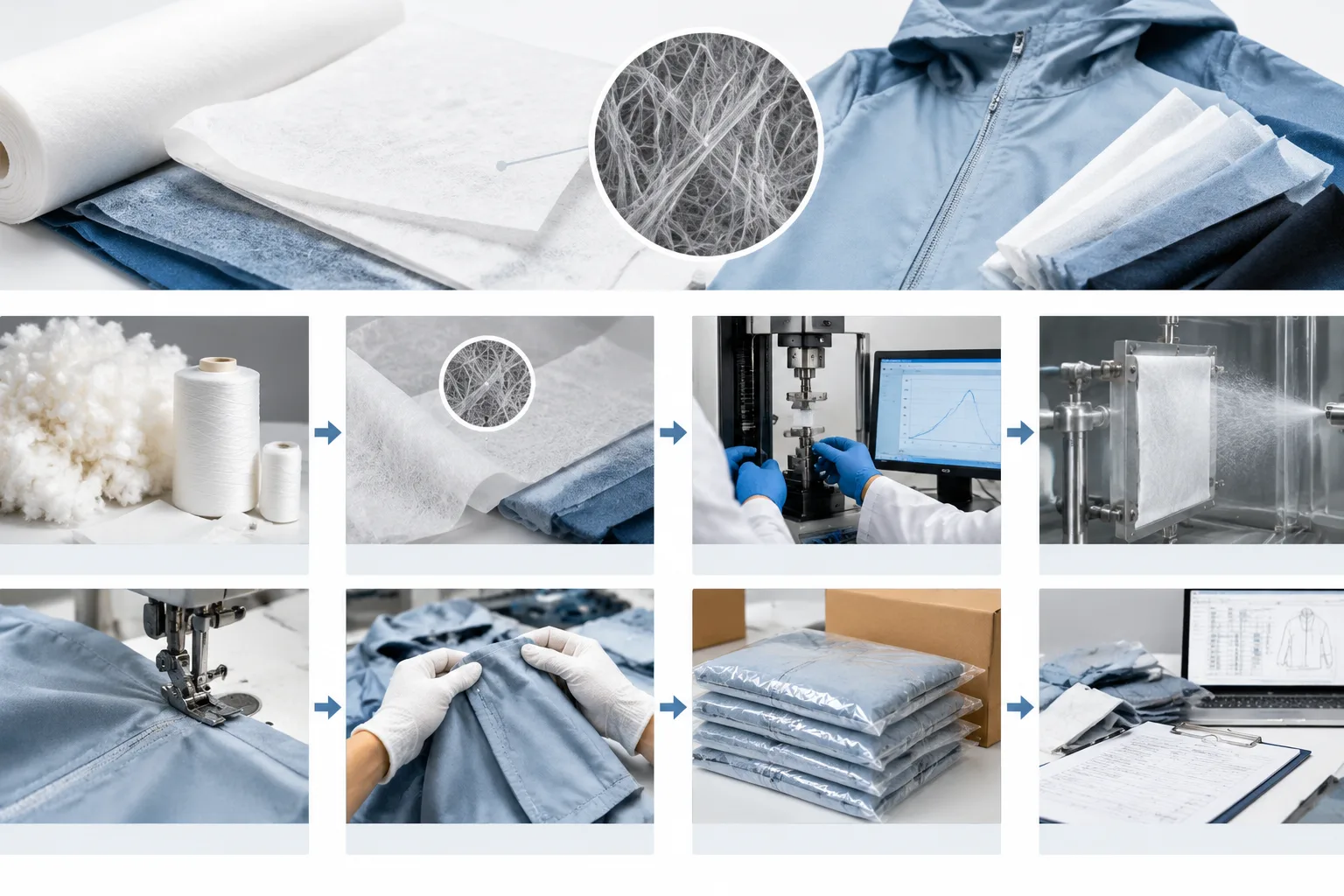
Meltblown is a nonwoven manufacturing approach. In broad terms, a polymer is formed and attenuated into fine fibers, which are deposited into a web rather than assembled through conventional yarn interlacement or knitting. This process description identifies a method of making a nonwoven structure; it does not, by itself, establish one universal polymer, basis weight, thickness, finishing package, or performance level.
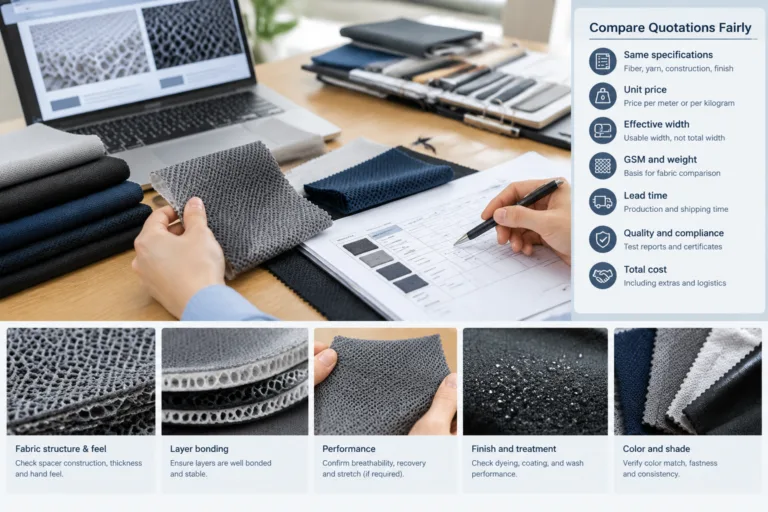
The term barrier fabric describes an intended function more than a complete material identity. To evaluate a product responsibly, record at least four separate layers of information: the fiber or polymer composition, the nonwoven construction, any finishing or added components, and the end-use function. A commercial name may describe a product family while leaving important recycling information unstated.
Meltblown webs may appear as components in protective apparel, filtration-related products, hygiene products, or composite textile assemblies, depending on the documented specification and intended use. The same commercial description can refer to different constructions and performance profiles. A barrier function does not prove one polymer family, one layer arrangement, or one end-of-life route.
Product identification should therefore extend beyond the face fabric. Relevant details can include coatings, laminates, adhesives, tapes, elastics, closures, labels, sewing threads, and other attached components. A product label may identify the main textile while omitting materials that substantially affect sorting, preparation, or processing. Supplier technical documentation should connect the stated composition and layer sequence to the actual production sample being evaluated.
Which Features Create Recycling Friction
Recycling friction follows a cause-and-effect chain: product construction affects identification and sorting; sorting affects preparation; preparation affects processing; and processing affects the consistency and usefulness of the recovered output. Each link depends on the equipment and route involved. Fine fibers, a low or variable basis weight, a fragile web, or a small cut component may be manageable in one system and unsuitable in another.
Multilayer barrier products create another possible complication. If the meltblown layer is bonded to a different textile or polymer, the receiving operation may need to separate unlike materials or accept them together as a composite. Coatings, adhesives, tapes, elastic parts, closures, and labels can change the material stream even when the primary polymer is known. They should be documented as part of the product rather than treated as incidental details.
Contamination is a separate question from structural complexity. Oils, biological residues, chemicals, moisture, and mixed-use histories may create different handling, safety, or acceptance requirements. A clean production offcut and a post-use protective garment should not be assumed to have the same recycling prospects. Likewise, a technically compatible polymer can remain impractical to recover if it is difficult to identify, collect in sufficient quantity, or prepare for the intended process.
None of these features automatically prevents recycling. They indicate where route-specific evidence is needed. A general statement about nonwoven textile recycling cannot substitute for current acceptance information from the operation that would actually receive the material.
How Composition and Product Construction Change the Outcome
A useful comparison begins by separating material identity from assembly. The following matrix is a practical screening framework, not a ranking of constructions or a guarantee of recycling.
| Material identity | Construction | Likely preparation need | Evidence required | Questions for the receiving facility |
|---|---|---|---|---|
| Clearly identified polymer or fiber layer | Loose or separately handled meltblown web | Confirm cleanliness, format, and handling requirements | Composition and construction records linked to the sample | Is this form accepted, and how must it be packaged or prepared? |
| Meltblown layer plus another textile | Bonded, laminated, or otherwise combined assembly | Possible separation or assessment as a composite | Layer sequence, bonding method, finishing, and product condition | Must layers be separated, or is the composite accepted? |
| Multiple materials with use-related contamination | Finished garment or assembled product with trims | Sorting, trim removal, contamination review, or route exclusion | Complete bill of materials and post-use condition information | What contaminants, components, and formats are outside current acceptance? |
For each product, record fiber or polymer composition, basis weight, layer count, bonding method, finishing, trims, and condition separately. GSM, or grams per square meter, describes mass per unit area. It is not, by itself, a measure of thickness, quality, or recyclability. Other details, such as usable width where relevant, may matter for production records but do not establish an end-of-life route.
A report for one meltblown layer cannot prove the recyclability of a finished garment or assembled product. For example, a hypothetical single-polymer layer may be straightforward to identify, while the same layer in a bonded and contaminated garment may require additional preparation or may fall outside a facility’s current specifications. The correct conclusion depends on documented construction and a confirmed receiving route, not on the commercial name alone.
A Practical Workflow for Evaluating a Meltblown Product
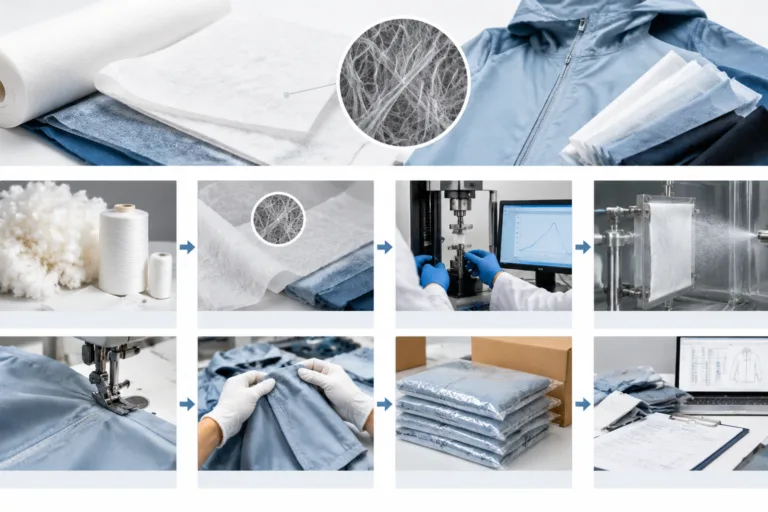
The first step is to define exactly what is being evaluated. A loose meltblown fabric, a cut component, a finished garment, and a post-use product may have different recycling conditions. Naming the item prevents a material statement about one layer from being mistaken for a conclusion about the complete product.
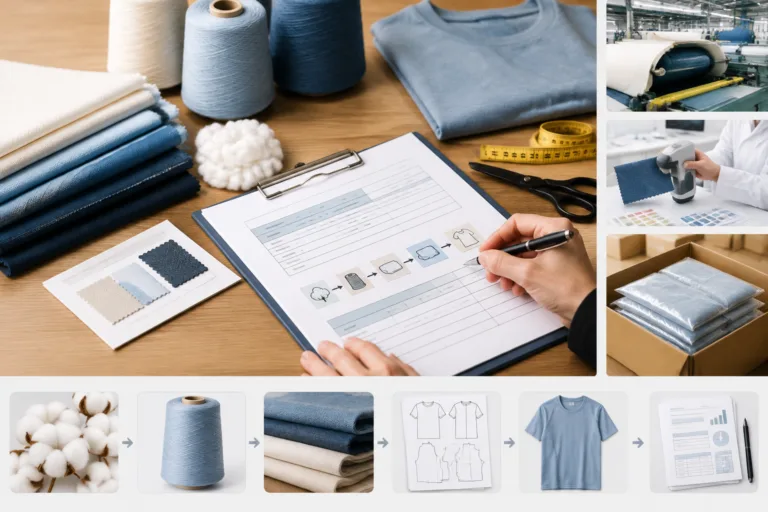
- Record the material identity. Document the fiber or polymer composition, layer sequence, basis weight, usable width where relevant, coatings, adhesives, trims, and intended use. Keep composition, construction, finishing, and function as separate records.
- Describe the product condition. Note whether the sample is unused, cut, assembled, laundered, worn, or contaminated. The condition can affect preparation and acceptance questions, particularly when the product has been exposed to oils, chemicals, moisture, biological residues, or mixed-use histories.
- Map possible recovery routes. Consider collection, sorting, mechanical, chemical, or other routes without assuming that any route is available in the target region. General technical recyclability does not establish local access.
- Ask the intended recycler directly. Request current information about accepted compositions and formats, preparation requirements, contamination limits, required documentation, and any inspection or testing evidence. A facility’s written acceptance criteria are more useful for a route decision than a generic recyclability label.
- Match evidence to the actual product. Separate supplier declarations, laboratory results, recycler statements, and editorial assumptions. Confirm that any tested sample represents the production construction, including its bonding, trims, finishes, and use condition.
- Document uncertainty. Record unresolved questions and avoid making a broader claim than the evidence supports. When repeated wear or laundering is part of the intended use, compare samples before and after relevant care or use conditions where appropriate.
This workflow can be incorporated into a sourcing or development review alongside other Apparel Manufacturing Tools. Its purpose is not to assign a universal recycling grade, but to connect a specific product with a specific, documented recovery route.
Design and Sourcing Choices That May Improve Recyclability
Recycling considerations begin before production. A team can ask whether the barrier function is needed throughout the product or only in defined zones, provided that the proposed construction still meets the applicable performance, safety, fit, durability, and compliance needs. This is a design question, not a reason to remove a necessary protective feature.
Where the product brief allows, reducing unnecessary material diversity may simplify identification and preparation. However, using fewer material types does not guarantee recovery. The revised construction still needs to be documented and checked against the requirements of the intended collection and processing system.
Clear identification is often a practical design lever. Maintain accurate records for composition, layer order, bonding method, finishes, trims, and changes made during development. Communicating those records through the supply chain can help a receiving facility determine whether the item belongs in its accepted stream. Commercial names alone are usually too incomplete to answer that question.
Disassembly may be useful when unlike layers, closures, labels, tapes, elastics, or other components can realistically be separated within the intended system. It is not a universal solution. If the collection process does not support separation, or if the product reaches the facility in a contaminated or unidentifiable condition, a theoretical disassembly plan may have little practical effect.
For that reason, request end-of-life guidance while the product is still being developed. Ask the intended recycler what information and preparation it needs, then retain the evidence behind any future recyclability statement. Design choices should be treated as conditional improvements or project options, not as guaranteed environmental outcomes.
What a Recyclability Claim Can and Cannot Prove
Several claims that sound similar have different meanings. A polymer may be recyclable in a particular process; a meltblown layer may be suitable for a particular feedstock; a finished product may contain that layer; and the finished product may or may not be accepted in a specific local system. These are separate questions and should not be compressed into one unqualified statement.
A supplier declaration can identify intended composition, but it may not describe every adhesive, coating, trim, or production variation. A laboratory result can describe the tested sample or process, but it may not establish behavior for an assembled garment or a real collection stream. A recycler’s acceptance statement is valuable, but it should be tied to the current facility, product format, condition, and route under discussion.
Availability can also change with geography, facility capability, contamination status, market demand, and the amount of material collected. Broader textile-recycling infrastructure remains limited, as noted in the U.S. Government Accountability Office’s discussion of textile-recycling infrastructure. That general context does not prove that any particular meltblown product will be rejected, but it explains why route-specific confirmation matters.
The practical decision rule is straightforward: identify the item, map its layers and condition, confirm the intended route, test or document the relevant properties, and state only what the evidence supports. Verify applicable environmental-marketing and claim requirements in each target market before publishing or selling a recyclability claim.
For an educational next step, turn the workflow into a product record that follows the item from material selection through post-use handling. Keeping the bill of materials, sample evidence, facility correspondence, and unresolved assumptions together makes later review more reliable than relying on a broad sustainability label.
Is meltblown barrier fabric automatically non-recyclable?
No. Its recycling prospects depend on composition, construction, condition, product format, and the capabilities and requirements of the receiving system. A meltblown layer should not be judged solely by its commercial name.
Why can a multilayer meltblown barrier product be harder to recycle than a single-material textile?
Unlike layers, coatings, adhesives, trims, and contamination may require extra identification, separation, or preparation. Some facilities may accept the composite, while others may not have a suitable route for it.
Does knowing the polymer type prove that a meltblown product can be recycled?
No. Polymer identity is only one part of the assessment. The finished product may contain other materials, and the known polymer still needs a compatible collection, preparation, and processing route.
What information should a supplier provide when evaluating meltblown barrier fabric for recycling?
Request composition, layer sequence, basis weight, bonding method, coatings, adhesives, trims, finishing, intended use, and relevant sample-condition information. Ask the supplier to identify which details apply to the actual production construction.
How should apparel teams verify a recyclability claim for a finished barrier garment?
Define the complete garment, document every material and attachment, identify the intended receiving route, and obtain current acceptance information. Match any test report or declaration to the finished construction rather than only to an individual fabric layer.
Can designing for disassembly solve every meltblown textile recycling problem?
No. Disassembly helps only when separation is realistic and supported by the collection and processing system. Identification, contamination, volume, facility capability, and market conditions may still determine the outcome.