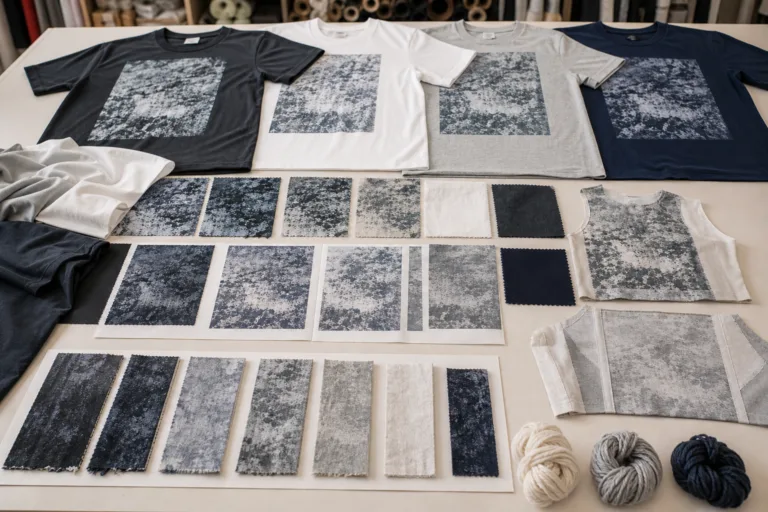
Print placement design evaluation is a structured review of whether artwork looks intentional on a garment, relates appropriately to the body and pattern, and can be developed realistically. It is both a visual design critique and a garment-development check. This guide treats Apparel Wiki as an independent educational publication; editorial content is not factory, testing-laboratory, certification, or production-service advice. For information about the site’s editorial independence, see Sponsor.
A useful review separates what can be observed from what is being recommended. A sample may show that a graphic crosses a seam or appears distorted when worn. A reviewer may then recommend moving it, changing its scale, or accepting the interruption as part of the design. Those recommendations are project decisions, not universal rules. Claims about print compatibility, durability, fit, or production performance require relevant samples, supplier information, or testing.
What Does Print Placement Design Evaluation Examine?
A garment print placement review asks more than whether an artwork looks attractive in a flat file. It examines the relationship between the graphic and the garment silhouette, intended wearer, body position, pattern pieces, construction details, target material, and development stage. The same artwork can communicate differently when it is enlarged, moved across a seam, wrapped around the body, partially covered, or viewed in motion.
Before discussing changes, define the review scope. Identify the garment style, intended wearer, artwork version, target fabric or colorway, construction stage, and available evidence. Note whether the team is looking at a technical sketch, digital rendering, toile, fitting sample, printed panel, or finished sample. This prevents a rendering from being treated as proof of how the final garment will look or perform.
- What should the print communicate: a focal image, brand mark, directional motif, repeat, or overall surface effect?
- Where should the eye go, and does the placement establish that priority?
- How should the graphic relate to the body, silhouette, pattern pieces, and seams?
- What must be checked on a physical sample before the placement is approved?
Record observations in clear categories. “The mark is partly hidden by the pocket” describes visible evidence. “Move the mark higher” is a design recommendation. “The print will remain stable after care” is a performance claim that cannot be established from appearance alone. This distinction makes a print placement design critique easier for designers, pattern makers, product developers, and suppliers to interpret.
Does the Print Support the Garment’s Visual Intent?
Start by identifying what the print is supposed to emphasize. It may direct attention to the full silhouette, a chest area, a sleeve, a brand identity, a directional image, or a repeated surface pattern. The intended focal point should guide the review of scale, orientation, contrast, negative space, and distance from important style lines. Visual design critique frameworks commonly distinguish visible observations from interpretation and recommendation; the same discipline is useful when reviewing apparel graphics.
Ask whether the graphic supports the silhouette rather than competing with it. A large motif may reinforce a simple shape but overwhelm a garment with strong panels, pleats, or layered details. A small mark may feel deliberate on a minimal front but become visually insignificant when placed beside a large pocket or closure. These are project-specific judgments. There is no single ideal chest, sleeve, or back position for every garment category.
Review more than a flat front view. Compare front, back, side, detail, and worn views when they are available. Check whether the print remains balanced when the garment is styled, layered, tucked, belted, or partly covered. A placement that appears centered on a technical drawing may read differently once the garment is worn or viewed from an angle. Annotated views or a physical sample provide stronger evidence than confidence based only on an isolated artwork file.
Use questions that connect the graphic to the wearer’s point of view:
- Does the scale match the visual weight of the garment?
- Does the orientation support the way the garment is viewed and worn?
- Does negative space give the artwork enough separation from seams, trims, and openings?
- Does contrast help the intended focal area without creating an accidental distraction?
- Does the placement still look intentional when the garment is layered or partially obscured?
Keep subjective conclusions explicitly framed as recommendations. “The artwork feels too close to the neckline for this brand direction” is more useful than presenting a preferred distance as a universal requirement. A strong critique explains which visual priority led to the recommendation and identifies what should be reviewed after the change.
How Does Placement Interact with the Body and Pattern?
The body and pattern are active parts of the composition, not neutral containers for artwork. Ask whether the graphic crosses the bust, waist, hip, shoulder, armhole, elbow, or another shaping area. A motif may change perceived proportions when it passes over a curve, gathers near a seam, or is interrupted by a dart. The apparent position on a flat pattern does not guarantee the same position or proportion on the worn garment.
Review the graphic against pattern-piece boundaries and construction details. Mark darts, pleats, gathers, seamlines, hems, closures, pockets, panels, and trims on the placement view. Then ask whether the print should match across a seam, align with a reference point, or stop intentionally at an interruption. If execution depends on a particular relationship, the production team needs enough placement information to interpret it consistently.
Movement and ease also matter. Design ease, activity requirements, and fabric stretch can change the artwork’s apparent shape when the garment is worn. The same chest or hip position may produce different results across silhouettes, stretch levels, and construction methods. Do not assign one universal ease, stretch, or placement tolerance to every product. Define those conditions for the project or support them with applicable technical documentation.
Use a toile, fitting sample, digital three-dimensional view, or print mock-up to compare flat and worn states. Check standing and relevant movement positions, especially when the artwork crosses a flexible or highly shaped area. A rendering can help the team discuss intent, but it cannot prove dynamic fit, distortion behavior, or final print performance. Physical evidence becomes increasingly important as the design depends on movement, stretch, surface texture, or precise alignment.
Finish this part of the critique by separating three decisions: whether the placement looks right, whether the pattern and body support that appearance, and what evidence is still needed. That separation keeps the review focused while making clear which questions belong to design judgment and which require sample or technical validation.
What Material and Print Behavior Should the Critique Question?
Material is part of the placement decision because the fabric can change how the artwork looks, feels, and behaves. Ask how weight, thickness, bending, stretch, recovery, surface texture, and finish may affect the graphic. A print that appears balanced on a flat artwork file may look different on a flexible, textured, or heavily shaped garment. Review appearance and hand together rather than treating the print as a purely visual layer.
Check compatibility with the actual candidate material, including its fiber, dye, color, finish, and construction. Possible concerns include migration, weak adhesion, color change, cracking, distortion, or an undesirable hand, but these are questions for validation rather than conclusions based on a process name. The same broad print category may behave differently with another supplier’s ink, adhesive, transfer system, or operating conditions.
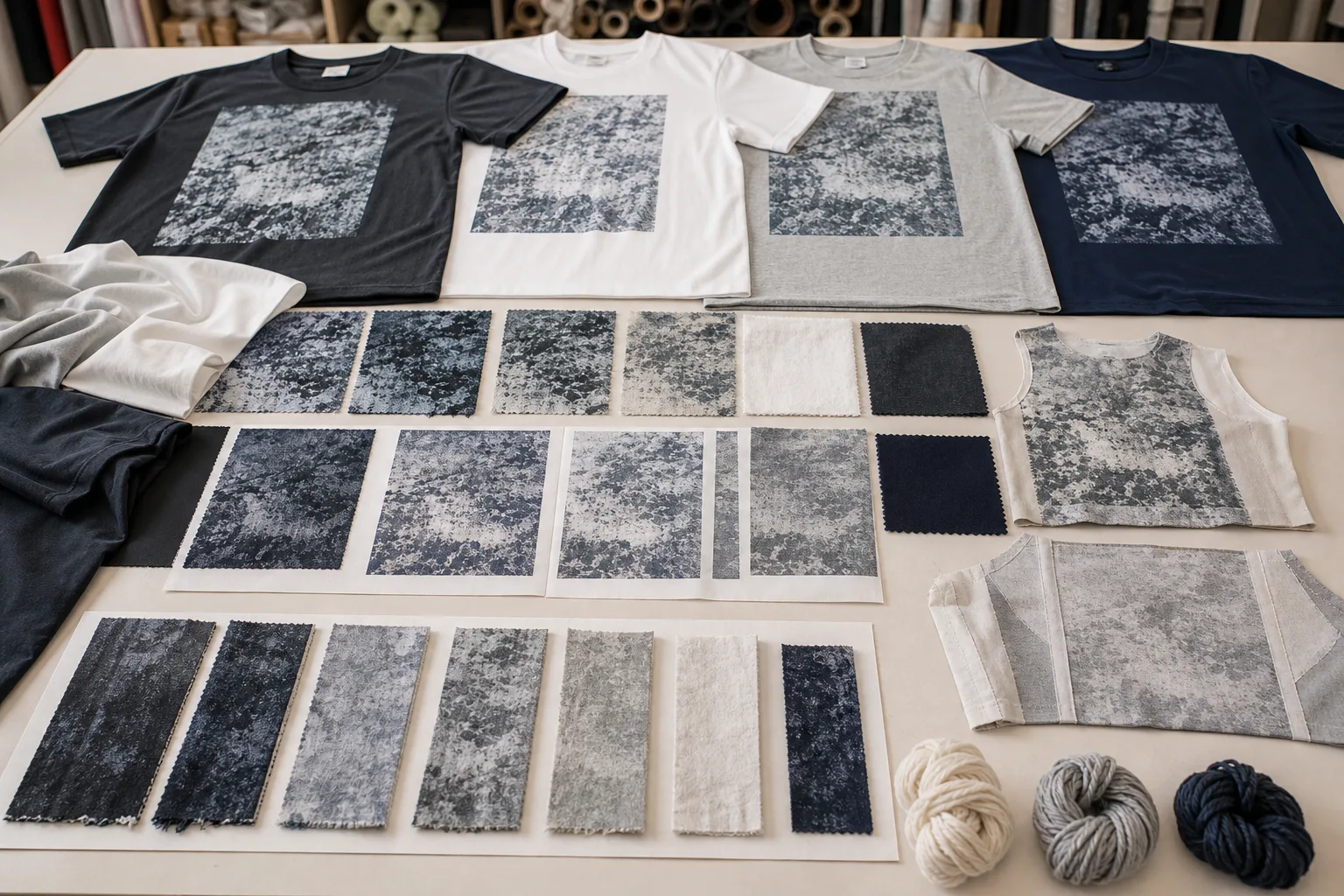
Compare the artwork and placement on the actual fabric, including relevant light and dark colorways. Use a physical sample or supplier technical information when judging compatibility or performance. Fiber content or fabric weight alone cannot establish the final visual or tactile result. Print-method selection should remain a separate decision, while recognizing that artwork detail, coverage, hand, batch size, substrate, and care expectations may influence the available options.
For a broader reference point, a team can also document material questions alongside its Apparel Manufacturing Tools and development records. Keep any wash result, durability statement, named test method, or regulatory conclusion tied to validated evidence and a defined scope. Apparel Wiki is an independent educational publication, not a laboratory, certifier, printer, or manufacturer.
Can the Placement Be Produced Consistently?
A critique becomes more useful when another team can interpret its decision consistently. Ask whether the placement is defined with the relevant pattern piece, reference points, artwork dimensions, orientation, and project-approved tolerances. “The graphic should sit slightly higher” may communicate a design preference, but it is not enough by itself to guide a repeatable production decision.
Review the construction details that could interrupt or shift the intended position. Seams, panels, pockets, closures, trims, hems, and garment variation may all affect how the artwork is applied or judged. If alignment or matching is important, identify whether it is required, preferred, or intentionally avoided. Confirm that the printer, factory, pattern maker, and quality team have the same placement information and understand which decisions remain open.
Also ask whether the selected print approach can deliver the required detail, coverage, color appearance, and hand on the target substrate. Do not assume a supplier’s equipment, factory capability, minimum order quantity, lead time, or process conditions. Those are project-specific questions. A production conclusion should be supported by approved artwork, a placement map, sample records, and relevant supplier documentation.
Before production moves forward, identify the approvals needed for the particular product. These may include the artwork file, placement map, strike-off or print sample, garment sample, and the applicable color and material combination. Keep design preferences separate from production requirements, and record any acceptance criterion or tolerance from the project specification or an applicable authoritative source rather than inventing a universal rule.
How Should a Team Run a Print Placement Critique?
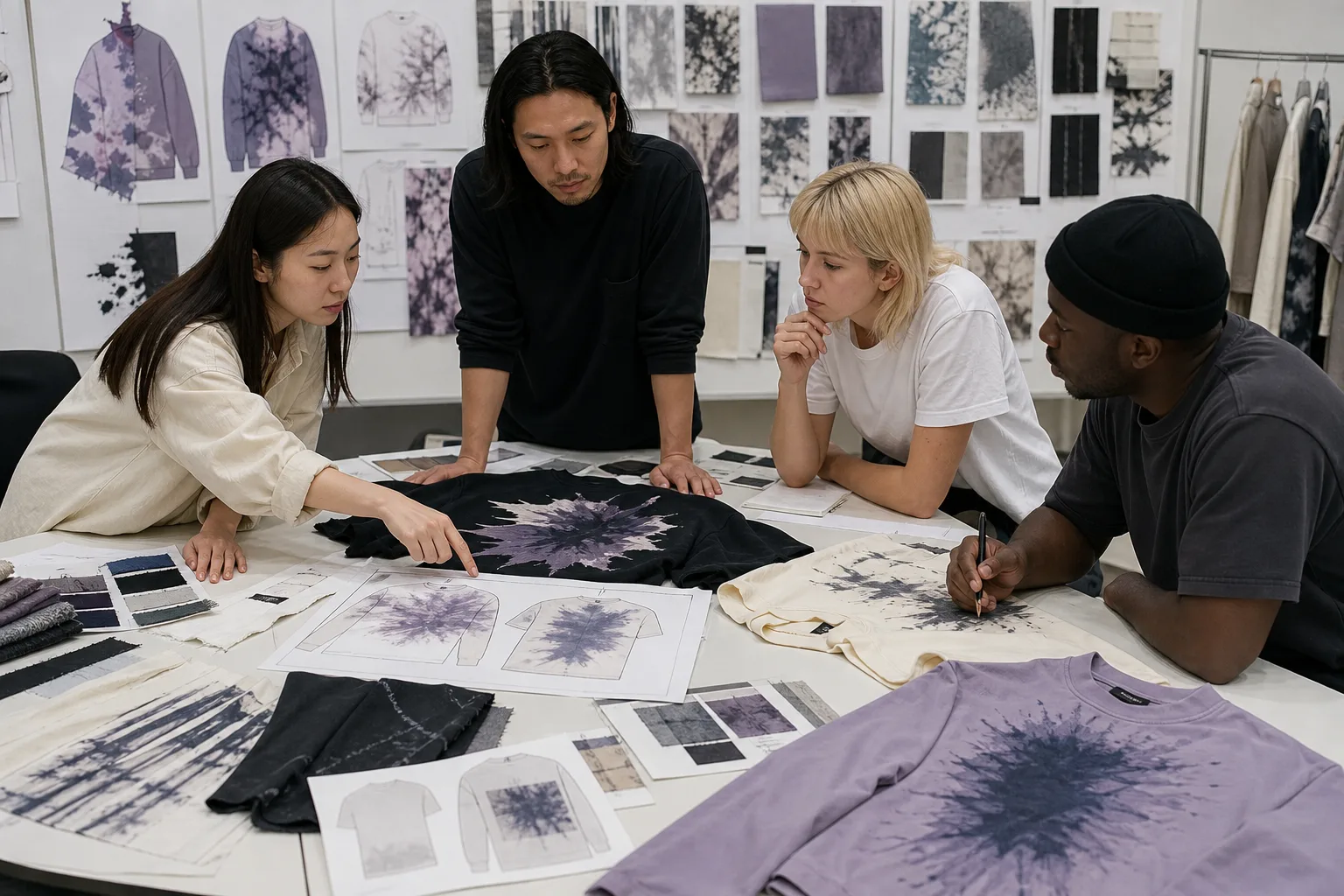
Begin with an annotated flat sketch or placement map, then review the garment from the front, back, side, detail, and worn views as relevant. A useful critique distinguishes what is visibly observed from what is interpreted. The visual design critique framework from the University of Washington offers a helpful general model for separating observation, interpretation, and actionable feedback.
Ask the team to identify at least one issue in each of four areas: visual intent, body or pattern interaction, material behavior, and production. This keeps the discussion from becoming a debate about taste alone. For example, a graphic may look visually balanced but cross a seam unexpectedly, distort during movement, or lack enough placement information for consistent execution.
Rank each issue by its effect on design intent, wearer experience, production repeatability, and the evidence needed to resolve it. Then assign a specific action: revise the artwork or position, request a physical sample, compare the material and print combination, confirm a construction constraint, or approve the design with documented assumptions. A rendering can support discussion, but it cannot prove dynamic fit, final hand, or print performance.
Repeat the review after the relevant change. Record which judgments are approved, which remain project-dependent, and which require supplier evidence, sample review, testing, or market-specific confirmation. This creates a decision trail without pretending that one universally correct placement exists. The goal is a clear, evidence-aware design decision that the wider product team can use.
Next step: Turn the critique into a one-page review record with the garment view, artwork version, target material, open questions, evidence requested, responsible team member, and approval status. Revisit that record when the pattern, fabric, print method, or construction changes, because a placement decision can change with any of those inputs.
Frequently Asked Questions
What is print placement design evaluation?
It is a structured review of an artwork’s position, scale, orientation, and relationship to the garment, body, pattern, material, construction, and production process.
Which questions should a designer ask when reviewing print placement?
Ask what the print should communicate, where the eye should go, how the graphic relates to body and seamlines, how the material may change it, and what must be confirmed on a sample.
Why should print placement be checked against pattern pieces and the body?
Pattern shaping, seams, ease, movement, and stretch can change the graphic’s apparent position or shape. A flat artwork file cannot prove how it will look on the worn garment.
How can fabric affect the appearance of a garment print?
Thickness, stretch, recovery, texture, finish, color, and construction may affect the print’s appearance, distortion, adhesion, color, and hand. These effects require material-specific validation.
What should be approved before print placement enters production?
Depending on the project, approval may include the artwork file, placement map, print sample or strike-off, garment sample, and the relevant material and color combination.
Can a flat artwork file prove that print placement will work on the finished garment?
No. It can communicate design intent, but physical samples, fitting reviews, digital three-dimensional views, supplier information, or other applicable evidence may be needed for movement, material, and production questions.