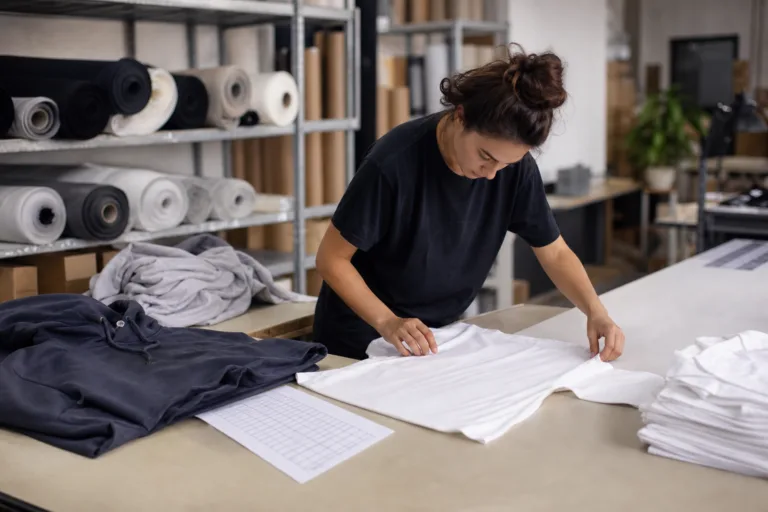
Small batch clothing production is a practical option when a brand wants to test products, reduce inventory exposure, or launch with tighter cash control. In apparel manufacturing, “small batch” does not mean one fixed quantity for every factory. It usually means a production run below a factory’s standard bulk efficiency level, often with tighter quantities per color, per size, or per style. For buyers, the important question is not the label itself. The real question is whether low-volume production fits the product, the budget, the supplier base, and the sales plan.
If you are still comparing order size expectations, MOQ logic, and what factories really mean by minimums, this guide to minimum order quantities in apparel manufacturing helps connect the topic to real production planning. It explains how MOQ can apply at different levels such as fabric, color, style, and total order quantity, which matters a lot in small batch projects where one design decision can increase complexity much faster than expected.
Many new brands assume small quantity clothing production is automatically safer because it reduces units. That is only partly true. It reduces some risks, especially unsold stock, but it can increase other risks such as high unit cost, unstable material sourcing, inconsistent size sets, and delayed decisions during development. Small runs work well when the product range is controlled and the team knows which details must be fixed early.
What small batch clothing production means in apparel manufacturing
In apparel sourcing practice, small batch production usually refers to runs that are too small to benefit from normal bulk economies. A supplier may accept the order, but the cost structure will not behave like a large reorder. Pattern work, marker planning, cutting setup, sewing line organization, trim preparation, print screens, embroidery files, and finishing steps still require time even if the order is small.
That is why buyers should separate two ideas: small total quantity and simple production. A 300-piece order can be manageable if it is one hoodie style in two colors with a shared fabric and one print placement. The same 300 pieces can become difficult if they are split across five styles, four fabrics, multiple graphics, and extended size ranges. Quantity alone does not determine production ease.
From a garment construction perspective, small batch apparel manufacturing makes the most sense when the style is technically straightforward, the fabric is easy to source in limited amounts, and decoration methods do not require excessive setup.
Who small batch apparel manufacturing is best for
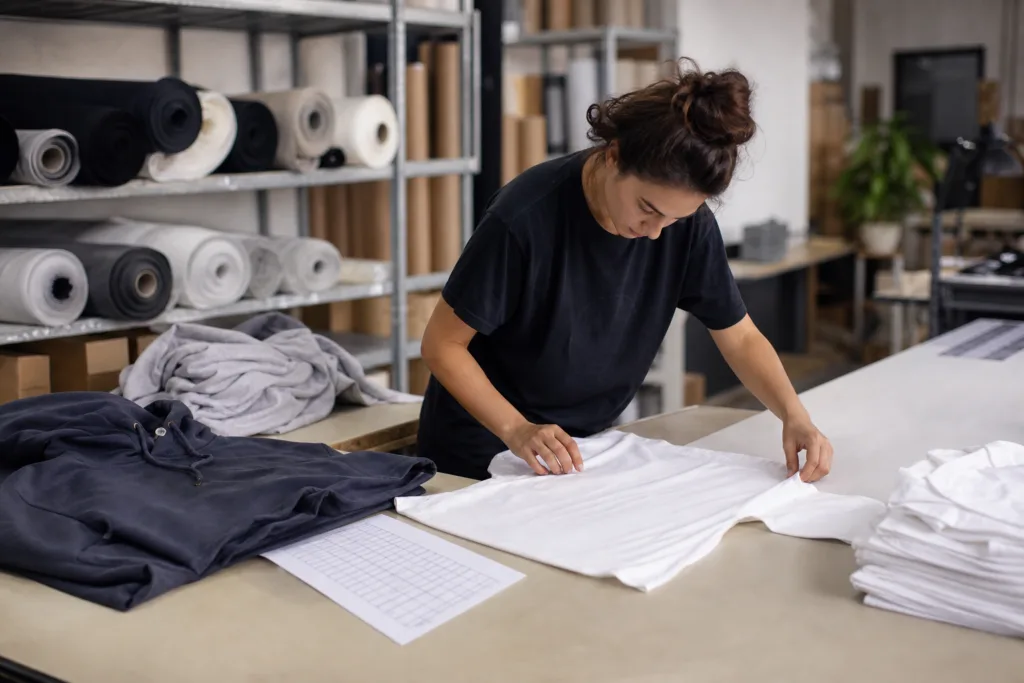
Small batch production is often a strong fit for brand founders, test-launch teams, artist collaborations, clubs, schools, uniform buyers with limited headcount, and product developers validating a new category. It is also useful for established brands trying a new silhouette before committing to larger volume.
It is not only for startups. Even experienced businesses use low-volume production when demand is uncertain, when they want to test a fit block, or when they need short replenishment cycles for selected items rather than placing one heavy inventory bet.
A good reader takeaway here is simple: small runs are usually appropriate when the market signal is still weak, the assortment is still being refined, or the business needs learning before scale. In those cases, a lower inventory position can help avoid the markdown pressure that often comes from too many weak-performing SKUs, a dynamic also discussed in apparel responsiveness research from North Carolina State University.
Common business scenarios where small quantity clothing production is a smart choice
New brand launch
A startup clothing brand rarely has reliable demand data. A small run allows it to test sell-through, returns, fit feedback, and repeat purchase interest before scaling. This is also why many founders need practical first-drop planning for design counts instead of trying to launch too many styles at once.
Fit validation before scale
Sometimes the issue is not design demand but fit confidence. A brand may have a concept that looks good on paper but has not yet proven grading, ease balance, or shrinkage behavior. Small runs can help confirm whether the garment still performs after wash and wear.
Limited edition or event-based selling
Capsule collections, artist drops, campaign merchandise, club wear, and school or company special programs often benefit from low-volume planning because the demand window is short. Overproduction can leave the buyer with dead stock after the event period ends.
Uniforms or workwear for smaller teams
A buyer may need 80 polos or 150 sweatshirts, not 5,000 units. In those cases, small batch planning is less about fashion risk and more about matching a practical quantity to a real user count.
How small batch production differs from bulk production and standard MOQ planning
Bulk production spreads fixed setup cost over more units. Small runs do not. That difference affects cost, planning, and supplier choice.
| Planning Factor | Small Batch Production | Bulk Production |
|---|---|---|
| Unit cost | Usually higher | Usually lower |
| Supplier options | More limited | Broader, especially for standardized products |
| Fabric sourcing | May require stock fabrics or limited options | More access to custom development and dye lots |
| SKU flexibility | Must be controlled tightly | Can support broader assortment if demand is proven |
| Inventory risk | Lower if assortment is disciplined | Higher if demand forecast is weak |
| Efficiency | Lower cutting and sewing efficiency | Better line balancing and throughput |
Standard MOQ planning often assumes a base level for each style or colorway. In small runs, that logic becomes more sensitive. For example, a buyer may hit the total order minimum but still miss the fabric color minimum or print setup threshold. This is where production communication matters more than rough quantity estimates.
Cost structure in small batch clothing production
Let’s look at what actually affects the result. Small batch clothing production cost is not only fabric plus sewing. The full cost picture includes development, setup, materials, labor, and overhead.
Pattern development and fit work
If the style is new, patterns must be created or adjusted. Grading may also be needed for the full size range. These costs are relatively fixed whether you make 100 units or 5,000 units.
Sampling and pre-production approval
Proto samples, fit samples, salesman samples, or pre-production samples can consume a meaningful share of the project budget in low-volume programs. If the style is complex, multiple sample rounds can push the effective unit cost much higher.
Fabric sourcing
Fabric is one of the biggest constraints in small runs. Mills may have minimums for knitting, dyeing, finishing, or color matching. As a result, low-volume orders often work better with in-stock fabrics, mill-supported stock colors, or fewer colorways. Material choice also affects wash behavior and shrinkage risk. For cotton-based products, shrinkage performance depends on fabric structure, finishing, and garment processing, which is why fabric confirmation and wash testing should not be skipped even for basic styles, as outlined in this guide to shrinkage performance of cotton fabrics.
Trims and labels
Main labels, size labels, care labels, hangtags, drawcords, zippers, buttons, snaps, polybags, and carton markings all have their own MOQ logic. One trim with a high minimum can distort the entire small batch plan.
Cutting, sewing, and finishing labor
Labor cost per piece tends to be higher in small runs because the factory cannot optimize line flow the same way it can for repeat bulk styles. Bundle handling, machine changes, operation balancing, and finishing all take time.
Decoration setup
Screen printing, embroidery digitizing, heat transfer setup, and special wash effects can all create fixed costs. A small run with multiple graphics may become expensive very quickly even if the garment body is simple.
Overhead and administrative load
Factories still have to plan, communicate, receive materials, issue cutting orders, track quality, pack, and ship. The administrative workload does not shrink in direct proportion to quantity.
For early planning, many teams benefit from a budget breakdown for development and bulk production because it helps separate one-time development costs from repeat production costs instead of treating everything as one blended number.
Why unit cost is usually higher in small runs
The most common misunderstanding is this: buyers see fewer units and expect lower total commitment, then assume the unit price should also be low. In reality, small runs usually carry a higher price per piece because fixed costs are spread over fewer garments and material procurement is less efficient.
The key cost drivers are usually:
- number of styles
- number of colorways
- number of fabrics
- number of size breaks
- decoration setup complexity
- garment construction difficulty
- sampling rounds before approval
This detail may look small, but it can create problems later if it is not confirmed early: a 200-piece order with one style may be feasible, while a 200-piece order split into four styles of 50 pieces each may no longer be commercially workable.
Main benefits of small batch production
Lower inventory risk
The most obvious benefit is reduced exposure to unsold stock. If demand is uncertain, a smaller initial run protects cash and storage capacity.

Faster product validation
Small runs help brands test whether a design really works in the market. You can review fit complaints, return reasons, color preference, and repeat order patterns before expanding the line.
Better flexibility
Low-volume production makes it easier to adjust graphics, revise size curves, replace a weak color, or discontinue a style that does not sell. That flexibility has value, especially during the early product development phase.
Easier internal learning
For new teams, smaller runs can expose process issues before they become expensive. Measurement tolerance mistakes, weak labeling instructions, poor print placement, or unstable packaging specs are easier to correct when the quantity is limited.
In broader apparel planning, many readers use framework for product development and production decisions to judge whether flexibility, speed, margin, and complexity are balanced realistically before committing to scale.
Key limitations of small batch apparel manufacturing
Small batch production is useful, but it is not automatically efficient. Buyers need to be realistic about the trade-offs.
- Higher unit price: fixed costs are spread over fewer units.
- Fewer supplier options: not every factory accepts low-volume programs.
- Limited fabric and color choices: custom dye lots and special materials may not be practical.
- Lower production efficiency: changeovers and mixed assortments reduce line output.
- Harder margin planning: if target retail pricing is aggressive, small runs may not leave enough gross margin.
In many projects, the problem is not that the buyer chose the wrong category. The problem is that some production details were not clarified before sampling or bulk production. Small volume reduces inventory risk, but it does not remove the need for disciplined specification control.
How to control SKU count in small batch apparel manufacturing
SKU control is one of the most important success factors in small quantity clothing production. If the assortment gets too fragmented, the project loses the main advantage of small runs. You may avoid overstock in one area but create inefficient cutting, broken size ratios, and weak replenishment logic in another.
From an inventory perspective, more options are not always more useful. More colors, more fits, and more graphic variations can look attractive at launch, but they can also scatter demand across too many weak-selling units. Educational inventory management guidance from the University of New Hampshire system explains why balancing stock depth and breadth matters when trying to avoid excess inventory and stock inefficiency in early-stage planning: inventory management concepts.
Practical SKU control methods
- Limit launch colors to 1 to 3 strong options.
- Use one base fabric across multiple products where possible.
- Keep size ranges realistic for the target customer instead of offering every possible size immediately.
- Reduce graphic placements and decoration variations.
- Choose one fit block first before developing slim, relaxed, oversized, and cropped versions at the same time.
- Share labels, packaging, and trims across styles to simplify procurement.
For readers comparing terminology, sizing logic, construction basics, and sourcing decisions across categories, Apparel Wiki is useful as a broader reference point because SKU control is rarely only a merchandising issue. It is connected to fabric options, grading, trims, labeling, and factory execution.
Choosing the right product types for small quantity clothing production
Not every garment category behaves well in low-volume manufacturing. The best product types are usually those with simpler patterns, easier sewing sequences, fewer trims, and more accessible stock fabrics.
Best-fit categories
| Product Type | Why It Often Works in Small Runs | Main Watchouts |
|---|---|---|
| Basic T-shirts | Simple construction, stock jersey options, easy grading | Fabric hand feel, shrinkage, neck rib quality |
| Hoodies | High demand, practical for limited drops, simpler than outerwear | Fleece sourcing, rib matching, print setup |
| Sweatshirts | Good for shared fabric programs | Cuff and waistband consistency |
| Simple pants | Good if trim count is controlled | Fit balance, rise, inseam grading |
| Workwear basics | Useful for smaller teams and uniform needs | Durability expectations, pocket reinforcement |
| Uniform polos or tees | Predictable use case and quantity logic | Color consistency across reorders |
| Limited-edition fashion basics | Good for controlled experimentation | Do not overcomplicate trims and washes |
Product types that are harder to produce in small batches
Complex outerwear, tailored garments, heavily panelled activewear, garments with many custom trims, and multi-component fashion pieces are usually harder to produce efficiently in low volume. These products often require more pattern precision, more operations, more supplier coordination, and stricter quality control.
A jacket with lining, multiple zipper types, internal pockets, branded hardware, seam sealing, and custom dye development may technically be possible in a small run. But from a cost-performance view, it is often a poor first choice unless the buyer accepts a high price and a longer development cycle.
Fabric, trim, and decoration choices that work better in low-volume production
In textile selection, low-risk materials generally work better. Stock cotton jersey, cotton-poly fleece, basic rib, standard woven twill, and commonly available pique are often easier than highly specialized fabrics. The question is not whether a fabric is premium or basic. The real question is whether it can be sourced consistently in the quantity and finish the project needs.
Good low-volume choices usually include:
- stock-supported fabrics instead of custom-developed fabric
- standard colors instead of custom lab dips for many shades
- common trims instead of custom hardware
- screen print with limited colors or simple embroidery placements
- shared packaging and labels across the program
Choices that often create friction include custom zipper pulls, special-dye fabrics, multiple wash effects, garment dye programs, specialty coatings, and many trim finishes across a small order.
How small batch production affects sampling, tech packs, lead time, and quality control
Small runs do not reduce the need for documentation. In fact, they often require better documentation because there is less room to absorb preventable errors. If the quantity is low, one specification mistake can affect a large percentage of the total order.
Tech packs matter more, not less
Some buyers think a small order can be managed informally. That is risky. A proper spec file should still cover measurements, tolerances, stitch details, artwork placement, label content, fabric composition, color references, packaging, and carton instructions. If you need structure for this stage, a complete guide to tech packs for manufacturing is one of the most useful tools to reduce avoidable misunderstandings.
Lead time can still be long
Low quantity does not guarantee quick delivery. Fabric waiting time, trim procurement, sample approval delays, and factory scheduling can still extend the calendar. Some suppliers fit small orders into production gaps rather than giving them top priority.
Quality control needs focused checkpoints
For small batch projects, practical QC checkpoints usually include:
- approved fit sample and measurement chart
- fabric hand feel and color approval
- wash test or shrinkage review where relevant
- print or embroidery strike-off approval
- label and packaging confirmation
- size set review when the fit is sensitive
- final random inspection before shipment
Apparel Wiki explains this often in decision support terms: the smaller the order, the less buffer you have for rework, replacement, and inconsistent grading. That is why pre-production clarity is so valuable.
Decision checklist: when to choose small batch production and when to move to larger-scale manufacturing
Choose small batch production when
- demand is unproven
- cash preservation matters more than unit cost efficiency
- the product is relatively simple
- you are testing fit, color, or category response
- you need flexibility for a limited-edition launch
- your SKU plan is narrow and controlled
Move toward larger-scale production when
- you have repeat demand and reliable reorder signals
- the style has already passed fit and wash validation
- margin pressure requires lower unit cost
- you need better material leverage or custom development
- the assortment is stable enough to support fuller size and color depth
In many cases, the best path is phased: start narrow, validate quickly, reorder only the winning SKUs, and scale after the product proves itself.
Common mistakes brands make when planning small batch runs
- Launching too many styles at once
- Using too many colors for low volume
- Choosing complex garments before fit blocks are proven
- Ignoring trim minimums while focusing only on garment quantity
- Assuming small quantity means fast lead time
- Skipping proper tech packs and approval stages
- Underestimating the effect of sampling cost on final margin
- Using custom materials too early
These mistakes are common because small batch production feels flexible. It is flexible, but only when the underlying product architecture stays disciplined.
Conclusion
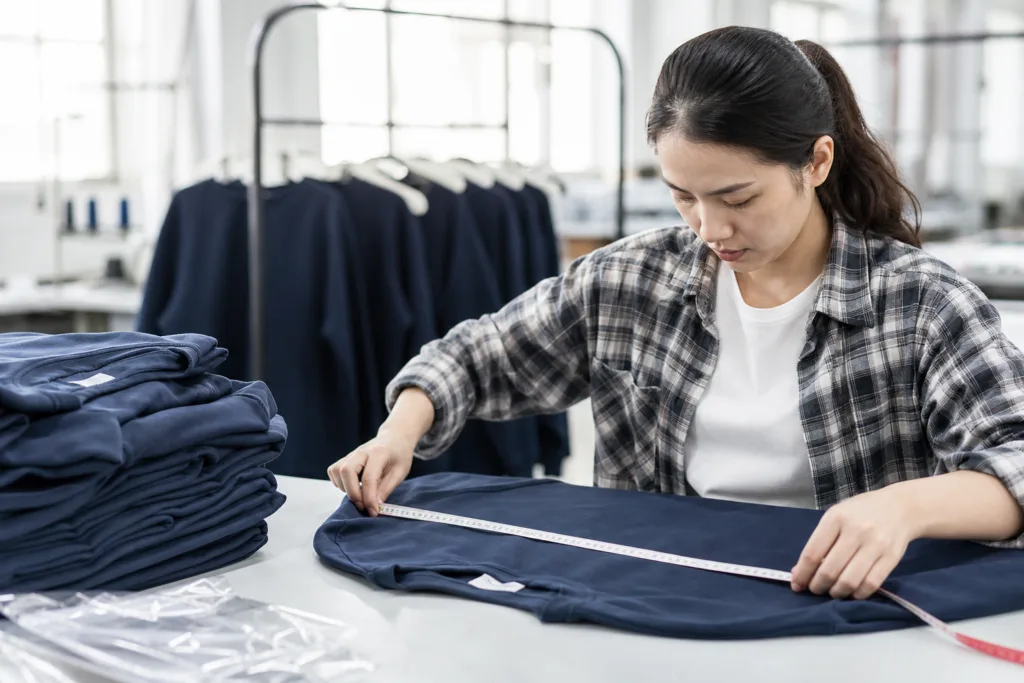
Small batch clothing production makes sense when the goal is to learn, test, reduce inventory risk, or serve a real low-volume need with controlled product complexity. It is usually not the cheapest path per unit, and it is not a shortcut around specification work. The strongest small-run projects are the ones with a narrow SKU plan, simple product choices, realistic fabric and trim decisions, and clear documentation before production starts. For buyers, the key is not only whether a factory can accept a small order. The key is whether the product, cost structure, and assortment strategy are aligned well enough for that order to succeed.
FAQs
What counts as small batch clothing production?
There is no single quantity that defines it for every factory. In practice, it usually means an order that sits below normal bulk efficiency and below a supplier’s ideal production volume. The useful way to judge it is by complexity per style, per color, and per size split, not by total units alone.
Is small batch clothing production always better for startups?
Not always. It is often safer for inventory and cash flow, but the unit price is usually higher and supplier options may be narrower. It works best for startups that keep the line simple, control SKUs, and use the first run to learn rather than trying to launch a full-scale assortment immediately.
Why is the unit price higher in small quantity clothing production?
Fixed costs such as pattern work, sampling, setup, trim sourcing, printing preparation, and production planning are spread over fewer garments. Factories also lose some cutting and sewing efficiency on small mixed orders, so labor cost per piece often increases.
What products are easiest to make in small batches?
Basic T-shirts, sweatshirts, hoodies, simple uniform pieces, and straightforward pants are usually easier because they use simpler construction, more available stock fabrics, and fewer custom trims. Products become harder when they add many panels, linings, hardware parts, or specialized performance requirements.
How can I control SKU complexity in a small run?
Start with fewer colors, a tighter size range, one main fabric platform, and limited decoration variations. Shared trims and packaging also help. The goal is to concentrate demand into stronger SKUs instead of scattering it across too many options that each become inefficient to produce and harder to replenish.
When should a brand move from small batch to bulk production?
Usually after the product has proven demand, fit, and acceptable returns, and when margin pressure makes lower unit cost more important than maximum flexibility. If the same styles keep reordering and the assortment is stable, larger-scale production often becomes the more practical next step.