Understanding the Pattern Maker Role
A pattern maker in apparel development transforms ideas into tangible frameworks that factories use to cut, sew, and assemble garments. This role blends technical expertise with creative interpretation, requiring both an eye for fit and hands-on knowledge of construction methods.
Key Responsibilities of Pattern Makers
- Translating designer sketches and technical packs into accurate patterns
- Engineeering garment construction details (seams, allowances, shaping)
- Ensuring product feasibility for mass manufacturing
- Grading patterns into size ranges
- Resolving fit or production challenges before bulk cutting begins
Workflow Integration in Apparel Development
Pattern makers serve as the linchpin between design, technical development, sampling, and production teams. Their work sets the measurement standard for the entire production flow.
Essential Tools and Technologies
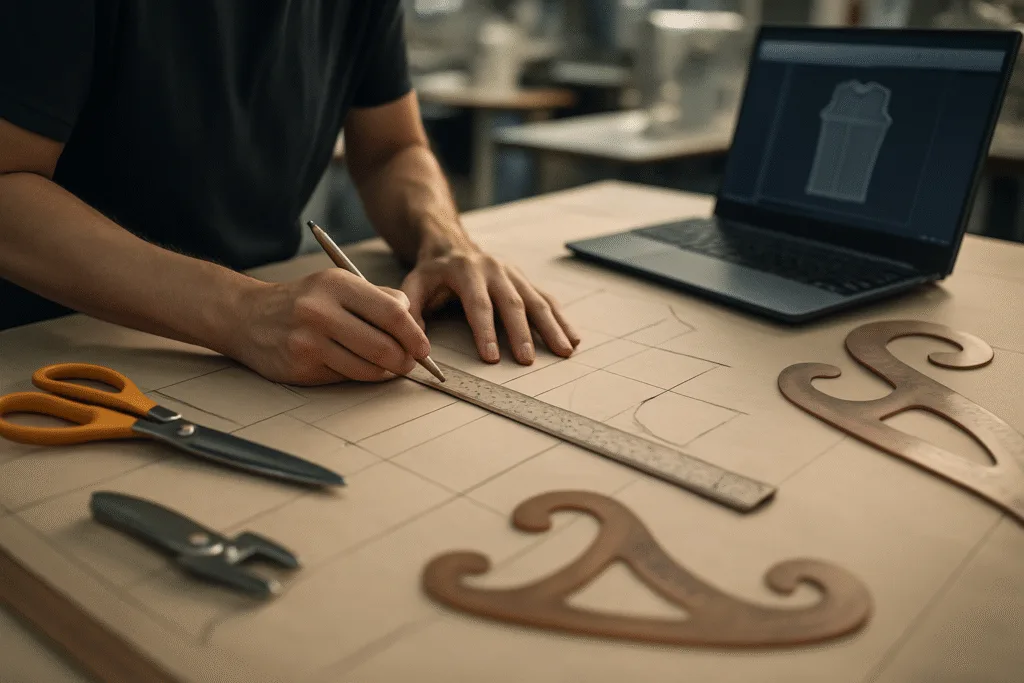
Modern pattern making relies on a mix of traditional and digital methods. Mastery of both is essential for accuracy, flexibility, and speed in apparel pattern development.
Traditional Pattern Making Tools
- Dot and cross pattern paper
- Pencil, straight and curved rulers (French curve, hip curve)
- Measuring tape, scissors, notcher, awl
- Pattern weights and marking pencils/chalk
Digital CAD Systems and Plotters
Computer-aided design (CAD) software, like Gerber, Lectra, or Optitex, allows fast pattern drafting, grading, and adjustment. They increase repeatability and minimize errors—especially valuable when modifying tech pack specs or responding to fit comments from sample reviews. Digital plotters print full-size patterns for cutting, while 3D modeling now aids in virtual sampling, cutting down lead times and waste.
Pattern Interpretation from Sketches
One of the core pattern maker responsibilities is to convert sketches and spec sheets into accurate patterns that realize a designer’s vision. This requires disciplined analysis and communication.
Analyzing Fashion Sketches
- Dissect proportion, balance, and drape intentions
- Clarify ambiguous details with the designer or product developer
- Note any unusual seaming, volume, pleats, or enhancements that could affect construction or cost
Building Patterns from Design and Body Blocks
Pattern makers start with established blocks (base templates for T-shirts, shirts, pants, etc.) and adapt them per the new design. Critical steps include deciding on ease (for movement and fit), seam placement for style/structure, and making allowances for fabric shrinkage or special finishes (enzyme wash, brushing, etc.).
Working with Tech Packs in Apparel Pattern Development
Tech packs—detailed technical specification documents—form the blueprint for both pattern maker role and eventual garment construction. Accurately interpreting these documents ensures smooth collaboration across the development chain.
What a Tech Pack Includes
| Tech Pack Section | Pattern Maker Focus |
|---|---|
| Flat sketches | Identify main shapes, seam placements, and construction features |
| Measurement chart/specs | Guide pattern measurements and grading increments |
| Bill of materials (BOM) | Account for fabric stretch, shrinkage, and trims affecting fit |
| Sewing and finishing methods | Allocate seam allowances, choose the right stitch types |
| Artwork/print placements | Define pattern cross-marks/fold lines for correct placement |
Collaborating Across Teams
Pattern makers discuss ambiguities with designers and sample makers, clarifying wherever sketches or measurements contradict construction logic. They flag manufacturability issues early—such as complex panels, restricted ease, or unfeasible finishes—reducing costly rework.
Accuracy: The Foundation of Apparel Pattern Development
The accuracy of a pattern is the difference between a well-fitting garment and costly remakes. Precision at this stage reduces wastage and keeps the shipment timeline on track.
Setting Tolerances
Garment specs typically include tolerance values (e.g., ±1 cm in width for knits, ±0.5 cm in wovens). A best-practice apparel pattern development workflow includes physically measuring sample-cut fabric components and sewn pieces, then comparing to tech pack specs—catching cumulative errors before scale-up.
Common Accuracy Risks
- Poor seam allowance marking
- Miscalculated shrinkage or stretch
- Not accounting for different fabric weights, causing silhouette changes
- Pattern distortion during cutting or handling
Checks and Controls
Expert pattern makers use reference templates, physical fit samples, and iterative fittings to ensure accuracy before approving patterns for bulk cutting. Apparel Wiki recommends a dual-verification process for size sets—comparing digital pattern dimensions, fabric test cuts, and initial sewn samples—before releasing a pattern for production.

The Pattern Development Process: Step by Step
Successful apparel pattern development follows a disciplined sequence, tying together sketch analysis, technical documentation, and production practicality.
- Sketch Review: Understand style intentions, proportions, and look.
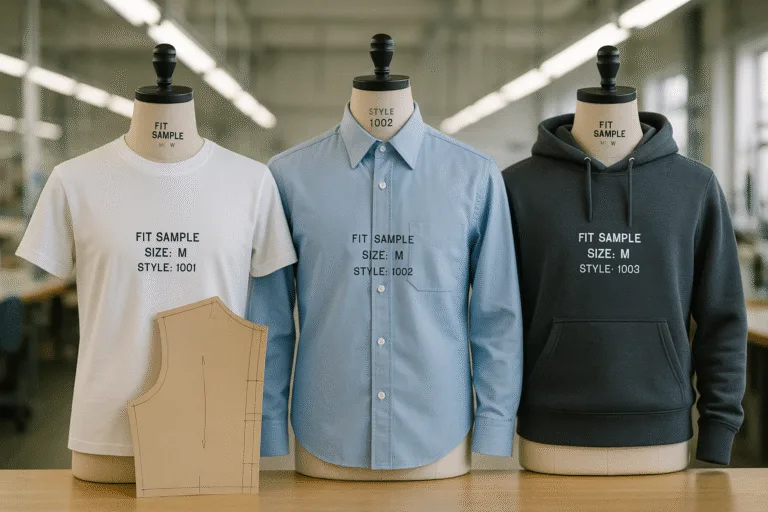
- Base Block Selection: Choose appropriate template for garment type (e.g., classic tee, tailored shirt, hoodie).
- Pattern Drafting: Adapt or create patterns, integrating style, fit, and construction logic.
- Allowance and Shrinkage Adjustments: Build in seam and hem allowances, plus fabric-specific shrinkage margins based on lab results (typically 3–5% for cotton knits).
- First Sample Cut: Use sample yardage to cut and assemble the garment. Review for fit, proportion, and construction issues.
- Fit Trials and Corrections: Refine pattern using wearer trials and measurement checks. Update with all modifications.
- Grading for Size Range: Expand pattern for required sizes, applying increments per tech pack specs.
- Final Approvals and Release: Confirm all dimensions with sample makers and production team. Hand off master and graded patterns for bulk cutting.
Special Considerations: Garment Type, Fabric, and Finish
Each garment category and fabric type brings unique pattern development challenges—and solving these is core to a skilled pattern maker role.
Knitwear (T-shirts, Hoodies)
- Require extra shrinkage allowance, careful alignment of grain lines to reduce twisting (torque).
- Patterns must be adjusted for stretch and recovery, especially for rib trims and cuffs.
Tailored Shirts and Structured Garments
- Need precise collar, cuff, and placket pattern pieces with accurate interfacing placement.
- Button/buttonhole spacing and seam types (e.g., French seam for light poplin) affect final fit and clean finish.
Special Finishes (Washed, Peached, Enzyme Treated)
- All finishes that change handfeel or dimensions require up-front testing and adjustment of pattern specs based on shrinkage/expansion rates from lab washing tests.
Pattern Maker Role vs. Sample Room Technician vs. Production Cutter
Pattern makers are distinct from sample room technicians (who sew initial samples) and production cutters (who cut in bulk). The pattern maker role centers on accuracy, fit, and manufacturability rather than solely execution. Collaboration between these positions, with robust handoffs and physical sample reviews, prevents miscommunication and material waste.
| Role | Primary Focus | Main Tools | Key Interface With |
|---|---|---|---|
| Pattern Maker | Pattern accuracy, fit, manufacturability | CAD, rulers, blocks | Designer, sample maker, tech pack owner |
| Sample Room Technician | Sample assembly, construction refinement | Sewing machines, pressing tools | Pattern maker, QC |
| Production Cutter | Bulk cutting consistency, fabric utilization | Cutting machines, markers | Pattern department, line supervisors |
The Role of Pattern Makers in Apparel Development
Pattern makers are the precision engine at the heart of apparel pattern development. Their role includes interpreting creative intent, mastering technical documentation, preventing costly fit errors, and enabling scalable manufacturing across diverse apparel categories—from T-shirts to uniforms, casualwear to technical performance garments. When they blend accuracy, communication, and understanding of materials, the difference is seen not only in factory efficiency, but also in comfort, silhouette, and longevity of finished garments on the consumer.
Why Great Patterns Matter
- Drive consistent fit and reduce returns
- Control bulk fabric yield and cost (especially in high-GSM or premium blends)
- Speed sample approval and minimize lead times
- Enable design complexity without sacrificing manufacturability
Tips from the Production Line
Rain’s tip: Always walk a new pattern in miniature—with paper and thumb tacks—to check fit and assembly order before committing to trial cuts, especially on complex styles or unfamiliar fabrics.
Common Pitfalls to Avoid
- Overlooking grainline direction on stretch or textured fabrics
- Neglecting fabric finish impact on final garment measurements
- Poor documentation of pattern revisions—always version and communicate changes clearly!
Raising Quality with Accurate Apparel Pattern Development
Seasoned pattern makers know that every adjustment ripples through the workflow. They embed quality by double-checking their math, building clear notches for assembly, and collaborating across functions. Apparel Wiki’s experience in export factories shows that investment in robust pattern development pays off with lower reject rates, fewer last-minute corrections, and more on-style, on-time launches.
Performance and Quality Controls
- Pattern/fabric test cut and fit review on in-house mannequins and real wearers
- Pre-production size set confirmation before bulk marker release
- Lockstitch and overlock seam alignment checks during sample assembly
- Fabric shrinkage and stretch validation for main and trim/facing materials
Practical Next Steps for Brands and Buyers
- Request detailed documentation (PDF or DXF) for each approved pattern and grading set.
- Clarify garment performance standards—shrinkage, fit tolerance, colorfastness—with your pattern department early.
- Ask for digital and physical pattern approval (with visual sample) before bulk fabrication.
Communication and Documentation Best Practices
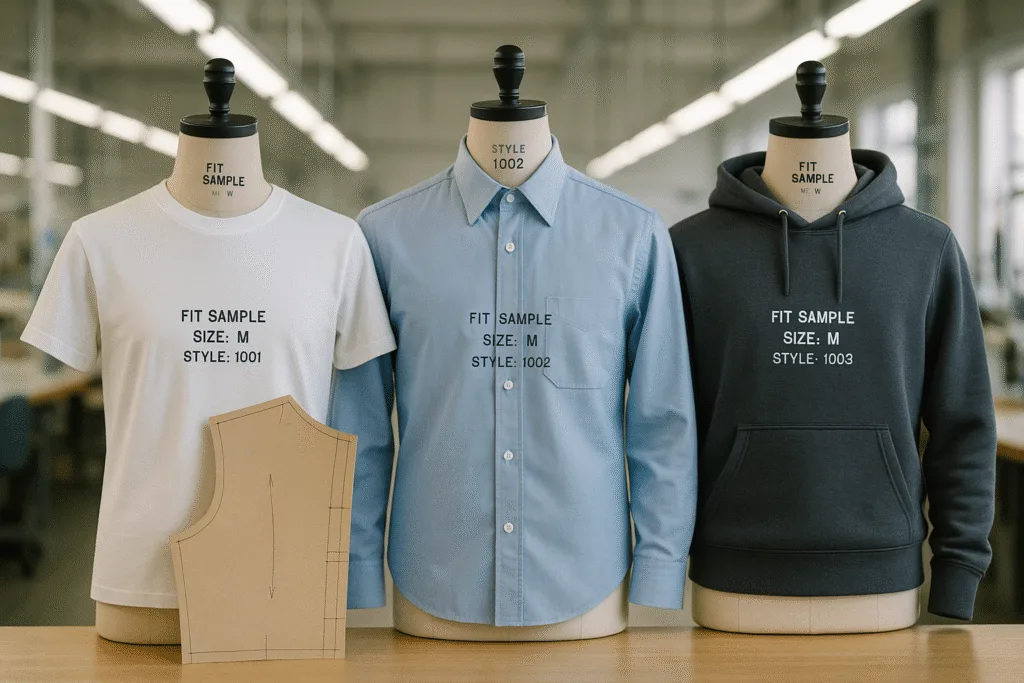
Pattern makers document every stage of the process—from scan/photographs of hand-drawn corrections to digital versioning in CAD. Well-documented patterns are future-proof, allowing easy reproduction and troubleshooting seasons later.
Labeling and Notation
- Each pattern piece is labeled with garment style, size, grainline, piece name, and critical notches
- Revision history with dates and key changes annotated in both hard copy and digital systems
Sample Set Storage
Store master paper and digital patterns in climate-controlled archives to prevent distortion (especially in humid climates), and back up files across secure locations to protect intellectual property and avoid costly reruns if originals are lost.
Frequently Asked Questions
What does a pattern maker do in apparel development?
A pattern maker interprets design sketches and tech packs, drafting and adjusting garment patterns for accurate fit and manufacturability.
Why is pattern accuracy important in garment production?
Accurate patterns ensure consistent sizing, optimal fabric yield, and reduce costly errors or rework during mass production.
What tools do apparel pattern makers use?
They use traditional tools like rulers and pattern paper, and digital CAD systems for drafting, grading, and plotting patterns.
How does a pattern maker use a tech pack?
Tech packs provide detailed style information, helping pattern makers create patterns that match specifications and intended fit.
What happens if a pattern is inaccurate?
Poor patterns lead to misfitting garments, increased fabric waste, failed quality checks, and delays in delivery schedules.
How can I ensure good communication with pattern makers?
Provide clear sketches and tech packs, discuss ambiguities early, and review both sample and digital pattern revisions together.