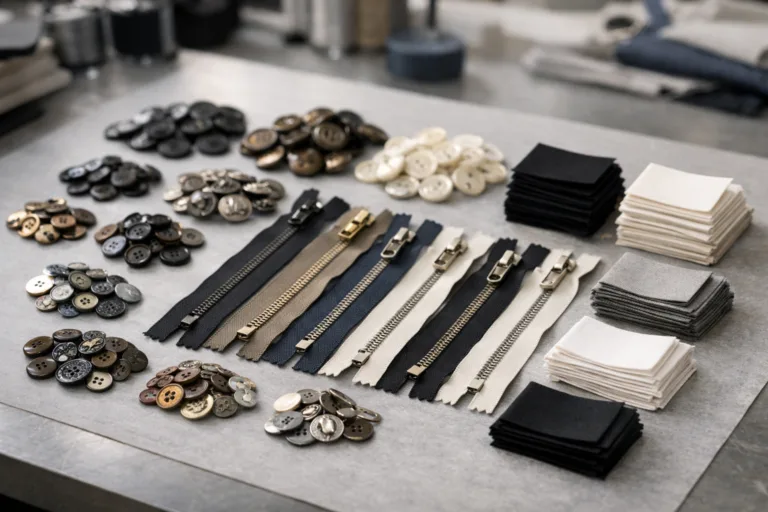
Introduction: Why Trims Matter in Your BOM
When building a Bill of Materials (BOM) for apparel manufacturing, trims like buttons, zippers, and labels are more than afterthoughts—they’re integral to both the product’s look and its functionality. Sourcing trims for your BOM: buttons, zippers, and labels means approaching these components with the same seriousness as your main fabrics, because they impact garment quality, performance, identity, and cost. The right trims can set your product apart, while sourcing mistakes can lead to delays, rework, and costly recalls. This guide provides a comprehensive, practical overview of trims sourcing strategies, quality considerations, sustainability trends, and supplier relationship tips to streamline your production process.
The Role of Trims in Apparel Production
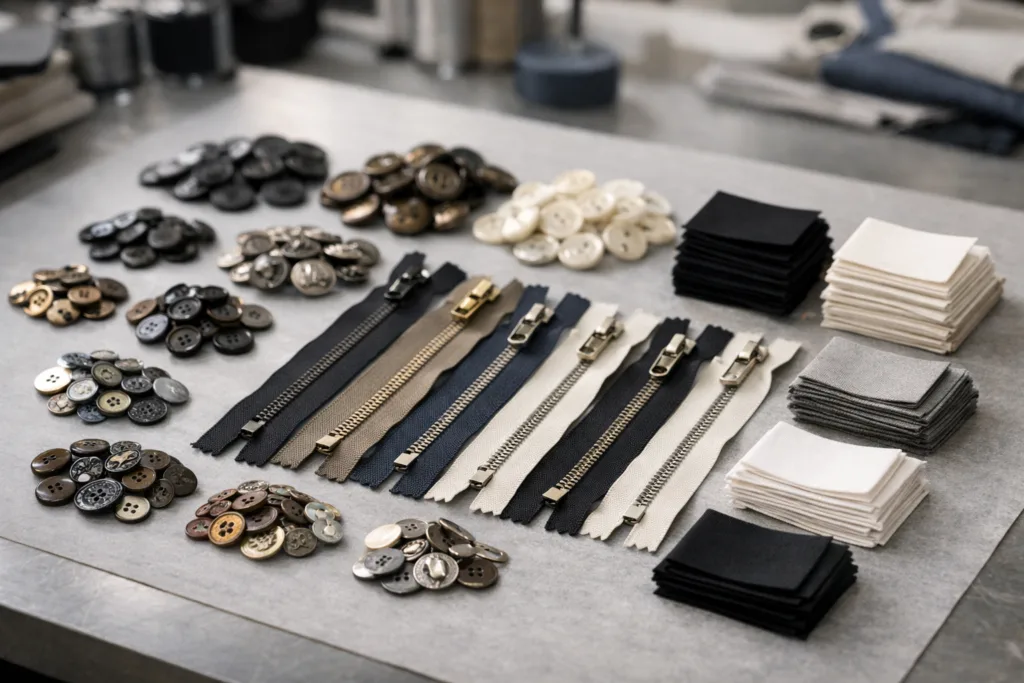
Trims are the finishing details that elevate a product, making it both functional and visually appealing. Whether it’s sleek zippers on outerwear, branded labels on denim, or statement buttons on shirts, trims are critical to the overall design intention, user experience, and market positioning of your garment.
Understanding Your BOM: Where Trims Fit In
A Bill of Materials (BOM) is a master list of components, and identifying each trim early in the design process is crucial. This ensures accurate costing, streamlined sourcing, and clear communication with factories. Apparel Wiki emphasizes that a precise BOM reduces confusion during production and helps avoid surprises related to trims procurement.
Types of Trims: Buttons, Zippers, and Labels
Let’s break down the core trim categories essential for most garments:
- Buttons: Available in materials like plastic, metal, wood, and shell. Styles range from functional shirt buttons to decorative jacket buttons.
- Zippers: Choose from coil, metal, invisible, separating, or specialty zippers. Each type serves unique design and function needs.
- Labels: Brand, size, care, and country-of-origin labels. Choices include woven, printed, heat seal, and leather types.
Sourcing Trims for Your BOM: Buttons, Zippers, and Labels
Sourcing trims for your BOM: buttons, zippers, and labels demands a blend of design vision, technical requirement, and supply chain practicality. Here’s how to approach sourcing for each major trim type:
Material Selection & Design Alignment
Select trims that align with your product’s aesthetic and end use. A tailored coat may require matte horn buttons and sturdy metal zippers. Children’s wear often opts for safety-certified, easy-to-operate options. For accessories, logo-embossed labels add brand recognition.
Supplier Types: Local vs. International
Evaluate sourcing from local suppliers for speed, lower shipping impact, and easier communication. International suppliers may offer lower costs, more variety, or unique techniques, but consider extra lead time and logistics complexity. Learn more about apparel manufacturing tools to assist in trim management.
Quality, Certification, and Compliance
Specify standards for colorfastness, strength, and regulatory compliance (e.g., REACH, OEKO-TEX). High-risk trims (like zippers in children’s products) may require third-party testing.
Sample Approvals and Fit Testing
Always request samples and include trims in sample reviews. For advice on effective sample feedback, see this smart guide to sample feedback.
Critical Sourcing Considerations for Buttons
Button Material Trends
Recent trends see a rise in eco-friendly options like corozo, recycled plastics, and upcycled metals. These offer aesthetic variety and sustainability benefits.
Ensuring Consistency in Dye Lots and Sizing
Consistency matters. Color and size variations between batches may lead to visible mismatches on the finished garment, underlining the importance of approved counter samples.
Choosing the Right Zippers: Function and Quality
What Makes a Good Zipper Supplier?
Beyond cost, prioritize suppliers with technical support, flexibility on order size, and proven quality. YKK and SAB are industry benchmarks but consider regional specialists for custom requirements.
Testing & Performance
Test zippers for smooth operation, locking action, and wash durability. Field issues with zipper failure often stem from skipped sample reviews or incorrect specifications.
Labels: Branding, Law, and Longevity
Types of Labels
Brand, size, care, and fiber content labels are all essential. Durable, legible labels are especially critical for compliance and customer satisfaction. Woven labels have lasting appeal, while printed labels offer lower bulk and cost.
Legal and Regulatory Labeling Requirements
Know the legal requirements for your market—incorrect or missing country-of-origin or care labels can lead to shipment holds or fines.
Trims Sourcing Strategies: How to Decide
Volume and Minimums
Trim suppliers often have minimum order quantities (MOQs). Communicate forecasts early to avoid costly overages or shortages.
Consolidated vs. Direct Sourcing
You can buy trims directly, or have your manufacturer handle procurement. Direct sourcing gives you more control, but increases logistics complexity.
Quality Control for Trims
Incoming Inspection
Check trims upon arrival for color matching, finish, and quantity. For technical guidance on fixture sample quality, visit size set sample quality assurance.
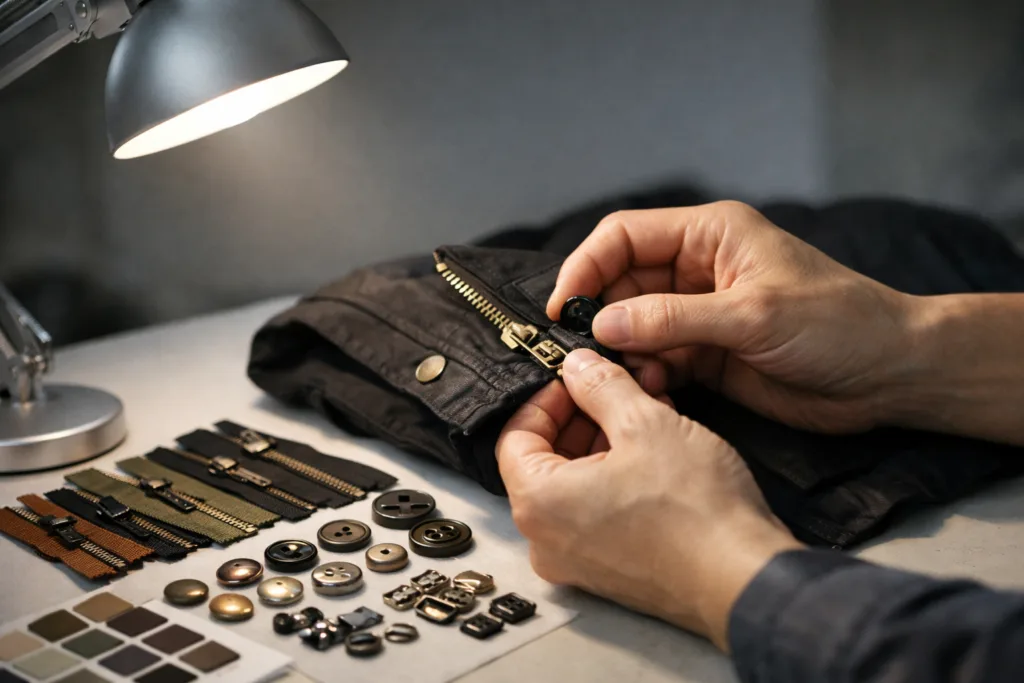
Pre-Production Approvals
Sign-off on trims before bulk production by using approved samples as the reference.
Lead Time Impact: Synchronizing Trims with Production
Early Ordering Is Key
Delays in trim delivery can halt production. Place orders promptly and follow up on order tracking. For insight on critical path management, see managing sample lead times.
Backup and Buffer Strategies
Always build in extra time for shipping or customs issues, especially with international suppliers. Having backup options, or approved alternate trims, minimizes downtime.
Sustainability Trends in Trim Selection
Eco-Materials and Transparent Sourcing
There’s rising demand for trims made from biodegradable, recycled, or traceable materials. Suppliers increasingly offer certifications and transparency around sourcing, which supports brand storytelling and compliance with eco-label requirements.
Recyclability and End-of-Life Considerations
Select trims that can be easily removed or recycled during a garment’s end-of-life, reducing environmental impact. This is increasingly important for brands pursuing circular design models.
Managing Costs: Budgeting for Trims
Factoring Trim Costs in BOM
Trim costs can swing your total margin. Track all trim expenses by style, quantity, and supplier. For techniques on yield and cost estimation, see fabric consumption calculation methods—it’s a parallel process.
Common Hidden Expenses
Watch for extra costs like special packaging, expedited shipping, or third-party testing, which may not be included in your initial quote.
Establishing Strong Supplier Relationships
Building Trust with Trim Suppliers
A mutually helpful partnership leads to better reliability and innovation. Share as much detail as possible, provide clear timelines, and communicate openly about forecast changes or issues. Apparel Wiki suggests regular feedback helps suppliers improve service, just as it does with factories.
Problems Solving and Innovation
Good suppliers can suggest alternative materials, offer R&D support, or flag supply chain issues before they impact production.
Documentation and Communication Tips
Clear Specifications Are Critical
Use detailed tech packs with trim specs, supplier details, photos, and finish requirements. For reference, review how to create a BOM for apparel for structure ideas.
Managing Changes
Communicate revisions in writing and keep a record of all approvals. Delays or mistakes often result from unsynchronized records.
Common Trim Sourcing Pitfalls (and How to Avoid Them)
- Omitting trims from early costing: Always include all trims in your first BOM draft.
- Underestimating lead time: Trims often take longer to procure than fabric, especially custom orders.
- Focusing only on price: The cheapest trims may not meet required quality or safety standards.
Future Trends in Trim Sourcing
- Smart Trims: Growth in labels with RFID or QR codes for inventory and authentication.
- Modular Design: Demand for easily replaceable trims to extend product life.
- Supplier Digital Integration: More brands use digital platforms for trim selection, ordering, and tracking.
Conclusion: Sourcing Smarter for Success
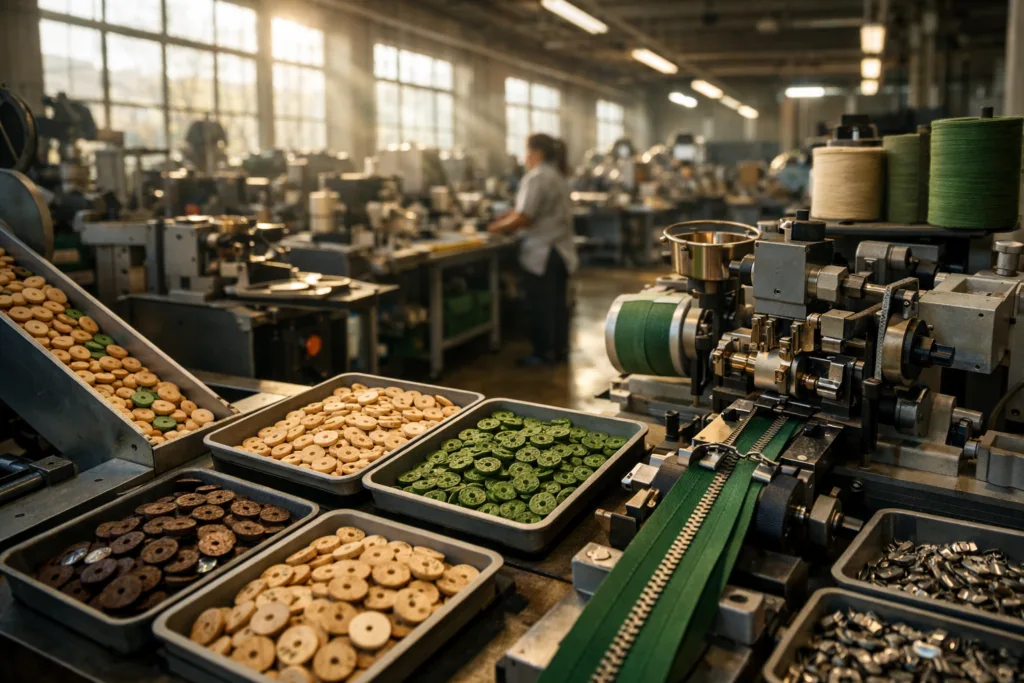
Trims like buttons, zippers, and labels are small components with an outsized impact on your apparel product. Thoughtful sourcing aligns design, function, timing, and budget, reducing risk in your Bill of Materials. Prioritize clear specs, realistic timelines, supplier communication, and sustainability to future-proof your process and delight end users.
Frequently Asked Questions
How do I choose the right button for my garment?
Consider the garment’s function, fabric type, and style. Match material and size to ensure durability and design fit, and test samples in context.
Is it better to source trims locally or internationally?
Local sourcing offers speed and easier communication, while international suppliers may provide more variety or cost savings. Balance both for your project’s needs.
What’s the most common trim quality issue in bulk production?
Color and finish inconsistency across shipments is a key issue. Pre-production approvals and clear specifications help minimize risks.
How can I make my trims more sustainable?
Choose recycled or eco-friendly materials, work with suppliers focused on transparency, and design for remove-and-recycle end-of-life scenarios.
What should go into my trim specifications?
Include dimensions, material, finish, color (with Pantone or color code), placement details, supplier name, and any required certifications.
How early should trims be ordered in the production process?
Order trims as soon as your BOM is finalized and samples approved, ideally before garment fabrics are cut, to avoid production delays.