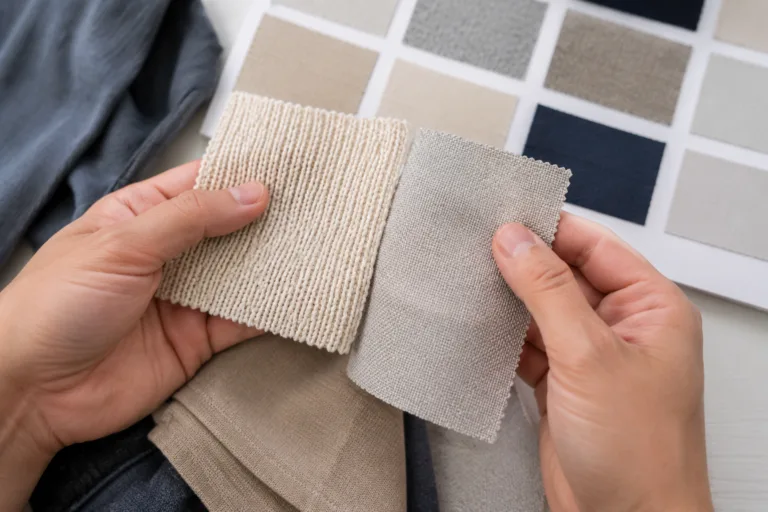
Introduction: Why Understanding Knit vs. Woven Matters
Choosing the right material can make or break your next project. Whether you’re designing activewear, tailoring a suit, or crafting upholstery, recognizing the crucial differences between knit and woven fabrics ensures your results are comfortable, durable, and reliable. This article explores the core distinctions of knit and woven structures, illustrates how to accurately identify them, and gives practical tips on when to use each type for the best outcome.
What Are Knit Fabrics?
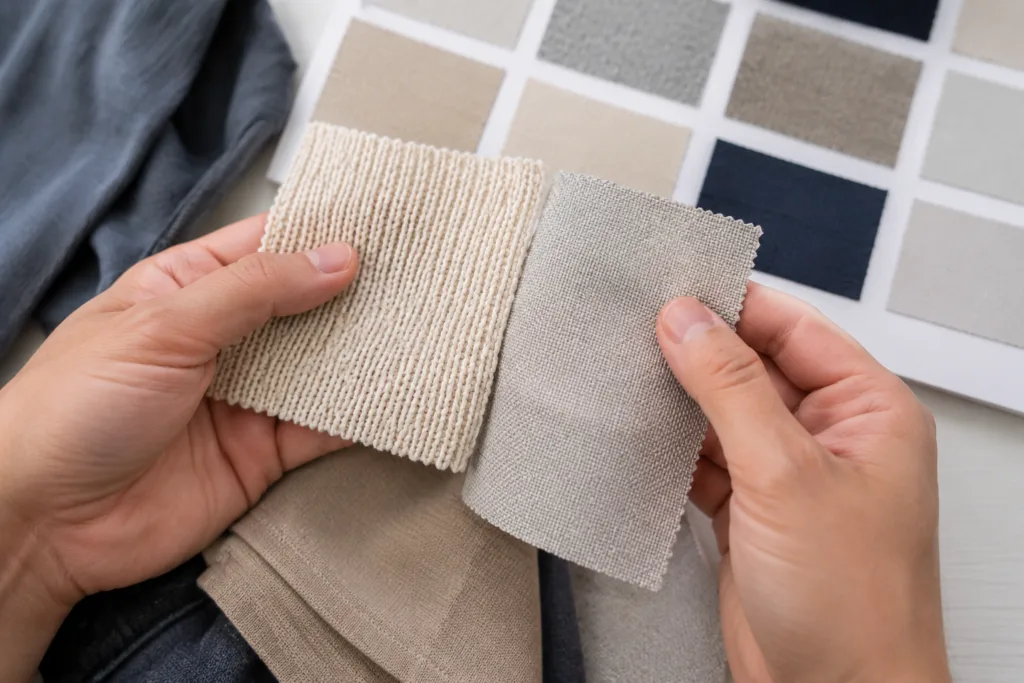
Knit fabrics are constructed by interlooping yarns, creating a series of interconnected loops that produce flexibility and stretch. They’re foundational in everything from casual tees to high-performance athleisure because of their ability to drape comfortably over the body. Knits can be made from natural fibers like cotton or synthetics such as polyester and spandex. For an essential breakdown of stretch fibers, see Spandex (Elastane): The Science of Stretch.
What Are Woven Fabrics?
Woven fabrics result from two sets of yarns (warp and weft) interlacing at right angles, forming a stable, grid-like structure. Woven textiles are celebrated for their crispness, durability, and resistance to stretching, making them ideal for shirting, suiting, denim, and home furnishings. Notable wovens range from lightweight cotton poplin to robust upholstery canvas. Insight on how natural and synthetic woven fabrics compare can be found in Apparel Wiki’s Definitive Guide: Natural vs. Synthetic Fibers.
Key Structural Differences: Knits vs. Wovens
The main difference lies in structure: knits rely on loops, while wovens depend on perpendicular interlacing. This determines everything from how they behave to how they’re cut and sewn.
| Aspect | Knit Fabrics | Woven Fabrics |
|---|---|---|
| Construction | Looped yarns | Interlaced yarns |
| Stretch | High (varies) | Low (some give on bias) |
| Edge Fraying | Low | Can fray easily |
| Drape | Soft, fluid | Crisp, structured |
| Best Uses | T-shirts, leggings | Shirting, denim, jackets |
How to Identify Knit Fabrics
Here are practical ways to spot a knit fabric during a quick inspection:
- Stretch Test: Try pulling the fabric along its width and length. Knits stretch easily, especially across the width.
- Visual Texture: Look for tiny, uniform V-shapes (jersey knits) or distinct ribbing (rib knits).
- Edges: Cut edges usually do not unravel immediately.
- Tactile Feel: Feels soft, smooth, and flexible in hand.
How to Identify Woven Fabrics
Distinguishing wovens is just as simple with the right approach:
- Stretch Test: Wovens are firm, stretching only slightly on the diagonal (bias).
- Visual Inspection: Notice a grid or tiny squares—hallmarks of warp and weft structure.
- Edge Behavior: Freshly cut edges fray or unravel easily without finishing.
- Tactile Hand: Feels crisp, sometimes stiff, and holds its shape better.
Advantages of Knit Fabrics
Why choose knits? Consider these benefits:
- Excellent stretch and recovery, perfect for close-fitting styles.
- Supreme comfort due to adaptability and softness.
- Wrinkle-resistance, often easy-care for everyday garments.
Advantages of Woven Fabrics
Wovens offer:
- Superior stability and shape retention—no sagging collars!
- Highly durable for heavy-duty use (jeans, upholstery, workwear).
- Professional, crisp appearance—ideal for structured applications.
Disadvantages of Knit Fabrics
Be aware of these limitations:
- Prone to pilling, especially with low-quality fibers.
- Can lose shape over time if not properly stabilized.
- Snags and pulls are more common in loosely-knitted surfaces.
Disadvantages of Woven Fabrics
Watch for these drawbacks:
- Less comfortable for body-hugging designs due to limited stretch.
- Wrinkles and creases more easily—may require ironing.
- Edges must be finished to prevent rapid fraying in use.
Common Knit Fabric Types and Typical Uses
Some of the most-used knit fabrics include:
- Jersey: T-shirts, dresses, loungewear
- Rib Knit: Collars, cuffs, beanies
- Interlock: Baby clothes, premium basics
- Ponte: Structured yet flexible trousers and dresses
- Fleece: Warm and soft layers
Common Woven Fabric Types and Typical Uses
Popular wovens and their applications:
- Poplin: Dress shirts, blouses
- Denim: Jeans, jackets, bags
- Twill: Workwear, chinos
- Crepe: Dresses, suits, blouses
- Canvas: Upholstery, totes, sneakers
Visual and Tactile Tests for Fabric Identification
If you feel unsure, try these two tests:
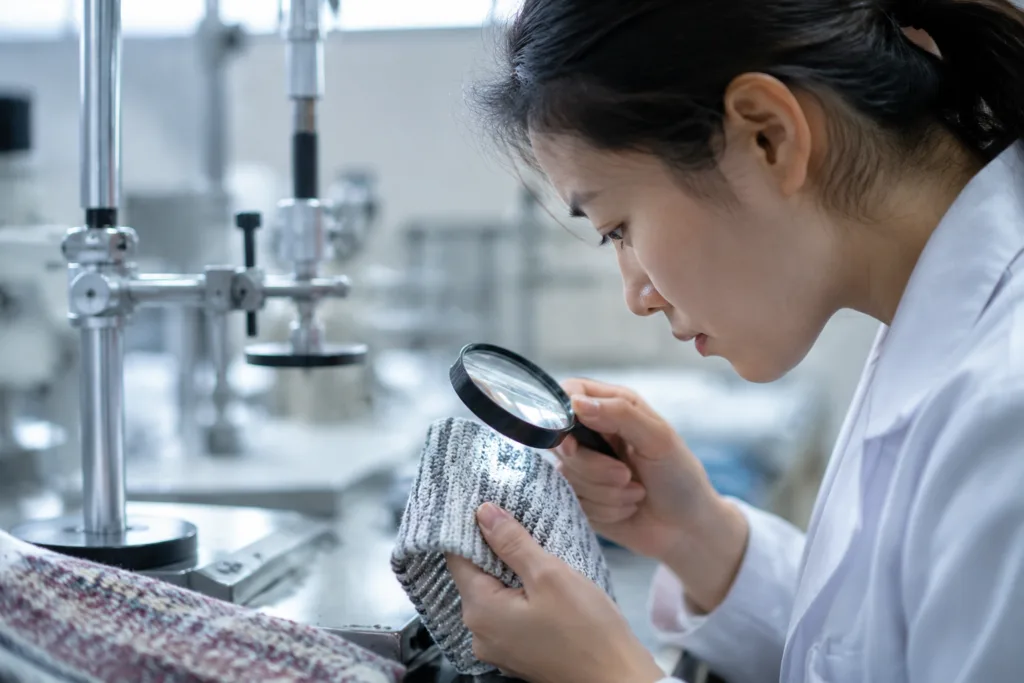
- Magnifier Method: Use a magnifying glass to look for loops (knits) or interlaced perpendicular threads (wovens).
- Edge Fray Check: Try gently rubbing the cut edge—if threads pull loose quickly, you likely have a woven.
When to Choose Knit Fabrics
Opt for knits when projects call for flexibility, comfort, or athletic function. Examples include yoga leggings, turtlenecks, or garments meant to hug the body. The stretch and form-fitting nature brings unmatched wearability, especially for cotton-blend basics and modern fashion.
When to Choose Woven Fabrics
Wovens are best when structure, shape, or resilience is needed. Think structured jackets, tailored trousers, table linens, or any scenario where stretch would undermine form. Their durability makes them ideal for technical applications and surfaces that see wear.
Knit vs. Woven: How to Identify and When to Use.
This is the critical question for every apparel developer. The decision boils down to desired fit, durability, and end-use environment. For a quick visual: stretch-focused, relaxed drape = knit; crisp edges, defined shapes = woven. Apparel Wiki recommends that for new designers, experimenting with fabric samples and mocking up both types helps clarify which construction meets your exact needs.
Knit and Woven Blends: Hybrid Fabrics
In some products, manufacturers blend knit and woven properties to balance comfort and structure. Key examples: woven shirts with knit side panels for mobility, or hybrid joggers mixing stretchy knits with woven reinforcements. These allow designers to fine-tune comfort and performance. For extended innovation on specialty fibers, see Future Fibers: Pineapple, Mushroom, and Spider Silk.
Durability, Maintenance, and Longevity—A Side-by-Side Review
| Feature | Knit | Woven |
|---|---|---|
| Durability | Moderate (varies by fiber) | High (especially with tight weaves) |
| Laundering | Easy care, less ironing | Often requires pressing or gentle washing |
| Wear Resistance | Can pill or snag | More resistant to abrasion |
| Lifespan | Loses shape faster without care | Retains shape longer |
Breathability and Moisture Management
Knits win for comfort during exercise, as their porosity and loop structure wick moisture well and allow airflow. However, some open-weave wovens (like linen) offer impressive breathability for summer apparel. To deepen your knowledge, check Apparel Wiki’s guide to Bast Fibers: Linen, Hemp, and Ramie Explained.
Cost Considerations—Knits vs. Wovens
Knit fabrics often cost slightly more to produce due to slower, specialized machinery and higher yarn consumption, while basic wovens can be produced rapidly in bulk. However, specialty woven constructions (e.g., jacquards or high thread-count poplins) quickly increase in price, sometimes outpacing knits. Remember, the overall cost depends more on fiber content, finish, and order volume.
Color, Dye, and Surface Effects
Knit fabrics tend to receive and hold vivid colors nicely because their looser structure absorbs dyes well. Woven fabrics, in contrast, allow for detailed prints and patterns thanks to their stable foundation. To see how digital and screen printing affect surface finishes and the environment, visit the guide on Digital Printing vs. Screen Printing.
Special Performance Applications: From Activewear to Interiors
Activewear typically uses high-stretch, wicking knits for move-with-you function. In contrast, interior textiles, uniform programs, and technical gear often turn to robust wovens for abrasion resistance. Some performance garments use engineered blends. In the context of sustainability trends, knowledge of fabric performance is essential; learn more with insights on Man-Made Cellulosic Fibers.
Sustainability and End-of-Life: Which Is Greener?
Sustainability isn’t inherent to knit or woven construction but depends on fiber type, dye process, and recyclability. Knits using mono-material blends (one fiber type) are easier to recycle, supporting circularity. For practical eco-design strategies, Apparel Wiki points to Mono-Material Design in sustainable production planning.
Tips for Designers and Home Sewists: Choosing with Confidence
Here are practical pointers for every designer, DIYer, or buyer:
- Test drape and stretch to match your pattern needs.
- Consider the garment’s stress points—do you need give or structure?
- Always finish woven edges to prevent fraying.
- Sample fabrics before committing to bulk yardage.
- Ask suppliers for data on fiber content, durability, and sustainability.
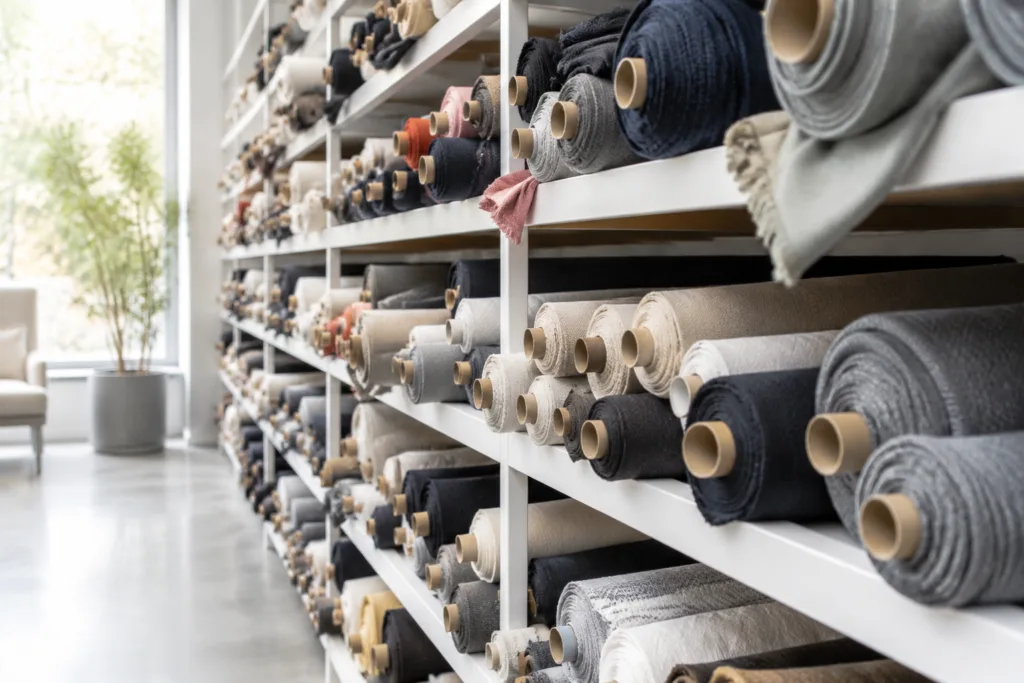
Summary Table: Quick Reference for Fabric Selection
| Project/Use Case | Knit | Woven |
|---|---|---|
| Sportswear/Activewear | Yes | Occasional (shells, windbreakers) |
| Tailored Jackets | Rare | Ideal |
| T-shirts | Ideal | Rare |
| Upholstery | Sometimes (casual use) | Preferred |
| Children’s Clothing | Often Used | Also Common |
| Home Linens | Rare | Preferred |
Frequently Asked Questions
Which fabric type stretches more—knit or woven?
Knit fabrics stretch much more due to their looped structure. Wovens are generally non-stretch unless blended with elastane or cut on bias.
Can I use knit fabric for upholstery projects?
While possible, knit fabrics are usually less durable for upholstery unless reinforced or blended. Wovens are recommended for long-lasting and structured results.
How can I prevent woven fabric edges from fraying?
Finish edges with overlocking, zigzag stitches, or bias binding immediately after cutting to keep woven fabrics from unraveling.
Are knit fabrics more sustainable than wovens?
Sustainability hinges on fiber, dye, and end-of-life processing—not construction type. Both can be sustainable with responsible sourcing and recycling practices.
Why do some knits pill quickly?
Pilling often results from low-quality fibers or surface abrasion during wear and wash. Choosing higher-grade materials can reduce pilling in knits.
What is the easiest way to identify fabric type at home?
Try stretching a fabric swatch—if it stretches significantly, it’s likely a knit; if not and the edge frays, it’s a woven.
Related Reading
- Cotton Selection: Pima, Egyptian, and Upland Demystified
- Stretch Science: Demystifying Elastane for Smarter Fabric Choices
- Mono-Material Design: Transforming Textile Recycling
- Bio-Based Fibers: Pineapple, Spider Silk, and More
- Digital vs. Screen Printing: 7 Key Environmental Insights
- Bast Fibers Uncovered: Linen, Hemp, Ramie Explored