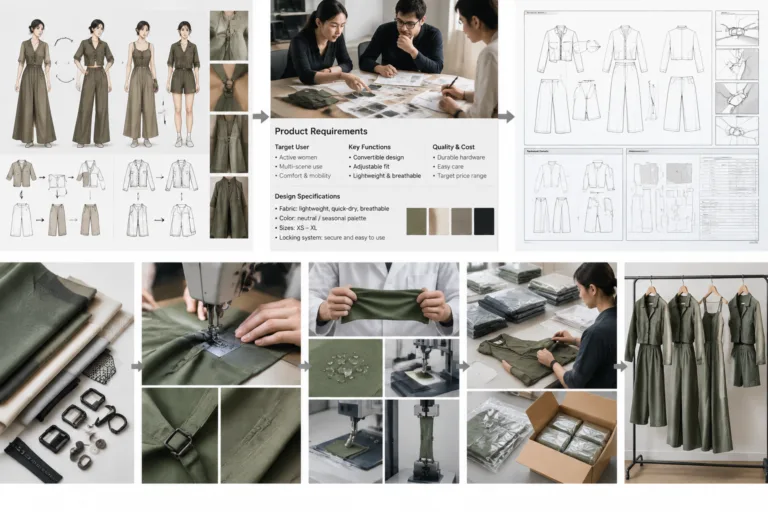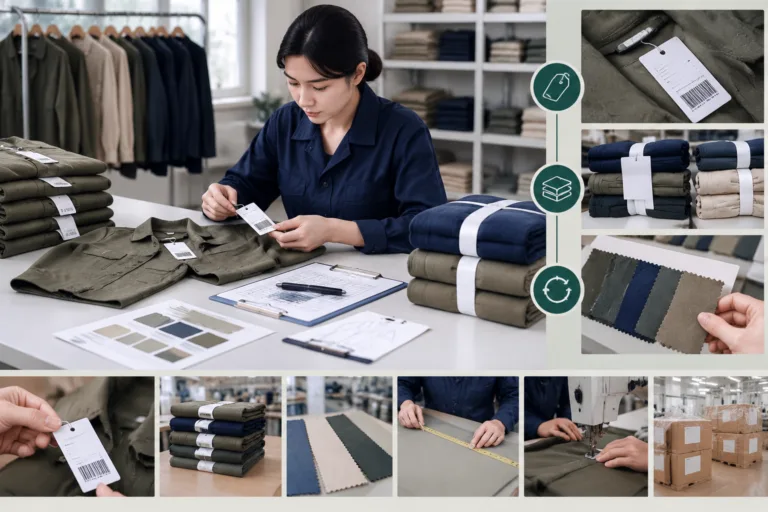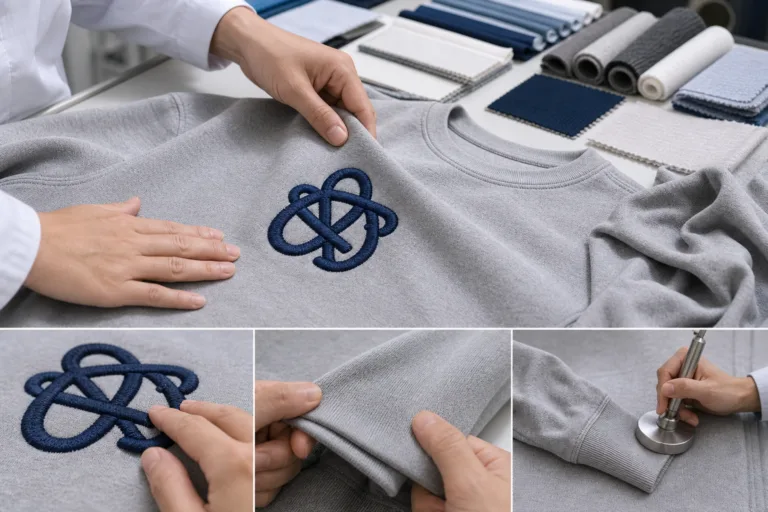

For a clothing startup, labels and packaging often look like small details compared with fabric, fit, and price. In practice, they can delay sampling, create compliance problems, confuse customers, and add hidden cost if they are not planned early. Clothing labels are not just branding pieces. They carry product information, legal information, and operational information that affects production, warehousing, ecommerce fulfillment, and final customer experience. The same goes for hang tags, garment packaging, and private label packaging decisions. If the startup only asks for “custom labels and nice packaging” without clear specifications, the factory has to guess, and guessing is where rework starts.
If you are still deciding how your brand setup, product type, and factory model fit together, the private label sourcing and factory selection guide is a useful supporting resource. It helps readers connect label and packaging planning with bigger production decisions such as factory capability, MOQ expectations, trim sourcing responsibility, quality control ownership, and how much development support a supplier can realistically provide before bulk production starts.
What clothing startups need to know about labels, tags, and packaging
Startups usually deal with four separate but related components: the main brand label, the care and content label, the size label, and the packaging set. Depending on the product and market, the hang tag may also become a standard component. These parts do different jobs, and mixing them together in the brief often creates problems.
The main label tells the customer whose product it is. The care label communicates fiber content, care instructions, country of origin, and other required information depending on the market. The size label helps identification during selling and after purchase. The packaging protects the garment, supports retail or ecommerce handling, and may carry SKU, barcode, carton, or shipping information. A hang tag sits somewhere between branding and product communication. It is often useful, but it is not always mandatory.
In many startup projects, the issue is not that the label plan is too simple. The issue is that it is incomplete. A founder may send a logo and ask for woven labels, but not confirm fold type, finished size, background color, edge finish, placement, sewing method, or whether the care label will be printed or woven separately. That missing information slows down development.
Another point that matters early is the sourcing model. If you are comparing OEM, ODM, private label, or white label routes, it helps to understand the differences between private label and other sourcing models because label ownership, packaging flexibility, trim customization, and artwork approval responsibility can change a lot between those models.
Main label, care label, and size label requirements

Main label
The main label is usually the brand identity label placed at the back neck, waistband, side seam, or another visible brand position. It can be woven, printed, heat transfer, satin, cotton, TPU, or another material depending on the product type and price point. For basics, underwear, activewear, or garments where neck comfort matters, a printed neck label or heat transfer label may be preferred over a woven label.
From a product development perspective, the main label specification should confirm:
- material type
- color and logo artwork version
- finished width and height
- fold style such as center fold, end fold, Manhattan fold, or straight cut
- seam placement
- whether the label is exposed or hidden
- attachment method
A startup mistake is treating the main label only as a logo exercise. It is also a construction detail. A thick folded label in a lightweight T-shirt neck seam may feel bulky. A scratchy woven label inside sportswear may create comfort complaints. What looks premium on the sample board may feel wrong on the body.
Care label
The care label is the more technical label and, in many cases, the more important one from a compliance standpoint. It often includes fiber content, care instructions, country of origin, size or SKU reference, and sometimes the importer or RN-style identification depending on market requirements and business structure. Startups should not assume one global label format works everywhere.
The exact legal requirements depend on where the garment will be sold, but the practical rule is simple: confirm the destination market before locking care label artwork. The label should also match the real fabric composition and actual approved care method. If the fabric has not passed washing evaluation, writing care instructions too early can create a mismatch later.
For startups, care labels should be checked against:
- actual tested or supplier-confirmed fiber composition
- trim and print sensitivity to washing and heat
- whether the garment is washed after sewing
- country of origin for the final substantial manufacturing step
- required language or formatting for the target market
This detail may look small, but it can create problems later if it is not confirmed early. If the body fabric changes from 100% cotton to a cotton-poly blend after costing review, the care label must be updated too. If not, the bulk goods may be incorrect before they even leave the factory.
Size label
The size label is operationally simple but still important. It can be a separate woven or printed tab, part of the care label, or integrated into the main neck print. For startup lines with a narrow size range, combining some information can save trim complexity. But if the product assortment is broad or multi-market, separate size identification can make warehouse handling easier.
The key is consistency between the physical size label, the purchase order, carton assortment, barcode setup, and product listings. If the label says M but the ecommerce listing and outer carton sticker say Medium or a different region conversion, errors can multiply fast.
How to design clothing labels without confusing the customer or the factory
When startups prepare clothing labels, the best approach is to separate creative design from production spec. The logo file alone is not enough. The supplier needs a production-ready label sheet or trim page.
A practical label spec should include:
- artwork in editable vector format
- Pantone or approved color reference
- dimensions with tolerances
- material and construction type
- fold direction
- attachment location by garment style
- sewing method or heat transfer method
- whether the label is shared across styles or style-specific
- approval status for sampling and bulk
In apparel development, one useful habit is assigning each label a code, such as LB-001 for main woven label, LB-002 for care label, and PK-001 for poly bag. This helps avoid confusion across emails, tech packs, trim cards, and purchase orders.
You should also think about label hierarchy. Not every piece of information belongs on the visible brand label. Customers should not have to search for basic product identity, but they also should not see a cluttered neck area because branding, composition, size, and messaging were all forced into one component.
For readers who need broader apparel terminology, trim logic, and construction context beyond this article, Apparel Wiki can help connect these details to bigger product development decisions.
When hang tags add value and what they should include
Hang tags are useful when they support selling, identification, or brand communication. They are especially common for retail presentation, gifting, premium positioning, and products that need a quick explanation such as fabric blend, finish, sustainability claim, or performance feature. But they are not automatically necessary for every startup product.
For low-cost basics sold mainly through ecommerce mailers, the startup may decide to keep hang tags simple or skip complex multi-card tag sets. For retail-ready garments, hang tags can help shelf presentation and SKU control.
A practical hang tag may include:
- brand name and logo
- product name or style code
- size
- barcode or SKU if required by the sales channel
- price if needed for retail
- short fiber or feature note when useful
- country-specific information if the channel requires it
What matters is not decoration alone. Tag stock thickness, hole position, string type, pin method, and barcode readability all affect usability. A thick luxury-style tag may look good, but it increases cost and may not suit a low-MOQ startup collection. A metal eyelet or special cord can also change lead time.
For ecommerce brands, packaging and identification need to support protection and scanning, not just shelf appearance. GS1 US provides useful context on Ecommerce apparel packaging and hang tags, especially around item identification, barcode handling, and fulfillment-friendly presentation.
Garment packaging options for startup brands
Garment packaging can be very basic or highly developed. The right level depends on your sales channel, unit price, product type, and handling needs. In many cases, startups spend too much on presentation before they have stable reorder volume. In other cases, they under-specify packaging and get garments that arrive wrinkled, mixed, or poorly protected.
Common garment packaging components include:
- individual poly bags
- self-adhesive or resealable bags
- size stickers
- barcode stickers
- tissue paper
- belly bands
- paper inserts
- thank-you cards or brand cards
- inner packs
- master cartons
Each component should have a job. If it has no clear job, it may be optional.
Poly bags
Poly bags are often the basic protective layer for apparel. They protect against dust, moisture exposure during transport, and handling damage. The startup should define bag size, thickness if needed, vent hole requirement, warning text if applicable, adhesive style, barcode label placement, and whether garments should be folded with or without inserts.
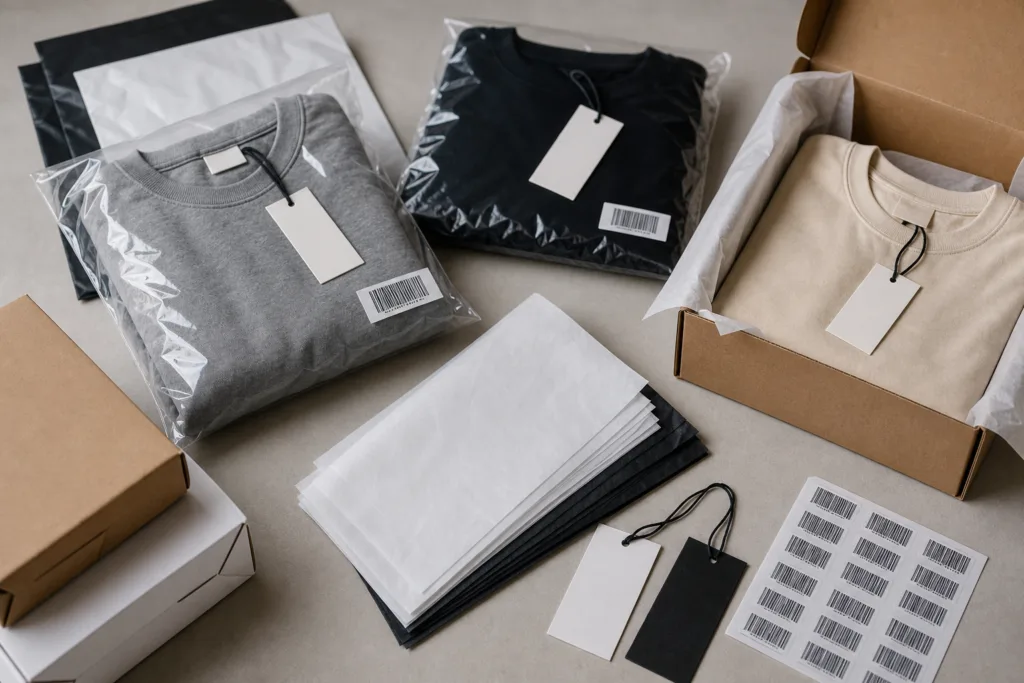
Not all products need the same bag spec. A padded jacket, fine knit top, and heavyweight hoodie do not pack the same way. If the bag is too tight, the garment can crease badly or stress trims. If too loose, the unit presentation looks messy and carton efficiency drops.
Tissue paper and inserts
Tissue paper and inserts are mainly presentation and folding-control components. They help with shape retention, gifting feel, and unboxing consistency. They are more relevant when the product is premium, delicate, or sold in a direct-to-consumer format where customer experience matters. They are less critical for entry-level basics where cost control matters more than layered presentation.
Master cartons
Outer carton specification is part of garment packaging even if startups focus mostly on the item-level pack. Carton dimensions, material strength, assortment ratio, carton marking, and shipping marks matter because they affect freight efficiency, warehouse receiving, and damage risk. If the outer carton is poorly planned, the item-level packaging quality will not solve the logistics problem.
Founders often underestimate how much packaging affects the total budget. If you need a wider planning view, this startup budget breakdown including packaging and logistics is useful because labels, trim development, barcode setup, packing labor, and freight all connect to the final landed cost.
Private label packaging: what is required and what is optional
Private label packaging means the packaging carries your brand identity rather than a generic factory presentation. That sounds straightforward, but in real production there are levels.
| Component | Usually Required | Usually Optional | Notes |
|---|---|---|---|
| Main brand label | Yes | No | Core identity element for most private label garments |
| Care/content label | Yes | No | Often required for legal and customer information reasons |
| Size label | Often | Sometimes | Can be integrated depending on product and market |
| Basic poly bag | Often | Sometimes | Depends on shipping channel and handling method |
| Hang tag | No | Yes | Useful for retail, gifting, and branding |
| Printed tissue | No | Yes | Mainly experience and presentation |
| Custom insert card | No | Yes | Useful when the product needs explanation |
| Custom mailer or gift box | No | Yes | Higher cost, usually better for DTC premium positioning |
The key for startups is to separate what the market or operation needs from what the brand image wants. If your budget is limited, start with compliant labels, clean packing, correct barcode handling, and consistent folding. A highly customized unboxing setup can come later once the reorder rate and margin support it.
How labels and packaging affect cost, MOQ, lead time, and complexity
Labels and packaging are trim items, but they influence the whole order. A custom woven label may have its own MOQ. A special hang tag with foil, embossing, and custom string may come from a different supplier than the garment factory. A printed zip bag may need separate artwork approval and extra sampling. These details add time and coordination load even when the unit cost looks small.
Main cost drivers include:
- number of separate trim components
- material quality and print method
- color count and finishing details
- custom mold or plate requirements
- trim MOQ versus garment MOQ
- manual packing labor
- barcode and sticker application work
- carton efficiency and shipping volume
For many startups, the real problem is not the visible trim cost. It is the hidden complexity cost. If one garment requires five labels, two tags, one insert, one folded tissue wrap, one branded sticker, and a custom box, the supplier has more handling steps and more ways to make mistakes.
This is why founders should connect packaging decisions to commercial math, not only aesthetics. The article on profit drivers and cost structure for private label brands is useful for that discussion because packaging choices can directly affect margin, MOQ feasibility, and reorder flexibility.
Compliance reminders for startup labels and packaging
Compliance is one of the easiest areas to overlook when a startup is focused on launch speed. The basic point is simple: if you sell apparel, the product information on the garment and in the packaging should be accurate, legible, and appropriate for the market.
Common checkpoints include:
- fiber content accuracy
- care instruction consistency with the actual product
- country of origin declaration
- size consistency across labels and selling channels
- suffocation warnings on poly bags where applicable
- barcode and item identification requirements for the retail or ecommerce channel
- any market-specific language, symbol, or importer information requirements
Startups should also avoid making unsupported product claims on hang tags or packaging. If you print statements about performance, antibacterial effect, sustainability, or special protection, be sure the claim is supported by the real material or test basis. Decorative marketing language can become a risk if it is presented as fact.
From a garment development perspective, the safest workflow is to finalize legal and technical label text only after fabric composition, wash testing approach, country of origin, and sales market are confirmed.
How to coordinate label artwork, packaging specs, and the tech pack
A good tech pack should not treat labels and packaging as an afterthought. They should have their own section or appendices with artwork, placement, and packing instructions. This makes approvals clearer and gives the supplier less room to improvise.
A practical startup trim and packaging pack usually includes:
- label artwork files
- dimensioned trim spec sheet
- placement diagrams by style
- care label text by fabric composition
- hang tag artwork and attachment method
- folding method photos or diagrams
- poly bag size and sticker position
- carton assortment ratio
- shipping marks and barcode instructions
- approval checkpoints for sample and bulk
In many projects, the problem is not that the buyer chose the wrong category. The problem is that some production details were not clarified before sampling or bulk production. That is why factory communication matters so much. When you build your supplier checklist, include questions to ask about labeling, sampling, and quality control so that trim sourcing responsibility, artwork approval timing, and packing inspection standards are clear from the start.
Mistakes startups make with labels and packaging
One common mistake is designing labels before the product architecture is stable. If the neckline, seam construction, or fabric handle changes later, the chosen label type may no longer work well.
Another mistake is underestimating lead time. Custom labels, printed packaging, and hang tags often have their own development schedule. If the garment sample is approved but the packaging artwork is still pending, the shipment can still be delayed.
A third mistake is trying to make the first order look too premium relative to the business stage. For many early brands, clean and accurate beats elaborate. Good basics include readable labels, correct information, suitable folding, protective bags, and consistent SKU handling.
There is also a frequent ownership problem. Founders assume the factory will automatically check spelling, compliance wording, and barcode logic. Some factories do catch issues, but you should not rely on that. The buyer or brand side should approve every visible and informational detail.
A simple startup checklist before production
Before bulk production starts, confirm the following:
- main label material, fold type, size, and placement are approved
- care label text matches the final composition and care method
- size label logic is consistent across garment, SKU, and selling channel
- hang tag is either approved or intentionally removed from scope
- poly bag size and closure type fit the garment correctly
- warning text, barcode stickers, and carton marks are confirmed if required
- folding method is documented
- all artwork versions are final and supplier-approved
- trim MOQ and replenishment logic are understood
- sample and bulk inspection checkpoints include labels and packaging
This checklist is basic, but it prevents many startup errors. A label problem discovered after sewing is annoying. A label problem discovered after packing or shipment is much more expensive.
Conclusion
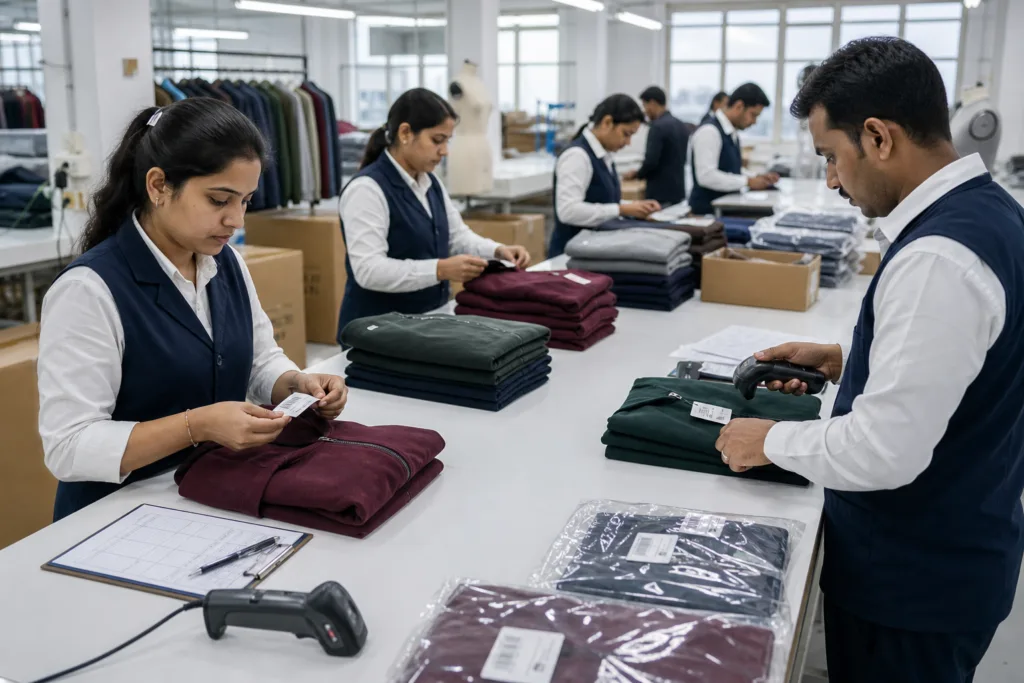
For startups, clothing labels, hang tags, garment packaging, and private label packaging should be planned as functional production components, not just branding accessories. The right approach is to confirm what information is required, what presentation adds real value, what the market expects, and what the supplier can execute consistently at your order size. If you keep the brief clear, separate mandatory items from optional upgrades, and document everything in the tech pack, you reduce rework and launch with fewer avoidable problems.
FAQs
Do all clothing startups need custom clothing labels from the first order?
No. Most startups need accurate brand and information labeling, but the level of customization can vary. A simple printed neck label plus a compliant care label may be enough for an early order if budget is tight. The important point is that the labeling system fits the garment, the market, and the supplier process without leaving required information unclear.
Are hang tags legally required for apparel?
Usually not in the same way care and content labeling can be required, but hang tags may still be operationally important for retail selling, pricing, barcode control, and brand presentation. If the product is sold in stores or through channels that need item-level identification, the hang tag can become a practical requirement even when it is not the main legal label.
What information should go on a care label?
A care label commonly includes fiber content, care instructions, country of origin, and sometimes size or brand identification depending on the garment setup and market. The exact format depends on where the product will be sold, so startups should confirm the destination market and final fabric composition before approving the artwork.
Is private label packaging necessary for a new clothing brand?
Not always at a fully customized level. Basic protective packaging is often necessary, but premium private label packaging such as printed tissue, custom boxes, or branded inserts is optional. Early-stage brands usually get better results by first making sure the garment is packed cleanly, labeled correctly, and easy to handle in fulfillment.
How do labels and packaging affect MOQ and lead time?
Each custom trim item can introduce its own MOQ, artwork process, and production schedule. Even low-cost items like woven labels or printed bags can delay bulk production if they are approved late or ordered in small quantities below the supplier’s standard. The more separate components you add, the more coordination the order needs.
What should be included in a startup tech pack for labels and packaging?
The tech pack should include artwork files, dimensions, material specifications, fold or attachment methods, placement instructions, care label text, packaging method, barcode or sticker positions, and carton instructions when relevant. If those details are missing, the supplier may improvise, and that often leads to inconsistency between the approved sample and the bulk order.