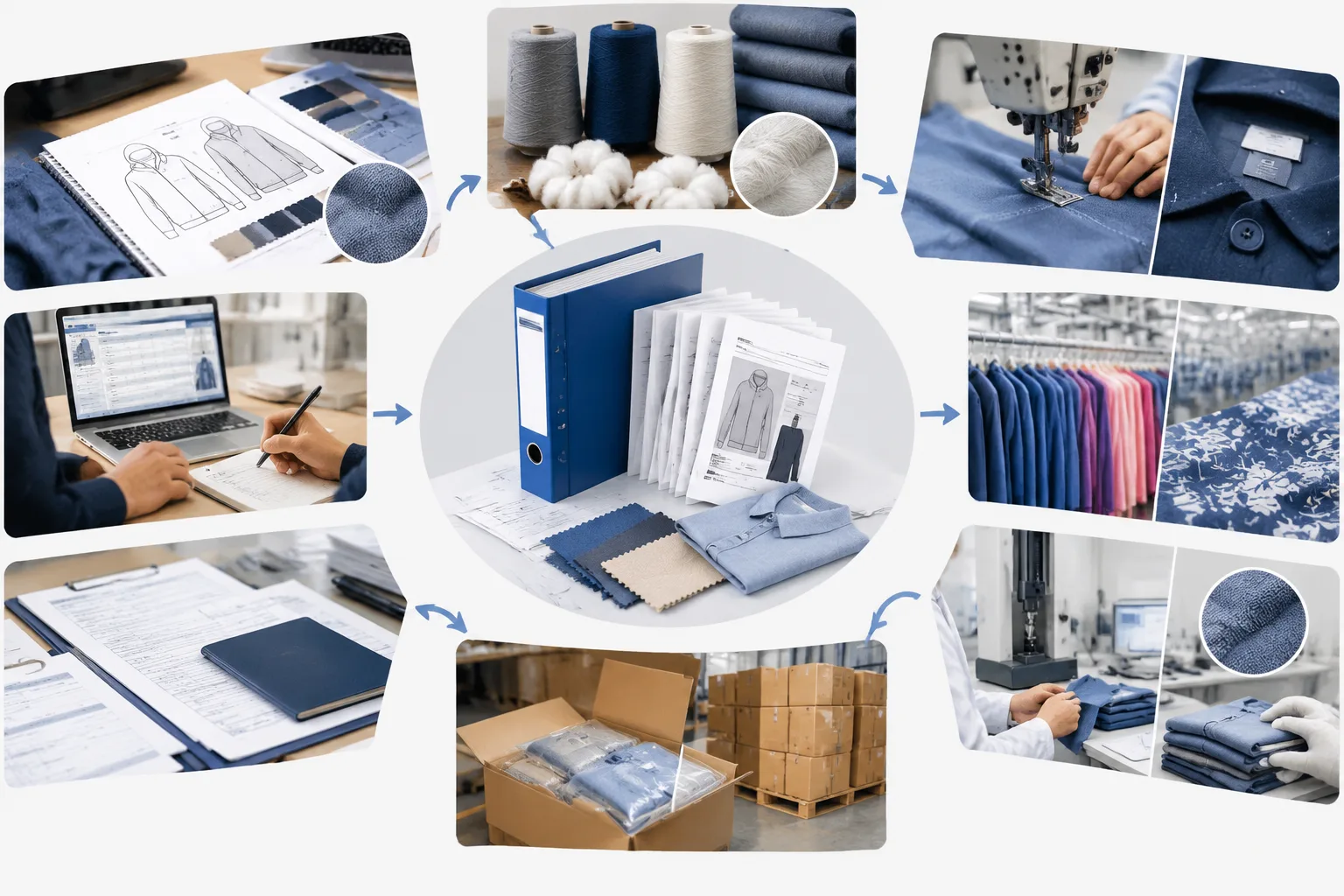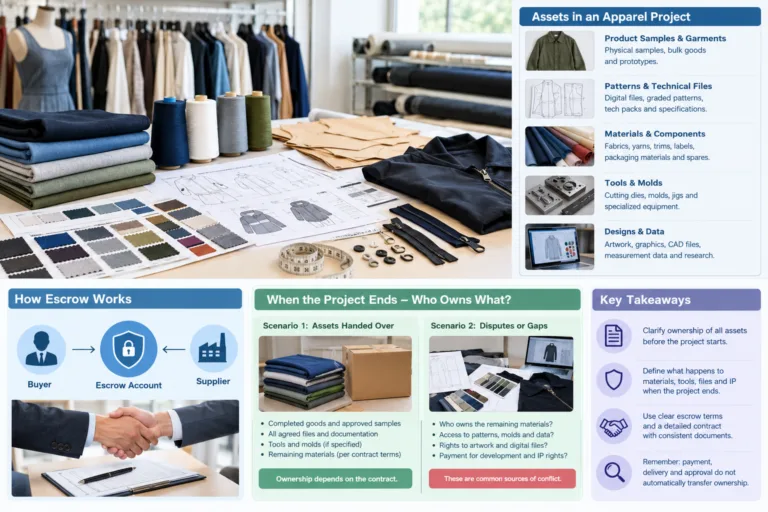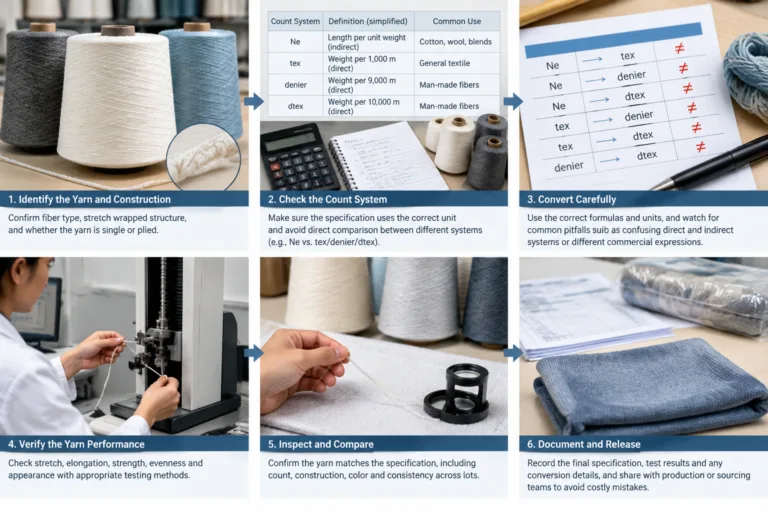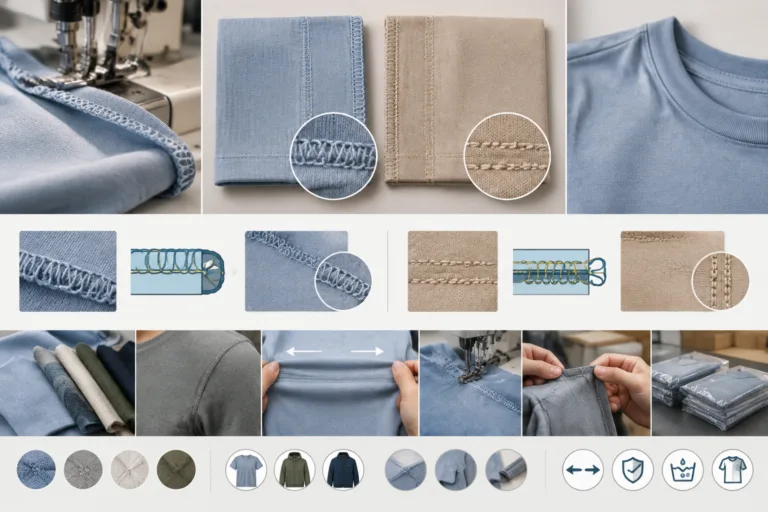

Customs classification documentation is the organized record showing how an imported apparel product’s physical characteristics support the tariff classification declared to customs. For a useful file, keep the product identity, composition, construction, shipment records, source evidence, and classification reasoning together. These records should make it possible to connect the actual imported goods to the description and tariff treatment used for the entry.
Apparel Wiki is an independent garment-industry knowledge publication, not a manufacturer, customs broker, testing laboratory, certification body, or legal adviser. Its editorial work is separate from sponsorship; see the Sponsor page for that distinction. Required records and retention rules vary by jurisdiction, product, transaction, and customs authority, so confirm jurisdiction-specific obligations with the relevant customs authority.
What Customs Classification Documentation Should Prove
A classification file should answer a straightforward question: why does this imported product fit the selected tariff classification? The answer should be based on the applicable customs tariff and the product facts, rather than on a vague commercial description or an assumption about how a similar garment was treated previously.
Begin with an identity record that fixes the scope of the file. It should identify the product name, style or SKU, revision, country of export, country of import, importer, supplier, and relevant purchase-order or shipment reference. The more clearly these identifiers match the goods being shipped, the easier it is to determine whether the supporting documents describe the same product.
A complete file normally separates five types of information:
- Documented product facts: composition, construction, garment type, components, labels, packaging, and other characteristics of the imported version.
- Source documents: specifications, supplier declarations, test reports, invoices, packing lists, photographs, samples, and shipment records.
- Classification analysis: the proposed tariff classification, tariff version or effective date, jurisdiction, facts relied upon, and provisions considered.
- Assumptions: information treated as accurate or complete when the available evidence does not fully resolve the point.
- Unresolved questions: missing, conflicting, or uncertain facts that require clarification or escalation.
This structure matters because classification support is not necessarily the same as every other import record. Commercial, tax, origin, valuation, logistics, and entry records may have separate purposes and requirements. A commercial invoice can identify the transaction, for example, but an invoice description may be too general to explain the garment characteristics relevant to classification.
Official customs guidance can help confirm how a jurisdiction approaches tariff classification and whether an advance or official ruling is available. Singapore Customs, for example, provides guidance on Harmonised System classification and classification rulings. In the United States, customs recordkeeping rules are set out in the applicable federal regulations. These sources illustrate why the file should be prepared for the relevant jurisdiction rather than treated as a universal document package.
Product Records That Describe the Garment
The technical product file establishes the physical facts that a classification review may need. Keep the final product description, style sheet, technical specification, and bill of materials together, using the same style and revision reference wherever possible. Development documents can be useful background, but the file should clearly identify which version represents the goods imported under the relevant shipment.
Composition records should describe materials by component when those details matter. Depending on the garment, that may include the shell fabric, lining, interlining, filling, trims, coatings, attached accessories, and other notable parts. A supplier composition declaration may be an important source, but it should be matched to the correct SKU or revision and checked against the product specification or other available evidence.
Record whether the garment is knitted or woven, along with the garment type and relevant construction details. Include wearer or gender category only where the applicable tariff structure uses that distinction. Intended use may also be relevant in some classification questions, but it should not be treated as decisive in every case. Customs classification depends on the applicable tariff language and facts, not on the presence of one preferred field in a technical pack.
Useful supporting records may include:
- Technical drawings, construction notes, and pattern or assembly information.
- Product photographs showing the finished garment, significant components, labels, and packaging.
- Fiber-content or material records tied to the finished product and its revision.
- Manufacturing specifications and approved sample references.
- Packaging descriptions, carton markings, and representative samples when practical.
Version control is particularly important in apparel. A development sample may differ from the production garment in fiber content, construction, styling, trim, lining, filling, or packaging. A later revision may also change a characteristic that was relevant to the earlier analysis. Keep superseded records identifiable and show which version was shipped, rather than silently replacing an old specification with a new one.
Source and Transaction Records to Link the Product to the Shipment
Source and transaction records connect the technical description to the actual imported goods. Retain purchase orders, commercial invoices, packing lists, shipment references, and entry-related records that identify the style, quantity, description, and parties involved. These documents help establish what was ordered and shipped, but they do not automatically establish the correct tariff classification.
Supplier composition declarations, material declarations, test reports, manufacturing specifications, and approved sample records should be filed against the corresponding SKU, style, and revision. If a supplier supplies several versions of a product, a general statement covering the product family may not show which version was included in a particular shipment. The file should make that relationship clear or identify the remaining uncertainty.
Use consistent identifiers across sourcing, product development, quality, logistics, and customs records. Link carton markings, shipping records, photographs, samples, and relevant entry data to the same product and shipment references. Also record the exporter, importer, manufacturer, and relevant production or shipment locations. These details identify the transaction and its participants, but they should not be presented as proof of classification by themselves.
Before filing, reconcile differences between the commercial documents and the customs description. For example, an invoice may say “women’s jacket,” while the technical file describes a different construction, material composition, or product version. The issue is not that one document must contain every technical detail; it is that the records should not describe materially different goods without an explanation.
A practical file therefore distinguishes two questions: which goods were involved in the transaction, and why those goods were assigned the proposed classification. The invoice, packing list, and purchase order primarily help answer the first question. Product specifications, composition evidence, tariff research, and the written classification analysis help answer the second.
The Classification Analysis and Decision Trail
The analysis should explain how the documented facts led to the proposed classification. Record the proposed classification, the product description used for the review, the jurisdiction, the tariff version or effective date, and the date of analysis. This information prevents a classification conclusion from becoming detached from the tariff text and product version considered at the time.
List the facts relied upon and identify their source. A fact may come from a supplier declaration, laboratory or other test report, finished sample, technical specification, photograph, internal inspection, or product-development review. Where evidence is incomplete, state the assumption instead of presenting it as an established fact.
Record competing classifications considered and the reason they were rejected. Note the tariff provisions, official guidance, explanatory material, or interpretation used in the review. The purpose is not to create a legal opinion in every case; it is to leave a clear decision trail that another reviewer can understand and challenge if the product or tariff context changes.
Save official customs rulings or written customs positions when they support the decision, along with relevant broker correspondence, internal approvals, and legal or technical reviews. Keep their status clear. An official ruling, a broker recommendation, a supplier statement, and an internal opinion are different kinds of evidence, and a ruling should not be assumed to apply beyond its issuing authority, stated facts, scope, or effective context.
Finally, record open questions and the trigger for review. Changes to material, construction, labels, components, supplier, destination, tariff text, or customs guidance may require the analysis to be revisited. A well-maintained decision trail therefore documents both the conclusion and the conditions under which that conclusion may no longer be reliable.
A Practical Pre-Filing Review for Each Style
Before customs documentation is submitted, review the exact goods being imported rather than relying on a product family name or an earlier development file. Identify the SKU or style number, revision, destination jurisdiction, shipment date, and person or team responsible for the review. The file should make clear which version of the garment the classification decision describes.
Compare the physical product with the technical specification, bill of materials, supplier declaration, commercial invoice, packing list, and proposed customs description. Check the details that may matter to the applicable tariff structure, including fiber composition, knitted or woven construction, garment category, components, and relevant packaging information. A consistent style and revision reference helps procurement, product development, quality, logistics, and customs teams work from the same record.
- Confirm that the product description matches the goods actually shipped.
- Check that composition and construction records are current for the imported version.
- Match supplier documents, photographs, samples, and test reports to the same SKU or revision.
- Verify that the tariff version, official guidance, ruling, or broker advice used in the analysis is applicable to the destination and review date.
- Flag conflicting descriptions, mixed styles, missing evidence, and unresolved assumptions.
- Record the reviewer, review date, conclusion, and trigger for the next review.
If the evidence conflicts, pause the process and escalate the question to the appropriate customs specialist, broker, adviser, or authority for the relevant jurisdiction. This checklist is a practical control for organizing a file, not a universal legal compliance program. Filing requirements, review procedures, and available advance-ruling processes differ by customs authority.

Common Gaps, Conflicts, and Limits of the Record
A large document package can still be weak if it does not describe the imported garment precisely. Terms such as “clothing,” “apparel,” or “textile goods” may identify a broad business category without recording the physical characteristics needed for a classification analysis. The problem is not always the absence of paperwork; sometimes the records do not answer the relevant product question.
Supplier declarations also require context. A declaration may be incomplete, outdated, or prepared for a different sample, production run, or style revision. Compare it with the current specification, bill of materials, labels, inspection information, and other available evidence. If two records state different fiber content or construction details, preserve both versions, identify the conflict, and resolve it before treating either statement as the established fact.
Testing has limits as well. A test report may document a particular result without resolving every tariff-classification issue. Similarly, a sample may not represent all production versions if the supplier changes fabric, trims, construction, or finishing. Keep the scope and identity of the tested item clear, and do not extend a result to other goods without a documented reason.
Records created for origin, valuation, quality, purchasing, or logistics can support the overall file, but they do not automatically prove tariff classification. An invoice can link a style to a transaction while still using a description that is too general for the classification analysis. Internal notes can explain the decision while remaining different from an official customs ruling or written position.
For example, suppose an older style sheet describes a woven shell while a supplier declaration for the shipment describes a knitted shell. The correct response is to investigate which document matches the imported goods, not to select the description that produces the preferred result. Better organization cannot cure an unsupported product fact, and no single record guarantees customs acceptance.
Review the conclusion when the fiber content, construction, design, component, packaging, supplier, destination, tariff schedule, or customs guidance changes. Internal records help preserve the reasoning, but they do not replace applicable official guidance, an authority’s ruling, or professional advice where the circumstances require it.
How to Maintain a Classification File Over the Product Life Cycle
A usable classification file should have a controlled structure. Separate product identity, technical evidence, transaction records, classification analysis, official correspondence, and review history while keeping clear links between them. A small apparel business may manage this with an organized shared repository; a larger organization may use a formal compliance system. The method can vary, but the relationships between records must remain understandable.
Keep superseded documents identifiable instead of silently replacing them. The team should be able to locate the specification, declaration, entry description, and analysis associated with a particular shipment. Version control is especially important when a recurring style changes fabric, trims, labels, construction, supplier, or destination. Shared evidence may help with related styles, but material differences must be checked rather than assumed away.
Assign practical ownership across merchandising, product development, sourcing, logistics, and customs or compliance functions. The person maintaining the file may not be the person who knows every product fact. A clear handoff makes it easier to update the record when a supplier changes a component or when the relevant customs authority publishes new guidance.
Check the current requirements of the relevant customs authority for record retention, electronic records, amendments, advance rulings, and access to supporting documents. These requirements are jurisdiction-specific, and this article does not establish a universal retention period or filing deadline. For orientation, businesses can consult official guidance on HS classification and classification rulings and then verify the rules that apply to their own imports.
The practical sequence is straightforward: identify the imported product, gather current evidence, document the classification reasoning, reconcile the entry description, approve the file through the business’s applicable process, and set a trigger for review. Apparel Wiki is an independent educational publication, not a manufacturer, laboratory, customs broker, certifier, or legal adviser. When the facts or jurisdictional requirements are uncertain, consult the relevant customs authority or a qualified professional.
What is customs classification documentation?
It is the collection of product, transaction, source, and analysis records that connects an imported item’s physical characteristics with the tariff classification declared to customs. The exact documents and retention rules depend on the jurisdiction, product, and transaction.
Which product records help support an apparel tariff classification?
Useful records may include the final product description, style sheet, bill of materials, fiber and component information, construction details, labels, photographs, technical drawings, and a representative sample. They should describe the version actually imported.
Are commercial invoices enough to support customs classification?
Usually, an invoice is a transaction reference rather than the complete classification analysis. It can identify the style, quantity, parties, and shipment, but its description may be too general to establish all relevant product facts.
Should I keep fabric composition and test reports for customs classification?
Keep them when they document facts relevant to the classification review, and link them to the correct SKU, revision, and shipment. Check their scope and date because a report or declaration may not represent every production version.
How should a business document the reasoning behind a tariff classification?
Record the proposed classification, jurisdiction, tariff version or effective date, product description, facts relied on, sources consulted, alternatives considered, assumptions, unresolved questions, and review trigger. Keep official rulings separate from broker recommendations and internal opinions.
When should an apparel product’s customs classification be reviewed?
Review it when product facts or trade conditions change, including composition, construction, components, labels, supplier, destination, tariff text, or customs guidance. A periodic review may also be appropriate for recurring styles, subject to the business’s applicable procedures.