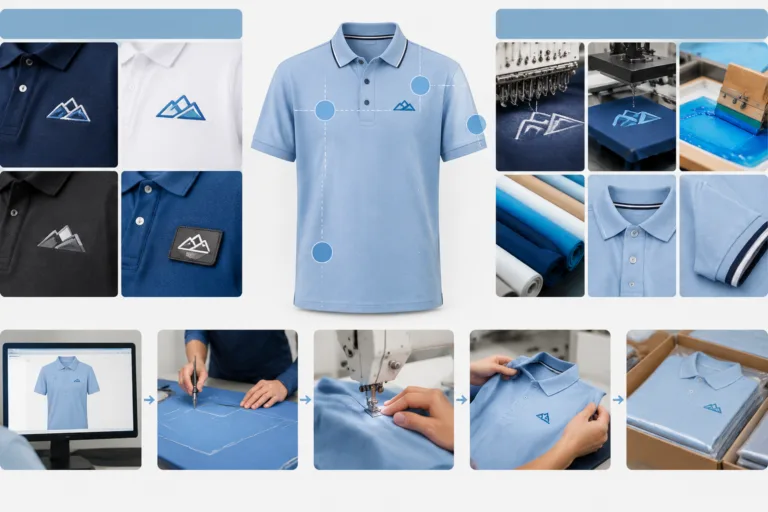
Sponsor information is separate from editorial guidance: Apparel Wiki is an independent educational publication, not a manufacturer or decoration service. Polo shirts logo placement is a garment-design and production decision: it identifies where a logo sits on the shirt, while size, orientation, application method, and visibility are related but distinct choices. The right position depends on the logo’s purpose, garment construction, fabric behavior, intended wearer, and production method. A chest position is familiar in some settings, but it is not a universal requirement or proof that the position suits a particular shirt or use.
To choose a polo shirt logo position, consider how people will use and see the garment, inspect its panels and details, and review the design across relevant sizes. The sections below offer editorial considerations, not fixed placement rules or a guarantee of production results.
What determines logo placement on a polo shirt?
Start with the job the logo needs to do. A mark intended to identify staff may call for a different visual relationship to the wearer and garment than a logo used for a team, event, or brand expression. Then consider where the shirt offers a visually suitable area, how the garment is constructed, and whether the selected decoration method can be assessed there.
Think of placement as one part of a design decision. Location answers “where”; size and orientation describe how the artwork appears there; application method describes how it is attached or reproduced. Visibility is an outcome to evaluate in context, not something guaranteed by choosing a particular location. These elements interact, so a decision that looks balanced in artwork may need review on the actual garment.
How will the logo be used and seen?
Define the intended role before comparing possible locations. For brand recognition, staff or team identification, or an event garment, the logo may need to work in different settings. Consider whether the shirt will be worn alone or under another layer, the wearer’s usual posture and activity, and the expected viewing distance and direction. Avoid assuming that every wearer or use context is alike.
Review the logo’s shape, text, contrast with the fabric, and visual balance alongside the collar, placket, pocket, and other design details. These are evaluation questions rather than promises about readability or recognition: inspect the artwork on the intended garment under conditions that resemble its expected use. A position can be prominent but visually crowded, or balanced on a flat rendering yet less noticeable when worn.
How do the polo shirt’s pattern and construction constrain placement?
Inspect the garment before settling on a location. The collar, front placket, seams, pocket, openings, and panel boundaries help define the available area and may compete with the artwork. Check that a proposed logo does not interfere with a closure, pocket use, or stitching, and consider how it sits when the garment is worn. These features are a practical inspection framework, not fixed boundaries that dictate one correct position.
Fabric stretch, drape, and movement around a location may also matter to the appearance of the artwork and its application. Their effects depend on the specific garment and process; do not assume that a fabric or construction will distort, pucker, or otherwise affect a logo without evaluating a representative sample. Separate general design considerations from conclusions about a particular material or decoration method.
How should logo size and position work across garment sizes?
A placement approved on one size may look different on another because garment dimensions and body proportions vary across a range. Review representative sizes and fits, rather than relying on a single sample, and judge how the logo relates to nearby garment features on each. This helps teams assess the apparent position and visual balance across the range without assuming that one size represents every wearer.
For a product specification, teams can choose to define a position from garment reference points or to adjust it across sizes. These are project-specific options requiring design approval, not universal measurement conventions. Record the reference points, artwork version, and orientation so the choice can be reproduced, then compare approved samples with the specification. No single distance or tolerance applies to every polo shirt.
For related planning, the Apparel Manufacturing Tools page is available as site content; Apparel Wiki does not provide manufacturing services.
Which decoration method and production details affect placement?
Logo application is part of the placement decision, not a separate step that can always be resolved afterward. The selected method should be considered alongside the polo shirt’s material, construction, artwork detail, intended use, and care expectations. A location that looks balanced in a drawing may be less practical once the application equipment, backing, hooping, pressing, or other process requirements are considered.
Each method can create different practical constraints. An embroidered logo, for example, may need an area that can be accessed and supported consistently, while a printed or transferred design may require attention to the surface, nearby construction details, and the process used to apply it. These are general considerations rather than universal rules. Feasibility varies with the equipment, supplier, material, artwork, and complete garment assembly.
Inspect the collar, placket, pocket, seams, openings, and other raised or interrupted areas before approving the location. A seam or closure may limit access, interrupt the artwork, or make consistent positioning more difficult. A pocket can also affect both the available surface and the garment’s function. The relevant question is not simply whether a logo can be put in a particular area, but whether it can be applied there repeatedly while preserving the intended appearance and use of the shirt.
For that reason, review the polo shirt logo application on a representative sample made with the intended materials and construction. Check the actual artwork, application method, and garment assembly together. A result from a separate fabric swatch or different construction should not be treated as proof of how the finished polo shirt will look or perform.
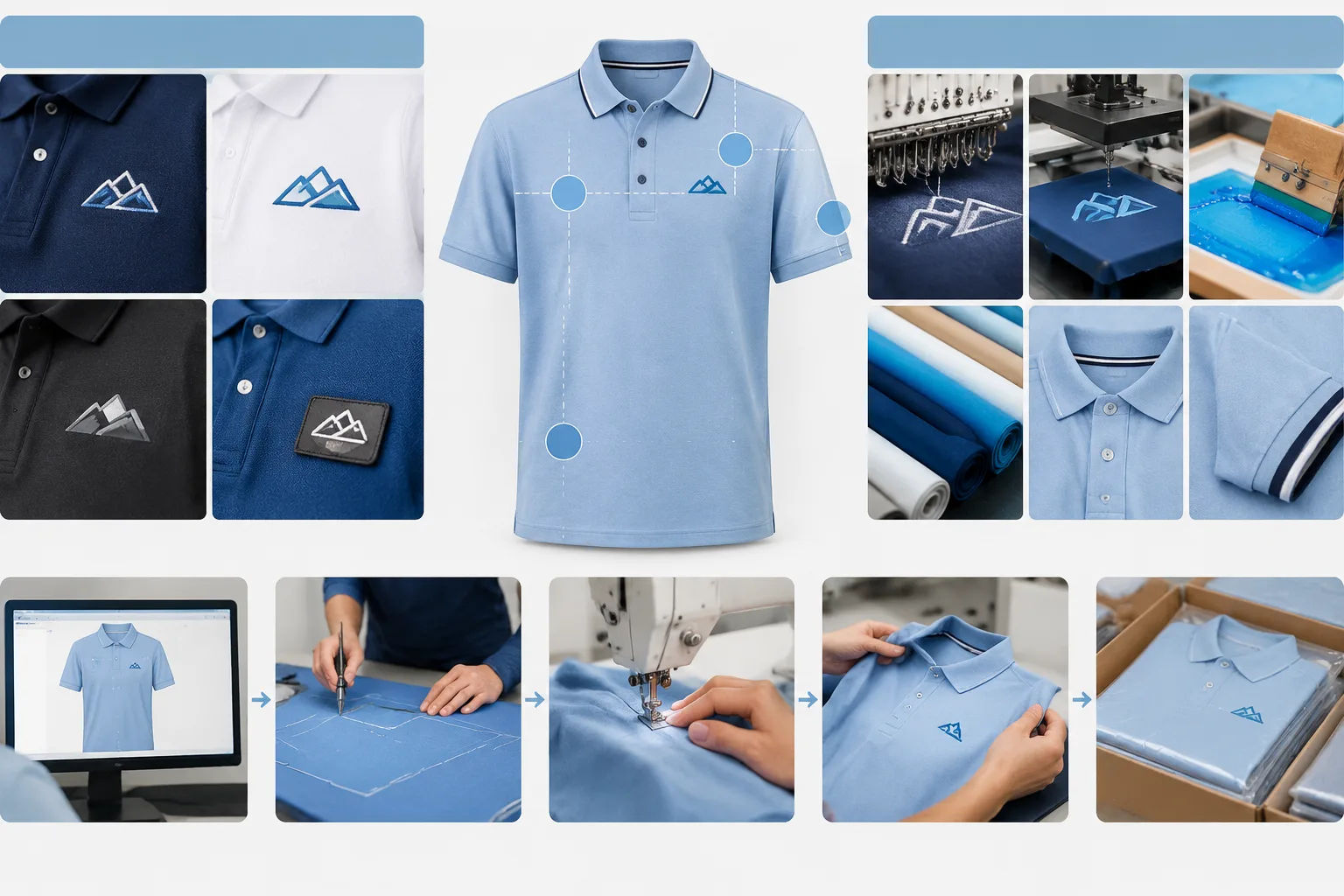
How can teams evaluate and approve a placement?
A practical polo shirt logo placement checklist begins with the purpose of the mark. Decide whether it is intended mainly for brand recognition, staff identification, team use, an event, or another defined purpose. Then identify the expected viewing context, including how the shirt may be worn, layered, photographed, or seen during movement. These decisions help the team judge visibility and visual hierarchy without assuming that one location suits every use.
Next, review the garment itself. Mark the collar, placket, seams, pockets, openings, and other design details that may compete with or constrain the artwork. Consider the logo’s shape, text, contrast, orientation, and relationship to those features. Visibility and balance are design judgments, so they should be checked on the actual garment or on a reliable visualization that reflects its construction and proportions.
Place the approved artwork on a representative garment and inspect it from the viewing distances and angles that matter for the project. Check appearance, interaction with the garment details, practical function, and wearer comfort. If the shirt is intended for a particular work activity, posture, or user group, include relevant users in the review where their experience can affect the decision. Do not infer identical needs from a category or identity alone.
Review the placement across the relevant size range and fits before final approval. A position that appears balanced on one sample may relate differently to the collar, placket, or body on another. Record the reference points, orientation, artwork version, approved sample, and any project-specific inspection criteria in the product specification. This documentation makes the decision reproducible without turning it into a universal measurement rule.

What are the limits of a placement decision?
A visually suitable logo position does not, by itself, establish garment quality, durability, safety, regulatory compliance, or suitability for every wearer and use condition. Final results depend on the complete garment, including its materials, construction, application method, care instructions, and actual use. Placement is one design and production variable among several.
Likewise, a familiar chest position should not be treated as proof that the logo is correctly placed for every polo shirt. Common practice can provide a starting point, but it does not replace review of the specific garment, artwork, wearer, and viewing context. The same caution applies to claims about embroidery, printing, distortion, puckering, wash performance, or comfort. Those conclusions require evidence from the relevant finished garment and conditions.
For specialized users or regulated applications, identify the actual user needs and verify applicable requirements with the responsible authority for the relevant jurisdiction. Apparel Wiki is an independent educational publication, not a manufacturer, factory, laboratory, certifier, or decoration service provider. Its guidance can support questions and review planning, but project teams remain responsible for their specifications, approvals, and validation evidence.
The useful next step is to turn the chosen location into a documented review: define the logo’s role, inspect the garment construction, test the intended application on a representative sample, compare relevant sizes, and record the approved artwork and reference points. This approach keeps polo shirts logo placement tied to the real product rather than to an unsupported universal rule.
Where is a logo usually placed on a polo shirt?
A logo is often considered for the chest area because that location may support visibility and visual balance, but it is not a universal requirement. The final position depends on the logo, garment construction, intended use, wearer, and decoration method.
Should polo-shirt logo placement change by size?
It may need to be reviewed or adjusted across sizes. Teams can use garment reference points or define project-specific size adjustments, but the selected approach should be approved and checked on representative sizes rather than assumed from one sample.
Can a logo go over a pocket, seam, or placket?
It may be possible, but the feature can affect access, appearance, function, or repeatability. Inspect the complete garment and application process, then confirm the result on a representative sample before approval.
How can I check logo placement before approving production?
Review the artwork on a representative garment or reliable garment visualization. Check visibility, balance, construction conflicts, function, comfort, relevant sizes, intended wear conditions, and consistency with the documented specification.
Does embroidery affect where a polo-shirt logo can be placed?
It can. Embroidery feasibility may depend on the garment material, logo detail, construction, equipment, and access to the application area. Confirm the embroidered result on the intended finished garment rather than relying on a separate sample or general assumption.