A thread ticket number has improved a finished seam only when controlled samples show a meaningful result against an agreed seam requirement. The result might be a smoother appearance, fewer thread breaks, acceptable seam strength, lower bulk, or better performance after the intended care process. A seam that simply looks better is not automatically stronger, more durable, or more stable in production. Apparel Wiki is an independent garment-manufacturing knowledge platform; it is not a factory, thread supplier, or testing laboratory. You can learn more about its editorial support through the Sponsor page.
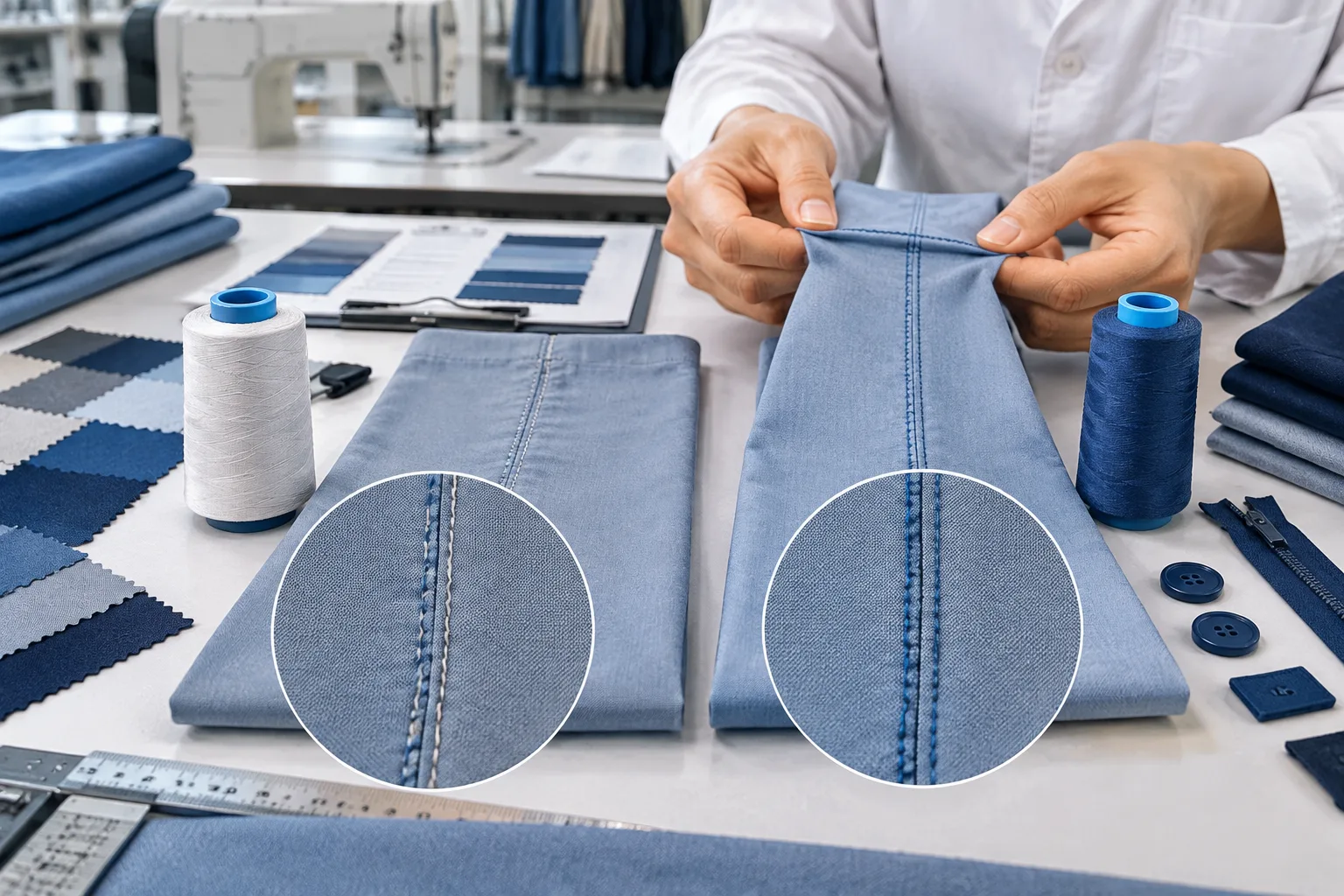
Thread ticket number seam testing should therefore compare a current thread with a candidate thread under defined conditions. The aim is not to prove that a larger or smaller ticket number is universally better, but to determine whether the change solves the specific problem identified in the garment or sewing operation.
What does it mean for a thread ticket number to improve a finished seam?
A thread ticket number is a designation used to identify sewing-thread size within a particular numbering system. Its meaning and scale should be confirmed from the supplier or technical system being used. Ticket numbers are not automatically comparable across every brand or numbering convention. The ASTM sewing-thread ticket-number system addresses this problem by providing a defined way to identify thread size rather than relying on unrelated numbering practices.
In practical terms, improvement means that the candidate ticket number performs better against a stated objective without creating an unacceptable new defect. For a visible seam, the objective may be cleaner thread balance, less puckering, or lower bulk. For a high-load seam, the priority may be resistance to thread failure, seam opening, or fabric rupture. For a production operation, fewer stops, adjustments, and thread breaks may matter as much as the appearance of the completed seam.
The ticket number is only one variable. Needle type and size, fabric construction, stitch density, tension, feeding, seam design, machine condition, operator technique, sewing speed, and finishing or care conditions can all influence the result. A fair comparison keeps these factors controlled as far as practical. Otherwise, an apparent improvement may actually come from a needle change, a tension correction, a different fabric area, or a more careful operator.
Define the intended failure or acceptance condition before reviewing the samples. “Looks better” is too broad for a reliable decision. Record whether the requirement concerns appearance, sewability, seam strength, bulk, damage, after-care behavior, or a combination of these. If a customer, buyer, or internal specification provides the requirement, use that document as the acceptance reference rather than treating a test result as a universal pass threshold.
Which seam variables must stay constant in a ticket-number comparison?
A controlled thread comparison changes the ticket designation while holding other important conditions constant. Use the same fabric lot, panel construction, seam type, seam allowance, machine, presser-foot setup, needle type and size, stitch type, stitch density, thread material, color, and sewing speed where practical. The compared threads should also be suitable for the target fabric and operation before their results are interpreted.
SPI means stitches per inch. It describes stitch density and must not be confused with stitch length or the spacing between needles on a multi-needle machine. If the project uses another measurement convention, record that convention clearly. A comparison becomes difficult to interpret when one sample uses a different stitch-density basis or when the operator changes the machine settings without recording the change.
Keep tension and feeding under control rather than silently adjusting them until one ticket number produces a more attractive sample. If an adjustment is necessary to achieve stable sewing, record what changed, why it changed, and whether the same adjustment was permitted for both candidates. A thread may require an appropriate machine setting, but that requirement is part of the production result and should not be hidden.
Record the information needed to identify every sample and sewing condition:
- Current and candidate thread supplier, ticket designation, material, construction, finish, color, and batch or lot information.
- Fabric lot, panel or specimen identity, seam construction, seam allowance, machine, needle, presser-foot setup, stitch type, SPI or stitch length, tension, feeding, and sewing speed.
- Operator or controlled production condition, date, machine adjustments, thread breaks, stops, rethreading, repairs, and observed defects.
- Replicate samples sufficient to show whether the pattern is repeatable, according to the documented project protocol.
There is no universal sample count that applies to every garment or comparison. The required number depends on the project protocol, variation in the fabric and process, and the decision risk. The important principle is to use enough comparable samples to distinguish a repeatable result from one unusually good or bad seam.
How to compare seam appearance and sewing performance
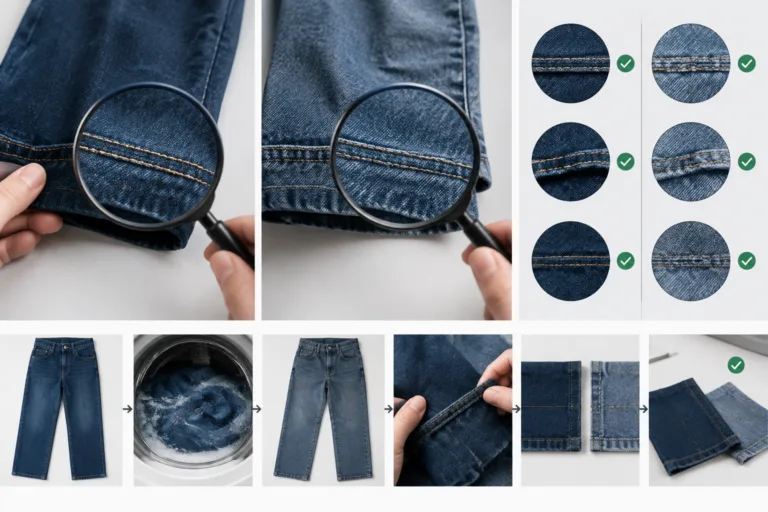
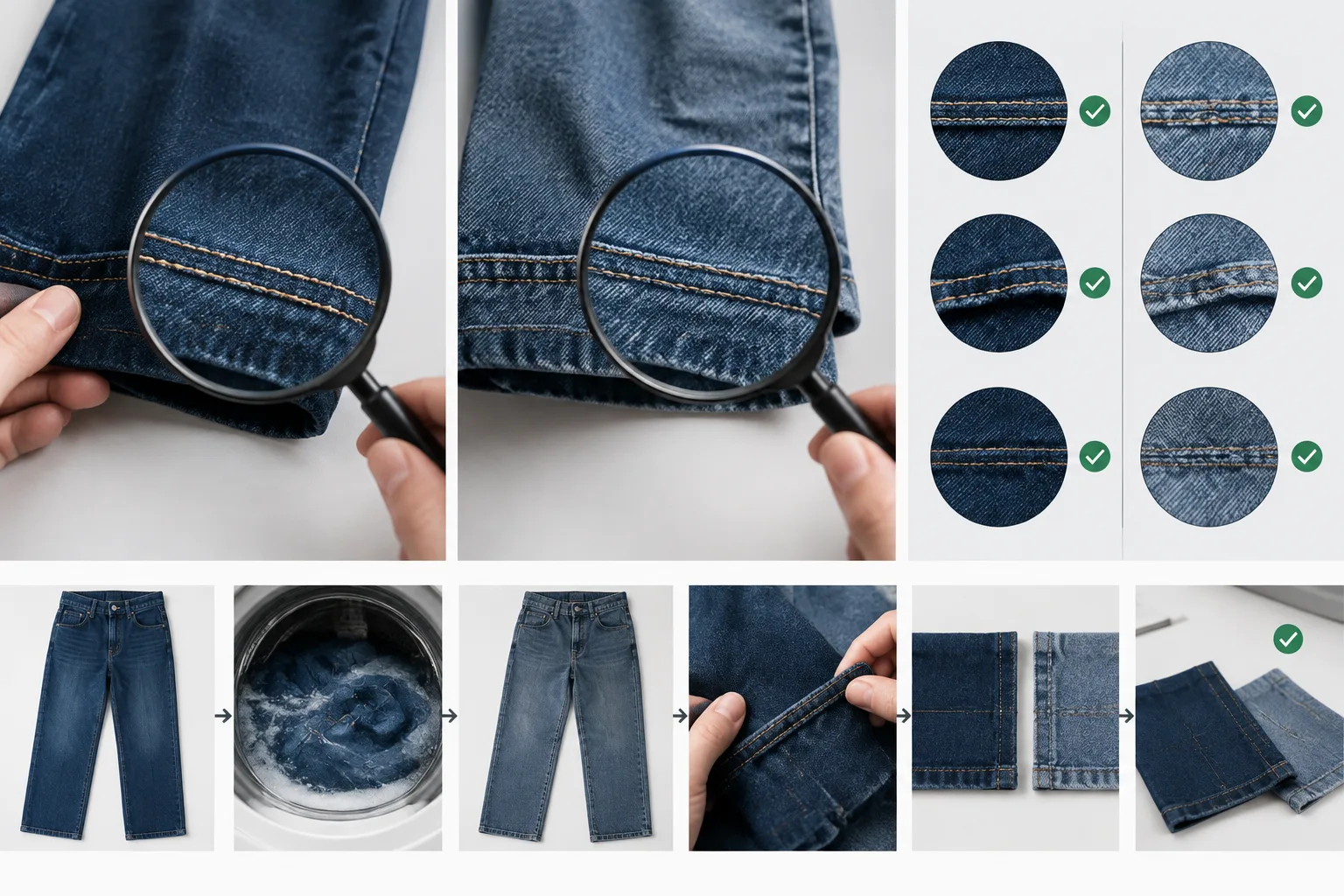
Begin with newly produced seams before repairs or corrective adjustments conceal the original process behavior. Inspect both sides under consistent lighting and viewing conditions. Review seam straightness, thread balance, skipped stitches, thread breaks, loose loops, visible puckering, uneven feeding, unwanted thread exposure, seam bulk, needle damage, hole visibility, and abrasion. Record observations in words or an agreed rating system instead of relying on one photograph.
Puckering requires particular care. It can be associated with tension, feeding, structural crowding, fabric behavior, or differential shrinkage after care. Similar-looking puckering does not establish the same cause, so do not attribute it to ticket number from appearance alone. Likewise, a larger or smaller thread may interact differently with the needle and fabric, but the comparison should document the actual defect rather than assume a universal relationship.
| Comparison area | What to record |
|---|---|
| Appearance | Straightness, balance, loops, exposure, puckering, bulk, and front-to-back differences. |
| Sewability | Thread breaks, skipped stitches, stops, rethreading, adjustments, and operator observations. |
| Material damage | Needle holes, abrasion, distortion, fabric rupture, or other visible harm. |
| Correction history | Repairs or setting changes made before the sample was judged. |
Repairs can restore the local appearance without proving that the process is stable. If a defect is corrected, mark the sample and inspect newly produced seams under the revised condition. When production stability matters, report defects and machine interventions per comparable sewing run, not only the final appearance of the best repaired piece.
Which durability tests show whether the seam actually performs better?
Move to durability testing only after the initial appearance and sewing-performance screen identifies a meaningful question. Select the test according to the seam’s function and failure risk. Depending on the garment, relevant checks may include seam strength, seam slippage, stitch or thread failure, abrasion, dimensional change, or appearance retention after the intended care process. Not every garment requires every test.
Define the failure mode before testing. The concern may be thread breakage, fabric rupture, seam opening, excessive distortion, loss of appearance, or another project-specific limit. A test method explains how a result is measured; a product specification, buyer requirement, or internal quality requirement explains what result is acceptable. The existence of a test method does not create one universal pass threshold for every fabric and seam.
Results are comparable only when the relevant conditions are equivalent. Check specimen direction, sample identity, conditioning, care pre-treatment, equipment, method, units, and evaluation criteria. Do not rank unlike reports solely by their numerical values. A higher number is not automatically better if it represents greater bulk, unwanted stiffness, fabric damage, or a seam behavior unsuitable for the garment.
A practical sequence is to screen appearance and sewability first, then apply only the durability and care checks connected to the actual risk. This keeps the comparison focused while preserving the distinction between an observed sample result, production validation, and formal acceptance against a project requirement.
How should pre-wash and post-wash seam results be compared?
A seam that looks improved immediately after sewing may change after laundering or another intended care process. Compare untreated and care-processed samples when dimensional change, seam puckering, seam distortion, or appearance retention matters to the garment. The purpose is not to assume that washing always belongs in a thread comparison, but to test the conditions that the finished product is expected to experience.
Keep the comparison paired. Preserve each sample’s identity, record the ticket number used, and apply the same approved care process to both options. Match the care cycle, drying conditions, inspection timing, and evaluation method as closely as the project requires. Inspect both sides of the seam and record observations before and after care rather than relying on one post-wash photograph.
Separate the observation from the explanation. A seam may pucker after laundering because of the thread, fabric, seam construction, tension, feeding, or differential shrinkage. The changed ticket number may contribute, but the result does not prove that it is the sole cause. Note whether the change is local or consistent across the sample and whether the same pattern appears in repeated specimens.
If dimensional change is calculated, identify the measurement points, units, direction, and sign convention. For example, a project may report reduction from the original dimension as a positive shrinkage value, while another system may represent the same change as a negative percentage. The calculation is less important than making the convention clear and applying it consistently to both thread options.
Do not infer finished-garment behavior from one unwashed seam sample. A useful record links the before-care appearance, after-care appearance, measured changes, and any relevant failure mode. The correct care process remains project-dependent and should follow the fabric, garment, approved care instructions, and intended use.
How to decide whether the new ticket number is genuinely better
Convert the comparison into a decision record rather than choosing the seam that looks best in isolation. Compare the current and candidate ticket numbers across appearance, sewability, fabric or needle damage, durability, after-care behavior, operator intervention, and documented cost or availability. Include only factors that were actually observed or supported by project records.
Classify each outcome as improved, unchanged, worse, or inconclusive. This prevents a trade-off from being hidden inside a single overall score. A candidate thread might reduce visible bulk but require more machine adjustments, or improve appearance while offering no demonstrated durability benefit. Those are decision facts, not reasons to force a universal winner.
Weight the criteria according to the seam’s purpose. A visible fashion seam may prioritize appearance and bulk. A high-load seam may give greater importance to the relevant failure mode. A stretch seam, delicate fabric, or construction with limited allowance may require a different balance. The right result is the one that satisfies the defined requirement without creating a more serious problem elsewhere.
When results conflict, check sample identity, fabric variation, thread construction, machine settings, method equivalence, care conditions, and evaluation timing. Confirm that the ticket designations belong to a comparable thread-size system and that both threads were suitable for the operation. If the evidence remains mixed, record the uncertainty and repeat the comparison under representative production conditions.
Approve a change only when the result is meaningful against the applicable project requirement. A laboratory or development-sample result is not automatically production validation, and neither is a substitute for a buyer or regulatory requirement when one applies. Once approved, update the relevant work instruction or specification so the selected thread, conditions, and acceptance basis remain traceable.
Common mistakes when testing thread ticket number changes
The most common error is changing several variables while treating ticket number as the explanation. Do not compare different thread materials, constructions, finishes, or suppliers and then attribute every difference to size. Similarly, changing the needle, tension, stitch density, feeding, speed, and ticket number at the same time prevents a reliable conclusion about the thread change.
Another mistake is ranking unlike reports only by their numerical values. Results from different methods, specimen directions, conditioning states, units, or evaluation criteria may not be directly comparable. Confirm the method and conditions before deciding that one number is higher in a useful sense. A larger result is not automatically better if it represents unwanted stiffness, bulk, distortion, or fabric damage.
Do not use one photograph, one repaired defect, or one seam sample as proof of process improvement. Repair can restore local appearance without showing that the process is stable. Record machine stops, rethreading, adjustments, and newly produced defects when production stability matters. Results should be based on a repeatable pattern defined by the project protocol, not an isolated success.
Finally, avoid generalizing from one fabric, seam, machine, or care process to every garment. If the comparison is inconclusive, verify the ticket-number system, review the controlled variables, preserve sample identity, and choose a test linked to the actual failure risk. The applicable supplier documentation, laboratory method, buyer specification, or internal quality requirement should guide the next step.
Before approving a thread change, confirm that the current and candidate threads are clearly identified, the controlled sewing conditions are recorded, the relevant appearance and performance checks are matched, and any care comparison uses paired samples. Apparel Wiki is an independent garment-manufacturing knowledge publication, so its guidance is educational; the final approval should come from the responsible product, quality, or production team using the applicable project requirements.
Frequently asked questions
Is a higher thread ticket number automatically better for a finished seam?
No. Ticket numbers identify thread size within an applicable system, but improvement depends on the seam objective. A larger or smaller thread may affect appearance, bulk, sewability, or performance differently.
Can a seam look better even if its durability result does not improve?
Yes. Appearance and durability are separate outcomes. Record both and judge them against the requirements for that seam instead of treating visual improvement as proof of stronger or longer-lasting construction.
Should the needle and stitch density change when the thread ticket number changes?
Not during a controlled comparison unless the protocol specifically permits it. Keep relevant settings constant first. A later production adjustment should be documented as a separate process decision.
How many seam samples are needed to compare two thread ticket numbers?
There is no universal sample count. Use the project protocol and prepare enough comparable replicates to distinguish a repeatable pattern from an isolated result.
Should thread ticket number testing include washing or other care conditions?
Include care testing when the garment’s fabric, care instructions, or intended use makes post-care appearance or dimensional change relevant. Use the same approved conditions for both thread options.
What should be recorded in a thread ticket number seam test report?
Record thread identity and ticket designation, supplier and construction, fabric and seam details, machine settings, needle, stitch conditions, sample identity, care treatment, observations, measured results, defects, adjustments, and the acceptance requirement used for the decision.