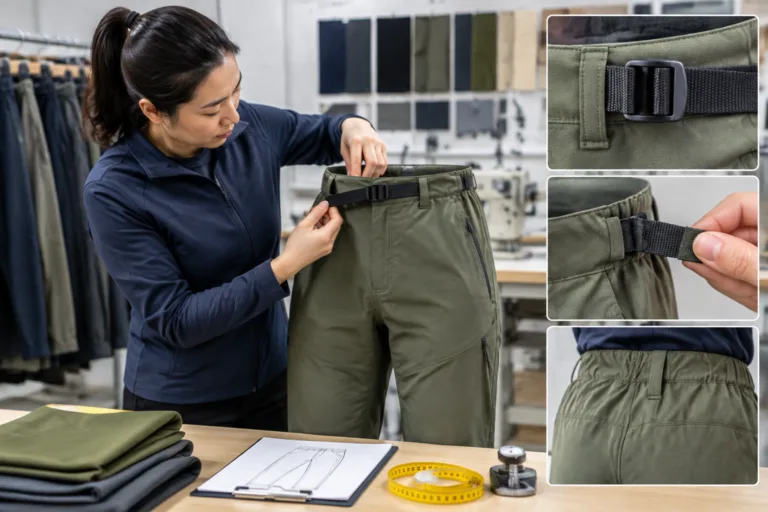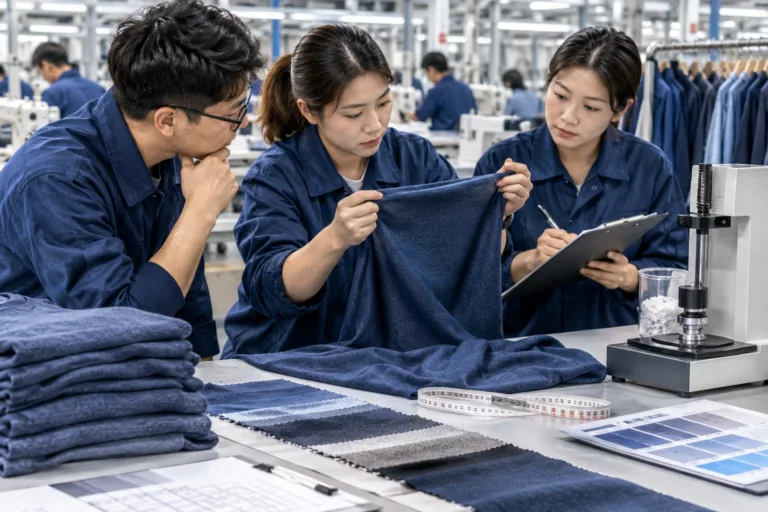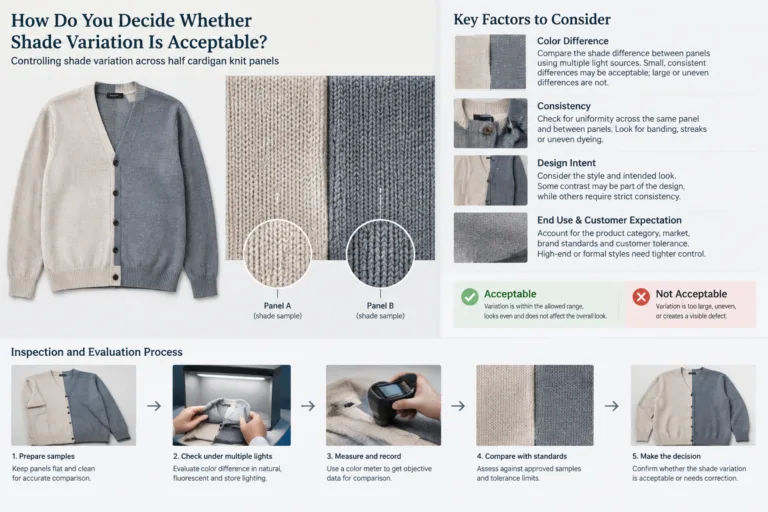
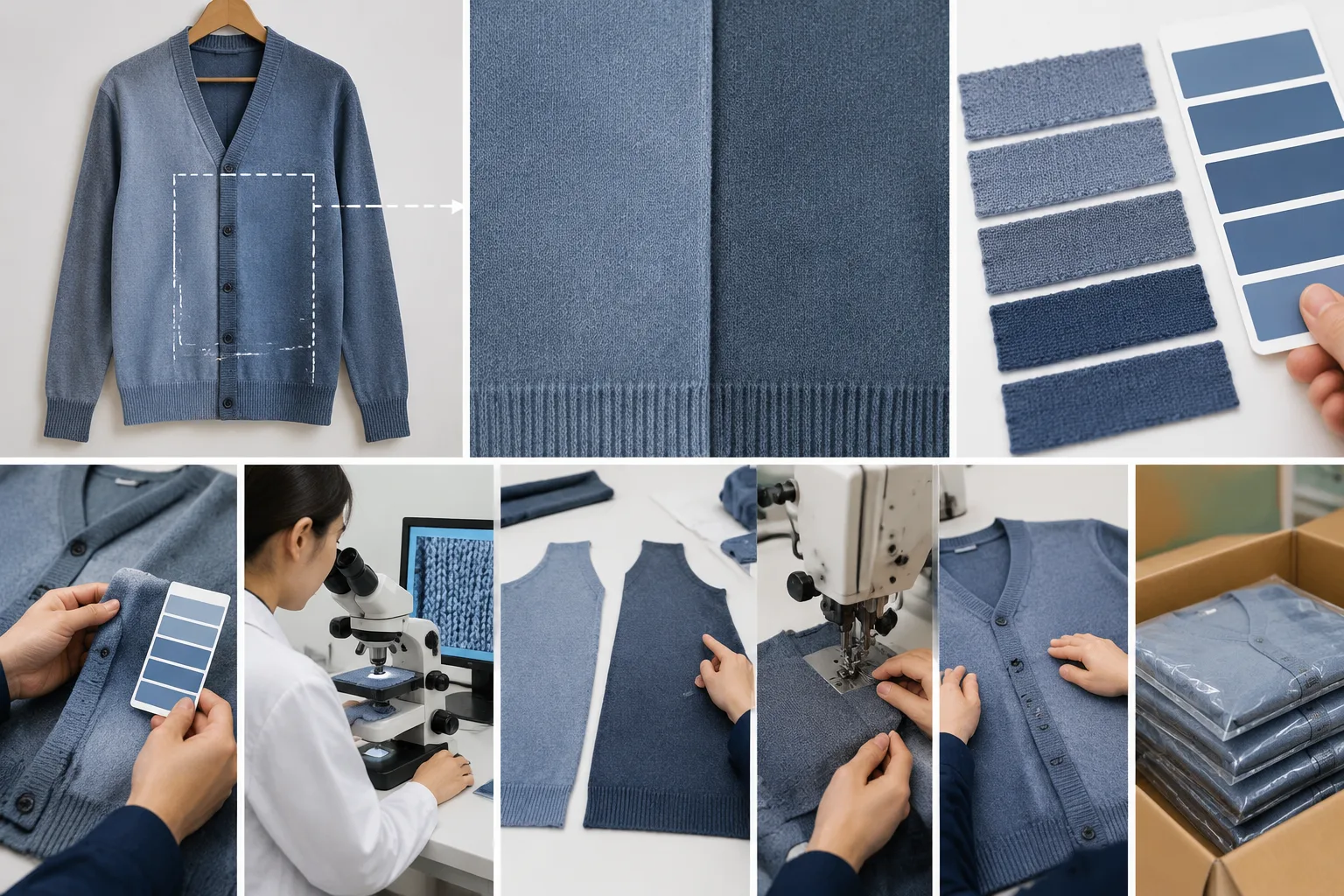
Half cardigan knit shade variation is a visible difference in color or apparent color between panels, sections, rolls, dye lots, or finished garment areas that are expected to look consistent. The difference may reflect a true color change, but it may also come from loop structure, surface direction, compression, finishing, or lighting. The practical control principle is simple: compare like with like under consistent preparation, lighting, viewing direction, and evaluation conditions.
Half cardigan is a knit construction, not a fiber name or a complete fabric specification. Fiber content, yarn, knit structure, dyeing, finishing, GSM, width, and material condition are separate information layers. Apparel Wiki is an independent apparel-industry knowledge publication; its editorial independence is described on the Sponsor page. The guidance below helps teams investigate shade differences without assuming that every mismatch is a dyeing defect.
What Is Half Cardigan Knit Shade Variation?
In practical terms, shade variation in knit panels means that two or more fabric pieces appear different when they should represent the same intended color and material. The comparison may involve panels cut from one roll, panels from different rolls in one finishing lot, or finished garment sections such as a body, sleeve, collar, or pocket. “Shade” describes perceived color appearance, so the observation must be tied to how and where the material was examined.
A half cardigan construction uses intermeshed yarn loops to form a weft-knit fabric with a particular face, back, and surface character. That construction should not be confused with the fiber used to make the yarn. For example, two fabrics can share a half cardigan description while differing in fiber blend, yarn size, machine settings, finishing route, or final weight. Those differences may affect how the fabric reflects light and how its color is perceived.
Apparent shade differences can therefore arise from several layers at once. A panel may have a genuine batch-to-batch color difference, or it may look lighter because its loops face another direction. Stretching, folding, pressing, compacting, brushing, moisture, and other finishing or handling conditions can also change the visible surface. A color comparison made under different light or with panels in different orientations may produce an apparent mismatch that is not explained by dye concentration alone.
Before assigning a cause, record the material identity and the comparison conditions. Confirm the fiber content, yarn details, knit construction, dye or color lot, finishing state, roll identity, and panel orientation where those records are available. The core question is not only “Are these panels different?” but also “Were they prepared and viewed in a way that makes the comparison reliable?”
Why Can Half Cardigan Panels Develop Different Shades?
The causes of shade variation in knitted fabric usually fall into connected but distinct variable groups. Yarn or fiber differences can influence color development and surface reflection. Dye-lot or color-development differences can create a genuine batch variation. Knitting conditions, including machine settings, loop formation, take-down, and tension, may change the fabric’s surface or density. These factors are project-dependent, so they should be checked against production records rather than assigned universal tolerances.
Fabric relaxation and dimensional change are another important group. A knitted panel can change its dimensions or surface appearance after it is removed from tension, exposed to heat or moisture, compacted, washed, or otherwise finished. If one panel is relaxed and another remains compressed from storage or packaging, the two may not present the same visual surface. This does not prove that either panel is defective; it shows why material state belongs in the investigation.
Cutting and panel orientation can reveal directional appearance. Panels cut with different courses, wales, or surface directions may reflect light differently, especially when the fabric has a pronounced texture or finish. Turning, brushing, stretching, or compressing a piece can make the apparent color change. Inspection conditions can have a similar effect: illumination, viewing angle, background, observer, and specimen preparation all influence visual comparison. Different light sources may also make two materials appear more similar or more different than they do in another setting.
Storage and handling should be reviewed alongside production. Moisture exposure, prolonged folding, pressure, contamination, or contact with other materials may affect a local area. However, a commercial fabric name alone cannot identify the cause. Confirm the actual fiber content, yarn type, knit structure, GSM, width state, and finish before drawing conclusions. Supplier lot records, retained samples, and chronological process documentation are more useful than assuming that dyeing is responsible whenever panels look inconsistent.
How Should Teams Prevent Shade Variation Before Panel Production?
Prevention starts with a material specification that is detailed enough for different teams to identify the same fabric. Record the fiber content, yarn information, half cardigan construction, target shade reference, intended finish, width state, and any approved color-control or lot-grouping requirements. GSM can be useful as a separate material characteristic, but it does not prove shade consistency or replace a color reference.
Traceability should continue from yarn through the finished panel. Keep yarn lot, dye lot, knitting lot, finishing lot, roll or piece identity, and cutting records connected wherever practical. Before production, agree whether panels for one garment or colorway must come from the same dye or finishing lot. Any exception should be documented and approved against the applicable customer, brand, or internal specification rather than decided informally at the cutting table.
Development approval and production release are related but different decisions. A representative lab dip, bulk submission, or approved shade standard may establish the intended color, while production records and inspection results determine whether a particular lot is released. Teams should define who reviews each decision and what evidence is retained. The applicable method and criteria depend on the project; there is no universal tolerance that can be supplied without a validated specification.
Storage and handling controls also matter before panel production. Keep rolls identifiable, protect them from avoidable compression or contamination, and preserve the orientation information needed for cutting and inspection. Product development, sourcing, knitting, dyeing, finishing, cutting, sewing, and quality teams should share the same lot terminology. This cross-functional control cannot eliminate all variation, but it reduces preventable mixing and makes a later investigation more precise.
A Practical Procedure for Checking Shade Across Half Cardigan Panels
A repeatable inspection begins with identification. Record the roll, lot, panel location, garment position, and orientation before comparing pieces. Allow the panels to reach the preparation or conditioning state required by the project method, and remove avoidable effects from packaging, tight folding, or temporary compression. Use the defined viewing environment and lighting for the comparison rather than relying on an unspecified room condition.
Compare panels in the same direction first. Then reverse or rotate selected pieces to check whether the difference follows the material direction or surface. Inspect representative areas, not only an edge, fold, seam allowance, or visibly contaminated spot. If the appearance changes substantially after rotation, note that directional or surface behavior may be involved. If the difference remains across orientations and comparable preparation states, a lot or color-development issue may deserve closer review.
| Inspection record | What to document |
|---|---|
| Identity | Lot, roll or piece, panel pair, garment position, and material specification |
| Condition | Preparation state, compression or folding history, and any relevant moisture or finish state |
| Comparison | Lighting, viewing direction, panel orientation, inspected areas, and apparent difference |
| Disposition | Suspected cause, reviewer, decision, supporting evidence, and follow-up action |
Do not force a pass or fail when the agreed criteria do not resolve the observation. Record uncertainty and escalate it for instrumental or laboratory evaluation only when the project specification and a validated method support that step. Any numerical color-difference limit, conditioning requirement, or formal grade must come from the applicable approved method, customer requirement, or internal specification rather than an invented universal value.
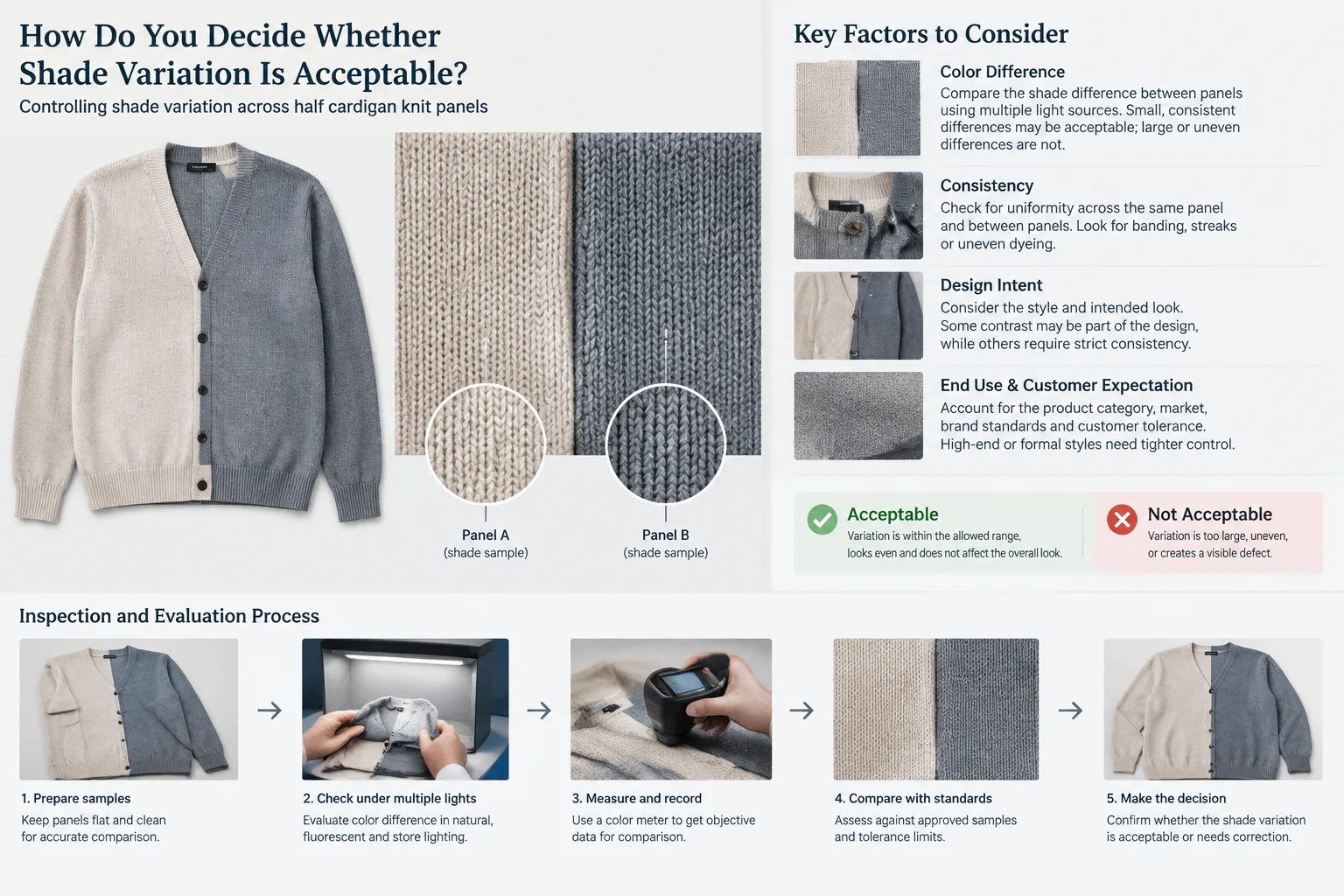
How Do You Decide Whether Shade Variation Is Acceptable?
Acceptability depends on the approved shade standard, customer or brand specification, garment use, and intended viewing conditions. There is no single tolerance that applies to every half cardigan knit. A difference that matters on adjacent panels in one garment may have a different impact when it appears between separate garments or production lots.
First identify where the variation occurs: within one panel, between panels intended for the same garment, between garments, or between lots. Consider the garment placement and whether the difference remains visible in the assembled product. If appearance changes when a panel is rotated, record that directional behavior; do not treat it automatically as a dye-lot mismatch.
Follow the project’s documented criteria to accept the material, segregate it for reassignment, retest it, hold it for technical review, or reject it. Rework may be considered only when a qualified process review supports its feasibility for the specific fiber, construction, finish, and production history. Record the decision-maker, evidence, and any change to lot-mixing or cutting rules.
What Should You Do When Shade Variation Is Found?
Contain potentially affected rolls, panels, and finished goods by their identifiable lot before more material is mixed, cut, or shipped. This preserves options while the team checks whether the mismatch is reproducible and whether the compared pieces were in similar preparation states.
Review the evidence in production order: yarn identity, dyeing records, knitting and finishing details, roll labels, storage and handling, cutting orientation, and inspection conditions. Compare retained samples when available. Check whether the difference follows panel direction, appears limited to a contaminated or compressed area, or remains across comparable orientations and conditions.
Choose a disposition based on the confirmed cause and project risk. Options may include segregation, reassignment to less visually sensitive placements, additional evaluation, process-specific rework review, or documented customer approval. Do not assume every shade issue can be corrected after processing. When the evidence points to a recurring control gap, update the relevant specification, traceability rule, inspection setup, or training and verify that the change addresses the observed cause.
Limits of Shade Control and the Records Worth Keeping
Shade control aims for consistent, agreed appearance; it cannot make every comparison independent of material state, surface, illumination, viewing direction, and use. A fabric name, GSM, or width does not establish shade consistency. These are separate material and specification details that should be recorded and evaluated for their own purposes.
Keep the approved shade reference and its identification, material specification, lot and roll map, inspection conditions, panel orientation, findings, disposition, reviewer, and supporting reports. Photos can help document location and appearance, but they do not replace a controlled visual comparison or an applicable validated test method. Retain post-production findings when they inform future lot control.
A compact control check should confirm material identity, traceability, preparation state, lighting, comparison direction, approval criteria, segregation decisions, and corrective-action records. Apparel Wiki is an independent garment-industry knowledge publication, not a manufacturer, factory, or testing laboratory. For related educational resources, browse the Apparel Wiki or its apparel manufacturing tools page.
For the next order, turn the approved criteria and inspection findings into a short lot-control checklist shared by product development, sourcing, cutting, and quality teams. That makes later comparisons more consistent without assuming that all shade variation can be eliminated.
Frequently Asked Questions
What does shade variation mean in half cardigan knit panels?
It is a visible difference in color or apparent color between panels or other fabric areas intended to look consistent. The appearance may reflect actual color differences or changes in surface, direction, material state, or viewing conditions.
What are the most common causes of shade variation in knitted fabric panels?
Possible contributors include yarn or dye-lot differences, knitting and finishing conditions, relaxation or compression, panel orientation, storage, and inspection conditions. The likely cause depends on the material and production records.
Should panels from different dye lots be used in the same garment?
Use the project’s documented lot-mixing rule. If different lots are not approved for one garment, keep them separate unless the responsible decision-maker reviews and documents an exception against the applicable shade criteria.
How should a team inspect half cardigan panels for shade differences?
Identify each lot and panel orientation, prepare pieces consistently, compare them under the agreed lighting, and inspect representative areas in the same direction. Rotate selected panels to check for directional appearance and record the conditions and result.
Can directional surface appearance be mistaken for true color variation?
Yes. A panel’s apparent shade may change with orientation or surface behavior. Compare pieces in the same direction first, then rotate selected pieces and document whether the difference follows the material direction.
What information should be recorded when a shade mismatch is found?
Record lot and roll identities, panel pair and garment position, preparation and viewing conditions, orientation, observed difference, suspected cause, disposition, reviewer, and supporting evidence or follow-up action.