Golden sample control means using one jointly approved garment sample as a documented reference for agreed aspects of bulk production. For buyers and suppliers, the goal is not to assume every production unit will be identical, but to make expectations clear enough to guide decisions about appearance, construction, and changes. Apparel Wiki is an independent educational publication; readers can also explore its sponsorship information.
What Is a Golden Sample, and What Should It Control?
In apparel sourcing, a golden sample is an approved garment kept as a visual and construction reference for an order. Depending on the project, it can show intended fit, workmanship, seam details, trims, labels, artwork, finishing, or packaging. “Golden sample” is a common working term rather than a guarantee that all production pieces will match it in every respect.
The sample is only one part of the production reference. Measurements, material composition, color targets, test results, and customer or market requirements may need their own written specifications or evidence. A physical garment can help people interpret a design, but it cannot reliably communicate every measurable limit or requirement by itself.
Control therefore depends on agreement and documentation: identify which sample is approved, what details it represents, and which written requirements apply alongside it. A sample does not automatically establish every commercial or technical term of an order. Its role depends on the records and agreements the buyer and supplier use for that project.
Align Expectations Before the Sample Is Approved
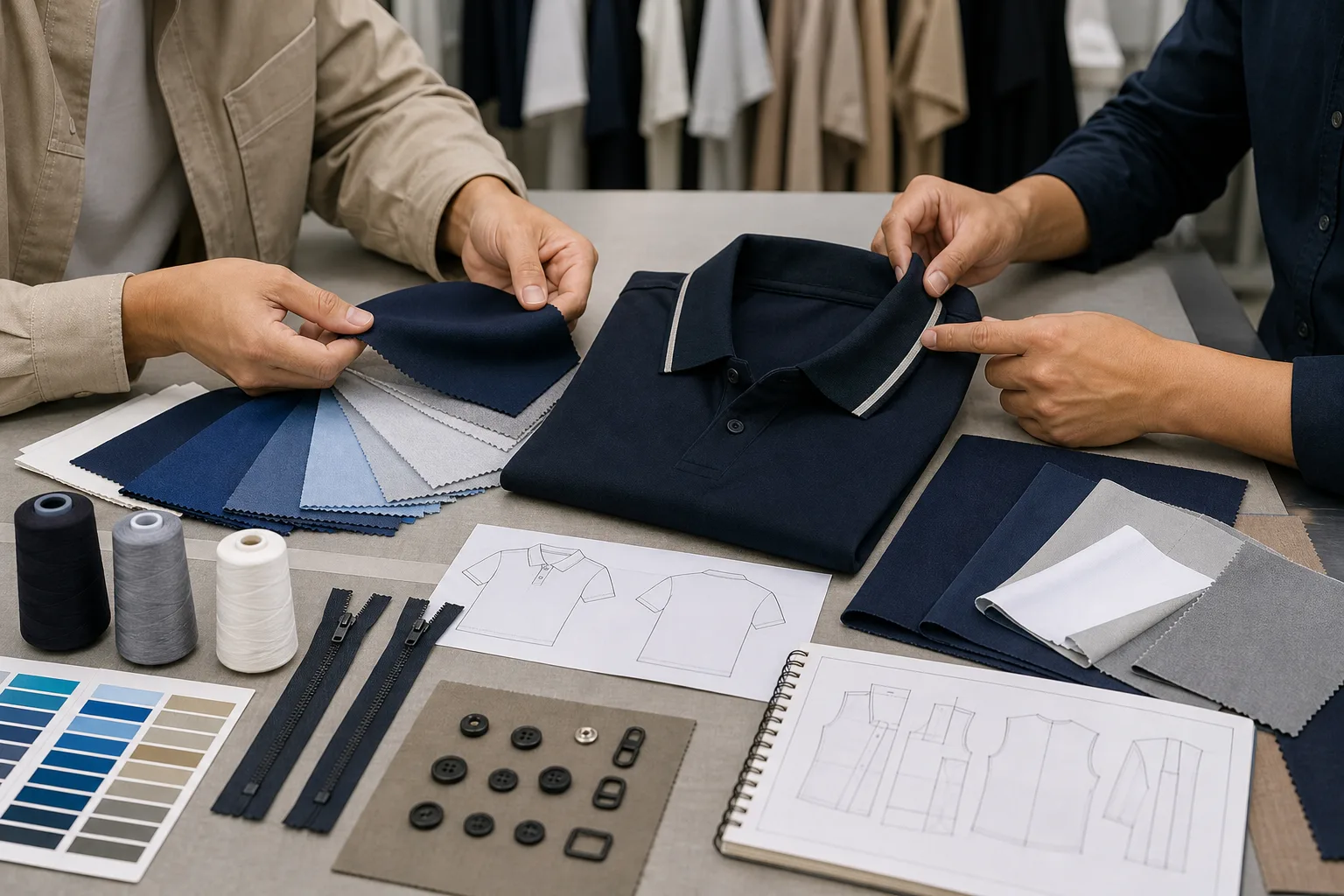
A practical approval package brings the relevant references together: the identified sample, current tech pack, measurement chart, construction details, material and trim information, artwork, color references, packaging instructions, and revision history where applicable. The set will vary by order. What matters is that both parties can tell which files and sample version are current, and how they relate to one another.
Before sign-off, record which features are fixed, which may vary within an agreed tolerance, and which changes need written approval. Clarify who can approve sample revisions and who can authorize production release, if those decisions are assigned to different people. Keep approval communication with the order records rather than relying on an untracked verbal exchange.
Also name the sample’s purpose. A development sample, pre-production sample, size-set reference, and final production reference may answer different questions; one approval should not silently stand in for another. Close or record unresolved comments on fit, substitute materials, wash effects, hand feel, or embellishment placement so neither party assumes a concern was accepted by default.
Turn the Golden Sample Into Clear Inspection Criteria
“Match the sample” can leave room for different interpretations. Translate the reference into observable checks and measurable requirements. For measurements, specify the points, method, applicable sizes, and project-specific tolerances. For appearance and workmanship, use written descriptions or annotated reference images to identify the intended result and the issues that need review.
Examples can make recurring concerns easier to discuss: puckering, seam distortion, shade variation, print placement, loose threads, damaged trims, or incorrect labels. Describe how severity will be judged for the particular product, considering its intended use, appearance, and relevant safety or customer requirements. A general defect list cannot substitute for product-specific legal or safety requirements where those apply.
Keep defect counts distinct from affected-garment counts. One garment can have several defects, while several garments can share the same type of defect. Reporting both the issue types and the number of garments affected helps the parties understand the scale of a finding without conflating two different measures. Agree on classification and decision criteria for the order rather than treating one universal defect list as suitable for every product.
Control Materials, Color, Fit, and Construction Changes
A proposed substitute can look similar or share a stated fiber composition with the original and still behave differently. Changes in material may affect shade, weight, drape, hand feel, stretch, shrinkage, fit, appearance, or care instructions. For the same reason, changes to patterns, grading, sewing operations, trims, labels, printing, embroidery, washing, finishing, or packaging deserve review when they could affect the approved result.
For a proposed material change, record the original and replacement materials, the reason for the change, affected garment components, and any sample review or testing needed for the specific risk and requirements. Do not treat similarity or matching composition alone as proof of equivalence. Whether re-sampling or testing is appropriate depends on the change, product, and applicable customer or market requirements.
As a practical control, pause unresolved changes that could affect fit, function, safety, compliance, or customer-visible appearance until the responsible parties decide how to proceed. Link an approved change to a revised sample, updated specification, or written deviation record. This gives both sides a traceable reference and reduces the chance that informal messages are mistaken for final approval.
Verify Bulk Production Against the Approved Reference
Before broad production proceeds, compare a production sample or first-off garment with the current approved golden sample when the project process calls for that check. Confirm that both references are the right revision and size. A comparison made against an outdated sample or specification can create confusion rather than control.
Use the approved sample together with the written specification. Review fit and measurements using the agreed measurement points and methods, then check construction, materials, color, artwork, labels, trims, finishing, and packaging against their documented requirements. The sample helps communicate visible and tactile expectations; it does not replace measurable specifications, required test results, or applicable customer and market requirements.
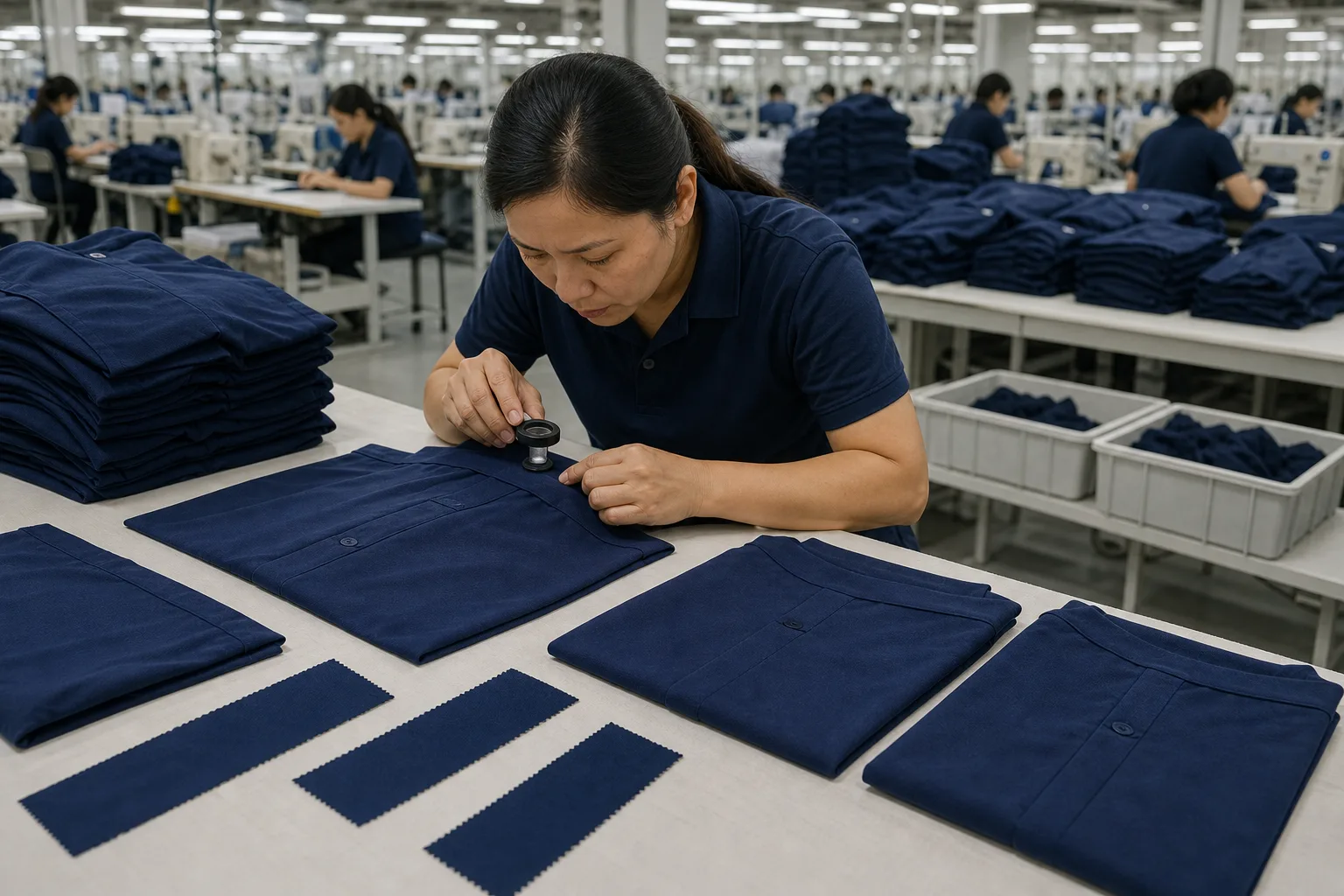
For bulk inspection, follow the project’s agreed sampling plan, including how the batch is defined, how units are selected, and what acceptance criteria apply. These details depend on the order and inspection plan; there is no single sample size or acceptance threshold that suits every garment and risk. Sampling supports a decision about the inspected batch, but it does not guarantee that every unit is defect-free.
Make inspection records specific enough for both parties to act on: note the issue, evidence such as photographs or measurements, affected units, responsible decision-maker, disposition, and corrective action. Keep defect totals separate from the number of garments affected. One garment may have multiple defects, so these counts describe different things.
Decide What Happens When Production Does Not Match
First determine whether the difference is an already approved variation, a correctable deviation, an unresolved nonconformance, or a change that needs reapproval. Make that decision against the project’s documented requirements, intended use, and any relevant customer or market obligations. A visual difference is not automatically acceptable or unacceptable without that context.
When the scope is uncertain, contain the potentially affected goods. Identify the relevant batch, material, operation, or production period and prevent the issue from being confused with unaffected work while it is reviewed. Record what is being held and who has authority to decide the next step.
Possible dispositions include correction or rework, reinspection, a documented concession, replacement, or rejection. These are distinct decisions, and the appropriate option depends on the nature and risk of the issue, customer requirements, and the governing agreement. Keep technical quality decisions clear in the record; document any commercial or delivery consequences separately.
After corrective action, verify that it addressed the issue and record the result. Repeatedly taking new samples until one happens to pass does not establish that the cause has been corrected. If a change affects the approved appearance, fit, function, or requirements, production should resume only after the designated parties document the decision, such as through a revised sample, updated specification, or written deviation approval.
A Shared Golden Sample Control Checklist for the Next Order
Use this checklist as a project prompt, not as a universal contract template. The buyer and supplier can adapt it to the product, order, and applicable requirements:
- Before approval: Identify the sample revision and size. Check materials, construction, color, artwork, labels, measurements, and open comments. Resolve or record outstanding questions.
- At approval: Record the approval date and approvers, the controlled sample and files, accepted deviations, required tests, and any conditions for production release.
- Before bulk production: Confirm that substitutions and process changes have been reviewed and approved where needed. Make sure the team is using current production references.
- During inspection: Compare with the current sample and specification. Apply the agreed measurement and defect criteria, and record defect types separately from the number of affected garments.
- After a deviation: Contain affected goods, document the disposition and decision-maker, verify corrective action, update the control record, and communicate whether production may proceed.
Keep four checks distinct: match the approved reference, meet the written specification, pass required testing, and comply with applicable requirements. They inform one another but are not interchangeable. For further preparation, connect this record to your tech pack and inspection documents, and review Apparel Wiki’s Apparel Manufacturing Tools as a related resource. Apparel Wiki is an independent educational publication, not a manufacturer or inspection service.
Frequently Asked Questions
Is a golden sample the same as a pre-production sample?
Not necessarily. A pre-production sample may be reviewed before bulk production, while “golden sample” commonly describes the approved reference used to communicate agreed production details. Confirm each sample’s purpose and revision in the project record.
What information should be recorded when a buyer approves a golden sample?
Record the sample identity, revision, size, approval date and approvers, linked specifications and files, accepted deviations, unresolved conditions, and any requirements for production release.
Can a supplier replace a fabric or trim after golden sample approval?
A proposed replacement should be documented and reviewed by the responsible parties before use when it may affect the approved result. Similar appearance or stated fiber composition alone does not establish equivalence; decide whether a revised sample or testing is needed for the specific change.
How should bulk garments be compared with the golden sample?
Use the current approved sample alongside the written specification and project inspection plan. Check the agreed appearance, measurements, construction, materials, trims, labels, finishing, and packaging, and record discrepancies and affected units.
Does a golden sample guarantee that every production garment will be identical?
No. It is a reference for agreed details, not a guarantee of identical results across every unit. Written requirements, suitable inspection, and documented decisions remain important.
What should the buyer do when the supplier’s production sample does not match the approved sample?
Document the difference and evidence, identify potentially affected work, and agree on a disposition with the authorized decision-makers. Depending on the issue, that may involve correction, reinspection, a documented concession, replacement, rejection, or reapproval before production continues.