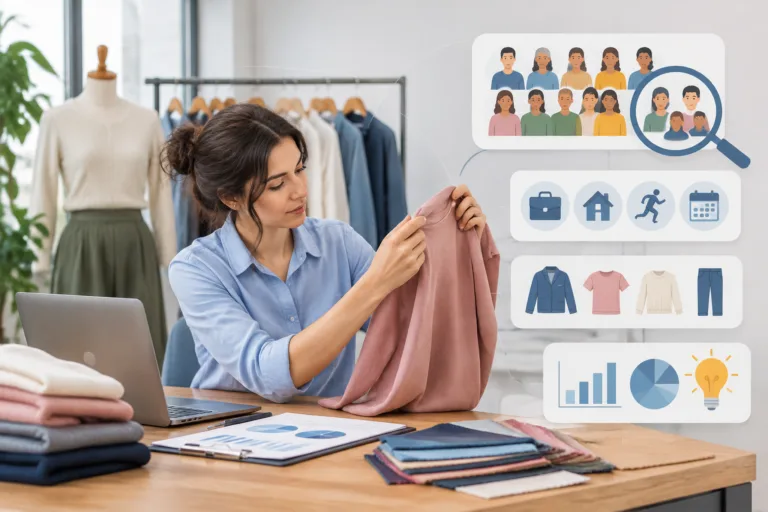
To write useful occasion driven shopping survey questions, start with the situation the respondent had in mind, not with a list of motives your team hopes to confirm. Occasion-driven shopping research examines the event, activity, setting, timing, wardrobe gap, or use situation connected to a clothing decision. A neutral survey first asks respondents to recall and describe that context, then separates what they considered, chose, wore, returned, or left unfinished. This approach can show how apparel needs take shape without assuming that a particular occasion caused a purchase or that one feature matters to everyone.
The practical goal is not to remove every interpretation from research. It is to make the interpretation visible, bounded, and testable. Questions should capture the respondent’s language before introducing categories, and each answer should be tied to the decision it can reasonably inform.
What Occasion-Driven Shopping Means in Apparel Research
An occasion is the concrete context connected to a shopping decision. It may be a work schedule, social event, trip, exercise routine, weather change, maintenance demand, or a wardrobe gap. It can also be a planned use situation rather than a completed purchase. The research unit is therefore the situation or need the respondent recalls, not an abstract label such as “quality-conscious shopper” or a demographic category.
Begin with an unprompted question such as, “Please describe the most recent situation in which you looked for clothing.” This wording invites a specific memory without saying that the situation led to buying, that a problem existed, or that a certain benefit mattered. After the response, optional categories can help organize answers. The respondent’s own wording may reveal an occasion the research team did not anticipate.
Keep the evidence types separate. A stated preference answers what someone says they value. An intended purchase describes a possible future action. An actual purchase records a transaction. Wearing frequency concerns repeated use, while a return description concerns a later outcome and the respondent’s account of it. These are related but different questions, so a survey should not treat them as interchangeable evidence.
Context also changes the meaning of familiar terms. “Comfortable” may refer to sitting through a workday, layering during travel, or moving during exercise. “Durable” may concern frequent washing, commuting, or repeated wear. “Good value” may depend on budget, expected use, care demands, or the number of occasions an item can serve. These factors can coexist, but none should be presented as a universal motive.
How to Write Occasion Driven Shopping Survey Questions Without Leading
Neutral occasion driven shopping survey questions describe what the respondent did or considered before asking for an explanation. An open prompt might ask, “What were you looking for, and what was happening when you began looking?” A leading version might ask, “Did you look for a comfortable garment that would solve your travel problem?” The second question supplies both a desirable feature and a presumed problem.
Use neutral verbs such as describe, recall, choose, compare, and consider. Avoid praise, pressure, and assumptions about sensible behavior. “Which option did you choose?” presumes a choice only when the respondent has already said one was made. Earlier wording can ask, “What happened next?” This leaves room for a purchase, a rejection, continued searching, or no action.
Separate the stages of the account. Ask first what happened and what the occasion was. Follow with what options were considered, what was selected or rejected, why those options mattered, and what trade-off was accepted. Do not combine occasion, product preference, price sensitivity, and satisfaction into one question. A respondent may have wanted a lower price, rejected the available choices, and still describe the occasion as successful.
Choose the response format according to the information needed. Open text is useful when the likely occasions or language are not yet known. Select-all-that-apply can organize several conditions after an open response, but a supplied list may make listed occasions easier to remember. Single-choice formats help identify a main category when categories are clear. Ranking can compare stated priorities, while an optional follow-up can clarify an unusual answer.
Every list and follow-up deserves an assumption review. Ask whether the wording introduces a brand expectation, a preferred benefit, a presumed inconvenience, or an answer the respondent may feel is more acceptable. The aim is not a universal wording formula; it is a disciplined check that each prompt allows the respondent’s situation and trade-offs to remain visible.
A Neutral Survey Sequence for Mapping Shopping Occasions
A compact sequence can move from recall to decision without becoming a catalogue of disconnected questions. Start with a clear reference period, such as a recent shopping experience, and screen only for the experience the study needs. Ask respondents to describe the occasion in their own words before showing researcher-defined categories.
| Question purpose | Neutral prompt direction | Useful answer format | Decision the result can inform |
|---|---|---|---|
| Occasion | Ask what was happening and what clothing need was present. | Open text, followed by optional categories | Which situations require closer investigation |
| Behavior | Ask whether the respondent searched, compared, bought, delayed, or stopped. | Single choice with “other” or “none” | Which stage of the shopping process needs attention |
| Criteria | Ask what characteristics were considered after the situation is described. | Select-all-that-apply plus optional explanation | Which garment or information attributes to examine |
| Trade-off | Ask what the respondent accepted, gave up, or could not find. | Open text or focused follow-up | Which tension may require a design or communication test |
| Outcome | Ask what happened afterward, without presuming satisfaction or purchase. | Single choice with an open follow-up | What needs further behavioral or qualitative evidence |
Keep the context behavioral and specific. Ask what the respondent needed to dress for, whether the item would replace something or add to the wardrobe, where they searched, and what happened next. “Where did you shop?” can distinguish a store, website, resale channel, or no completed search. It should not be treated as proof of why the respondent acted.
After the occasion and behavior are clear, ask which options were considered, selected, rejected, or not purchased. Then ask why, using the respondent’s own terms where possible. This sequence can expose a difference between a stated preference and an action. Someone may describe durability as important yet choose another item because of fit, availability, care requirements, or a different trade-off.
Demographic or profile questions belong where they support a stated analysis need. They should not replace the occasion description or force respondents toward an identity-based explanation. Mark optional questions clearly when they could make people feel categorized, and review whether the resulting comparison will inform a specific design, information, or service decision.
Sampling, Context, and Interpreting Occasion Responses
A survey result describes the people, time period, and situation included in the research. Before interpreting a pattern, record how respondents were recruited, the sample size, the collection period, the screening criteria, and any unanswered or excluded responses. These details show whose experiences are visible and which shoppers may be missing.
A current customer list can reveal how existing buyers describe an occasion, but it may not represent people who stopped buying, considered an item and rejected it, or never entered the category. Former customers, non-buyers, and product rejecters can have different experiences. Treat recruitment as part of the result rather than as a footnote.
Keep the recalled occasion beside the answer during analysis. A stated preference may not match what the respondent purchased, wore repeatedly, returned, or abandoned. The survey can document what people report; it does not automatically establish the reason for a later behavior. Open-text themes should be labeled as respondent language or coded themes, not as objective causes.
| Observable input | Possible implication | Initial decision | Variable that could change it |
|---|---|---|---|
| Several respondents mention lightweight knitwear for travel | Weight may matter in that recalled occasion | Examine a lightweight concept | Destination, layering, packing, care, and garment type |
| Respondents describe durability but choose other items | Durability may compete with another priority | Ask what trade-off affected the choice | Fit, availability, price, maintenance, or timing |
| A theme appears among one recruitment source | The pattern may reflect that sample’s context | Report it as a sample pattern | Recruitment route, missing groups, and collection period |
For example, respondents discussing lightweight knitwear for travel may initially appear to prioritize low weight or softness. Separating destination, layering needs, packing constraints, and care expectations could change the interpretation. The relevant choice may differ for commuting, formal events, or frequent washing. The same feature description does not carry one fixed meaning across occasions.
Report repeated patterns in the sample without turning them into market-wide conclusions. Avoid converting a small or convenience sample into a population percentage. The distinction between reported intent and observed or transactional behavior should guide any recommendation for interviews, observation, purchase records, wear information, or return descriptions. Those sources can complement a survey when their measurement purpose is defined; they are not evidence already collected merely because they are available in principle.
From Survey Findings to a Testable Apparel Decision
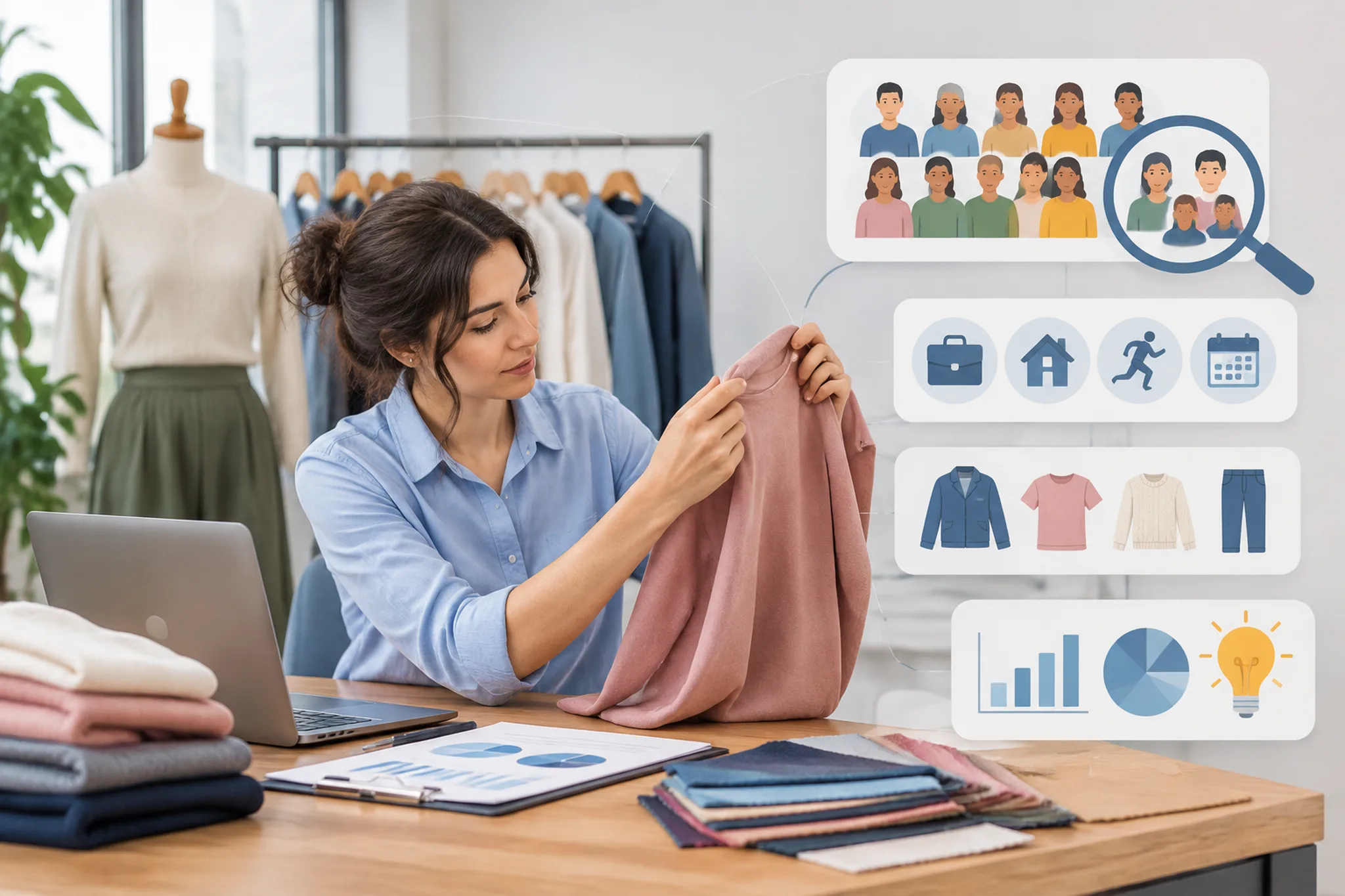
A useful finding states more than “shoppers care about comfort.” It identifies an occasion, the reported tension, the item or option considered, and the evidence that remains uncertain. This makes the result easier to turn into a bounded hypothesis without confusing what respondents said with what a product team hopes to achieve.
A hypothesis might concern a garment detail, product message, assortment choice, or service explanation. For example, a team could ask whether clearer care information would help respondents compare two concepts for a frequent-washing occasion. That question does not promise higher sales. It defines a change and an observable comparison for further study.
Choose an evaluation signal that matches the decision. A structured comparison can show whether people distinguish two concepts. A follow-up behavior measure can address what they do later. An interview or observation can clarify ambiguous occasion language. Purchase, wear, or return information may add behavioral context when the team defines exactly what each source measures.
Check whether the same response changes meaning across garments, occasions, maintenance conditions, budgets, or wearer groups. A request for “easy care” may concern limited time for one respondent and frequent travel for another. Collapsing both answers into one segment label could hide the design question that needs testing.
- Identify the occasion and the wardrobe task.
- Remove assumptions from the question and interpretation.
- Separate preference, intention, purchase, wearing, and return description.
- Document recruitment boundaries and missing groups.
- Define the next comparison, interview, observation, or behavioral check.
This process keeps occasion-based consumer research educational and testable. Related survey evidence can inform a proposed improvement, but it cannot alone prove that a design or message will improve sales.

Key Takeaway: Let the Occasion Lead the Question
Neutral occasion-driven shopping research starts with the respondent’s situation. Ask what happened, why it mattered, what was chosen or rejected, and what evidence remains missing. Then review the questionnaire for embedded assumptions and compare its themes with the applicable interview, observation, transaction, wear, or return evidence before making a product decision. Treat sample limits as part of the finding, not as a detached disclaimer.
Frequently Asked Questions
What is an occasion-driven shopping survey?
It is a survey that connects a clothing decision with a concrete event, activity, setting, timing, wardrobe gap, or use situation. It asks respondents to describe that context without assuming it caused a purchase or that one motive applies to everyone.
How can I ask about a shopping occasion without suggesting the answer?
Begin with a recent or clearly defined experience and ask the respondent to describe what happened in their own words. Follow with separate questions about options considered, reasons, trade-offs, and outcomes. Avoid praising a feature or presuming that a purchase occurred.
Should occasion-driven survey questions be open-ended or multiple choice?
Use open text when respondent language and unanticipated occasions matter. Use structured choices when consistent comparison is important, but review whether the list limits recall. A focused open follow-up can explain a selected response without making every question lengthy.
How do I separate a shopper’s stated preference from actual purchase behavior?
Ask about preference, intention, purchase, wearing, and returns as separate evidence types. Record what the respondent says happened, then identify which behavior is documented and which remains unverified. Do not treat a stated intention as proof of payment or repeated use.
Can a customer survey represent people who did not buy or later stopped buying?
Not automatically. A customer survey primarily shows the people reached through that recruitment route. Include or separately identify non-buyers, product rejecters, and former customers when those groups support the research question, and report which experiences remain outside the sample.
What should I do after finding a recurring occasion in survey responses?
Describe the pattern with its sample and context, then state the unresolved decision. Check whether interviews, observation, purchase information, wear reports, or return descriptions can clarify it. Define a specific product, message, assortment, or service comparison rather than assuming the pattern proves a market need.