Remote factory verification for small clothing brands is a structured evidence-gathering process, not an automatic substitute for every onsite or independent check. A brand can use a remote review to compare factory information, observe relevant equipment or workflow, examine samples and records, and identify risks that need further confirmation. Apparel Wiki is an independent garment-manufacturing knowledge publication; its Sponsor page explains the separation between sponsorship and editorial control.
The practical aim is proportionality. Instead of copying a large buyer’s entire verification program, a small brand should focus first on evidence that could materially change a decision about the intended garment, customer, or order. The result should be a documented view of what is supported, what is partly supported, and what remains unresolved.
Remote Factory Verification for Small Clothing Brands: Scope and Limits
Remote factory verification is a planned review of factory identity, relevant capability, records, samples, process evidence, and open risks conducted without assuming that remote access proves everything. It may show whether supplied information is internally consistent, whether the factory can demonstrate product-relevant equipment or workflow, and whether answers to product-specific questions are usable.
Each benefit has a boundary. A live video view is limited to what is shown during that session. Documents may be incomplete, outdated, or broader than the particular garment under review. A remote review does not independently establish every legal, technical, safety, or performance claim. Verification is an evidence review; an audit is a more defined examination against a stated scope or criteria; certification involves an applicable certification process; and commercial approval is the brand’s sourcing decision. These terms should not be treated as interchangeable.
| Observable input | What it can support | Initial choice | What could change the choice |
|---|---|---|---|
| Documents and records | Consistency of identity, scope, dates, and product information | Continue review when records match the stated product | Missing versions, contradictions, or records unrelated to the order |
| Live facility walkthrough | Presence of relevant areas, equipment, and stated workflow | Ask product-specific questions during the session | Limited visibility, another site, or an undisclosed subcontractor |
| Sample review | Observable materials, construction, measurements, and workmanship | Compare the sample with the current specification | Different materials, revised construction, or unresolved fit issues |
| Production evidence | Connection between a process, product, and order-linked record | Request evidence tied to the intended product | Generic references or no traceable link to the order |
| Independent testing | Results within the stated method, sample, and report scope | Use when the decision risk justifies confirmation | Unclear method, sample identity, date, or issuing source |
For a small brand, proportional verification means exposing the risks that matter most rather than collecting documents for their own sake. Apparel Wiki offers educational planning guidance, not a factory inspection, certification, laboratory assessment, or sourcing service.
Prioritize Verification by Garment and Supplier Risk
Before contacting a factory, prepare a short risk brief. Record the garment type, fabric and trim requirements, critical fit or construction features, intended use, expected variants, and the consequences of late or nonconforming goods. This brief keeps the review connected to the actual product rather than a generic factory category.
Prioritize questions that could change the initial factory decision. Can the relevant equipment and process knowledge be demonstrated? Can the factory explain material handling and quality controls for this garment? Are the sample, records, and stated workflow consistent? A straightforward style may justify a smaller initial evidence set. Sensitive materials, complex construction, or significant fit demands call for stronger sample, process, and possibly independent confirmation.
For a lightweight knit with fit-sensitive seams, a brand might prioritize material identity, dimensional behavior after the relevant finishing or care process, seam construction, and sample evidence. Those priorities would change if the fabric, end use, or finishing process changed. The scenario illustrates a decision method, not a universal checklist or a guaranteed result.
Record each issue as confirmed, partly supported, unresolved, or requiring independent confirmation. Do not turn missing information into a pass simply because the review has a limited budget. Limited resources make prioritization more important, while the appropriate evidence threshold still depends on the product and the consequences of failure.
Prepare a Consistent Remote Verification Evidence Pack
Prepare one controlled product brief for every factory under consideration. Include the current specification, approved materials and trims, construction priorities, measurement or fit references, relevant labeling needs, and the questions that require factory-specific answers. Mark the version and date so later responses can be compared with the same baseline.
Request an evidence set appropriate to the decision. Depending on the project, this may include factory identity and contact details, relevant capability information, sample or production references, process descriptions, quality records, and material or order traceability documents. These are decision-support inputs, not universal proof. A document’s value depends on its scope and connection to the intended product.
Use an evidence log with columns for the requested item, version or date, source, scope, unanswered question, and follow-up owner. Distinguish a factory statement from a record tied to a particular order, material batch, sample, or process. Traceability is a connection among the product, material, process, and record, not a conclusion based only on a supplier name or broad document.
Control substitutions explicitly. An apparently similar replacement can change care behavior, shade, weight, hand, fit, or construction. Any proposed alternative should be linked to a revised sample or another appropriate recheck. Fiber content alone does not settle whether the substitute is suitable for the intended garment.
When comparing factories, use the same specification, units, assumptions, and relevant packaging or delivery scope. Mark each item as included, excluded, or substituted. Comparable information requires comparable scope and version control; otherwise a shorter document set may only appear stronger because it leaves more questions unstated.
Run the Remote Review as a Structured Evidence Session
Start the scheduled call by confirming who is participating, which facility and product are in scope, which sample and record versions are being discussed, and whether work occurs at another site or through a subcontractor. Note these details before interpreting any demonstration.
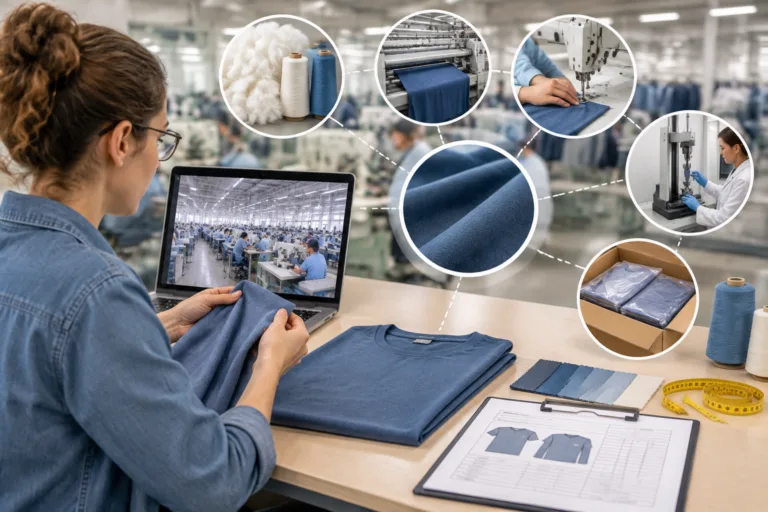
Ask for product-relevant demonstrations rather than a general promotional tour. The discussion may cover applicable equipment, material handling, inspection points, sample details, and the path of a garment or component through the relevant process. A demonstration can support an observation about what was shown at that time; it does not prove ongoing production performance.
Keep contemporaneous notes, dated screenshots or permitted records, question owners, and follow-up deadlines. Mark whether each point was directly shown, stated by the factory, supported by a record, or left unverified. Ask the factory to explain exceptions, rework, rejected materials, changed suppliers, and scheduling constraints in terms of the intended product without treating an answer as a guaranteed future result.
For contradictions or missing evidence, define a controlled follow-up. That may involve another live demonstration, a revised sample, an order-linked record, or independent confirmation when the decision risk justifies it. Remote visibility can reduce ambiguity when the session is structured, but it cannot remove every uncertainty or prevent all misrepresentation.
Connect Factory Claims to Samples, Materials, and Process Records
A remote factory sample verification should connect what the factory says with the actual garment or development sample. Compare the sample with the current specification and record observable differences in fabric, trims, construction, measurements, labeling, finishing, and workmanship. A visually similar sample does not prove that the same materials or process will be used in production.
Where possible, connect the material to the garment and order context. Supplier or batch information, processing steps, proposed substitutions, and handover records should form a traceable chain. A supplier name or broad certificate is only one information point. It does not, by itself, establish that a particular material entered a particular garment or order.
| Evidence area | What it may support | Open question | Next action |
|---|---|---|---|
| Factory-stated capability | Understanding of the claimed equipment, process, or construction method | Was the capability shown for this product? | Request a product-specific demonstration or sample |
| Sample-observed condition | Review of visible materials, workmanship, measurements, and construction | Does the sample match the current specification? | Record differences and request a revised sample when material |
| Process or inspection record | Evidence that a stated step or check was documented | Does the record identify the relevant garment, material, or batch? | Request an order-linked or sample-linked record |
| Unresolved technical claim | Identification of a claim requiring a defined method or scope | Which units, sample scope, and interpretation apply? | Check the applicable specification, method, or authoritative source |
For a fit-sensitive or material-sensitive style, review the appropriate development sample or other physical evidence before making a final decision. Washing, finishing, fabric behavior, and construction can change the result. A remote discussion can identify what to examine, but it cannot replace evidence that the product decision requires.
Measurements, performance tests, safety claims, and regulatory claims need an applicable method, units, sample scope, and authoritative interpretation. A supplied report or formula is not automatically proof of a universal result. The brand should review the report’s sample identity, date, method, issuing laboratory, and stated scope before relying on it.
For example, if a factory proposes a substitute with the same fiber composition, compare its hand, shade, weight, care behavior, and fit implications. The composition may appear unchanged while the garment behaves differently. Link approval to the revised sample or other appropriate recheck, rather than accepting the replacement from composition alone.
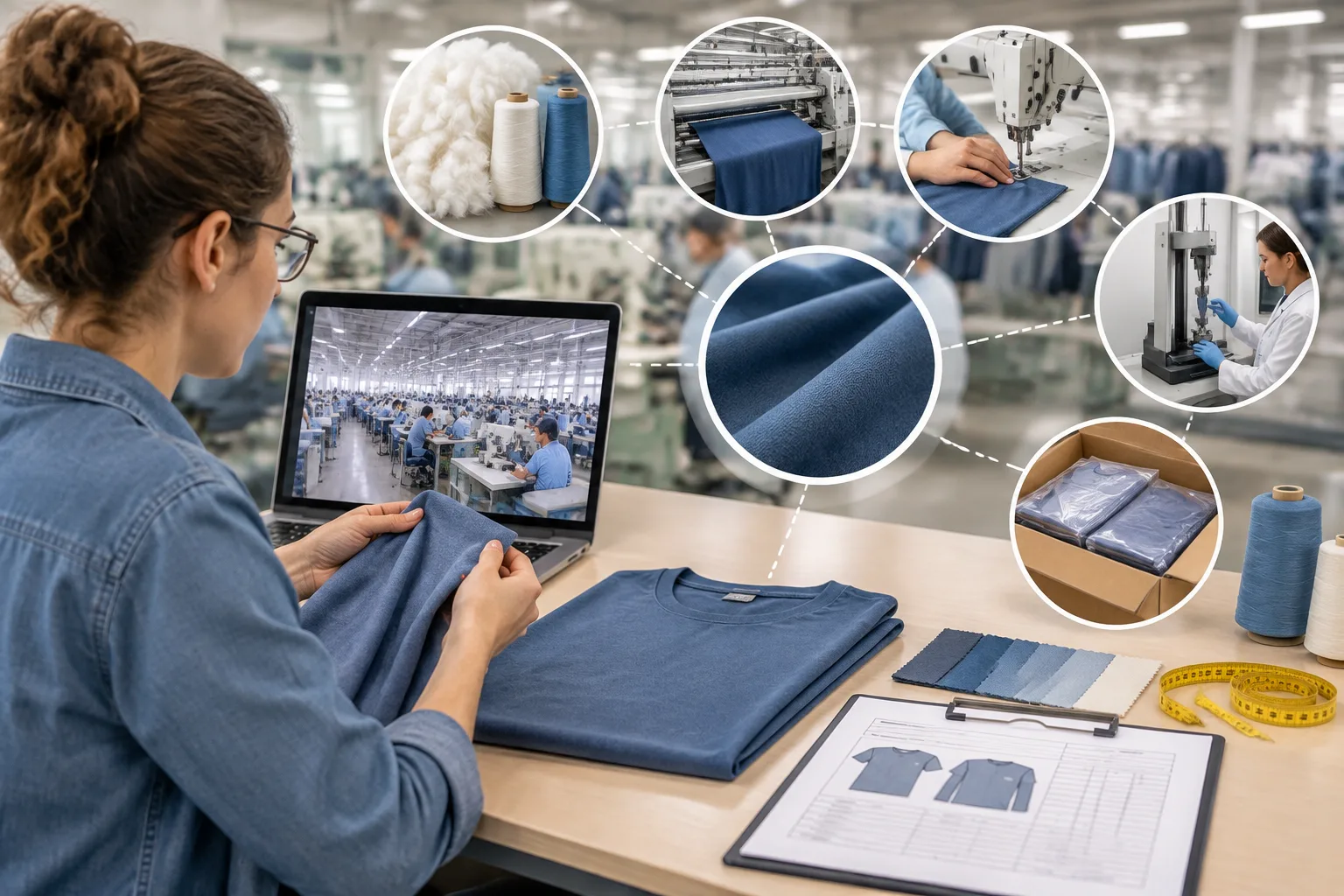
Turn Findings into a Proportionate Approval and Follow-Up Plan
Convert the evidence log into a documented sourcing decision without treating remote verification as a guarantee. A practical status system can classify each issue as supported, partially supported, unresolved, or not applicable. Record the evidence, owner, due date, and decision impact beside the status. This is an editorial planning tool, not a universal approval standard.
Separate issues that block an initial decision from issues that can be closed during development. Contradictory facility information, an inability to demonstrate a critical process, unexplained substitutions, and missing product-specific evidence may require escalation. A minor unanswered question may instead have a defined owner and a later closing action. The correct treatment depends on the garment, intended use, and consequences of failure.
Match the next action to the risk:
- Request clarification when the information is incomplete but the scope is clear.
- Repeat a live review when the demonstration was ambiguous or did not cover the relevant process.
- Inspect or test a physical sample when fit, material behavior, construction, or performance could change the decision.
- Request order-linked records when a document does not connect the material or process to the intended goods.
- Seek independent inspection or laboratory work when the decision requires evidence beyond the brand’s own review.
- Pause the decision when a material risk remains unresolved and no suitable follow-up is available.
Reopen the review when a change affects the original risk assessment. Triggers may include a new material, changed subcontractor or facility, altered construction, revised sample, different end use, or a quality issue. Treat change control as part of verification, not as an administrative detail after approval.
Keep the record proportionate to the brand’s resources, but specific enough to support later comparison. Use consistent scope, units, assumptions, and product context when reviewing supplier responses. Order difficulty, quantity, and product scope can affect apparent performance, so a single remote session should not be used to rank factories or infer future delivery, quality, or capacity.
Before moving forward, compare the evidence log with the current specification. List unresolved assumptions and identify the one or two checks most likely to change the decision. This creates a follow-up plan without manufacturing certainty from incomplete information.

Use Remote Verification as a Starting Point, Not a Guarantee
Remote verification can improve an initial sourcing judgment when a small brand narrows the scope, standardizes evidence, links claims to the actual garment, and escalates material risks. It does not remove unresolved product, process, traceability, testing, or change-control questions. As the next educational step, review the current specification and build a short evidence log before the next supplier conversation. Compare each claim with the evidence available, then check the applicable method, buyer requirement, or official source before treating a technical statement as verified. Apparel Wiki provides independent garment-manufacturing education, not factory access, inspection, manufacturing, or sourcing services.
Frequently Asked Questions
What can remote factory verification confirm for a small clothing brand?
It can help confirm whether supplied information is internally consistent, whether relevant equipment or workflow can be demonstrated, and whether product-specific questions receive usable evidence. It cannot independently establish every legal, technical, performance, capacity, or future production claim.
What documents should a small clothing brand request before a remote factory review?
Request information appropriate to the decision, such as factory identity and contact details, relevant capability information, sample references, process descriptions, quality records, and material or order traceability documents. These are decision-support records, not universal proof, and their scope should match the product and transaction.
Can a live video walkthrough replace an onsite factory visit?
A live walkthrough can provide time-limited observations and product-specific demonstrations. It does not automatically replace an onsite visit, physical sample review, independent inspection, or laboratory work when those are needed to address the garment’s risk and intended claims.
How should a brand prioritize verification for a complex garment or sensitive fabric?
Start with the questions most likely to change the factory decision. Prioritize material identity, handling, construction, fit, finishing, sample evidence, and relevant records when the garment is complex or sensitive. A straightforward style may need a smaller evidence set.
How should a brand handle a proposed material or subcontractor change after remote verification?
Reopen the affected part of the review. Record the change, connect it to the relevant sample or order, and reassess material behavior, construction, traceability, or process risk. Do not assume the original verification covers a new material, facility, or subcontractor.