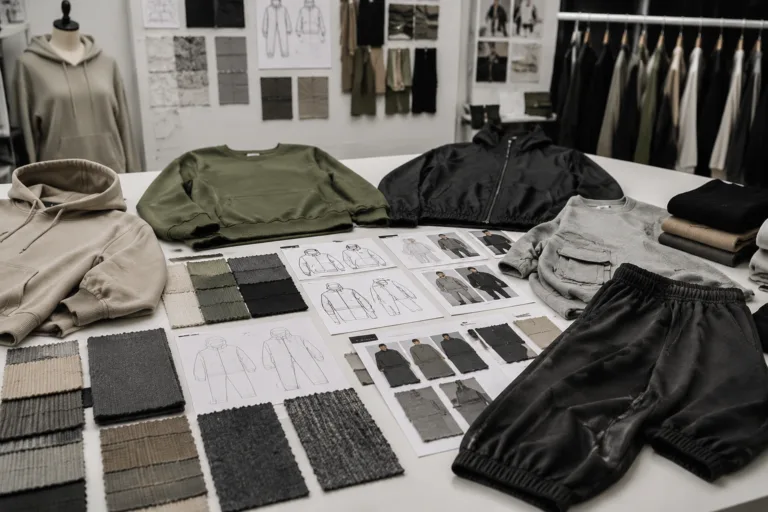
Streetwear influence collection planning works best when a visible style direction becomes a documented product hypothesis, not an assumed sales forecast. Record what appeared, where and when it appeared, who adopted it, and which garment or assortment decision it could affect. Then choose an appropriate commitment: keep it as a reference, test it in a limited form, include it in a capsule, or develop it more broadly. Apparel Wiki is an independent apparel knowledge publication; its Sponsor page explains that sponsorship does not control editorial content.
The practical distinction is between attention and evidence. A striking image can suggest a silhouette, detail, or styling direction, but it does not establish demand across every customer, climate, occasion, or sales channel. Measured planning connects the signal to a defined audience, a product brief, and a reviewable decision.
What Streetwear Influence Means for Collection Planning
Streetwear influence is an input to collection planning, not a guaranteed market outcome. A single runway look, viral post, or small sales sample may show that an element has attracted attention. It does not, by itself, establish a repeatable trend or a global consumer preference. A stronger streetwear trend signal appears across a stated period, more than one relevant channel, and some evidence of actual adoption.
These observations represent different levels of certainty. A visible style signal is something that can be described, such as a loose proportion, graphic treatment, layered styling direction, or pocket detail. A repeatable trend pattern is a signal that recurs in a defined market or audience. A product hypothesis asks whether that influence could work in a particular garment or assortment. A collection decision determines the commitment that follows.
Attention does not equal willingness to buy. An element may be visually strong but suited only to a defined customer group, use occasion, climate, body-size range, or channel presentation. A styling image can communicate an idea without showing whether customers want the garment, can use it repeatedly, or will choose it over alternatives. For that reason, the planning record should retain the signal’s audience and context rather than describing personal exposure as universal demand.
A useful brief states the recognizable influence, the intended customer, the garment category, the use occasion, and the question the team needs to answer. The possible outcomes can then remain proportionate: reference only, limited test, capsule inclusion, broader collection adoption, or rejection. This approach supports streetwear-inspired collection decisions without assuming every observed influence deserves a full range.
Measure the Signal Before Committing Product
Before assigning collection space, create a signal record. Note the observed element, observation period, location or market, channel, audience, and frequency of appearance. Add evidence of adoption where available, while keeping inspiration sources separate from validation sources. Editorial imagery and social attention may reveal a direction; defined purchase, preorder, waitlist, search, or customer-feedback evidence may help test commercial interest.
The record should also capture counter-signals. Limited wearability, narrow sizing relevance, climate mismatch, weak product response, or a sharp difference between attention and purchase interest can change the decision. These observations do not automatically disprove an influence. They show where its relevance may be narrower than the original signal suggested.
Teams may use internal labels such as “emerging,” “recurring,” or “unconfirmed.” These labels are planning aids, not statistical conclusions. Each label should be accompanied by the evidence behind it and by the uncertainty that remains. Repetition across independent channels and time is more informative than repeated exposure within one tightly connected source, but neither pattern removes the need to define the audience and product question.
| Observable input | Likely implication | Initial collection choice | Variables that could change the choice |
|---|---|---|---|
| Isolated visual attention in one source | Useful creative reference, with limited evidence of repeatability | Retain as reference or explore in styling | Audience relevance, recurrence, product-level response |
| Repeated styling adoption across defined channels | Promising direction, but the product form still needs testing | Develop a controlled sample or limited silhouette | Climate, occasion, fit, channel, and customer context |
| Product-level purchase or preorder evidence | Stronger indication that the influence may translate into a product decision | Consider capsule or broader development after review | Returns, repeat demand, operational capacity, and assortment role |
| Response concentrated in one region or audience | Potentially relevant, but not a universal collection direction | Keep the choice market-specific or limited | Geography, season, cultural context, and distribution channel |
This framework keeps measuring streetwear trends tied to time, place, audience, and channel. It also turns trend watching into a testable product hypothesis rather than an unsupported claim about consumer demand.
Streetwear Influence Collection Planning: Translate Signals Into a Collection
Once a signal is promising enough to explore, translate it into a product brief. State the customer, use occasion, garment category, recognizable influence, intended degree of adaptation, and reason the product belongs in the collection. This makes the influence actionable: the team can identify whether it changes silhouette, material direction, color, graphic or trim treatment, styling, or the product’s role in the assortment.
Keep the visible reference separate from its underlying function or cultural context. A historical form may inform a contemporary garment, but visual similarity alone does not prove direct lineage or a single origin. The brief should distinguish historical reference, current adaptation, and editorial interpretation. That distinction helps the product communicate an idea without presenting one borrowed visual as the universal identity of streetwear.
The influence can serve different collection roles. It may define a hero item, support a repeatable core product, appear through a color or detail, anchor a limited capsule, or remain primarily a styling direction. A recognizable hero can express the idea clearly, while quieter supporting products may give the assortment broader use. The right role depends on the evidence, customer, channel, and level of uncertainty.
For example, a lightweight knit in a warm-weather casual assortment might test a loose streetwear proportion as a limited silhouette. A colder market may require another material weight or layering approach. A different customer or more performance-oriented use may justify another proportion or product role. The first choice is therefore a scenario for evaluation, not a universal specification.
Product development should keep open questions visible. Fabric behavior, construction, fit, layering, care expectations, cultural context, and channel presentation can all alter the final decision. Streetwear-inspired product development is more controlled when the team identifies which variable carries the influence and changes one meaningful element at a time where practical. The collection then becomes a set of commitment levels rather than a demand to reproduce every observed signal.
Balance Design Appeal With Wearability and Assortment Risk
A strong visual signal does not automatically create a useful garment. Evaluate the influence against proportion, layering, movement, climate, care expectations, and compatibility with the customer’s existing wardrobe. These variables can change whether a striking interpretation earns a place in the range or remains a reference.
First identify where the influence actually sits. It may come from the silhouette, fabric hand, color, graphic treatment, pocketing, trim, styling, or a combination. Isolating the main variable makes review more manageable. It also helps the team revise one decision without losing the entire product idea.
Wearability remains context-specific. A relaxed proportion may support one use occasion but create fit or layering questions in another. A graphic treatment may be central to the concept, while a quieter color or detail may carry the same direction into products with broader styling options. Do not describe these choices as guaranteed comfort, durability, or fit outcomes without appropriate technical evidence.
| Observable decision | What to examine | Possible collection response |
|---|---|---|
| Distinctive silhouette | Movement, layering, sizing, and use occasions | Use as a focused item or limited capsule if the use case is narrow |
| Strong graphic or trim | Placement, styling flexibility, cultural context, and repeat wear | Keep the statement concentrated while supporting it with quieter products |
| Material-led influence | Fabric behavior, care expectations, construction, and climate | Review development variables before assigning a broad collection role |
| Styling-led influence | Whether the look depends on a complete outfit or works as separates | Present it as a styling direction or distribute the idea across several products |
Assortment risk often appears through substitution and repeat use. A distinctive piece may attract attention but serve fewer occasions than a quieter interpretation. Distributing the influence across a hero item, supporting color or detail, repeatable core, and limited capsule can reduce reliance on one expression. The appropriate mix depends on the evidence and the collection’s intended customer.
Coordinate these choices with pattern, construction, quality, and sourcing review. Material and construction decisions remain project-dependent, so a concept review cannot approve performance or production results. Historical and cultural references also need care: visual similarity alone does not establish one universal streetwear identity or prove a direct lineage.
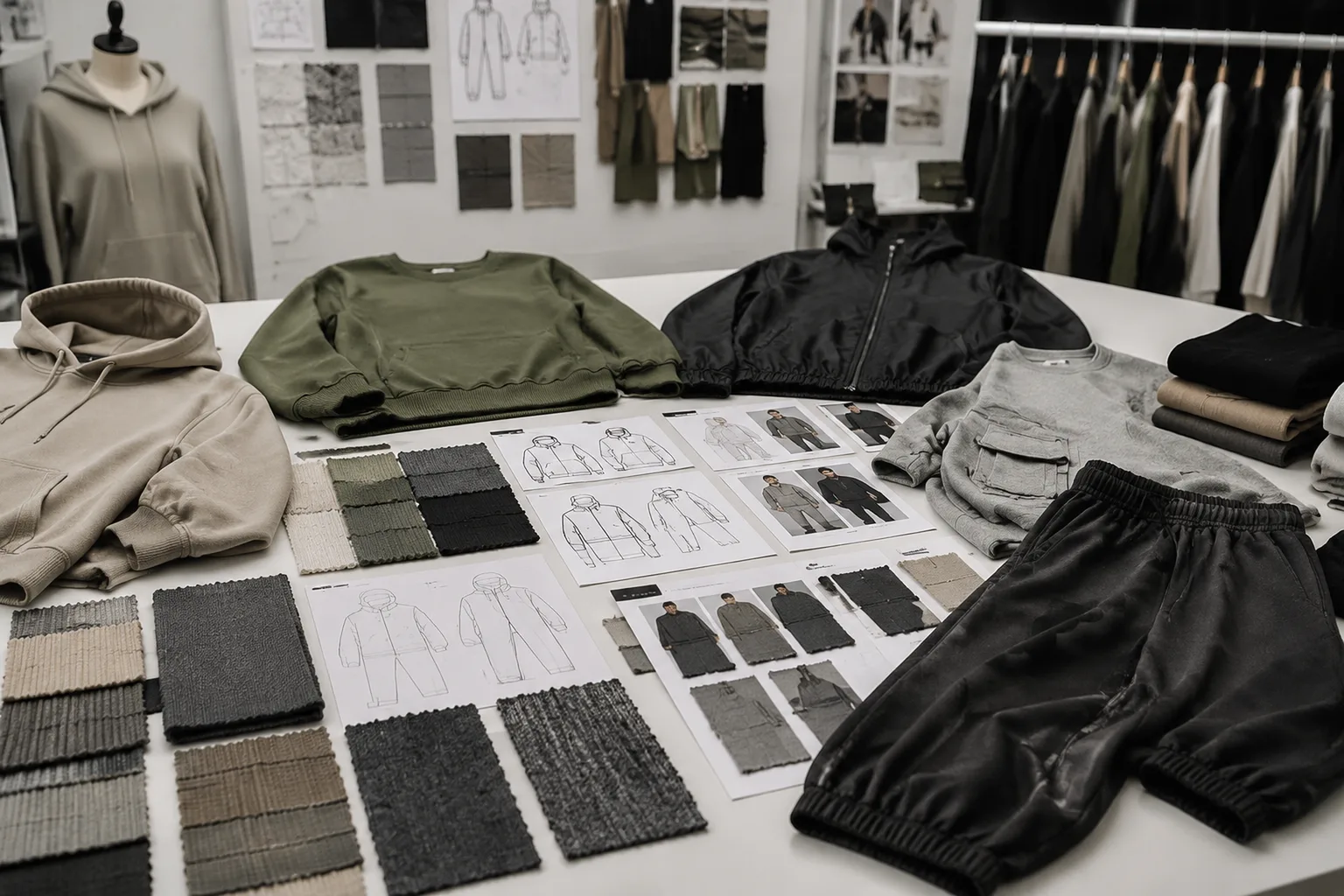
Validate the Collection Decision Through a Defined Commercial Test
Before committing product, define what the test is meant to decide. Record the product, intended audience, channel, observation period, and response that would support continuation, revision, or stopping. A test without a stated decision can collect attention without clarifying the next action.
Match commitment to uncertainty. An unconfirmed signal may justify retaining the reference or developing a small learning exercise. Repeated observation combined with product-level evidence may support broader development, subject to fit, quality, operational, and assortment review. Neither path proves future demand by itself.
Business model and channel also shape interpretation. Wholesale, direct-to-consumer, preorder, custom, and on-demand approaches distribute inventory exposure, customer acquisition work, fulfillment responsibilities, and timing of cash responsibility differently. Low inventory exposure does not necessarily mean the lowest total cost, and a favorable early response does not prove repeat demand.
Record operational limits alongside the response. Depending on the defined test, relevant observations may include returns, fulfillment constraints, customer feedback, revision requests, or the gap between stated interest and completed purchase. Do not compare these signals without defining what each one measures.
A decision log should capture:
- the evidence used and its time, place, audience, and channel;
- the product hypothesis and collection role under review;
- assumptions that remain open, including fit, material, care, and operational questions;
- the chosen action: reference, development, limited test, revision, expansion, or stopping;
- the review date and the condition that would change the decision.
This approach treats streetwear product testing as a learning exercise with boundaries. It can clarify whether a defined offer merits further attention, but it cannot establish universal consumer demand or remove the need for product and operational review.

Conclusion: Make Influence a Testable Collection Input
Measured streetwear collection planning connects an observed signal to evidence, a product hypothesis, a controlled commitment, and a review point. To continue the exercise, compare several influences using the same fields: audience, context, product variable, evidence, collection role, and changing assumptions. Check relevant technical or market evidence before assigning collection space.
Frequently Asked Questions
How is streetwear influence different from proof that a product will sell?
Influence describes a design input or observable signal. Proof of sales requires defined product-level evidence from a relevant audience, channel, and time period. Attention, styling visibility, or positive feedback may inform a hypothesis, but none alone establishes demand.
What evidence should a team record before adding a streetwear influence to a collection?
Record the observed element, observation period, location or market, channel, audience, frequency, and evidence of adoption where available. Add counter-signals such as climate mismatch, narrow sizing relevance, limited wearability, or weak movement from attention to purchase.
Should a streetwear reference become a hero item, a core product, or a limited test?
Choose the role according to evidence, customer, use occasion, channel, and uncertainty. A distinctive but narrow idea may suit a limited test, while a quieter and more adaptable interpretation may support a broader role after review.
How can climate, audience, and sales channel change a streetwear-inspired product decision?
They can change the suitable material weight, proportion, layering approach, use occasion, presentation, and commitment level. A choice developed for a warm-weather casual audience should not be treated as universal for colder climates or performance-oriented use.
What should a collection decision log include when the trend evidence is uncertain?
Include the evidence source and context, product hypothesis, intended collection role, open assumptions, selected action, review date, and condition for changing course. The log should also state what the test can and cannot establish.