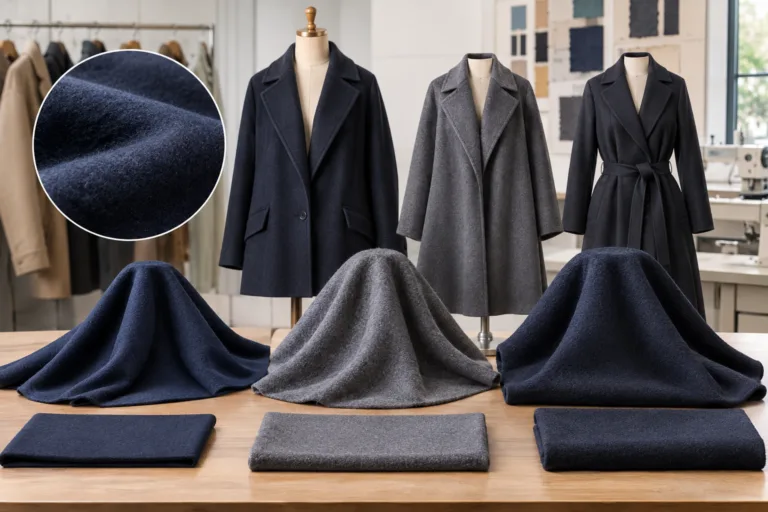
An apparel quality control plan is a documented system that connects each product requirement to a check, an acceptance rule, a responsible role, a record, and an action when results do not conform. It follows materials through cutting, sewing, finishing, finished-garment inspection, and shipment release. Apparel Wiki provides this as independent educational guidance; its Sponsor page explains the publication’s separation between sponsorship and editorial control.
A useful plan does not treat final inspection as the entire garment quality control process. It places controls where problems can be detected before they affect more garments. The exact controls depend on the product, intended use, approved specification, identified risks, applicable requirements, and contractual agreement. The framework below is editorial guidance rather than a universal factory procedure.
What an Apparel Quality Control Plan Covers
The plan should cover materials, construction, appearance, measurements, packaging, and any testing required by the product specification. For every characteristic, it should state what must be checked, how it will be evaluated, who makes the decision, and what evidence must be retained.
The basic chain is: requirement, method, acceptance criterion, responsible role, record, and response. For example, an approved button reference becomes a trim identity check. A specified pocket position becomes a defined measurement. If the result falls outside the applicable criterion, the plan should require containment and an authorized disposition rather than an informal decision to continue.
In this article’s framework, quality control means the operational checks and decisions used to evaluate product or process results. Final inspection is only one checkpoint within that system. Quality assurance has a broader preventive focus on whether suitable processes and controls exist. A production approval may authorize a sample or stage, but it does not replace continuing controls across the production quantity.
The plan should separate incoming material checks, in-process controls, finished-garment inspection, and shipment-release review. This structure helps detect problems near their source. It also prevents an end-stage inspection from carrying responsibility for issues that could have been controlled before cutting or during assembly.
| Operation or input | Characteristic | Method | Frequency or sample basis | Acceptance rule | Record | Responsible role |
|---|---|---|---|---|---|---|
| Incoming buttons | Identity, appearance, and specified dimensions | Compare with approved information and measure where specified | Defined by the agreed plan | Matches the applicable approved criteria | Receiving inspection record | Assigned receiving or quality role |
A defect is an individual departure from a requirement. A nonconforming garment is an affected piece. One garment may contain several defects but still count as one nonconforming piece, so those totals should remain separate. Tolerances, sampling parameters, safety controls, and contractual acceptance rules must come from the applicable specification, agreement, procedure, or validated authoritative source—not from a universal Apparel Wiki limit.
Set Quality Requirements Before Materials Arrive
Material control begins by translating the product specification into checkable requirements before cutting. List every fabric, lining, interlining, thread, closure, label, decorative component, and packaging item. For each input, identify the approved reference and the characteristics that affect product identity, construction, appearance, function, or documentation.
An apparel material inspection may compare item identity, color or shade reference, visible condition, dimensions, quantity, composition information, and approval status. The relevant criteria remain product- and agreement-dependent. Packaging components can also require identity, dimensions, print details, or documented approval where those characteristics appear in the specification.
Receiving records should connect the material to its lot or batch identity, quantity received, supplier documentation, and approval status. That traceability matters if a later garment problem must be connected to a specific fabric delivery, trim batch, or packaging input. Without it, containment can become unnecessarily broad or fail to cover all affected goods.
Visual and dimensional checks have clear limits. They can identify observable appearance differences or compare a dimension with a specified value, but they cannot establish every composition or performance property. Where characteristics such as dimensional behavior, stretch, colorfastness, or another performance attribute require testing, the plan should identify the applicable specification and validated method instead of treating receiving inspection as proof.
A practical incoming material quality check follows a controlled decision path:
- Confirm the item and lot against the order and approved specification.
- Perform the defined visual, dimensional, documentary, or test-related checks.
- Record results and describe any deviation clearly.
- Segregate uncertain or nonconforming material to prevent unintended use.
- Obtain a disposition from the role authorized by the plan before release to production.
Consider a lightweight knit intended for a close-fitting garment. Its shade, stretch behavior, and dimensional behavior may influence panel matching, cutting controls, fit, and later appearance. The selected fabric quality control checks should reflect those risks and the garment’s intended use. However, the final criteria and methods must come from the approved product information and applicable test procedure.
Material control is therefore part of finished-garment quality planning, not merely a purchasing check or supplier endorsement. It establishes whether production inputs are suitable for their specified purpose and creates the records needed for later investigation.
Control Quality Through Cutting, Sewing, and Finishing
Once materials are released, the plan should place apparel production quality checkpoints where an error can be detected before it repeats. Each checkpoint still needs a defined requirement, method, decision role, record, and response. Inspection frequency should reflect the agreed procedure, product risk, process stability, and specification rather than an assumed universal interval.
Cutting
Cutting controls can confirm marker or panel identity, fabric lot or shade separation, directional or grain requirements where relevant, piece counts, and panel completeness. The checkpoint should compare work with approved product information. If panels from uncertain lots become mixed, the response may include stopping use, identifying affected bundles, and obtaining a documented disposition.
Sewing and assembly
In-process garment inspection should focus on construction features that influence fit, function, appearance, or durability. Examples include seam configuration, operation sequence, component placement, matching, attachment security, and specified measurement points. These are possible control characteristics, not universal workmanship rules. Exact tolerances and mandatory construction details belong in the approved product specification.
A first-piece or start-up review can identify an incorrect setup or interpretation before the same issue appears repeatedly. It should compare the initial output with the relevant construction and measurement requirements. Passing that review confirms only the evaluated piece or start-up condition; it does not approve every garment subsequently produced.
Finishing and packing preparation
Before final inspection, finishing checks can cover pressing appearance, loose threads, stains, closures, labels, visible construction, and packaging preparation. Functional checks should be included where the specification requires them. Findings should trigger a defined response instead of being left for final inspection to rediscover.
Actionable records identify the style or order, operation or area, defect description, affected quantity, date, responsible person or role, disposition, and recheck result. Together, these details show what happened, where affected work was contained, who decided the response, and whether the correction met the original criterion.

Inspect Finished Garments and Decide Batch Disposition
Finished-garment inspection brings several controls into one review. Check the style and batch identity, inspected quantity, appearance, workmanship, specified measurements, relevant functions, labels or documentation, packaging condition, and traceability to earlier records. Each result should be evaluated against the approved specification or other applicable acceptance rule.
If sampling is used, define the batch boundary, selection method, sample size, defect-counting rules, and acceptance criteria before inspection. Samples should represent the defined batch rather than convenient or specially selected pieces. The appropriate plan depends on the product, risk, agreement, and applicable procedure; there is no universal sampling level for every garment.
| Observable result | Implication | Initial decision | What could change it |
|---|---|---|---|
| All evaluated requirements conform | No nonconformity found in the inspected sample | Proceed under the defined release process | Missing records or unresolved earlier findings |
| Isolated nonconforming garments | Affected pieces require control | Segregate them and assess the batch under the agreed plan | Defect severity, frequency, or evidence of wider occurrence |
| Repeated or systemic defects | The issue may extend beyond sampled pieces | Contain the batch and investigate the process | Verified scope, correction, and reinspection results |
| Unresolved safety or specification concern | Release requirements remain uncertain | Hold release and escalate to the responsible authority | Documented resolution under the applicable requirement |
Keep defect totals separate from affected-piece counts. Using the example inputs, 12 nonconforming garments among 200 inspected pieces gives a nonconforming-piece rate of 12 divided by 200, or 6%. If those garments contain 18 defects, DHU is 18 divided by 200 times 100, or 9. These measures describe different counting bases; neither result is an acceptance plan.
Acceptance sampling supports a decision about a defined batch under a defined plan. It does not establish that every piece is defect-free. Repeating samples until one happens to pass also does not correct the underlying problem.

Control Nonconformities and Release Shipments with Records
When a result does not conform, first identify and contain the affected material, garments, or batch. Record the requirement, observed condition, quantity or known scope, and relevant traceability details. Containment prevents uncertain product from moving forward while the responsible role determines the disposition.
Possible dispositions include rework, repair, replacement, authorized use-as-is or concession, and rejection. These choices are not interchangeable or automatically acceptable. The plan should define who has authority to approve each option and what evidence is required. After authorized correction, reinspect against the original relevant criterion and record the result.
Correction addresses the product currently affected. Corrective action investigates why the issue occurred, addresses its cause, and evaluates whether the response reduces recurrence. Replacing a misplaced component may correct one garment. Reviewing instructions, setup, training, or process controls may form part of corrective action when repeated placement errors indicate a broader cause.
For repeated placement or measurement deviations, the initial response may be to contain the known batch and review additional records or pieces. The final disposition can change if the deviation affects function, safety, contractual requirements, or a broader lot. Safety-related uncertainty should be escalated to the responsible quality or compliance authority rather than resolved through an unsupported assumption.
Release records should connect the material or batch identity, in-process findings, finished inspection results, disposition, correction or corrective action, reinspection, authorized deviations, and final status. Any unresolved requirement should remain visible. The exact document format, approval route, and retention period must follow the applicable contract, management system, or other governing requirement.
Shipment release should therefore be a documented decision by an authorized role, not an informal verbal approval. The record should show which requirements were evaluated, what happened to nonconforming goods, whether reinspection passed, and whether any approved concession remains attached to the shipment information.
Use the Plan as a Practical Quality Decision System
Review the plan as one connected decision system from materials to shipment. Every important requirement should have a checkpoint or method, responsible role, record, acceptance rule, and defined response to nonconformity. Test whether the records can trace a finished-garment problem back to the relevant input or process finding.
Before implementation, compare the draft apparel quality control plan with the applicable product specification, contract, and validated inspection or test method. Give particular attention to safety, regulatory, sampling, and performance requirements that cannot be set through general editorial guidance.
Frequently Asked Questions
What should an apparel quality control plan include?
It should define product requirements, inspection or test methods, checkpoints, responsible roles, records, acceptance rules, and responses to nonconformity. Its scope should cover incoming materials, production processes, finished garments, disposition decisions, and shipment release.
How does material inspection fit into an apparel quality control plan?
Material inspection checks whether fabric, trims, labels, and packaging inputs match approved requirements before use. It also records lot identity and deviations, supporting traceability when a later garment problem may be connected to an input.
What is the difference between a garment defect and a nonconforming garment?
A defect is an individual departure from a requirement. A nonconforming garment is an affected piece. One garment can contain several defects, so total defects and total affected garments use different counting bases.
Does final inspection alone provide adequate apparel quality control?
No. Final inspection can identify finished-product issues, but it cannot replace incoming-material and in-process controls. Earlier checkpoints help contain problems before they affect more garments or become harder to trace and correct.
How should a quality plan handle garments that fail inspection?
The plan should require identification, segregation, documentation, authorized disposition, and reinspection where appropriate. It should distinguish correction of affected garments from corrective action addressing the cause of repeated or systemic problems.
Are sampling levels and acceptance criteria the same for every apparel product?
No. Sampling boundaries, sample sizes, defect classifications, and acceptance criteria depend on the product, intended use, risk, applicable specification, contract, and governing procedure. They should be defined before inspection rather than selected after seeing results.