Reliable apparel supplier communication protocols are agreed methods for sending, receiving, confirming, approving, updating, and recording information during clothing production. They connect product specifications, quotations, samples, materials, timelines, quality requirements, documents, decisions, and exceptions so that important instructions do not depend on scattered messages or personal memory. This practical framework reflects Apparel Wiki’s independent educational approach; its editorial work is described through the Sponsor page.
A useful protocol gives each important instruction an identifiable owner, a current version, a required response, an approval status, and a retained record. The right level of control depends on product complexity, supplier structure, order stage, and the contractual responsibilities agreed for the project. The following sections provide an editorial recommendation, not a universal industry rule.
What Are Apparel Supplier Communication Protocols?
A supplier communication protocol is the working system that determines how production information moves between a brand, designer, sourcing team, trading company, factory, subcontractor, and other relevant parties. It should clarify who sends information, which channel is appropriate, how the recipient confirms understanding, where the current version is stored, and how later changes are approved.
This is broader than an email template, messaging application, purchase order, or factory audit. An email may transmit a request, but it does not by itself establish whether the request is complete, whether the supplier accepted the assumptions, or whether a later revision superseded it. A purchase order may define commercial information, while sample comments, technical specifications, material approvals, and exception records may sit elsewhere. An audit provides a particular type of assessment; it does not replace the day-to-day communication process.
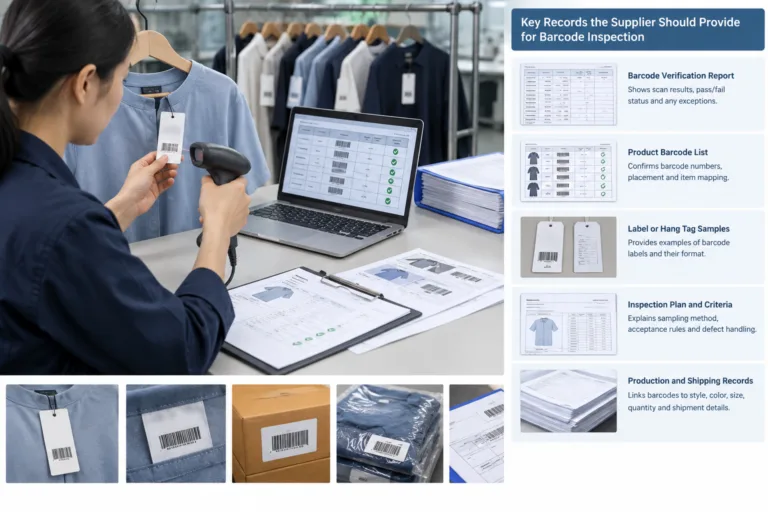
In practice, the communication objects may include a technical specification, request for quotation, measurement information, sample, fabric or trim decision, production milestone, quality requirement, packing instruction, shipping assumption, inspection record, approval, or exception. Each object needs enough context to remain understandable when forwarded, reviewed later, or considered by someone who was not part of the original conversation.
A simple control test is to ask five questions about every material instruction:
- Who owns the instruction or decision?
- Which style, order, sample, material, or project reference does it concern?
- What is the current revision or status?
- What response, approval, or action is required?
- Where is the retained record and supporting evidence?
The answer to these questions may be recorded in different tools. The important point is the agreed relationship between the tools and the project documents. Requirements concerning legal effect, contractual responsibility, regulatory communication, or record retention must be confirmed against the applicable agreement and jurisdiction rather than assumed from a general protocol.
Set Up the Communication Chain Before Requesting a Quote
Before sending an RFQ, map the parties involved in the commercial and production arrangement. The quoting entity, contracting entity, payment recipient, actual production site, and permitted subcontractors may be different organizations. That structure is not automatically good or bad, but it should be visible enough for the project team to understand who is responsible for each step.
Verify the stated arrangement against available commercial documents, supplier disclosures, and project records. Record the scope of any permitted subcontracting and the process for notification or approval if the production arrangement changes. The specific disclosure and approval requirements should be checked against the applicable contract, code of conduct, and jurisdictional requirements.
Next, assign named contacts for the functions that matter to the project. Depending on the product and organization, these may include product development, merchandising, production planning, quality, compliance, and commercial approval. A named contact does not need to make every decision, but the role should have a clear route to the person who can answer, approve, or escalate an issue.
Define channels by purpose. Formal specifications and quotations may require a controlled document location; sample comments may need an annotated review record; urgent exceptions may begin in a faster channel but should be transferred to the project record; routine status updates can use an agreed reporting format. These are working arrangements, not universal service levels. Response expectations should reflect the project’s schedule, complexity, and contractual commitments.
Set an escalation path before problems occur. It should identify what happens when a question is unanswered, a milestone is missed, specifications conflict, or a quality concern appears. The path can include the responsible contact, the next decision-maker, the affected scope, and the evidence needed for resolution. This makes escalation a defined project action rather than an informal reaction to frustration.
Standardize the Information Sent to Suppliers
Consistent inputs make quotations and development responses easier to compare. Build a controlled information pack suited to the product. It may include style references, technical specifications, measurement details, materials, color information, labeling, packaging, quantities, destination, target dates, and known quality requirements. These categories are a starting framework; the final information set should follow the product and the parties’ agreement.
Issue one identified version of the RFQ and ask each supplier to mark included items, exclusions, assumptions, proposed substitutions, and unresolved questions. A supplier’s assumption should remain visibly different from an approved buyer requirement. Silent substitutions or unrecorded exclusions can make two apparently comparable quotations describe different scopes.
| RFQ control | What to ask the supplier to identify |
|---|---|
| Scope | Included work, exclusions, and unresolved items |
| Materials | Specified materials, proposed substitutes, and related assumptions |
| Commercial basis | Comparison unit and relevant cost components for the project |
| Production details | Planned arrangement, stated milestones, and dependencies |
| Document control | Style or purchase reference and the quotation revision |
Keep comparison units and scope consistent. Where relevant, separate material, labor, packaging, testing, tooling, freight, duties, and other cost components instead of treating one total as self-explanatory. No universal quotation format, price, minimum order quantity, or lead time should be inferred without direct project evidence. A low quoted unit price may not represent a lower delivered or operational cost when assumptions and scope differ.
Connect every request to a style number, purchase reference, revision, or another project identifier. The identifier should follow the conversation through quotation review and later development decisions. This gives the team a way to distinguish current information from an earlier request and to locate the record when a commercial or technical question returns.
Control Samples, Materials, and Specification Changes
Communication becomes most important when the physical product and the written specification begin to diverge. Define the status of each sample or document, such as submitted, under review, approved, approved with conditions, rejected, or superseded. A status should show what decision has actually been made, not merely that a file was sent.
Record comments against observable product details wherever possible. Construction, fit, color, material, trims, labeling, packaging, and other relevant features should be described clearly enough for the supplier to identify the requested action. Separate buyer approval, supplier feasibility feedback, and independent quality findings because they answer different questions.
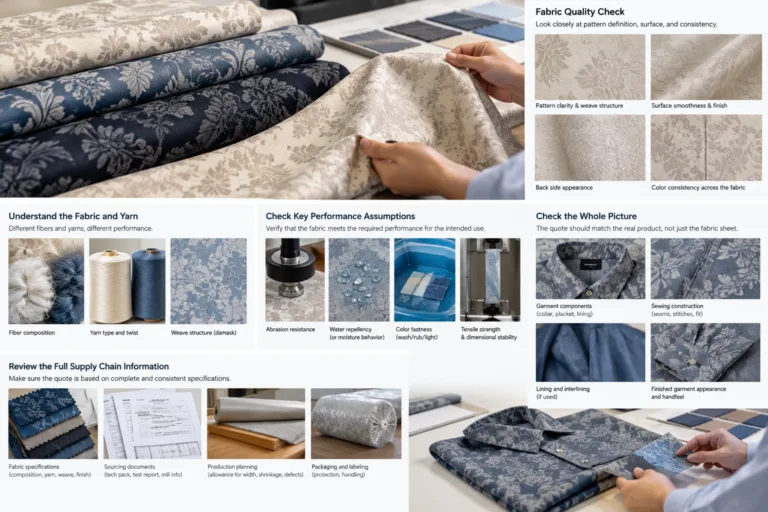
Require written confirmation when a change affects fabric, trims, construction, measurements, tolerances, workmanship, packing, or shipment assumptions. A material that appears identical by fiber content can still affect care instructions, color variation, weight, hand feel, fit, or performance. These are possible project risks, not conclusions that can be made without product-specific review or testing.
When a substitution is considered, link the approval to any samples, tests, labels, care information, or inspection steps that may need to be repeated. Conditional approval is appropriate when the decision depends on a pending sample, test, or commercial confirmation. Maintain an approval log showing who approved the change, when it took effect, which orders or lots it affects, and which version is current.
Turn Production Updates Into Actionable Records
A production update is useful when it makes the current state, supporting evidence, and next decision clear. A short structured record is easier to act on than a long message thread, especially when several teams or production sites are involved. Keep each update tied to a style, order, or other project reference, and identify who provided the information and when.
A practical update can include: activity and status; evidence available; variance from the agreed plan; person responsible; next action; and the date by which a decision is needed. Label information accurately: distinguish a supplier-reported status from a buyer decision, an observed finding, or an unresolved assumption. A statement that production is on schedule, for example, is not the same as a verified milestone record.
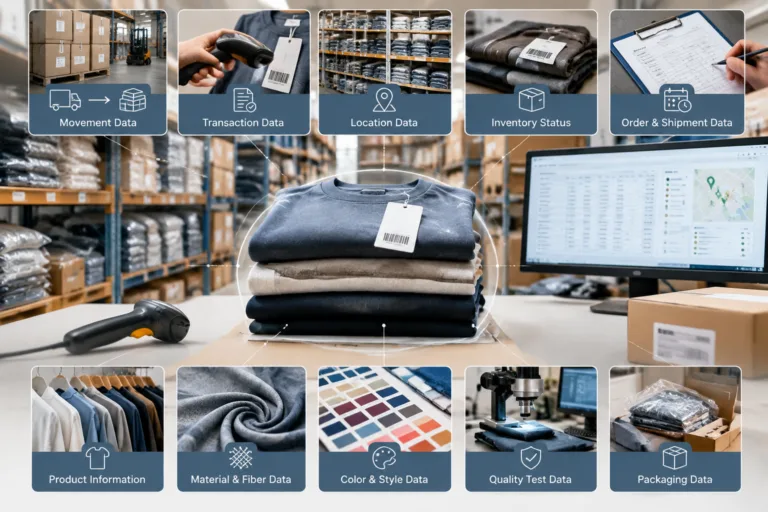
Link relevant records to the affected style and order, then to the material batch, production step, inspection, shipment, or commercial document where applicable. The amount of detail should fit the product and project. A supplier name alone may identify one relationship in the chain, but it does not connect a particular garment lot to its materials and processing history.
When an exception needs escalation, state the issue, affected scope, immediate containment or workaround, requested decision, owner, and likely consequence of delay. Keep a decision log for changes that affect cost, schedule, materials, quality, compliance, or customer-facing information. Include the decision date, approver, relevant specification version, and affected orders or lots. These records improve coordination; they do not independently prove product quality or compliance.

Evaluate Whether the Protocol Is Working
Review the protocol using questions that can be answered from project records: Are requests complete? Can participants identify the current specification? Are approvals and changes recorded? Do affected parties receive updates? Are exceptions assigned an owner and resolved through a documented decision? These checks assess whether the communication process is functioning, not whether a supplier is universally capable.
Teams may also track response capability, milestone reliability, first-pass acceptance, exception handling, or document completeness. Define each measure consistently before using it. For example, specify what counts as a complete response or an accepted first submission. Keep the time window, number and difficulty of orders, quantities, and known exception causes with the result so that comparisons have context.
Separate communication problems from production capability, material availability, unclear buyer instructions, buyer-side delays, and external disruption. A missed milestone can have more than one cause. Review evidence quality, repeatability, accountability, and operational impact together; do not turn incomplete records into a supplier score or ranking. Mark missing information as pending verification, and treat any metrics as project management tools rather than universal benchmarks.
Use periodic reviews to update contact assignments, templates, escalation routes, and supplier-specific working instructions. The aim is to make the next development or production cycle clearer, not to create a score that hides the circumstances behind the data.

Know the Limits of Communication Protocols
A clear protocol helps people exchange and retain information, but it cannot establish factory capacity, material authenticity, workmanship, social compliance, product safety, or on-time delivery by itself. Those questions require appropriate project evidence and, depending on the claim, technical review, verification, inspection, or other due diligence. Documentation is part of the evidence trail, not a substitute for evaluating the evidence.
Communication controls also cannot resolve conflicting commercial terms, incomplete specifications, untested substitutions, or undisclosed production changes on their own. Requirements and responsibilities must be clear for the specific project. Where a question has contractual, regulatory, or product-safety implications, seek qualified advice for the relevant product and market rather than relying on a messaging workflow.
Start with one supplier or product workflow. Map the parties, assign owners and decision rights, standardize the RFQ, control specification versions, document approvals, log exceptions, connect relevant records, and review outcomes after a real development or production cycle. Then revise the process where the records show unclear ownership, repeated questions, or decisions that were not communicated to everyone affected.
Apparel Wiki is an independent educational publication, not a manufacturer or sourcing provider. Its Apparel Manufacturing Tools page may help readers find related learning resources; it does not replace project-specific supplier checks.
Frequently Asked Questions
What should an apparel supplier communication protocol include?
It should identify responsible contacts, approved channels, required information, specification versions, response and approval steps, escalation routes, and records for decisions and changes. The details should reflect the product, supplier arrangement, and project agreement.
Which communication channel should be used for apparel production approvals?
Choose a channel that supports clear written confirmation and keeps approvals retrievable. Agree which channel is authoritative for specifications, commercial decisions, sample comments, and urgent exceptions; do not assume one tool suits every project.
How should a clothing brand control supplier specification changes?
Record the proposed change, affected styles or orders, reason, supplier feasibility feedback, required review, and authorized decision. Update the controlled specification and notify affected parties only after the approval status is clear.
How can buyers compare supplier communication performance fairly?
Use consistent definitions and comparable time windows, and record order quantity, complexity, sample size, and known exception causes. Separate communication performance from production capability and mark missing evidence as unverified.
What records should connect a garment order to its materials and production steps?
As relevant to the project, connect order and style references with material batch identifiers, production-step records, handovers, inspections, and shipment documents. The records should support the specific traceability claim being made.
Can a communication protocol prove that an apparel supplier is capable or compliant?
No. It can organize requests and evidence, but capability and compliance require suitable verification for the specific supplier, product, process, and market.