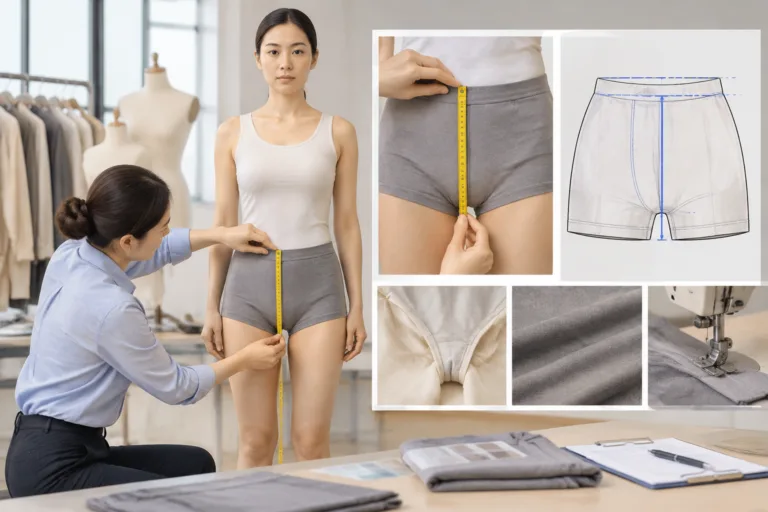
A crotch length measurement is a recorded distance along a defined path between specified landmarks. To use a crotch length measurement method consistently, first identify whether you are measuring a person or a garment, then state the path and conditions. This practical guide demonstrates a body measurement; it does not prescribe one universal set of landmarks for every fitting purpose.
Use a flexible tape and a repeatable posture, but agree on the start and end points with the fitting team before measuring. Record those points with the reading. That context makes it possible to repeat or compare the measurement meaningfully, while the reading itself remains only one input in a broader fit review.
What Crotch Length Measurement Describes
Crotch length describes the length of a specified route between two stated landmarks. The route may be defined for a body measurement or a garment measurement, depending on the fitting question. Because the landmarks and path can vary by purpose, the term alone does not establish exactly where a measurement starts, ends, or travels.
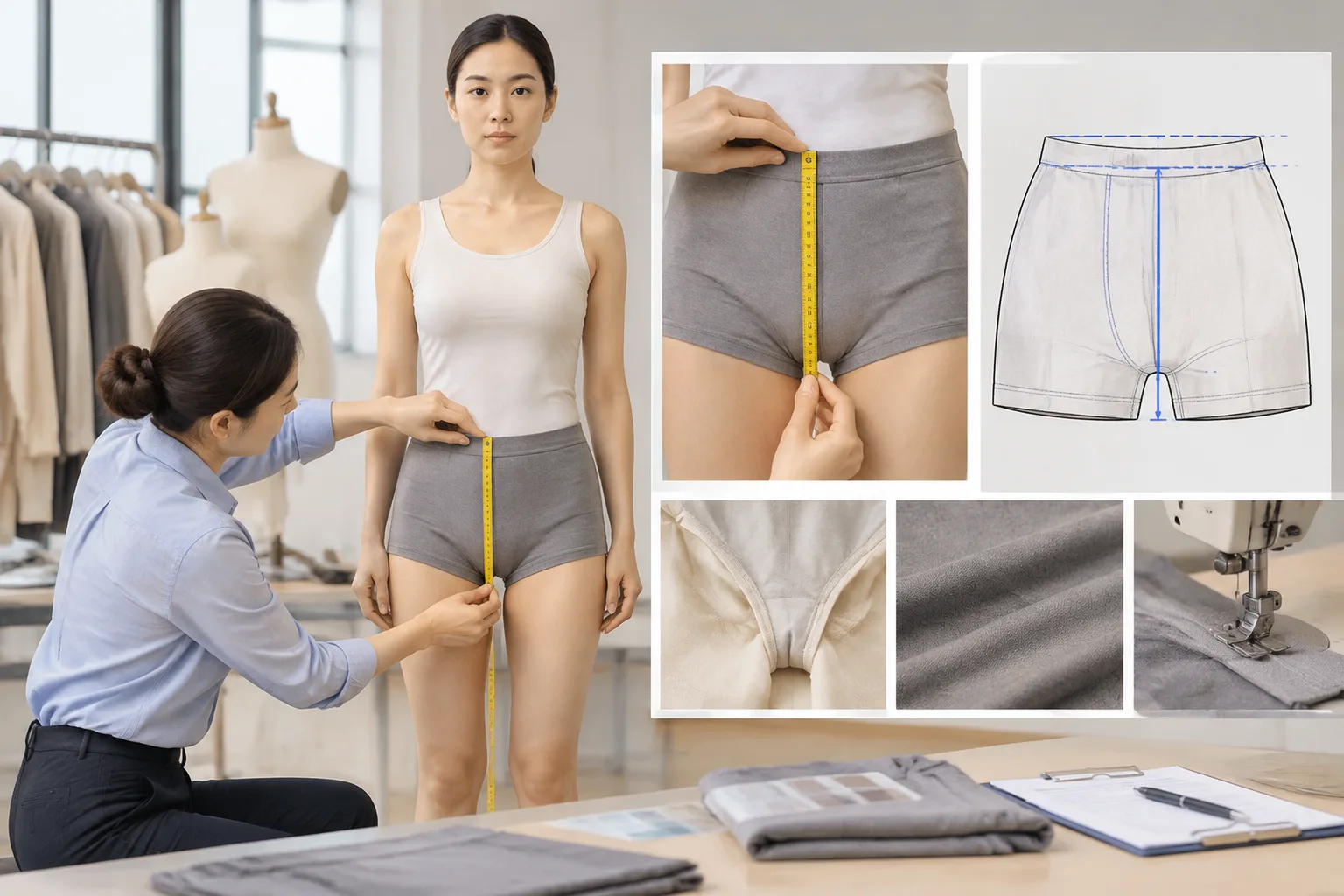
This method focuses on the body: a flexible tape follows a defined path over the subject’s body between agreed points. A garment measurement instead follows a route on the garment. These are different measurement objects. A garment dimension reflects its construction and design as well as the route being measured, so it should not be substituted for a body measurement.
The measurement can help communicate a fit observation or compare readings taken under matching conditions. It cannot, on its own, establish whether pants fit comfortably, stay in place, or provide suitable coverage. Those judgments also involve garment construction, fabric behavior, intended use, and movement.
For a useful record, specify the start point, end point, whether the tape follows the body or garment surface, and the route between the points. If any of these details change, the resulting values may no longer describe the same measurement. The named path—not the label “crotch length” alone—is what makes the record interpretable.
A Consistent Method for Taking the Measurement
There is no landmark convention supplied here that can be presented as universal. For this practical body-measurement method, first agree on the landmarks that suit the fitting purpose. Name the start and end points in terms the person taking the reading can identify again, and describe the route the tape will follow between them.
- Define the measurement. Confirm that the object is the body, not the garment. Write down the agreed endpoints and tape path before taking the reading. If a pattern, fit brief, or product specification already defines the method, use that method instead of introducing a competing one.
- Set up consistently. Have the subject stand in a neutral, repeatable posture. Keep the conditions as similar as practical each time. Position a flexible tape along the agreed route, in contact with the body, without pulling it tight or leaving it slack enough to sag away from the path.
- Read and document. Record the value and unit alongside the measurement object, landmarks, tape route, posture, and relevant fitting context. Use plain descriptions that another measurer can follow; a number without its path and conditions is difficult to interpret.
- Repeat and troubleshoot. Take another reading under the same conditions. If the readings differ, check whether the landmarks shifted, the route changed, or the tape tension or posture varied. Resolve the cause before deciding what value to record; do not average unexplained differences and treat the result as a reliable measurement.
This sequence is an editorially useful way to improve consistency, not a cited industry standard. A project-specific measurement specification takes precedence when one exists. The practical answer to how to measure crotch length is therefore to define a repeatable route for the fitting purpose, follow it consistently, and preserve enough detail for someone else to repeat it.
Recording and Comparing Measurements
Keep the measurement definition attached to every value. A compact crotch measurement record can include:
- Measurement object: body or garment.
- Named start and end points, plus the tape route between them.
- Posture for a body reading, or garment state for a garment reading.
- Value and unit, with the date or fitting round when useful.
For a body measurement versus a garment measurement, keep the records separate. Garment dimensions reflect design and construction, and their relationship to the body depends on the garment and its intended use. A garment value is not automatically a body-size value, even when both describe a route that uses similar landmarks.
Compare readings directly only when they use the same measurement object, route, and relevant conditions. If one reading follows a different path or was taken in a different posture, state that difference rather than presenting the values as equivalent. Unit conversion can make values easier to read side by side, but it does not make two different methods comparable or improve the original measurement. Preserve the original value and label any converted value clearly.
Use the record as one input for fit review, not as a standalone pass-or-fail threshold. Keeping the method and conditions beside the number helps a fitting team distinguish a meaningful change from a change in how the measurement was taken.
Interpreting the Reading in a Fit Check
A crotch length reading is one piece of fit information, not a pass-or-fail result. Consider it alongside visible pulling, restriction, excess length, or changes in coverage. The meaning of those observations depends on the garment’s construction and intended use; there is no universal reading that establishes comfort or fit for every design.
Check the garment during movements relevant to how it will be worn. Sitting or bending may reveal tension or coverage changes that are not apparent while standing. For a woven garment intended for seated wear, compare its behavior standing and seated, then consider whether the design and intended ease explain the difference.
For a close-fitting stretch garment, consider fabric stretch and recovery together with the construction and movement. These factors can guide what to inspect next, but do not guarantee a particular fit outcome. If evaluating changes after washing or wear, treat that as a separate comparison condition; one fitting or wash observation does not establish long-term performance.
For example, if a garment appears comfortable standing but pulls when the wearer sits, inspect the tape route and recorded measurement first, then examine the garment’s construction and coverage in that seated position. The next check should follow the observed issue and the garment’s intended use, not an assumed target value.
Common Measurement Errors and Their Limits
Readings can differ when landmarks shift, the tape follows a different route, posture changes, or tape tension varies. Before interpreting a difference, check those conditions and repeat the measurement consistently. For a body reading, keep the posture stable; for a garment dimension, keep the garment state consistent and note any unavoidable difference.
A repeatable measurement does not prove that the garment fits well. It only makes the recorded value more useful for comparison. Fit decisions still require attention to the garment, its fabric and construction, and the movements and use for which it is intended.
Do not infer a defect, size recommendation, or production tolerance from one reading alone. Those judgments require broader fit review and, where applicable, a defined project specification. Likewise, a body measurement and a garment dimension are different measurement objects; comparing them as though they were interchangeable can lead to a misleading conclusion.
When readings conflict, first check whether the same landmarks, path, posture, and measurement object were used. If any condition changed, document it rather than treating the values as directly comparable. This helps separate variation in the method from a possible change in fit.
Use the Measurement to Decide What to Check Next
Define whether the reading describes the body or garment, identify the landmarks and path, and record the conditions. Repeat the measurement consistently, compare only like with like, then assess the garment in movement relevant to its use. Treat the number as one input to fit review, not a universal verdict.
For an educational next step, document the method you used and compare it with the applicable pattern, fit, or product measurement instructions. Keep that specification with the measurement record so later readings can be interpreted on the same basis.
Frequently Asked Questions
Is crotch length measured on the body or on the garment?
It can describe either, but the record must say which. A body measurement and a garment dimension are different measurement objects and should not be substituted for one another.
Where should the tape start and end when measuring crotch length?
Use the start and end landmarks agreed for the fitting purpose. There is no single universal route established here, so record the landmarks and tape path to make the method repeatable.
Should the tape measure be pulled tight when taking a body measurement?
No. Keep the flexible tape in contact along the defined route without pulling it tight or allowing it to sag. Use the same conditions when repeating the reading.
Why do two crotch length readings differ when measuring the same person?
Landmark placement, tape route, posture, or tension may have changed. Check these conditions and repeat the reading consistently rather than averaging unexplained differences.
Can crotch length alone tell whether pants will fit comfortably?
No. It is one fit input. Comfort also depends on garment construction, fabric, intended use, and how the garment behaves during relevant movement.
Should crotch length be checked while sitting or moving?
Check the garment in positions and movements relevant to its intended use. A standing measurement does not establish comfort or coverage while sitting or bending.