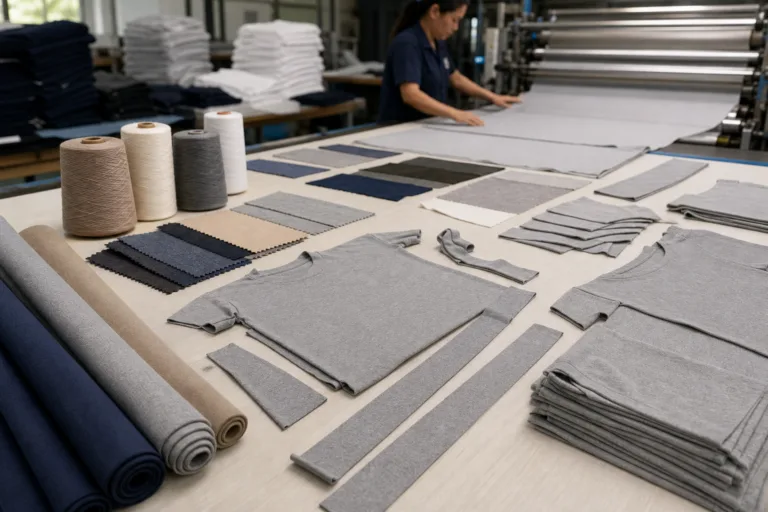
Fabric relaxation in garment production is the controlled release or redistribution of tension and compression that fabric can acquire during finishing, winding, rolling, transport, storage, spreading, or other handling. A factory allows the material to reach a more stable condition before cutting so that later dimensional change is less likely to affect garment measurements, panel matching, or the cutting plan. The appropriate method depends on the fabric and product; there is no universal waiting time or recipe.
Relaxation is related to dimensional stability, but it is not the same as a complete shrinkage test. It also does not guarantee that fabric will remain unchanged after washing, pressing, finishing, or later handling. This article provides general educational guidance from Apparel Wiki, an independent apparel knowledge publication; information about editorial independence and sponsorship is available on the Sponsor page. The factory’s approved material procedure and product specifications control the final decision.
What Is Fabric Relaxation in Garment Production?
Textile material does not always arrive at cutting in the same physical condition in which it will remain during production. Tension may be introduced while fabric is knitted or woven, finished, wound onto a roll, compressed during packing, transported, or stored. Stretch fabrics and knitted structures can be particularly sensitive to the way they are pulled, folded, rolled, or spread, although woven fabrics can also change after handling.
Fabric relaxation is the preparation step used to let some of those handling effects reduce or redistribute before pattern pieces are cut. Depending on the material and factory procedure, this may involve an approved resting arrangement, controlled unrolling, open-width handling, or another documented method. The purpose is not simply to leave fabric untouched. It is to place the material in a condition that is more appropriate for inspection, spreading, marker planning, and cutting.
The distinction between relaxation and shrinkage testing matters. A shrinkage or dimensional-stability test measures how a defined fabric sample responds under specified conditions. Relaxation concerns the condition of the production material before cutting and the effect of previous handling. A fabric can complete a relaxation procedure and still require dimensional-stability testing, shrinkage allowances, or additional verification for the intended garment.
In practice, the decision should consider fiber content, knitted or woven construction, elastic or non-elastic behavior, finishing, roll condition, handling method, and the garment’s tolerance for dimensional variation. A close-fitting style, engineered print, or matched stripe may require more control than a product where small dimensional differences have less visual or functional impact.
Why Fabric Relaxation Matters Before Spreading and Cutting
Cutting converts fabric condition into garment components. If the material changes after panels have been cut, the resulting pieces may no longer behave as expected during sewing or measurement. That can contribute to differences between panels, difficulties with matching, or finished dimensions that do not align with the approved pattern and product requirements.
The risk is especially visible when stripes, checks, repeats, engineered prints, or directional surfaces must align. Even where visual matching is not required, changes in length, width, skew, or stretch behavior can affect how pieces fit together. Relaxation cannot eliminate every source of variation, but it can help the cutting team work from a more considered and repeatable material condition.
Fabric relaxation should therefore be treated as one part of pre-cutting control. Before confirming a cutting plan, teams may need to consider usable width, fabric width, shade or color batch, visible defects, roll identity, and measured dimensional change alongside the approved marker and pattern information. The relevant checks and acceptance limits come from the product specification, buyer requirement, validated test method, or factory procedure for that material.
A faster upstream step does not necessarily improve the overall production result. If unstable material creates cutting holds, extra inspection, rework, panel replacement, or downstream measurement problems, time saved before cutting may be lost later. Preparation, spreading, cutting, sewing, inspection, and packing are linked, although the exact route varies by product and factory.
The practical objective is not to claim that relaxation prevents all defects or guarantees higher yield. It is to reduce avoidable variation and support a cutting decision that fits the approved tolerance. Any claimed improvement in defect rates, waste, or productivity would require evidence from the relevant fabric, product, and production conditions.
How a Factory Plans the Fabric Relaxation Process
A factory normally begins by reviewing the material and the product rather than selecting a generic waiting period. The material specification, fiber and construction details, finishing information, roll condition, care requirements, and available dimensional-stability results provide the starting information. The team also considers whether the fabric is knitted or woven, tubular or open width, elastic or non-elastic, brushed, coated, laminated, printed, or otherwise sensitive to handling.
The next decision is how the material should be handled before release to spreading or cutting. The chosen arrangement should avoid unnecessary compression, distortion, contamination, or heat exposure and should keep the roll, lot, color, and order identity clear. A method suitable for one fabric may be unsuitable for another, so the factory’s approved procedure should define the relevant conditions rather than relying on an assumed industry-wide duration.
A practical planning sequence can include the following:
- Review the material: Confirm construction, finishing, roll condition, identification, and any approved test or specification requirements.
- Assess product risk: Consider fit, matching requirements, print placement, directional surfaces, and the tolerance for dimensional variation.
- Select the handling route: Use the approved resting or conditioning arrangement for the specific material, avoiding avoidable pulling, compression, distortion, or exposure.
- Define release evidence: Decide what must be confirmed before cutting, such as completion of the procedure, usable width, visible condition, and any required measurement or test result.
- Record the decision: Log the style or order reference, fabric lot or batch, roll identity, start and release information, observed issues, and whether the material proceeds, is held, or requires technical review.
Coordination is important because relaxation affects the production schedule. Inspection, spreading, marker planning, and cutting need access to the correct material at the appropriate time. A factory should avoid treating relaxation as an isolated waiting activity that is disconnected from material availability or the next operation.
Release should be based on evidence appropriate to the fabric and garment application. A completed handling step may be necessary but not sufficient if the material shows distortion, unusual width, visible damage, or results that do not support the cutting plan. Likewise, an approved sample establishes a target or reference; it does not automatically prove that every production roll or later batch has the same condition.
Which Variables Change the Relaxation Decision?
There is no single fabric relaxation method that suits every garment order. Fiber content, yarn structure, fabric construction, finishing, roll condition, and product tolerance all affect how material responds to tension, compression, moisture, heat, and storage. A factory should therefore treat relaxation as a material and product decision, supported by the actual production fabric rather than by a generic waiting rule.
Knitted fabrics and stretch materials may respond differently from stable woven fabrics because their structure can be more sensitive to handling and tension. Lightweight materials, brushed surfaces, pile fabrics, coated or laminated textiles, and directional prints may also need specific controls during unrolling, resting, spreading, and inspection. The approved procedure should reflect the material’s construction and the way its surface or stretch properties affect cutting.
Roll condition is another important starting point. Tight winding, winding direction, compression during transport, storage conditions, roll age, and the method used to unroll or spread the fabric can influence the tension present before cutting. These factors do not establish a universal relaxation time, but they help explain why two rolls described as the same fabric may not present exactly the same condition when opened.
Readiness also depends on visible and dimensional characteristics. Usable width, bow, skew, spirality, creasing, surface defects, shade variation, and the placement of stripes, checks, or prints can affect the marker and cutting method. A close-fitting garment, engineered print, or highly visible matching seam generally justifies more verification than a product with greater design tolerance.
Finally, distinguish material variables from project risk. An approved sample can establish a useful reference, but it does not automatically represent every color, lot, width, roll, or future delivery. Where variation could materially affect the garment, the process should be reviewed using representative production material and batch-linked records.
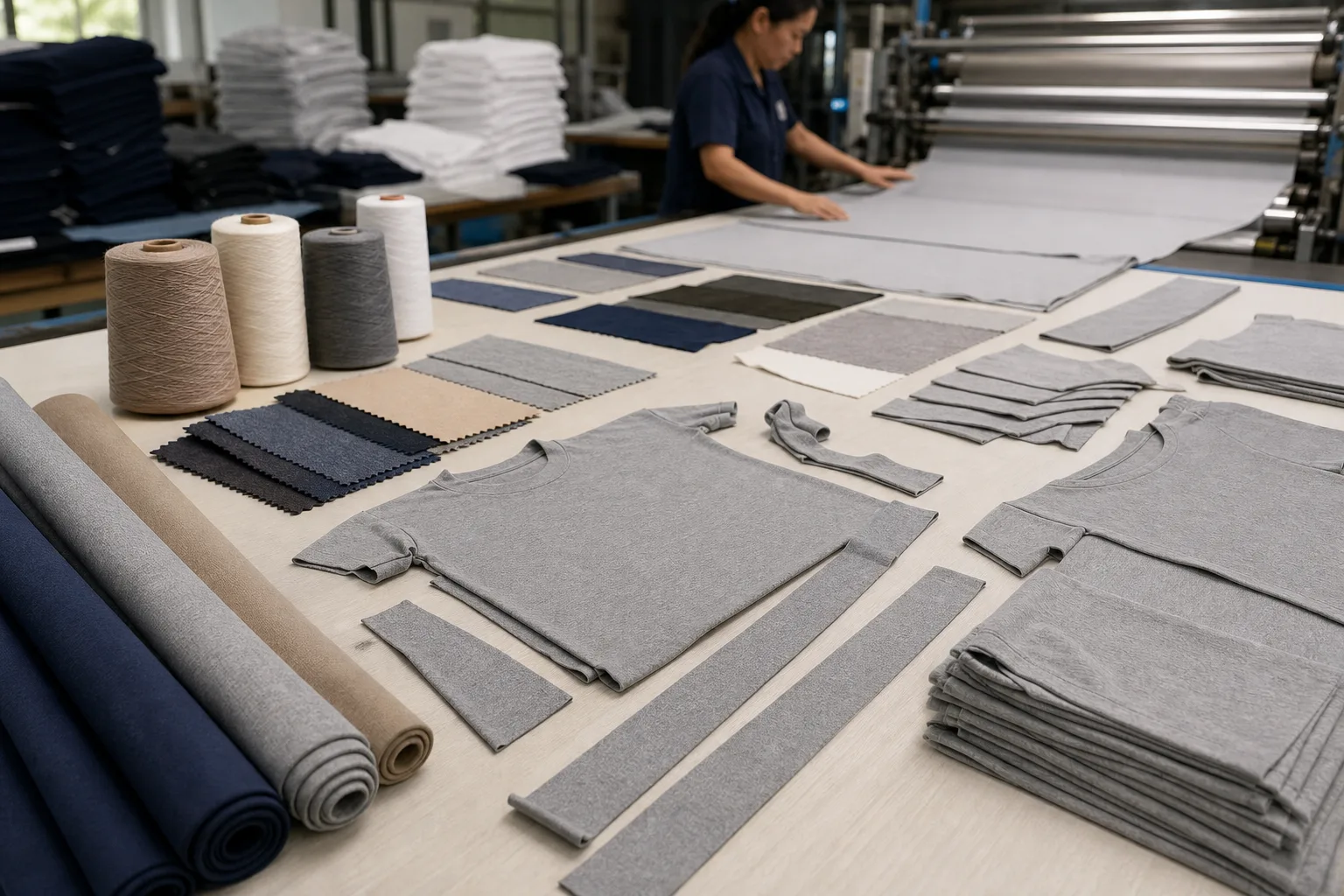
How to Check Whether Fabric Is Ready for Cutting
Fabric relaxation becomes useful when it ends in a documented release decision. Completing a resting or handling procedure is an important condition, but it is not by itself proof that the fabric supports the cutting plan. The final check should connect the material’s observed condition with the applicable specification, approved sample, validated test method, and requirements of the garment style.
A practical fabric relaxation quality check can include the following points:
- Identity: Confirm the style or order reference, color, fabric lot, roll number, and batch information before inspection.
- Process status: Verify that the approved handling or resting step has been completed and that the material was kept identifiable throughout the process.
- Usable condition: Inspect width, surface condition, creasing, distortion, shade variation, and defects that could affect the marker or garment panels.
- Dimensional checks: Compare required measurements with the applicable specification, approved reference, or validated method. Do not substitute a universal pass value where the product has no such requirement.
- Consistency: Review representative rolls or batches and investigate an abnormal roll instead of assuming that one satisfactory result covers all material.
- Disposition: Release, hold, segregate, seek technical input, or revise the cutting decision according to the evidence.
The record should make later comparison possible. It can link material condition with spreading observations, cut-panel dimensions, garment measurements, and recurring quality issues. This helps a team determine whether a problem began during fabric preparation, arose from spreading tension or marker decisions, or became visible only after assembly.
Acceptance criteria remain product-specific. A buyer requirement, material specification, approved sample, or validated test method may define what matters for width, dimensional change, matching, or garment measurements. An approved sample gives the team a target or reference; it does not prove that every production batch remains within that target. Final inspection is also not a substitute for controlling material preparation and cutting conditions earlier in the process.
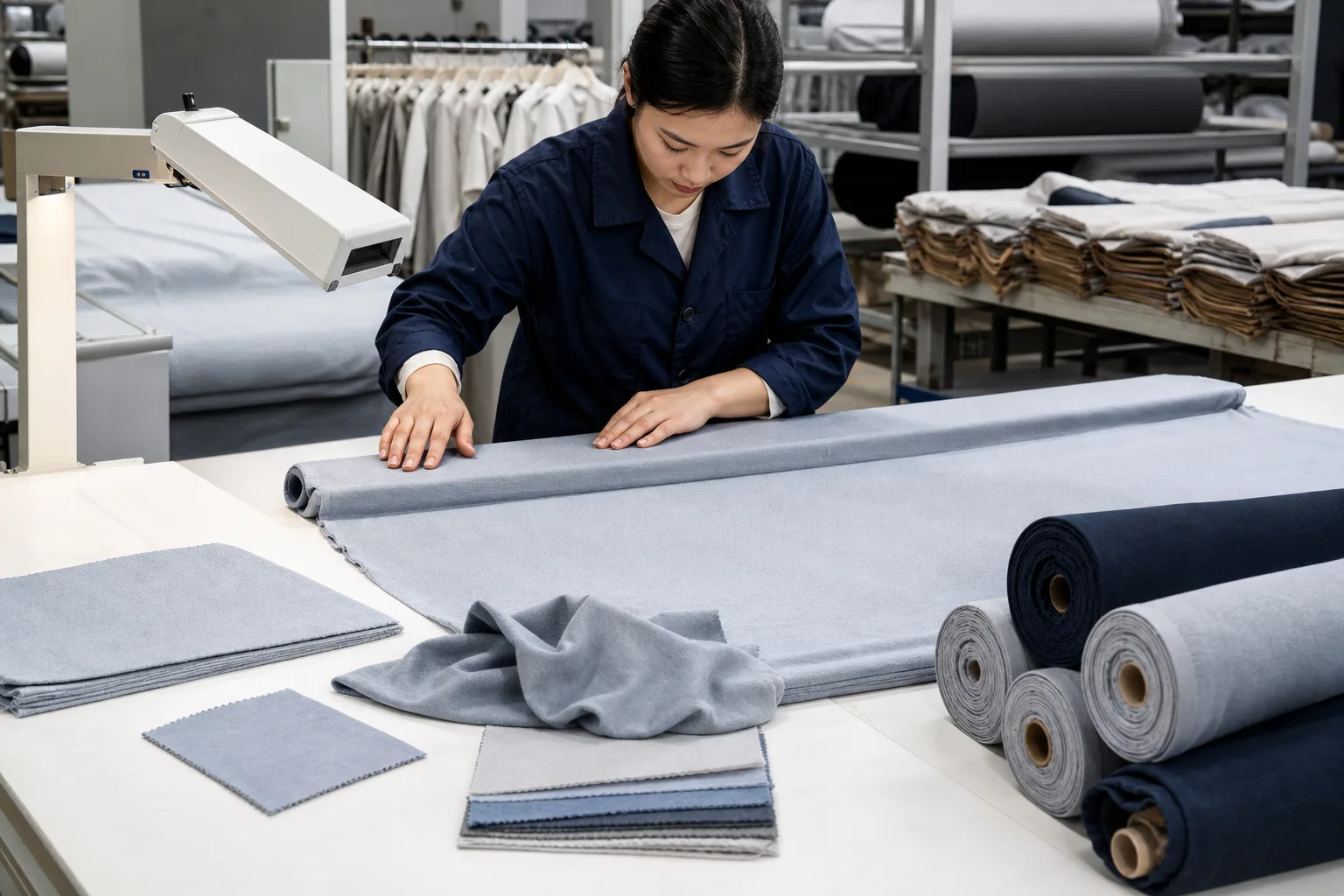
Common Limits and Practical Next Steps
Fabric relaxation is one control within a connected production process. It cannot correct an unsuitable pattern, missing shrinkage allowance, unstable finishing, damaged fabric, inaccurate marker, excessive spreading tension, or uncontrolled cutting condition. Extending the waiting period without investigating the underlying cause may delay production while leaving the actual source of variation unchanged.
A stable result from one sample or one roll should not be treated as automatic validation for all colors, lots, widths, or later deliveries. When a problem persists, compare pre- and post-relaxation observations, review supplier finishing and packing information, inspect how the material was spread, and trace the issue through cut-panel and garment-measurement records. This creates a clearer basis for deciding whether the process, material, or cutting plan needs attention.
For a new fabric or high-risk style, validate the selected process on representative production material before committing the full cutting plan. If variation remains unresolved, escalate it through the appropriate technical, quality, supplier, or product-development channel. The decision may involve segregating material, revising the cutting approach, seeking additional technical evidence, or reviewing the product’s approved tolerances. Relaxation should not become an indefinite waiting activity without a defined release condition.
Apparel Wiki is an independent educational publication, not a factory, laboratory, certifier, or OEM/ODM supplier. For further learning, compare this topic with practical resources on Apparel Manufacturing Tools, fabric inspection, shrinkage, spreading, cutting, and garment quality. Apply the principles to the relevant factory procedure and product specification rather than treating this general guidance as a universal production instruction.
Frequently Asked Questions
How long should fabric relax before cutting?
There is no universal duration. The appropriate procedure depends on construction, finishing, roll condition, handling method, and the factory’s approved release criteria. Use documented evidence from the actual material and product rather than an assumed time.
Does every fabric need to relax before garment production?
Not every fabric requires the same relaxation treatment. The decision depends on the material, its handling history, dimensional behavior, and the product’s tolerance for variation. The factory should determine whether a specific procedure or verification step is necessary.
Is fabric relaxation the same as fabric shrinkage testing?
No. Relaxation allows handling-related tension or compression to reduce or redistribute before cutting. Shrinkage testing evaluates dimensional change under a defined test or care condition. Relaxation does not guarantee that fabric will remain unchanged later.
How does fabric relaxation affect knit and stretch fabrics?
Knits and stretch fabrics can be sensitive to tension, spreading, construction, and recovery behavior. They may therefore need handling and verification suited to their structure. The correct approach depends on the actual fabric and the garment’s dimensional requirements.
What should a factory check before releasing relaxed fabric to cutting?
Confirm material identity, completion of the approved procedure, usable width, surface condition, visible distortion, relevant dimensional results, and consistency across representative rolls or batches. Release should follow the applicable specification or validated acceptance criteria.
Can fabric relaxation fix width, skew, or shrinkage problems?
It may help reveal or reduce some handling-related condition changes, but it cannot be assumed to correct persistent width, skew, or shrinkage problems. Investigate the material, finishing, spreading, measurement method, and product requirements before deciding on corrective action.