Product lifetime extension limitations are mismatches that make continued wear or a proposed next use impractical, unacceptable, or unsuitable. A garment lasts longer only when its condition, construction, care needs, fit, and appearance remain compatible with a user and an available route. Durability alone does not prove a longer service life. Apparel Wiki maintains editorial independence under its disclosed Sponsor policy and approaches this topic as a practical product decision.
The first question is therefore not simply, “Is this garment durable?” It is, “Can this specific garment meet the requirements of its intended next use?” The weakest relevant compatibility link may determine whether repair, continued wear, resale, reuse, redesign, or recovery is realistic.
What product lifetime extension limitations mean for a garment
A garment may resist one form of wear yet still leave use early. For example, its fabric could remain intact while a closure fails, its fit becomes unacceptable, or suitable repair is unavailable. The owner may also decide that the care burden, appearance, or repaired result no longer suits the intended use. Durability contributes to garment lifetime extension, but it does not establish the outcome by itself.
Garment compatibility describes a relationship between a product, a user, and a route. It is not a permanent yes-or-no label attached to the product. A coat might be repairable because its damaged closure is accessible, yet unsuitable for resale because the repair would remain conspicuous. Another garment might be wearable by a different user but unacceptable to a local recovery operator.
A practical screening sequence begins with the garment rather than a broad circularity claim:
- Identify its present condition and failure. Note lost function, damage, wear, distortion, staining, odor, or a fit problem.
- Define the intended extension route. Continued personal use, repair, resale, reuse by another user, redesign, and material recovery require different inputs.
- Test compatibility with that route. Review material behavior, construction access, care, fit, hygiene, appearance, and the actual receiver’s requirements.
This sequence also clarifies what value the decision seeks to preserve. Continued use retains the original garment and purpose. Resale or reuse can preserve a functional garment for another person. Redesign may retain selected fabric, trims, or components in a changed product. Material recovery concerns material value at a later stage and should not be confused with continued garment use.
These product lifetime extension limitations are route-specific. Teams should keep repair access and user willingness visible beside physical condition. A technically feasible intervention has little practical value when no capable repair option exists or the intended user would not accept the result.
Garment features that limit continued wear and repair
The repairability of garments depends on what failed, where it failed, and how the product was assembled. Functional failures and cosmetic objections should be assessed separately. A loose closure or open seam can prevent use directly. Surface wear, pilling, staining, loss of shape, or a changed fit may leave the garment functional but unacceptable for a particular person or route.
Damage location can matter as much as damage type. A small hole in an unstressed area presents a different repair problem from damage at an armhole, pocket opening, knee, or other area subject to repeated movement or load. The repair must restore enough function for the intended use without creating excessive stiffness, bulk, abrasion, or a new weak point.
Construction determines whether the damaged area and its seam allowances can be reached. Concealed or permanently joined layers, bonded areas, complex linings, inaccessible seams, and integrated components may require extensive opening or disassembly. Access may still be possible, but the work can alter appearance, handling, or construction quality. These features are garment construction limitations in context, not proof that a design is universally poor.
Replacement materials and trims also need to work with the remaining garment. Thread, patches, closures, adhesives, and reinforcements should suit its stretch, weight, surface, movement, and care conditions. A rigid patch can stabilize one area while concentrating stress near its edge. A replacement closure may restore function but differ visibly from the original components. The acceptable compromise depends on the route.
Consider a lightweight knit with localized damage. A visible mend may be acceptable to its current owner and support continued personal use. The same mend may be less compatible with resale when the receiving channel expects consistent appearance. Another user or channel could reach a different decision, so the visible repair is not automatically qualifying or disqualifying.
Product teams can learn more from recurring failure records than from a durability indicator alone. Records should identify failure location, use conditions, feasible access, repair materials, and the circumstances in which the repaired result remains acceptable. A test result addressing one performance property does not, by itself, demonstrate usable garment life.
Use, care, fit, and appearance constraints after the first sale
After sale, the relevant threshold comes from actual use. Appearance consistency may be central for a formal garment. For another application, freedom of movement, warmth, coverage, pocket security, or a working closure may matter more. Condition should therefore be judged against a defined user and purpose, not an abstract expectation that every intact garment remains suitable.
Garment care compatibility can narrow continued use even when the fabric and seams remain sound. A garment may require care that is difficult for its likely user to provide regularly. Its drying, pressing, stain-removal, or other handling needs may also conflict with the practical demands of a resale or reuse route. Physical survival does not remove that care burden.
Fit is another route-specific constraint. A size label does not show whether a garment can be altered successfully. Alterability depends on seam and hem allowances, construction access, available material, shaping, closure position, pockets, decoration, and the location of design lines. It also depends on the amount and type of change required. Shortening a simple hem presents different constraints from changing shoulder shape or increasing body width.
Condition assessment and user acceptance are related but distinct. Cleanability, persistent odor, stains, pilling, distortion, fading, and visible repair can be evaluated differently by the current owner, a prospective buyer, another wearer, or a reuse operator. A feature accepted for informal personal use may not satisfy the appearance or hygiene expectations of a receiving channel.
This distinction helps teams describe resale garment condition without claiming a universal threshold. First identify the next user, use context, and receiving route. Then decide whether each issue is disqualifying, repairable, cleanable, alterable, or acceptable as it stands. If a receiver will make the decision, its current criteria must be checked directly.
Technical integrity alone cannot establish that continued use will occur. A sound garment may still lack a suitable user, manageable care routine, acceptable fit, or receiving channel. Keeping those human and practical constraints in the assessment produces a more defensible view of garment reuse limitations.
Matching the garment to repair, resale, reuse, redesign, or recovery
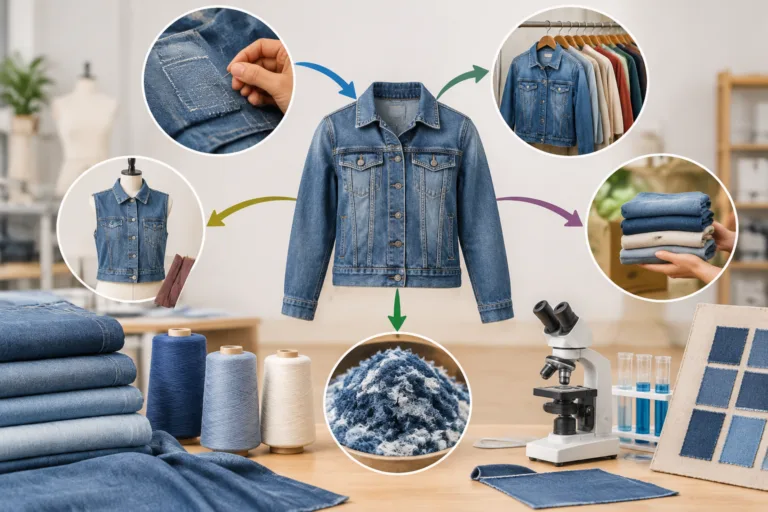
Lifetime-extension routes retain different forms of value and require different work. Continued use, repair, and resale generally keep the garment functioning as a garment. Redesign may preserve selected fabric or components in a changed product. Material recovery addresses material value at a later stage. Collection alone does not show that recovery has occurred.
| Route | Value retained | Observable garment inputs | Initial compatibility signals | Common constraints | Variables that could change the choice |
|---|---|---|---|---|---|
| Continued use or repair | Existing garment and function | Failure location, remaining function, construction access, care needs | Localized failure, usable fit, accessible repair area | Inaccessible seams, unsuitable replacement, unacceptable repair appearance | Repair skill, parts, cost, wearer acceptance |
| Resale | Garment-level use by another wearer | Condition, fit range, appearance, hygiene, labels | Functional garment with suitable condition and identifiable care needs | Damage, odor, staining, limited demand, channel criteria | Buyer expectations, local demand, receiving-channel rules |
| Reuse in a new context | Garment function in a different use | Coverage, movement, warmth, closures, care burden | Function and condition suit the new user and purpose | Fit, hygiene, appearance, or care mismatch | Use context, recipient needs, acceptable alteration |
| Redesign | Selected fabric, panels, trims, or components | Usable area, damage placement, disassembly access, material behavior | Recoverable sections or components support a defined new product | Small usable areas, bonded layers, contamination, labor needs | New design, available processes, quality expectations |
| Material recovery | Material rather than garment function | Composition, attachments, finishes, contamination, identification | Inputs match an actual operator’s criteria | Unknown composition, mixed structures, attachments, lack of local acceptance | Operator, location, process, current acceptance rules |
A functional garment that no longer suits its owner’s fit or style could move to resale or another user before redesign is considered. That initial choice can change if condition, hygiene expectations, demand, or channel requirements create a mismatch.
Material simplicity, detachable attachments, and clear composition information can assist some downstream routes. They do not guarantee acceptance. Facilities and operators use different inputs and criteria, so teams should check the actual recipient before making a route claim. Product lifetime extension limitations are therefore specific to both the garment and the intended pathway.

Build compatibility checks into product development records
Product teams can make future decisions more defensible by adding a compact compatibility block to development records. It should describe the intended primary use and plausible extension routes without presenting those routes as guaranteed outcomes.
- Use and route: Record the primary use, likely next users, and plausible repair, resale, reuse, redesign, or recovery pathways.
- Failure and access: Identify foreseeable failure areas, how a repairer could reach them, and which components are replaceable or permanently integrated.
- Care and fit: State care assumptions, relevant fit limits, alteration considerations, and features that could restrict size or shape changes.
- Materials and trims: Identify fabrics, linings, threads, closures, finishes, labels, and other attachments precisely enough to support later assessment.
- Open questions: Note which receiver criteria, replacement options, or material details still require verification.
Precise drawings, measurement points, units, material specifications, construction details, labels, and revision numbers help reviewers assess the actual product. Conflicts between an illustration and written instruction create execution ambiguity. Teams should resolve them and identify which revision controls production.
A bill of materials and a cost record also serve different purposes. For compatibility planning, the material record identifies what the garment uses, relevant specifications, and permitted alternatives. A cost record assigns values to inputs. Neither document alone proves that the garment is repairable, recyclable, or accepted by a particular pathway.
A cross-functional review can bring together design, development, quality, merchandising, and a relevant receiving party. The group can ask which condition, construction detail, or information gap would block the intended route. It can then decide whether an upstream change is justified.
These reviews expose trade-offs rather than one universal design answer. Easier repair access may affect appearance or construction. Simplifying materials may help one recovery process but conflict with required function, handle, or aesthetics. A useful garment compatibility checklist records the decision, its assumptions, and unresolved constraints. Its length should reflect the product’s complexity; no fixed technical-pack size suits every garment.

Choose the next use based on evidence, not assumptions
Compatibility remains specific to the route, user, location, and garment condition. A durable-looking garment, a collected item, or a technically possible process does not prove that a particular extension outcome will occur.
As an educational next step, review one representative garment against the decision table. Compare its specifications and present condition with the intended repairer’s, resale channel’s, reuse recipient’s, or recovery operator’s criteria. Document the evidence, assumptions, and unanswered questions before describing the garment as suitable for that route.
Frequently Asked Questions
What is the difference between garment durability and product lifetime extension?
Durability describes resistance to relevant wear or failure under stated conditions. Product lifetime extension also depends on actual condition, repair access, care, fit, user acceptance, and a suitable next-use route. Durability can support longer use, but it does not establish that continued use will occur.
Can a garment be repairable but unsuitable for resale?
Yes. A repair may restore function while leaving a visible change that does not meet a resale channel’s appearance criteria. Hygiene, fit, demand, labeling, and care needs can also limit resale even when a technically feasible repair exists.
Which garment details can make alteration difficult?
Limited seam or hem allowance, inaccessible construction, shaping, closure and pocket placement, decoration, bonded layers, and design-line locations can restrict alteration. The type and amount of change also matter, so size labeling alone cannot establish alterability.
Does using one material mean a garment will be accepted for recycling?
No. Material simplicity may help some processes, but acceptance also depends on composition details, finishes, attachments, contamination, identification, location, and the operator’s current criteria. Technical potential is not the same as access to an accepting recovery route.
What information should a product team record to assess future repair or recovery options?
Record intended uses and routes, materials and trims, construction access, likely failure areas, replaceable components, care assumptions, fit and alteration limits, labels, measurements, revisions, and unresolved receiver questions. Keep drawings and written instructions consistent.
How should a brand choose between repair, resale, redesign, and material recovery?
Start with the value that can still be retained, then compare condition, function, fit, appearance, repair or disassembly access, composition, contamination, and receiver criteria. Choose the route supported by current evidence; do not rank one route as universally preferable.