For many beginners, the real question is not whether apparel looks exciting from the outside. The question is whether the business model fits your money, patience, product skills, and risk tolerance. If you are asking is starting a clothing brand worth it, the honest answer is: sometimes yes, but only when the founder understands that clothing is not just about design. It is also about product development, fit, fabrics, sampling, returns, cash flow, MOQ, and repeatable demand.
If you are still at the idea stage, a pre-production brand-building guide can help you sort out positioning, customer type, product direction, and specification thinking before you spend money on labels, inventory, or custom packaging. That early planning work matters because many new founders rush into production before they have clarified what they are selling, who it is for, and why the product should exist at all.
What “worth it” really means in a clothing business
“Worth it” means different things to different founders. For one person, it means building a profitable label with repeat customers. For another, it means turning a creative idea into a side business that does not lose money. From an apparel development perspective, you should define success before you order anything. Otherwise, you may judge the project by the wrong standard.
A clothing brand can be worth it if you want to build a long-term product business and you are willing to learn fabric selection, sizing, margins, and sourcing. It is usually not worth it if you expect quick profit from a few logo items with no clear customer, weak product differentiation, and no plan for inventory or returns.
| What you mean by “worth it” | What to measure | What it changes |
|---|---|---|
| Extra side income | Contribution margin, reorder rate, low overhead | Pushes you toward lean launches and fewer SKUs |
| Creative brand project | Budget tolerance, time commitment, small-batch viability | Lets you accept slower growth if losses are controlled |
| Full business growth | Customer acquisition cost, repeat sales, operations capacity | Requires stronger planning, cash, and product consistency |
| Retail or wholesale expansion | Lead time, size run planning, quality consistency | Requires more discipline in production and delivery |
How hard it really is to start a clothing brand
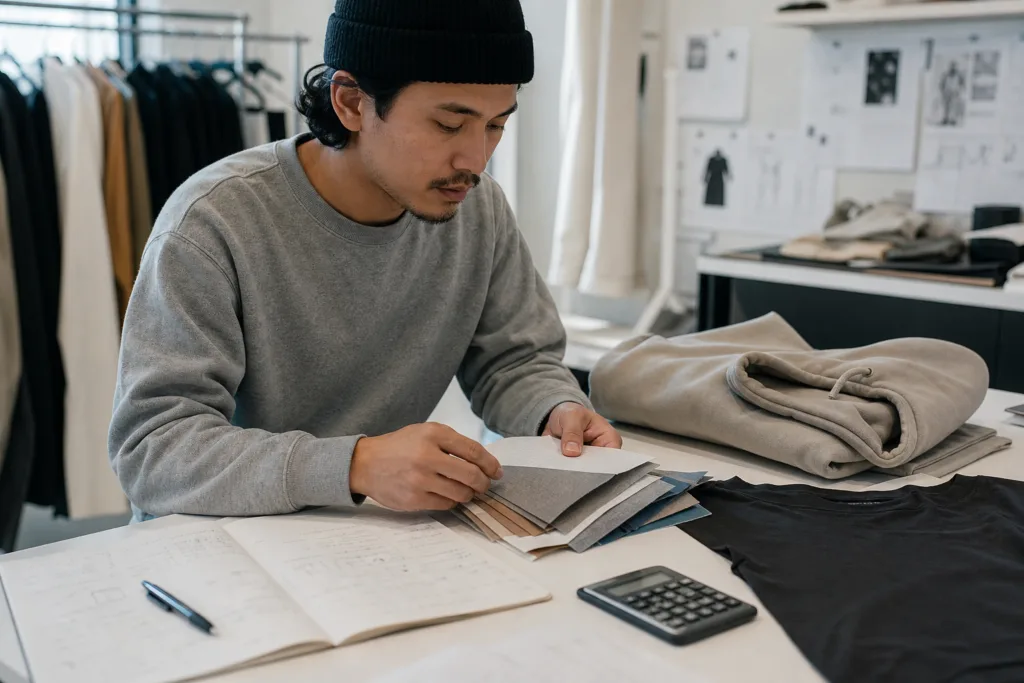
Starting a clothing brand is harder than many beginner businesses because physical products create mistakes you cannot undo with one software update. If you choose the wrong fabric, the wrong sizing, or the wrong decoration method, that problem may affect your whole order.
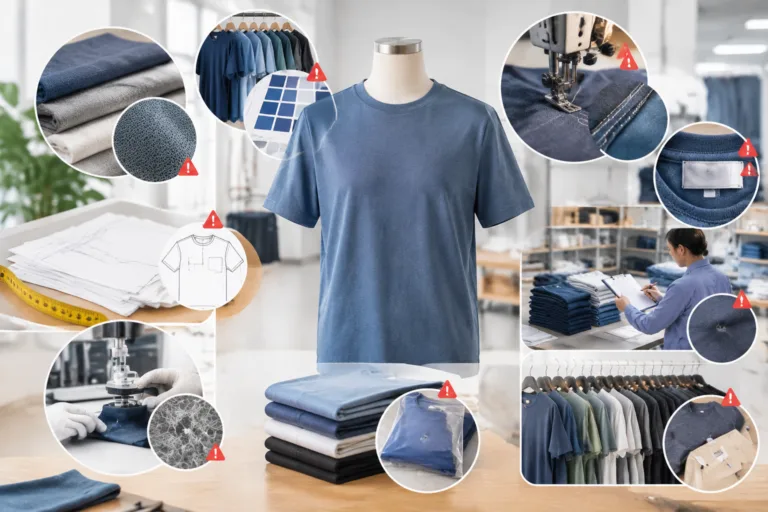
In apparel, small details stack up. A T-shirt is not just a T-shirt. You need to decide fabric composition, GSM, knit structure, shrinkage expectation, fit block, neck rib quality, print method, label format, packaging, and size spec tolerances. Even a simple hoodie project can become expensive if you approve a sample without confirming fleece weight, pocket construction, drawcord quality, or wash result.
This is where broader product knowledge helps. Apparel Wiki exists for exactly this kind of gap: readers often do not need hype, they need clearer terminology, comparison logic, and practical production context before making a decision.
Why many clothing brands struggle in the first year
Most first-year problems are not caused by one dramatic mistake. They usually come from several ordinary mistakes happening together: too many styles, weak positioning, incorrect price targets, poor fit, underestimating marketing costs, and ordering inventory before proving demand.
Returns are another issue that new founders often underestimate. Apparel margins can disappear quickly when a product has inconsistent fit or when the brand has weak size communication. MIT Sloan discusses how apparel return rates and fit risk put pressure on profitability, which is especially relevant for small brands with limited cash reserves.
Common first-year friction points include:
- choosing a product category without understanding fit complexity
- offering too many colors and sizes too early
- using custom manufacturing before demand is validated
- pricing from competitor retail prices instead of actual cost structure
- ignoring shrinkage, colorfastness, pilling, and wash performance
- spending on branding assets before checking product-market fit
Who is a good fit for starting a clothing brand
A good fit is someone who accepts that the job is operational, not only creative. Strong beginner founders are usually willing to test, revise, and learn from samples. They can delay gratification, work with uncertainty, and make practical trade-offs between design ambition and launch reality.
You may be a good fit if you:
- can define a clear customer and a narrow first product range
- are comfortable starting small instead of chasing a full collection
- understand that sourcing, QC, and fulfillment are part of the brand
- can handle slow early momentum without panicking
- are willing to improve product specs after real feedback
Who is not a good fit for starting a clothing brand
If your main goal is easy money, apparel is usually the wrong category. It can work, but it rarely works because the founder simply uploads a logo and waits. The category has high visual competition, high expectation for quality, and real operational complexity.
You may want to wait if you:
- need fast profit from the first drop
- cannot afford sample costs, test marketing, and possible dead stock
- do not want to deal with measurement specs, defects, or customer returns
- plan to launch many products without validating one hero item first
- expect a manufacturer to solve all product decisions for you
Typical startup costs: from lean tests to small-batch production
Beginner costs vary a lot depending on the model. A print-on-demand test can start lean. A private label or cut-and-sew launch usually needs more money because you are paying for development, materials, production, and inventory at the same time.
If you want a practical estimate range, this beginner budget breakdown for a clothing brand is useful because it separates branding ideas from the actual cost buckets that tend to surprise first-time founders.
| Launch path | Typical starting cost pattern | Main risk | Good for |
|---|---|---|---|
| Print-on-demand | Low setup, pay per order, low inventory | Lower margin, limited product control | Testing design demand |
| Pre-order model | Moderate setup, lower inventory burden | Delivery delays can damage trust | Audience-led launches |
| Small-batch private label | Higher sample and inventory spend | Unsold stock, cash tied up | Brands wanting better product control |
| Cut-and-sew custom | Highest complexity and development cost | Fit errors, long timelines, costly revisions | Original product concepts |
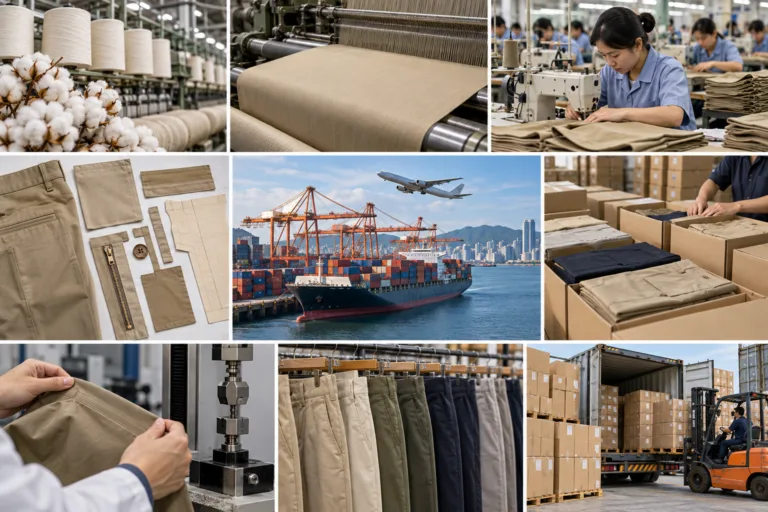
Typical beginner cost areas include samples, fabric or blank garments, trims, labels, decoration, freight, import duty if applicable, e-commerce setup, photo content, and marketing tests. Many projects fail because founders budget for manufacturing but not for the full landed cost and post-launch selling cost.
How long it usually takes to break even
Most beginners should not expect quick break-even. In many real projects, the first phase is about learning what people actually buy, what size issues appear, what content converts, and whether the brand can get repeat demand. That means the first months may be more about reducing mistakes than taking profit.
A simple print-on-demand store can go live quickly, but profitability may still take time because ad spend and low unit margin reduce earnings. A custom product line may take longer to launch because patterns, fit approvals, and sample revision cycles add weeks or months before the first sellable order is ready.
In plain terms, apparel often becomes more stable only after the founder learns three things: what product sells, what spec avoids complaints, and what channel brings customers at a sustainable cost.
The main business models for beginners
Print-on-demand
This is the easiest way to test a brand idea with low inventory risk. It works best when your main test is audience interest, artwork appeal, or message-market fit. It works less well when the brand promise depends on premium fabric, custom fit, or elevated construction details.
Pre-order
Pre-order can lower inventory risk because you collect demand before full production. But it only works when delivery timing is realistic and clearly explained. If you miss your promised timeline, customer trust drops fast.
Small-batch private label
This model gives more control over blanks, labeling, packaging, and presentation. It is often a better learning step than jumping into fully custom cut-and-sew. For founders comparing the real limits, small-batch production tradeoffs and limits are worth understanding before you build a range with too many colors and sizes.
Cut-and-sew custom development
This is the most ambitious path. It gives the highest product control, but it also creates the most room for expensive mistakes. Pattern accuracy, grading, fabric behavior, shrinkage, and factory communication all matter more here. It is usually better after you already understand your customer and have some proof of demand.
The safest low-budget way to start a clothing brand
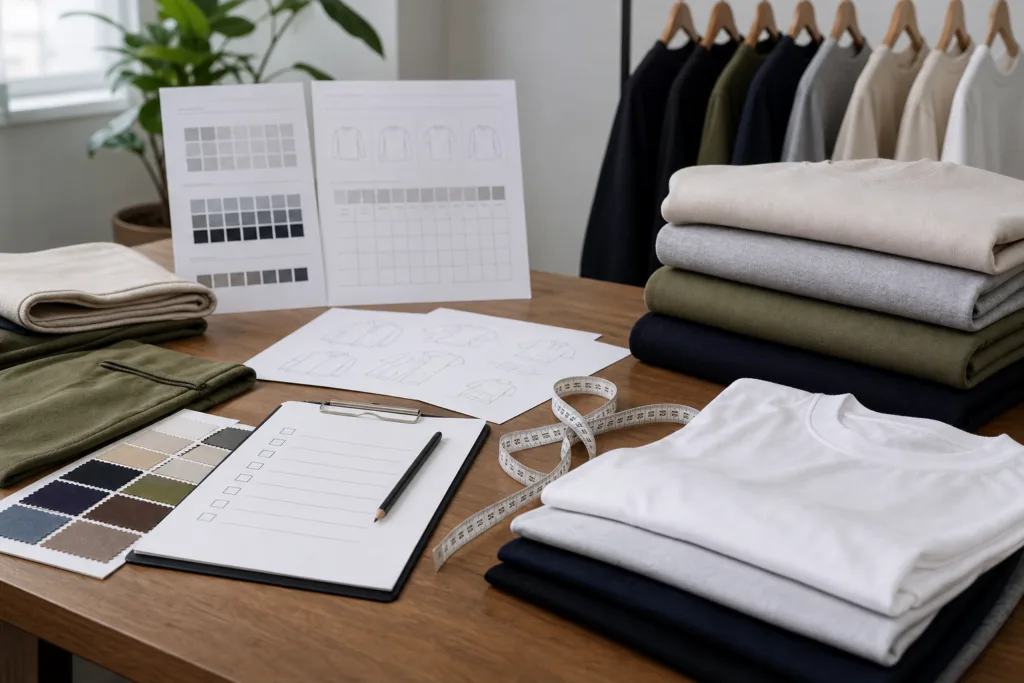
For most beginners, the safest path is to start narrow, test demand, and delay complexity. That often means one product category, one target customer, one or two colors, and a small number of sizes to begin with. It also means using available blanks or low-risk production methods before moving into custom construction.
Many founders looking for low-budget launch options for new brands should think less about looking big on day one and more about learning cheaply. A lean test is not only about spending less. It is about discovering what actually deserves more investment.
A practical low-risk path often looks like this:
- define one customer type and one product use case
- test design or concept demand with low inventory exposure
- collect customer feedback on fit, fabric feel, and price resistance
- improve size chart clarity and product specs
- upgrade to better materials or custom production only after traction
How to reduce risk before placing large inventory orders
Before you commit to bulk production, confirm the parts of the project that usually cause expensive problems later. In apparel sourcing practice, many issues are visible before production if the founder asks the right questions early enough.
Check these points before a large order:
- product-market fit: are people buying the category, not just liking the logo?
- size logic: have you checked garment measurements, not only generic S-XL labels?
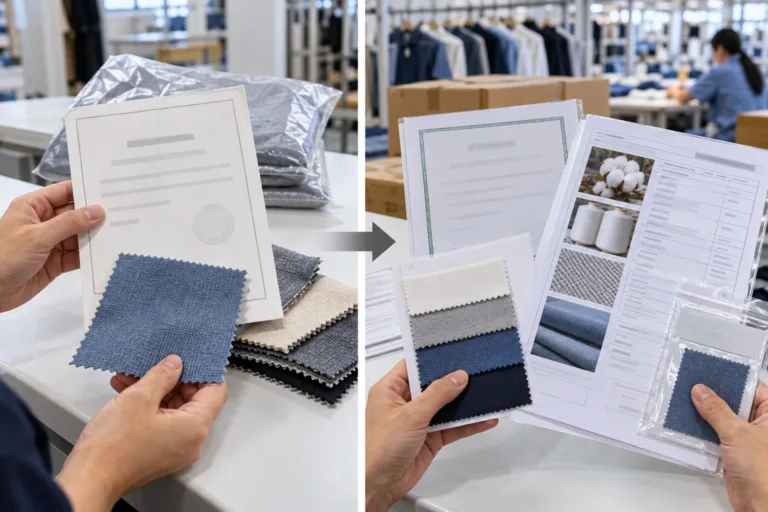
- fabric behavior: does it shrink, twist, pill, or become too sheer after washing?
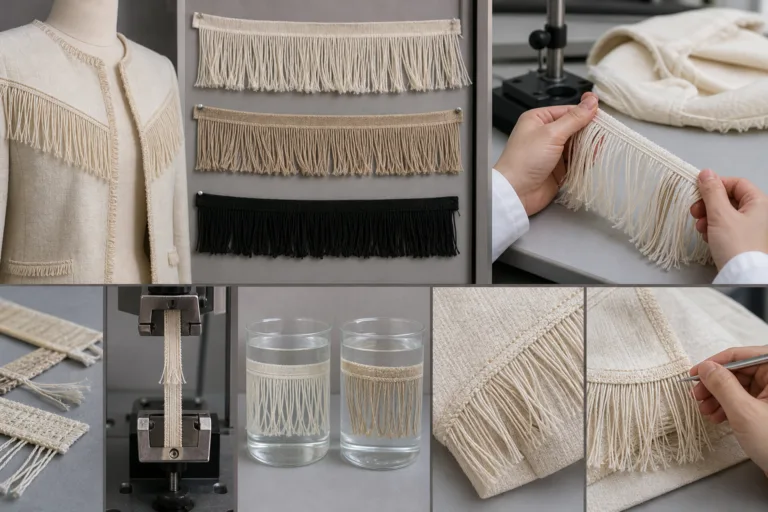
- decoration compatibility: will print, embroidery, or heat transfer work well on the fabric?
- minimum order logic: can you support color-size quantity requirements without overstock?
- cash-flow timing: when do deposits, balance payments, freight, and ads need to be paid?
One frequent beginner error is ignoring minimums until the quotation stage. Understanding how MOQ affects your first order plan can stop you from building an unrealistic assortment that looks good in a mood board but fails in production economics.
Brand protection also matters earlier than many beginners think. Before printing woven labels, hangtags, or packaging at scale, it is smart to review trademark basics for a clothing brand so you do not invest heavily in a name or logo that creates legal problems later.
What products are easiest for beginners to launch first
The easiest products are usually the ones with simpler fit expectations, easier sourcing, and lower development complexity. That does not automatically mean the cheapest item. It means the item is easier to execute consistently.
| Product type | Why it is beginner-friendly | Main caution |
|---|---|---|
| Graphic T-shirts | Simple base product, easy demand testing | Highly competitive, quality still matters |
| Basic hoodies or sweatshirts | Strong casual demand, easier repeat styles | Fleece weight and shrinkage need checking |
| Caps or simple accessories | Less sizing complexity | Decoration quality and perceived value matter |
| Uniform-style basics | Clear use case and repeat orders possible | Consistency and lead time become critical |
Products that are harder for beginners include fitted pants, technical activewear, bras, swimwear, and any garment with complex grading or high body-fit sensitivity. These categories can work, but they usually need stronger development skill and stricter quality control.
When starting a clothing brand is worth it
It is worth it when you have a clear reason for entering the market, a narrow launch plan, and enough patience to build product quality step by step. It is also worth it when you understand that the first version is a test, not proof of failure or proof of destiny.
Good signs include a specific audience, a product gap you can describe clearly, and a launch method that does not depend on betting your whole budget on a large first order. If you can start small, learn quickly, and improve your product from real feedback, the odds improve.
From Apparel Wiki’s perspective, the strongest beginner brands usually win through clarity. They know who they serve, what garment they are selling, what construction level they need, and what details matter enough to justify the price.
When it is better to wait or choose a different model
Sometimes the smart move is to wait. If your budget only covers inventory and nothing else, you are undercapitalized. If you have not validated demand, a large order is not a brave move. It is a gamble. If your product depends on highly custom construction but you have never managed sampling before, you may need a slower entry path.
In many projects, waiting does not mean giving up. It means doing the groundwork first: building audience, testing positioning, refining sketches, comparing suppliers, learning fabric basics, and reducing confusion before money gets locked into stock.
A different business model may suit you better if your real strength is content, community building, or selling curated products rather than developing original garments. The best decision is not always starting immediately. It is choosing the lowest-risk route that still lets you learn.
A simple decision checklist before you start
If you are still asking is starting a clothing brand worth it, use this checklist honestly:
- Can you clearly describe the customer and the first product?
- Do you know whether you are testing demand, building a side income, or pursuing full-scale growth?
- Can you afford samples, marketing tests, and possible mistakes without putting yourself under severe pressure?
- Do you understand the margin after production, freight, returns, packaging, and selling costs?
- Are you starting with a narrow SKU plan instead of an oversized collection?
- Do you have a realistic production method for your current stage?
- Are you prepared to revise fit, fabric, or price based on feedback?
If most of these answers are weak or unclear, the better decision may be to pause and simplify the plan. If most of them are strong, starting may be worth it, but only if you keep the first launch controlled and measurable.
Conclusion

So, is starting a clothing brand worth it? Yes, it can be, but not because apparel is easy. It becomes worth it when the founder treats it like a product business with real constraints, not just a branding idea. The safest beginner path is usually narrow assortment, low inventory risk, clear target customer, and steady improvement after launch. If you can stay practical, protect cash, and learn from samples and customer feedback, a clothing brand has real potential. If you skip that discipline, the same idea can become expensive very quickly.
FAQs
How much money do I need to start a clothing brand?
The amount depends on the model. Print-on-demand can start with a relatively low budget, while small-batch private label and custom cut-and-sew require more money for samples, inventory, trims, decoration, freight, and marketing. The important point is not only the starting number, but whether you have enough budget for testing, mistakes, and post-launch selling costs.
Is print-on-demand a good way to test a clothing brand?
Yes, print-on-demand is often a good entry path when your goal is to test customer interest, artwork appeal, or niche positioning without buying inventory upfront. It is less suitable if your brand promise depends on premium fabric, unique fit, or detailed garment construction, because product control is more limited.
What is the biggest mistake new clothing brand founders make?
The biggest mistake is usually starting too wide and too early. Many beginners launch too many SKUs, order too much stock, or invest in branding details before proving that customers actually want the product. In apparel, narrowing the product range and validating demand first usually reduces risk more than trying to look like an established brand on day one.
What products are easiest for a beginner clothing brand to launch?
Graphic T-shirts, basic sweatshirts, hoodies, and some simple accessories are usually easier because sourcing is more straightforward and fit issues are easier to manage than in categories like tailored pants, activewear, or swimwear. Even then, fabric weight, print quality, shrinkage, and size consistency still need attention.
How long does it take for a clothing brand to become profitable?
There is no fixed timeline because profitability depends on product margin, marketing cost, return rate, reorder demand, and how efficiently the founder manages inventory. Many brands need time to learn what sells, what fit problems cause complaints, and which channel can bring customers without destroying margin.
Should I start with custom manufacturing or use blanks first?
For most beginners, using blanks or simple private label methods first is safer because it lowers development complexity and lets you test demand before investing in full custom production. Custom manufacturing makes more sense when you already know your customer, your fit direction, and the product details that truly need to be original.