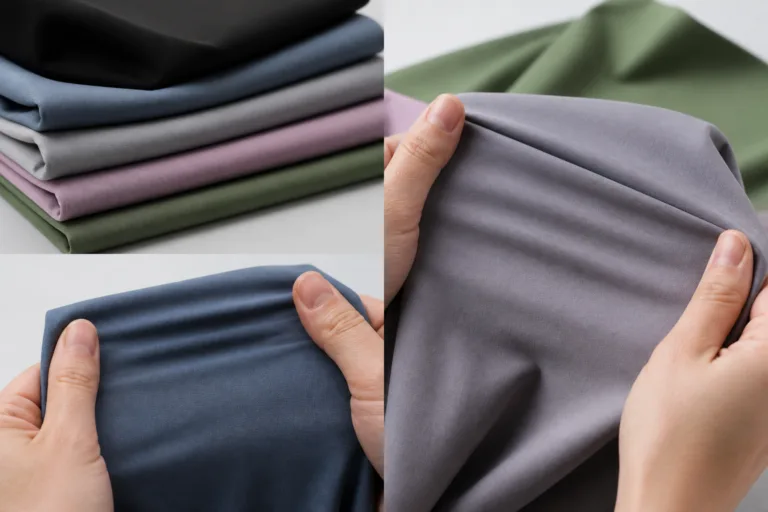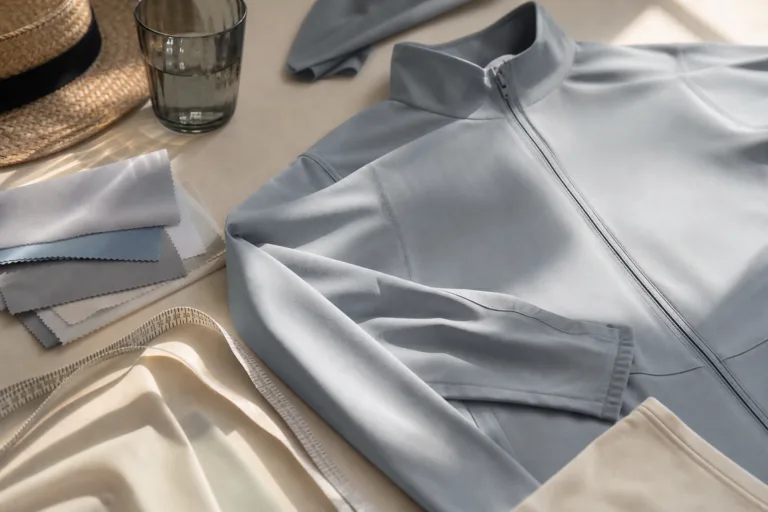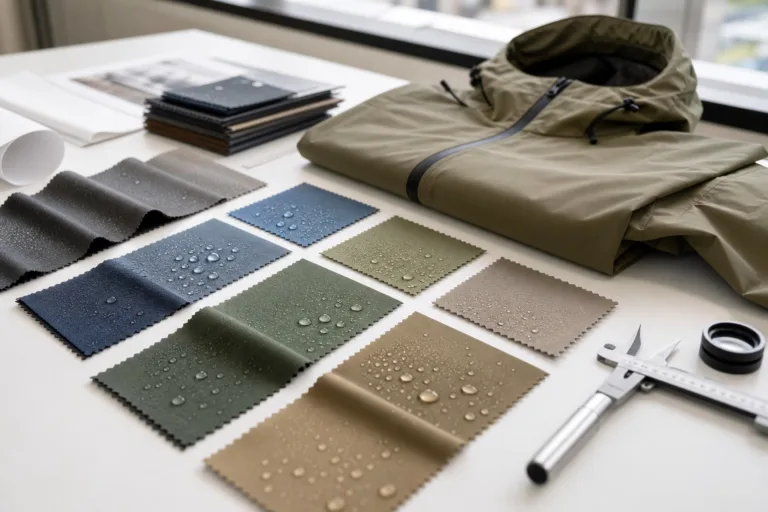

Choosing clothing manufacturers for startups is less about finding the cheapest factory and more about finding a partner that can handle small quantities, clear development work, realistic timelines, and first-order uncertainty. Many new brands approach sourcing as a price exercise, but in apparel development, the early manufacturer decision affects sampling accuracy, MOQ pressure, quality consistency, and how easily problems get solved when the first production run does not go exactly as planned.
If you are still building your shortlist, defining product requirements, or trying to understand how factories differ by category, service level, and startup fit, this practical guide to finding the right clothing manufacturer helps connect the sourcing process from research to evaluation. It is especially useful for readers who need a clearer way to compare manufacturer capabilities, understand what information factories need before quoting, and avoid wasting time on suppliers that are not aligned with their garment type, order size, or development stage.
Startup brands usually need more support than established labels. They may not have refined specs, proven sales volume, tested fits, or confirmed color and fabric standards. That means the right manufacturer is not simply one that says yes to production. The right one is able to explain constraints, flag risks early, manage low-volume development sensibly, and communicate in a way that prevents costly misunderstandings.
What clothing manufacturers for startups actually need to provide
From an apparel sourcing perspective, a startup-friendly manufacturer should provide more than sewing capacity. Early-stage brands often need help translating an idea into a manufacturable product. That does not mean the factory should design the collection for the brand, but it should be capable of reviewing specifications, identifying production issues, and explaining what is realistic for the requested quantity.
Useful capabilities often include:
- Low or flexible MOQ options by style, color, or size range
- Sampling support, including proto samples, fit samples, and pre-production samples
- Clear costing structure with fabric, trim, labor, packaging, and development charges separated where possible
- Reasonable communication speed and organized document handling
- Category-specific experience, such as knit tops, hoodies, leggings, uniforms, or outerwear
- Basic quality control process during cutting, sewing, finishing, and packing
- Willingness to explain lead times, revisions, and approval checkpoints
A manufacturer that is suitable for startups should also be honest about its limits. A factory that mainly serves large-volume programs may accept a small order, but small brands can still become a low-priority account. In practice, that often leads to slow replies, weak sample follow-through, or shifting delivery dates.
Why startup brands have different manufacturer requirements than established labels
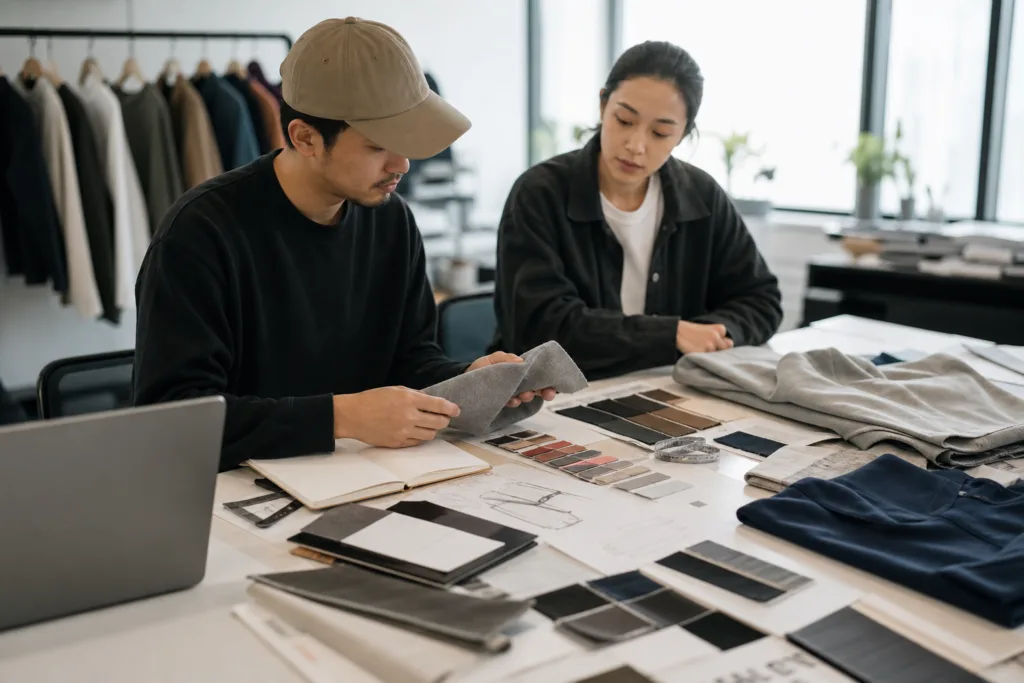
Established apparel companies usually arrive with developed patterns, tested fits, approved fabrics, grading rules, packaging standards, and stable order volume. Startups often do not. That changes the sourcing logic completely.
For a new brand, the factory relationship has to absorb more uncertainty. There may be design revisions after the first sample, changes in size range, uncertainty about colorways, or ongoing cost adjustments to meet retail pricing targets. Manufacturers that work well with startups understand that the first order is often a learning cycle, not just a purchase order.
This is one reason development documentation matters so much. A detailed spec package reduces confusion about measurements, seam construction, trims, labels, artwork, placement, tolerances, and finishing. Readers building their first factory-ready package may benefit from a complete guide to creating a production-ready tech pack, because incomplete information is one of the most common reasons startup orders become slow, inaccurate, or unexpectedly expensive.
Startup requirements also differ because cash flow is tighter. Large brands can sometimes absorb sample waste, missed deadlines, or small quality losses. Startups usually cannot. A factory that misses one delivery or mishandles one fabric decision can disrupt a launch plan, wholesale meeting, or early customer trust.
Low MOQ explained: why it matters, what counts as reasonable, and common trade-offs
MOQ means minimum order quantity, but in apparel manufacturing it is rarely just one number. MOQ may apply at several levels: per style, per color, per fabric, per size set, or per total order. A startup should always ask what the MOQ actually covers before comparing factories.
What counts as a reasonable MOQ depends on product type:
| Garment situation | Typical startup concern | Common MOQ impact |
|---|---|---|
| Basic cotton T-shirt in stock fabric | Testing the market with low risk | Lower MOQ may be possible because materials and construction are simple |
| Custom-dyed hoodie with embroidery | Balancing branding with budget | MOQ often rises due to fabric dyeing, trim setup, and decoration planning |
| Performance leggings in custom fabric | Fit and fabric consistency | MOQ may be driven by fabric mill requirements rather than sewing capacity |
| School or club uniform | Size ratio and repeatability | Small runs may be possible, but size split affects efficiency and cost |
Low MOQ matters because it reduces inventory risk. A startup can test styles, fit response, and customer demand without committing to a large stock position. But there are trade-offs. Lower MOQ often means higher unit cost, fewer fabric choices, less customization, or longer negotiation over sourcing practicalities.
Factories offering very low MOQ may rely on one or more of these conditions:
- Using stocked fabrics instead of custom-developed materials
- Limiting color options
- Standardizing trims or labels
- Producing with shared line scheduling rather than dedicated production windows
- Charging separate development or setup fees to offset small production volume
For startups, the right question is not “Who has the lowest MOQ?” but “What quality, flexibility, and cost trade-offs come with that MOQ?” A low MOQ is only useful if the finished garment still meets brand expectations.
Sampling and development support: why first samples often decide the partnership
In startup sourcing, the first sample often reveals more than the sales pitch. It shows whether the manufacturer understands instructions, whether pattern interpretation is strong, how carefully measurements are followed, and how openly the factory discusses corrections.
Sampling stages may include:
- Proto sample for concept interpretation
- Fit sample for measurement and silhouette adjustments
- Salesman or development sample for presentation or buyer review
- Pre-production sample for final bulk approval
A startup-friendly manufacturer should explain what each sample is for and what changes are still possible at that stage. For example, significant pattern changes after a pre-production sample may affect bulk timing or cost. If the factory does not clearly separate development stages, confusion can spread into production.
Sample evaluation should cover more than appearance. Check fabric hand feel, shrinkage behavior, stitching quality, print or embroidery execution, seam puckering, collar shape, placket alignment, label position, tolerance accuracy, and wash outcome where relevant. After receiving a sample, brands need a structured correction process. This is where how to give clear sample feedback that reduces production errors becomes important, because vague comments like “make it nicer” do not help a pattern maker or sample room fix technical issues.
A strong sample process is one of the clearest signs that a factory can support first-time production. A weak one usually predicts trouble later.
Communication standards for startup-friendly manufacturers
Good communication in apparel manufacturing is not about friendliness alone. It is about accuracy, traceability, and response quality. Startup brands should judge a manufacturer by how it handles real sourcing details, not just by how quickly it says yes.
Useful communication standards include:
- Replies that answer each technical question directly
- Clear notes on MOQ, sample charges, and payment terms
- Willingness to point out missing information before quoting
- Organized handling of measurement charts, artwork files, and revisions
- Stated timeline for sample completion and production booking
- Written confirmation of approved changes
A factory that repeatedly gives partial answers can create major production risk. For example, if you ask whether quoted pricing includes labels, polybags, hangtags, and folding, and the answer comes back as only a unit price, that is not a minor issue. It suggests weak costing discipline or weak communication discipline.
In apparel sourcing practice, communication quality often predicts production quality. If a supplier cannot keep development notes organized, it may also struggle with revision control on the sewing floor.
Local manufacturers vs overseas manufacturers: cost, speed, control, and risk comparison
Startups often compare local and overseas factories too simply. Local production is not automatically better, and overseas production is not automatically cheaper in total. The right choice depends on product type, development complexity, budget tolerance, and how much direct oversight the brand needs.
| Factor | Local manufacturer | Overseas manufacturer |
|---|---|---|
| Communication | Often easier due to time zone and language alignment | May require stronger documentation and slower clarification cycles |
| Sampling speed | Usually faster shipping and easier revision loops | Can be efficient, but transport adds time to each revision |
| Unit cost | Often higher labor cost | May offer lower labor cost, but total landed cost must be checked |
| Oversight | Easier visits and in-person review | Requires stronger remote management or third-party inspection |
| MOQ flexibility | Sometimes more startup-friendly for niche categories | Can vary widely; some are flexible, some require higher volume |
| Logistics risk | Lower shipping complexity for domestic delivery | More exposure to freight timing and customs issues |
Some startups choose domestic production because they want faster decision cycles, easier visits, and more direct control over early development. For U.S.-focused brands comparing domestic options and origin-claim considerations, the Department of Commerce provides U.S. sourcing directory and Made in USA guidance for apparel brands that can help frame location decisions more accurately.
That said, overseas production may still be the better choice when the product requires specialized fabric capability, established trim supply chains, or cost targets that domestic sewing cannot meet. The decision should be based on total sourcing fit, not assumptions.
How to judge whether a manufacturer is suitable for beginners
A beginner-friendly factory is not the same as a low-cost factory. It is one that can work with a less experienced client without creating avoidable confusion. From a garment development perspective, that means it can explain process stages, highlight missing information, and set boundaries clearly.
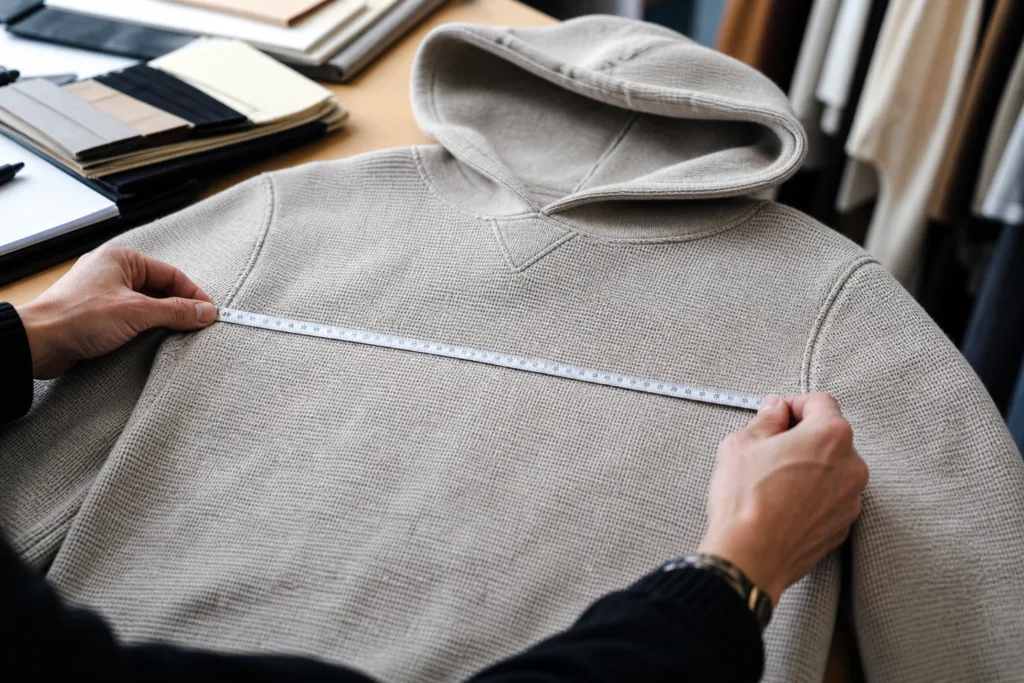
Signs of beginner suitability include:
- Explains sample stages and what is included in each one
- Asks for measurement charts, artwork, fabric preferences, and label details before quoting
- Clarifies whether patterns are provided by the brand or created in-house
- States what types of garments it specializes in
- Provides practical feedback when a requested construction is too costly or difficult for low volume
- Uses organized approval steps for fabric, color, size set, and pre-production sample
A useful broader learning reference for startup teams building sourcing vocabulary, construction understanding, and process awareness is Apparel Wiki, especially when comparing terms that factories use differently in sampling, costing, and quality discussions.
By contrast, a manufacturer may be unsuitable for beginners if it assumes the client already understands tolerances, shrinkage allowances, grading implications, or trim substitution risk. That does not mean the factory is poor overall. It may simply be aligned with experienced buyers rather than first-time founders.
Questions to ask before requesting a quote or sample
Startups often request quotes too early, before key product details are defined. That creates unreliable pricing and weak factory comparison. Before asking for a sample or quotation, gather enough information to let the supplier assess feasibility properly.
Ask these questions:
- What is your MOQ by style, color, and size range?
- Do you support startup orders and first-time production runs?
- What sample types do you offer, and what does each cost?
- Can you source fabric and trims, or must the brand supply them?
- What garments do you make most often?
- What information do you need to quote accurately?
- How do you handle fit revisions and sample corrections?
- What is your estimated timeline for sample development and bulk?
- What quality checks happen before shipment?
- What is included in the unit price, and what is charged separately?
If the supplier cannot answer these clearly, comparison becomes difficult. Startups should also ask how the quote is built. A clear costing discussion helps prevent surprises around trims, packaging, testing, or finishing. For readers who need a more structured costing lens, this step-by-step guide to garment FOB pricing is helpful when comparing factory quotes on a like-for-like basis.
Red flags that suggest a manufacturer is not a good fit for startups
Not every manufacturer that accepts small orders is truly startup-friendly. Some simply want to fill capacity, while others quote before understanding the product. Watch for these red flags:
- Unclear MOQ definitions
- Very slow replies during pre-sales communication
- No questions about fabric, construction, fit, or artwork
- Refusal to document revisions in writing
- Prices that seem unusually low without explanation
- No category specialization relevant to your product
- Promises of very fast delivery without discussing development steps
- Pressure to skip samples and go straight to bulk
- Conflicting answers from different team members
- No explanation of defects, tolerances, or QC checkpoints
One especially serious red flag is when a manufacturer is casual about category-specific compliance risk. If a startup line includes regulated categories such as children’s sleepwear, supplier selection must include testing, traceability, and labeling awareness from the start. The U.S. Consumer Product Safety Commission outlines CPSC flammability and tracking requirements for children’s sleepwear, which is a good example of why some product categories demand much tighter factory screening and documentation.
How to evaluate lead time, pricing structure, and revision policy
Lead time should always be broken into stages: material sourcing, pattern work, sample making, sample revision, approval, bulk production, finishing, and shipment. A supplier that gives only one total number without stage detail may be oversimplifying the process.
For startup planning, it helps to compare expected schedules against realistic lead time benchmarks for fabric, sampling, and bulk production. This allows brands to spot quotes that are unrealistically optimistic or too vague to manage against.
Pricing structure should also be separated where possible:
- Sample fee
- Pattern fee or development fee
- Fabric and trim costs
- Decoration cost
- Packaging cost
- Unit manufacturing cost
- Shipping or ex-factory terms
Revision policy matters because startups often need at least one round of fit or construction changes. Ask whether sample revisions are charged, how many correction rounds are normal, and what kinds of changes trigger a full re-sample instead of a simple adjustment. Small changes to label placement are very different from changing a sleeve shape or fabric type.
How to assess quality control and production consistency before placing an order
Quality should not be judged from one photo or even one sample alone. In apparel manufacturing, consistency is as important as appearance. A startup must know whether the factory can repeat the approved standard across the whole order.
Useful quality checkpoints include:
- Fabric inspection before cutting
- Measurement checks during sampling
- Inline sewing checks for stitch quality and construction accuracy
- Print or embroidery approval before bulk application
- Final measurement and visual inspection before packing
- Carton and packaging verification before shipment
Ask whether the factory checks shrinkage, shade variation, print placement, embroidery registration, seam strength, and labeling accuracy where relevant. For knit garments, size consistency and wash outcome can be especially important. If the product is fashion-sensitive or fit-sensitive, request a size set or measurement review before bulk.
In first-time production, startups should also ask for approval checkpoints in writing. For example: fabric approval, lab dip or color approval, size set approval, pre-production sample approval, and final shipment approval. Clear checkpoints reduce the chance that a supplier moves ahead based on assumptions.
When to choose a local factory and when to consider overseas production
Choose a local factory when development speed, easier communication, small-batch flexibility, or direct oversight matter more than headline unit cost. This is often useful for premium small runs, frequent fit revisions, early market testing, or products that need close collaboration during pattern and sample refinement.
Consider overseas production when the order economics improve meaningfully, the factory has stronger category specialization, the fabric supply chain is more suitable, and the brand has enough structure to manage remote development. Overseas production becomes more viable when the tech pack is strong, sample feedback is disciplined, and timelines include enough room for shipping and revision cycles.
Neither route is inherently correct for all startup brands. The better decision depends on product complexity, capital, launch timing, and how much process discipline the team can maintain.
A simple startup manufacturer selection checklist
Before shortlisting a supplier, use this practical checklist:
- Does the factory make your specific product category regularly?
- Is the MOQ realistic for your launch quantity and budget?
- Are sample stages clearly explained?
- Does the supplier ask informed technical questions?
- Are pricing inclusions and exclusions clear?
- Is communication organized and reasonably fast?
- Can the factory explain lead times by stage?
- Is there a written revision and approval process?
- Does the supplier show a basic quality control method?
- Are category-specific compliance risks understood?
- Can you compare total cost, not just unit price?
- Do you trust this team to handle problems constructively?
For startups, manufacturer selection is really a decision about risk control. A slightly higher quote from a clear, disciplined, responsive supplier may be safer than a cheaper quote from a factory that cannot explain how it will manage development, sampling, and bulk consistency.
Conclusion
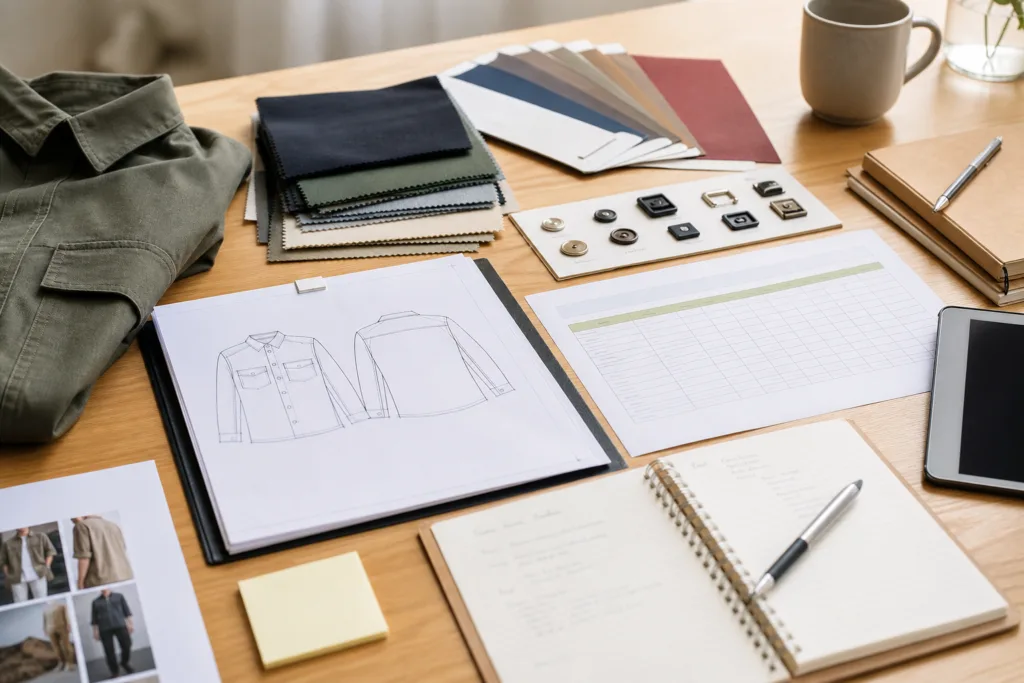
Choosing clothing manufacturers for startups requires more than comparing prices or searching for the lowest MOQ. The stronger approach is to evaluate whether a factory can support early-stage product development, communicate clearly, manage sample revisions, explain costs, and deliver consistent quality at a scale that matches your launch plan. In most cases, startups do better when they choose a manufacturer that is operationally compatible with beginner realities rather than one that only appears affordable on the first quote.
If you compare suppliers using MOQ structure, sample quality, communication discipline, lead time logic, and quality control checkpoints, you will make a better first production decision and reduce avoidable risk in the development cycle.
FAQs
What is a good MOQ for startup clothing brands?
A good MOQ is one that lets the brand test demand without creating excess inventory or forcing compromises it cannot afford. For simple garments in stocked fabrics, a lower MOQ may be practical, while custom fabrics, dyeing, or special trims usually push quantities up. The important point is to understand whether MOQ applies per style, color, size range, or total order before comparing suppliers.
Should startups choose local or overseas clothing manufacturers?
Startups should choose based on development needs rather than assumptions. Local factories can make communication, sampling, and oversight easier, which is helpful for first-time production and frequent revisions. Overseas factories may offer stronger cost efficiency or specialized capability, but they require better documentation, more timeline control, and clearer quality management.
Do clothing manufacturers for startups usually help with samples?
Many do, but the level of support varies. Some suppliers offer pattern development, proto samples, fit samples, and pre-production samples, while others only sew from fully prepared brand specifications. Startups should ask what sample stages are available, what each one costs, how revisions are handled, and whether the supplier can interpret early-stage product development needs accurately.
How can I tell if a manufacturer is beginner-friendly?
A beginner-friendly manufacturer asks smart questions, explains process stages clearly, documents revisions, and does not assume the brand already knows every technical term or approval step. It should be able to describe MOQ logic, sample timelines, quality checks, and what information is needed for accurate costing. Fast promises with little technical discussion are usually less useful than slower but more organized communication.
What should be included before I ask a factory for a quote?
Before requesting a quote, prepare the garment category, sketches or reference images, measurement chart, fabric preference, trim details, decoration method, expected quantity, target market, and any packaging needs. A more complete tech pack usually leads to more accurate pricing and fewer misunderstandings. If key details are missing, the quote may be too rough to compare reliably across suppliers.
Is the cheapest factory quote usually the best option for a startup?
No. A low quote can hide missing services, weaker materials, unrealistic lead times, or limited revision support. Startups should compare what is included in the price, how the supplier handles sampling, whether quality checkpoints exist, and how clearly the factory communicates problems. A slightly higher quote can be the lower-risk choice if it comes from a supplier that manages development and production more reliably.