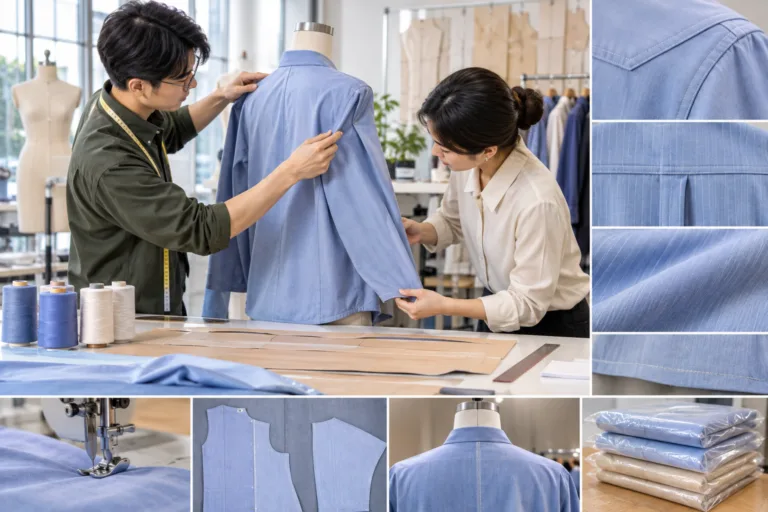
Before sampling, true a unisex block by checking its sewing lines, matching seams, reference points, grain direction, and balance—not merely its outer cutting shape. The aim is to make the paper pattern internally consistent and identify what the sample still needs to test. Apparel Wiki presents this as independent education; its Sponsor page explains that sponsorship does not provide paid control of editorial content.
Truing unisex blocks does not prove that the garment will fit every intended wearer. It prepares the pattern for a more meaningful sample review. First clarify the pattern’s working lines and measurements. Then match adjoining pieces, inspect balance and grain, and record unresolved assumptions about fabric, sizing, posture, movement, and silhouette.
Truing Unisex Blocks Before Sampling
In this context, truing means checking and correcting the relationships that should agree when pattern pieces are assembled. Pattern-making terminology varies, so the pattern legend or technical specification should define the lines in use. For a practical review, distinguish the sewing line, cutting line, and finished garment dimensions before taking measurements.
The sewing line represents where adjoining pieces are intended to join. The cutting line is the edge used to cut the material and commonly sits beyond the sewing line where seam allowance is present. Finished garment dimensions describe the intended assembled garment under a stated measurement method. Measuring the cutting edge when the question concerns a sewn seam can produce a misleading comparison, especially near curves and corners.
Seam allowance supports cutting and assembly. Wearing ease is the space incorporated into the garment’s intended fit and movement relative to the body assumptions behind the design. They are not interchangeable. Increasing seam allowance does not, by itself, create a looser finished silhouette because the intended sewing line remains the controlling construction reference.
A practical pattern truing before sampling sequence is:
- Confirm center lines, grain arrows, fold lines, balance references, and measurement points.
- Compare every pair of adjoining seams along the intended sewing lines.
- Check matching points, corners, grain direction, and front-to-back balance.
- Record any fit, material, construction, or size assumptions that remain unresolved.
| Observable input | Likely implication | Initial choice | Variable that could change the choice |
|---|---|---|---|
| Joining sewing lines do not correspond | The intended assembly relationship is unclear | Resolve the mismatch before sampling | Planned easing, gathering, or another documented construction treatment |
| Grain or balance references are disrupted | The revised piece may no longer follow the drafting intent | Recheck connected pieces and reference lines | Intentional asymmetric styling or fabric layout requirements |
| Silhouette is intentionally relaxed | Added garment volume may be deliberate | Retain the intended sewing line and document the fit goal | Target wearer, layering use, movement needs, or fabric structure |
This review makes the unisex block pattern clearer for sampling. It is not a fit guarantee. A clean cutting outline can still conceal uncertain sewing relationships, while a properly explained construction feature may look mismatched until its intended treatment is considered.
Check Seams, Balance, and Grain as One System
To true pattern seams, compare each joining pair along the sewing line from one defined matching point to the next. Do not rely only on the outside perimeter. Walk or otherwise compare curved edges carefully, and inspect where seams meet corners. If one edge intentionally includes fullness, gathering, or easing, mark that intent rather than treating the difference as an unexplained error.
Notches and other matching marks should identify corresponding construction points without contradicting the seam relationship. At intersections, check what happens when seam allowances are accounted for and the sewing lines meet. A visually smooth cutting edge is secondary to a clear junction at the intended construction line.
Conduct the pattern balance check alongside seam comparison. Review center lines, shoulder and side-seam relationships, grain arrows, and front-to-back reference lengths as a connected set. These checks do not predict one universal hanging result. Instead, they reveal whether the pieces still express the selected drafting and style assumptions before fabric behavior enters the review.
Local edits require a deliberate recheck loop. Changing a neckline can affect its facing, collar, shoulder endpoint, or center reference. Altering an armhole can affect the adjoining shoulder, side seam, and sleeve relationship. After every meaningful change, return to the connected seam, its matching points, and the nearby grainline and balance references.
Use this compact paper-pattern checklist:
- Seam pairing: Identify every joining piece and compare the intended sewing lines.
- Notches: Confirm that corresponding marks agree and remain clearly placed.
- Corners: Inspect sewing-line intersections rather than judging only cut edges.
- Grain arrows: Check that each arrow reflects the intended orientation.
- Center lines: Confirm center-front, center-back, fold, or opening references.
- Edges: Mark hem, fold, facing, and other construction references distinctly.
- Version notes: Identify the revision so corrected and superseded pieces are not mixed.
A trued paper pattern can improve internal consistency and expose disrupted references. It cannot establish fabric-specific drape, stretch behavior, wash response, movement comfort, or wearer fit. Those remain evaluation questions for a sample made and reviewed under appropriate project conditions.
Decide What a Unisex Block Can Represent
A unisex pattern block is a shared drafting framework for an intended garment or sizing approach. “Unisex” does not mean anatomically neutral, nor does it prove that one pattern shape accommodates every body proportion, posture, or movement need. The useful question is narrower: which intended conditions does this block represent well enough to test?
Define those conditions before sending the pattern forward. Relevant project variables include the expected distribution of body shapes and postures, target size range, garment ease, fabric structure or stretch, opening placement, layering intent, and required movement. These are decision inputs rather than universal drafting rules. Changing one may change the appropriate block or the questions assigned to sampling.
A central size or fitting form provides evidence only for the conditions actually reviewed. It does not, by itself, validate the smallest and largest sizes. When the range warrants broader assessment, plan reviews for its ends and a relevant intermediate size. Do not assume proportions, posture effects, or pattern changes will behave identically throughout the range.
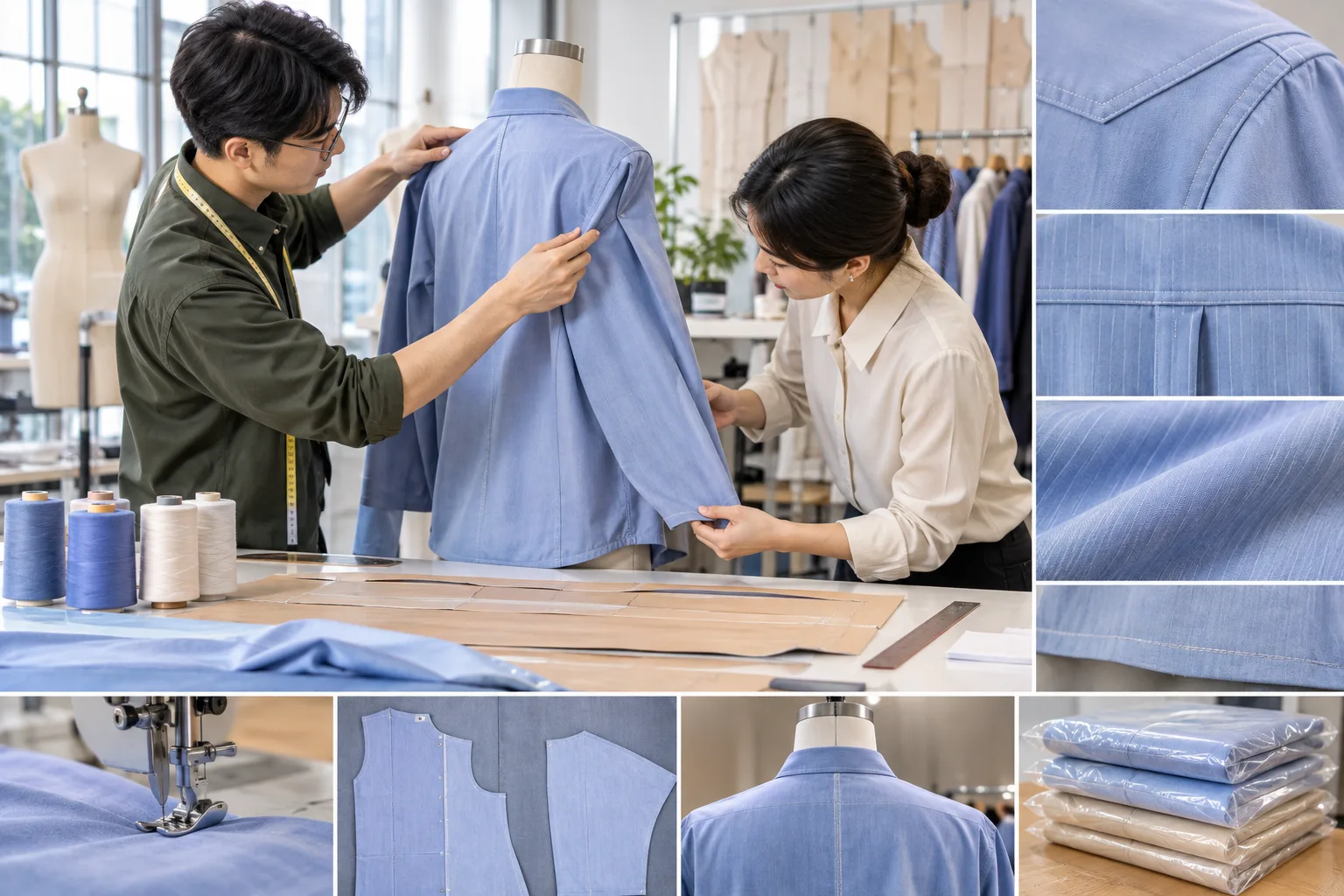
For example, a relaxed woven overshirt may use a shared unisex sizing block as a practical starting point. Its generous silhouette can support that decision, but it does not settle every fit question. Shoulder balance, sleeve mobility, opening placement, layering expectations, and the selected woven fabric can all change what the sample must examine.
Keep drafting intent separate from validation evidence. Record the body or fitting reference used, the size represented, the intended material, the garment use, and the movement assumptions. Also mark what has not been established. This lets reviewers evaluate the unisex garment pattern against a defined purpose instead of treating “unisex” as a universal fit approval.
Prepare the Block and Sample Brief for Review
A pre-sampling pattern check should connect the marked block to a clearly defined review purpose. Freeze the working version before making that connection. Otherwise, reviewers may compare a sample with pattern pieces that have already changed.
- Identify the version. Give every pattern piece the same version reference and note which earlier version it replaces.
- Define the intended use. Record the garment type, intended wearer or fitting reference, size under review, layering assumptions, and expected movement.
- Confirm the pattern references. Ensure sewing lines, grain arrows, center lines, folds, matching points, and construction features are visible and consistent.
- Compare joining pieces. Complete the seam, balance, and grain review established earlier, then compare the revision with the prior pattern.
- Mark unresolved assumptions. Identify any fit, size, material, wash, or movement question that the paper pattern cannot answer.
- Write the sample purpose. State what reviewers should examine and what they should not conclude from this sample.
The sample brief should name the pattern version, size or sizes, intended material, any substitute material, and the planned construction. It should also identify the specific questions under review. These might concern overall shape, assembly relationships, opening placement, sleeve movement, or behavior in the selected material.
Sample-stage names vary among organizations, so the stated purpose matters more than the label. A sample intended to examine shape or construction should not silently become evidence for wash response, a complete size range, or final-material behavior.
If substitute fabric is used, record that substitution and any known differences relevant to the review. Differing material properties can limit which questions the sample answers. Leave unsupported conclusions open rather than treating the substitute as equivalent to the intended fabric.
Proceed when the pattern is internally consistent and the sample questions are explicit. Revise or pause when joining seams, balance references, construction intent, or material assumptions remain unclear. Comparing the frozen revision with its predecessor helps reveal local edits and neighboring changes that might otherwise disappear from the review record.
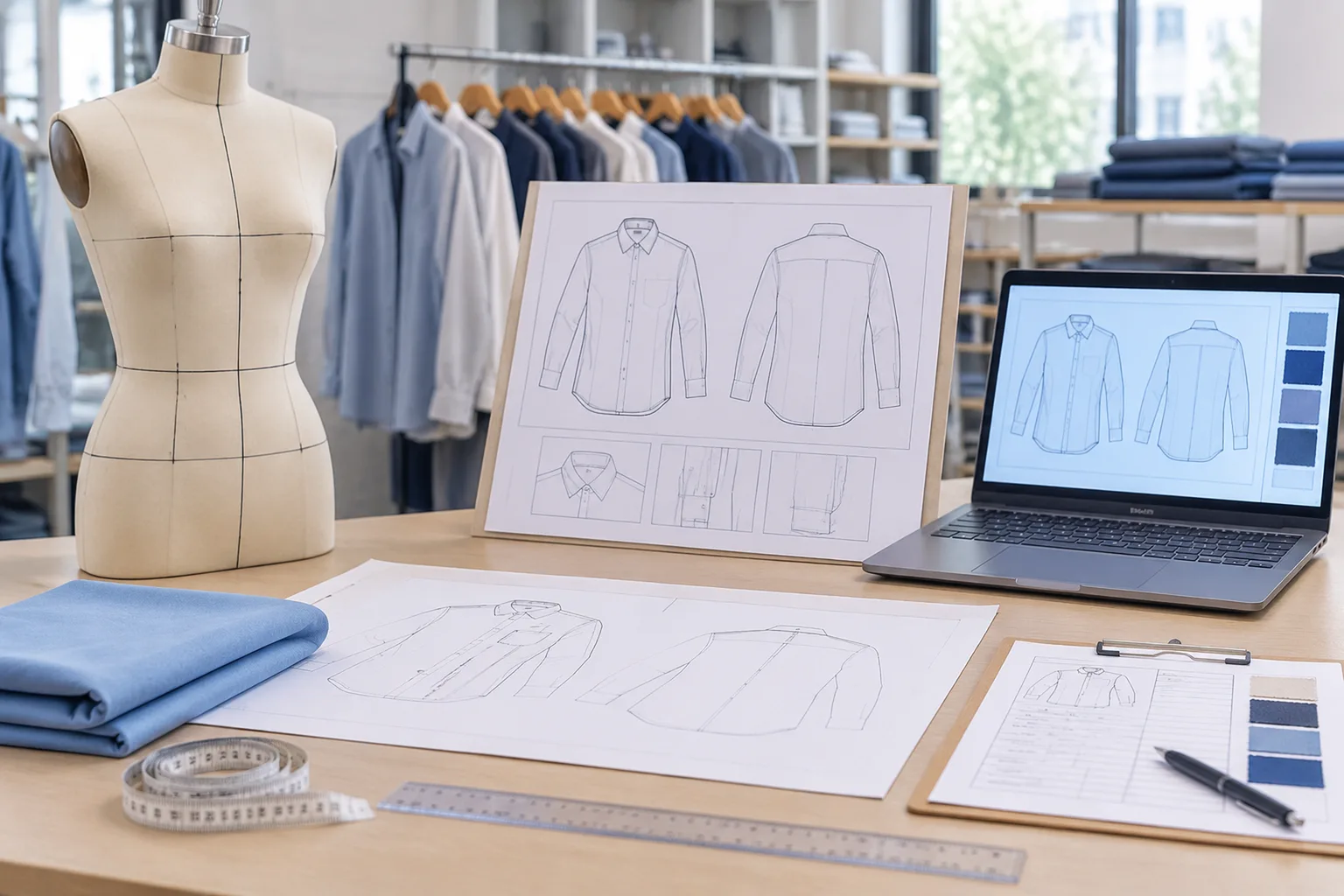
Know What the First Sample Cannot Prove
A clean paper review establishes only that the pattern is sufficiently organized for its stated next step. It may reveal mismatched sewing lines, missing references, or disrupted relationships. It does not establish finished fit, drape, comfort, durability, movement performance, or dimensions after washing.
The first sample should therefore be evaluated against its brief, not against an undefined expectation of approval. A sample made to examine construction can show whether the planned pieces and features assemble as intended. Questions about wearer fit or fabric behavior remain open unless those conditions are part of the review.
Temporary or substitute material may still support a useful local evaluation. For example, it can help reviewers examine general shape or the position of an opening. However, conclusions tied to the intended material remain unresolved when relevant properties differ. The brief should identify every judgment deferred for that reason.
Shrinkage also remains a project-specific variable. If verified directional shrinkage information is available, it can inform separate decisions for length and width. That does not justify enlarging the entire pattern uniformly, and a paper adjustment does not replace evaluation under the applicable garment and material conditions.
Likewise, an acceptable result in one central size does not prove the size range. The next question might concern a range endpoint, a different posture, layering, or a particular movement. Define that question instead of extending one result to conditions that were not reviewed.
Each recorded conclusion should name its evidence boundary: the pattern version, material, size, construction, and evaluation purpose. A note such as “shape reviewed in substitute fabric” is more informative than a general approval statement. It preserves what was learned while making the remaining sample review variables visible.
This distinction prevents truing from becoming an accidental production or fit sign-off. Internal consistency supports a meaningful sample; it is not garment-level validation.
Use the Review to Set the Next Learning Step
Before releasing the pattern for its next development check, compare every marked piece and review note with the sample brief. Confirm that sewing-line relationships, grain, balance, version, and intended representation agree. Keep unresolved material, fit, movement, and size questions visible rather than hiding them behind a clean cutting outline. The next educational step is to match each open question to the relevant sample condition, then check the applicable construction or evaluation method. This turns the review into a traceable learning cycle: inspect the pattern, state the assumptions, examine the sample for its defined purpose, and update the documented version.
Frequently Asked Questions
What does truing a unisex block mean before sampling?
It means checking the block’s sewing-line relationships, matching points, corners, balance, grain direction, and reference lines. The purpose is internal pattern consistency before sampling, not proof that the finished garment will fit every intended wearer.
Should seam allowance be included when checking whether two pattern pieces match?
Compare joining pieces primarily through their intended sewing lines and matching points. The cutting edges include seam allowance for assembly and can obscure the relationship being checked. Also inspect how the allowance behaves at corners and construction transitions.
Can one unisex block fit every size and body shape?
No single block should be assumed to fit every body, posture, or size. A unisex block is a shared drafting framework. Its suitability remains tied to the intended silhouette, size range, body references, material, layering, openings, and movement requirements.
What should be recorded when a sample uses substitute fabric?
Record the substitute material, intended material, pattern version, sample size, construction, and review purpose. Note any known material differences relevant to the evaluation, and identify which judgments must wait for a sample made under the intended conditions.
Does a trued paper pattern prove that the garment will fit?
No. Truing can improve internal consistency and expose pattern conflicts, but garment fit remains an evaluation question. The conclusion must be limited to the wearer or fitting reference, size, material, construction, movement, and sample purpose actually reviewed.
When should a block be rechecked after making a pattern adjustment?
Recheck it after every meaningful change to a neckline, armhole, shoulder, side seam, hem, opening, or another connected area. Review the altered line, adjoining seam, matching points, nearby balance references, and any affected grain or construction markings.