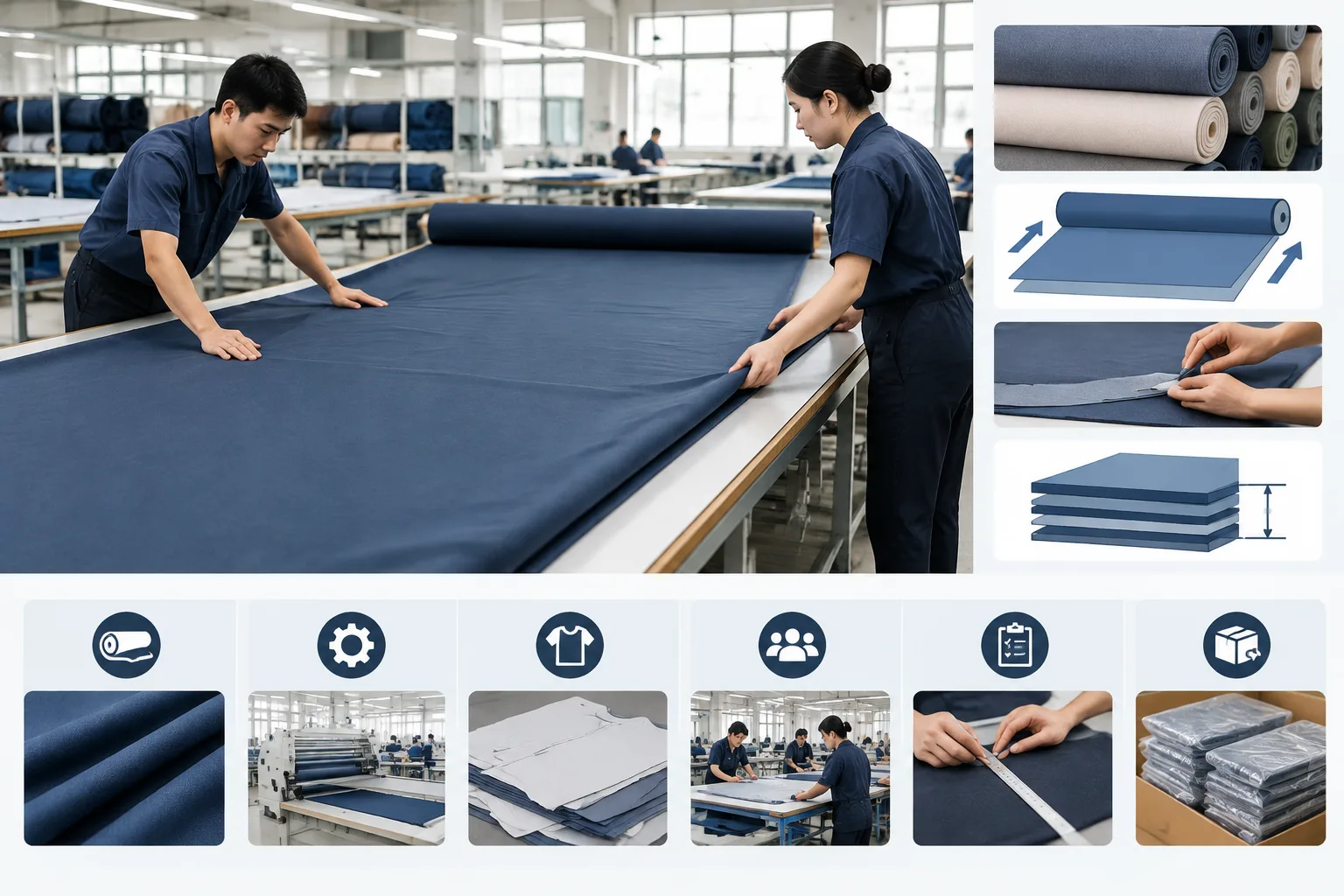
Manual spreading in garment production is the hand placement of fabric layers on a spreading surface before marking and cutting. The operator follows an approved lay or marker plan, aligns the layers for the intended cut, and records relevant material or process conditions. The method is part of a broader preparation and cutting workflow, not an isolated task. Apparel Wiki is an independent educational publication; readers can learn more about its editorial support through the Sponsor page.
In practical terms, a fabric roll is opened across a spreading table to create a lay: an arranged stack of layers prepared for cutting. The marker identifies the pattern pieces and their planned arrangement on the usable fabric area. Manual means that the primary handling is performed by people, although the operation may still use tables, roll supports, measuring aids, clamps, or other local equipment. The exact staffing, lay length, ply arrangement, and handling sequence depend on the product, fabric, and factory process.
What Is Manual Spreading in Garment Production?
Manual fabric spreading connects material preparation with the garment cutting room. Before the lay is released for cutting, the team normally confirms the fabric identity, the relevant work order, the approved marker or lay plan, and any direction requirements. Each layer must be placed so that the stack remains suitable for the planned cut. Depending on the material and product, this may involve controlling selvedge alignment, fabric face direction, nap, stripes, checks, prints, joins, and visible defects.
The lay is not simply a pile of fabric. It is a planned arrangement whose condition affects the next operation. The marker provides a cutting target, while the spreader prepares the physical layers to match that target as closely as the material and process require. After inspection, the lay moves to cutting, where the pattern shapes are separated into components for later handling. Subsequent steps may include bundling, sewing, inspection, and packing, but the precise route varies by product and factory.
For that reason, “manual” should describe the handling method rather than imply a particular factory size, labor cost, production volume, or quality level. A small development order and a larger production program may both use hand spreading, while applying different controls and equipment. The appropriate method is a project decision based on the material, product requirements, available workspace, operator capability, documentation, and the factory’s wider cutting plan.
Why Spreading Quality Matters Before Cutting
The quality of a spread lay influences how reliably the cutting plan can be carried out. Misaligned edges, uneven tension, folds, wrinkles, or an unsuitable surface condition can make the layers less consistent with one another. The likely effect depends on the fabric, pattern, marker, and cutting method, so spreading checks should be treated as process controls rather than a promise of a particular defect reduction.
Material information also needs to be reconciled before cutting begins. Usable width may differ from the nominal roll description because of selvedges, defects, or the condition of the cloth. Shrinkage information can affect how a product team or cutting room interprets the material, while color or lot variation may require grouping and identification. Visible defects should be located or recorded according to the factory’s procedure when they could affect marker placement or cut-part acceptability.
An approved sample, trial lay, or marker establishes a target for a product or material condition. It does not automatically prove that every later roll or batch will behave in the same way. Ongoing checks can compare the actual fabric, lay, and records with the approved plan. This distinction matters for cutting-room quality control because a sample-fabric observation and production-batch verification answer different questions.
Good records also help information move with the work. Depending on the documented process, the record may identify the roll, lot or color grouping, marker reference, layer progress, defects, joins, or deviations. That information can support cutting decisions and later investigation if a problem appears during bundling, sewing, inspection, or packing. Final inspection remains important, but it cannot remove every process issue introduced before cutting.
How a Manual Spreading Operation Works
A representative manual fabric spreading process begins with preparation. The operator or cutting-room team confirms the work order, fabric identity, required quantity, approved marker or lay plan, and the intended fabric direction. One-way designs, nap, face-up or face-to-face handling, stripes, checks, and prints may require specific arrangements. Those requirements should come from the product and factory instructions rather than from a universal assumption about all fabrics.
- Prepare the work area. The spreading surface should be clean, suitable for the local procedure, and clear enough to support the planned lay. The roll and any handling aids are positioned according to the factory’s documented method, with attention to practical manual handling and operator ergonomics.
- Place the layers. Fabric is opened and positioned across the table while the operator manages alignment, tension, selvedges, face direction, wrinkles, skew, and the condition of the cloth. The required approach changes with fabric behavior and the lay plan.
- Record relevant events. Roll changes, defects, splice points, panels, ply progress, joins, or interruptions may need to be marked or entered in the cutting-room record. The purpose is to preserve information needed for traceability and the next operation.
- Inspect before release. The completed lay is compared with the work order and approved plan. Deviations that could affect cutting should be documented, corrected, or referred to the person authorized to release the lay.
This sequence is a useful process pattern, not a mandatory route for every apparel product. Tools, responsibilities, record formats, and the order of individual checks vary by factory and material. A local work instruction should define the operational details, while safety practices should follow the facility’s applicable workplace guidance.
Which Variables Make Manual Spreading Difficult?
Manual spreading becomes more demanding when the material does not settle predictably or when the product requires close control of direction and appearance. Stretch, elasticity, slipperiness, weight, thickness, rolling, skew, and recovery can change how layers align. A fabric that relaxes after handling may require a different control approach from one that remains stable, and the correct response depends on its construction and the factory’s instructions.
Surface appearance creates another group of variables. Nap, stripes, checks, prints, one-way designs, face direction, shade variation, and defect visibility can impose additional requirements on the lay. Matching or directional needs may limit how layers are turned or arranged. These requirements should be reconciled with the marker and product specifications rather than treated as standard rules for every knitted, woven, stretch, or patterned fabric.
| Variable | What to review |
|---|---|
| Fabric behavior | Stretch, recovery, slipperiness, thickness, rolling, skew, and how the layers settle. |
| Appearance | Nap, face direction, stripes, checks, prints, shade variation, and visible defects. |
| Material preparation | Roll identity, usable width, shrinkage information, lot or color grouping, and defect records. |
| Workflow conditions | Operator training, table space, handling aids, documentation, interruptions, and cutting capacity. |
Human and workflow factors can affect repeatability as well. A trained operator, suitable table space, clear records, and appropriate handling aids may make the process easier to control, but none of these guarantees identical results across materials. Manual work can offer flexibility for changing products, while repeatability may require stronger instructions and verification as the product mix becomes more demanding. The relevant comparison is always between the material, product, and control plan in use.
How to Check a Manually Spread Lay
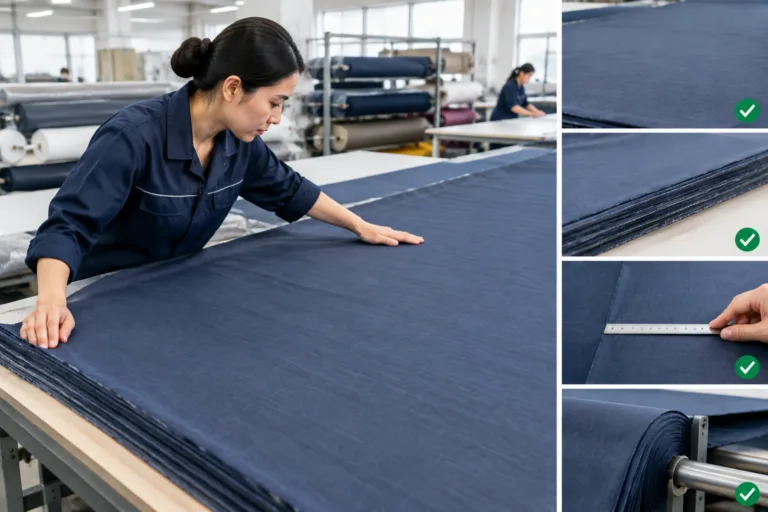
A manually spread lay should be checked against the work order and approved cutting plan before it is released. Start by confirming the lay identity, fabric roll or lot information, marker reference, planned direction, and required layer details. This basic record check helps ensure that the physical lay corresponds to the intended product and material, rather than relying only on a roll label or a previous sample.
The physical inspection should cover the spreading surface and the full lay. Look for aligned edges, stable selvedges, wrinkles, folds, skew, damaged areas, excessive tension, and changes in face direction. Check whether joins, interruptions, roll changes, splice points, or visible defects have been recorded according to the factory’s procedure. The relevant checks will vary with the fabric and product, so a factory’s approved work instruction should define how findings are handled.
Usable width and fabric condition also need to agree with the cutting plan. A lay can appear orderly while still being unsuitable if the material is narrower than expected, grouped incorrectly by color or lot, or affected by an unrecorded defect. Where an issue could change cutting decisions, the lay should be held until an authorized person decides whether to correct it, revise the plan, or release it with a documented deviation.
This is a first-pass process control, not a substitute for later inspection. Cutting, bundling, sewing, inspection, and packing may each have their own checks, but final garment inspection cannot remove every problem introduced earlier. Useful records connect the check to the work order, material identity, observed deviation, corrective action, and release decision without pretending that one checklist is a universal certification.
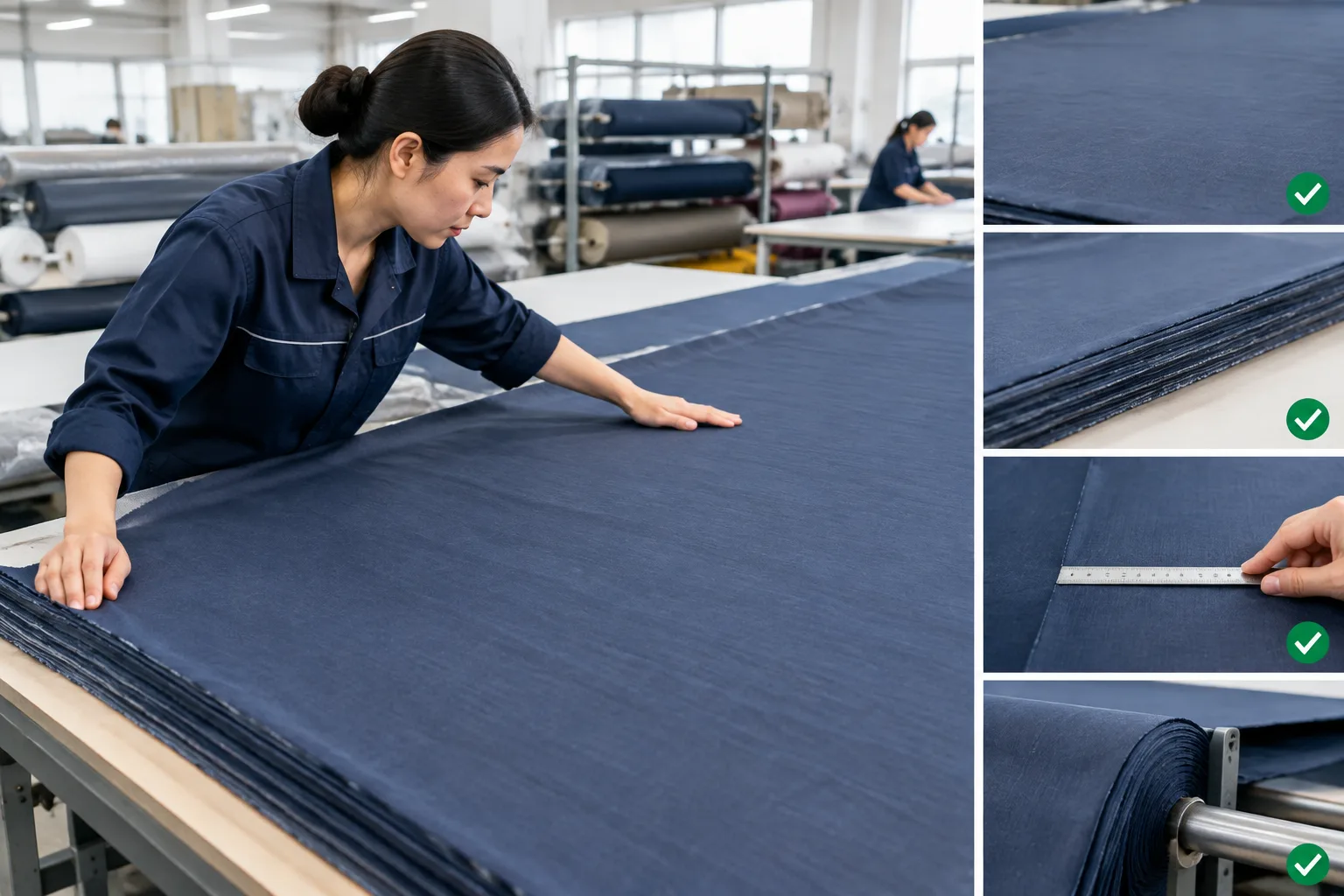
Manual Spreading Compared With Mechanized Spreading
Manual and mechanized spreading differ mainly in how fabric movement, layer placement, and operator control are organized. Manual spreading depends more directly on operator handling and local work instructions. Mechanized spreading uses dedicated equipment to support some movement or placement tasks, but it still requires suitable material preparation, an appropriate lay plan, trained personnel, and checks that the result matches the cutting requirement.
A useful comparison considers control method, setup flexibility, repeatability, material handling, table and floor space, maintenance, and integration with the cutting plan. Manual spreading may fit a product mix that changes frequently or requires hands-on responses to material conditions. Mechanized equipment may be more suitable where the process is stable and the available machine supports the required fabric and lay arrangement. These are conditions to investigate, not universal rankings.
Consider two hypothetical cases. A small program with varied styles, changing materials, and frequent setup changes may value flexibility and simple adjustments. A repetitive program with a stable marker and closely controlled material may place greater emphasis on repeatability and equipment integration. Neither example proves that one method is cheaper, faster, or better. Actual suitability depends on the factory’s equipment, people, controls, product mix, and production plan.
Spreading should also be evaluated as part of the whole cutting-room workflow. Increasing the speed of one operation does not necessarily increase total output if cutting, bundling, material release, or quality review becomes the constraint. A comparison should therefore examine waiting, rework, interruptions, and downstream requirements rather than focusing only on the movement of the spreading equipment.
A Practical Decision Framework for Using Manual Spreading
Begin with the material. Document the relevant construction and handling characteristics, usable width, stretch or recovery behavior, fabric direction, visible defects, shrinkage information, and lot or shade controls. The purpose is not to create a universal specification, but to identify which conditions could affect layer placement, marker use, or cutting decisions on the actual production material.
Next, review the product and marker together. Confirm pattern direction, matching requirements for checks or stripes, one-way or nap restrictions, size mix, planned lay structure, and any cutting constraints. Then review the operation itself: table capacity, handling aids, operator capability, inspection points, records, and the condition of the next cutting step. A method is only ready when the required controls can be performed consistently and deviations have a defined owner.
A representative pilot can reveal issues that a sample or written plan does not show. Use production-relevant material, record alignment or handling deviations, document corrective actions, and confirm who approves the method before wider use. This is project-level editorial guidance, not a factory audit or compliance determination. Requirements from a buyer, product specification, workplace rule, or local authority should be checked separately.
A simple go/no-go review can ask: Is the material understood? Does the marker reflect its direction and usable width? Can the team handle the planned lay? Are inspection and traceability records available? Is there an approval route for deviations? If the answers are uncertain, resolve those gaps before scaling the process. Readers building a broader production-control system can continue with Apparel Wiki’s Apparel Manufacturing Tools and related material, cutting, and quality topics.
What is manual spreading in garment production?
Manual spreading is the hand placement of fabric layers on a spreading surface according to an approved lay or marker plan before cutting. The exact tools, layer arrangement, and handling method depend on the fabric, product, and factory process.
Why is fabric alignment important during manual spreading?
Alignment helps the layers correspond more reliably to the cutting plan. Poor alignment, uncontrolled tension, wrinkles, or skew can affect how accurately pattern pieces are positioned and cut.
What should be checked before cutting a manually spread lay?
Check the lay identity, marker reference, material lot or color grouping, direction, layer information, usable width, edges, wrinkles, tension, defects, joins, and recorded deviations. Release should follow the factory’s documented approval process.
Which fabrics can make manual spreading more difficult?
Stretchy, slippery, thick, lightweight, rolling, skew-prone, directional, patterned, or visibly variable fabrics may require additional controls. The handling method should be based on the material’s actual behavior rather than its general category alone.
Is manual spreading always cheaper or slower than mechanized spreading?
No. Cost and speed depend on the product mix, material, equipment, labor organization, maintenance, controls, and downstream constraints. A single operation’s apparent speed does not establish total production performance.
How can a factory decide whether manual spreading is suitable for a product?
Review the material, marker, lay requirements, table and handling capacity, operator capability, inspection system, records, and next cutting step. Pilot the method on representative material and approve it using documented project requirements.