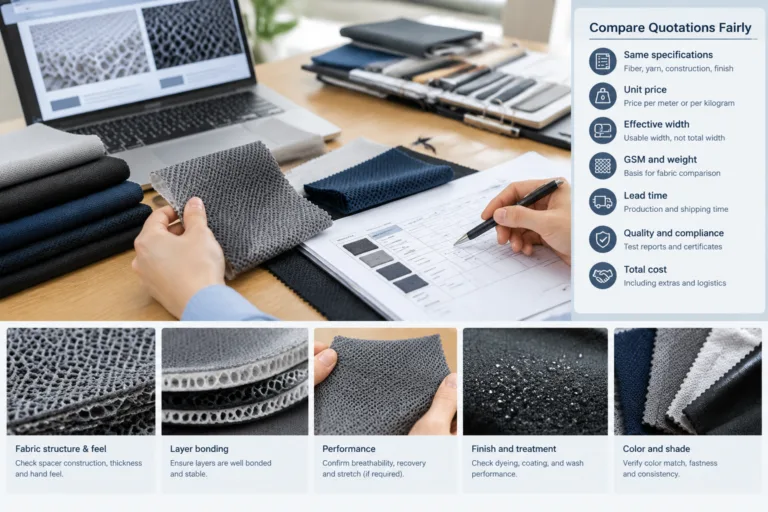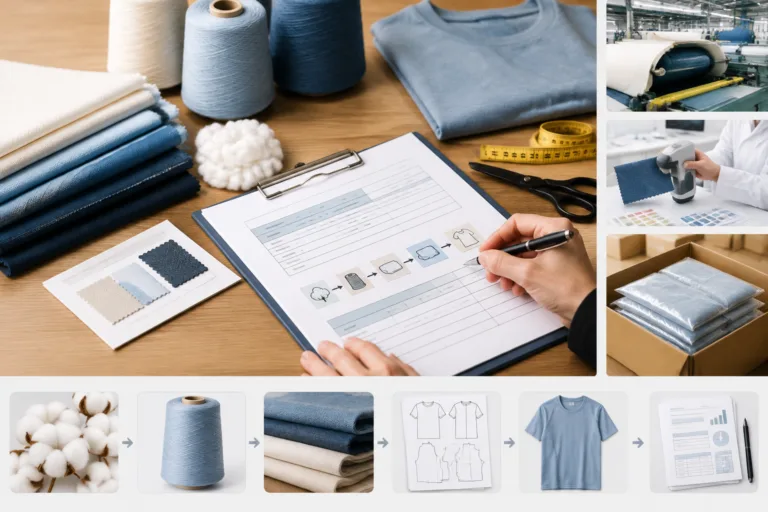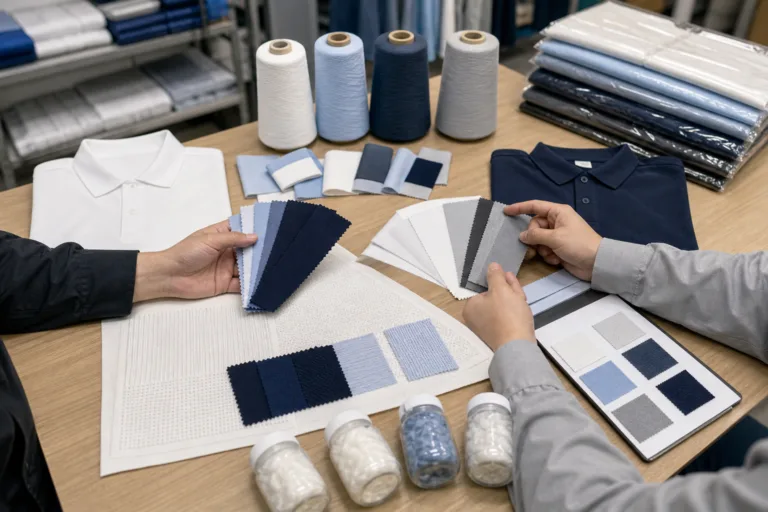
Before sourcing double pique in bulk, verify the fabric’s actual construction, fiber composition, finished specifications, intended garment performance, quality consistency, commercial terms, and approval status. “Double pique” is best treated as a commercial fabric description, not a complete technical specification. The supplier’s data sheet, representative sample, selected test evidence, and quotation must support what the name is intended to mean for your product. Apparel Wiki is an independent garment-manufacturing knowledge platform; editorial work may be supported through its Sponsor page, but sponsorship does not make the site a fabric vendor, factory, testing laboratory, or certification body.
For reliable double pique fabric sourcing, request the same information from every candidate. Separate fiber composition, yarn details, fabric structure, and finishing because these describe different layers of the material identity. The name alone does not establish stretch, breathability, durability, hand feel, weight, or garment suitability. Supplier claims should remain distinct from verified test results and from judgments made after a garment trial.
What should you verify before sourcing double pique in bulk?
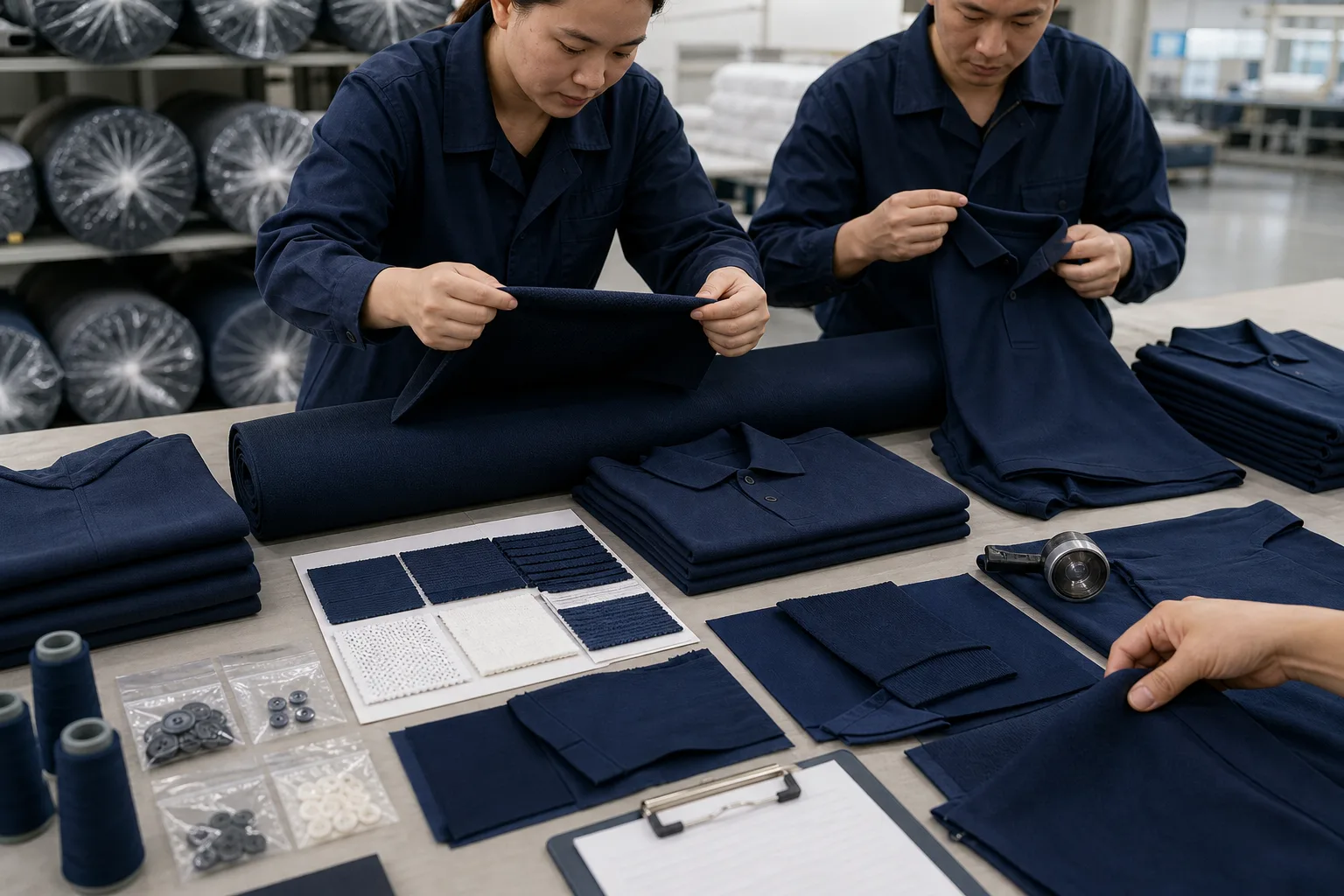
Start by identifying exactly what the supplier is offering. Ask for the fiber composition and any relevant yarn information, then request a description of the fabric structure and finishing process. Confirm whether the submitted sample represents the quoted bulk construction or is only a development sample. If the supplier uses “double pique” as a style or catalogue name, record that name but control the purchase through measurable specifications and an approved physical reference.
Next, establish the finished condition that matters to the garment. This includes finished GSM, total width, usable cuttable width, color or coloration method, dimensional behavior, surface appearance, hand, and any required care route. Keep supplier declarations, laboratory or other test reports, and internal product judgments in separate fields. A supplier’s statement that a fabric is suitable for a polo, uniform, top, or other garment is not by itself evidence that it will meet your fit, wash, appearance, or durability requirements.
Use one verification record for every supplier. It should show which specifications are confirmed, which are pending, which depend on testing, and which are project decisions. This makes apparently similar offers comparable and exposes changes introduced through a different blend, yarn, construction, finish, width, or weight. A bulk order should not be approved because the headline name matches; it should be approved because the relevant identity and risks are documented.
Which fabric specifications belong in a double pique RFQ?
A controlled RFQ turns an informal material request into a comparable technical and commercial brief. Send every supplier the same fields, and mark each item as required, preferred, excluded, or open to an alternative. State the intended end use, garment silhouette, color range, care route, and important hand or appearance characteristics. These details help suppliers quote against the same product need rather than interpreting “double pique” differently.
| RFQ area | Information to request |
|---|---|
| Material identity | Fiber composition, relevant yarn details, construction description, coloration method, and finishing details |
| Finished specifications | GSM, total width, usable cuttable width, measurement condition, and whether width includes selvedges |
| Measurement basis | Whether weight is a target, tolerance, average, or result from one sample; selected methods for composition, width, mass, or dimensional change |
| Product requirements | End use, silhouette, color range, care route, hand, appearance, and any required performance evidence |
| Commercial terms | Minimum order conditions, packaging, payment and trade terms, quotation validity, delivery assumptions, and exclusions |
GSM means mass per unit area. It is useful for comparing fabric weight, but it is not a direct guarantee of thickness, quality, or garment behavior. Keep total width and usable cuttable width as separate fields because selvedges, defects, finishing, and cutting restrictions can affect actual marker planning. Also ask how the supplier measured each value and whether the stated figure applies to the quoted finished fabric or only to a development sample.
For a useful double pique fabric RFQ, request tolerance documentation where available and identify what happens if the finished goods fall outside the agreed range. Do not insert universal values for weight, width, order quantity, price, or delivery. Those are project and supplier variables. The purpose of the RFQ is to make assumptions visible before quotations are compared.
How do you assess a double pique sample beyond appearance?
Review samples in a defined sequence: identify, measure, handle, test, sew, wash if applicable, and document. Compare the approved reference with each supplier submission under consistent lighting and handling conditions. Record surface texture, cover, uniformity, color, hand, edge behavior, skew, bowing, and visible defects. One attractive sample can show development quality, but it does not prove that the same condition will be maintained throughout bulk production.
Measure only the properties that matter to the intended garment, using a defined method and direction where relevant. If stretch and recovery affect fit or movement, assess them through a documented procedure rather than relying on hand pulling. Consider dimensional change, spirality or skew, pilling, snagging, colorfastness, abrasion, and seam or laundering behavior according to the product’s actual use and care conditions. Do not invent pass levels; use the buyer’s approved specification or a documented product requirement.
Include the fabric in a prototype or garment panel when drape, fit, seam appearance, wash appearance, or sewing behavior could change the decision. Structure may provide useful clues, but it does not independently determine stretch, breathability, or durability. A laboratory or supplier report is more useful when it identifies the method, specimen details, result, and test date. Match the selected tests to the garment risk instead of ordering an unfocused list.
What variables can change performance between double pique fabrics?
Two fabrics sold under the same commercial name can behave differently because their fiber composition, yarn characteristics, structure, machine settings, weight, width, dyeing, finishing, or compacting process differs. A change in blend or finishing may alter hand, recovery, shrinkage, color appearance, surface behavior, and sewing performance. These relationships should be checked through candidate-specific samples or test data rather than treated as universal rules.
Weight and width also affect marker efficiency, garment consumption, handling, and shipping calculations, but neither is a quality ranking by itself. When comparing candidates, ask whether each specification describes the same finished condition and whether the samples have undergone equivalent processing. A fabric that matches the listed GSM but differs in usable width or finish may create a different production result and total cost.
Distinguish a nominal substitute from an approved substitute. Matching one headline specification, such as composition or GSM, is not enough. A replacement should be reviewed for specification match, physical behavior, test evidence, garment trial, commercial impact, and approval status. Require a new review when the supplier changes the fiber blend, finish, weight, width, or construction. Even a similar listed composition can affect wash care, shade consistency, fit, and garment appearance.
| Comparison point | Question to resolve |
|---|---|
| Specification match | Does the candidate meet the complete approved identity, not just its commercial name? |
| Physical behavior | Does it handle, sew, fit, and launder as the garment requires? |
| Evidence | Are the relevant claims supported by representative samples or identified test results? |
| Commercial impact | Do width, weight, finishing, or process differences change consumption or handling? |
| Approval status | Is the candidate approved, conditionally approved, or still awaiting review? |
How should you compare bulk quotes for double pique?
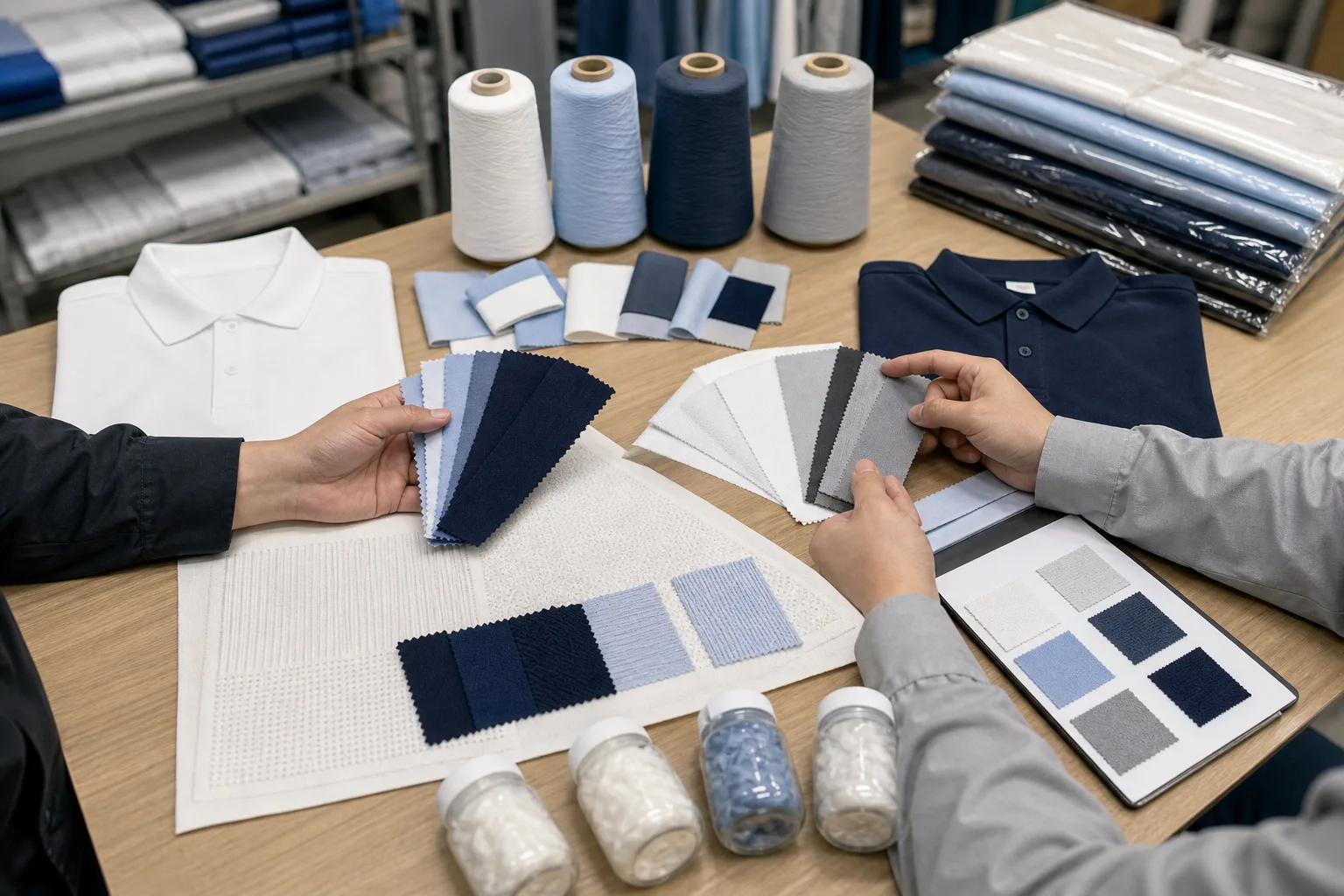
Compare bulk offers only after the technical identity and finished condition of each fabric have been aligned. A quotation for double pique should state the quoted unit, currency, width basis, weight basis, packaging, inspection assumptions, delivery point, trade terms, and any applicable taxes or charges. Keep total width and usable cuttable width separate, and confirm whether the stated weight is a target, tolerance, average, or single sample result.
Separate the fabric price from costs that may affect the project total, such as sampling, testing, freight, duty, inspection, packaging, waste, or rework. These items may not apply in every project, but they should be identified rather than silently treated as included. A lower unit price is not directly comparable when the candidate fabrics use different specifications, allowances, delivery terms, or costing assumptions.
Use the same RFQ and comparison sheet for every candidate. Record whether the quoted material is the approved construction or an alternative, then list all exclusions and assumptions. Supplier statements about capacity, ownership, production resources, or delivery should be treated as claims requiring appropriate documentation. A quotation alone does not establish factory ownership, production capacity, certification status, or a guaranteed lead time.
A practical comparison matrix can include technical conformity, evidence quality, consistency controls, commercial clarity, and total delivery risk. This makes the decision more useful than ranking suppliers by price alone. Apparel Wiki is an independent educational publication, not a fabric manufacturer, factory, laboratory, certifier, or sourcing service provider; project teams should verify supplier and commercial information directly.
What quality controls should cover the first bulk delivery?
Before the shipment arrives, create an approval record that connects the accepted sample to the fabric specification, color standard, relevant test reports, supplier, approval date, and revision status. This record gives receiving and production teams a reference point when the rolls arrive. It also helps distinguish an authorized change from an unexplained difference between the approved sample and bulk material.
A receiving checklist should cover roll or lot identification, shade continuity, finished width, usable width where relevant, weight, visible defects, packaging condition, and project-specific concerns. Compare the delivery with the approved specification under the measurement conditions defined by the buyer’s quality plan. Visual checks, laboratory testing, and final garment inspection are separate controls and should not be treated as interchangeable.
Do not assume that one roll represents an entire shipment. Sample multiple rolls or lots according to the documented inspection plan, paying attention to shade grouping and roll allocation before cutting. This matters when variation could affect garment appearance. Where the product risk requires it, additional checks may address dimensional change, surface behavior, sewing performance, laundering, or another property already defined in the project requirements.
Record every nonconformity with its affected roll or lot, description, evidence, disposition, corrective action, and release status. Material should not move into production simply because it has arrived. The buyer’s approved specification, contract, or quality plan should determine whether the goods are released, held, conditionally accepted, or returned for further review.
When is a double pique bulk order ready for approval?
A double pique bulk order is ready for approval when the commercial name, technical specification, representative sample, relevant test evidence, intended garment use, quotation basis, and substitution rules are aligned. The approval decision should answer not only whether the fabric looks acceptable, but also whether its documented identity and observed behavior support the planned garment.
Place unresolved questions in a risk register with an owner, required evidence, decision deadline, and likely production consequence. Conditional approval can be appropriate when a remaining condition is written, measurable, assigned to a responsible person, and connected to a clear release or hold decision. “Approved subject to confirmation” is too vague unless the confirmation step is defined.
Reconsider approval after a fiber-blend change, finishing change, weight or width change, construction change, failed test, shade concern, or meaningful bulk inconsistency. The required response may include a new sample, garment trial, repeat testing, or updated commercial review. A replacement fabric is not approved merely because it has a similar commercial name or listed composition.
Use this reusable pre-order sequence: identify the material, specify the finished requirements, obtain representative samples, select relevant tests, compare equivalent offers, approve the candidate, receive and inspect the bulk goods, and document the final release. This evidence-based process is more reliable than relying on fabric naming or supplier reputation alone.
As the next step, issue one controlled RFQ to all candidates, request samples that represent the proposed bulk construction, define the project-relevant checks, and keep the approval record with the quotation and specification. A structured Apparel Manufacturing Tools resource may help organize the purchasing and quality information, but the buyer remains responsible for project-specific requirements and decisions.
Is double pique a fiber, a fabric structure, or a commercial name?
It is generally used as a commercial fabric description, not as a fiber name. Confirm the fiber composition, yarn information, structure, finishing, weight, width, and intended use separately because fabrics sold under the same name may differ.
What information should a supplier include in a double pique fabric quotation?
The quotation should identify the material offered, composition, relevant construction details, finished weight, total and usable width, color or finishing assumptions, quoted unit, currency, packaging, delivery basis, inclusions, exclusions, and any substitution or validity conditions.
How can I compare two double pique fabrics with the same GSM?
Compare composition, construction, width, finishing, hand, surface behavior, dimensional change, sewing and laundering results, and relevant test evidence. GSM is mass per unit area, not a direct guarantee of thickness, quality, or garment performance.
Which tests are useful before placing a bulk double pique order?
Select tests according to the garment’s risks and care route. Possible areas include dimensional change, colorfastness, pilling, abrasion, stretch and recovery when relevant, and seam or laundering behavior. Use defined methods and buyer-approved criteria rather than universal pass levels.
Should a replacement double pique fabric require new sample approval?
Yes, when the fiber blend, construction, finish, weight, width, or observed behavior changes. A replacement should be reviewed against the approved specification and garment requirements, with repeat testing or a garment trial where the risk warrants it.
What should be checked when bulk double pique fabric arrives?
Check roll and lot identity, shade continuity, width, weight, visible defects, packaging, documentation, and any project-specific performance concerns. Inspect according to the buyer’s documented plan, record nonconformities, and confirm release status before cutting.