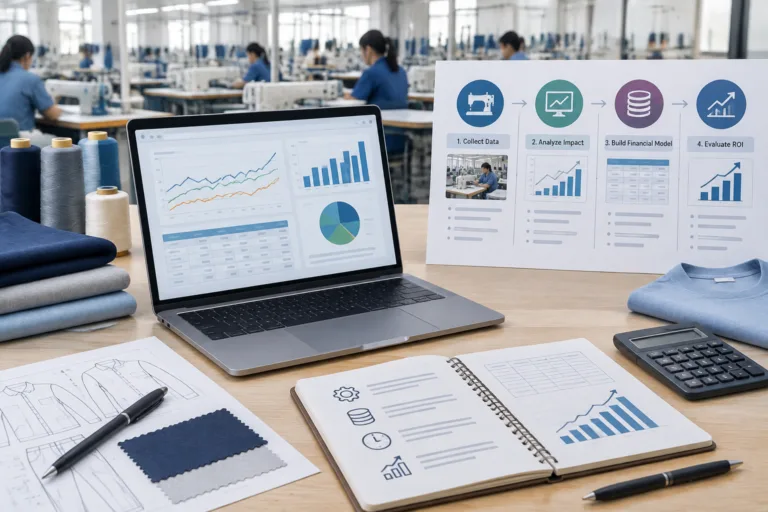
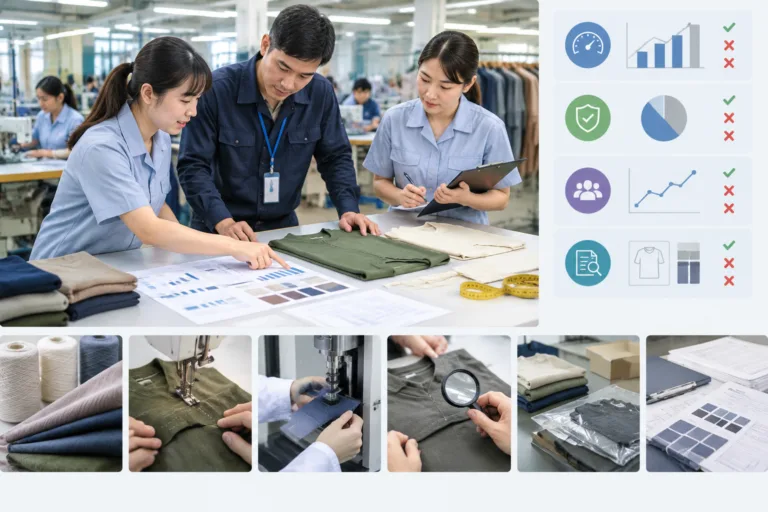
A pilot line trial in an apparel factory is a limited production run that uses intended or near-intended materials, construction methods, equipment, work sequence, and quality controls to reveal production risks before broader manufacturing begins. It tests whether a garment and its method can work together under realistic production conditions, rather than examining only one finished sample. This independent guide from Apparel Wiki is supported by the site’s editorial model, including its Sponsor policy.
The trial may evaluate the product, the process, or both. Its result is evidence for a production decision: proceed, revise, repeat, or hold. It is not proof that every later order will perform identically, because operators, material lots, shifts, line conditions, and engineering support may change.
What Is a Pilot Line Trial in an Apparel Factory?
In common factory practice, a pilot line trial places selected garments through a planned production sequence so the team can observe how the design behaves when made through representative workstations. The trial may use the intended line or a smaller representative setup. The important feature is not a universal quantity or a particular factory name; it is the connection between the tested inputs, the observed process, and a decision that remains open.
This makes a pilot trial different from several related activities. A product-development sample usually helps refine the design, fit, materials, or appearance. A pre-production approval may confirm that a defined version is acceptable before manufacturing, but the approval method and name vary by factory and program. A single garment check can identify an isolated issue without showing whether the operation is repeatable. Operator training teaches a method, while routine bulk production executes an already established method at broader scale.
Those activities can overlap. A trial may expose a construction problem that requires another sample, or it may provide useful training while the team is learning a new operation. Even so, its central role is process-and-decision learning. Factory terminology, approval gates, and records should therefore be treated as project-dependent choices rather than one fixed industry system.
Why Do Apparel Factories Run Pilot Line Trials?
The practical purpose of a pilot line trial is risk discovery. A development sample can look correct while leaving unanswered questions about fabric handling, machine access, seam sequence, pressing, finishing, or the amount of intervention needed at a workstation. A limited run makes those questions visible before the team commits more materials, labor, and scheduling capacity. General pilot-program guidance likewise treats a pilot as a stage for planned monitoring and evaluation, not as automatic proof of full-scale results.
A trial can show whether construction details are repeatable through the intended workstation sequence and whether the chosen equipment, attachments, patterns, trims, and fabric work together as expected. It can also reveal bottlenecks, unclear work instructions, difficult handling steps, training needs, and locations where defects or rework accumulate. These observations are often more useful than a simple statement that a garment was successfully completed.
Quality planning is another purpose. The team can check whether inspection points and acceptance criteria are understandable, whether defects are being classified consistently, and whether rework changes the appearance or construction. Production, engineering, quality, development, sourcing or merchandising, and participating operators may all contribute different evidence. Worker questions, ergonomic concerns, and safe working conditions should be considered during the review, although a pilot alone does not verify labor or social compliance.
The appropriate outcome may be to proceed, revise the work method, repeat the trial under better-controlled conditions, or keep the product in development. That makes the trial a learning and readiness activity, not simply a small order or a speed test.
What Should Be Prepared Before the Trial Starts?
A trial is easier to interpret when the team knows what decision it is intended to support. The objective might concern construction feasibility, material behavior, operation sequence, quality risk, training, capacity planning, or readiness for a defined next step. Without that question, observations can become a collection of comments with no clear action.
The tested version should also be recorded. Depending on the project, this may include the tech pack revision, pattern, bill of materials, approved materials, construction details, measurement points, and quality criteria. The team should identify the product variants, planned scope, participating roles, equipment, operators, line arrangement, and timing assumptions. These are preparation records, not universal requirements or fixed trial quantities.
A practical preparation checklist includes:
- Decision: What must the trial confirm, and what would require revision or another trial?
- Inputs: Which design, pattern, materials, trims, measurements, and construction version are being tested?
- Method: Which work instructions, operation breakdowns, machines, attachments, and workstation sequence will be used?
- Evidence: How will first-pass output, defects, rework, interruptions, material issues, and operator questions be recorded?
- Changes: How will temporary tools, substitute materials, missing trims, unusual operator assignments, or engineering intervention be logged?
- Review: Who will examine the findings, assign actions, and decide the next controlled step?
Freezing the tested version does not mean that no change is allowed. A process adjustment may be necessary to learn something important. However, the original condition, the intervention, and the resulting observation should remain distinguishable. A trial using substitute inputs can still be useful, but its evidence must be labeled limited or conditional rather than treated as direct proof of the intended bulk configuration.
How Does a Pilot Line Trial Work in Practice?
The work usually begins with a briefing. Participants review the product version, critical operations, quality definitions, safety considerations, and the questions the trial must answer. The team then arranges the intended or representative sequence of workstations, machines, attachments, tools, materials, and handling points. Any temporary substitution should be recorded before production begins.
Selected units are run through the actual sequence while the team observes material flow, handling, machine settings, operator questions, operation time, stoppages, and emerging defects. The purpose is not merely to watch the final garments. Observers should connect each result to the operation that created it and note whether intervention came from an operator, technician, engineer, or quality reviewer.
First-pass output should be inspected and documented before rework where possible. Records may include defect types, affected operations, alterations, rework, scrap, stoppages, and reasons for intervention. If the method changes during the run, the timing and reason for the change should be logged so evidence from the original and revised methods is not confused.
After the run, a cross-functional review converts observations into decisions. The group may update work methods, clarify instructions, address equipment or material issues, and assign owners and verification conditions. The final decision should be tied to the evidence: proceed with the documented configuration, revise and repeat, conduct a controlled follow-up, or stop until a material risk is resolved.
Which Results Should Be Measured and How Should They Be Read?
A useful pilot line trial does not end with one efficiency percentage. The team should separate product quality, process stability, interruptions, rework, material loss, and output observations. These measures answer different questions. A garment may eventually pass inspection after correction while still revealing a weak operation, excessive handling, or a recurring source of waste.
First-pass yield describes the units accepted at the first inspection without rework. It should remain separate from the rate that passes after alterations or corrections. Reporting only the final pass rate can hide the labor, time, and material consumed by defects. The inspection stage, product scope, and denominator should therefore appear beside every percentage.
Defect records need the same discipline. Count the number of affected garments separately from the total number of defects, because one garment may contain several problems. Keep the inspection scope consistent, identify the operation associated with each issue, and note whether the problem was corrected, accepted under an approved decision, or left unresolved.
Efficiency and capacity observations also depend on definitions. State whether the recorded time includes training, setup, stoppages, rework, indirect work, overtime, or engineering support. A percentage based on available production time cannot be compared directly with one based only on active sewing time. The pilot evaluation and monitoring guidance is useful for the broader principle that measures should be defined alongside the decision they are intended to inform.
A short evidence table can keep the review practical. Useful columns include observation, supporting record, impact, likely cause, action, owner, and status. Compare the planned method with what actually happened, then investigate causes rather than ranking workers or factories from percentages with different definitions. Worker questions, justified interruptions, rest needs, and safety concerns should remain visible in the record; efficiency measures must not conceal poor working conditions.
What Are the Practical Limits of a Pilot Line Trial?
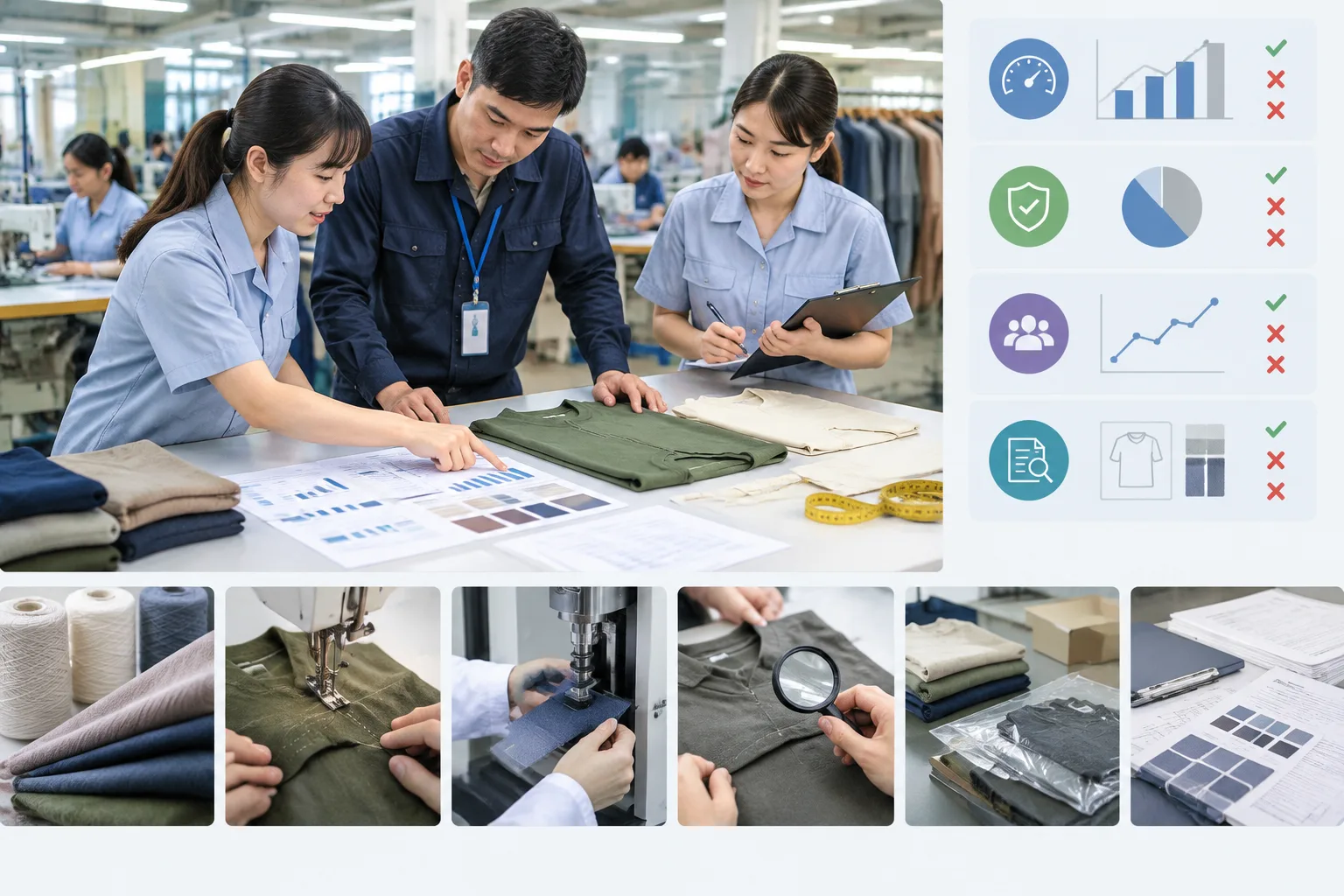
A pilot line trial is evidence about a defined configuration, not a guarantee that every later order will perform the same way. The result may not transfer when operators, shifts, line balancing, material lots, colorways, size ranges, seasonal conditions, suppliers, or equipment change. Even a well-run trial can represent only the conditions that were actually observed.
Small or heavily supported runs can also hide problems that appear at scale. Engineering staff may intervene quickly, experienced operators may compensate for unclear instructions, and temporary resources may remove setup losses or bottlenecks that a regular production team will later face. These interventions are not necessarily flaws in the trial, but they must be recorded so the evidence is interpreted as supported or conditional.
Inputs matter just as much. Results are weaker when the tested fabric, trims, pattern, machinery, attachments, construction, or finishing method differs from the intended bulk configuration. A successful trial on one color or material lot does not automatically establish performance across every planned variant. Follow-up work may be needed where variation is a material part of the production risk.
The trial also has clear boundaries. It can provide production-readiness evidence about the observed process, but it cannot by itself establish regulatory compliance, social-audit compliance, long-term durability, wash performance, colorfastness, chemical safety, or every buyer acceptance requirement. Those conclusions require the applicable approval, audit, laboratory, wear, wash, safety, chemical, or compliance evidence.
Readers should distinguish what the line directly observed from what still requires another source of evidence. A favorable result supports a controlled next step; it does not remove unresolved risks. Each limitation should be linked to an owner and a condition for verification rather than buried in a general disclaimer.
How Should Teams Decide What Happens After the Trial?
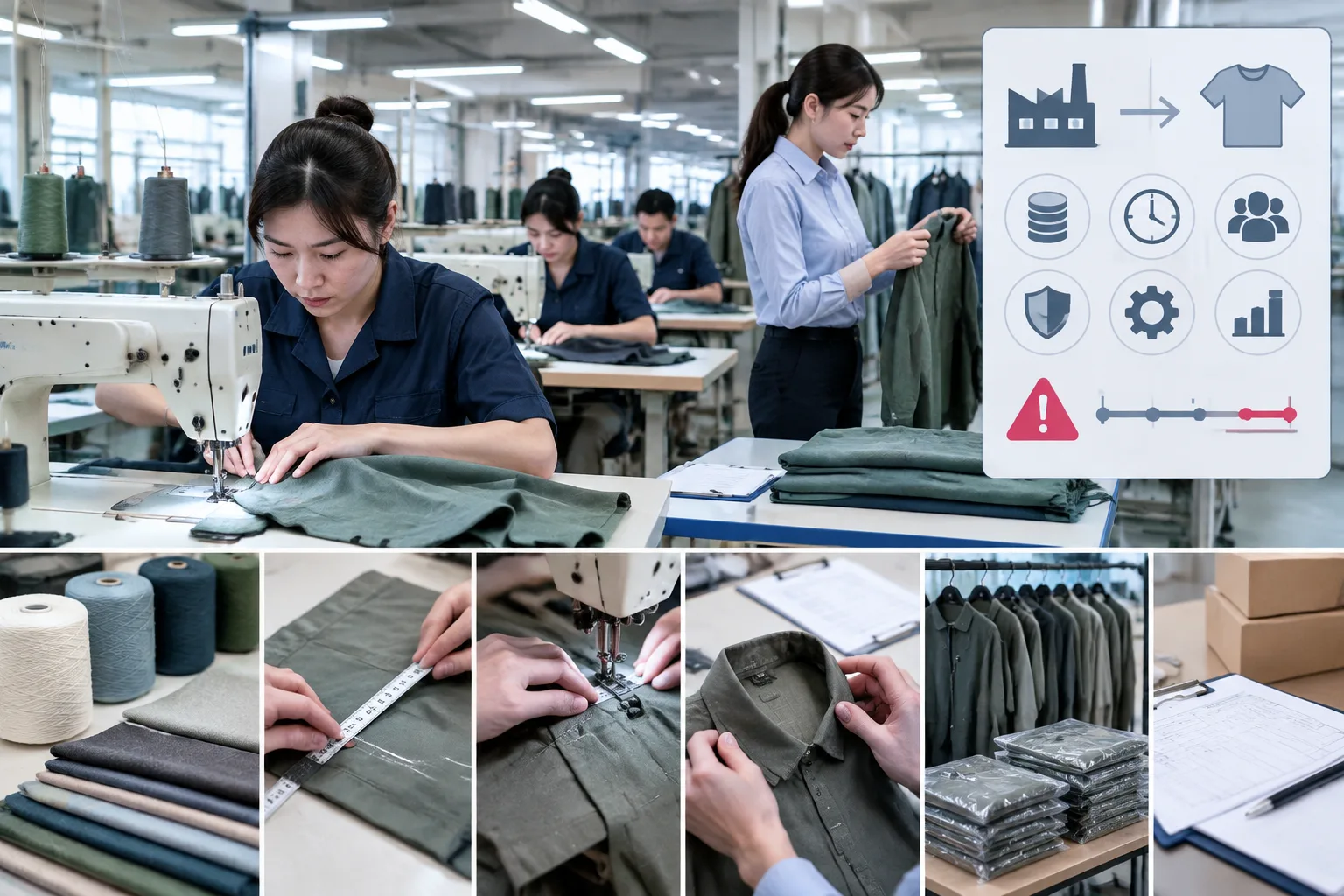
Proceed when the tested configuration is documented, critical quality risks are controlled, required approvals are complete, and remaining variation is understood and assigned. “Proceed” should mean moving to a defined next step under known conditions, not treating the trial as proof that no further monitoring is necessary.
Revise and repeat when defects, bottlenecks, material behavior, unclear work instructions, or operator feedback show that the method is not yet reliable. The repeat should answer a specific question, such as whether a revised attachment removes a defect or whether updated instructions work with the intended operators. Changing the method is useful only when the change and its timing are recorded.
Use a controlled follow-up when the main uncertainty concerns scale, variant coverage, shift transfer, supplier consistency, or a changed input. Stop or escalate when a safety issue, unresolved construction problem, material failure, or missing approval makes the next production step unjustified. There is no universal pass or fail threshold that can replace the applicable project decision criteria.
Closeout should link every important finding to its evidence, corrective action, responsible owner, due date, and verification condition. This record gives the brand, factory, development, quality, and sourcing teams a shared basis for action. The central question is simple: what decision does this trial support, what does it not support, and what evidence is still missing?
For further work, readers can organize observations, approvals, and follow-up actions with relevant Apparel Manufacturing Tools. Apparel Wiki is an independent educational publication, so its guidance should be used to frame questions and evaluate evidence, not as a factory inspection, certification, or manufacturing service.
How is a pilot line trial different from a pre-production sample in apparel?
A pre-production sample primarily checks a garment configuration or approval version. A pilot line trial observes how that configuration behaves through a defined production process, including work sequence, equipment, quality checks, interruptions, and rework.
How many garments are needed for an apparel pilot line trial?
There is no universal quantity. The appropriate scope depends on the questions, product variation, process risks, available resources, and evidence needed for the next decision. The planned scope should be documented rather than treated as an industry-wide rule.
Who should participate in a garment factory pilot line trial?
Participation commonly includes production, engineering, quality, product development, and relevant sourcing or merchandising roles, along with the operators doing the work. The exact group depends on the decision and risks being evaluated.
What metrics are useful during a pilot line trial?
Useful records may include first-pass yield, defects by operation, rework, interruptions, material loss, output observations, and documented operator or engineering interventions. Each metric needs a clear inspection stage, scope, and denominator.
Can a successful pilot trial guarantee smooth bulk production?
No. It provides evidence about tested conditions. Later operators, shifts, materials, variants, suppliers, equipment, and production scale may introduce risks that were not visible during the trial.
Should first-pass yield and final pass rate be reported separately?
Yes. First-pass yield measures units accepted before rework, while final pass rate includes units that pass after correction. Combining them can hide process losses and make the result difficult to interpret.