
Introduction: Understanding the Relationship Between BOM and Costing Sheet
Modern metal product manufacturing relies on precise coordination between two fundamental documents: the Bill of Materials (BOM) and the costing sheet. Together, they serve as the backbone for efficient production, informed pricing, and profitability. This article explores The Relationship Between BOM and Costing Sheet, showing how an accurate BOM is the foundation for reliable costing and why alignment between these documents is vital for metal product companies striving for competitive advantage.
Defining the Bill of Materials (BOM)
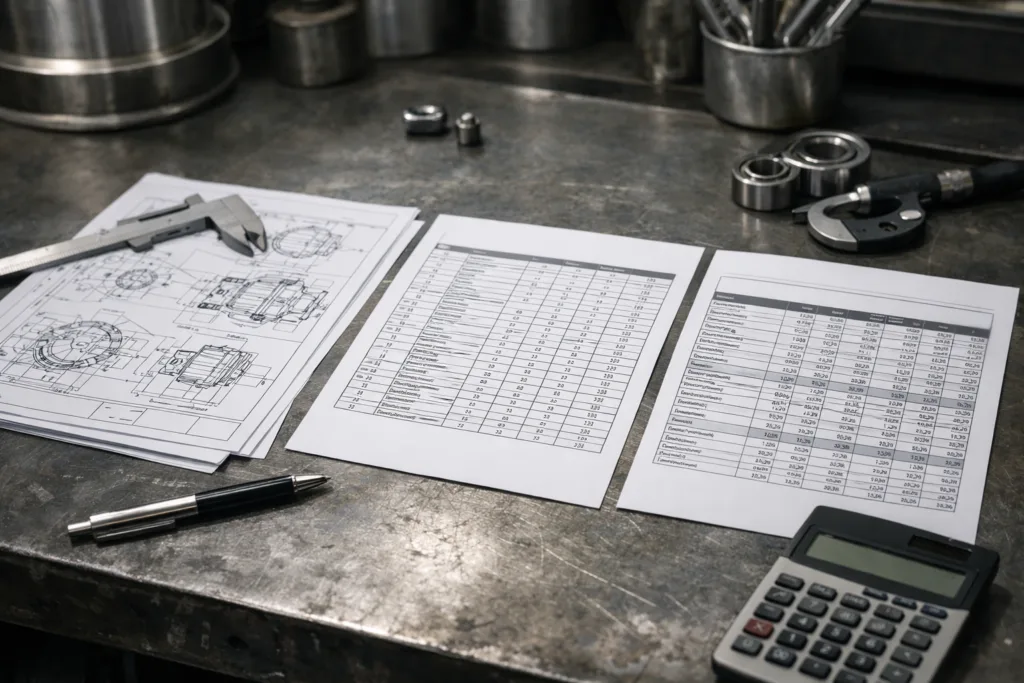
The Bill of Materials is a detailed inventory of every component, raw material, and sub-assembly needed to manufacture a finished product. In metal product manufacturing, the BOM often includes metals, fasteners, trims, sub-parts, and even packaging. Each part lists the required quantity, specification, supplier, and sometimes the unit of measure. Without a clear BOM, production can be delayed, and costs may spiral out of control due to errors or shortages.
What Is a Costing Sheet in Manufacturing?
A costing sheet is a structured document or spreadsheet used to estimate the total production cost of a product. It typically breaks down every input cost, from materials and labor to overhead and shipping. In metal manufacturing, costing sheets help factories predict expenses, set prices, and ensure margin control. The costing sheet’s precision directly depends on the quality of the BOM data it references.
The Critical Link: How BOM Drives the Costing Sheet
The BOM and costing sheet are intrinsically linked. The BOM defines what goes into a metal product; the costing sheet calculates how much those items cost. If even a single material, such as a fastener or decorative trim, is miscounted or listed incorrectly in the BOM, the costing estimate becomes inaccurate. This inaccurate estimate can then lead to incorrect pricing or unexpected losses during manufacturing.
Why Metal Product Manufacturers Rely on Accurate BOMs
Metal manufacturers trust their BOMs to ensure that each production run is consistent. An accurate BOM minimizes errors, helps avoid costly rework, and ensures that every costing sheet generated reflects the true expenses. When companies follow best practices such as frequent BOM review and version control, they improve both operational quality and cost predictability.
Core Components of a Typical Metal Product BOM
A well-constructed metal product BOM lists:
- Raw metals (steel, aluminum, copper, etc.)
- Surface treatments (plating, coating)
- Fasteners (screws, bolts, rivets)
- Packaging materials
- Trims and decorative elements
- Sub-assemblies
- Consumables for manufacturing (lubricants, adhesives)
Omitting or misclassifying any of these can jeopardize accurate costing.
Main Elements of a Costing Sheet
The costing sheet for metal products generally includes:
- Materials cost (from BOM)
- Labor expenses
- Manufacturing overhead (factory rent, utilities)
- Process costs (machining, welding, coating)
- Tooling and setup
- Packaging and logistics
- SG&A (selling, general, and administrative)
- Margin and profit calculation
The Relationship Between BOM and Costing Sheet
The heart of this topic is the close interplay between the BOM and costing sheet. Every line in the BOM should translate directly, or via conversion factors, into a line item on the costing sheet. If quantities are under- or overestimated in the BOM, the costing sheet will reflect inaccurate material costs. Likewise, if the costing sheet omits a material due to BOM oversight, the business may suffer financial losses or face supply issues later on. Integration between both tools is thus essential for business health.
Common BOM-Related Costing Sheet Errors in Metal Manufacturing
Some recurring errors arise from poor BOM practices:
- Omitted small parts (washers, clips, screws)
- Wrong units of measure leading to mismatched quantities
- Obsolete materials remaining on the BOM after design changes
- Trims or finishes listed without production yield consideration
Each error ripples into misplaced costing, wasted time, and sometimes contract penalties. As explained in the Managing BOM Revisions and Version Control guide, regular BOM updates and reviews minimize these issues.
How the BOM Shapes Production Costing Accuracy
Metal manufacturers use BOMs to generate both pre-production and real-time cost estimates. The more granular and up-to-date the BOM, the more accurate the costing. BOMs that explicitly outline trim details, special finishes, or extra-consuming processes enable costing teams to provide realistic estimates, avoiding surprises during quoting or purchase negotiations.
Impact of BOM Discrepancies on Production Costs and Profitability
Even minor inaccuracies can have an outsized impact. For example, missing the cost of a metal plating process in the BOM may result in undercharging customers. On the flip side, overestimating material needs may drive up anticipated costs and make your quote uncompetitive. In either case, profitability takes a direct hit. Apparel Wiki often advises teams to integrate iterative BOM review with fabric consumption calculation practices—even if dealing with metals, the industry logic applies equally.
How a Detailed Costing Sheet Breaks Down BOM Data
A well-prepared costing sheet dissects the BOM, assigning a value to every component, process, and dependency. For example, if the BOM includes a plated brass knob, the costing sheet will factor in:
- Raw brass cost
- Cost per plating process
- Labor for assembly
- Loss allowance during production
This granularity is crucial not just for budgeting but also for analyzing which parts of the product or process drive up costs.
Real-World Example: BOM and Costing Alignment for a Metal Hinge
Suppose you manufacture a custom metal hinge for the furniture market. Your BOM lists three components: a steel plate, two pins, and a spring. The costing sheet pulls these costs, but if you forget to include the zinc coating step in your BOM, the sheet won’t capture its expense or time needed. This misestimation may lead to lost margins—or require urgent re-quotation later that damages client trust.
Standardized Templates for BOM and Costing Sheet Integration
Many factories rely on standardized templates to reduce errors from manual entry. These templates often have linked fields where altering a BOM quantity triggers automatic costing updates. Controls such as required fields, drop-down lists, and automated roll-ups help teams stay consistent, especially when multiple engineers collaborate on a project.
Version Control: Keeping BOM and Costing Sheet in Sync
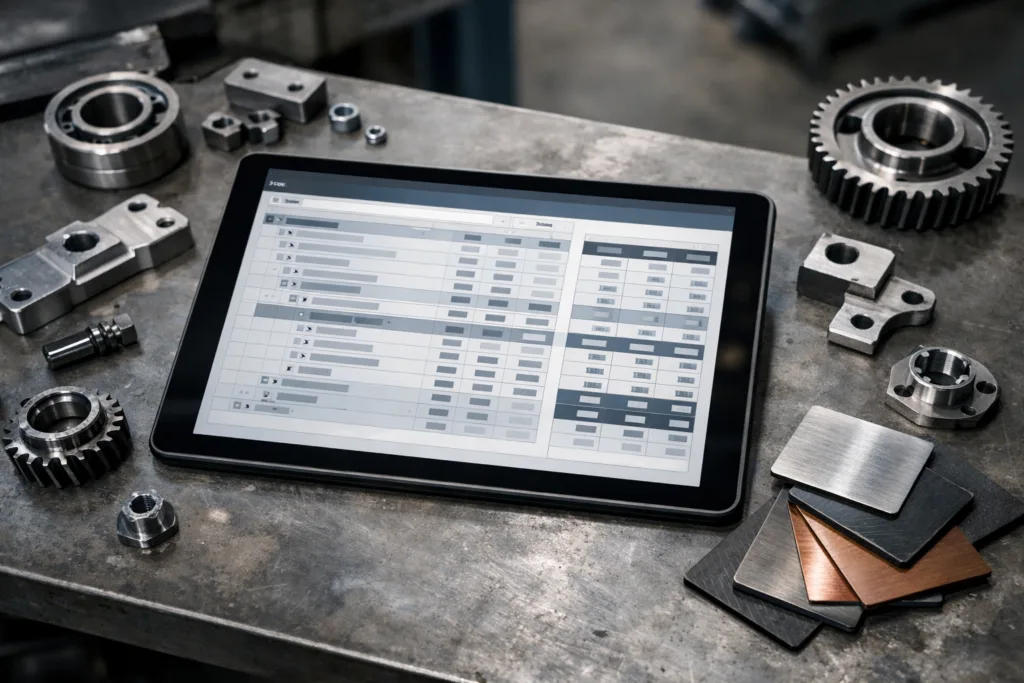
Each revision of a product may modify its BOM (such as changing a pin from stainless steel to brass). Without robust version control, the costing sheet can quickly become outdated. Industry leaders recommend assigning the same revision identifier to both BOM and costing documents. Learn more about BOM revision management for step-by-step best practices.
Integrating Trims and Accessories into Both BOM and Costing
Trims like labels, buttons, and zippers can impact production costs even in metal products, especially for items with assembled soft parts. Accurate sourcing and specification of these trims ensure costing sheets reflect the right materials, reducing risk during procurement and assembly.
Yield Calculation and Waste: Factoring Reality into Costing Sheets
Scrap, offcuts, or subpar components are realities of manufacturing. Including expected yields (number of usable pieces per sheet/length) in your BOM enables costing teams to build more resilient estimates. For practical calculation techniques, Apparel Wiki’s fabric consumption and yield breakdown—while focused on garments—applies the same math used in metals.
How Process Steps Impact Both BOM and Cost Calculations
Some processes—such as polishing, deburring, or heat treatment—are easy to overlook in BOMs. Yet, each carries time, labor, and energy costs. Including these steps in the BOM ensures all corresponding expenses reach the costing sheet, minimizing the chance of budget overrun.
BOM Structure Types: Single-Level vs. Multi-Level and Costing Complexity
Single-level BOMs only list base components, while multi-level BOMs detail all sub-assemblies and purchased components. Multi-level BOMs lead to more accurate costing but require discipline to update. The choice between BOM types affects both the realism and effort of costing sheet creation.
Technology Solutions for BOM and Costing Sheet Management
Digital tools such as Product Lifecycle Management (PLM) software automate integration between BOMs and costing sheets, reducing errors and speeding up quote cycles. However, smaller operations often use spreadsheets, which require careful management to avoid manual entry mistakes. The step-by-step BOM creation guide shows how to strike the right balance between automation and manual review.
Best Practices for Ensuring BOM and Costing Sheet Alignment
To optimize performance and profitability:
- Institute regular BOM reviews (with costing review)
- Use standardized (ideally, template-driven) documentation
- Train staff to double-check units, quantities, and specifications
- Integrate design, engineering, and costing communication
- Plan for yield, scrap, and process steps with realistic factors
- Keep digital version control and change histories for every document
Summary Table: BOM and Costing Sheet Comparison
| Aspect | BOM | Costing Sheet |
|---|---|---|
| Main Goal | List all components/materials | Calculate total product cost |
| User | Design, engineering, purchasing | Finance, pricing, sales, management |
| Document Structure | Hierarchical, often multiple levels | Tabular, with cost breakdowns |
| Impact of Errors | Material shortages, production delays | Under-pricing, lost profit, budget overrun |
Practical Tips for Aligning BOMs and Costing Sheets in Metal Manufacturing
Develop the habit of traceable communication between engineering and costing teams. Document sourcing choices, negotiate with suppliers early, and factor in all costs—including packaging and logistics—to avoid surprises. Reference benchmarking tools, such as those on Apparel Wiki’s resource hub, to compare typical yield and wastage rates for different processes.
When and How to Update Both Documents Effectively
Major product revisions, supplier changes, and raw material cost shifts all trigger updates. Create clear workflows so that engineering updates to the BOM automatically signal costing sheet review, preventing disconnects. Use change logs to record what was altered, when, and by whom.
The Business Case: Real Profit Impact of BOM-Costing Alignment
Brands and factories with disciplined BOM-costing sheet alignment routinely outperform those that treat documentation as an afterthought. They win more bids with accurate pricing, avoid fire-fighting surprise costs, and develop better supplier relationships. Minor documentation investments pay off in higher profit margins and lower risk long term.
Conclusion: Continuous Improvement for Better Cost Visibility

The connection between the BOM and costing sheet is the lifeline of successful metal manufacturing. Accurate, well-managed BOMs ensure that costing sheets deliver true visibility into production costs, shaping everything from quote strategy to company profitability. By fostering rigorous review processes, adopting digital tools, and educating teams, organizations can turn these documents from sources of confusion into keys for confident, data-driven production—and sustainable business growth.
Frequently Asked Questions
What is the main difference between a BOM and a costing sheet?
The BOM lists all materials and parts required for assembly, while the costing sheet translates those itemized materials into total cost figures, including labor and overhead.
How can inaccurate BOM data affect metal product costing?
Inaccurate BOMs lead to missing or extra items in the costing sheet, resulting in production cost overruns, incorrect quotes, and potential profit loss.
How often should a BOM and costing sheet be updated?
Update both whenever design changes, material suppliers, or processes are modified, or at least prior to major production runs to ensure ongoing accuracy.
What software tools help manage BOM and costing sheet alignment?
Product Lifecycle Management (PLM) systems, ERP modules, or specialized BOM management tools streamline both documents, reducing manual entry errors and mismatches.
Do trims and accessories matter much in metal product costing?
Yes, including trims and accessories in the BOM ensures all costs are captured, preventing sourcing gaps and supporting precise cost estimates for complex metal products.
Why is version control important for BOM and costing sheets?
Version control prevents outdated specifications from being used in costing, helping teams stay organized, trace changes, and maintain alignment between engineering and finance.
Related Reading
- 7 Smart Steps for Managing BOM Revisions and Preventing Costly Metal Manufacturing Errors
- Fabric Consumption Calculation: Proven Methods for Reducing Waste and Saving Money
- Avoid Trims Sourcing Mistakes: How to Improve Your BOM for Metal Products
- No Guesswork: Step-by-Step BOM Creation for Stress-Free Metal Manufacturing
- Time-Saving BOM and Costing Tools Every Factory Owner Should Know