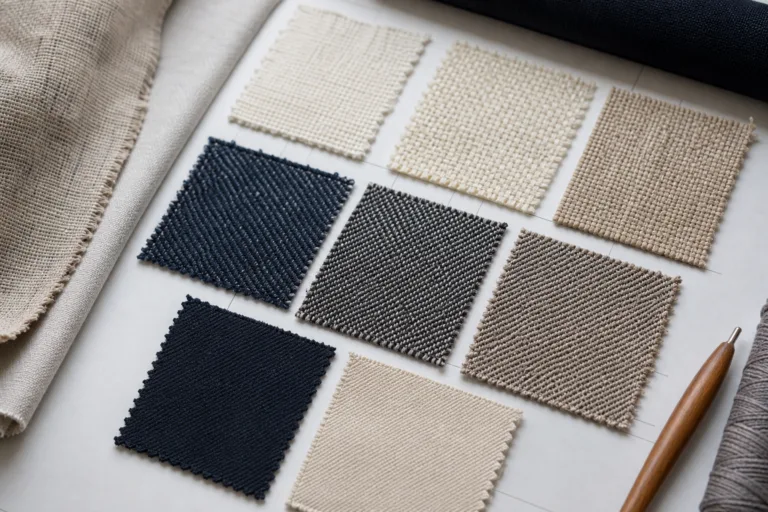
Warp and weft are the two basic yarn directions that define most woven fabrics, and understanding them is one of the fastest ways to make better textile and garment decisions. For apparel teams, fabric direction is not just a weaving term: it affects strength, stretch, drape, surface appearance, cutting layout, and even how a finished product behaves after sewing and wear. When designers, buyers, and product developers understand how weave patterns work with grain line, they can evaluate samples more accurately and reduce avoidable construction problems.
For a more visual starting point, the overview of plain, twill, and satin weave structures is a useful companion because it shows how the three most common weave families are built and why they feel and perform differently. That background makes it easier to connect weave structure with fabric direction, garment use, and sourcing decisions.
What warp and weft mean in fabric construction
In woven fabric, warp yarns run lengthwise on the loom, and weft yarns run crosswise through them. The warp is usually held under tension during weaving, which often makes it more stable and uniform in many fabrics. The weft, sometimes called the filling yarn, is inserted across the width and can contribute a slightly different hand feel or performance depending on the yarn type, tension, and weave pattern.
These two yarn directions intersect to create the cloth structure. Because the yarns are locked together, woven fabrics usually have less inherent stretch than knits. That is why understanding fabric direction matters early in product development: the same fabric can behave differently along the length, across the width, and diagonally on the bias.
Why fabric direction matters in apparel and textiles
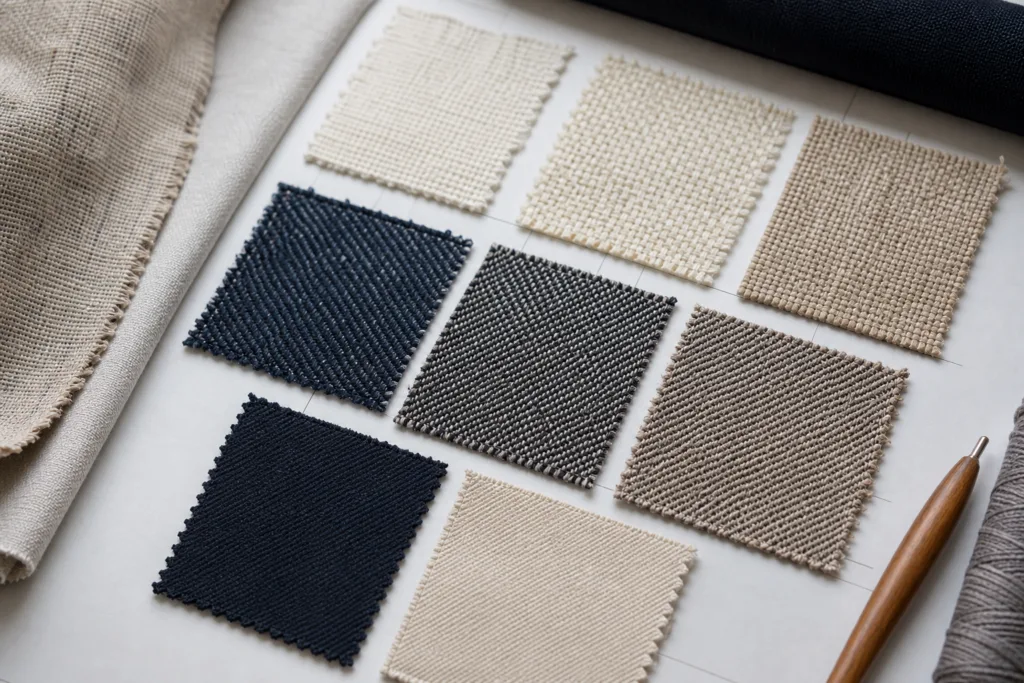
In apparel, fabric direction influences almost every practical decision after fabric selection. It affects how a garment hangs on the body, how seams align, how easy the fabric is to cut, and whether a style will hold its shape after wear and laundering. A jacket shell, a dress shirt, and a pair of tailored trousers may all use woven fabrics, but their directionality requirements are very different.
From a sourcing perspective, direction also affects marker efficiency and construction risk. If a fabric has a clear grain and predictable behavior, cutting and sewing are easier to control. If the fabric is unstable, slippery, or prone to distortion, teams may need more careful spreading, inspection, and pattern planning.
how to distinguish knit and woven fabrics is helpful when a sample is difficult to identify. That distinction matters because warp and weft are core concepts for woven goods, while knit structures behave differently in stretch, recovery, and cutting orientation.
Warp vs weft: key structural differences
Although both yarn systems work together, they are not always identical in behavior. Warp yarns are often stronger, more tightly controlled, and more consistent because they must endure loom tension. Weft yarns may be chosen for comfort, texture, or visual effect, depending on the fabric construction.
| Aspect | Warp | Weft |
|---|---|---|
| Direction | Lengthwise | Crosswise |
| Loom role | Held under tension | Inserted through warp |
| Typical behavior | Often more stable | May vary more in feel or appearance |
| Design relevance | Supports grain line and shape stability | Can influence drape, texture, and widthwise behavior |
It is important not to assume that every woven fabric behaves the same way. Yarn count, fiber type, finishing, and weave pattern can all change the final result. A dense cotton poplin, a wool twill, and a viscose satin may all be woven fabrics, yet their warp and weft performance can be quite different.
How fabric direction affects strength, stretch, and drape
Most woven fabrics are direction-dependent, which means they respond differently when pulled lengthwise, widthwise, or diagonally. Research on woven materials has shown that loading a woven fabric in a bias direction can change tensile behavior significantly, which is why diagonal cutting or stress can alter stability and shape retention. In practical garment terms, this is why a sleeve, skirt, trouser leg, or jacket panel can behave differently depending on how it is cut and sewn.
Lengthwise direction usually provides the most controlled structure because it follows the warp. Widthwise direction may allow a little more give, especially if the yarns or weave are less tightly compacted. Bias direction, which runs diagonally across warp and weft, often introduces the most visible movement and can increase drape while reducing stability.
bias direction affects strength is a useful technical point to remember when developing garments that must keep their shape. If a style relies on crisp edges or precise fit, too much bias exposure can create distortion. If a style is meant to flow and move, controlled bias placement can be an advantage.
How fabric direction influences surface appearance and grain line
Fabric direction is not only structural; it is also visual. Many woven fabrics show a subtle difference in sheen, texture, or yarn visibility depending on whether the viewer is looking along the warp or the weft. In some fabrics, the warp appears slightly smoother or more lustrous because of yarn choice and tension. In others, the weft may carry more visual texture.
The grain line in pattern making is the layout direction that aligns a pattern piece with the warp or the intended stable direction of the fabric. When a pattern piece is placed true to grain, the garment is more likely to hang correctly and behave as intended. If grain is shifted, the style may twist, stretch, or appear visually uneven after sewing and wear.
guide to fabric GSM and garment weight can also help here because weight and direction work together. A heavy fabric may still drape well if the weave and yarn structure support movement, while a lighter fabric may feel unexpectedly stiff if the weave is dense and stable.
Common weave patterns and how they change fabric behavior
Weave pattern determines how warp and weft interlace, and this changes the final fabric character. The three most common structures are plain weave, twill weave, and satin weave. Each one creates a different balance of stability, drape, surface appearance, and durability.
| Weave pattern | Structure | Typical behavior | Common apparel use |
|---|---|---|---|
| Plain weave | One over, one under | Stable, balanced, often crisp | Shirts, linings, poplin, muslin |
| Twill weave | Diagonal interlacing | Stronger drape, visible diagonal line, good durability | Denim, chinos, suiting, workwear |
| Satin weave | Long floats with fewer interlacings | Smoother surface, more sheen, softer drape | Eveningwear, linings, decorative fabrics |
Plain weave is often the most balanced and easy to handle. Twill is useful when a garment needs durability and a more structured drape. Satin can look elegant but may snag more easily because the long floats are less tightly locked than in plain weave.
how fabric texture and drape are rendered in design is relevant for teams working on concept development. When designers understand weave pattern and fabric direction, they can sketch or render garments more realistically and communicate fabric intent more clearly to technical teams.
Plain weave, twill weave, and satin weave explained in clothing terms
Plain weave
Plain weave is the most basic interlacing structure, with each warp yarn crossing over and under each weft yarn in a regular sequence. This creates high stability and a relatively firm hand in many fabrics. Apparel teams often use plain weave when they want clean seam behavior, easy cutting, and predictable shape retention.
Twill weave
Twill weave creates diagonal lines on the fabric face, which often gives the cloth more visual depth and better drape than plain weave. Denim is the most familiar example, but twill also appears in chinos, uniform fabrics, and tailored garments. Because the structure is less rigid than plain weave, twill can be comfortable while still durable.
Satin weave
Satin weave minimizes interlacings on the face side, creating a smoother appearance and often a softer drape. The trade-off is that it may be less resistant to abrasion or snagging than a plain weave of similar fiber content and construction. Satin is useful where appearance and fluidity matter more than heavy-duty wear.
How different weave patterns are used in clothing and technical textiles
The right weave pattern depends on the end use. A crisp woven shirt needs shape control and clean collar behavior, while a blazer lining may need smoothness and low friction. Workwear may prioritize abrasion resistance, while a fashion blouse may prioritize flow and surface luster. In technical textiles, weave choice can affect stability, dimensional control, and performance under stress.
Here is a practical way to think about it:
- Plain weave suits garments that need stability and easy manufacturing control.
- Twill weave suits items that need stronger drape, resilience, or a diagonal visual texture.
- Satin weave suits products where smoothness and visual finish are more important than surface toughness.
For sourcing teams, the key is not only fabric name but also weave behavior, fiber content, and finish. Two fabrics with the same fiber blend can perform differently if the weave changes.
A broader knowledge base also helps. The Apparel Wiki homepage is useful when teams need to move from weave basics into related topics such as fabric terminology, garment construction, and sourcing decisions in one place.
Fabric direction in garment design: grain line, pattern layout, and fit
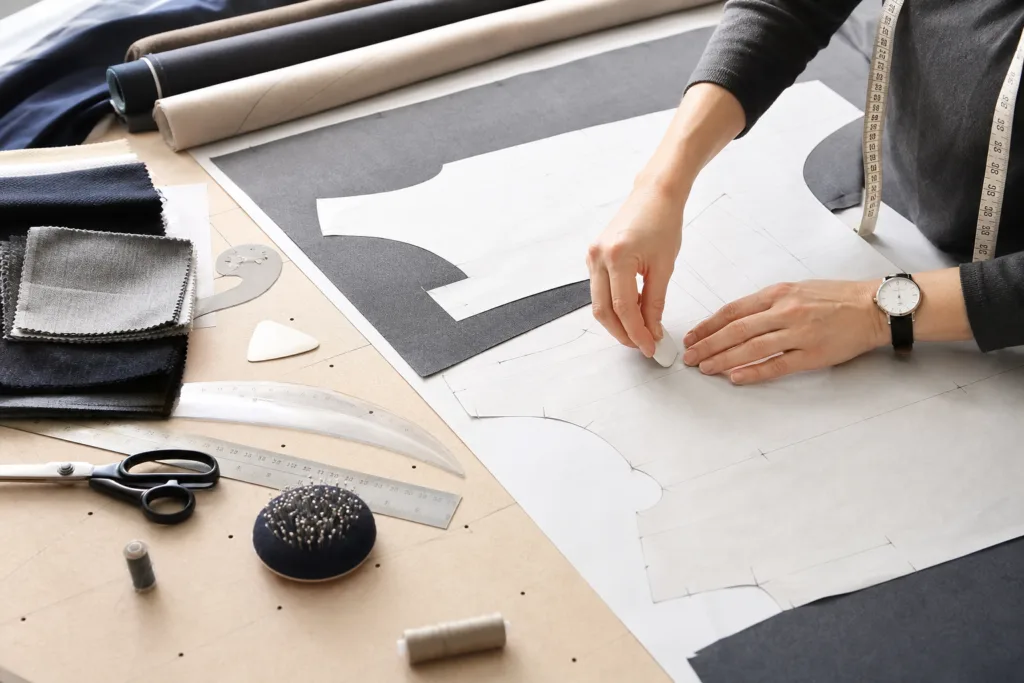
Pattern makers use grain line to place pattern pieces so that they follow the intended direction of the cloth. This is essential for balance and fit. A front panel cut off-grain can pull differently from the back panel, and a collar cut without correct grain may not roll or lie as intended.
In practice, the grain line is one of the simplest control points in garment development, yet it is frequently ignored by beginners. A good cutting layout respects warp, weft, and the intended behavior of the garment. That is especially important for tailored garments, structured shirts, trousers, and any piece with symmetric panels or sharp construction lines.
Why cutting on the grain matters for shape, stability, and sewing accuracy
Cutting on the grain helps fabric behave predictably. It reduces unwanted twisting, supports even seam alignment, and makes it easier for the garment to maintain its intended silhouette. Sewing on-grain pieces also tends to be more efficient because the cloth feeds more consistently through cutting and stitching processes.
For production teams, accurate grain placement is also a quality control issue. If panels are cut with visible distortion, the garment may pass sewing but fail in final appearance. Waistbands may tilt, hems may swing, and seam lines may not hang straight.
| Cutting method | Typical effect | Risk level |
|---|---|---|
| On grain | Stable, predictable, balanced shape | Low |
| Off grain | Possible twisting or uneven hang | Moderate to high |
| On bias | Increased drape and movement, less stability | High for structured garments |
What happens when fabric is cut off-grain or on the bias
Off-grain cutting can create subtle but costly problems. A garment may appear acceptable at first, but after sewing, pressing, or laundering, the distortion can become obvious. Skirts may spiral, trouser legs may twist, and shirt fronts may not align cleanly.
Bias cutting is different because it intentionally uses the diagonal direction for a specific effect. Bias can create graceful drape in dresses, scarves, or certain fashion details, but it can also make handling more difficult. If the design needs structure, bias exposure should be controlled carefully and supported with proper interfacing, seam planning, and test fittings.
How textile engineers use warp and weft knowledge in fabric development
Textile engineers and fabric developers use warp and weft planning to shape performance outcomes. They may adjust yarn type, yarn count, weave density, finishing methods, or filament choice to balance strength, softness, coverage, and appearance. Even a small change in warp density or weft yarn selection can alter how a fabric feels in the hand and how it performs on the body.
explanation of thread count and yarn count in textiles is useful in this context because many buyers confuse yarn count with thread count. Those numbers are not the whole story, but they help explain why one woven fabric feels smoother, denser, or more stable than another.
Developers also think about finish. Mercerization, calendaring, brushing, washing, and coating can all influence how warp and weft present on the surface. A fabric that looks simple on a spec sheet can behave very differently after finishing.
Practical examples: shirts, trousers, jackets, home textiles, and performance fabrics
Shirts: A woven shirt often uses plain weave or a fine twill. The goal is usually balance between structure, comfort, and clean appearance. Direction matters because collars, cuffs, and plackets need controlled grain placement.
Trousers: Twill is common because it balances durability with flexibility in movement. Fabric direction affects how the leg hangs and how the crease behaves over time.
Jackets: Outer layers may require stronger warp stability, while linings need smoothness and controlled drape. Direction is important for pocket openings, lapels, and panel alignment.
Home textiles: Sheets, curtains, and upholstery also depend on weave direction. In curtains, drape and sheen matter; in upholstery, abrasion and shape retention matter more.
Performance fabrics: Some woven performance textiles are engineered for stretch, wind resistance, or quick drying. Even there, warp and weft behavior remains important because direction affects mobility and comfort.
Common mistakes designers and buyers make when ignoring fabric direction
One common mistake is treating all woven fabrics as if they behave the same. Another is judging a sample only by color or hand feel without checking grain stability. Buyers may also underestimate how much cutting direction affects fit, especially in styles with long seams or asymmetric details.
Other frequent errors include:
- placing pattern pieces without confirming grain alignment
- specifying a fabric by fiber content only and ignoring weave pattern
- assuming a heavier fabric is always more stable
- using a visually appealing fabric without checking seam distortion risk
- neglecting sample testing for drape, shrinkage, and twist
These mistakes can create avoidable rework. In apparel development, directionality is one of the simplest variables to review before production starts, yet it is often missed until fitting or final inspection.
How to evaluate fabric direction when sourcing or reviewing samples
When a sample arrives, start with a simple checklist. Identify whether the fabric is woven or knit, confirm the visible grain direction, and observe how the cloth behaves when held lengthwise, widthwise, and diagonally. Look at seam stability, edge fraying, and whether the fabric drapes evenly when suspended.
A useful sourcing review also asks whether the intended garment needs more structure or more fluidity. If the style needs crisp shape, choose a weave and yarn arrangement that supports stability. If the style needs movement, consider whether the chosen fabric can deliver drape without causing excessive distortion.
It can also help to compare sample behavior against expected weight and finish. The sample may feel too soft, too rigid, or too elastic for the product brief. If so, the issue may be weave structure rather than fiber content alone.
Quick checklist for identifying warp, weft, and weave pattern behavior
- Check which direction runs along the length of the fabric roll.
- Look for the most stable direction under light hand tension.
- Observe whether the fabric shows diagonal ribs, smooth floats, or a plain grid.
- Test whether one direction stretches or distorts more than the other.
- Confirm grain line during pattern layout and marker planning.
- Review whether the weave pattern matches the intended garment use.
If you are comparing different textile types, the comparison of natural and synthetic fibers can help separate fiber effects from weave effects. In other words, a fabric’s performance is shaped by both what the yarn is made of and how those yarns are woven together.
Fabric direction, weave patterns, and buying decisions
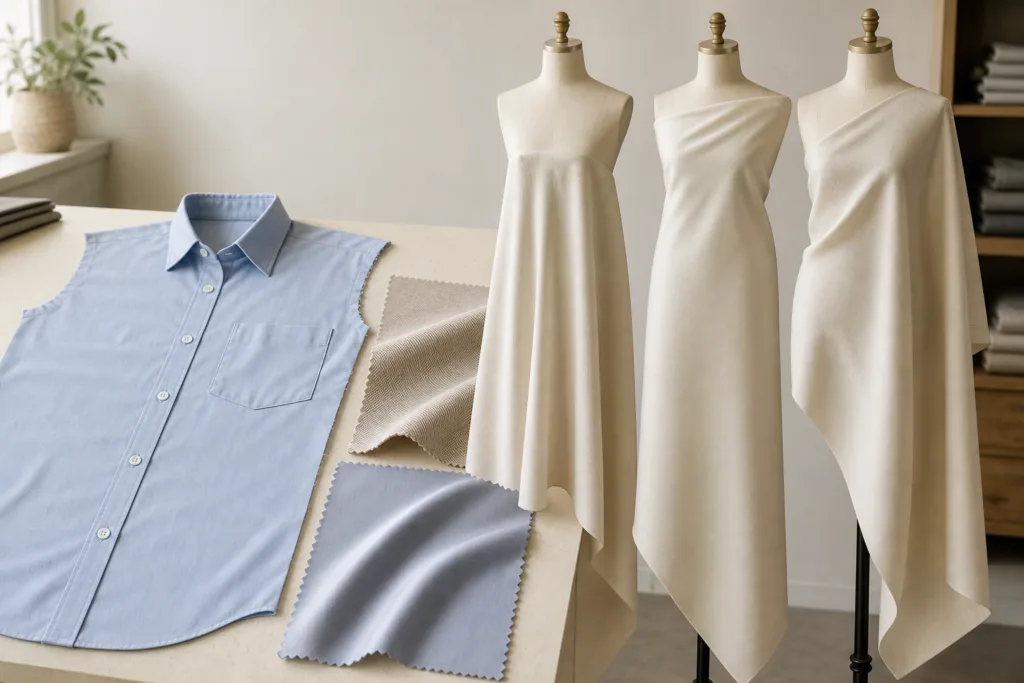
For sourcing and product teams, the most useful question is not simply “What is the fabric called?” but “How does it behave in the direction the garment will use most?” That question connects weave construction to real-world wear, sewing, and quality outcomes. If the answer is unclear, ask for sample testing, clarified fabric specs, and confirmation of intended grain direction.
Understanding fabric direction also improves communication between design, sourcing, and manufacturing. When everyone uses the same language for warp, weft, grain, and weave pattern, there is less room for misinterpretation during sampling and bulk production.
Frequently Asked Questions About Warp, Weft, and Fabric Direction
What is the difference between warp and weft?
Warp yarns run lengthwise in woven fabric, while weft yarns run crosswise. The warp is usually held under greater tension during weaving, which often makes it more stable, while the weft helps fill the width of the fabric and contributes to overall structure.
Why does fabric direction matter in clothing?
Fabric direction affects strength, stretch, drape, and how a garment hangs on the body. If pattern pieces are cut on the wrong grain or on a bias unintentionally, the garment may twist, lose shape, or fit inconsistently.
What is grain line in pattern making?
Grain line is the direction a pattern piece should align with the fabric’s warp or intended stable direction. Correct grain placement helps the garment stay balanced, sew accurately, and maintain the intended silhouette.
Which weave pattern is most stable?
Plain weave is often the most stable because it has the simplest and most balanced interlacing structure. That said, actual stability also depends on fiber type, yarn count, finishing, and fabric density.
What happens if fabric is cut on the bias?
Bias cutting increases drape and movement because it uses the diagonal direction of the fabric. It can be useful for flowing garments, but it also reduces stability and can make sewing and fitting more difficult.
How can buyers evaluate fabric direction before production?
Buyers can review the sample by checking grain alignment, observing how the fabric behaves in different directions, and confirming whether the weave pattern matches the intended garment use. It is also smart to test drape, seam stability, and distortion before approving bulk production.