Jacquard and dobby are both patterned fabrics created through weaving techniques, but they achieve design in very different ways. For apparel developers, merchandisers, and textile buyers, the distinction matters because weave structure affects not only appearance but also handfeel, stability, durability, and production complexity. Understanding these differences helps you choose a fabric that matches the end use instead of relying on surface decoration alone.
For readers who want a foundation before comparing patterned woven textiles, this overview of foundational weave structures is a useful starting point. It explains how warp and weft interlace, why different weave structures behave differently, and how the base construction of a fabric influences drape, density, and surface texture. That context makes it easier to understand why Jacquard and dobby weaves create pattern directly in the fabric rather than adding it later with print or embroidery.
What Jacquard and Dobby Weaves Are
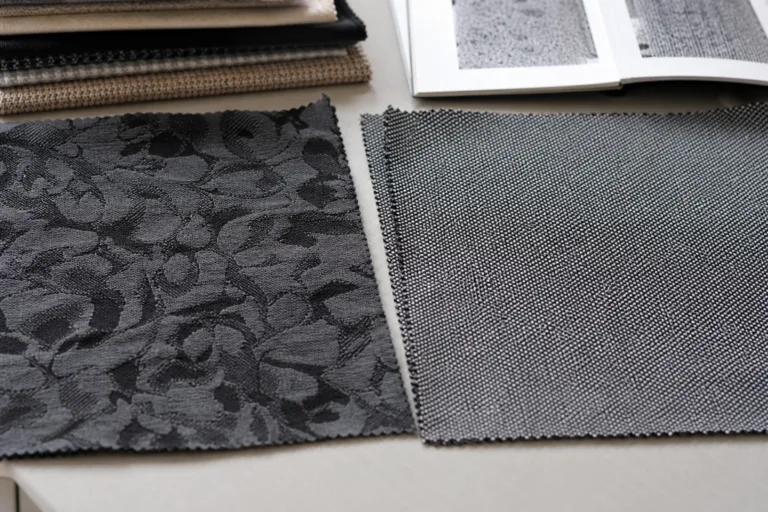
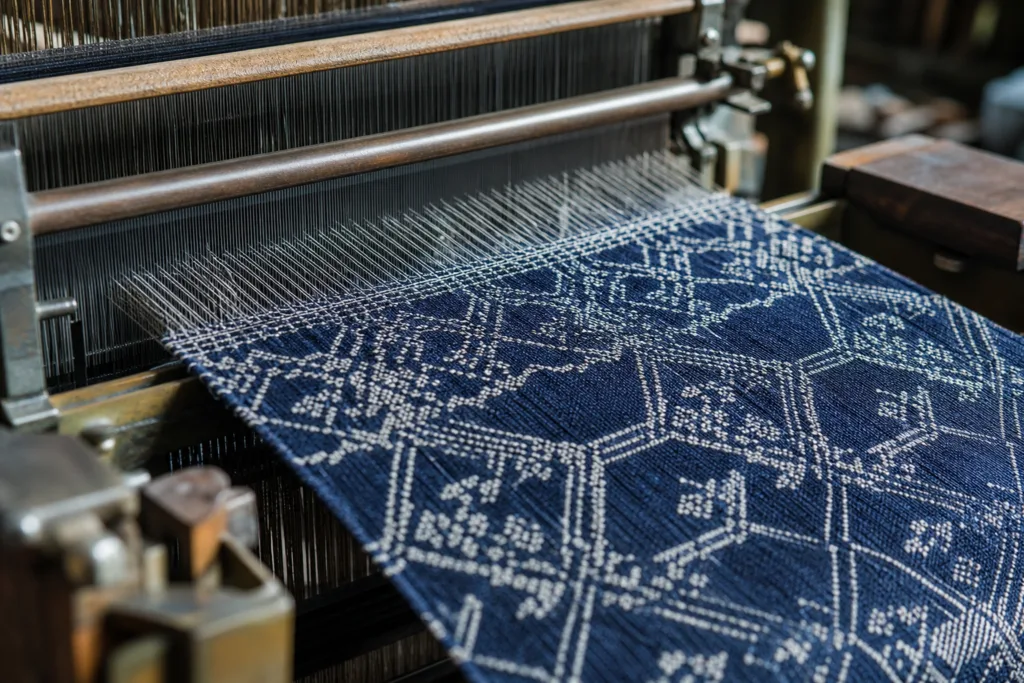
Jacquard and dobby are both woven pattern systems, meaning the design is formed during weaving rather than printed on top of the fabric. In a Jacquard weave, individual warp threads can be controlled in a way that allows highly detailed motifs, large repeats, and even pictorial surfaces. In a dobby weave, the loom controls groups of warp threads to create smaller, more regular geometric patterns or subtle texture effects.
From an apparel sourcing perspective, the most important idea is that these are not just decorative labels. They describe how the loom is programmed and how the fabric structure is built. That structural difference affects the look of the face side, the reverse side, the cost of development, and the kinds of garments or home textiles each fabric suits best.
How patterned weaving differs from printing and embroidery
Patterned weaving should not be confused with surface decoration. Printing applies color to an existing fabric surface, and embroidery adds stitches on top after the fabric is made. Jacquard and dobby, by contrast, build pattern into the cloth itself. That means the motif can be visible through the structure, not just on the face layer.
This matters for durability and design longevity. A woven pattern will not crack or peel the way some applied decorations can. However, woven patterns are also constrained by yarn choice, loom capability, and construction density. In practice, you are trading some freedom in color application for stronger integration between design and fabric structure.
If you are comparing woven fabrics to other garment categories, the broader comparison of knit and woven fabrics is a helpful reference point. Jacquard and dobby sit firmly on the woven side, so they usually behave more like structured fabrics than stretch-led knits unless stretch yarns are added deliberately.
How Jacquard Weaving Works
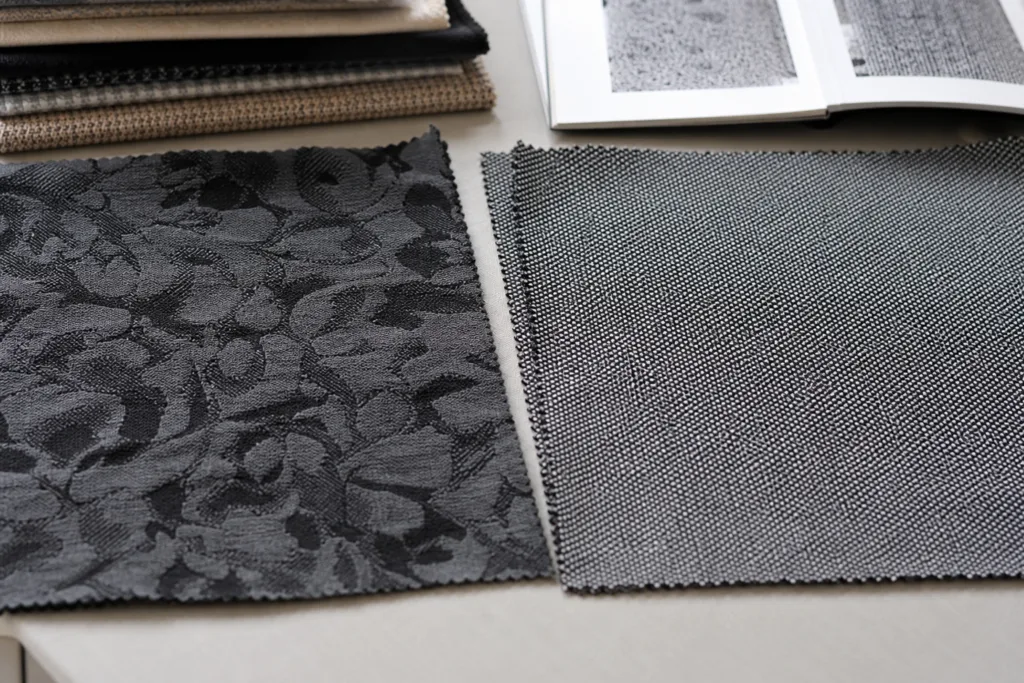
Jacquard weaving uses a loom system that can control many warp threads independently. That individual control gives the designer a much wider pattern vocabulary than simpler weave structures. It allows motifs to be scaled larger, repeated less obviously, and arranged in more complex compositions across the fabric width.
Because the pattern is created by the loom itself, jacquard fabrics can include floral designs, medallions, geometric surfaces, damask-like effects, tapestry-inspired imagery, and highly customized branding patterns. The fabric may look elaborate from a distance yet remain structurally woven throughout.
One practical point for buyers is that Jacquard development usually takes more planning. A complex motif may require more sampling, more coordination between design and weaving teams, and more attention to how the pattern falls on a garment panel. That is one reason why jacquard fabrics are more complex and costly to produce is not just a slogan but a real production issue tied to loom setup and design translation.
Pattern complexity and design freedom
Jacquard is the better choice when the pattern itself is the visual centerpiece. Large motifs can create a luxurious, architectural, or decorative effect. Fine repeats can also be used, but the real strength of Jacquard is its ability to move beyond small regular textures into broader design storytelling.
This design freedom is valuable in statement apparel, formalwear, upholstery, drapery, and premium accessories. The trade-off is that more complex visuals can increase production sensitivity. Pattern placement across seams, repeat matching, and panel layout become more important, especially when the garment has darts, pockets, plackets, or curved pieces.
How Dobby Weaving Works
Dobby weaving uses a simpler control mechanism than Jacquard and is generally best for smaller repeat patterns or textured surfaces. Instead of independently controlling a large number of warp threads, the loom lifts groups of warp threads in sequences that create geometric effects, small shapes, stripes, dots, honeycomb textures, or subtle surface relief.
Because the system is simpler, dobby fabrics are often more efficient to produce than Jacquard fabrics. They can still look refined and technical, but their pattern language is usually more restrained. That is why dobby is often selected when the goal is a sophisticated texture rather than a bold pictorial design.
In many product lines, dobby fabrics function as a practical middle ground: they offer more visual interest than a plain weave while remaining easier to source and more predictable in production than heavily decorated Jacquards.
Repeating motifs and subtle surface effects
Dobby patterns are typically smaller, more regular, and easier to repeat across yardage. This makes them attractive for shirting, lightweight dresses, linings, and home textiles where subtle texture is preferred over high-contrast ornamentation. Because the pattern is usually more compact, it often looks clean and balanced at close range and does not dominate the garment silhouette.
That subtlety also supports versatile styling. A dobby shirt can read as more polished than a flat plain weave without looking busy. A dobby curtain can add depth without overwhelming a room. For brands building a coherent product line, that balance between texture and restraint can be a major advantage.
Jacquard vs. Dobby Weaves at a Glance
| Feature | Jacquard | Dobby |
|---|---|---|
| Pattern scale | Large motifs, pictorial effects, broad repeats | Small repeats, geometric or textured motifs |
| Visual impact | High, decorative, statement-oriented | Moderate, subtle, refined |
| Loom control | More complex individual warp control | Grouped warp control with simpler sequencing |
| Production complexity | Higher | Lower to moderate |
| Cost tendency | Usually higher due to development and setup | Usually more efficient for smaller patterns |
| Best suited to | Fashion statements, upholstery, decorative textiles | Shirting, dresses, lining, subtle texture fabrics |
| Texture | Can be richly textured or layered | Usually more understated and regular |
For buyers estimating fabric mass, drape, and garment feel, a practical guide to fabric GSM and weight helps connect the weave choice to end-use performance. A Jacquard can be light or heavy depending on yarns and construction, while a dobby can also span many weights, so structure alone does not determine comfort or warmth.
Pattern Complexity, Texture, and Visual Scale
The strongest difference between Jacquard and dobby is not simply “fancy versus simple.” It is the scale and freedom of pattern expression. Jacquard can place visual emphasis across large areas, whereas dobby usually works best when the design logic depends on repeatable texture.
Pattern scale matters because the same motif can feel different depending on how it sits on the body or in the room. A large Jacquard motif may be compelling on a jacket back panel or upholstery chair, but too dominant for a small shirt. A dobby grid or micro-texture may disappear from a distance on a curtain, yet add richness when viewed up close.
Texture also depends on yarn thickness, tension, finishing, and fiber type. A Jacquard is not automatically raised, and a dobby is not automatically flat. Either structure can create dimensional effects if the yarns, floats, and finishing are engineered that way. What changes is the designer’s available pattern vocabulary.
Fabric texture and handfeel
Handfeel is where many fabric decisions become tangible. Jacquard fabrics can feel substantial, sculptural, or richly detailed because the pattern construction often creates visible surface variation. Some are smooth and elegant; others have more body or a slightly textured face and back. Dobby fabrics, by comparison, often feel cleaner and lighter in visual expression, though not necessarily lighter in weight.
If you are evaluating woven quality, thread-level behavior also matters. Yarn count, density, and fiber quality influence how clearly a dobby texture reads or how sharply a jacquard motif holds its edges. The relationship between yarn selection and fabric appearance is why the how yarn count and thread count affect fabric quality discussion is useful when specifying both weave type and finishing expectation.
In sourcing practice, asking only for “jacquard” or “dobby” is not enough. You also need to define yarn composition, repeat size, fabric weight, finish, and intended use. Otherwise, the delivered fabric may technically match the weave category but still fail the tactile or visual target.
Durability and Everyday Performance
Durability is not determined by weave name alone, but weave structure does influence how a fabric performs in use. A well-made Jacquard can be durable enough for upholstery, formalwear, and structured garments. A dobby can be equally durable in lighter apparel if the yarns and construction are appropriate. The real question is how the weave behaves under wear, abrasion, laundering, and snag risk.
Jacquard fabrics sometimes use floats or more intricate structural variation, which can make them visually rich but potentially more vulnerable to snagging if the construction is loose or the yarns are delicate. Dobby fabrics, with their smaller repeating structures, often feel more controlled and stable, though this is not a guarantee. The final result depends on weave density, yarn strength, and finishing.
For home textiles and indoor applications, performance evaluation should include abrasion resistance, seam behavior, pilling tendency, and overall fabric stability. The durability and performance testing for woven fabrics guidance is relevant here because woven structures may look strong but still need testing to confirm how they behave in real use.
Stability, snagging risk, and maintenance
In practical garment development, a more decorative weave often needs more careful handling. Patterned floats, delicate yarns, and prominent surface effects can be more visible when damaged. That does not make Jacquard inferior; it simply means the fabric must be matched to the right application. A dressy blazer lining, for example, can support a more expressive weave than a children’s play shirt.
Dobby fabrics often have an advantage in understated everyday wear because their repeat is small and their surface may be easier to keep visually consistent after laundering or pressing. Still, any woven patterned fabric should be tested for shrinkage, dimensional stability, and seam behavior before production approval.
Common Fiber and Fabric Combinations
Jacquard and dobby are weave constructions, not fiber types. They can be made from cotton, polyester, viscose, silk, linen, blends, or more technical yarn systems. That means the final performance comes from both the structure and the fiber selection.
Cotton Jacquards are common in shirts, dresses, and decorative textiles when breathability and natural handfeel are important. Polyester or blended Jacquards may be chosen for improved crease resistance, color consistency, or easier maintenance. Silk-like or viscose-rich Jacquards are often selected for sheen and drape, but they may require more careful QC around snagging and shrinkage.
Dobby fabrics also span many fiber systems. Cotton dobby shirtings can feel crisp and breathable, while polyester blends can improve wrinkle recovery and production consistency. Linen or linen-blend dobby fabrics may be used when texture and natural slub character are part of the design brief. For fiber-specific selection context, the comparison of cotton varieties for fabric selection is useful when cotton is being considered for either weave type.
Fashion Applications: Where Each Weave Fits Best
In fashion, the best choice depends on how much the fabric should lead the design. Jacquard is typically stronger when the garment needs a clear visual statement. Dobby is often better when texture should support the silhouette without overpowering it.
When Jacquard works well in apparel
Jacquard is common in jackets, eveningwear, tailored skirts, decorative dresses, statement shirts, waistcoats, and accessories such as ties or bags. It is especially useful when the fabric itself is part of the branding or aesthetic identity. Designers often choose it when they want the garment to look structured, premium, or ornate without relying on surface printing.
Because Jacquard motifs can be large and directional, pattern placement must be planned carefully. A garment panel might cut through part of a motif, which can look intentional on one style and disruptive on another. For that reason, sample approval should include not just fabric hand approval but also cut-and-sew mockups when possible.
When dobby works well in apparel
Dobby fabrics suit business shirts, blouses, summer dresses, lightweight trousers, linings, and garments that need visual texture without obvious decoration. They are often a smart choice for everyday wardrobe pieces because they add refinement while keeping styling flexible.
In product line planning, dobby can help create a family of coordinated fabrics across multiple garments without making every item look identical. A shirt, dress, and lining might share a related texture language while differing in weight and finish. That kind of cohesion is valuable in capsule collections and uniform programs.
For a broader structural context across woven and non-woven apparel materials, the Apparel Wiki homepage is a useful starting point for related garment and textile knowledge. It can help readers connect weave choice to construction, care, sourcing, and product development decisions across the full apparel workflow.
Home Textile Applications
Jacquard and dobby are both widely used in home textiles, but their roles differ. Jacquard is often selected for upholstery, drapery, cushion covers, bedding accents, and decorative table textiles when strong visual identity is needed. Dobby is often chosen for sheeting, curtains, table linens, and lightweight decorative fabrics where pattern should remain elegant and controlled.
For upholstery and drapery, durability testing becomes especially important because these products face prolonged use, friction, and light exposure. In those categories, the pattern must survive not just aesthetics review but repeated contact and cleaning cycles. A visually attractive weave that fails in abrasion or seam slippage is not suitable for contract or residential performance expectations.
In bedding and table linens, comfort, washability, and clarity of repeat often matter more than dramatic motif scale. Dobby can be especially useful here because it gives a premium feel without making the fabric visually heavy. Jacquard can still work well for decorative covers, bed runners, or table statements where the goal is a more formal or luxurious presentation.
Cost, Production Complexity, and Sourcing Considerations
From a sourcing standpoint, Jacquard usually implies greater development cost, more sampling time, and potentially more production risk than dobby. That does not mean it should be avoided; it means the buyer should plan for it. Complex motifs may require more back-and-forth on artwork translation, loom setup, repeat alignment, and weave engineering.
Dobby is often easier to source when the design brief allows for smaller repeat patterns. It can lower risk in terms of setup complexity and improve efficiency for mainstream product lines. However, cheaper is not automatically better. If the end use needs a statement surface or stronger identity, a carefully engineered Jacquard may justify the extra investment.
When negotiating with suppliers, request clear information on repeat size, yarn composition, fabric weight, shrinkage tolerance, colorfastness expectations, and pattern alignment rules. These specifications are especially important for woven patterns because a fabric can look correct in swatch form yet behave differently once cut, sewn, and washed.
How to Choose Between Jacquard and Dobby
The most useful way to choose is to work backward from the product goal. Ask what the fabric needs to do visually, physically, and commercially. Then match the weave to that need.
| Decision question | Jacquard is usually better when… | Dobby is usually better when… |
|---|---|---|
| How important is visual impact? | The pattern should be a focal point | The texture should support the garment quietly |
| How large is the motif? | You need broad, decorative, or pictorial designs | You need small repeats or geometric texture |
| How sensitive is the budget? | The product can absorb more development cost | Efficiency and repeatability matter more |
| What is the end use? | Statement apparel or decorative interiors | Shirting, lining, everyday wear, subtle home textiles |
| What matters most in wear? | Premium aesthetic and controlled structure | Subtle texture and versatile styling |
When choosing, do not separate weave from weight. A Jacquard can be soft and light, and a dobby can be dense and substantial. The correct specification should combine weave type, fiber content, yarn count, GSM, finish, and intended end use into one coherent fabric brief.
Common Misconceptions About Jacquard and Dobby Fabrics
One common misconception is that Jacquard always means heavy fabric. In reality, weight depends on yarns, density, and finishing. A fine silk-like Jacquard may be relatively light, while a compact cotton dobby can feel much denser.
Another misconception is that dobby is always plain or boring. In fact, dobby can create elegant micro-patterns, tonal texture, and highly wearable fabrics that look elevated without shouting for attention. It is often the more versatile choice when a collection needs subtle design continuity.
A third misconception is that woven pattern guarantees durability. Weave structure supports durability, but it does not replace proper testing, good fiber selection, or correct finishing. Both Jacquard and dobby fabrics should be evaluated for shrinkage, seam performance, abrasion, pilling, and dimensional stability before bulk approval.
Quality Inspection Points for Patterned Woven Fabrics
When inspecting Jacquard or dobby fabric, the pattern quality should be checked as carefully as the physical quality. A flawed repeat can ruin the visual effect even if the fabric is technically stable.
- Check repeat consistency across the fabric width and length.
- Confirm that motif edges are clear and not distorted by tension issues.
- Inspect for float pulls, broken ends, or misdrawn pattern areas.
- Assess handfeel for unwanted stiffness or uneven texture.
- Test shrinkage and relaxation behavior before final cutting.
- Verify that the pattern aligns properly at seams, hems, and panel joins.
- Look for color variation between dye lots if multiple yarn colors are used.
For buyers making long-term product decisions, quality review should also include how the weave behaves after wear and care. A beautiful sample is only useful if it remains attractive after production realities such as pressing, washing, storage, and transportation.
Conclusion
Jacquard and dobby are both patterned weaving techniques, but they serve different product goals. Jacquard offers greater design freedom, larger motifs, and a more expressive visual language, while dobby provides smaller repeats, subtle texture, and efficient elegance. Neither is automatically better. The right choice depends on the intended look, feel, durability target, and budget for the product line.
For apparel and home textile decision-makers, the key is to specify the weave together with fiber content, fabric weight, finish, and end use. When that brief is clear, Jacquard and dobby become powerful tools rather than confusing labels. Used well, these patterned fabrics can improve both the aesthetic value and the technical performance of a garment or interior product.
FAQs
Is Jacquard always heavier than dobby?
No. Jacquard is not automatically heavier, and dobby is not automatically lighter. Fabric weight depends on yarn thickness, density, weave tightness, and finishing. A lightweight Jacquard can be very refined, while a dense dobby can feel substantial. Always specify GSM and review the fabric sample rather than assuming based on weave name alone.
Is dobby always more subtle than Jacquard?
Usually, yes in terms of pattern scale, but not always in visual impact. Dobby is typically designed for smaller repeats and texture-led effects, yet it can still look rich if the yarns, colors, or finish create contrast. Jacquard is better for larger, more complex motifs, but a well-designed dobby can be just as elegant in the right product.
Can Jacquard or dobby fabrics be stretchy?
They can, but the stretch does not come from the weave category alone. Stretch depends on the fiber system, yarn composition, and whether elastane or other stretch elements are included. A woven fabric with a Jacquard or dobby pattern may still have limited mechanical stretch unless it is engineered for it.
Which weave is better for shirts?
Dobby is often preferred for shirts when the goal is subtle texture, breathability, and easy styling. Jacquard can also work for premium or statement shirts, especially when the fabric itself is meant to be the visual focus. The better choice depends on whether the shirt is intended for everyday wear or a more decorative role.
Which weave is more durable for upholstery?
Neither is inherently superior in every case. Durability depends on yarn strength, construction density, finishing, and testing. Jacquard is often used in decorative upholstery because it can carry strong visual patterns, while dobby can be suitable where a more restrained texture is needed. Performance testing is essential before approving either one for upholstery use.
What should buyers check before placing an order for patterned woven fabric?
Buyers should confirm pattern repeat, fabric weight, fiber content, shrinkage allowance, color consistency, seam behavior, and the exact end use. They should also review strike-offs or lab dips when colors matter and ask how the weave will appear after laundering or finishing. Clear technical specification reduces risk in both Jacquard and dobby sourcing.