Selvedge denim heritage is a topic that sits at the intersection of textile construction, workwear history, and modern product evaluation. For readers comparing denim options, the key question is not only whether a pair of jeans is “selvedge,” but what that actually means for weave quality, edge finishing, fading behavior, and long-term wear.
For a broader foundation on fabric structure, it helps to start with an overview of woven fabric structures and common uses. That background makes it easier to understand why denim is a woven textile rather than a knit, why twill construction matters, and why selvage finishing is an output of the loom rather than a marketing label added later in production.
What Selvedge Denim Is
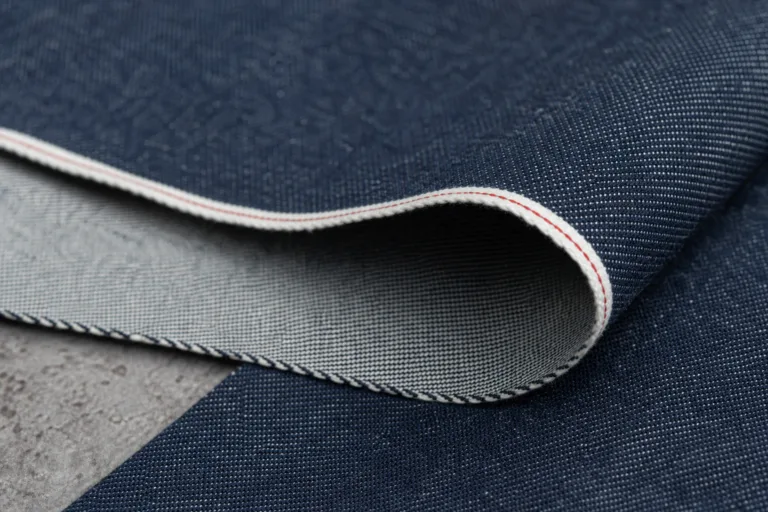
Selvedge denim is denim woven on narrow looms that create a clean, finished self-edge on both sides of the fabric. The term “selvedge” comes from “self-edge,” which means the fabric edge is finished as part of the weaving process instead of being left raw and later overlocked or cut. In jeans production, that finished edge is often visible when the cuff is turned up, which is one reason selvedge denim has become a recognizable marker of heritage denim.
At a technical level, selvedge denim is still denim: a cotton twill fabric, typically with indigo-dyed warp yarns and a lighter weft. The difference is how it is woven and how the fabric edge is formed. Many people associate selvedge with better quality, but that is too simple. Selvedge is a construction method, not a complete quality guarantee. It can indicate traditional weaving and tighter process control, but buyers still need to evaluate yarn quality, fabric density, finishing, seam construction, and garment consistency.
| Aspect | Selvedge Denim | Regular Denim |
|---|---|---|
| Weaving method | Narrow shuttle loom with finished edge | Modern wider looms, edge usually cut and finished separately |
| Edge appearance | Clean self-edge, often with a colored ID line | Raw fabric edge before garment finishing |
| Production speed | Generally slower | Generally faster |
| Fabric width | Narrower | Wider |
| Typical appeal | Heritage, craftsmanship, fade culture | Efficiency, scale, lower cost |
The Selvage Edge: How It Is Formed and Why It Matters
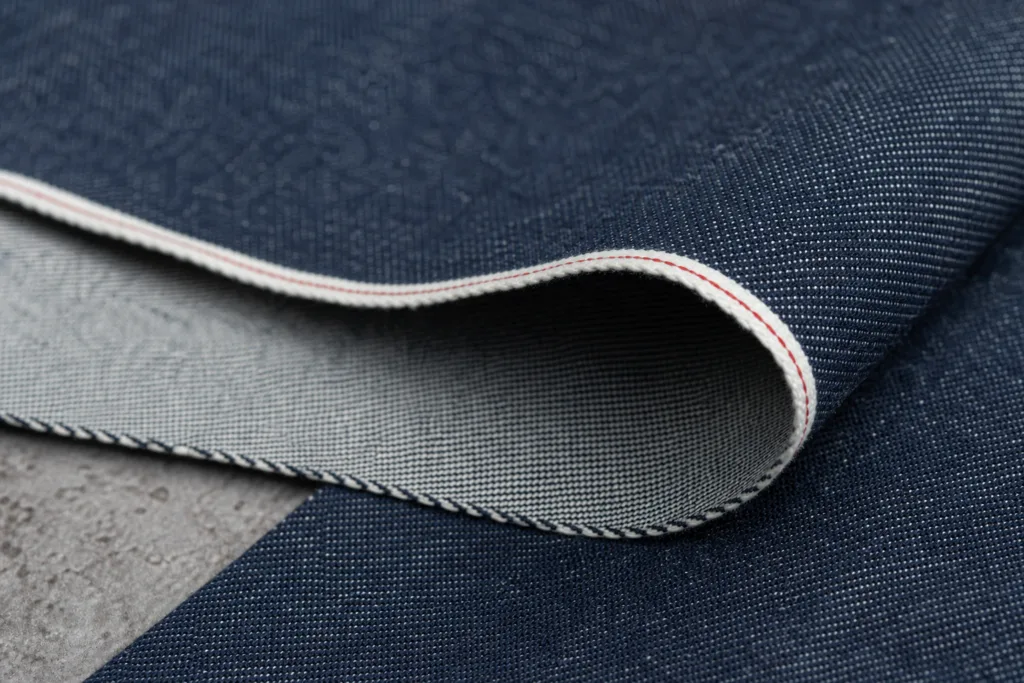
The selvage edge forms because the shuttle loom carries the weft yarn back and forth across a narrow width, turning the yarn at the edge to create a bound, stable finish. This reduces fraying at the fabric edge and gives the material its characteristic clean border. In denim, the edge is often finished with a colored yarn line, which became a visual cue in jeans culture and a quick way for enthusiasts to identify selvedge fabric.
That edge matters for both technical and symbolic reasons. Technically, it shows that the fabric was woven in a way that controls the edge without relying on a separate finishing step. Symbolically, it signals a production style associated with older denim manufacturing methods. However, a visible selvedge edge does not automatically mean premium denim overall. The weave could be dense or loose, the yarn could be uneven or refined, and the finishing can still vary widely from mill to mill.
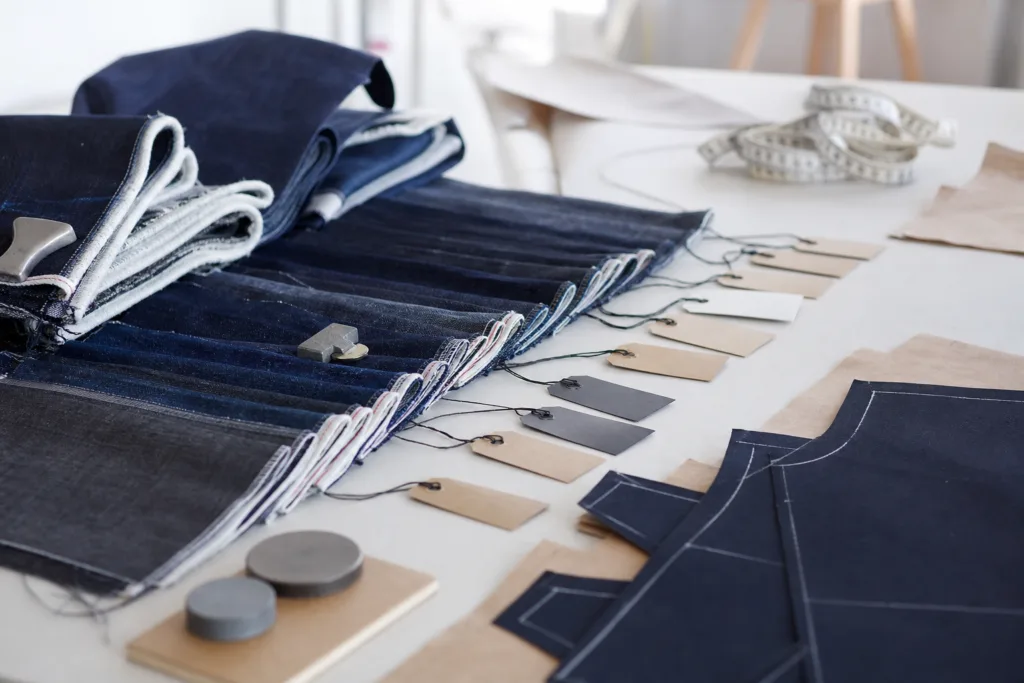
In apparel development, the self-edge also affects pattern planning. A garment designer working with narrow loom fabric has to think differently about pattern yield, cutting efficiency, and seam placement. That is one reason selvedge denim often appears in smaller production runs or higher-priced products: the fabric width and slower weaving process affect both economics and technical execution.
Shuttle Looms vs. Modern Looms
Selvedge denim is typically woven on shuttle looms, while much of today’s denim is woven on projectile, rapier, or air-jet style industrial looms. The important difference is not just speed. Shuttle looms produce narrow fabric and recirculate the weft yarn across the width in a way that naturally creates the finished edge. Modern looms are designed for higher output, wider fabric widths, and greater efficiency.
From a sourcing standpoint, the choice of loom has direct implications:
- Output and lead time: shuttle looms are slower, so fabric availability may be more limited.
- Fabric width: narrow fabric can reduce cutting efficiency in garment production.
- Visual character: shuttle-woven denim often has more irregularity and texture, which many buyers value.
- Cost structure: lower throughput and narrower width can raise fabric cost per usable garment panel.
If you are comparing denim products at the line-planning stage, guide to fabric GSM and garment weight is useful because weave method and fabric weight are often discussed together. Selvedge denim is commonly presented as “heavy,” but GSM alone does not tell the full story. Yarn thickness, weave density, and finishing all influence hand feel and drape.
How Selvedge Denim Is Made
The production sequence for selvedge denim follows standard denim manufacturing steps, but with the loom process and finishing details handled differently. A simplified version looks like this:
- Cotton fiber selection and yarn spinning
- Warp yarn preparation and indigo dyeing
- Weaving on a shuttle loom
- Inspection for weave consistency and edge quality
- Fabric finishing, such as sanforization or washing preparation
- Cutting, sewing, and garment assembly
Each step affects the final product. The quality of the cotton affects yarn strength and surface character. The spinning method affects neps, slubs, and texture. Dyeing affects shade depth and fade potential. Weaving affects the density and regularity of the fabric. Finishing affects shrinkage control, touch, and size stability.
A common misunderstanding is that selvedge denim is always raw denim. That is not true. Selvedge describes the fabric edge and loom method. Raw denim refers to denim that has not been washed after weaving and garment construction. A pair of jeans can be raw and selvedge, raw and non-selvedge, washed and selvedge, or washed and non-selvedge.
Why Selvedge Denim Has a Heritage Reputation
Selvedge denim heritage comes from the way denim was historically produced before large industrial looms became the norm. Denim began as a practical workwear textile valued for strength, service life, and dependable wear performance. That workwear identity is part of why selvedge denim still carries cultural weight today: it connects contemporary jeans to older manufacturing methods and to a long history of utility clothing.
The heritage reputation is not just nostalgia. It is also tied to visible process. A selvage edge, a denser woven body, and the slightly irregular character of shuttle-woven cloth all make the production method easier to see and appreciate. In that sense, selvedge denim is often discussed in the same way that craft manufacturing and controlled irregularity are discussed in other apparel categories: the process becomes part of the product story.
The U.S. National Park Service describes denim’s workwear roots and the historical value of durable construction in its discussion of denim’s workwear origins and why durability became part of its identity. That historical framing helps explain why denim culture still places so much emphasis on hard wear, reinforcement, and long service life.
The cultural significance of selvedge denim
Over time, selvedge denim became important in several overlapping communities: workwear enthusiasts, vintage clothing collectors, Japanese heritage denim makers, and consumers who wanted jeans that aged visibly and uniquely. The appeal is partly technical and partly symbolic. Technical because the weave can create distinctive texture, edge finishing, and fade development. Symbolic because wearing and breaking in selvedge denim can feel like participating in a garment tradition rather than simply buying a fashion item.
That said, cultural value should not be confused with universal product superiority. A highly refined non-selvedge denim can outperform a low-grade selvedge denim in comfort, dimensional stability, or wash consistency. Apparel Wiki often recommends separating emotional value from specification value: ask what the fabric is designed to do, how the garment is built, and whether the product matches the intended use.
Key Quality Factors to Evaluate
When evaluating selvedge denim, the most useful questions are practical. How even is the weave? How strong is the yarn? How stable is the fabric after washing? How much irregularity is present, and is it intentional or a quality issue? The answer to these questions tells you more than the selvedge label alone.
- Weave density: A tighter weave can improve abrasion resistance and structure, but very dense fabric may feel stiff at first.
- Yarn character: Slub, nep, and ring-spun texture can influence fading and surface interest.
- Edge finishing: The selvage edge should be clean and consistent, not loose or sloppy.
- Fabric weight: Heavier denim may feel robust, but weight alone does not determine quality or comfort.
- Consistency: Check panel-to-panel matching, leg twist, seam symmetry, and wash uniformity.
Construction details matter too. In jeans, seams and stitches affect durability and comfort, especially at high-stress areas like inseams, outseams, pockets, and the crotch. If you want a garment-construction lens, the overview of essential stitch types in garment construction is relevant because seam type, stitch density, and topstitching decisions influence how well denim holds up in wear and washing.
Selvedge Denim vs. Regular Denim
Comparing selvedge denim with regular denim is most useful when the comparison is tied to real buying or production decisions. Regular denim, produced on wider modern looms, usually offers better efficiency, broader fabric width, and lower production cost. Selvedge denim offers a heritage construction story, a clean self-edge, and often a more textured or characterful cloth surface.
| Decision Factor | Selvedge Denim | Regular Denim |
|---|---|---|
| Fabric width and cutting efficiency | Narrower; lower yield | Wider; better yield |
| Fabric character | Often more textured and irregular | Often smoother and more uniform |
| Garment cost | Usually higher | Usually lower |
| Production scale | Better for smaller runs and premium positioning | Better for large-scale production |
| Fade culture | Strong enthusiast appeal | Can still fade well, depending on denim quality |
For brands, the relevant question is not which category is inherently better, but which one fits the product brief. If the goal is premium storytelling, visible craft, and a heritage product line, selvedge may be the right choice. If the goal is accessible pricing, volume production, and broad size availability, regular denim may be more practical.
How Selvedge Denim Ages Over Time
One of the main reasons selvedge denim still matters is the way it ages. Denim enthusiasts often value high-contrast fades, whiskers, honeycombs, and roping effects that develop as indigo rubs, loosens, and gradually wears away on high-friction areas. The aging process can be highly individual, shaped by body movement, wear frequency, washing habits, and the original denim construction.
Fabric character strongly influences fade behavior. Uneven yarns, indigo depth, and loom texture can create more visible contrast as the garment breaks in. But fade potential is not only about selvedge status. Regular denim can also age beautifully if the yarns, dyeing, and weave are well designed. The more useful distinction is whether the fabric was engineered for strong, visible wear development.
For readers who want to preserve indigo character, color stability matters. The guide to testing dye color durability in apparel is helpful because indigo denim often needs a more careful approach to color transfer, crocking, and wash performance. If a garment is poorly dyed or insufficiently stabilized, the wear experience can become messy rather than attractive.
Care Tips for Preserving Fit, Texture, and Fade Potential
Care recommendations for denim should balance cleanliness, dimensional stability, and color retention. For selvedge denim, especially raw or minimally washed styles, the main risks are excessive shrinkage, distorted fit, and early dye loss. Most care issues begin when wet denim is handled too aggressively or washed without checking the fabric’s shrinkage behavior.
- Check whether the jeans have been sanforized or pre-shrunk before washing.
- Wash inside out to reduce abrasion on the face of the fabric.
- Avoid unnecessary soaking if the garment has not been tested for dye stability.
- Use gentle wash cycles and mild detergent when cleaning.
- Hang dry when possible to reduce heat stress and shrinkage risk.
Care for indigo denim should also account for dye transfer and wet handling. The National Park Service’s guidance on how to care for indigo denim without causing dye loss is useful here because it reinforces a basic textile principle: wet fabrics are more vulnerable to damage, and dye-bleed checks matter when handling dark cotton goods.
When buying or developing denim, it is also wise to understand shrinkage testing. The method for calculating fabric shrinkage is a practical reference because even a well-made selvedge jean can disappoint if the shrinkage behavior is not controlled or clearly communicated to the buyer.
Is Selvedge Denim More Sustainable?
This is where claims need careful wording. Selvedge denim is not automatically more sustainable simply because it is selvedge. Sustainability depends on fiber content, dyeing method, water and energy use, finishing processes, durability, repairability, and how long the garment is actually worn. A well-made selvedge jean that is worn for years may have a lower impact per wear than a cheaply made garment that is replaced quickly, but the fabric label alone does not determine the outcome.
It is also important not to overstate end-of-life claims. Cotton denim behaves differently from blends, and fiber composition strongly affects biodegradation, recycling pathways, and disposal outcomes. Research from an academic source on denim compostability shows that end-of-life behavior is tied closely to fiber content and construction, which is why sustainability evaluation should be careful and specific rather than promotional.
For a sustainability lens, selvedge denim should be evaluated alongside broader garment strategy: fiber choice, finishing intensity, repair potential, and production efficiency. If a brand chooses selvedge denim for heritage value but cuts and sews it wastefully, or if the jeans are washed heavily before sale, the sustainability story may be weaker than it first appears.
How to Identify Genuine Quality Selvedge Denim
Shopping for selvedge denim is easiest when you focus on observable cues rather than brand mythology. A genuine selvedge jean should show the finished self-edge at the outseam cuff or inside seam area. But that alone is not enough. Look for the following:
- Clear selvage line: A neat edge with consistent binding, not a loose or ragged finish.
- Fabric texture: Some irregularity is normal and often desirable, but the weave should still look deliberate.
- Accurate labeling: Product copy should distinguish between selvedge, raw, washed, and stretch content.
- Stitch consistency: Clean topstitching, aligned seams, and durable pocketing are signs of better garment control.
- Fit and shrinkage information: Serious denim products usually provide clear measurements and care guidance.
For buyers who evaluate garments systematically, the broader Apparel Wiki resource at Apparel Wiki can be useful for terminology, construction checks, and sourcing concepts that apply far beyond denim. That kind of structured review is especially important when a product description mixes heritage language with performance claims.
Common Misconceptions About Selvedge Denim
There are several myths that make selvedge denim harder to evaluate than it should be.
- Myth: Selvedge always means better quality. Reality: It means a different weaving method and edge finish, not automatic superiority.
- Myth: Selvedge denim is always raw. Reality: Selvedge and raw are different terms.
- Myth: Heavier denim is always more durable. Reality: Weight matters, but yarn quality, weave structure, and finishing also matter.
- Myth: Selvedge denim is always more sustainable. Reality: Sustainability depends on many factors beyond loom type.
- Myth: Selvedge jeans always fade better. Reality: Fade character depends on dye, yarn, and wear pattern as much as on selvedge status.
These distinctions matter because many shoppers buy with a vocabulary problem rather than a product problem. Once the terms are clear, it becomes easier to compare denim on measurable traits instead of storytelling alone.
Who Selvedge Denim Is Best For
Selvedge denim is a strong choice for buyers who care about fabric character, visible craftsmanship, heritage storytelling, and long-term wear. It is also useful for brands that want to position a denim line as premium, timeless, or workwear-inspired. The texture, edge finish, and fade behavior support that story well.
It may not be the right choice for every use case. If the priority is low cost, broad size availability, faster production, or a highly uniform commercial finish, regular denim may be more appropriate. Selvedge also may not be ideal when the garment requires maximum pattern efficiency or when the customer expects immediate softness and easy care with minimal break-in.
In buying and product development, the right answer depends on the intended wearer, target price, and brand promise. Selvedge denim can be excellent, but it should be selected for clear reasons, not for the word itself.
Conclusion
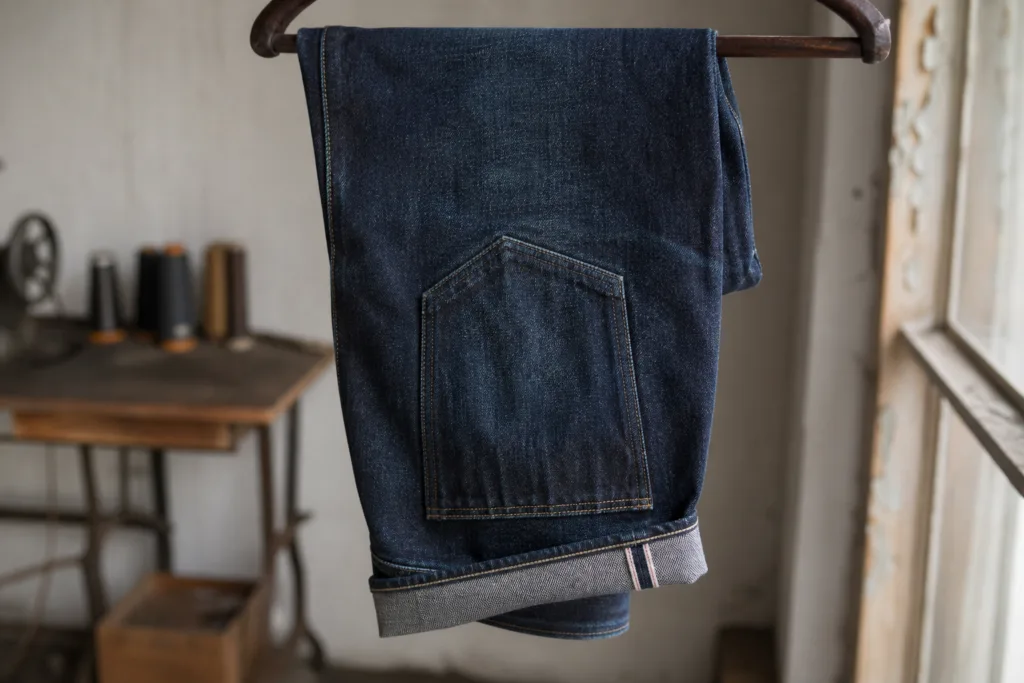
Selvedge denim heritage matters because it links a fabric construction method to a long history of durable workwear, visible craftsmanship, and distinctive garment aging. The self-edge, narrow loom production, and textured character all contribute to its reputation, but the label alone does not guarantee quality. The smartest way to evaluate selvedge denim is to look at weave structure, yarn behavior, fabric weight, shrinkage control, seam quality, and how the garment is intended to age in wear. For readers comparing denim products or planning a denim line, selvedge is best understood as a meaningful construction choice rather than a fashion buzzword.
FAQs
What does selvedge denim mean?
Selvedge denim is denim woven on a narrow loom that creates a clean self-edge on the fabric. That edge is part of the weaving process, so it is less likely to fray than a raw cut edge. The term tells you about fabric construction, not automatically about quality or whether the denim is raw.
Is selvedge denim stronger than regular denim?
Not always. Strength depends on yarn quality, weave density, finishing, and garment construction. Some selvedge denim is very durable, but some regular denim can be just as strong or stronger depending on how it is engineered. The weaving method is only one part of the total product.
Why is selvedge denim more expensive?
Selvedge denim often costs more because shuttle looms are slower, the fabric width is narrower, and cutting efficiency is lower. Those factors can raise fabric cost and reduce production efficiency. The premium may also reflect small-batch positioning and heritage branding, not just material performance.
Does selvedge denim fade better?
It can fade beautifully, but fade quality depends on more than selvedge construction. Indigo depth, yarn irregularity, wear pattern, and washing habits all affect fade development. Selvedge denim often appeals to enthusiasts because it is associated with textured fades and traditional denim aging.
How should I wash selvedge denim?
Wash it carefully, inside out, and only as needed. Check whether the jeans are pre-shrunk or raw before choosing a washing method. Avoid harsh handling when wet, because indigo can transfer and fabric can shrink or distort if the care process is too aggressive.
Is selvedge denim more sustainable?
Not by default. Sustainability depends on fiber content, dyeing, finishing, durability, repairability, and how long the jeans are worn. Selvedge can support a long-use product strategy, but it should be evaluated with the full garment lifecycle in mind rather than treated as an automatic sustainability claim.