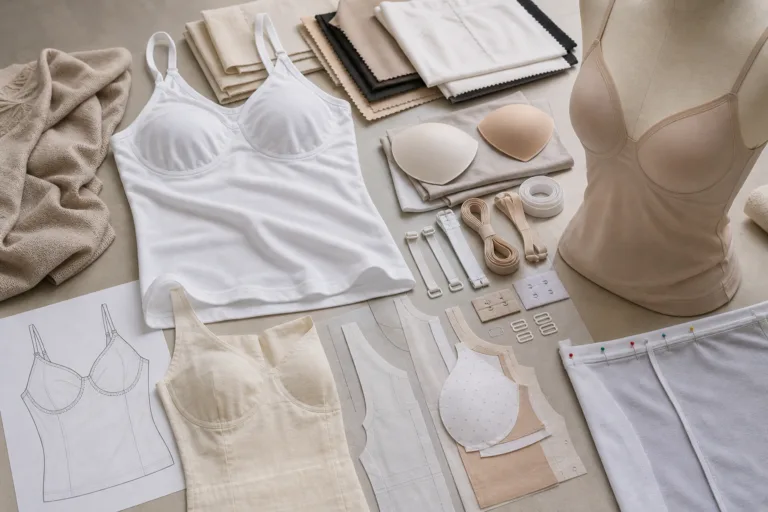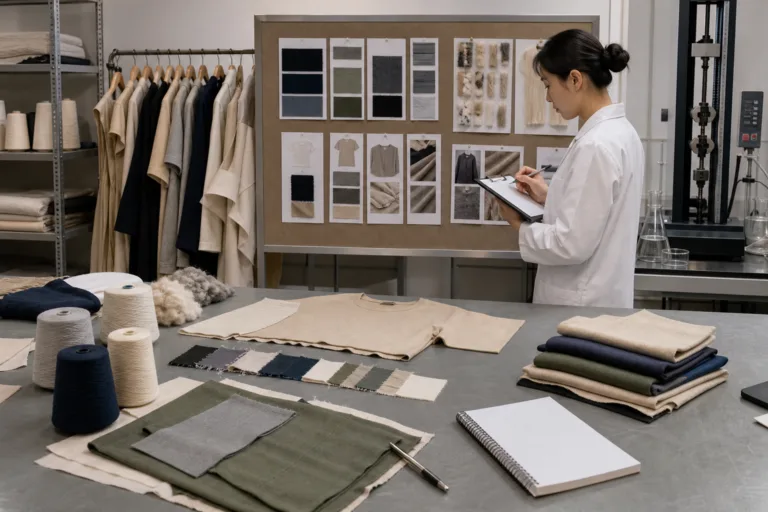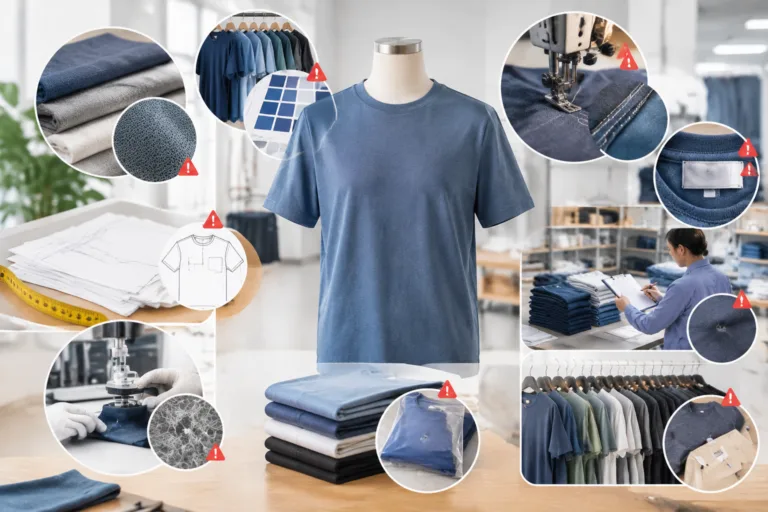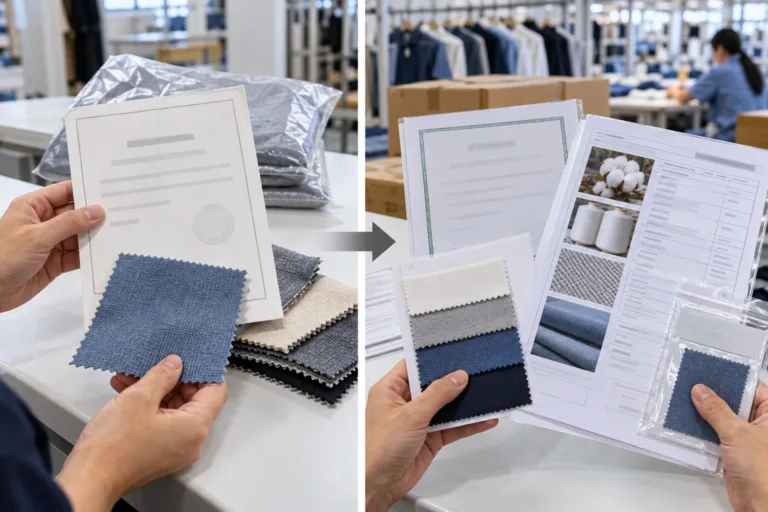
Learning how to find a clothing manufacturer is not only about searching online and sending a few messages. In apparel sourcing practice, the better question is how to identify a manufacturer that actually matches your product type, quality level, quantity, timeline, and communication needs. A supplier that is suitable for one brand can be completely unsuitable for another. For startups and growing labels, the real task is to reduce risk before money is committed to development, sampling, and production.
If you are comparing sourcing approaches and want a broader view before building your first supplier shortlist, this guide pairs well with 5 proven sourcing methods for finding a clothing manufacturer. That resource helps readers understand where different factory search channels fit into the process, how to narrow options by product category, and why early preparation matters before outreach begins.
A practical sourcing process usually moves through five stages: preparation, supplier search, initial screening, deeper evaluation, and structured inquiry. When these steps are skipped, buyers often end up with weak quotes, unsuitable samples, or confusion around MOQ, fabric, construction, and lead time. This article explains how to search more efficiently, what information to prepare, how to compare suppliers side by side, and which warning signs deserve attention before you move to sampling.
What a clothing manufacturer does and how it differs from a trading company
A clothing manufacturer typically handles production activity directly or through a controlled production system. That may include pattern development support, sample making, fabric sourcing coordination, cutting, sewing, finishing, packing, and quality control. Some factories specialize narrowly, such as knit T-shirts, activewear, uniforms, denim, or outerwear. Others offer broader cut-and-sew capability but still have stronger and weaker categories.
A trading company, by contrast, may not own the factory floor. Instead, it coordinates with one or more partner factories and manages communication, sourcing, order follow-up, and sometimes consolidation. This model is not automatically bad. In some cases, a strong trading partner can help small brands access factories that would otherwise reject low quantities. The key issue is transparency. You should know whether you are speaking to a direct manufacturer, an agent, or a general supplier managing external production.
A general clothing supplier is a wider term. It may refer to a manufacturer, wholesaler, exporter, sourcing office, or trading business. That is why early clarification matters. Ask directly about business scope, production setup, main product categories, and whether the company manages production internally or externally.
For readers building apparel knowledge across sourcing, specifications, and production terminology, Apparel Wiki can be a useful reference point while comparing manufacturer claims with actual garment-development requirements.
What to prepare before you start searching
The quality of your search depends on the quality of your brief. If your product idea is vague, your supplier search will also be vague. A good factory match starts with a clear view of what you are trying to make.
Define the product type clearly
Do not search only for a “clothing manufacturer.” Search for a manufacturer that makes your category well. A hoodie factory, seamless activewear supplier, woven shirt producer, and babywear manufacturer may all operate very differently. Product category affects machinery, pattern know-how, sewing operations, shrinkage control, fabric sourcing, and quality checkpoints.
Useful starting details include:
- Garment category: T-shirt, polo, leggings, hoodie, dress shirt, shorts, workwear, uniform, etc.
- Fabric family: jersey knit, fleece, rib, interlock, poplin, twill, denim, nylon shell, mesh lining
- Fit direction: slim, regular, oversized, boxy, compression, relaxed
- Target customer: men, women, kids, plus size, schoolwear, sports team, fashion brand, corporate uniform
- Decoration: screen print, embroidery, heat transfer, sublimation, applique
Estimate quantity honestly
Many beginners ask for prices before they know their quantity range. That creates inaccurate quotes. In apparel manufacturing, 100 units in one style and one color is very different from 100 units across four colors and six sizes. MOQ often depends on style complexity, fabric minimums, trim customization, and color count.
It helps to define quantity in three layers:
- Total units per style
- Units per color
- Expected size breakdown
A manufacturer may accept a low sewing MOQ but still require higher fabric minimums. This is especially common for custom-dyed fabrics, special trims, or private-label programs.
Set budget and timeline boundaries
Factories need realistic context. If your budget targets a very low price but your design requires heavyweight fabric, custom labels, embroidery, enzyme wash, and individual polybag stickers, there is a mismatch from the start. The same is true for timeline. Sampling, revisions, material booking, and production planning all take time.
Before outreach, define:
- Target ex-factory price range or rough cost ceiling
- Preferred launch or delivery date
- Whether you need stock fabric or custom fabric
- Whether trims can be generic or must be branded
Key documents and information to prepare
Factories respond better when the request is specific. The goal is not to create a perfect industrial package on day one, but to provide enough structure for accurate feedback.
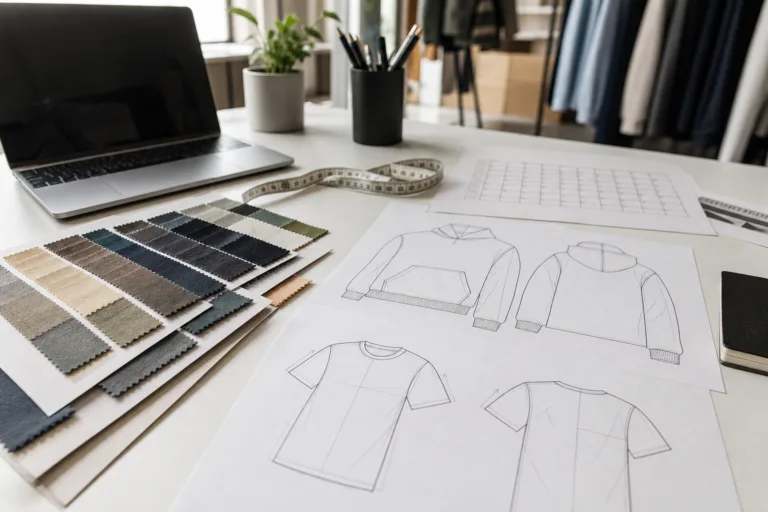
Sketches and reference images
A hand sketch can work if it is readable, but a flat technical sketch is better. Reference photos also help, especially when you want to communicate neckline shape, pocket type, silhouette, stitching look, wash effect, or trim placement. Make sure you clarify which parts of a reference sample you want to keep and which parts are only inspirational.
Tech pack basics
If you are serious about sampling, prepare a tech pack or at least a simplified version. A good tech pack reduces interpretation errors and improves quote quality. It should normally include garment sketches, construction notes, measurements, bill of materials, label details, artwork placement, color references, and packing notes where relevant. If you need deeper guidance, review this complete guide to preparing a manufacturing-ready tech pack.
Many sourcing mistakes happen because the buyer sends inspiration photos but no specifications. Factories then guess fabric weight, fit balance, seam construction, print size, and finishing level. Even a basic development pack is better than an unstructured visual mood board. For a more detailed view, a section-by-section breakdown of a strong tech pack can help you understand what factories actually need to quote and sample correctly.
Size chart and fit direction
Size labels alone are not enough. A factory needs garment measurements and fit expectations. A medium in one market may be much wider or longer than a medium in another. If your target is oversized or cropped, say so explicitly. Include key points such as chest width, body length, shoulder width, sleeve length, waist, hip, inseam, and opening measurements depending on garment type.
Logo artwork and decoration files
If you want custom branding, prepare editable artwork in usable formats and specify approximate print size, embroidery size, placement, colors, and finishing expectations. Decoration often affects MOQ, setup cost, and lead time, so missing artwork delays quoting.
Quality requirements
State the basics early. Examples include acceptable shrinkage expectation, colorfastness concern, print durability concern, seam strength concern, needle damage sensitivity, and packaging needs. You do not need to turn every request into a lab specification, but you should communicate what matters to your product.
| Preparation Item | Why It Matters | Common Beginner Gap |
|---|---|---|
| Product category | Helps match the right factory specialization | Searching too broadly |
| Estimated quantity | Determines MOQ fit and quote logic | Only giving a rough total |
| Fabric direction | Affects cost, hand feel, shrinkage, and sourcing route | Not knowing knit vs woven or GSM range |
| Size chart | Improves fit consistency and pattern decisions | Assuming standard sizes are universal |
| Tech pack | Reduces interpretation errors | Sending only inspiration photos |
| Timeline | Filters out unrealistic suppliers early | Requesting urgent delivery without development time |
Where to find a clothing manufacturer
There is no single correct sourcing channel. The right one depends on whether you need private-label blanks, full custom cut-and-sew, local production, specialty performance fabrics, or low-MOQ development support. The smartest approach is to use several channels and compare results.
Google search methods and keyword combinations
Google remains useful when the search is specific. Generic searches return mixed results, including wholesalers, directories, agents, and irrelevant resellers. Better searches combine garment type, manufacturing model, and location.
Try combinations such as:
- custom hoodie manufacturer usa
- cut and sew t shirt factory portugal
- private label activewear manufacturer low moq
- children’s wear manufacturer organic cotton
- uniform manufacturer bulk supplier
Search results should be screened carefully. Look for product relevance, production language, factory photos, company details, and consistency between the website and the inquiry response. If you are looking specifically for U.S.-based partners, Start your search in official manufacturer directories and industry resources that point to domestic cut-and-sew options.
Sourcing platforms and what each is best for
Sourcing platforms can help you build an initial list quickly, especially if you need many options in one place. However, platform visibility does not equal suitability. A high-response supplier may still be a poor fit for your product category.
In general:
- Large B2B marketplaces are useful for broad supplier discovery and MOQ comparison.
- Niche sourcing directories can be more helpful for specialty categories such as sustainable fabrics, sportswear, or local manufacturing.
- Private-label platforms may suit startups using semi-custom products rather than full custom development.
Use platforms to gather names, not to make final decisions. Move quickly from listing pages to deeper evaluation.
Trade shows, exhibitions, and local sourcing events
Trade shows are useful because you can compare suppliers in a compressed time frame and evaluate how clearly they explain their products and capabilities. This is especially valuable for buyers who need to handle fabric swatches, review trims, and discuss MOQ face to face.
At a trade show, ask practical questions: What are your main categories? What is your standard sample time? What fabrics do you hold regularly? Can you handle custom dyeing? Do you produce in-house or through partner units? What is your realistic MOQ per style and per color?
Social media, content platforms, and online communities
Social media can help identify active factories, especially for visually driven categories like streetwear, activewear, swimwear, and embroidery-heavy products. But social content should be treated as a lead source, not proof of capability. A polished page does not confirm quality systems, production control, or fit consistency.
Online founder groups, designer communities, and sourcing forums can also surface referrals. The useful part is not just the factory name, but what type of product the referral was for, the order size, the communication quality, and whether the factory handled revisions responsibly.
Referrals and word of mouth
Referrals are often high quality because they come with context. If another brand had a good experience with a factory producing a similar product category at a similar volume, that is more meaningful than a random directory listing. Still, verify independently. A factory that worked well for simple cotton T-shirts may not be strong in waterproof outerwear or compression leggings.
How to screen a clothing supplier at first glance
Once you have a shortlist, conduct a quick first-glance screen before sending detailed inquiries. This saves time and reduces noise.
Check product relevance
The supplier should show evidence of making products close to yours. A factory focused on woven uniforms may not be the right place for brushed fleece loungewear. Look for matching categories, materials, silhouettes, and finishing levels.
Review website quality with caution
A poor website is not always a dealbreaker, especially for smaller factories, but a confusing or inconsistent website deserves caution. Watch for product photos that do not match the stated business model, unclear factory location, weak company profile, or exaggerated claims with no supporting detail.
Assess communication responsiveness
Fast replies are useful, but clarity matters more than speed. A good first response usually confirms whether the supplier understands your product category, asks relevant follow-up questions, and provides realistic comments instead of vague promises. Clear communication becomes even more important when you move into sample comments, measurement revisions, and construction corrections. These clear factory communication tips for comments and callouts can help you structure that process.
How to judge whether a manufacturer is reliable
Reliability should be evaluated through match, process, and evidence. Many beginners focus too heavily on price and MOQ, but production reliability is usually a larger long-term issue.
Business scope and production capability
Ask what the factory mainly produces, which processes are in-house, and which are outsourced. There is nothing unusual about some outsourcing, such as special printing, washing, or knitting, but you should know what is controlled directly and what depends on external partners.
Important capability questions include:
- What garment categories are your main strength?
- What is your normal monthly capacity for similar styles?
- Do you support pattern making and grading?
- Can you source fabric, or do you only work with nominated materials?
- What decoration methods do you handle?
- What quality checks happen before packing?
Product match matters more than general size
A huge factory is not automatically safer for a small brand. In fact, very large factories may deprioritize small runs or struggle to give enough development attention. A smaller but specialized manufacturer may be a better match if it understands your fabric, fit, and finish requirements.
Quality system and process discipline
Look for signs of process control, not just attractive samples. Ask how measurements are checked, how defects are handled, and how sample approvals are translated into bulk standards. When assessing consistency, it is reasonable to Look for suppliers with documented quality management systems or other structured quality procedures that show they manage requirements systematically rather than relying only on verbal promises.
Sample quality and consistency
The sample phase tells you a lot. Review stitching, balance, symmetry, measurement accuracy, fabric hand feel, shrinkage behavior where relevant, print or embroidery execution, and label application. Also assess whether the factory follows instructions or improvises without approval.
Lead time realism
Be careful with suppliers that promise unusually fast production without asking enough questions. Reliable lead times depend on fabric availability, trim lead times, sample approval cycles, line planning, and shipping mode. A realistic supplier may give a longer timeline but a more accurate one.
| Evaluation Area | What to Look For | Why It Matters |
|---|---|---|
| Product specialization | Similar garments already in production | Reduces technical learning risk |
| Sampling process | Clear revision workflow and timelines | Shows development discipline |
| Quality control | Measurement, appearance, and packing checks | Improves bulk consistency |
| Communication | Specific answers and follow-up questions | Reduces costly misunderstandings |
| MOQ fit | Aligns with your order structure | Avoids surprise fabric minimum issues |
| Lead time | Detailed and realistic planning | Helps launch timing and risk control |
Red flags that suggest a supplier may be risky
Some problems are visible early if you know what to check.
- The supplier avoids direct answers about whether they are a factory or trader.
- The product gallery shows no clear specialization.
- Quotes are given immediately without questions about fabric, sizing, or quantity breakdown.
- MOQ, lead time, and customization details change repeatedly.
- The supplier says yes to every request without discussing technical limits.
- Sample photos do not match the construction quality claimed.
- Communication becomes slow or unclear after initial enthusiasm.
- No clear process exists for revisions, approvals, or defect handling.
One red flag alone may not disqualify a supplier, but several together should push you to continue searching.
How to send an effective inquiry
A good inquiry helps the supplier answer accurately and helps you compare responses fairly. If each supplier receives different information, the quotes and lead times will not be comparable.
What to include in the first message
- Brief introduction to your brand or project
- Product category and target customer
- Tech pack or product reference attachments
- Estimated quantity by style, color, and size range
- Fabric direction or target material
- Decoration details
- Target timeline
- Questions about MOQ, sampling, lead time, and pricing
Keep the inquiry concise but complete
Do not send a long emotional brand story while skipping product details. Factories need operational information. Your first message should be easy to scan and answer.
Simple inquiry structure
Subject line: Inquiry for custom heavyweight cotton T-shirt production
Intro: We are developing a small apparel brand focused on oversized unisex knit tops.
Product: We are currently sourcing a manufacturer for a 240 GSM 100% cotton jersey T-shirt with rib neck, screen print on front, woven neck label, and custom hangtag.
Quantity: Initial target is 300 units across 2 colors and sizes S to XL.
Attachments: Tech pack, size chart, reference images, logo artwork.
Questions: Please advise MOQ, sample cost, sample lead time, bulk lead time, estimated FOB or ex-factory price range, customization options, and payment terms.
Timeline: We hope to begin sampling this month if the factory is a good match.
This structure encourages relevant replies and makes supplier comparison easier.
What information to request in return
Your inquiry should not only ask for price. It should request decision-making information.
- MOQ by style, color, and size range
- Fabric sourcing options and available substitutes
- Sample cost and sample revision policy
- Bulk lead time after sample approval
- Decoration capability and artwork requirements
- Price basis: ex-factory, FOB, or other Incoterm
- Payment terms
- Packing details
- Quality control workflow
- Defect or remake policy
When comparing offers, it is helpful to convert free-form replies into one shared review sheet.
How to compare multiple clothing manufacturers side by side
Do not rely on memory. Build a comparison table and score suppliers on criteria that matter to your project.
| Criteria | Supplier A | Supplier B | Supplier C |
|---|---|---|---|
| Product category match | |||
| MOQ fit | |||
| Sample cost | |||
| Sample lead time | |||
| Bulk lead time | |||
| Communication clarity | |||
| Fabric understanding | |||
| Quality control confidence | |||
| Customization options | |||
| Price structure clarity |
Weight the categories according to your needs. For a fashion startup, communication and category fit may matter more than having the absolute lowest unit price. For a reorder-heavy basics brand, consistency and lead time reliability may matter most.
Questions to ask before placing an order
Before moving from inquiry to sampling or from sample approval to production, ask direct questions that reduce ambiguity.
- Can you share your standard sampling process from first proto to pre-production sample?
- What measurements will be checked during production?
- How do you handle size-set approval if multiple sizes are needed?
- What shrinkage or wash testing do you recommend for this fabric type?
- How are print, embroidery, or trim approvals documented?
- What is your standard tolerance approach?
- What happens if the final bulk shipment has defects above the agreed standard?
- Who is the daily communication contact during development and bulk production?
Before shipment, many buyers also benefit from using a formal final inspection checklist and quality standards approach so that appearance, measurements, workmanship, labeling, and packing are reviewed against agreed expectations rather than assumptions.
Beginner mistakes to avoid
Being too vague
If you do not define product details, factories will estimate differently. That leads to non-comparable quotes and disappointing samples.
Choosing only by lowest price
The cheapest supplier may be quoting a lighter fabric, simpler construction, lower trim quality, or unrealistic assumptions. Low price without specification alignment is not a true comparison.
Skipping samples
Even if a supplier looks strong on paper, samples reveal execution quality, fit understanding, and communication discipline. Skipping this step raises risk dramatically.
Ignoring MOQ structure
MOQ is not always one simple number. Fabric minimums, trim MOQs, and color minimums can change the economics of a small order.
Failing to confirm details in writing
Verbal agreement is not enough. Key details should be documented: approved sample status, measurements, fabric code, color reference, artwork, print placement, labels, packaging, lead time, and shipping terms.
Final decision checklist
Proceed when the supplier shows a clear match with your product category, answers technical questions directly, provides realistic MOQ and timeline details, and demonstrates organized sampling and quality processes. Keep searching when replies are generic, pricing is unclear, or the supplier avoids discussing construction, measurement control, or defect handling. Move to sampling only when your own input package is complete enough for the factory to interpret correctly.
Apparel Wiki explains supplier selection as a process of reducing uncertainty. The strongest choice is rarely the one that simply replies fastest or quotes lowest. It is the one that best matches your garment category, communicates clearly, understands your specification level, and can convert sample approvals into consistent production.
Conclusion
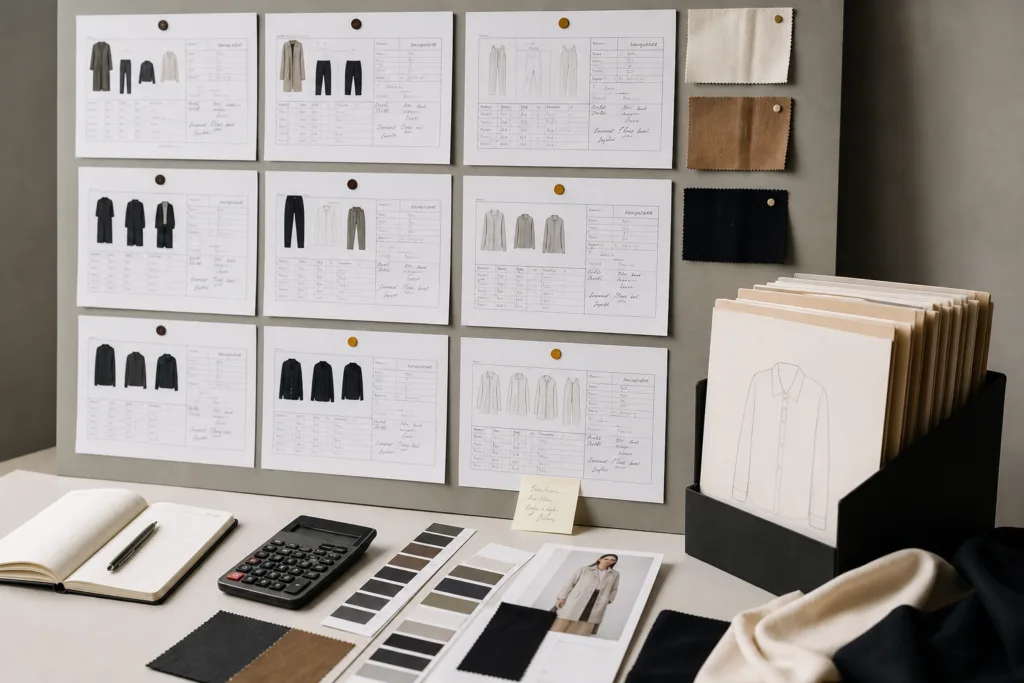
Understanding how to find a clothing manufacturer starts with preparation, not outreach. When you define the garment type, quantity structure, material direction, sizing, and quality requirements first, the search becomes faster and more accurate. From there, use multiple sourcing channels, screen suppliers for category fit and responsiveness, ask focused questions, and compare answers in a structured way. For beginners and growing brands, this step-by-step method lowers sourcing risk and gives you a stronger foundation before sampling and bulk production begin.
FAQs
How do I know if a clothing manufacturer is right for my product?
A manufacturer is a stronger match when it already produces garments similar to yours in fabric type, construction level, and order size. Check whether its main category aligns with your product, whether it understands your fit and decoration needs, and whether it can explain sampling, MOQ, and quality control in a clear and realistic way.
Should I work with a manufacturer or a trading company?
It depends on your order size, complexity, and need for direct control. A direct manufacturer may provide clearer production visibility, while a trading company can sometimes help smaller brands access multiple factory options and coordinate development. The important point is to understand who is actually making the garment and how communication and accountability will be managed.
What should I send in my first inquiry to a factory?
Your first inquiry should include a short brand or project introduction, product category, tech pack or reference images, quantity estimate by color and size range, fabric direction, decoration details, and target timeline. You should also ask for MOQ, sample cost, sample lead time, bulk lead time, price basis, and payment terms so replies are useful for comparison.
Is it possible to find a clothing manufacturer with low MOQ?
Yes, but low MOQ does not always mean low total development cost. Some suppliers accept small sewing runs but still require higher fabric or trim minimums, especially for custom colors or branded components. Ask whether MOQ applies per style, per color, per fabric, or per order so you understand the real commitment.
Why are samples so important before placing a bulk order?
Samples show whether the supplier can translate your design into an actual garment with the right fit, measurements, fabric behavior, construction quality, and decoration execution. They also reveal how well the factory follows instructions, manages revisions, and communicates technical issues before bulk production risk increases.
What is the biggest beginner mistake when learning how to find a clothing manufacturer?
The biggest mistake is contacting factories before preparing clear product information. Without a defined garment brief, quantity plan, material direction, and size chart, suppliers will quote based on assumptions. That creates confusion, weak comparisons, and a higher chance of delays, hidden cost differences, and unsuitable samples.