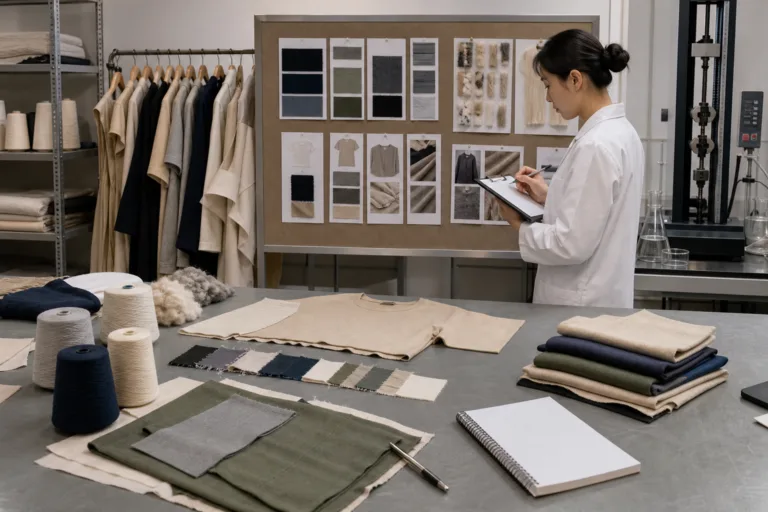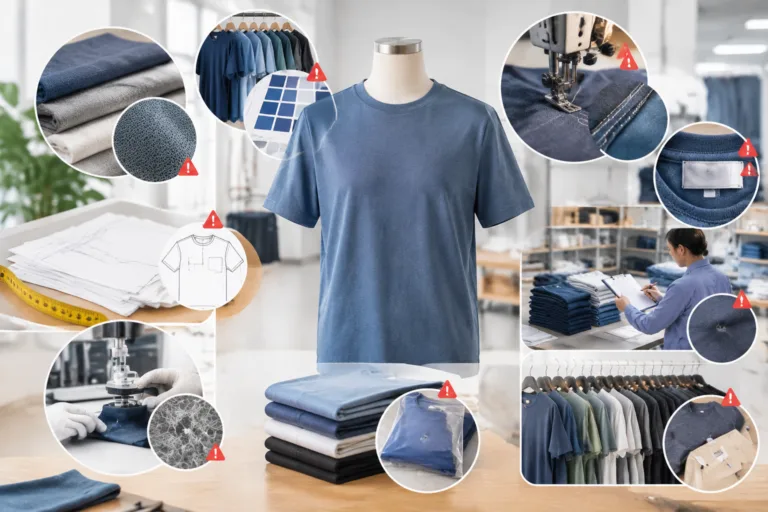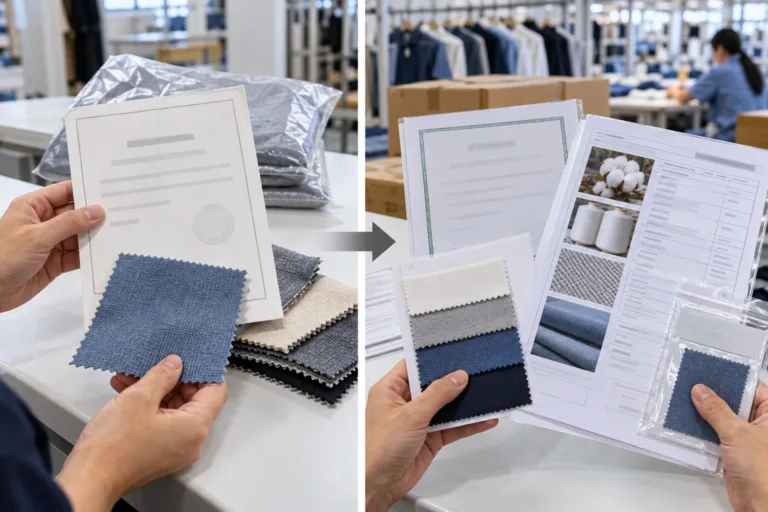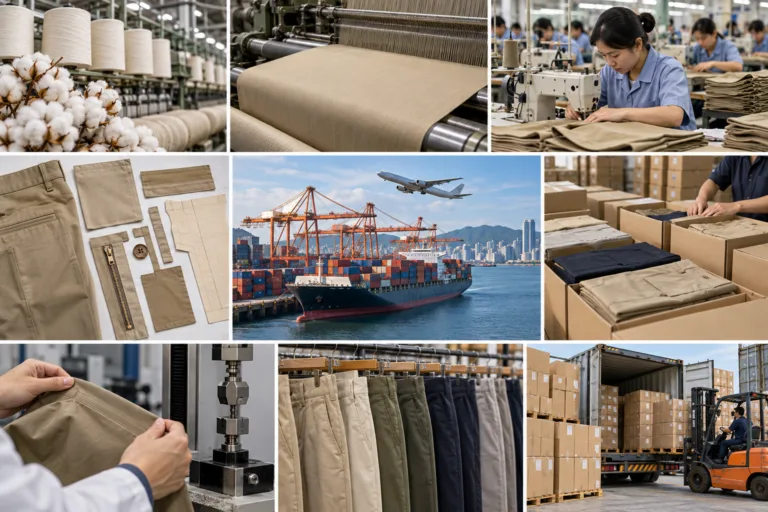

Apparel product development is the process of turning a garment idea into a production-ready item with clear specifications, tested fit, approved materials, realistic costing, and a manufacturing plan that can be repeated consistently in bulk. For brand founders, product developers, merchandisers, and sourcing teams, the real challenge is not only designing something attractive. It is making decisions that connect concept, construction, sampling, quality, and cost so the final garment performs as expected in production.
Readers who are still building their supplier shortlist often need to connect development decisions with factory type, MOQ flexibility, communication quality, and sample support. If that is your current stage, this guide to choosing a startup-friendly clothing manufacturer helps frame practical issues such as development support, production readiness, specification clarity, and how supplier capabilities can affect early-stage apparel decisions.
In apparel development, weak decisions made early usually become expensive later. A fabric that feels right in hand may shrink too much after washing. A silhouette that looks balanced on one sample size may grade poorly across the size range. A decorative detail may look simple in a sketch but add labor, defect risk, and delay once sewing starts. Evaluating development decisions means asking not only, “Does this product look right?” but also, “Can this be made consistently, on budget, at the target quality level?”
What apparel product development means and why it matters
From an industry perspective, apparel product development sits between creative intent and production execution. It translates ideas into measurable instructions. That includes pattern shape, measurements, tolerances, fabric and trim specifications, stitch construction, label placement, wash requirements, packaging needs, and testing expectations.
Apparel Wiki explains this process as a decision chain rather than a single step. Each choice influences later outcomes. If the team selects a loosely knitted jersey for a fitted T-shirt, then drape, recovery, shrinkage, and opacity all become development concerns. If the product is a heavyweight hoodie with brushed fleece, then bulk handling, seam buildup, rib balance, and embroidery suitability may become equally important.
A strong development process matters because it reduces ambiguity. Factories do not produce “ideas.” They produce garments from specs, approved references, and repeatable methods. When product development is thorough, teams can compare quotes fairly, predict quality risk more accurately, and shorten the path from sample room to bulk production.
The typical apparel product development workflow from idea to production

The workflow can vary by company size and product type, but most garment programs move through a recognizable sequence. A startup launching one hoodie and one T-shirt may do this informally. A larger brand may formalize every step with approvals, calendars, and cross-functional signoff.
| Stage | Main Objective | Key Output | Main Risk if Weak |
|---|---|---|---|
| Concept | Define product purpose and customer use | Design brief, references, price goal | Unclear product direction |
| Specification | Translate concept into measurable details | Tech pack, BOM, measurement chart | Misinterpretation by supplier |
| Material selection | Approve suitable fabrics and trims | Fabric details, trim approvals | Wrong performance or cost profile |
| Sampling | Test appearance, fit, and construction | Sample iterations and comments | Late design and fit changes |
| Costing review | Check target margin and production feasibility | Revised specs or target price decision | Commercially unworkable product |
| Pre-production | Lock approved standard before bulk | PP sample, final approvals | Bulk inconsistency |
| Production handoff | Prepare factory for repeatable manufacturing | Final pack, QC plan, timeline | Delays, defects, preventable errors |
One useful way to evaluate decisions at each stage is to ask three questions: Is the requirement clear, is it testable, and is it realistic for the supplier? This sounds simple, but many development problems come from requirements that are only partially defined. A note like “premium hand feel” is not enough. Teams need supporting details such as composition, GSM range, finishing requirement, stretch behavior, and acceptable variation.
Supplier model also affects the workflow. Teams comparing private development, factory-led development, or catalog-based adaptation should understand how OEM and ODM clothing production works, because ownership of design details, pattern control, material choice, and modification flexibility can differ significantly.
How to turn a product concept into a clear tech pack
A product concept becomes actionable only when it is documented well enough for pattern makers, sample rooms, sourcing teams, and production managers to interpret it in the same way. The tech pack is the central tool for doing that. It is not just a design file. It is a communication system.
A practical tech pack usually includes garment sketch views, construction callouts, measurement specs, grading logic, bill of materials, artwork placement, label instructions, packaging notes, and revision tracking. Depending on the garment type, it may also include seam allowances, SPI targets, wash instructions, and special machine requirements.
For example, a basic crew neck T-shirt still needs clarity around neck rib width, shoulder seam treatment, body hem depth, sleeve opening shape, label method, fabric shrinkage allowance, and whether side seams or tubular construction are required. A woven overshirt may need even more detail, including interlining, pocket shape, button size, topstitch spacing, cuff construction, and plaid matching rules if yarn-dyed fabric is used.
When tech packs are weak, factories fill in the gaps based on habit or convenience. That creates inconsistency. If one factory assumes a 1 cm topstitch and another uses 0.6 cm, the product can look visibly different even if both suppliers believe they followed the design correctly. For readers building or improving their documentation system, this section-by-section tech pack preparation guide is a useful reference for structuring specifications clearly.
What a strong tech pack should answer
- What is the intended garment type and end use?
- Which fabric and trim specifications are mandatory?
- What measurements define fit in the sample size?
- How should the garment grade across sizes?
- Which construction methods are required or prohibited?
- What visual details must match the design intent?
- What tolerances are acceptable in bulk?
- Which testing, washing, labeling, and packaging conditions apply?
From a development perspective, the goal is not to create paperwork for its own sake. The goal is to reduce avoidable interpretation. The more technical the garment, the more important this becomes.
Key specification inputs: fabric, GSM, fit, sizing, trims, and construction details
Many production decisions become easier when specification inputs are defined in practical terms rather than visual terms. “Soft,” “structured,” and “premium” are directionally useful, but they are not enough for sourcing or quality control. Teams should define material and garment requirements in measurable ways wherever possible.
Fabric and GSM decisions
Fabric selection influences silhouette, comfort, durability, opacity, shrinkage behavior, printability, and cost. GSM matters because it affects weight perception, coverage, drape, and yield consumption. A 160 GSM single jersey T-shirt can feel very different from a 240 GSM cotton jersey, even when both are 100% cotton. The lighter fabric may suit hot-weather use and sharper cost targets, while the heavier one may support a denser hand feel and reduced transparency.
Developers should also consider knit or woven structure, yarn type, finishing, and recovery behavior. A cotton-spandex jersey might support body-conscious fit better than a 100% cotton jersey, but it may require better control of width stability and heat during production. Brushed fleece may improve softness but can add lint, bulk, and variation if finishing quality is inconsistent.
Fit, sizing, and grading logic
Fit problems often begin long before a fitting session. They start with unclear target user assumptions, weak base measurements, or poor grading logic. In apparel product development, sizing should be tied to the intended body profile and use case, not copied blindly from another brand. Technical teams often rely on body measurements and sizing data used in apparel development to understand the link between body dimensions, garment measurements, and fit evaluation.
That principle matters because garment size is not just a label. It is a system of proportions. A men’s oversized hoodie, a women’s fitted polo, and a youth performance short each require different ease logic, balance points, and movement allowances. Grading also needs review. Increasing chest width without properly adjusting shoulder slope, armhole depth, sleeve bicep, or body length can create poor cross-size consistency.
Standardized testing and terminology also matter when development teams discuss shrinkage, stretch, dimensional stability, and fit consistency. In practice, many technical decisions are informed by textile standards that affect sizing, fit, and performance, especially when teams need a common language for evaluating fabric behavior and garment repeatability.
Trims and construction details
Trims often look minor on paper but carry major implications in production. Buttons, zippers, drawcords, labels, elastics, snaps, and interlinings can affect lead time, cost, durability, and compliance requirements. A zipper color that is not stock-supported may delay the entire order. A custom molded drawcord tip may raise MOQ. A woven brand label sewn into a sensitive neck seam may irritate the wearer if placement is not considered carefully.
Construction details matter in the same way. Coverstitch hems, flatlock seams, bartacks, reinforced plackets, taped neck seams, twin-needle finishing, and seam binding all have labor and machine implications. The development team should decide which details are aesthetic priorities and which are optional if cost or capacity becomes a constraint.
Sampling stages and what each sample should prove
Sampling is not one event. It is a controlled sequence for reducing uncertainty. Each stage should answer a different set of questions. If a team uses samples only to react visually, it misses the chance to validate fit, construction feasibility, and production readiness.
Most development programs move through prototype or first sample, fit sample, sales or photo sample where relevant, and pre-production sample. Readers wanting a broader process breakdown can review the five stages of apparel sampling, but the key point is that each stage should have a clear approval purpose.
| Sample Stage | Main Focus | What to Evaluate |
|---|---|---|
| Prototype or first sample | Concept translation | Overall silhouette, style lines, material direction, obvious construction issues |
| Fit sample | Wear and measurement balance | Ease, length, mobility, neckline, rise, sleeve shape, cross-size logic |
| Sales or photo sample | Presentation quality | Visual accuracy, color approval, finishing level |
| Pre-production sample | Bulk readiness | Final materials, workmanship standard, labeling, packaging, approved execution |
A frequent mistake is changing too many variables in one sample round. If the team changes fabric, pattern, and trim simultaneously, it becomes harder to isolate the source of a fit or quality problem. Better development practice is to note which variable is under review and record decisions systematically.
How to evaluate manufacturability, quality risk, and production consistency
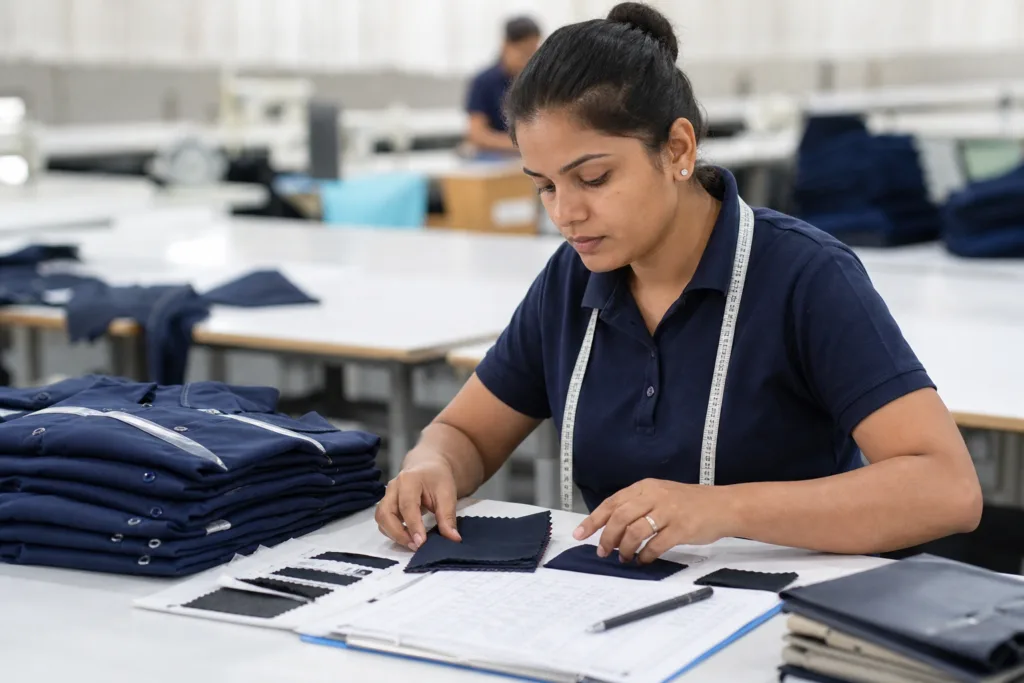
A garment can be visually appealing yet difficult to manufacture consistently. Manufacturability means the product can be sewn, finished, packed, and repeated at the desired quality level using the supplier’s actual equipment, skill level, and process controls.

To evaluate manufacturability, teams should review the garment operation count, seam complexity, fabric handling difficulty, symmetry requirements, tolerance sensitivity, trim application steps, and rework risk. For example, a lightweight viscose woven blouse with narrow rolled hems, hidden plackets, and precise gathers may be elegant but more unstable in sewing than a cotton poplin shirt. Similarly, thick brushed fleece combined with multiple embroidery placements can create hooping distortion, needle breakage, or seam bulk if the build is not planned properly.
Quality risk should also be reviewed before bulk cutting begins. That includes incoming fabric approval, shade consistency, shrinkage testing, print strike-off review, embroidery placement tolerance, and seam performance expectations. Fabric quality is especially important because sewing cannot fix fundamental fabric defects. Teams should define inspection logic for fabric inspection and defect grading before bulk cutting so unacceptable lots are identified early rather than discovered after garments are partly assembled.
Production consistency depends on more than a golden sample. Teams need measurement tolerances, workmanship standards, approved construction methods, and clear defect language. In practical factory communication, “neat sewing” is too vague. It is more useful to define acceptable seam puckering, stitch density, alignment tolerance, raw edge control, and label placement variance.
Broader terminology support is one reason some teams use Apparel Wiki as a reference point when training junior merchandisers, designers, or sourcing staff. A shared vocabulary helps reduce preventable miscommunication across product development and production teams.
Cost drivers in apparel product development and how they affect target price
Cost is not determined only at the quotation stage. It is built into development decisions from the beginning. Fabric type, fabric consumption, trim selection, wash process, operation count, packaging, order volume, and quality expectations all affect the eventual ex-factory price.
The biggest cost driver in many garments is fabric. Higher GSM, wider garment dimensions, low-yield markers, and expensive fiber blends can raise cost quickly. A garment with generous oversized proportions may consume significantly more fabric than a standard fit version, even if the visual difference seems modest. Pattern efficiency matters too. Panels, cut-and-sew inserts, and directional prints can reduce marker efficiency and increase waste.
Labor cost is often influenced by complexity rather than garment category alone. A basic T-shirt with simple neck binding and standard hem finishing may be relatively straightforward. Add contrast panels, multiple print locations, cover tape, bartacks, zipper pocket details, and special labels, and the labor profile changes immediately.
Trim strategy also affects cost discipline. Custom-dyed rib, branded zipper pullers, specialty snaps, heat transfer neck labels, and retail-style packaging can all be appropriate, but each should be tested against the target price and product role. For some categories, the right decision is not the cheapest component. It is the component that best matches customer expectation without creating unnecessary cost inflation.
Useful costing questions during development
- Which features drive the most visible value to the customer?
- Which details increase cost but add limited perceived value?
- Can construction be simplified without changing fit or function?
- Is the selected fabric heavier or more technical than the product really needs?
- Will packaging choices materially affect margin?
- Does the target order volume justify custom trim development?
MOQ, lead time, and supplier capability considerations
Production decisions should always be tested against supplier reality. A garment may be technically sound but still unsuitable for a given factory due to MOQ, machine capability, sourcing network, or planning calendar.
MOQ matters because some fabrics, custom colors, trims, or washes only become commercially practical at certain volumes. If a brand wants custom-dyed 2×2 rib, silicone logo patches, and printed polybags for a small opening order, the supplier may either reject the request, substitute materials, or quote inefficiently high prices. Evaluating product development decisions therefore means separating “must-have” features from “nice-to-have” features.
Lead time is equally important. Development changes made after trim booking or fabric knitting can force timeline resets. A revised zipper length, a late embroidery artwork change, or a new wash requirement may appear small internally but trigger fresh sourcing and approvals externally.
Capability review should include more than sewing. Teams should ask whether the supplier can manage the specific knit or woven category, the required finishing, decoration method, size range, inspection discipline, and packaging standard. A factory strong in basic jersey programs may not be equally strong in seam-sealed outerwear or highly washed denim. Evaluating capability early reduces rework later.
Common development mistakes that cause delays, defects, or cost overruns
Many avoidable production problems can be traced back to development habits rather than factory negligence alone. One of the most common is incomplete specification control. Missing measurements, conflicting comments, outdated artwork files, and undocumented revisions create confusion that travels through the entire process. This is why teams should understand common tech pack mistakes that delay production before moving styles into sampling or bulk planning.
Another common mistake is approving a sample for appearance while unresolved fit or construction issues remain. A garment can photograph well but still twist after wash, feel tight at the bicep, or fail under normal seam stress. Visual approval should not replace technical approval.
Teams also underestimate material substitution risk. If the approved sample used one fabric lot and bulk uses another with different shrinkage or elasticity, measurements and fit can shift. The same applies to trim substitutions. A softer elastic, weaker snap, or slightly different zipper tape can change user experience significantly.
Finally, some teams overdesign relative to their order size or supply chain maturity. That does not mean products should be generic. It means development choices should match business stage, budget, and operational control. A disciplined first collection often performs better than a highly customized line that the team cannot yet manage consistently.
A practical checklist for moving a garment from development into production
Before production handoff, teams should verify that the garment is not only approved aesthetically but also ready for controlled execution. This checkpoint is often where stronger brands separate design completion from production readiness.
- Approved tech pack reflects all latest revisions.
- Base size measurements and tolerances are confirmed.
- Grading rules are reviewed for the full size range.
- Fabric composition, GSM, finish, and color are approved.
- Shrinkage, stretch, and dimensional behavior are understood.
- Trims, labels, artwork, and packaging are approved and booked.
- Construction details and workmanship expectations are documented.
- Sample comments are closed, not partially unresolved.
- Target ex-factory cost still aligns with pricing strategy.
- MOQ and lead time assumptions are confirmed with the supplier.
- Pre-production sample is approved against final materials.
- Inspection and quality checkpoints are defined before bulk starts.
From a product development guide perspective, this checklist is less about bureaucracy and more about control. Every unchecked item becomes a possible source of delay, cost increase, or inconsistent product quality once production begins.
Conclusion
Evaluating apparel product development and production decisions means understanding how every technical choice connects to fit, quality, cost, and manufacturability. Good development is not just creative direction plus sampling. It is a structured process of clarifying intent, testing assumptions, reducing variation, and preparing a garment for repeatable production.
For readers working in apparel product development, the most reliable approach is to review each style through a practical lens: Is the product clearly specified, fit-approved, commercially viable, and realistic for the chosen supplier to produce consistently? When those questions are answered early, teams reduce risk and make stronger production decisions with fewer surprises downstream.
FAQs
What is apparel product development in simple terms?
Apparel product development is the process of converting a clothing idea into a production-ready garment through design clarification, material selection, pattern and fit work, sampling, costing, and final specification approval. It connects the creative concept to actual factory execution.
What is the difference between apparel product development and production?
Product development happens before bulk manufacturing and focuses on defining what the garment should be, how it should fit, which materials it uses, and how it should be constructed. Production is the stage where the approved version is made in quantity according to those decisions and controls.
Why is the tech pack so important in garment development?
The tech pack is important because it gives the supplier a measurable and visual instruction set for the garment. Without a clear tech pack, factories may interpret styling, measurements, trims, and construction differently, which increases the risk of delays, incorrect samples, inconsistent quality, and preventable costing errors.
How many sample stages are usually needed before production?
The exact number depends on the product and the team’s experience, but most styles need at least a prototype or first sample, a fit sample, and a pre-production sample. More complex garments, new fabrics, or multiple decoration methods often require additional rounds to confirm fit, workmanship, and bulk readiness.
What are the biggest cost drivers in apparel product development?
The biggest cost drivers are usually fabric price and consumption, garment complexity, labor-intensive construction details, trims, washes, decoration methods, packaging, and order volume. Small design changes such as heavier fabric, extra panels, or custom trims can significantly affect the final ex-factory cost.
How can brands reduce quality problems before bulk production starts?
Brands can reduce quality problems by approving final materials carefully, documenting construction and tolerances clearly, testing fit across the intended size logic, reviewing pre-production samples against the latest tech pack, and defining inspection checkpoints for fabric, sewing, finishing, and packaging before cutting begins.