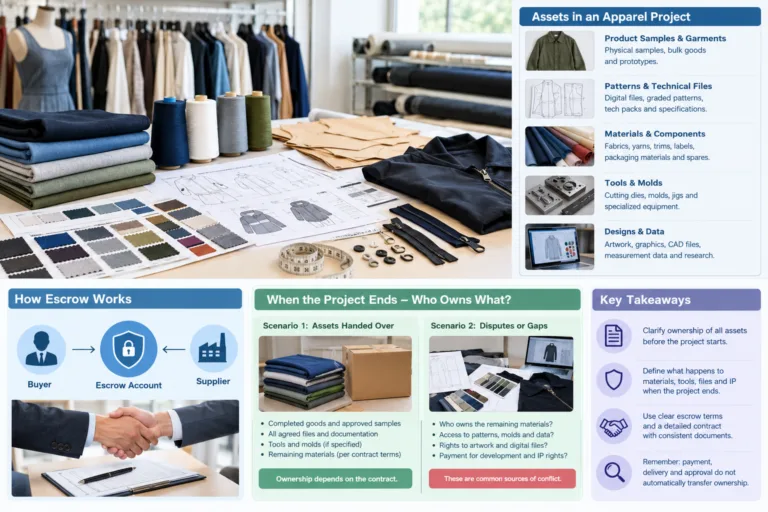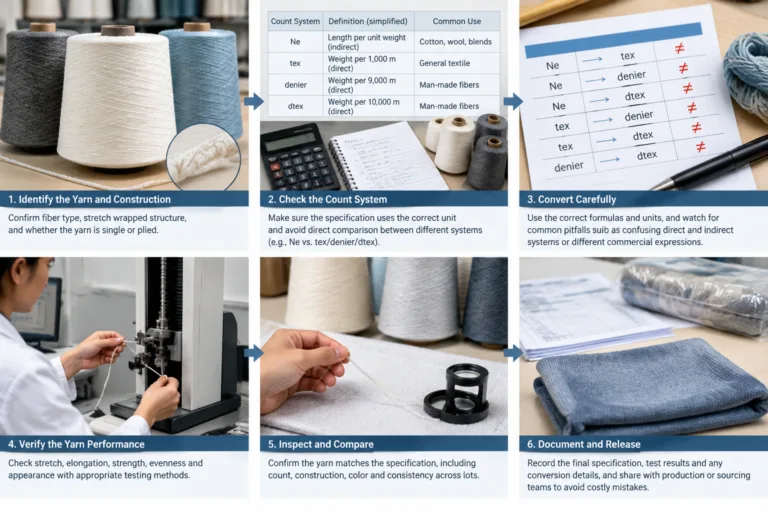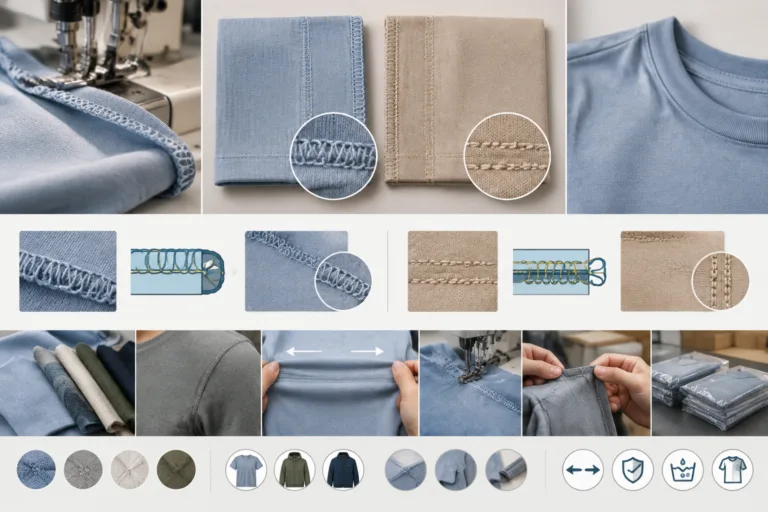

If you need to negotiate MOQ clothing manufacturer terms, the first step is to understand why the factory set that number in the first place. In apparel sourcing, MOQ is not just a sales condition. It is usually tied to fabric purchasing, line efficiency, labor planning, marker use, trim setup, and the factory’s risk if your order moves slowly or changes late. Many buyers ask for a lower MOQ too early, without showing how the factory can still run the order in a practical way. That usually gets a fast rejection.
If you also need a more foundational view of how minimums work before you start factory conversations, this guide to MOQ basics in clothing manufacturing helps clarify the difference between style MOQ, color MOQ, fabric MOQ, and total order quantity. That context matters because many negotiation problems come from mixing those terms together. A buyer may think the factory wants 500 pieces total, while the factory really means 500 pieces per color in one fabric program.
From an apparel sourcing perspective, the most useful way to approach MOQ is to think like the manufacturer first. A lower MOQ is easier to approve when the order is simple, material risk is low, and the production team does not need to create extra work for a very small run. If you understand those limits, you can negotiate with trade-offs instead of just asking for an exception.
What MOQ means in clothing manufacturing
MOQ stands for minimum order quantity. In apparel, that minimum can apply at several levels:
- Total order MOQ: the minimum number of garments across the whole purchase order
- Style MOQ: the minimum quantity for one design or SKU
- Color MOQ: the minimum quantity for each colorway
- Size ratio MOQ: the minimum quantity needed to support a workable size breakdown
- Fabric or trim MOQ: the minimum quantity required by the fabric mill, dye house, printer, or trim supplier
This is why MOQ discussions often become confusing. A factory may say it can accept 300 pieces, but only if that means one fabric, one color, and a standard size ratio. If you then divide that order into four colors and unusual size quantities, the real production complexity changes.
In many projects, the problem is not that the factory refuses small orders in general. The problem is that the buyer wants a small order with too many variables. That combination creates material leftovers, setup inefficiency, and more chance of quality inconsistency.
Why manufacturers resist lower MOQs

Factories resist lower MOQs because small runs can consume nearly the same coordination effort as bigger runs while generating less revenue. A 100-piece order still needs costing, sample review, pattern confirmation, sourcing checks, cutting planning, line loading, quality control, packing, and shipping follow-up. If the order also uses custom fabric or branded trims, the workload can be out of proportion to the order value.
Another issue is line efficiency. Sewing lines run better when operations are repeated over a reasonable volume. Very small runs create more changeovers. Each changeover can mean resetting machines, re-briefing operators, adjusting folders or guides, and rechecking workmanship. That time has a cost, even if it does not appear as a separate line item.
Material risk is another major reason. If the supplier buys custom-dyed fabric for your small order and there is leftover yardage, they may not be able to use it on another customer. The same applies to custom labels, printed polybags, buttons with logos, zipper colors, or branded swing tags.
Before asking for a reduced minimum, it helps to review key questions to ask manufacturers about MOQ and terms so you can identify whether the barrier is fabric, trims, sewing capacity, or commercial policy. The negotiation is much easier when you know what part of the order is actually creating the limit.
The business factors behind MOQ
Fabric minimums
Fabric is often the biggest MOQ driver. Many mills or dye houses do not want to process very small custom lots because the setup time, recipe control, and machine utilization are not efficient. In practice, this means a garment factory may be willing to sew 150 pieces, but the fabric source may require enough yardage for 300 or 500 pieces.
That is one reason stock fabrics often support lower MOQs better than custom-developed fabrics. A government trade report discussing lot-size constraints and stock-program sourcing shows how fabric lot minimums and flexible lot sizing influence apparel order thresholds across product types: fabric lot sizes and stock-program sourcing.
Labor efficiency
Cutting, bundling, sewing, ironing, finishing, and packing all become less efficient when the order is too fragmented. A 400-piece T-shirt order in one color is operationally very different from a 400-piece order split into five colors, two prints, and uneven size ratios.
Setup cost
Pattern adjustment, marker making, print screen setup, embroidery digitizing, wash test approval, and packaging arrangement can create fixed costs. Whether you make 100 garments or 1,000 garments, some of those tasks happen anyway. This is why lower MOQ usually increases unit price.
Commercial risk
Small buyers are not always higher risk, but first orders with changing specifications often are. From the factory’s view, a low-volume order with uncertain approvals can occupy development time and block capacity without creating a stable repeat business relationship.
When MOQ can be negotiated more easily
Some situations are naturally more flexible than others. A lower MOQ is usually easier to negotiate when:
- you use stock fabric already in the supplier system
- you accept standard trims instead of branded custom trims
- the style is operationally simple
- the color count is low
- the size ratio is commercially normal
- the factory has off-season capacity to fill
- you show repeat-order potential and communicate clearly
- you accept a higher unit price for the small run
Production model also matters. Some operations built around custom or made-to-order workflows can handle smaller runs better than factories optimized for long production lines. In a discussion of production structures and custom-order flexibility, the USITC overview of apparel production models helps explain why certain sourcing models can be more realistic for low-minimum programs than standard high-volume cut-and-sew setups.
For buyers, the key is not only to ask, “Can you lower the MOQ?” It is to ask, “Under what conditions would a lower MOQ work for your production system?” That small wording change often produces better answers.
Negotiable conditions buyers can offer in exchange for a lower MOQ
Factories are more open to MOQ flexibility when the buyer offers something practical in return. This does not always mean paying more, although that is one common lever. It can also mean reducing complexity or risk.
| Buyer concession | Why it helps the factory | Common result |
|---|---|---|
| Higher unit price | Absorbs setup and inefficiency cost | Lower quantity may be approved |
| Fewer colors | Reduces fabric splitting and cutting complexity | Lower color MOQ possible |
| Stock fabric and trims | Removes custom material minimums | Faster approval for small runs |
| Standard packaging | Removes branded packing minimums | Lower total project risk |
| Phased repeat order plan | Shows future volume potential | Factory may support first run as an entry order |
| Flexible delivery window | Lets factory fit order into spare capacity | Better chance of MOQ exception |
In many cases, the best negotiation is not about forcing the number down. It is about changing the project so the number becomes workable.
How to reduce MOQ by combining colors, sizes, or styles
One of the most practical ways to lower MOQ is to stop over-fragmenting the order. Buyers often create MOQ problems by planning too many style or color options too early.
For example, suppose you want 240 hoodies. If you request four colors at 60 pieces each, the factory may reject the program because the color quantity is too low. If you change that to two colors at 120 pieces each, the same total order becomes much easier to run. The same logic applies to fabric weights, wash treatments, or print placements.
Size planning also matters. Factories usually expect commercially normal ratios. If your order is 20 pieces each of XS, S, M, L, XL, and XXL, that may look balanced on paper but not realistic for market sell-through. A more practical ratio often reduces leftovers and helps cutting efficiency.
When readers compare MOQ structures across factories, it helps to understand how MOQ is calculated in apparel production because the quantity that matters most may be per color, per fabric, or per marker plan rather than the order total.
Using stock fabrics, in-stock trims, or existing patterns to lower MOQ
If your real goal is to launch early and test demand, stock materials can solve more problems than tough negotiation. Using in-stock jersey, fleece, pique, or rib trims removes one of the biggest barriers to small-batch production. The same applies to standard drawcords, care labels, zipper colors, carton sizes, and packing formats.
Existing patterns can also help, especially for basic products such as T-shirts, leggings, joggers, or hoodies. If the factory already has a close block or fit base, the development load is lower. That does not mean you should skip fit review, but it can reduce pattern and sample complexity.
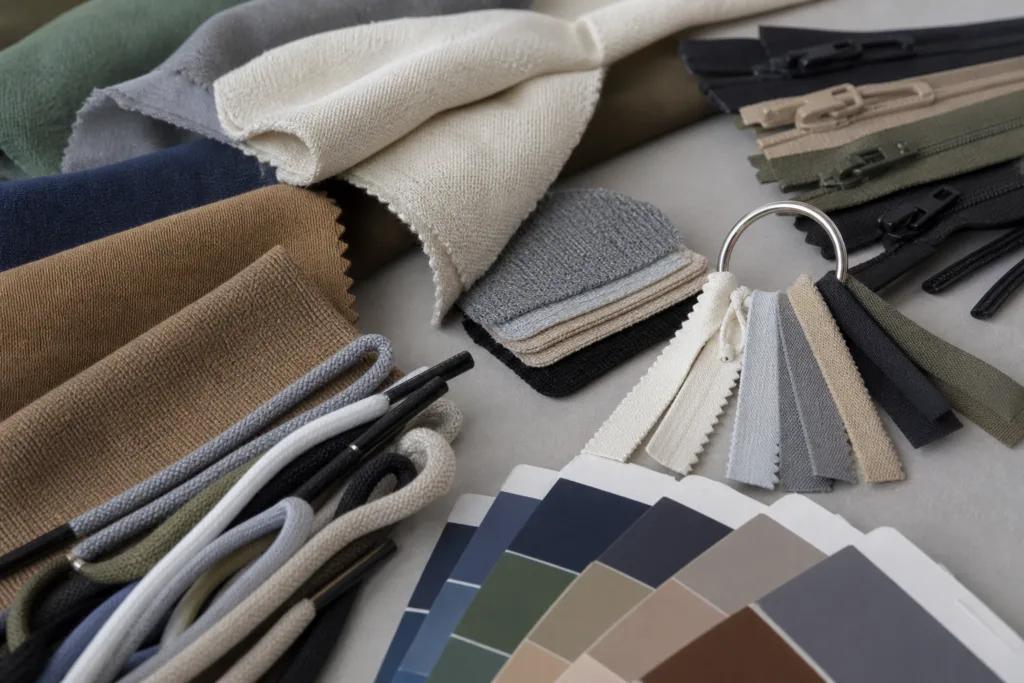
This is also where a clear manufacturer outreach email framework is useful. If you contact factories saying you are open to stock materials, standard trims, and existing pattern bases, you signal flexibility early. That changes the conversation from “small buyer asking for exceptions” to “buyer trying to build a practical first order.”
Split production and phased ordering
Some buyers want one low MOQ because they are unsure about demand. In those cases, phased ordering can be more realistic than asking the factory to break every internal minimum. A phased plan might look like this:
- Phase 1: 150 pieces in one color to test fit and market response
- Phase 2: repeat 300 pieces using the same fabric and trims if sales are positive
- Phase 3: add more colors only after the base style is stable
This approach works best when the factory believes the second order is realistic, not just hypothetical. Buyers should avoid promising unrealistic growth numbers. Instead, present a simple and credible reorder path tied to sales milestones.
Batch production can also help if the supplier is willing to cut material once and sew in smaller releases. But this should be confirmed carefully. If fabric is held for later batches, you need agreement on storage, shade consistency, defect responsibility, and payment terms. A detail like this may look small, but it can create problems later if it is not confirmed early.
Trade-offs of lower MOQ
Lower MOQ is not automatically better. It solves one problem while often creating others. Buyers should understand the trade-offs before they negotiate aggressively.
| Lower MOQ benefit | Possible trade-off | What to confirm |
|---|---|---|
| Less inventory risk | Higher cost per piece | Final quote basis and surcharge logic |
| Faster market testing | Fewer customization choices | Which trims or colors must be standard |
| Lower cash exposure | Longer lead time if order fits spare capacity only | Real production slot timing |
| More flexibility for startups | Potential consistency issues across repeat batches | Fabric continuity and shade control |
| Smaller launch quantity | Less efficient packaging and logistics | Carton plan and freight impact |
Small orders can also hide cost drivers that are easy to miss during negotiation. Screen setup, pattern revision, sampling rounds, relabeling, folding method, barcode stickers, or extra QC handling can all affect the real economics. Readers evaluating quotes should review these hidden cost factors that affect lower MOQ quotes before deciding that a small run is automatically the cheaper choice.
Negotiation strategy: what to ask for, what to avoid, and what to prioritize
A good MOQ negotiation is specific. A weak negotiation is vague. Instead of saying, “Can you do any quantity?” ask targeted questions that help the factory offer an alternative structure.
What to ask for
- What is the MOQ if we use stock fabric?
- What is the MOQ if we reduce to one or two colors?
- Can the first order use standard trims and packaging?
- Is there a trial order quantity with a higher unit price?
- Can the style MOQ stay the same while colors are combined?
- Do you have available fabrics or open production slots that support a small run?
What to avoid
- asking for a lower MOQ without sharing product details
- requesting many custom elements on a tiny order
- comparing one supplier’s MOQ to another without understanding their model
- promising large repeat orders with no evidence or launch plan
- treating MOQ as a negotiation game instead of a production reality
What to prioritize
Prioritize the factor that matters most to your launch. If you need fast market entry, accept stock materials. If brand appearance matters more, keep custom labels but simplify fabric and color count. If price matters most, it may be better to increase quantity slightly rather than pushing too hard for a very low minimum.
For broader terminology, garment development logic, and sourcing communication structure, Apparel Wiki organizes many of the apparel concepts buyers need before moving from idea to production.
Email templates and message phrasing for negotiating MOQ
Good message phrasing matters because factories can usually tell whether a buyer understands production. The goal is to sound clear, flexible, and commercially realistic.
Simple first-contact MOQ message
We are developing a first order for a basic 100% cotton T-shirt. Our target is 200 pieces total. We are open to stock fabric, standard trims, and limited color options if that helps meet your minimums. Could you please advise your MOQ under those conditions, and also let us know the price difference if we increase to 300 pieces?
Message for reducing color complexity
Our initial plan included four colors, but we can reduce to two colors for the first run if that supports your production minimum. Please let us know the MOQ per color and whether combining sizes under a standard ratio would help.
Message for phased ordering
We understand your standard MOQ is 500 pieces. For launch, would you consider 200 pieces as a trial order if we use in-stock materials and confirm a repeat order window after sell-through review? If so, please advise what conditions or pricing adjustments would be required.
The best messages are short, concrete, and easy to answer. Long explanations about your brand vision usually do not help with MOQ approval unless they connect to real order planning.
Sample negotiation scenarios for startups, small brands, and first orders
Startup activewear brand
A new activewear brand wants 180 leggings in three colors with custom dyed compression fabric and branded packaging. The factory rejects the order. A workable revision is 180 pieces in one or two colors using available fabric bases, standard polybags, and simple heat-transfer size marks instead of multiple custom trims. The product is still launchable, but the order is now aligned with actual sourcing limits.
Small streetwear label
A label wants 120 heavyweight hoodies with large embroidery, custom drawcord tips, woven labels, and garment wash. The supplier says MOQ is 300 pieces. The brand may lower risk by launching 150 pieces in one body color, keeping the woven label, dropping the wash, and using standard drawcord components. That keeps one branding element while removing several minimum-driving variables.
First corporate uniform order
A small business needs polos for staff but only 80 units initially. A factory may accept this if the buyer uses stock pique, standard buttons, and one embroidery position. Uniform orders can be easier than fashion orders when styling is simple and repeat potential is credible.
Common mistakes that make manufacturers reject low-MOQ requests
- Too many custom details: custom fabric, custom color, custom trim, and custom packaging on a tiny run often fail together.
- No tech information: if the factory cannot see the garment spec, it may assume the order is harder than it really is.
- Unclear quantity structure: buyers say they want 200 pieces but do not explain color split, size ratio, or decoration count.
- Price-only negotiation: asking for lower MOQ and lower price at the same time gives the factory little reason to cooperate.
- Weak communication: delayed replies and changing details make a small order look even riskier.
In apparel sourcing practice, clarity often matters more than persuasion. A factory does not need a dramatic story. It needs a workable order structure.
MOQ negotiation checklist before you contact a factory
- Confirm your real minimum launch quantity, not just your ideal quantity.
- List which details are non-negotiable and which can be simplified.
- Decide whether stock fabric is acceptable.
- Reduce colorways unless they are essential.
- Use a realistic size ratio based on the target market.
- Prepare a simple tech pack or at least clear reference images and specs.
- Know whether your budget can absorb a higher unit price.
- Consider a phased order instead of one highly fragmented launch.
- Ask what part of the MOQ is fixed by the factory and what part is driven by material suppliers.
- Plan your email so the factory can answer with numbers, options, and conditions.
Conclusion

To negotiate MOQ clothing manufacturer terms successfully, focus less on pushing the supplier and more on making the order easier to produce. In most apparel projects, lower MOQ becomes possible when you reduce variables, use stock materials, accept a higher unit price, or present a credible phased plan. Manufacturers usually resist small orders for operational reasons, not because they dislike new buyers. Once you understand those reasons, you can negotiate with better logic, better phrasing, and better trade-offs.
The practical goal is not simply to get the lowest number. It is to build a first order that the factory can run without unnecessary risk, and that you can reorder with more confidence if the product performs well.
FAQs
Can I negotiate MOQ with a clothing manufacturer if I am a new brand?
Yes, but the chance improves when you reduce complexity. New brands usually get better responses if they accept stock fabric, standard trims, fewer colors, and a realistic size ratio. Factories are more likely to approve a small first order when the project looks easy to execute and has repeat potential.
What is the best way to ask for a lower MOQ?
The best way is to ask conditionally, not emotionally. Instead of simply requesting a lower quantity, ask what MOQ would apply if you use stock materials, combine colors, simplify packaging, or accept a higher unit price. That gives the supplier practical options to work with.
Will a lower MOQ always increase the price per piece?
In most cases, yes. Small runs spread setup, development, and handling costs across fewer garments, so the unit cost usually rises. Sometimes the increase is moderate, and sometimes it is significant, depending on fabric sourcing, decoration setup, and how fragmented the order is.
Is it better to lower MOQ by combining colors or by reducing sizes?
Combining colors usually has a bigger effect because color splits often drive fabric minimums, dye lots, cutting complexity, and trim matching. Reducing sizes can help if the ratio is very unusual, but most MOQ problems are caused by too many colors, styles, or custom components rather than too many standard sizes alone.
Can stock fabrics really make a big difference in low-MOQ apparel orders?
Yes. Stock fabrics remove one of the most common barriers to small production runs because the supplier does not need to place a custom fabric order or meet a dye-lot minimum just for your program. This often improves both MOQ flexibility and lead time, although it may limit color or composition choices.
Should I accept a phased order instead of pushing for one very low MOQ?
Often, yes. A phased order can be more realistic because it lets you test the market without forcing every internal minimum below a workable level. The important point is to define fabric continuity, repeat pricing logic, and timing in advance so the second batch does not become a separate negotiation from zero.