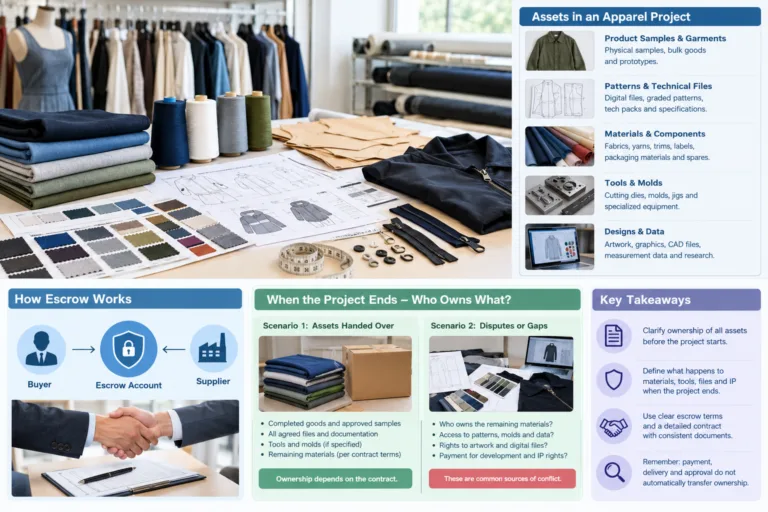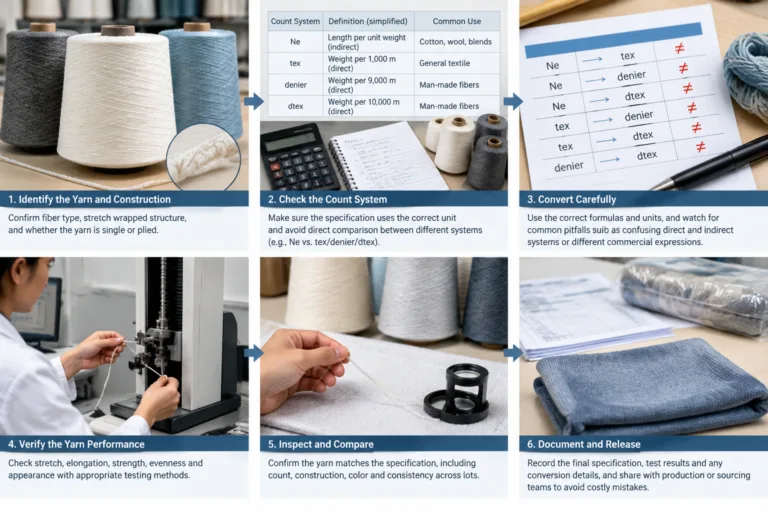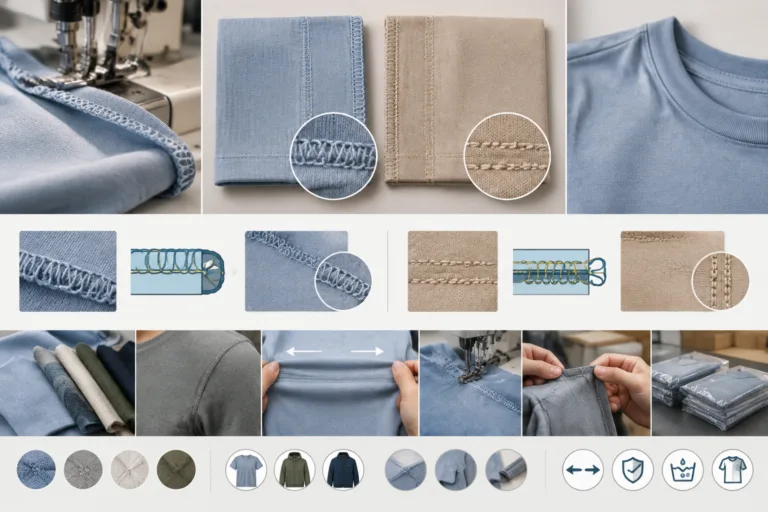

A full package clothing manufacturer handles more than sewing. In apparel sourcing practice, this usually means one supplier can support several connected steps such as development, fabric and trim sourcing, sampling, production, labeling, packing, and sometimes shipping coordination. For beginners, that sounds simple. In real projects, the important question is not just whether a factory says it offers full package service, but what is actually included, what stays on the buyer side, and what details must be confirmed before pricing starts.
If you are still building your sourcing foundation, an overview of how custom apparel production works can help connect this topic to the bigger process. That is useful when you need to understand how idea development, tech packs, material decisions, sampling, MOQ, and bulk production fit together before you compare supplier service models.
Many buyers use the term full package loosely, and that creates confusion. One supplier may mean design-to-delivery support. Another may only mean they can source fabric and trims after you provide a finished tech pack. This detail may look small, but it can create pricing gaps, sampling delays, and quality disputes later if it is not clarified early.
What Is a Full Package Clothing Manufacturer?
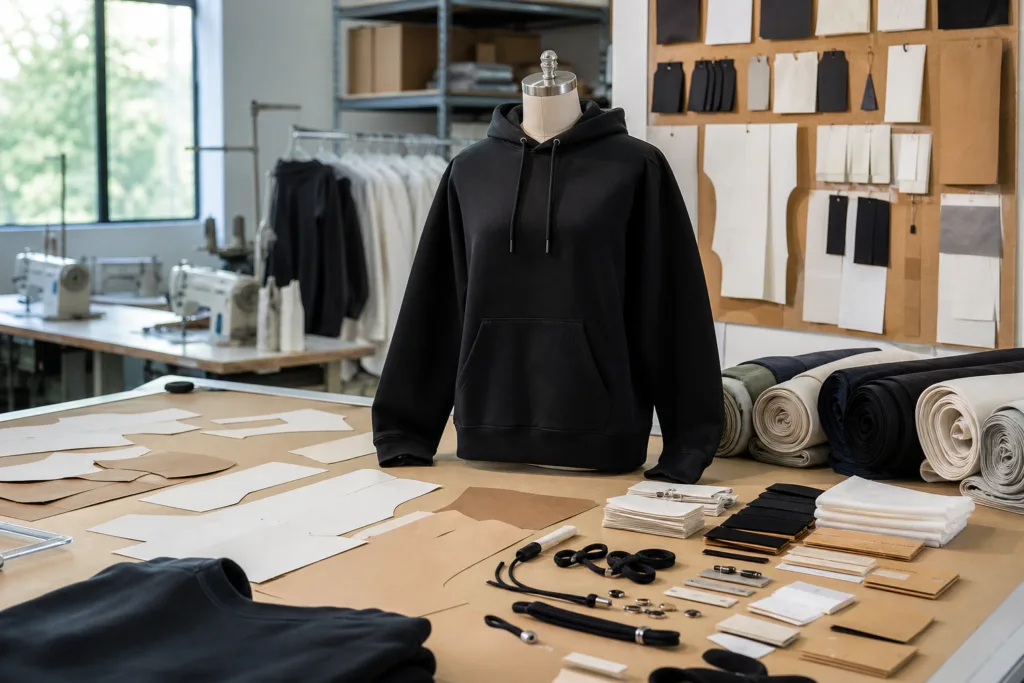
A full package clothing manufacturer is a supplier that can manage multiple stages of apparel development and production under one project structure. Depending on the supplier, that may include:
- style development support
- tech pack review or creation support
- pattern making
- fabric and trim sourcing
- lab dips, strike-offs, or material approvals
- sample development
- fit corrections
- size set samples
- bulk fabric booking
- cutting, sewing, finishing, and packing
- labels, hangtags, and packaging coordination
- quality control during production
- shipment preparation or logistics coordination
The exact scope is not fixed across the industry. Some suppliers include product development but not original design. Some will source materials but expect the buyer to approve every fabric option. Some can help with branding trims and packaging, while others only produce the garment body.
From a buyer decision perspective, the main benefit is coordination. Instead of finding separate partners for pattern making, sourcing, sample sewing, and bulk production, you work through one manufacturing channel. That can reduce communication gaps, especially for small brands or non-technical teams.
At the same time, full package does not mean hands-off. The buyer still needs to confirm product requirements, measurements, material direction, brand identity details, target price level, and delivery expectations. A supplier can manage the process, but they cannot guess what should be made.
Full Package vs Cut, Make, Trim (CMT): Key Differences

The biggest difference is who controls the inputs. In a CMT model, the buyer usually provides the design package, patterns, fabric, trims, and often more of the production planning. The factory mainly cuts, sews, and assembles the garment. When comparing full package to cut-make-trim or cut-and-sew options, this CMT explanation is a useful reference for understanding where factory responsibility becomes narrower.
| Area | Full Package | CMT |
|---|---|---|
| Product development support | Often included or partially included | Usually buyer-managed |
| Fabric sourcing | Often supplier-managed | Usually buyer-provided |
| Trim sourcing | Often supplier-managed | Usually buyer-provided |
| Pattern and fit support | May be included | Usually buyer-provided |
| Sampling coordination | Managed through one supplier | More fragmented if buyer manages inputs |
| Buyer control | Moderate to high, depending on structure | Higher control over materials and specs |
| Buyer workload | Lower | Higher |
| Best for | New brands, lean teams, non-technical buyers | Experienced teams with established supply chain inputs |
This is also where buyers start confusing service models. A factory may call itself OEM, full package, or private label depending on the project. If you need clearer terminology around business models, Apparel Wiki has a practical explanation of OEM, ODM, private label, and white label differences. That comparison helps because the commercial model and the production scope are related, but they are not always the same thing.
Does Full Package Include Design, Fabric Sourcing, Sampling, and Production?
Sometimes yes, but not automatically. Buyers should break the question into separate parts.
Design
Some full package suppliers can help turn a rough concept into a production-ready style. That may include silhouette advice, fabric suggestions, and construction input. But many are not fashion design studios. They may refine a design, not originate it.
Fabric sourcing
This is commonly included, especially when the supplier has established mill relationships. Still, you should ask whether the supplier sources from stock fabrics, develops custom fabrics, or can do both. Those options affect MOQ, lead time, and cost.
Sampling
Usually included as a paid development step. The important point is to confirm how many sample rounds are expected, what each round is called, and what is charged separately. Proto sample, fit sample, salesman sample, pre-production sample, and size set are not the same thing.
Bulk production
This is normally the core part of the service. However, bulk production only runs smoothly if the pre-production approvals are controlled properly. In many projects, the problem is not the sewing stage. The problem starts earlier, when materials, measurements, artwork size, shrinkage allowance, or trim details are still unclear.
Labels and packaging
Many full package suppliers can arrange main labels, care labels, size labels, hangtags, polybags, barcode stickers, and carton marking. But do not assume this is included in the quoted unit price. It may be quoted separately or depend on whether the buyer provides final artwork files.
What a Full Package Apparel Production Workflow Typically Looks Like
The workflow varies by supplier, but a typical sequence looks like this:
Project brief
The buyer shares the product idea, target market, quantity, price range, and timeline. Even a beginner should provide at least reference images, garment category, intended fabric direction, and expected branding method.
Development review
The supplier reviews whether the style is realistic for the requested quantity, construction level, and target cost. This is where factories may suggest changing fabric type, simplifying seams, or adjusting decoration methods.
Material sourcing
The supplier sources possible fabrics and trims based on the brief. This may include knit or woven options, GSM ranges, stretch level, color references, and trim alternatives.
Pattern and sample making
A first sample is made using the initial specifications. At this stage, buyers should check measurements, fit balance, fabric behavior, branding placement, and overall make quality. If the style is a knit garment such as a T-shirt or hoodie, fabric shrinkage and recovery should be reviewed early.
Revisions and approvals
Comments are consolidated, corrections are made, and another sample may be produced. This stage often takes longer than new buyers expect because every small decision affects later production consistency.
Bulk quotation confirmation
Once the style, fabric, trims, quantities, and packaging direction are clearer, the supplier can provide a more accurate cost structure. If you are still selecting suppliers, this is a good stage to use a practical guide to finding the right clothing manufacturer so you can compare capability, communication quality, category fit, and quote logic instead of just chasing the lowest number.
Pre-production preparation
The supplier books materials, confirms size ratio, finalizes artworks, and prepares production files. If compliance, labeling, or destination-market requirements matter, they should be locked before cutting starts.
Bulk production and inspection
The garments are cut, sewn, finished, pressed, packed, and inspected. Depending on the project, the supplier may do inline checks and final inspection before shipment.
Packing and shipment coordination
After final approval, the order is packed according to the agreed assortment and carton rules. Some suppliers also help coordinate freight or handoff to the buyer’s forwarder.
Who Should Use a Full Package Clothing Manufacturer?
This model is often a strong fit for teams that need production support beyond sewing.
- new clothing brands without an in-house technical team
- startups with limited sourcing contacts
- retailers developing exclusive products
- organizations buying uniforms or event apparel with custom requirements
- designers who understand aesthetics better than production planning
- buyers who want one accountable supplier instead of several disconnected vendors
It may be less suitable for advanced teams that already control fabric sourcing, pattern development, fit blocks, and quality standards internally. Those teams sometimes prefer CMT or more modular supplier structures because they want tighter control over every input.
Best Fit Scenarios for New Brands, Small Teams, and Non-Technical Buyers
Full package works well when the main challenge is coordination rather than factory capacity alone. For example, a new brand launching 3 hoodie styles and 2 T-shirt styles may not yet have mill contacts, fit blocks, label suppliers, or production checklists. In that case, one supplier handling development through packing can remove a lot of friction.
It also helps when the buyer does not have time to manage multiple specialists. A small team often underestimates the amount of follow-up needed for fabric booking, color approvals, size grading, trim matching, labeling layouts, and pre-production signoff.
However, convenience should not replace clarity. Even with full package support, the buyer must still define the product well enough that the factory is not guessing the standard.
Advantages of Full Package Clothing Manufacturing
Simpler project management
One supplier managing more steps can reduce the number of separate conversations, handoffs, and approval gaps.
Better coordination between development and production
When the same supplier develops and produces the style, it is easier to carry fit comments, fabric decisions, and construction adjustments into bulk planning.
More accessible for beginners
For non-technical buyers, a full package structure is often easier to manage than buying fabric separately and then sending materials to a CMT factory.
Potentially faster problem solving
If a fabric issue or trim issue appears during sampling, the supplier may be able to solve it internally instead of waiting for a third party.
Useful support for documentation and trim coordination
Many buyers overlook care labels, size labels, barcode stickers, carton marks, and packaging ratio setup. A capable supplier can help keep these parts aligned.
That is why broader sourcing education matters. Readers who need connected guidance on terminology, garment planning, and production logic often use Apparel Wiki as a structured reference point before they begin supplier outreach.
Limitations and Risks: Higher Dependence, Less Control, and Cost Trade-Offs
Full package is not automatically the better model. It is a trade-off.
Higher dependence on one supplier
If the supplier is weak in fabric sourcing, pattern development, or project follow-up, more parts of the job are affected at once.
Less direct control over component sourcing
Buyers may not know which mills, trim vendors, or subcontractors are involved unless they ask. That matters if consistency, transparency, or specific quality standards are important.
Potentially higher cost
Because the supplier is handling more work, the quote may include added development, sourcing, and project management cost. That does not mean it is overpriced. It means the service level is different.
Risk of vague scope
The phrase full package sounds complete, but some suppliers exclude pattern making, graded specs, label artwork, testing, or compliance management. If the scope is not written clearly, disputes can start once sampling begins.
Possible quality mismatch
A supplier may be strong at simple jerseys and fleece but weak at tailored woven garments, washed products, or performancewear. Full package capability is category-specific, not universal.
What to Prepare Before Requesting a Quote
To get a useful quote, you need more than a sketch and a quantity guess. Factories price based on details.
- product type and style count
- reference images or technical sketches
- fabric preference, composition, and weight if known
- target size range
- measurement sheet or expected fit direction
- logo method such as print, embroidery, patch, or woven label
- color count
- estimated quantity per style and per color
- target market or destination country
- requested delivery window
- packaging requirements
- target price range if you have one
If you do not have a full tech pack, say so directly. A good supplier can still tell you what is missing. The mistake is pretending the project is more defined than it really is.
Before sending your brief, it also helps to review the key questions to ask before requesting a factory quote. That can save time because many quote problems come from missing information rather than slow factory response.
How to Ask for a Full Package Quote
A strong quote request should help the supplier estimate both scope and risk. Here is what actually matters.
Style
Name the garment type clearly. For example: oversized French terry hoodie, men’s pique polo, women’s rib tank top, or woven cargo short. Generic terms such as streetwear set or fashion top are too vague.
Fabric
If you know the fabric, specify composition and approximate GSM. If you do not know it, describe the hand feel, stretch, surface, and intended use. For example: 100% cotton single jersey around 180 GSM, soft hand feel, low transparency, suitable for screen printing.
Quantity
State total quantity and estimated breakdown by color and size. MOQ affects fabric booking, trim setup, and unit cost, so suppliers cannot price accurately without this. If you need a refresher on order planning, see what MOQ means and how to plan an order.
Size range
Include the size run and whether the fit is standard, slim, oversized, unisex, or youth. This influences grading, consumption, and sample review.
Decoration
Explain logo size, placement, and method. A small left-chest embroidery is very different from a large front puff print or all-over sublimation application.
Timeline
Share your sample deadline, target bulk approval date, and required ship window. Tight deadlines can limit fabric choices and increase development pressure.
Branding and packaging
List any neck labels, care labels, hangtags, woven patches, custom polybags, barcode stickers, or carton requirements. These details are often missed in first-round quote requests.
Common Pricing Drivers in Full Package Apparel Production
| Cost driver | Why it changes the quote |
|---|---|
| Fabric type and GSM | Changes material cost, garment weight, and sewing behavior |
| Custom dyeing or printing | Adds process steps, setup, and minimums |
| Pattern complexity | More panels and construction details increase labor |
| Decoration method | Embroidery, screen print, transfer, and patch costs differ |
| Order quantity | Higher volume can spread setup costs more efficiently |
| Size range breadth | Wider grading and larger sizes can increase consumption |
| Labels and packaging | Custom trims and pack-out details add components and labor |
| Compliance or testing needs | Certain product categories may require extra checks, documentation, or testing |
Compliance is one of the areas beginners often miss. Depending on market and product type, labeling, origin marking, and safety requirements can affect what the supplier must prepare. For U.S.-bound products, official guidance on import compliance and garment marking requirements is useful when discussing final labels, packaging, and import readiness with a supplier.
For some apparel categories, safety and testing obligations can also influence cost and lead time. Fabric choice and garment category are not only design decisions. They can affect whether additional checks are needed, as outlined in this U.S. CPSC fact sheet on safety and compliance factors that affect manufacturing quotes.
Questions to Ask a Potential Full Package Supplier
- What exactly is included in your full package service?
- Do you support pattern making and grading in-house?
- Can you source stock fabric, custom fabric, or both?
- How many sample rounds are typical before bulk?
- What are your MOQ rules by style, color, and fabric?
- Can you handle custom labels, hangtags, and packaging?
- How do you manage fit comments and approval records?
- What quality checks happen during and after production?
- Which garment categories are your strongest?
- What parts of the process are subcontracted?
- What lead times should we expect for development and bulk?
- What information do you need for the most accurate quote?
The goal is not to overwhelm the supplier. The goal is to see whether their answers are specific, organized, and realistic.
Red Flags to Watch for When Comparing Suppliers
Watch for vague promises such as we do everything, no problem, without clear scope details. That often means the supplier is trying to secure the inquiry before checking whether the product is a real fit.
Another warning sign is a quote that arrives very fast but ignores fabric assumptions, decoration details, or size range. A quick number may be useful as a rough indication, but it is not a dependable costing basis.
Be careful if the supplier avoids discussing sample stages, approval points, or QC procedure. In apparel production, lack of process clarity usually becomes a bigger issue than lack of enthusiasm.
Also note whether the supplier asks intelligent follow-up questions. A factory that never asks about fabric weight, shrinkage expectation, artwork application, packaging, or destination market may not be managing risk properly.
How to Decide Whether Full Package Is the Right Model for Your Project
Ask three practical questions.
Do you need coordination support?
If you do not have internal capability for sourcing, development, and production management, full package can be efficient.
Do you want control or convenience?
If your priority is deep control over mills, trims, and technical standards, a more modular model may suit you better. If your priority is easier execution, full package may make more sense.
Is your supplier strong in your product category?
This is critical. A full package supplier for basic knitwear may not be the right supplier for outerwear, uniforms, activewear, or washed denim. Match the factory to the product, not just the service label.
For many beginners, the right answer is not permanent. You may start with full package to get to market faster, then move toward more direct control as your tech packs, fit blocks, and sourcing network become stronger.
Conclusion
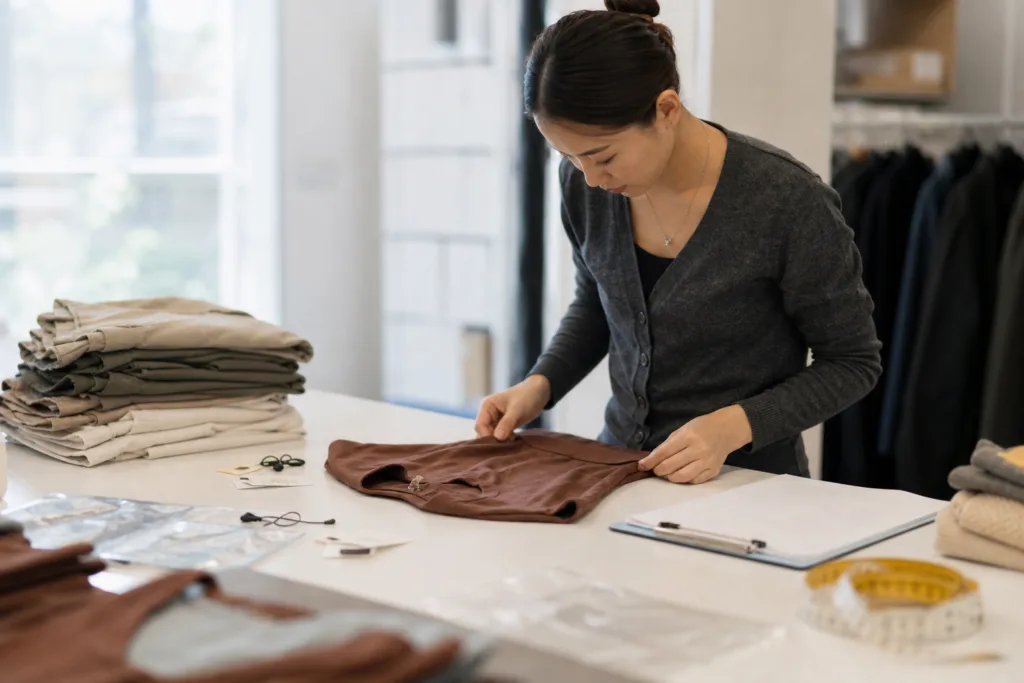
A full package clothing manufacturer can be a practical solution when you need one supplier to connect development, sourcing, sampling, production, and delivery preparation. The main advantage is coordination. The main risk is assuming the service scope is broader or more precise than it really is.
For buyers, the key is not only the product name or price, but whether the material plan, development responsibilities, approval stages, MOQ structure, quality controls, and labeling requirements are clearly defined before the quote is accepted. If you ask better questions early, you usually get better costing, fewer revisions, and a smoother production path.
FAQs
Is full package the same as OEM or private label?
Not exactly. Full package describes the service scope, meaning how much of the development and production process the supplier handles. OEM and private label describe business models or product ownership structures. A supplier can offer full package service within an OEM or private label arrangement, but the terms are not automatic substitutes for each other.
Can a full package clothing manufacturer handle low MOQ orders?
Sometimes, but it depends on the product and material sourcing method. If the supplier uses stock fabrics and standard trims, lower MOQs are more possible. If the project needs custom dyeing, custom knitting, or many color options, the minimums usually rise because mills and trim vendors also have their own order thresholds.
Do I need a tech pack before contacting a full package supplier?
No, but having one usually improves quote accuracy. If you do not have a full tech pack, you should still prepare clear reference images, garment descriptions, target quantity, size range, decoration plan, and timeline. A capable supplier can help identify what is still missing, but they need enough information to estimate the work properly.
Will full package manufacturing always cost more than CMT?
Usually the unit cost or development cost is higher because more services are included, but that does not automatically make it a worse value. If full package reduces sourcing errors, sample delays, and coordination problems, the total project cost may be easier to manage for a small team than a cheaper but fragmented setup.
What is the biggest mistake when requesting a full package quote?
The biggest mistake is being too vague. Buyers often ask for pricing without confirming fabric direction, garment construction level, quantity per color, size range, artwork method, or delivery timing. The result is a quote that looks usable but is based on assumptions that may change later and cause re-costing.
Can a full package supplier also manage labels, packaging, and shipment preparation?
Yes, many can, but you should confirm the exact scope. Some suppliers include standard labels and packing in the unit price, while others quote them separately. Shipment preparation may also mean different things, from carton packing only to full coordination with a nominated freight forwarder.