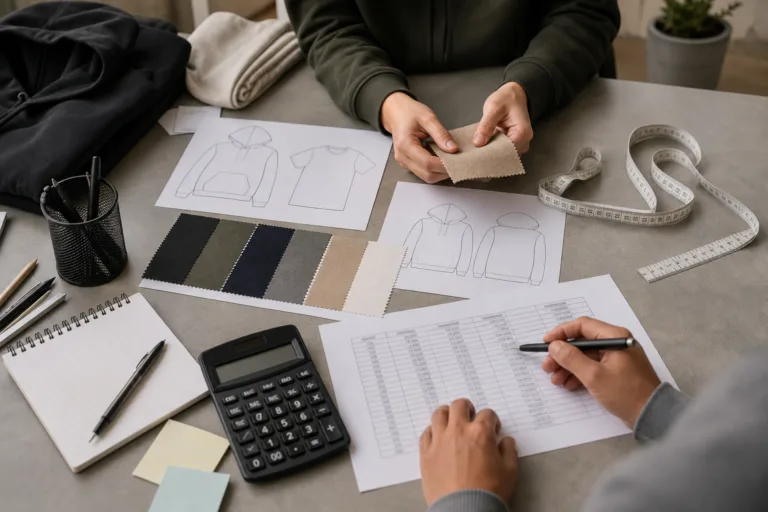
A realistic clothing brand budget is much more than the cost of making garments. For beginners, the biggest planning mistake is treating product cost as the entire startup cost. In apparel development, money is usually tied up across design decisions, pattern work, samples, revision rounds, bulk production, trims, labels, packaging, freight, duties, photography, launch marketing, and the cash reserve needed to absorb delays or rework. If you understand those buckets early, you can build a launch plan that is smaller, slower, and more controlled instead of becoming expensive by accident.
Many new founders also need a broader view of startup math before they compare factories or commit to an initial collection. If you want a more general startup cost breakdown by business model, that Apparel Wiki resource helps connect apparel budgeting with launch format, inventory risk, production scale, and the difference between testing an idea and funding a full brand rollout. It is especially useful when deciding whether to begin with a narrow capsule, made-to-order logic, or a small stocked collection.
What a clothing brand budget actually needs to cover
From a sourcing perspective, a startup budget has both pre-production costs and inventory-launch costs. Pre-production includes concept refinement, technical specifications, pattern making, sample creation, fit corrections, lab dips or strike-offs where needed, and supplier communication. Inventory-launch costs include bulk fabric, trims, labor, decoration, labels, packaging, freight, duties, and the operational spend needed to sell the goods after they arrive.
A practical budget normally includes these categories:
- Brand and product planning
- Tech packs, pattern making, and grading
- Samples and sample revisions
- Bulk production
- Packaging and labeling
- Freight, duties, and local delivery
- Product photography and launch assets
- Advertising and customer acquisition
- Platform, storage, or fulfillment costs
- Cash flow reserve and contingency
That is why early founders benefit from a structured guide to launching a clothing business before they lock in a product line. The budgeting logic depends on whether the brand is starting with cut-and-sew garments, private label blanks, or decorated basics, because each path changes development cost, MOQ exposure, and margin pressure.
Why beginners usually underestimate fashion startup costs
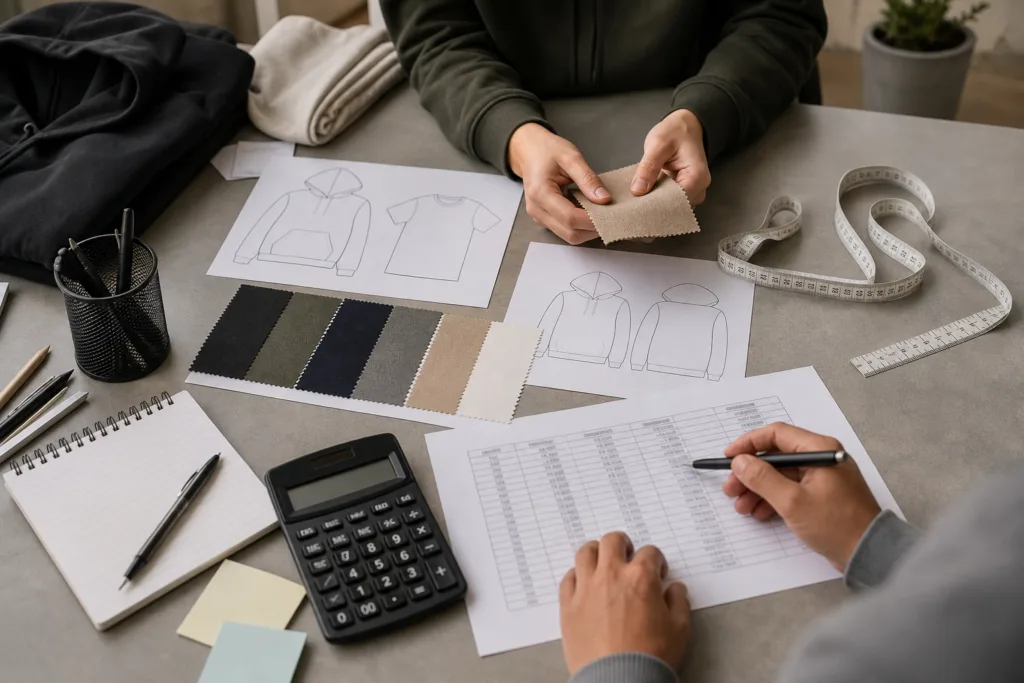
Most underestimation happens for three reasons. First, beginners budget for the garment they imagine, not the development process required to make it correctly. Second, they ask factories for a unit cost before they have fixed the spec, so early pricing is incomplete. Third, they ignore the time gap between paying deposits, waiting for production, receiving goods, and finally turning inventory into cash.
In apparel sourcing practice, costs often expand in small steps rather than one obvious jump. A neckline needs correction. A print size changes. Fabric weight is upgraded. A size set is required. Cartons are larger than expected. Air freight is needed for a launch deadline. None of these is unusual by itself, but together they can break a weak budget.
Founders also forget non-inventory expenses. Even if a first run is small, you still need product imagery, ecommerce setup, basic brand assets, and some customer acquisition budget. A shirt that costs $9 landed is not a $9 business.
Product development costs in a clothing brand budget
Product development is the money spent to turn an idea into a production-ready specification. For beginners, this section is often skipped in rough spreadsheets, yet it is one of the reasons sampling becomes inefficient. If the spec is weak, every later step becomes more expensive.
Concept work and line planning
This can include mood direction, reference gathering, competitive price positioning, construction choices, and deciding which garments belong in the opening assortment. A very small startup may do this work internally, but it still has a cost in time and often in freelance support.
Typical beginner-level spend can range from minimal self-directed planning to several hundred dollars per style if outside help is used. The real budgeting lesson is not the exact number; it is recognizing that decisions made here affect fabric use, trim count, complexity, and eventual margin.
Tech packs and specification sheets
A proper tech pack usually includes garment sketches, points of measure, bill of materials, stitch and seam notes, artwork placement, labeling details, packaging instructions, and tolerance expectations. If you are making custom garments rather than printing on blanks, this is one of the most important cost-control tools in the process.
Beginner brands often pay per style for technical development. Costs vary widely by complexity, but simple garments may require a modest spend while highly detailed outerwear or performance products cost more. The budget implication is clear: fewer initial styles usually means cleaner development and lower waste.
Pattern making and grading
Custom silhouettes need a base pattern, then grading into your size range. If you launch only one fit and a narrow size run, grading cost is lower than launching multiple fits or unisex plus women’s plus kids at once. From a garment construction perspective, fitted woven garments usually demand more technical accuracy than relaxed knit basics.
| Development Item | What Drives Cost | Beginner Budget Logic |
|---|---|---|
| Tech pack | Style complexity, artwork, trim detail | Keep first collection tight and repeatable |
| Pattern making | Silhouette complexity, fit type | Start with simpler products if budget is limited |
| Grading | Number of sizes, fit families | Limit size expansion until fit is proven |
| Material sourcing | Fabric minimums, trim customization | Choose available materials when possible |
Beginners trying to understand cost structure should also study garment manufacturing pricing models. The difference between CMT and full-package development changes who sources fabric, who controls trims, and where hidden spending appears inside the total clothing brand budget.
Sample and prototype costs: where many first budgets fail
Sampling is not just one garment. It is a cycle. You may need a prototype, a fit sample, a revised fit sample, a salesman sample, a pre-production sample, or at least some version of several of those depending on product type and supplier process. Each round can involve pattern edits, material substitutions, shipping, and time loss.
For a simple T-shirt, sample costs may seem manageable. For a hoodie with custom rib, embroidery, print, drawcords, labels, and wash treatment, each revision can be meaningful. New founders often multiply sample cost by style and forget to multiply by rounds.
What sample budgets should include
- Initial prototype charge
- Pattern correction or re-development fees
- Revised sample cost
- Express courier charges
- Fabric and trim upgrades during revisions
- Pre-production sample approval
If your first estimate assumes one sample per style, it is probably too low. A safer beginner assumption is two to four paid sample events per custom style, especially if fit, fabric, or artwork placement is new.
Another common oversight is forgetting the cost of delayed decisions. Each revision round can push back launch timing, which may increase storage, freight urgency, or marketing rescheduling. In budgeting terms, slow approvals create indirect cost even when the factory sample price itself looks small.
Bulk production costs: the largest cost bucket
Bulk production is where the biggest absolute spend usually sits, but it should not be analyzed as a single line item. Unit cost is shaped by material, construction, quantity, trim count, packaging requirements, decoration, wash treatment, and quality level.
Core unit cost drivers
- Fabric type and composition
- GSM or fabric weight
- Consumption per size
- Number of panels and sewing operations
- Print, embroidery, wash, or special finish
- Trims such as zippers, drawcords, snaps, and woven labels
- Order quantity by color and size
- Factory efficiency and pricing model
Fabric usually carries major influence. A heavy cotton fleece hoodie with brushed interior, reactive dyeing, and embroidery will cost much more than a basic jersey tee with a small chest print. Likewise, low volume usually raises per-unit cost because setup and cutting inefficiency are spread over fewer pieces.
Minimums matter more than many beginners expect, which is why understanding how MOQ affects first order budgeting is essential. MOQ is not just a sourcing term. It determines how much cash gets locked into inventory, how many colors you can afford, and whether your opening assortment is financially realistic.
Apparel Wiki explains that production budgeting works better when you estimate landed unit cost, not only ex-factory cost. Landed cost considers what one sellable unit really costs after production, packaging, freight, duties, and inbound handling are added.
Simple production math beginners can use
A basic planning formula is:
Total bulk production budget = (unit manufacturing cost x order quantity) + development charges + packaging + freight + duties + inspection + local handling
Example: if 300 hoodies cost $18 ex-factory, the garment manufacturing subtotal is $5,400. Add $450 for labels and packaging, $700 freight, $650 duties and customs-related charges, $250 inspection, and $200 local delivery/handling. The working landed inventory budget becomes $7,650 before marketing or reserve capital.
This is also where founders should account for the hidden manufacturing costs to plan for that often sit outside supplier headline pricing, such as freight surcharges, carton updates, trim overruns, replacement samples, testing, banking fees, or damaged-unit allowance.
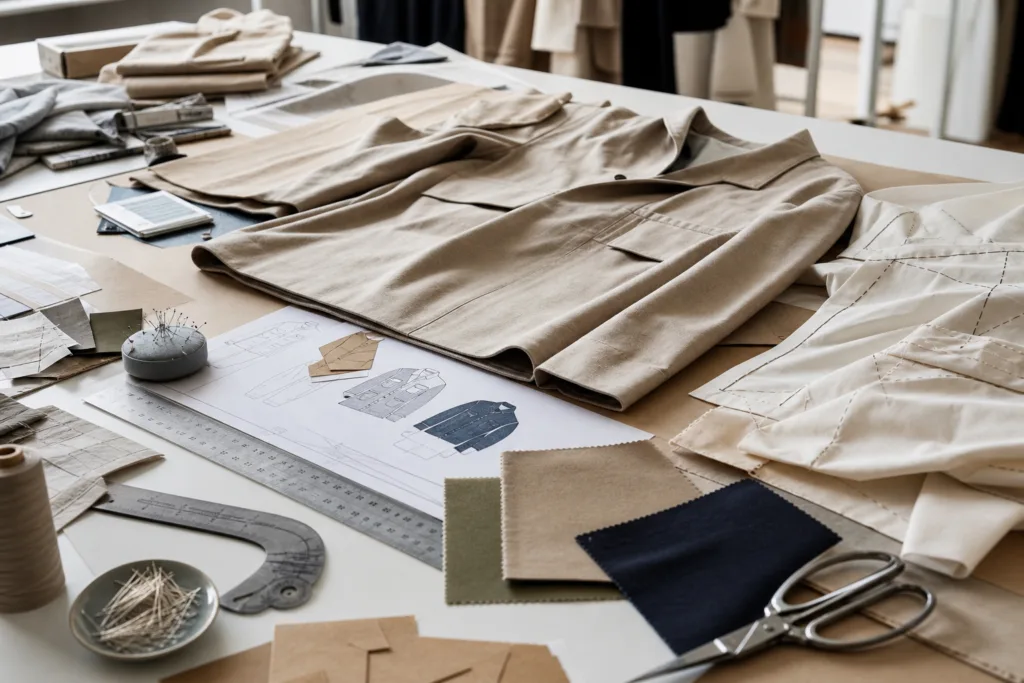
Packaging costs: small details, real budget impact
Packaging is often underestimated because each component looks cheap in isolation. In total, however, labels, tags, folding, polybags, barcode stickers, inserts, size stickers, and export cartons can materially change the cost per unit.
Typical apparel packaging components
- Main label
- Size label
- Care label
- Hangtag and string
- Polybags
- Barcode or SKU stickers
- Tissue or insert cards where needed
- Master cartons
A simple startup may choose plain packaging to protect cash flow. That can be a smart decision if the product itself carries the value. Overdesigned packaging often consumes budget that should have gone into fit, fabric, or reorder capacity.
Care labels and fiber content labeling are not only branding items; they are part of product information and market-readiness. When selling imported goods, founders should also include customs-related planning in their packaging and documentation review because apparel categories often involve trade rules and duty exposure. For a high-level government overview of why textile imports require attention to duties and compliance, see Don’t forget import duties and customs costs.
Shipping and logistics costs: freight is not a side note
Logistics can move a viable product into an unprofitable one if it is not estimated early. Freight mode alone can change unit economics sharply. Sea freight is usually cheaper per unit but slower. Air freight is faster but can destroy margin on lower-priced goods.
Logistics budget categories
- Factory to port movement
- International freight
- Insurance if used
- Duties and taxes
- Customs clearance and broker fees
- Port handling or terminal charges
- Warehouse receiving
- Final-mile delivery to your location or 3PL
Beginners should always ask whether quoted supplier pricing is ex-factory, FOB, CIF, DDP, or based on another shipping term. If you do not know which costs are already included, your spreadsheet can double count or miss major charges.
Another practical issue is carton utilization. If a bulky fleece item takes more volume than expected, freight may increase even when the unit count does not. This is why product category matters. Puffers, heavyweight hoodies, and padded garments create different logistics behavior than lightweight jerseys.
Marketing and advertising budget: inventory does not sell itself
A clothing brand budget should include the cost of making the product visible. For very early brands, this may begin with product photography, model or mannequin shoots, ecommerce setup, basic email capture, and a test advertising budget. The exact level depends on the sales channel, but it should never be zero unless you already have a strong audience and a low-risk test strategy.
Common startup marketing costs include:
- Product photography
- Launch video or short-form content
- Website setup and apps
- Email and SMS tools
- Paid social testing
- Seeding or PR samples
- Creative design assets
From a budget planning perspective, many founders make the mistake of spending everything to get inventory made, then having no funds left to generate traffic or validate demand. A weak launch can leave stock sitting while cash remains trapped in goods.
Cash flow reserve: the most overlooked line in a clothing brand budget
Reserve capital is what keeps a startup stable when reality does not follow the ideal timeline. Production may take longer than expected. Freight may spike. A sample may need rework. A launch may take longer to convert. Without a reserve, even a promising first run can create stress that forces poor decisions.
As a general budgeting method, separate one-time setup costs from recurring or timing-sensitive costs, then calculate the total cash required before the first meaningful sales cycle. The U.S. Small Business Administration offers a useful framework for How to estimate your total clothing brand startup costs, especially when you are listing startup expenses, monthly operating needs, and the gap between spending and revenue.
A practical beginner reserve is often expressed as a percentage rather than a fixed number. Many founders use a contingency range of roughly 10% to 20% of planned launch spend, with the higher end being safer for custom products, overseas production, or complex multi-style launches.
A simple budget framework by launch stage
Not every new brand should budget the same way. The right structure depends on how much product complexity and inventory risk you are taking.
| Launch Stage | Typical Goal | Budget Priority | Main Risk |
|---|---|---|---|
| Test launch | Validate product and audience | Small assortment, simple packaging, low sample count | Underfunded marketing or poor product-market fit |
| Small batch | Sell a more developed collection | Better specs, controlled MOQ, stronger imagery | Cash tied in too many styles or colors |
| Scaling | Repeat proven products | Reorder planning, logistics efficiency, margin discipline | Stock imbalance and operational strain |
Test launch
This stage is about learning. Keep the line narrow, reduce trim complexity, and avoid too many colors. A smaller budget here should favor product clarity and data gathering over full brand theater.
Small batch
This stage works when you have enough confidence to place an opening order but still need caution. Spend more on fit accuracy, specifications, and cleaner visuals, while staying disciplined on unit count.
Scaling
Once one or two products have repeat demand, budget attention shifts toward replenishment timing, inventory depth, warehousing, and margin preservation.
Common budgeting mistakes beginners make
- Budgeting only for unit cost and ignoring development
- Assuming one sample round per style
- Launching too many SKUs at once
- Ignoring MOQs by color and size
- Forgetting packaging, freight, and duties
- Leaving no marketing budget
- Holding no contingency reserve
- Choosing premium materials before testing demand
The most expensive beginner mistake is often complexity. Every extra fabric, trim, color, and decoration method creates more quoting variables, more approval points, and more risk of delay.
How to prioritize spending when the budget is limited
If funds are tight, prioritize in this order: product clarity, fit/spec accuracy, manageable inventory, and enough launch support to test demand. In many cases, it is smarter to launch one strong style in two colors than four styles with weak development.
Good areas to simplify include custom packaging, oversized assortments, unnecessary trim variation, and too many decoration placements. Areas that usually deserve protection include pattern accuracy, sample review, quality consistency, and basic content creation for launch.
For readers comparing options across fabrics, fits, sourcing paths, and production terminology, Apparel Wiki is useful because structured garment education often prevents costly assumptions before the first purchase order is placed.
Example budget breakdown for a small clothing brand launch
Below is a simplified example for a beginner launching two custom knit styles in a small batch. Actual numbers vary by market, fabric, quantity, and supplier, but the logic is realistic.
| Budget Category | Example Amount | Notes |
|---|---|---|
| Tech packs and development | $800 | Two simple styles with outside support |
| Patterns and grading | $500 | Basic size range |
| Samples and revisions | $900 | Multiple rounds plus courier |
| Bulk production | $4,800 | Approximate ex-factory garment cost |
| Labels and packaging | $450 | Main labels, care labels, tags, polybags, cartons |
| Freight and duties | $1,000 | International and local inbound cost |
| Photography and launch assets | $700 | Basic ecommerce content |
| Paid marketing test budget | $900 | Initial campaign learning phase |
| Reserve capital | $1,200 | Contingency for delays or overruns |
| Total | $11,250 | Illustrative beginner launch budget |
This example shows why founders often underestimate startup cash needs. The garments themselves account for less than half of the total. The rest is what makes the product real, deliverable, and sellable.
Final budgeting checklist before placing your first order
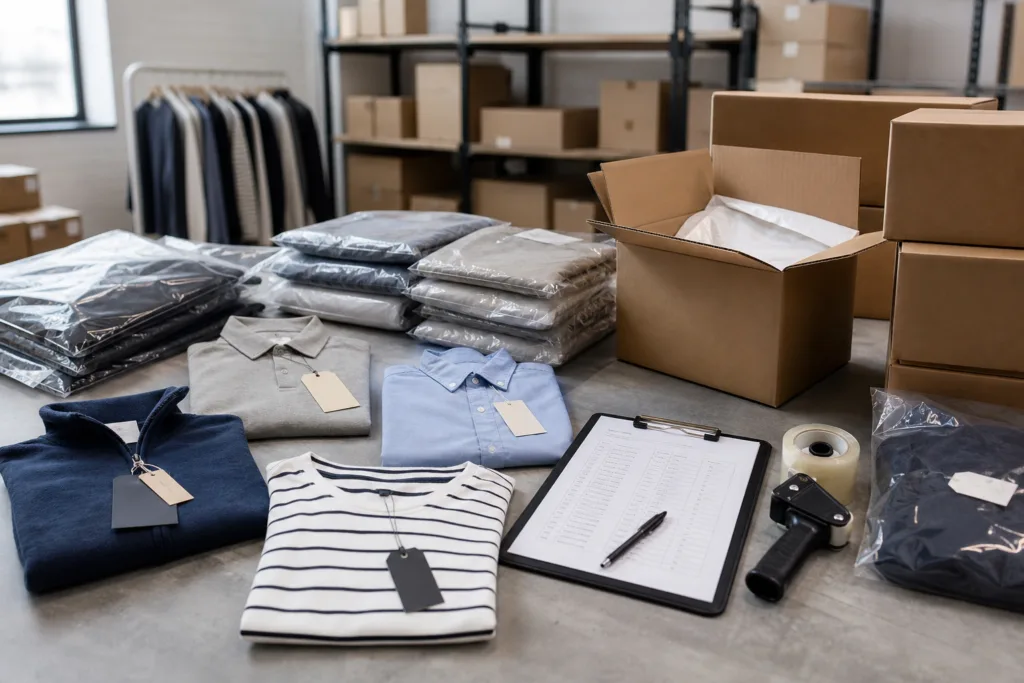
- Is each style technically defined enough for reliable pricing?
- Have you included at least one revision round in sample planning?
- Do you know the MOQ by color, fabric, and size range?
- Have you estimated landed cost, not only ex-factory cost?
- Did you include labels, tags, polybags, and cartons?
- Is freight mode aligned with your launch calendar?
- Have you allocated money for content and customer acquisition?
- Do you have reserve capital if delivery or sales take longer than expected?
FAQs
How much clothing brand budget does a beginner usually need?
The answer depends on product type, sourcing model, and launch size, but many beginners need far more than garment cost alone. A very small test can be lean, while a custom cut-and-sew launch with multiple styles often requires funding for development, samples, production, packaging, freight, marketing, and contingency. The key is to calculate total launch cash, not just supplier quotes.
What costs are most often forgotten in a clothing startup budget?
The most commonly missed costs are sample revisions, courier fees, labels and packaging, import duties, inspections, local delivery, photography, paid marketing, and reserve capital. These are not unusual extras; they are normal parts of apparel launch planning and should be budgeted from the beginning.
Should beginners spend more on product development or marketing?
Both matter, but a weak product is hard to fix with promotion alone. For most startups, the first priority is a product that fits properly, has a clear spec, and can be produced consistently. After that, keep enough budget available to create launch assets and test customer acquisition, because unsold stock also creates financial pressure.
How many sample rounds should I budget for?
For a simple item, you may get through with fewer rounds, but beginner brands should usually expect more than one sample event per style. Two to four paid sample stages is a safer assumption for custom garments, especially when fit, fabric, print placement, or trims are still being refined.
Why is MOQ so important when planning startup cash?
MOQ affects how much money is tied up before you make your first sale. It changes unit cost, inventory depth, color count, and the number of sizes you can reasonably carry. A low per-unit price can still create a bad launch if the minimum order forces you to buy more inventory than your budget or audience can support.
How much reserve capital should a new clothing brand keep?
There is no single rule, but many beginners are safer with a contingency layer of around 10% to 20% of planned startup spend, especially for imported or customized products. The more moving parts you have, the more important reserve cash becomes for handling delays, corrections, and slower-than-expected sell-through.