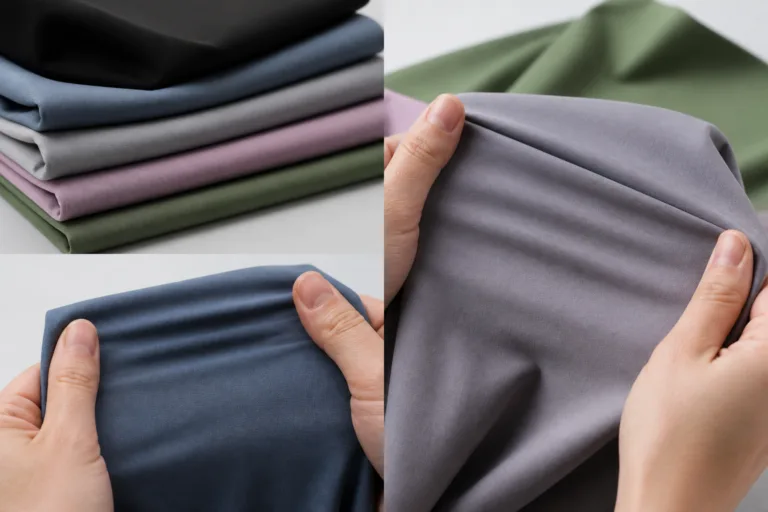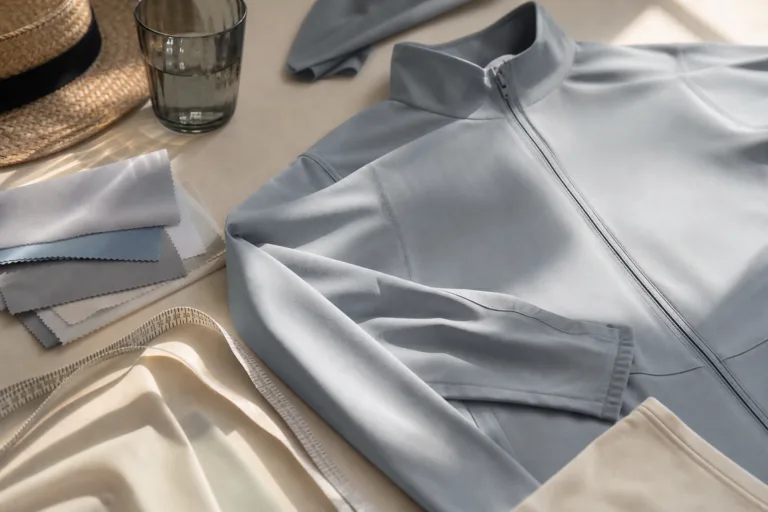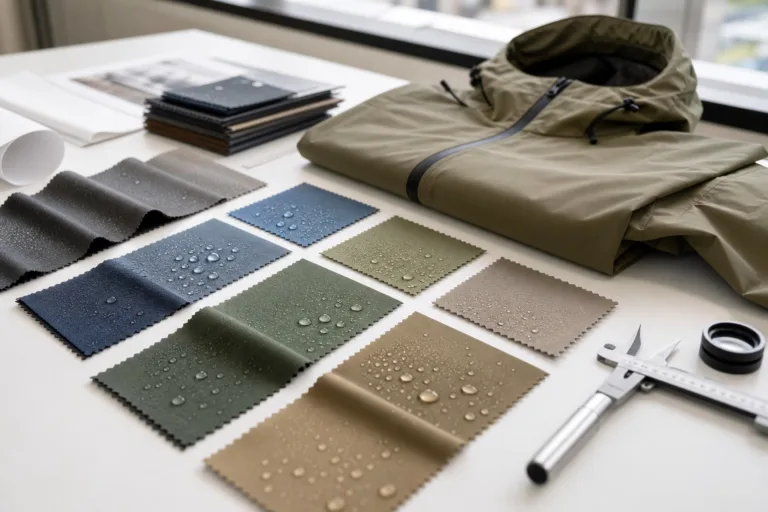

Choosing a clothing manufacturer is not only about finding a factory that can make your design. It is about asking the right questions early enough to protect your budget, delivery timeline, product consistency, and customer experience. For brands, startups, merchandisers, schoolwear buyers, and first-time custom apparel buyers, the most useful questions to ask clothing manufacturer teams are the ones that reveal how the supplier handles MOQ, sampling, material control, approvals, production planning, payment risk, and quality standards before money is committed.
If you also need practical support beyond supplier conversations, apparel manufacturing tools for costing, sizing, and QC planning can help you structure price comparisons, measurement logic, inspection preparation, and specification decisions before and during production. That is especially useful when you are comparing several factories, building your first sourcing checklist, or trying to turn a rough product idea into clearer manufacturing requirements.
This guide is written as a practical decision-support article. Instead of giving generic sourcing advice, it focuses on what to ask, why the question matters, what kind of answer is useful, and which answers should make you look more carefully. In apparel sourcing practice, a good question set makes factories easier to compare because every supplier is responding to the same technical and commercial points.
Who should use this manufacturer checklist
This checklist is useful for readers who need structured buying logic rather than sales language:
- apparel brand founders preparing first production orders
- product developers and merchandisers comparing supplier capability
- designers moving from sample stage to bulk production
- retailers, clubs, schools, and organizations ordering custom garments
- import buyers who need to reduce quality and timeline risk
It is especially helpful when you do not yet have a long sourcing history. New buyers often focus on unit price first, but in garment manufacturing, a low quote without clear answers on materials, approvals, lead time, and defect handling can become the more expensive option later.
Questions to ask clothing manufacturer teams about MOQ

MOQ stands for minimum order quantity. In apparel manufacturing, MOQ may apply at several levels at once: per style, per color, per fabric, per size ratio, per print colorway, or even per trim component. A supplier that says “our MOQ is 300 pieces” may still require 300 pieces per color or a larger fabric minimum behind that number.
Start with direct questions such as:
- What is your MOQ per style?
- Is the MOQ per color or total across all colors?
- Does the MOQ change based on fabric type or GSM?
- Can sizes be mixed freely within the MOQ?
- Does embroidery, screen printing, washing, or special finishing increase the MOQ?
- Do you have different MOQs for cut-and-sew styles versus stock blank customization?
These questions matter because MOQ is tied to fabric utilization, marker efficiency, trim purchasing, machine setup time, and production line economics. A factory may accept a low quantity only if you choose available fabrics or standard trims. If you want custom-dyed fabric, special labels, contrast panels, branded packaging, or multiple decorations, the true working MOQ often rises.
What a useful MOQ answer looks like
A useful manufacturer answer is specific. It should explain whether the MOQ is affected by fabric sourcing, dye lot requirements, trim customization, or printing setup. Vague answers such as “MOQ is flexible” are not enough unless the supplier explains exactly what can be flexible and under which conditions.
| MOQ question | Why it matters | What to listen for |
|---|---|---|
| MOQ per style or order? | Prevents misunderstanding in quotation stage | Clear breakdown by SKU, color, and total pieces |
| MOQ with custom fabric? | Fabric mills may require higher minimums | Fabric minimum in kilos or meters, not only garment pieces |
| MOQ with printing or embroidery? | Decoration setup affects cost and feasibility | Screen count, stitch count, placement, and setup limits |
| Can stock trims reduce MOQ? | Standard components may improve flexibility | Which items can be sourced from in-house stock |
| Can colors be mixed? | Color variety changes fabric and trim planning | Allowed color splits and any surcharge |
MOQ also affects price and lead time. Low-quantity orders may have higher unit costs because fixed setup costs are spread over fewer pieces. They may also move more slowly if the factory prioritizes larger, easier production runs. If a factory offers a low MOQ, ask whether the same lead time and quality process still apply.
When a buyer wants several colors and sizes in a small run, it is wise to ask if the supplier can propose a practical assortment. For example, a manufacturer may recommend fewer colorways for a first order so the production run stays more consistent and the size ratio remains efficient.
Sampling and prototype questions before bulk approval
Sampling is where many preventable problems can be caught. If the sample stage is handled casually, bulk production often inherits the same confusion. Ask the manufacturer what sample types they provide and how approvals work before materials are ordered in full.
A helpful starting point is understanding the 5 stages of apparel sampling, because not every sample serves the same purpose. In apparel development, a fit sample, a pre-production sample, and a shipment sample answer different questions, and buyers should know which approval is tied to production release.
Key sampling questions include:
- What sample stages do you provide?
- How many revisions are included before extra charges apply?
- Do you make pattern corrections after fit comments?
- Who pays for sampling, fabric development, and courier cost?
- How long does each sample round take?
- Which sample becomes the bulk production standard?
- Can you produce a pre-production sample in actual bulk fabric and trims?
Common sample types to clarify
- Reference sample: used to communicate style direction, construction, or fit inspiration.
- Fit sample: used to evaluate measurement, balance, silhouette, and movement.
- Sales sample: used for marketing, line review, or buyer presentation.
- PP sample: pre-production approval sample made closer to bulk standard.
- Shipment or sealing sample: retained as a production reference for final comparison.
The manufacturer should clearly explain whether comments are tracked in writing and how revised specifications are confirmed. If you do not have a complete development package, ask what minimum information they need. Many sourcing issues begin because the buyer assumes the factory “understands the style” while the factory is interpreting gaps on its own.
For readers creating first specifications, how to build a tech pack in Excel is a practical way to organize measurements, construction details, labels, artwork, and comments. Even a basic but structured tech pack usually leads to better sample accuracy than scattered messages and reference photos.
Also ask a direct approval question: What happens if the approved sample and bulk output do not match? A serious supplier should explain tolerance, replacement, rework, or claim-review logic rather than answering vaguely.
Fabric, trims, and packaging questions that reduce surprises
Material control is one of the biggest production risk areas. The same garment design can perform very differently depending on fiber blend, GSM, knit structure, finish, shrinkage behavior, trim quality, and packing method. Buyers should ask material questions in a way that turns broad preference into measurable specification.
Fabric questions to ask
- What is the exact fabric composition?
- What is the target GSM, and what tolerance is acceptable?
- Is the fabric combed, carded, ring-spun, open-end, brushed, compact, enzyme-washed, or otherwise finished?
- What is the expected shrinkage after washing?
- How is color consistency controlled between lots?
- What is the fabric width and yield assumption used in costing?
- Can the factory provide swatches, test reports, or previous fabric references?
For example, a 100% cotton jersey T-shirt and a cotton-polyester jersey T-shirt may look similar in a photo but behave differently in shrinkage, drying time, pilling profile, and color retention. A buyer asking only for “soft cotton fabric” is not giving the manufacturer enough technical direction.
Ask what tolerance is accepted for shade variation, GSM, and width. In bulk apparel production, some tolerance is normal, but it should be defined. You should also ask whether replacement fabric can be sourced if the first lot fails testing or shade approval, and what timeline impact that would create.
Trim and accessory questions to ask
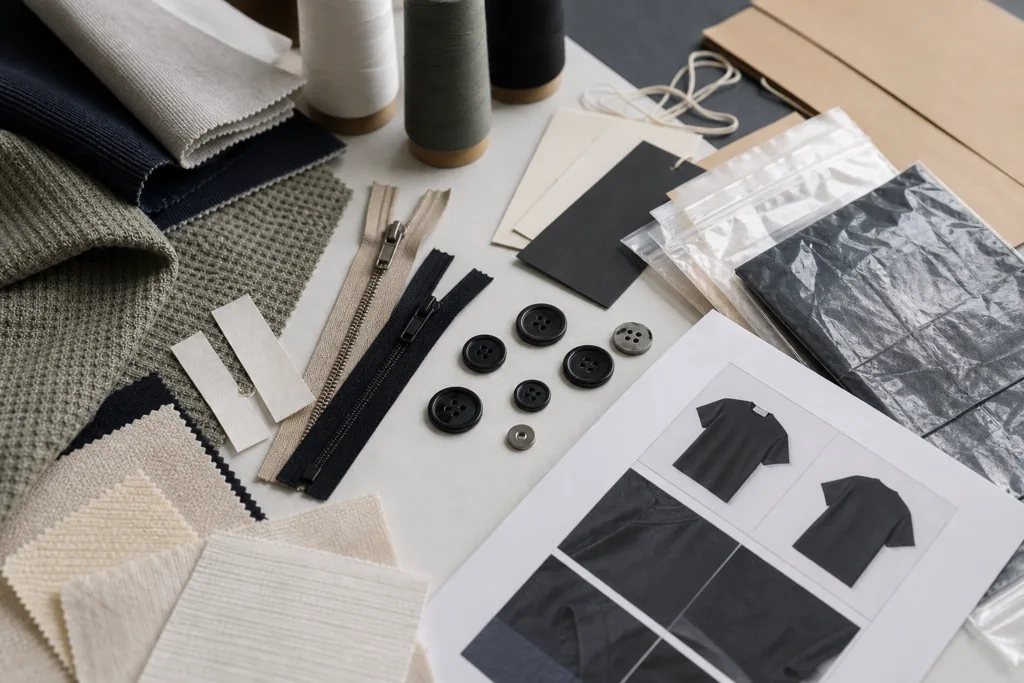
Trims are not minor details. Labels, drawcords, elastic, zippers, buttons, snaps, sewing thread, and tapes all affect performance, appearance, and compliance. Ask:
- Are trims custom-made or sourced from stock?
- What are the trim lead times?
- Can trim colors be matched to fabric, and to what standard?
- What happens if nominated trims arrive late or fail inspection?
- Will labels, care labels, and size labels be buyer-supplied or factory-sourced?
- Are substitute trims allowed, and who approves them?
Many production delays come from missing or incomplete component planning. That is why buyers should review common BOM errors that cause material shortages before confirming bulk orders. In product development, one omitted label, zipper puller, or carton spec can hold finished garments in the factory even when sewing is complete.
Packaging questions to ask
Packaging should be discussed before the order is placed, not after the goods are packed. Ask:
- What is the standard folding method?
- Will garments be packed individually in polybags or in bulk?
- Do polybags need warning text, suffocation notice, or barcode labels?
- What carton dimensions and weight limits are standard?
- Can the factory provide retail-ready packing with hangtags, stickers, and barcode placement?
- How are size assortments packed by carton?
Packaging affects freight efficiency, store handling, and final presentation. It also affects labor cost. If the product needs tissue, inserts, hanger packing, size separators, polybag stickers, carton marks, or retailer compliance labels, those details should be part of quotation and pre-production review.
One critical question is: Can any fabric, trim, or packaging substitution happen without written approval? The correct answer should be no. Any substitution should be confirmed in writing with clear impact on cost, timeline, and quality.
Lead time questions for each production stage
Many buyers ask only one lead-time question: “How long will production take?” That is too broad. A more useful approach is to split the timeline into stages and ask how each stage is controlled.
Ask for time estimates for:
- quotation review and feasibility check
- sample development
- fabric booking or knitting
- lab dip or color approval
- trim development
- pre-production sample approval
- bulk cutting and sewing
- washing, finishing, pressing, and packing
- final inspection and shipment preparation
A factory may be fast at sewing but slow at fabric booking. Another may quote a short production window but exclude waiting time for custom labels, print screens, or shade approvals. You need to know what is included in the stated lead time.
| Stage | Question to ask | Risk if unclear |
|---|---|---|
| Sampling | How many days per sample round? | Launch delays from repeated corrections |
| Fabric | When is fabric considered confirmed? | Hidden raw-material delays |
| Trim sourcing | Which trims are on the critical path? | Finished garments waiting for components |
| Bulk production | How many days from PP approval to ex-factory? | Unrealistic delivery planning |
| Inspection | When is final QC scheduled? | No time left for rework |
Also ask what happens if approvals are late. Some factories quote lead time from deposit date, while others quote from fabric approval, PP approval, or all-material-ready date. These are very different starting points. Good supplier communication means the time-count rule is stated clearly.
Payment terms and commercial control questions
Payment terms influence risk on both sides. Buyers should understand deposit expectations, balance timing, extra charge triggers, and claim procedures before placing an order.
Useful questions include:
- What deposit is required to start sampling or bulk production?
- When is the balance due: before shipment, against inspection, or against shipping documents?
- What payment methods are accepted?
- Are there additional fees for development, pattern making, testing, or artwork setup?
- How are price changes handled if fabric cost rises after order confirmation?
- What is the refund or credit policy if the order is canceled or rejected?
A clear answer should distinguish sample charges, development charges, bulk deposit, and any separate fabric liability. If the factory must book custom fabric or trims specifically for your order, ask when those liabilities become non-refundable.
It is also reasonable to ask how the manufacturer handles shortage, overrun, and balance-piece situations. Some factories may ship a small shortfall with prior notice; others expect tolerance acceptance. Clarify this before production begins.
Quality control questions that buyers should not skip
Quality control should never be reduced to “we check everything.” Buyers need to understand when the factory inspects, what standards it follows, how defects are classified, and how nonconforming goods are handled. A useful factory discussion should cover incoming material inspection, in-line quality control, end-line checks, measurement verification, and final inspection release.
In the quality-control section of your supplier review, ask:
- Do you inspect fabric before cutting?
- How do you handle shade, holes, stains, bowing, skewing, or roll defects?
- What in-line inspection checkpoints are used during sewing?
- How are measurement tolerances checked during production?
- What are your major, minor, and critical defect definitions?
- Who approves rework decisions?
- Can third-party inspection be arranged before shipment?
For a broader technical explanation of inspection logic, defect evaluation, seam checks, and testing considerations, a garment quality control checklist and defect standards reference can help buyers understand what a structured QC conversation should cover. That matters because not all factories use the same inspection discipline, even when their quotations look similar.
You should also ask which final inspection method is used and when it takes place. The article on final random inspection standards is useful background if you want to compare factory claims with common apparel QC practice. Final inspection should happen early enough for rework when needed, not only after all goods are sealed and loading is imminent.
Another important question is: What happens if defects are found after shipment? The supplier should explain claim windows, evidence requirements, replacement or credit policy, and how root-cause review is handled. In apparel sourcing practice, the quality response process matters almost as much as the defect rate itself.
Questions for first-time buyers before the first inquiry
First-time buyers often worry that they need a perfect tech pack before approaching a manufacturer. In reality, you do need enough information to let the supplier judge feasibility, but not every first inquiry has to be fully production-ready. The goal is to give the factory enough structure to respond accurately.
Prepare these basics before contacting suppliers:
- product category and style description
- target quantity
- target fabric type or blend
- target GSM or weight range if known
- reference images or sketches
- size range and fit direction
- decoration method such as print or embroidery
- required labels and packaging level
- target delivery date and destination market
If you are still building your sourcing knowledge base, Apparel Wiki provides structured guidance across garment terminology, sampling, fabric concepts, quality control, and production planning. That broader context is helpful when you need to translate a design idea into manufacturing language that suppliers can quote against.
Minimum information for a first inquiry message
A practical first inquiry should tell the supplier what you want, how many units you need, what level of customization is required, and when you need delivery. If you do not know the exact fabric yet, describe the intended use case: lightweight gym T-shirt, heavyweight streetwear tee, brushed fleece hoodie, stretch legging, woven uniform shirt, and so on. That gives the factory a more useful starting point than saying “please quote custom clothing.”
Ask the supplier to reply with:
- estimated MOQ
- sample cost and timeline
- fabric options
- bulk lead time
- printing or embroidery capability
- payment terms
- packaging options
- quality control process
Red flags when evaluating manufacturer replies
Not every incomplete answer is a red flag, but repeated vagueness usually is. Watch carefully if the supplier:
- avoids giving MOQ detail by style, color, or fabric
- cannot explain sample stages or approval logic
- offers fabric suggestions without composition or GSM detail
- pushes immediate payment before technical review
- cannot describe inspection steps or defect handling
- changes lead-time assumptions from one message to the next
- ignores packaging or labeling requirements in the quote
Another warning sign is overpromising. If one supplier says yes to every request instantly while others explain practical limits, the more cautious suppliers may actually be giving more reliable information. In garment production, honest constraints are often a sign of real operational understanding.
A simple supplier comparison checklist
When comparing factories, use the same question set for each one. This reduces emotional decision-making and makes commercial differences easier to interpret.
| Evaluation area | What to compare | Decision cue |
|---|---|---|
| MOQ | Per style, color, fabric, and decoration | Choose the supplier whose MOQ structure matches your launch plan |
| Sampling | Rounds, cost, revision process, PP approval | Prefer clear revision control over vague speed claims |
| Materials | Fabric clarity, trim planning, substitution rules | Prefer detailed specification discipline |
| Lead time | Stage-by-stage breakdown and critical path logic | Prefer realistic timing with defined start points |
| Payment | Deposit, balance, liability, dispute process | Prefer transparent commercial terms |
| Quality | In-line QC, final inspection, rework, claim handling | Prefer documented process, not only verbal reassurance |
It is also smart to score each supplier on clarity. A factory that answers technically and consistently may be more manageable than one offering a slightly lower price but poor communication. Buyer confidence should come from process transparency, not only from quotation totals.
Common mistakes buyers make
One common mistake is asking for a quote before defining enough details to compare quotes fairly. Another is approving a sample without locking fabric, trim, or packaging standards. Some buyers also fail to confirm whether the approved sample was made with actual production materials or only with substitute components.
Other frequent mistakes include:
- assuming MOQ means total order only
- ignoring trim lead times
- not confirming shrinkage and measurement tolerance
- failing to ask who approves substitutions
- treating final inspection as optional
- not documenting claims and comment history in writing
From an apparel development perspective, the safest path is simple: define more, assume less, and confirm every approval stage in writing.
Conclusion
The most useful questions to ask clothing manufacturer teams are the ones that turn uncertainty into measurable decisions. Before placing an order, buyers should understand how MOQ is structured, how samples are approved, what materials are actually being sourced, which stage controls the lead time, how payment risk is allocated, and what quality-control process protects the order. Clear questions do not slow sourcing down; they prevent confusion that would otherwise appear later as delays, rework, or disappointing goods.
For brands and first-time buyers alike, the goal is not to interrogate the factory. It is to build a repeatable checklist that makes supplier comparison more objective and production planning more stable. Ask early, document clearly, and treat every vague answer as a signal to clarify before you commit.
FAQs
What are the most important questions to ask a clothing manufacturer first?
Start with MOQ, sample process, fabric options, lead time, payment terms, and quality control. These six areas reveal whether the supplier can actually support your product, quantity, timeline, and quality expectations. Price matters, but it is much easier to compare pricing once the technical and commercial conditions are clear.
How do I ask about MOQ without sounding inexperienced?
Ask in a direct and specific way: what is the MOQ per style, per color, and per fabric, and does decoration affect it? This shows that you understand apparel production variables. In sourcing, a precise MOQ question usually sounds more professional than asking only for the lowest possible minimum.
Do I need a full tech pack before contacting a manufacturer?
No, but you do need enough information for the factory to judge feasibility and quote more accurately. A style description, reference images, target quantity, fabric direction, size range, decoration method, and delivery target are usually enough for a first discussion. A full tech pack becomes more important as sampling and approvals move forward.
What should I ask about fabric before approving production?
Confirm composition, GSM, hand feel, shrinkage expectation, color standard, and whether the sample fabric matches bulk fabric. You should also ask what tolerance is acceptable and whether any substitution can happen without written approval. Fabric is one of the biggest drivers of garment performance, fit stability, and cost.
How can I tell if a manufacturer has a reliable quality control process?
Ask how they inspect fabric before cutting, what in-line checkpoints they use during sewing, how they classify defects, when final inspection happens, and what rework steps are used if problems are found. Reliable suppliers can usually explain their QC workflow in sequence rather than giving only general reassurance.
What is a practical way to compare two or three clothing manufacturers?
Use the same checklist for every supplier and compare their answers across MOQ, sample rounds, materials, trims, packaging, lead time, payment terms, and quality control. Then score not only price, but also clarity, consistency, and responsiveness. In many cases, the better-managed supplier is the one that gives the clearest operational answers, even if its quote is not the very lowest.