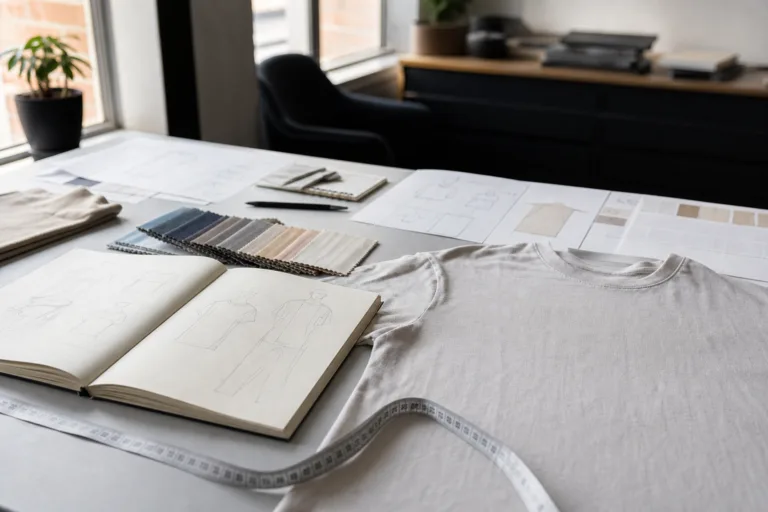
Starting a clothing brand is less about having one good design and more about making a series of clear decisions in the right order. If you are figuring out how to start a clothing business, the most important early work is choosing a business model, defining who you are selling to, setting a realistic budget, and understanding what your first production order can actually support. Beginners often move too quickly into logos, samples, or websites before they have answered the core questions that determine whether the business can sell at a profit.
For readers who want a more production-focused path after this guide, Apparel Wiki’s complete startup guide from product development to production is a useful companion. It connects the early business choices in this article to supplier communication, sampling, and factory handoff, which helps when you are trying to turn a concept into an order that a manufacturer can understand and quote accurately.
What a clothing business actually is
A clothing business is not one single model. It is a combination of product, brand position, sourcing method, and sales channel. Two founders can both say they have a clothing brand, but one may be selling printed shirts through print-on-demand with no inventory, while another is developing a private label knitwear line with custom fabric, size grading, and factory minimums. Those businesses have very different costs, risks, lead times, and control levels.
Apparel Wiki explains the topic this way because beginners usually need a structure before they need creative inspiration. If you understand the model first, you can make better decisions about fabric, decoration, packaging, and even whether you need a full tech pack or only a simple artwork file. This is also why the same product idea can be cheap to launch in one model and expensive in another.
In practical terms, your clothing business will usually sit somewhere on this spectrum:
- Low-control, low-inventory models such as print-on-demand and some marketplace-based approaches
- Mid-control models such as custom apparel, blank-based private label, or small-batch sourcing
- High-control, higher-risk models such as fully developed niche brands with custom fits, custom fabrics, and owned inventory
Common clothing business models and how they differ
The fastest way to reduce confusion when learning how to start a clothing business is to compare the major models side by side. The model you choose affects your cash needs, supplier search, branding freedom, and speed to market.
| Model | What you sell | Inventory risk | Upfront cost | Control level | Best for |
|---|---|---|---|---|---|
| Print-on-demand | Printed apparel made after an order is placed | Low | Low | Low to medium | Testing ideas with minimal capital |
| Custom apparel | Apparel made to your design or client request | Low to medium | Low to medium | Medium | Events, teams, clubs, small brands |
| Private label | Blank or base garments branded as your own | Medium | Medium | Medium to high | New brands wanting faster launch |
| Wholesale/resale | Purchased goods from other brands or distributors | Medium to high | Medium | Low | Retailers and curators |
| Made-to-order | Produced only after sale, often with custom options | Low | Medium | High | Limited drops and niche positioning |
| Direct-to-consumer niche brand | Own product line sold under your brand | High | Medium to high | High | Founders building a long-term brand |
Private label and custom apparel are often confused, but they are not the same. In the overview of OEM and ODM clothing production models, the key distinction is that one model is built around your own branding on an existing base, while the other usually involves more custom product development or factory-led adaptation. For beginners, that difference matters because it changes how much product development work, sampling, and technical communication you need before the first order.
How to choose the right model as a beginner
Choosing the right model is a decision about trade-offs, not just preference. Beginners should compare the model against five practical factors: margin, inventory risk, upfront cost, speed, and control. If you choose a model that is too complex for your budget or too slow for your market window, you may burn time and money before you ever learn whether customers want the product.
Use these questions to narrow the model
- Do I need to test demand with the lowest possible risk?
- Do I want full control over fit, fabric, and branding?
- Can I afford to hold inventory if sales are slower than expected?
- Do I need a fast launch, or can I wait for sampling and production?
- Will my buyers care more about price, speed, uniqueness, or quality?
If your answer is mostly about speed and minimal risk, print-on-demand or custom small runs may be enough for a first test. If your answer is about a distinctive product and stronger brand control, private label or made-to-order may be better. If you are building a premium brand, you will usually need a more detailed development process and a higher tolerance for sample revisions and MOQ pressure.
When founders ask how to start a clothing business with limited capital, the answer is often to start with a model that matches the money actually available today, not the ideal version of the brand you hope to build later. That is not a compromise on ambition; it is a way to avoid overcommitting before customer demand is proven.
Step 1: Define your target customer and product positioning
Your first job is to identify who the clothing is for and why they would choose it. A good product position is specific enough to guide design decisions. “Everyone” is not a target customer. A more useful definition might be “women aged 25 to 35 who want comfortable workwear basics with a polished fit” or “gym customers looking for heavyweight oversized tees with streetwear styling.”
Product positioning affects nearly every later step. It shapes your price point, fabric selection, fit strategy, branding, and packaging. A budget t-shirt brand and a premium streetwear label may both sell tees, but they will not use the same GSM, cut, stitch quality, label style, or sales copy.
To define positioning, write down three things:
- Target customer: who will buy, wear, and recommend the product
- Use case: when and where the product will be worn
- Value promise: what makes the product worth buying over alternatives
Once you know those three things, you can make better product decisions. For example, if your customer wants everyday comfort, you may prioritize soft hand feel and relaxed fit. If your customer wants a durable uniform piece, you may prioritize shrink control, consistent sizing, and colorfastness.
Step 2: Decide your product category, price point, and brand direction
Many beginners start with a logo instead of a category. In practice, you should decide the product category first because it drives cost structure and operational complexity. A hoodie, a t-shirt, a polo, a dress shirt, and a jacket each require different patterns, fabrics, trims, and supplier capabilities.
When you decide on a category, set a realistic price point early. A price point is not just a marketing choice. It must support the total cost of goods, fulfillment, returns, payment processing, platform fees, packaging, marketing, and overhead. If the math does not work, the brand may look good online but fail in cash flow.
For a beginner-friendly brand, keep the first range narrow. One or two hero products are easier to develop than a large line. A focused launch also makes it easier to explain quality and compare samples objectively. Apparel Wiki recommends this because too many options often create inconsistent first orders and scattered inventory.
Brand direction should guide product decisions
Your brand direction can be minimalist, performance-driven, streetwear-led, family-oriented, workwear-focused, or event-based. The direction matters because it influences silhouette, fabric weight, color palette, decoration, and packaging. A clean basics brand may use neutral colors and simple labels, while a statement brand may rely on graphic placement and heavier fabrics.
Before you order anything, make sure your brand direction is also clear enough to support name selection and visual identity. If you want to protect your brand name later, it is smart to review trademark your clothing brand name as part of the planning stage rather than after samples and packaging have already been paid for. That does not mean every founder needs a complex legal process at day one, but it does mean that naming should not be an afterthought.
Step 3: Estimate startup budget before you place the first order
One of the most common mistakes in how to start a clothing business is underestimating launch costs. Beginners often budget only for products and miss the rest of the launch stack: sampling, packaging, photography, website setup, marketing, shipping supplies, and operating cash. A realistic budget should show both one-time costs and recurring costs.
Use a simple budget structure:
- Product development: sketches, tech packs, sample fees, revisions
- Inventory or production: first purchase order, deposit, freight
- Branding: logo use, labels, hangtags, packaging design
- Sales setup: website, marketplace fees, point-of-sale tools
- Marketing: photography, content, ads, launch samples, influencer seeding
- Operations: shipping materials, software, accounting, returns
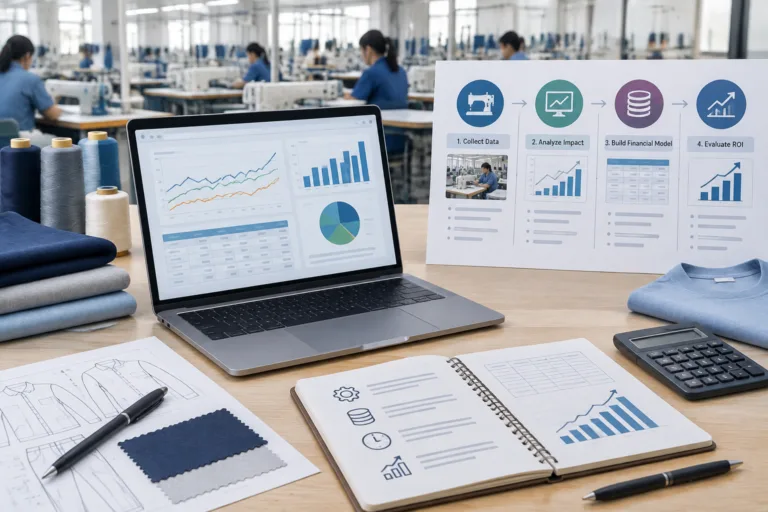
To make the planning realistic, think in terms of landed cost, not just factory price. Landed cost includes the product cost plus freight, duty, and other charges that get the goods to your warehouse or fulfillment location. This matters because a product that looks profitable at factory quote stage may become far less attractive once transport and import costs are added. The landed cost framework for pricing and margin planning is useful here because it keeps pricing tied to the full cost to get goods into sellable condition.
For many new founders, budget pressure appears in the first order because they try to do too much at once. A smaller, better-planned launch usually beats a larger, poorly controlled launch. If you need a formal budgeting reference while building your launch plan, the U.S. Small Business Administration’s startup cost calculator is a practical way to separate one-time setup spending from ongoing operating expenses.
Step 4: Understand the sourcing path and supplier selection process
Supplier selection is not only about finding a factory with the right category. It is also about communication quality, responsiveness, sample consistency, MOQ fit, and willingness to work with your launch size. Beginners often focus on unit price too early. A lower quote is not a good deal if the supplier cannot hit spec, misses deadlines, or communicates poorly.
When you evaluate suppliers, compare them on these points:
- MOQ: minimum quantity per style, color, or size run
- Lead time: sample time and production time separately
- Sample quality: material, stitching, fit, finishing, labeling
- Communication: speed, clarity, and accuracy of responses
- Flexibility: ability to handle small runs, revisions, or packaging requests
You should also ask what the supplier needs from you. A good supplier relationship starts with clear product information, not vague ideas. If you send only a reference photo and a slogan, you will likely get a vague sample. If you send measurement points, construction details, artwork placement, and fabric direction, you give the factory the information needed to quote and make the item more accurately.
For beginners, the startup manufacturing roadmap in startup manufacturing roadmap from idea to first run can help you think through the sequence of development, sampling, approval, and production. It is especially useful when you are deciding whether you are ready to ask for quotes or still need to refine the product brief.
What to compare in a supplier quote
A good quote should not just show a product price. It should clarify fabric, construction, decoration, size range, sample allowances, pack method, and any additional fees. Compare quotes line by line so you know where differences come from. Sometimes one supplier looks more expensive because the quote includes better finishing, tighter tolerances, or a more complete packaging setup.
Also remember that communication reliability is part of sourcing quality. If a supplier answers slowly during quoting, they are unlikely to improve dramatically once production starts. Early responsiveness is a useful signal, especially for first-time buyers who need guidance.
Step 5: Create a simple product development plan
A product development plan turns an idea into something a supplier can actually make. For a clothing business, this usually means moving through concept, sketch, materials, measurements, sample, revision, approval, and production. Beginners do not need a complicated process, but they do need a process.
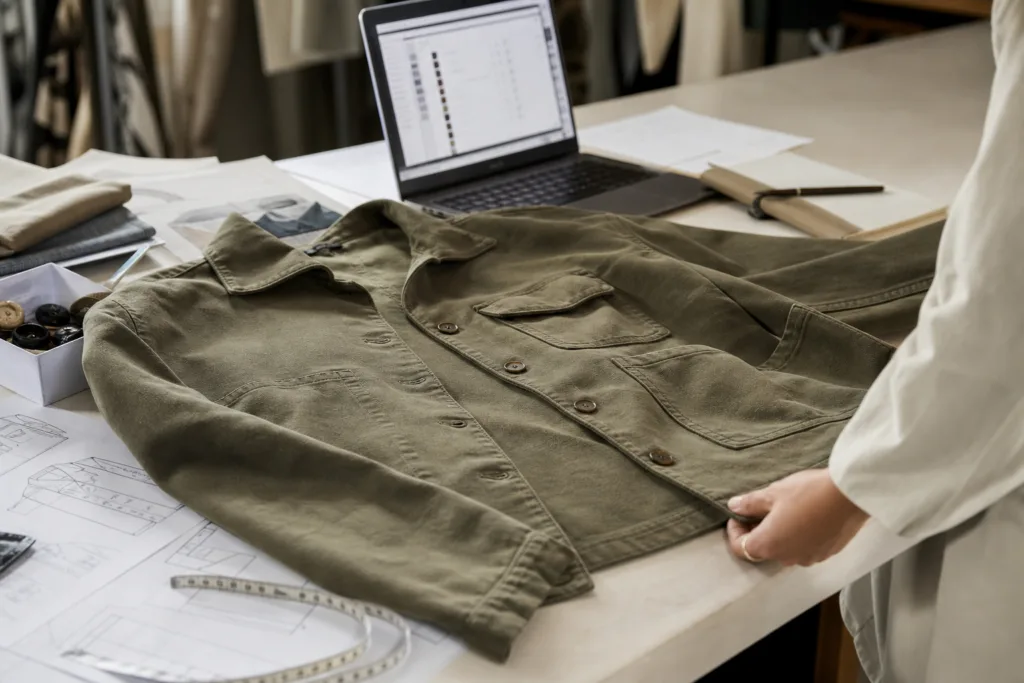
A simple development path looks like this:
- Define the product and target use
- Select the fabric type, weight, and finish direction
- Choose the construction details and trims
- Create measurements and size assumptions
- Prepare a tech pack or at least a clear spec sheet
- Order a sample
- Review fit, quality, and appearance
- Revise and approve before bulk production
If you are new to documentation, compare your draft against real tech pack examples for apparel development. This is valuable because beginners often underestimate how much a factory depends on precise instructions. Even a basic product needs enough detail for the supplier to understand stitch type, artwork size, label placement, and measurement tolerances.
When you are building your first sample, keep the goal simple: prove the product can be made to the standard you want. You are not trying to perfect every detail at once. A first sample is a communication tool as much as a product sample. It shows whether your assumptions about fit, fabric, construction, and finish are workable.
Step 6: Build your first order plan carefully
Your first order should be shaped by demand confidence, budget, and the risk of unsold sizes or colors. Beginners often order too many units in too many variations because they want choice. In reality, choice multiplies risk. A smaller color range and a tighter size range can protect cash while you test the market.
When planning your first order, decide on:
- Quantity per style: enough to test demand, not enough to create dead stock
- Size range: based on your target customer, not assumptions
- Color selection: focus on core colors unless you have strong evidence for more
- Pack ratio: how sizes will be split in the order
- Risk buffer: a reserve for defects, reorders, and launch surprises
It is often better to launch with one well-developed item than three weak ones. If you are unsure about color demand, start with the safest colors for your category and audience. If you are unsure about size demand, review your audience research or start with a range that matches the most likely body profile and fit preference.
For commercial planning, it is also useful to understand what the factory and your fulfillment system can support. The way you pack units, label sizes, and sort colors affects both receiving and shipping efficiency. The article on apparel manufacturing tools for costing and production is helpful when you are trying to turn a rough order plan into numbers that can be checked, compared, and adjusted.
Step 7: Choose sales channels that fit your model
Your sales channel should match your business model and launch stage. A direct-to-consumer brand may start online through Shopify, social commerce, or a marketplace. A custom apparel business may rely on direct outreach, local organizations, or repeat institutional orders. A wholesale-focused business may need a different pricing structure and inventory plan altogether.
Common first-channel options include:
- Shopify or similar storefronts: good for building your own brand presence
- Marketplaces: useful for testing demand and getting traffic faster
- Social commerce: useful when content and community drive sales
- Pop-ups or events: useful for feedback and direct customer contact
- Wholesale or B2B sales: useful for larger volume orders and recurring accounts
Do not choose a sales channel before you understand its operational demands. A marketplace can create faster exposure, but it may also pressure pricing and fulfillment. A direct website gives more control, but it usually requires more work to drive traffic. Wholesale can bring larger orders, but it often requires better line sheets, more consistent supply, and sharper margin discipline.
At Apparel Wiki, we recommend that beginners match the channel to the product life stage. If you have not proven the product yet, a low-complexity channel is usually safer. If you have already validated demand, a channel with more control and brand ownership becomes more attractive.
Step 8: Set up basic brand assets and launch essentials
Once the product and channel are clear, create the minimum brand assets needed to sell professionally. You do not need a massive brand system before launch, but you do need enough consistency to make the product feel intentional.
Launch essentials usually include:
- Brand name and logo usage rules
- Product descriptions and size guide
- Care instructions and label information
- Packaging and unboxing plan
- Product photography or clear sample images
- Basic return and shipping policy
Be careful not to overinvest in aesthetic details before the business model is proven. Fancy packaging will not fix unclear product positioning, poor fit, or weak supplier communication. On the other hand, completely ignoring presentation can make even a strong product look unfinished.
How to move from idea to first production order
If you want a simple beginner workflow for how to start a clothing business, use this sequence:
- Choose one business model.
- Define one target customer.
- Select one or two product categories.
- Set a realistic price range and budget.
- Shortlist suppliers that fit your MOQ and lead time.
- Create a clear spec or tech pack.
- Order and review samples.
- Revise, approve, and place a first order.
- Set up one or two launch sales channels.
- Track results and prepare your reorder decision.
This sequence may look simple, but it solves the biggest early problems: too much complexity, too little budgeting, and weak supplier direction. It also helps you avoid the common mistake of treating the first order as the final answer. In a real apparel business, the first order is usually the beginning of your learning curve, not the end of it.
Key decisions that affect profit and product quality
Several small choices can have a large effect on margin and customer satisfaction. Beginners sometimes focus on the logo while ignoring the material and construction decisions that customers feel every time they wear the garment.
Fabric choice
Fabric affects hand feel, durability, breathability, shrinkage, drape, opacity, and perceived quality. A heavier fabric may feel more premium, but it also changes cost, shipping weight, and wearer comfort. A lighter fabric may reduce cost and improve summer wearability, but it may be too sheer or unstable for some products. The right choice depends on the use case, not just a trend.
Decoration method
Print, embroidery, heat transfer, woven labels, and screen printing each create different results. The decoration method should match the brand position and product surface. For example, a graphic tee may work well with screen printing, while a premium logo polo may be better suited to embroidery or a cleaner label approach. Decoration also changes lead time and cost, so it should be chosen alongside the production model, not afterward.
Fit and sizing
Fit is one of the most important repeat-buy factors in apparel. Even a good-looking garment can fail if the size consistency is poor. For startup brands, keep grading logic simple and make sure the sample matches the intended fit before committing to bulk. If the fit is not clear at sample stage, the risk of complaints and returns increases after launch.
Packaging and fulfillment
Packaging should support the product and the sales model. For DTC, packaging may be part of the brand experience. For wholesale, packaging may be designed for efficiency and retail readiness. Either way, keep the system simple enough to handle consistently during the first orders.
Common mistakes beginners make when starting a clothing brand
Most startup failures in apparel are not caused by one big problem. They are caused by several avoidable mistakes stacking up at once. The most common ones are:
- Starting with a logo before defining the product
- Choosing a price based on emotion instead of cost structure
- Ignoring MOQ and lead time realities
- Ordering too many sizes, colors, or styles at once
- Using vague supplier communication
- Skipping proper sampling or approving samples too quickly
- Overinvesting in branding before product-market fit
- Choosing a sales channel that is too complex for launch
A major hidden mistake is failing to write clear comments during sample review. If you want suppliers to improve the sample, they need precise feedback, not general opinions. The guide on writing clear factory comments and callouts is especially helpful because it shows how to communicate corrections in a way factories can act on without guesswork.
A practical launch checklist
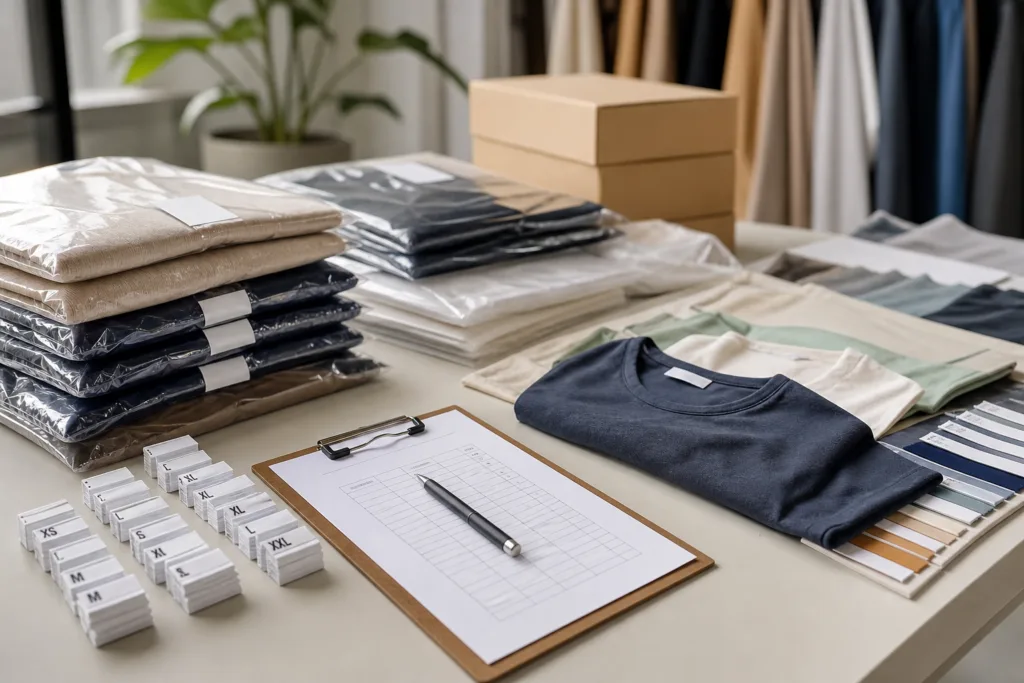
Before you place the first production order, make sure you can answer yes to the following:
- I know my target customer clearly.
- I have chosen one main business model.
- I know my product category and price point.
- I have a budget that includes development, inventory, and operating costs.
- I have reviewed at least one sample.
- I understand the supplier’s MOQ and lead time.
- I know my first sales channel.
- I have a plan for packaging, labeling, and fulfillment.
- I know what success looks like for the first order.
If you can answer those items, you are much closer to launch readiness than someone who only has a logo and a mood board. That is the practical difference between wanting to build a clothing brand and actually running one.
Frequently asked questions about starting a clothing business
What is the easiest clothing business model for beginners?
For many beginners, print-on-demand or a small custom apparel model is the easiest way to start because inventory risk is lower and the launch can happen faster. The trade-off is less control over product quality, fabric selection, and margin. If your goal is to test demand with limited capital, a lower-risk model is usually the most practical starting point.
How much money do I need to start a clothing business?
The amount depends on your model, product type, and sales plan. A simple launch may require only a modest budget for samples, branding, and a small initial order, while a custom or private label launch can require significantly more cash for development, inventory, and marketing. The safest approach is to build a line-item budget that includes product, sampling, packaging, website setup, and operating expenses before you place the first order.
Do I need a tech pack to start a clothing brand?
You do not always need a full professional tech pack on day one, but you do need enough product detail for a supplier to make the item accurately. That usually includes measurements, construction notes, fabric direction, artwork placement, and label or trim details. The more custom the garment, the more important a clear tech pack becomes.
How do I choose the right supplier for my first order?
Choose a supplier that fits your MOQ, lead time, product category, and communication needs. Compare sample quality, responsiveness, and quote clarity rather than looking only at unit price. A supplier that communicates well and can explain the production process is often safer for a first order than a slightly cheaper supplier that is difficult to work with.
Should I launch with one product or a full collection?
Most beginners should launch with one strong product or a very small capsule collection. A focused launch reduces complexity, makes budgeting easier, and lowers the chance of holding slow-moving inventory. Once you have demand data, you can expand into related styles with more confidence.
What is the biggest mistake new clothing brands make?
The biggest mistake is usually starting too broadly without a clear customer, cost structure, or sourcing plan. That leads to weak product decisions, poor pricing, and unnecessary inventory risk. A focused brand with one clear product and a realistic launch plan is usually much easier to manage than an ambitious but unfocused collection.