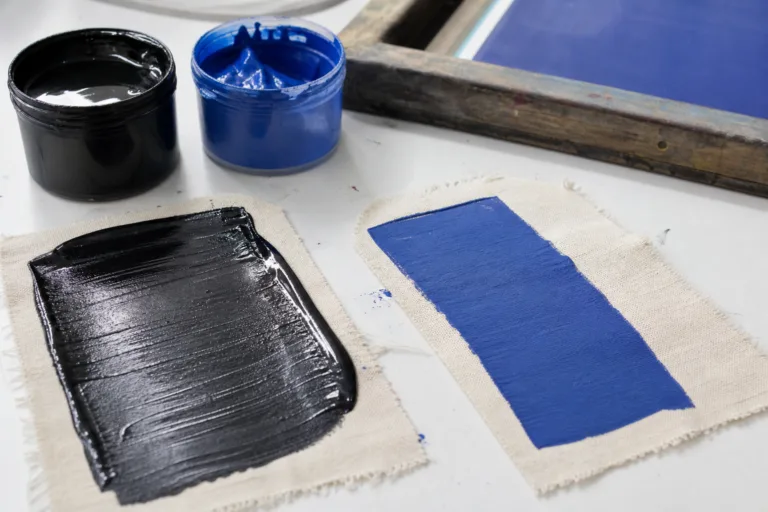
Choosing between screen printing inks is not just a matter of color or personal preference. In real production, plastisol and water-based inks change the print’s hand feel, opacity, curing method, cleanup workflow, durability profile, and even which garments are practical to run efficiently. For artists, printers, and apparel buyers, the right decision depends on the fabric, the design style, the order size, and the final use of the garment.
For readers who want supporting production context while comparing inks, Apparel Wiki’s apparel manufacturing tools and production resources page is useful because ink choice sits inside a larger workflow that includes planning, testing, sampling, and process control. Understanding the right tools and checkpoints helps you compare print requirements, estimate waste, and coordinate ink selection with fabric behavior, curing, and quality standards.
This guide compares plastisol and water-based inks from a practical screen printing perspective. It focuses on what changes in the finished print, how each ink behaves in production, and how to choose a method that fits the garment and the business goal.
What Screen Printing Ink Choice Changes in a Finished Print
Ink choice affects several things at once. First is appearance: some inks sit more on top of the fabric, while others penetrate the fibers more deeply. Second is feel: a print can be soft and breathable or thicker and more noticeable on the garment surface. Third is performance: ink chemistry influences cure temperature, wash resistance, and compatibility with different fabrics. Fourth is production flow: some inks are simpler to manage in high-volume environments, while others demand tighter control over moisture, mesh, and drying.
That is why ink selection should not be treated as a decorative decision. It is a technical choice that influences cost, productivity, wearability, and customer satisfaction.
What Plastisol Ink Is and How It Works
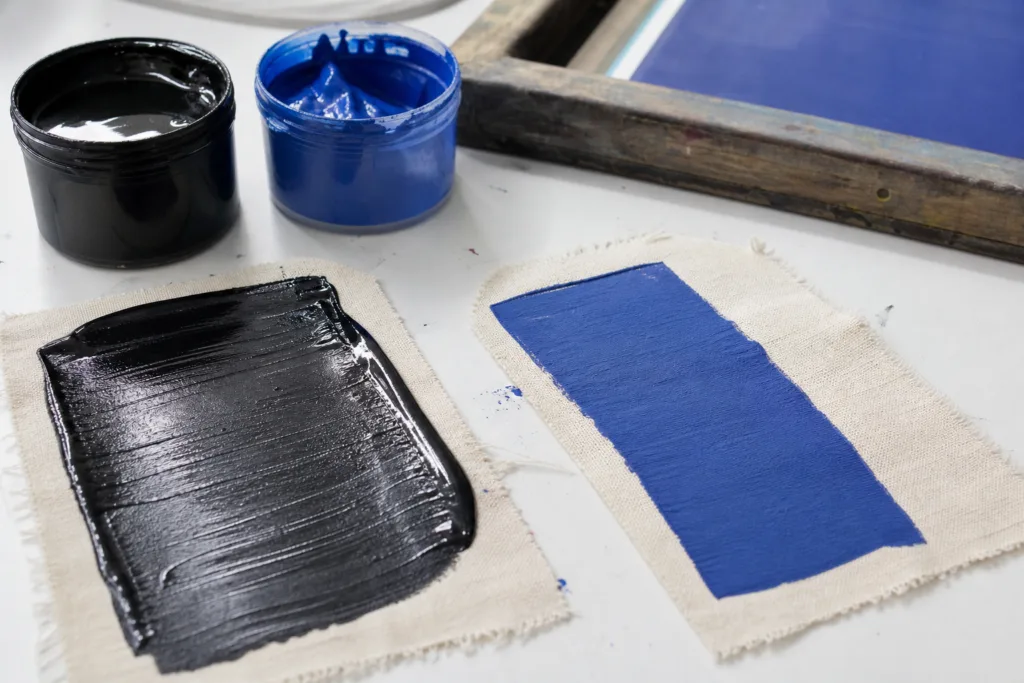
Plastisol is a PVC-based screen printing ink system that remains in a semi-liquid state until it is heated to its curing temperature. Unlike water-based ink, it does not dry simply by air exposure on the screen. This gives printers a more forgiving open time during printing, which is one reason plastisol is common in many shops.
Because plastisol stays wet until cured, it is often easier to manage on press for longer runs, multi-color jobs, and designs that require strong opacity. It generally prints as an opaque layer on top of the fabric rather than soaking deeply into the fiber structure. That can be useful for bold graphics, logos, lettering, and prints on dark garments.
Plastisol can also be paired with different additives and underbases, which gives printers flexibility in finish and effect. However, that flexibility comes with the need to control cure precisely. An under-cured plastisol print can crack, wash poorly, or feel greasy, while over-curing may affect garment hand and print appearance.
What Water-Based Ink Is and How It Works
Water-based ink uses water as a major carrier in the formulation, so it behaves differently on press. It can soak into the fibers more than plastisol, creating a softer, more integrated print surface after curing. Many printers and buyers prefer this for a lighter hand feel, especially on fashion tees, lifestyle garments, and prints where a soft, vintage-style result is desired.
Water-based ink is generally more sensitive to screen drying and humidity because the ink can begin to dry in the mesh if production pauses. That means it often requires closer process control, especially on longer runs or in warm shop environments. Printers may need to manage screen wetness, flash timing, and cleanup more carefully than with plastisol.
Water-based systems can also be used for discharge-style looks or low-hand prints, depending on the formulation and the garment substrate. From a production viewpoint, this makes them attractive when softness and a more textile-integrated result matter more than maximum opacity.
Plastisol vs. Water-Based: Key Differences at a Glance
| Comparison Factor | Plastisol Ink | Water-Based Ink |
|---|---|---|
| Hand feel | Thicker, more surface-oriented | Softer, lighter, more integrated |
| Opacity | High opacity, strong on dark garments | Typically lower opacity unless specially built up |
| Drying on screen | Stays wet until cured | Can dry in the screen during pauses |
| Curing | Heat cure required | Heat cure required, often with moisture removal considerations |
| Cleanup | Often simpler on press, but still requires proper ink removal | Can require more attention to prevent screen drying and residue |
| Best visual result | Bold, opaque graphics | Soft hand, print-in-fabric look |
For projects where garment substrate matters, a deeper understanding of textile behavior helps. If you are comparing specific fabric structures and their effect on print performance, Apparel Wiki’s guide to heavyweight fabrics that suit bold print applications is helpful because thick, stable fabrics often behave differently under heavy print deposits than light, stretchy knits.
Print Feel and Hand: Thick, Opaque Plastisol vs. Softer Water-Based Prints
Hand feel is one of the most noticeable differences between these two systems. Plastisol usually creates a print that can be felt on the garment, especially when ink deposit is heavy or the design covers a large area. This is not necessarily a flaw; for some streetwear, promotional, or teamwear applications, the bold presence of the print is part of the desired look.
Water-based ink typically produces a softer hand because more of the ink settles into the garment rather than forming a thick film on top. On ring-spun cotton or other absorbent fabrics, this can create a print that feels almost built into the shirt. The trade-off is that deep softness may come with more demanding application requirements, especially when printing on dark garments or when the design needs to stay highly saturated.
For brands that sell premium basics, fashion tees, or garments where comfort and drape matter, the softer print feel of water-based ink can be an important value driver. For designs where the graphic needs to stand out with maximum clarity, plastisol may be the more practical choice.
How fabric selection affects print feel
Garment structure changes how each ink reads on the surface. Smooth, tightly knit cotton often gives a cleaner result with either system, while textured or unstable fabrics may make fine details harder to hold. If you are evaluating how fiber composition affects bleed, absorbency, or color behavior, Apparel Wiki’s article on why fabric colors bleed after washing is useful because color migration and wash behavior can influence how a print appears after use and laundering.
Durability, Wash Fastness, and Cure Requirements
Durability depends less on the label “plastisol” or “water-based” alone and more on whether the ink is properly matched to the garment and fully cured. Both systems can perform well when they are processed correctly. The real difference is in the practical cure and handling conditions.
Plastisol requires the print film to reach its cure temperature through the full ink layer. If the top feels dry but the bottom is not cured, the print may fail in the wash. Water-based inks also need proper heat exposure, but they usually require attention to moisture removal as well as cure. In other words, the ink has to lose water and then form a durable bond or film structure appropriate to the formulation.
Wash fastness also depends on fabric prep, ink deposit, garment construction, and post-print handling. A print on a low-quality garment with poor dimensional stability may fail for reasons unrelated to ink chemistry. Before committing to a print method, buyers should confirm wash expectations, curing equipment capability, and the garment’s response to heat.
When in doubt, request sample testing and validate the print after laundering. That is especially important for darker, dyed, or unstable fabrics where shrinkage or color transfer can affect the final result. For garment planning, it also helps to review how to perform a fabric shrinkage test, because post-print shrinkage can distort artwork alignment, print feel, and overall presentation.
Opacity, Vibrancy, and Printing on Dark Garments
Opacity is one of the clearest reasons many printers still choose plastisol. Because it sits more on the surface and can be built up in stronger layers, plastisol often delivers brighter, more saturated print color on dark garments with fewer complications. This is especially useful for logos, sponsors’ marks, bold graphics, and orders where strong visibility matters more than a soft hand.
Water-based inks can produce attractive color, but they may need more passes, a proper white underbase, or a garment substrate that already supports a softer, more absorbed look. On dark garments, that means more process variables and sometimes more testing before production runs are approved. If the graphic is intricate or the brand wants a very soft print, water-based can still be the right answer, but it is not always the easiest route to maximum brightness.
For buyers and printers working on garments that demand heavy print coverage, it is worth thinking about the textile itself. Apparel Wiki’s guide to sustainable fabric options for print-ready garments is relevant here because substrate choice can affect print absorption, opacity, and the environmental profile of the finished product.
Environmental and Workplace Considerations
Many readers compare water-based ink and plastisol first on environmental grounds. In general, water-based systems are often positioned as a lower-emission choice because they can align better with low-VOC and low-HAP goals, although the exact environmental impact depends on formulation, cleanup products, energy use, and waste handling. OSHA and EPA guidance for printing operations is useful here because the broader production environment matters as much as the ink itself. For a process overview, see the OSHA page on Screen printing process and safety considerations, which discusses operational handling and safety concerns in the printing workflow.
That said, “eco-friendly” does not automatically mean “lower total impact” in every situation. A water-based setup that causes excess waste, repeated reprints, or higher energy use may not outperform a well-managed plastisol workflow in practice. The better question is which system fits the printer’s equipment, order profile, and cleanup discipline while reducing unnecessary emissions and waste.
Shops that are evaluating material choices more broadly should also consider how garment fiber and print strategy fit together. Some fabrics absorb and release moisture differently, and some blends are more forgiving during print and cure. That is why choosing the right substrate is part of an environmental and production conversation, not just a design one. Where appropriate, broader printing-house safety and hazard control context can also be reviewed through printing industry safety and hazard controls.
Cost Factors: Ink Price, Setup, Production Speed, and Waste
Ink price per unit is only one part of the cost equation. Plastisol can be more predictable in production because it remains usable longer on the screen, which may reduce stoppage-related waste. Water-based ink may cost less or more depending on the supplier and formulation, but it can create hidden costs through screen drying, slower setup, more frequent maintenance, or additional testing.
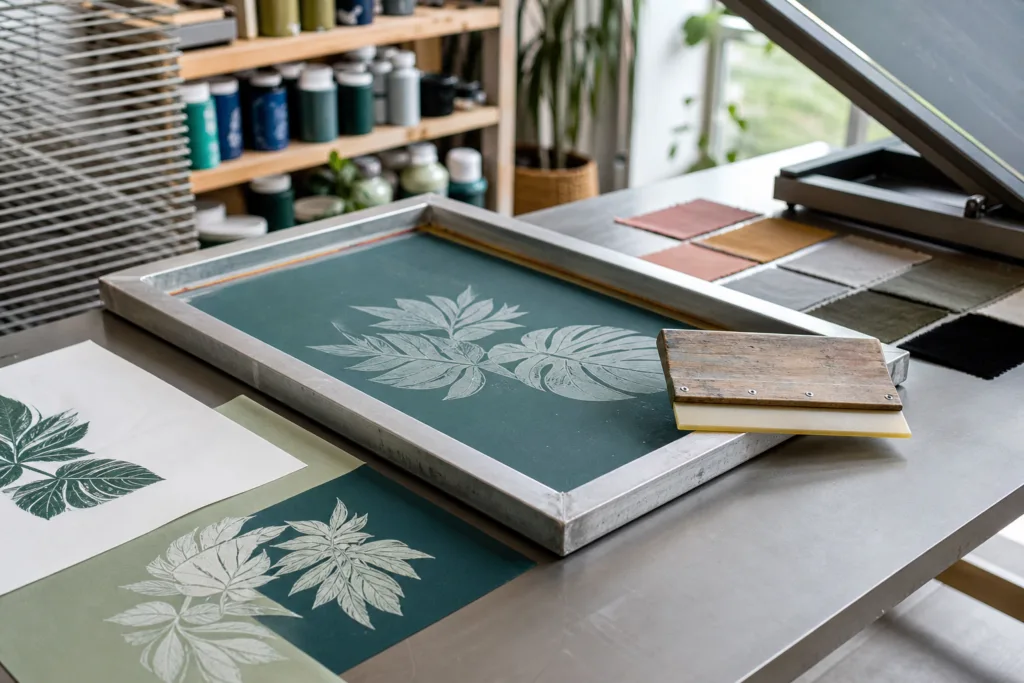
Production speed matters as well. In a high-volume shop, the more forgiving open time of plastisol can improve throughput and reduce interruptions. In lower-volume or more artisanal work, the slower, more controlled process of water-based may be acceptable if the print aesthetic is a priority. Curing equipment also affects cost, because different inks can influence conveyor speed, flash use, and energy consumption.
Waste is another practical issue. Reclaiming screens after a job, cleaning ink residues, and managing unused ink all affect labor and consumables. Process notes from the EPA on screen printing facility pollution prevention and operating costs are useful because they connect ink choice to drying, cleanup, emissions, and workflow efficiency in a real shop setting.
Printing Difficulty: Skill Level, Mesh Count, and Process Control
Plastisol is often seen as easier for beginners because it is more forgiving on press. It does not dry in the mesh the way water-based ink can, so a new printer may have more room to pause, test, and adjust. That said, a beginner can still make mistakes with plastisol by under-curing, over-depositing, or using the wrong mesh and squeegee setup.
Water-based ink usually requires tighter control over environmental conditions, print speed, and screen maintenance. Mesh count, stencil choice, and flood technique matter more because the ink’s water content can evaporate. Some shops use retarder or other process aids to manage open time, but those adjustments require experience and discipline.
In both systems, the screen printer needs to think about the full process chain: mesh selection, exposure quality, emulsion durability, flash timing, garment moisture, and final cure. A technically good design can still fail if the production method is not tuned to the ink.
Best Use Cases for Plastisol Ink
Plastisol is often the more practical choice when the project needs strong opacity, bright color on dark garments, and efficient repeatability. It works well for sports graphics, event merchandise, workwear logos, and large-volume retail runs where production consistency matters.
- High-opacity prints on dark shirts
- Bold graphics and lettering
- High-volume production runs
- Jobs where screen open time and press stability matter
- Designs that need a raised or more noticeable print surface
Plastisol also tends to fit shops that need a simpler learning curve and more predictable press handling. For some buyers, the slightly thicker feel is acceptable if the trade-off is visual strength and production efficiency.
Best Use Cases for Water-Based Ink
Water-based ink is often the better choice when the priority is a soft hand, a more textile-like finish, and a print that feels integrated into the garment. It is commonly used for fashion tees, premium retail products, and projects where the print aesthetic should feel understated rather than heavy.
- Soft hand-feel garments
- Lifestyle and fashion-focused tees
- Light to medium garments where a subtle finish matters
- Brands seeking a lower-emission production profile
- Designs where the print should feel less plasticky
Water-based ink can be excellent for the right project, but it rewards a well-controlled shop environment. Printers who understand mesh behavior, screen drying, and curing consistency are usually better positioned to get clean, repeatable results.
Common Mistakes When Choosing Between the Two
One common mistake is choosing ink type based only on marketing language such as “eco” or “premium.” A more useful approach is to match the ink to the garment, the order size, and the desired finish. Another mistake is assuming that softer automatically means better or that thicker automatically means more durable. Those assumptions are too simple for real production.
Another frequent problem is ignoring fabric behavior. A garment that is prone to shrinkage, bleed, or surface texture variation can make either ink perform poorly if the buyer does not test first. It is also easy to underestimate cleanup and production timing. A job that looks simple in pre-production may become difficult if the ink is drying too quickly, the underbase is overbuilt, or the cure line is not properly calibrated.
Before approving a production run, compare the fabric, ink, mesh, curing setup, and wash requirement together. Ink choice is not isolated from the rest of the garment system.
How to Choose the Right Ink for Your Project
The simplest way to choose is to start with the garment and the desired print result. Ask four questions: Do I need maximum opacity? Do I need a soft hand? How many pieces am I printing? What fabrics are involved? The answers usually point toward one system more strongly than the other.
If the project is a dark cotton tee with a bold logo and a fast turnaround, plastisol is often the safer choice. If the project is a soft, premium-feel shirt where the print should blend into the garment, water-based ink may be the better fit. If the fabric is unstable or blended, test both the print and the wash result before final approval.
For apparel teams and designers working at the product-development stage, it helps to keep the whole garment package in view. Print method, fabric composition, sizing consistency, and tech-pack details should all line up. Apparel Wiki’s complete guide to tech packs for production is relevant here because a good tech pack can document print location, ink type, fabric type, cure expectations, and QC criteria clearly.
And if you need a broader apparel knowledge base to support the decision, the Apparel Wiki homepage is a good starting point for related terms, garment construction concepts, and sourcing references that help connect print choices to the rest of the product.
Practical Recommendations for Artists, Small Shops, and High-Volume Printers
For independent artists and small shops, water-based ink can deliver a premium look when the team is comfortable controlling moisture and working carefully. But if the shop is still learning or has limited drying control, plastisol may reduce production risk. The best choice is the one that matches the team’s current capability, not the idealized result on a mood board.
For mid-size and high-volume printers, plastisol often remains efficient because it supports repeatability and strong color on many common garment types. Water-based can still be valuable for selected premium collections, but it is usually strongest when the production environment is disciplined and the garment brief justifies the extra control.
For apparel buyers, the most useful question is not “Which ink is better?” but “Which ink is appropriate for this specific garment, audience, and price point?” That framing produces better buying decisions and fewer quality surprises.
Conclusion

In screen printing, plastisol and water-based inks each solve different problems. Plastisol is usually stronger for opacity, speed, and process forgiveness. Water-based ink is usually stronger for softness, a more fabric-like finish, and lower-emission positioning when the shop can manage the process carefully. The right choice depends on the garment, the print style, the production scale, and the performance expectations after washing.
If you evaluate ink by finish, durability, cost, and workflow together, you can choose a method that fits the project instead of forcing the project to fit the method. That is the most practical way to compare screen printing inks in real apparel development.
FAQs
Can you print water-based ink on dark garments?
Yes, but it usually requires more process control than plastisol. Dark garments often need a white underbase, careful opacity planning, or a specific formulation that is designed for stronger coverage. The softer hand is still possible, but the shop must test the setup before production.
Is plastisol always more durable than water-based ink?
No. Both can be durable when they are properly cured and applied to a suitable garment. A poorly cured plastisol print can fail just as a poorly processed water-based print can. Durability depends on the full system, not only the ink family.
Which ink is better for soft hand feel?
Water-based ink is usually better when soft hand is the main goal. It tends to sit more naturally in the fabric and produce a lighter-feeling print surface. Plastisol can be softened with process choices, but it usually remains more noticeable on the garment.
Which ink is easier for beginners?
Plastisol is generally easier for beginners because it does not dry in the screen as quickly and is more forgiving during pauses. Water-based ink can be learned, but it requires closer attention to humidity, screen drying, and cleanup timing.
Which ink is more eco-friendly?
Water-based ink is often preferred when a lower-emission workflow is important, but the result depends on the formulation and the shop’s overall production practices. Energy use, waste, cleanup products, and reprints also affect the final environmental profile.
What should I test before approving a print method?
Test the garment fabric, print opacity, hand feel, wash performance, and cure results. It is also smart to check for shrinkage, bleed, and registration issues before final production. Sampling is the best way to avoid expensive surprises.