Compression fabrics are a core part of modern activewear, but the term is often used too loosely. In real product development, compression is not just about making a garment tight. It comes from a combination of fiber content, knit structure, pattern engineering, panel layout, and size grading that allows the fabric to apply controlled pressure while still letting the wearer move, sweat, and recover in reasonable comfort. For buyers and product teams, the practical question is not whether compression sounds technical. The real question is whether the fabric and garment construction match the sport, the wear duration, and the level of support the end user actually needs.
If you are also comparing sweat handling and next-to-skin comfort, this guide to moisture management in performance fabrics is a useful companion resource. It helps connect compression fabric choice with moisture transport, drying behavior, fiber selection, and comfort planning, which matters because a garment can have strong stretch and support but still fail in real use if it traps sweat, feels clammy, or becomes heavy during training.
What compression fabrics are in activewear
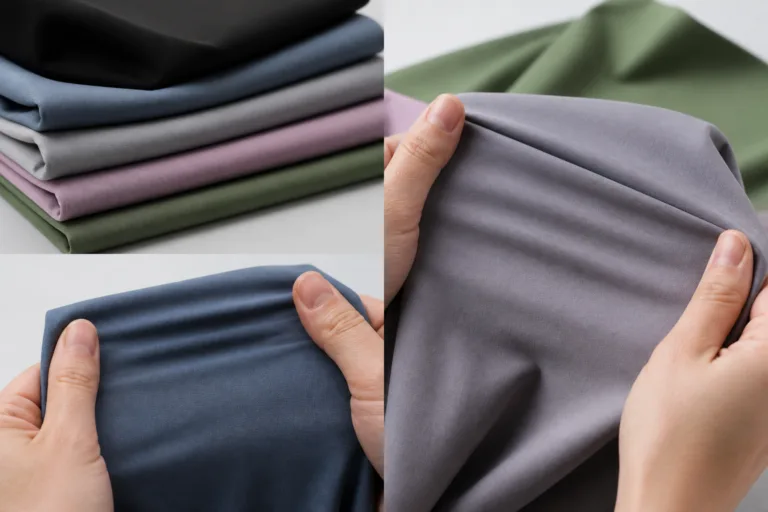
In activewear, compression fabrics are stretch fabrics engineered to fit close to the body and apply varying levels of pressure to muscles and soft tissue. You will see them in leggings, shorts, arm sleeves, base layers, recovery tights, sports bras, and some performance tops. Most are knit fabrics rather than woven fabrics because knits provide better multi-directional stretch, shape conformity, and freedom of movement.
Not every tight garment is compression wear. A slim-fit legging made from a soft jersey may feel snug, but if the fabric has low power, weak recovery, or inconsistent pressure through the garment, it is more accurate to call it close-fitting activewear rather than true compression activewear. This distinction matters during sourcing because claims around support, muscle stability, and recovery should be based on actual fabric behavior, not only styling language.
From a textile selection standpoint, compression usually comes from synthetic fiber blends such as nylon or polyester combined with elastane. If a team needs a clearer technical background on stretch components, Apparel Wiki recommends understanding how elastane creates stretch and recovery before locking the fabric specification. This detail may look basic, but it affects power, fit retention, and wash performance later.
Why compression fabrics matter for athletic performance
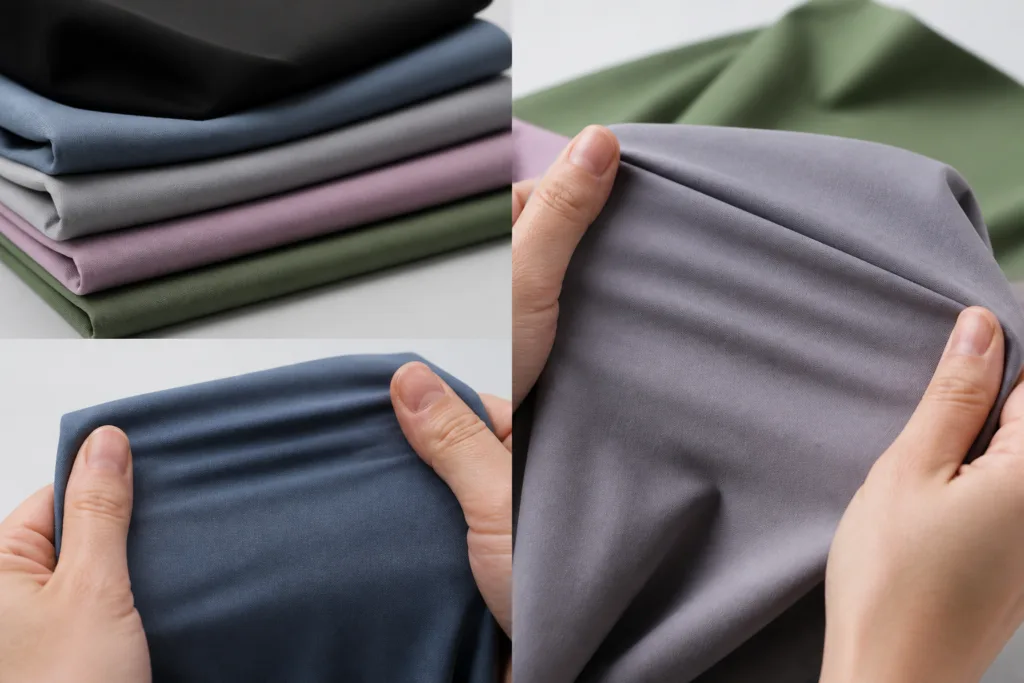
Compression fabrics matter because they influence how the garment interacts with the body during movement. A well-made compression garment can reduce fabric bounce, provide a more secure fit, improve the feeling of support, and help keep the garment stable during repetitive motion. For running, field training, cycling, and gym work, that stability can improve user perception of control and reduce distraction.
It is important to keep the claims realistic. Compression wear is not a shortcut to large performance gains. In many projects, the problem is not that buyers expect nothing from compression. The problem is that product descriptions promise too much and do not explain where compression can actually help. In practice, the benefits are often linked to body awareness, garment stability, muscle support sensation, and in some cases recovery support after exercise rather than dramatic improvements in speed or strength during every session.
Research on recovery gives useful perspective here. A systematic review and meta-analysis of compression garments for recovery supports the idea that recovery benefits can be real, but they are usually modest and depend on pressure, timing, and the activity involved. For product teams, that means recovery messaging should stay specific and evidence-aware instead of making broad performance claims.
How compression supports circulation, muscle stability, and fatigue reduction
Compression works by applying pressure to the body through elastic tension in the garment. When the pressure is balanced and the fit is correct, wearers often describe a feeling of support around major muscle groups such as the quadriceps, hamstrings, calves, and glutes. This can help reduce the sense of uncontrolled movement or fabric drag during repeated exercise.
Claims about circulation and fatigue reduction need careful handling. Compression may help some wearers feel less heavy-legged during or after training, and it may support post-exercise recovery routines, but results are not universal. A garment that is too loose does very little, and one that is too tight can cause discomfort, poor wear compliance, and sizing returns. The engineering side matters as much as the fabric itself.
That is why pressure distribution matters more than raw stretch percentage. Uneven pressure at the waistband, knee, calf opening, or arm hem can create a product that feels restrictive in one area and ineffective in another. In apparel development, compression should be evaluated as a garment system, not just a fabric claim.
Main types of compression fabrics used in activewear
Most compression activewear uses one of a few common fabric families. The differences affect hand feel, cooling, durability, opacity, and price.
| Fabric type | Common blend | Typical feel | Main strengths | Watch-outs |
|---|---|---|---|---|
| Nylon-elastane warp or circular knit | Nylon with elastane | Smooth, cool, dense | Strong recovery, good abrasion resistance, premium hand feel | Can feel warm if too heavy or too tight |
| Polyester-elastane knit | Polyester with elastane | Dryer hand, lighter feel | Good moisture transport, often cost-efficient, print friendly | May feel less soft than nylon-based options |
| Nylon-polyester-elastane blend | Three-fiber blend | Balanced feel | Can combine durability, wicking, and support | Requires tighter specification control |
| Interlock compression knit | Usually synthetic with elastane | Dense and stable | Better opacity, support, and clean surface | Higher GSM can reduce breathability |
| Mesh-mapped compression fabric | Engineered synthetic blend | Zoned structure | Ventilation in high-sweat areas with support elsewhere | Pattern and panel alignment become more complex |
Nylon-rich blends are common in premium leggings and shorts because they tend to feel smoother and more supportive. Polyester-rich blends are often chosen when rapid drying, sublimation compatibility, or lower cost targets matter. Neither is automatically better. The correct choice depends on use case, decoration method, target price, and how much power the fabric needs to maintain over time.
Knit structures, fiber blends, and elasticity: what creates compression
Compression is created by more than fiber content. Two fabrics can both contain 20 percent elastane and still perform very differently. The knit structure, yarn denier, stitch density, and finishing process all influence power, rebound, and how evenly the garment compresses the body.
Interlock, tricot, high-gauge circular knits, and engineered body-mapped knits are common in this category. Denser constructions usually give better support and opacity, but they may also increase heat retention. Lighter constructions can improve breathability, but if they are too open or too low in power, the garment may bag out at the knee or seat after repeated wear.
Direction matters as well. Stretch behavior and panel orientation can change depending on the fabric structure and how the pattern is laid. For teams working through spec sheets and marker planning, a guide to fabric direction in knit and weave construction helps explain why the same fabric can behave differently across the body if panel direction is not controlled carefully.
From a testing perspective, initial stretch is only one part of the story. Shape retention after repeated extension matters just as much. Product teams often review growth, recovery, and residual deformation because garments that lose rebound quickly stop delivering consistent support. Recognized technical methods such as the standard for measuring stretch and growth in knitted fabrics are useful when comparing development fabrics that look similar on paper but behave differently in wear and laundering.
Fabric technology innovations in modern compression wear
Modern compression activewear often includes more than a basic elastane blend. Mills now develop fabrics with engineered zones, plated yarns, varying knit density, brushed inner surfaces, ceramic or mineral additive claims, and seamless or near-seamless body mapping. Some of these changes are genuinely useful. Others mainly change hand feel or marketing language.
The useful question is simple: what problem does the fabric innovation solve? Zoned compression can help balance support and ventilation. Seamless tube knitting can reduce seam count and friction points. A denser outer face can improve durability and coverage. A softer inner face can improve next-to-skin comfort for long wear. But if the technology adds cost without solving a real wear problem, it may not be worth specifying.
In buyer decision work, it is better to ask for measurable outcomes than attractive terminology. Ask whether the innovation improves power retention, drying speed, opacity, abrasion resistance, or wearer comfort over a known baseline. If the supplier cannot explain the practical difference, the feature may be more decorative than functional.
Breathability, moisture-wicking, and heat management
One of the most common mistakes in activewear development is assuming that tighter support automatically means better performance. Compression garments sit close to the skin, so they need stronger moisture handling than looser apparel. If the fabric is too dense, too heavy, or poorly engineered for sweat transport, the user can overheat or feel damp for too long.
Breathability and moisture management are related but not identical. Breathability is about air movement and heat release. Moisture-wicking is about moving liquid sweat across and through the fabric so it can spread and evaporate. A fabric can wick reasonably well but still feel warm because its structure limits ventilation. That is why compression tops for indoor training may need a different construction than cycling tights for cooler weather.
Moisture management can also be tested rather than guessed from hangtag language. A recognized industry benchmark is the recognized test method for liquid moisture management in textile fabrics, which gives teams a more objective way to compare how candidate fabrics move and spread moisture. For sourcing teams, this is useful when two mills both claim strong wicking performance but the end-use conditions are demanding.
Heat management should be matched to sport. Runners and court-sport users often need lighter structures or ventilation zones because body heat rises quickly. Strength training users may tolerate denser fabrics if opacity, squat proof coverage, and support are priorities. Recovery wear used in non-training contexts may accept less ventilation if it is not being used during high sweat output.
Durability, stretch recovery, and shape retention over time
Compression activewear only works when the garment keeps its power. A fabric that feels supportive in the first fitting but relaxes after washing or repeated wear creates returns, complaints, and inconsistent product reviews. For that reason, durability in this category is not only about holes or seam breaks. It is also about recovery, fabric growth, pilling, and waistband or cuff stability.
Nylon-based compression fabrics often perform well in abrasion-heavy use, which is one reason they are common in leggings and cycling shorts. Polyester-based options may offer very good moisture handling and color performance, but they still need evaluation for power retention and surface wear. GSM alone does not guarantee durability. A heavier fabric can still fail if the elastane quality is weak or if the finishing process damages elasticity.
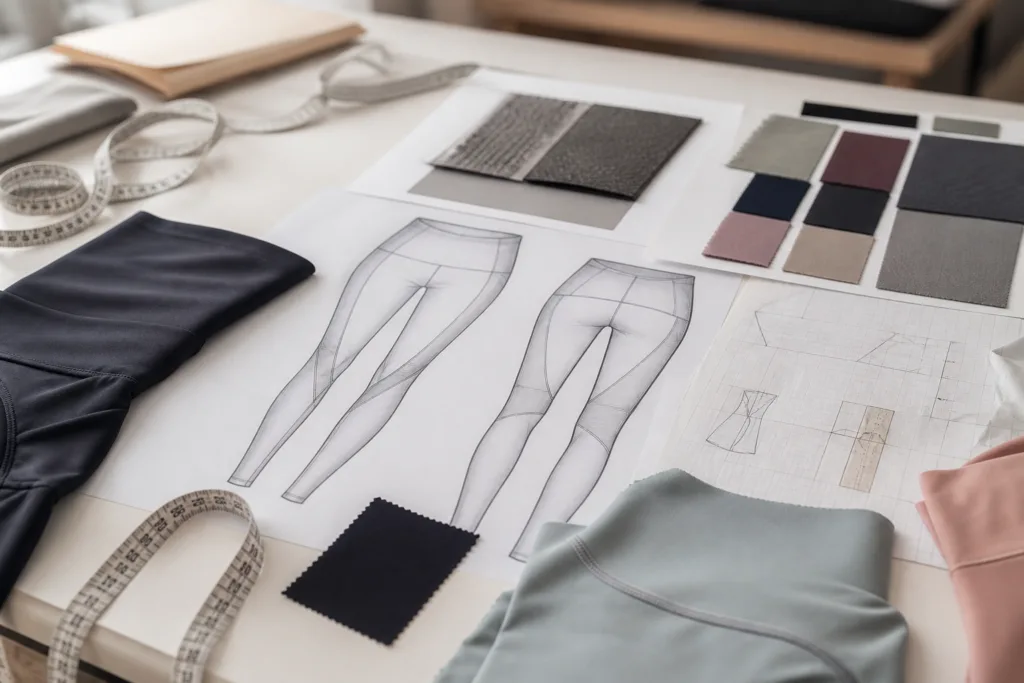
Product teams should usually check wash performance, seam grin, opacity under extension, and pilling resistance. A clean surface matters because activewear buyers notice early fuzzing, shiny abrasion marks, and seat or inner-thigh wear quickly. In addition to lab testing, repeated wear trials are useful because some issues only appear when stretch, sweat, and laundering combine over time.
How compression level affects different sports and training activities
Compression level should match movement type and wear duration. This is where many ranges become too generic. A single fabric may work well for one category and perform poorly in another because the pressure profile, thermal comfort, and recovery needs are different.
| Use case | Preferred compression approach | Why it works | Common risk |
|---|---|---|---|
| Running | Moderate support with good ventilation | Helps stability without excessive heat build-up | Too much density can overheat the runner |
| Gym training | Moderate to firm support with high opacity | Useful for movement confidence and squat coverage | Poor recovery can cause knee bagging |
| Cycling | Firm support in key muscle zones | Can suit repetitive leg motion and longer wear | Waist and leg hem pressure may become irritating |
| Team sports | Light to moderate support under uniforms | Needs mobility, cooling, and low bulk | Too tight can restrict comfort during mixed movement |
| Recovery wear | Controlled compression with comfort focus | Worn after exercise for support and recovery routine | Consumers may expect unrealistic results |
Performance claims should also be tied to actual garment engineering. A useful review of compression garment considerations and physiology highlights how body area, applied pressure, sizing, and wear duration influence outcomes. For buyers, this is an important reminder that not all compression wear behaves the same even when the fabric label looks similar.
Choosing compression wear for running, gym training, cycling, team sports, and recovery
For running, look for fabrics that balance support with air permeability and low chafe construction. Flat seams, stable waistbands, and moderate GSM are usually safer than very heavy compression unless the product is designed for cool-weather use. Reflective print or pocket additions should not interfere with stretch balance.
For gym training, support and opacity often rank high. Users doing squats, lunges, and floor work want fabric that remains non-sheer under extension, recovers quickly, and feels secure through the seat and thigh. This is also where panel shape and rise depth matter because poor pattern balance can cause rolling waistbands even if the fabric itself is good.
For cycling, evaluate longer wear comfort, saddle friction zones, and heat build-up. Compression can be useful, but seam placement, chamois integration where relevant, and leg opening pressure become critical. A technically supportive fabric can still create discomfort if the garment architecture is wrong.
For team sports, base-layer compression pieces usually need lighter weight and easier layering under uniforms. Bulk, shine, and heat retention can become problems. Where weather protection is involved, readers sometimes also compare shell-layer performance, and a separate comparison of water resistance and waterproof performance helps clarify that moisture protection in outer layers is a different issue from sweat management inside compression activewear.
For recovery-focused products, the message should stay disciplined. Support, comfort, and controlled pressure are valid design goals. Broad claims about guaranteed faster performance gains are harder to defend. In sourcing practice, that means fabric selection, garment fit, and wear instructions should be stated more carefully than the marketing headline.
Fit, sizing, and pressure distribution considerations
Compression products are more sensitive to grading errors than many casual garments. A small change in hip, thigh, calf, or bicep measurement can noticeably change pressure on the body. That is why fit approval should not rely only on a standard sample size worn by one model. Teams should review at least a few body types within the intended size range.
Pressure distribution is influenced by fabric power, pattern dimensions, seam location, and opening circumference. For example, a legging may test well for fabric stretch but still feel harsh if the waistband elastic is too aggressive or the ankle opening is too tight. Likewise, a sleeve can feel weak if it uses a strong fabric but has excessive ease in the pattern.
This is one area where structured planning tools help. During size set reviews and costing checks, many teams use apparel calculators for fabric, fit, and production planning to estimate material usage, measurement impact, and production logic before scaling a range. It does not replace fitting, but it reduces avoidable mistakes in spec development.
In practical terms, buyers should confirm target body measurements, intended wear duration, whether the garment is for direct-to-skin use, and whether a compressive hand feel is expected immediately or after break-in. Those details affect customer satisfaction more than fabric composition alone.
Common mistakes when selecting compression fabrics
One common mistake is choosing based only on elastane percentage. A high elastane number can look impressive in a spec sheet, but without the right yarn quality and knit construction, it does not guarantee durable compression.
Another mistake is ignoring heat build-up. Dense support fabrics can feel excellent in an air-conditioned showroom and uncomfortable during actual training. This is especially true for black leggings, full-length garments, or products designed for hot climates.
Buyers also sometimes overlook opacity testing under stretch. A fabric may pass visual inspection in relaxed form and become too sheer in the seat or thigh during movement. In activewear, this is a product failure, not a small aesthetic issue.
A fourth mistake is approving fit based on static standing positions. Compression garments need evaluation in motion: squat, stride, bend, pedal, and recovery postures. The garment has to maintain support without cutting into the body or shifting excessively.
Product development and sourcing considerations for compression activewear
From a product development perspective, compression activewear needs closer coordination between design, pattern, fabric sourcing, and quality teams than basic jersey apparel. The fabric cannot be chosen in isolation. You need to know the sport, target user, price level, decoration method, and whether the garment should feel light, firm, cool, brushed, or highly supportive.
Sampling should include wear tests, wash tests, and fit reviews across multiple sizes where possible. This detail may look small, but it can create problems later if it is not confirmed early. A fabric that performs well in a lab dip or hanger swatch may change once it is cut into panels, sewn with elastic thread, printed, or heat set.
Supplier communication should cover at least these points:
- fabric composition and actual finished GSM
- stretch direction and recovery targets
- opacity under extension
- moisture management expectations
- recommended needle, seam, and thread setup
- wash care and heat sensitivity of elastane-rich fabrics
- shade consistency, especially for dark colors
- minimum order quantity and greige or dyed stock availability
Apparel Wiki explains that activewear sourcing becomes easier when teams treat compression as a technical product category rather than a generic fashion legging program. Broader references on Apparel Wiki can help readers connect fabric terminology, garment construction, testing logic, and sourcing decisions across the development process.
Conclusion
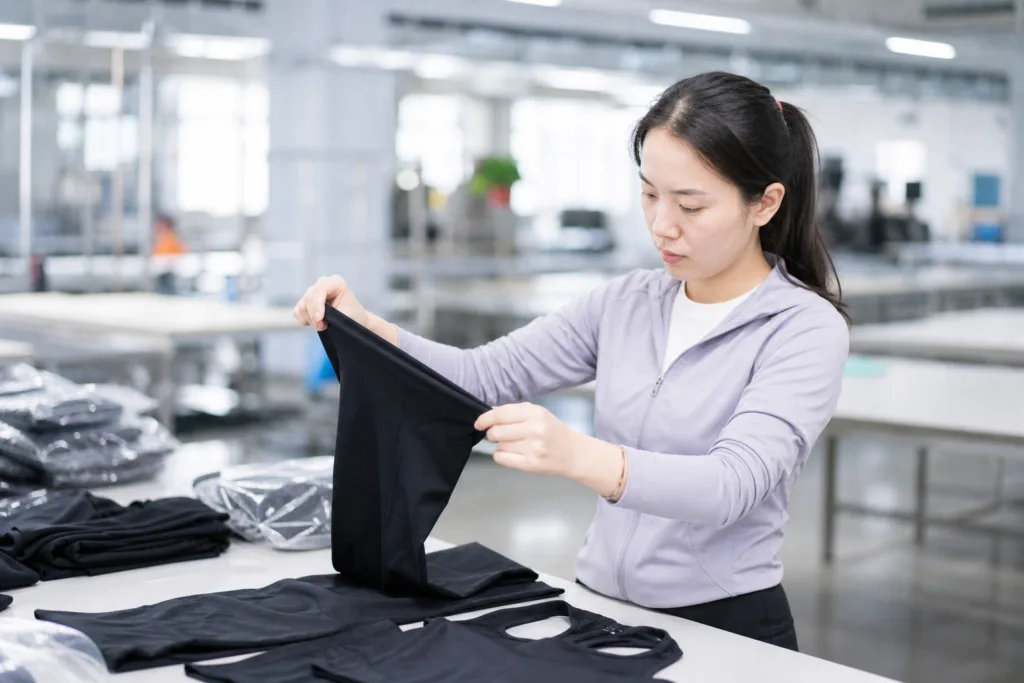
Compression fabrics can add real value to activewear when the material, knit structure, fit, and pressure profile are aligned with the intended sport and wear conditions. The practical benefits usually come from support, stability, comfort management, and in some cases modest recovery support, not from exaggerated performance promises. For buyers and product teams, the safer path is to define the use case first, then select the fabric based on power, breathability, moisture handling, recovery, durability, and fit consistency. When those details are confirmed early, compression activewear is much easier to develop, source, and scale with fewer surprises.
FAQ: Compression Fabrics for Activewear
Are compression fabrics and regular stretch fabrics the same?
No. Regular stretch fabrics can move with the body, but compression fabrics are engineered to apply more controlled pressure and maintain better support through wear. The difference usually comes from fabric power, recovery, knit density, and garment patterning rather than stretch content alone.
What fiber blend is most common in compression activewear?
Nylon-elastane and polyester-elastane blends are the most common. Nylon-based options often feel smoother and more supportive, while polyester-based options are frequently chosen for drying performance, print compatibility, or cost targets. The right choice depends on the sport, fit goal, and durability requirement.
Does a higher elastane percentage always mean better compression?
No. Higher elastane content does not automatically create better compression. Yarn quality, knit structure, stitch density, finishing, and garment sizing all affect how much pressure the garment actually applies and how well it holds that pressure after washing and repeated wear.
How do buyers check whether compression fabric will stay supportive over time?
They should look beyond first-fit stretch and review recovery, growth, wash performance, pilling, and opacity under extension. A fabric that feels firm in sampling but relaxes quickly in use will not deliver consistent support, so repeat-wear testing and lab evaluation are both important.
Is stronger compression always better for activewear?
No. Stronger compression can be useful for some categories, but too much pressure can reduce comfort, increase heat build-up, and create return problems if the fit is too aggressive. The right level depends on the sport, wear duration, body area, and whether the product is meant for training, competition, or recovery use.
What should be confirmed before sourcing compression activewear in bulk?
Before bulk production, teams should confirm fabric composition, finished GSM, stretch and recovery targets, size grading, pressure feel, opacity, moisture handling, seam construction, and wash performance. In many projects, problems come from unclear specifications rather than from the fabric category itself.