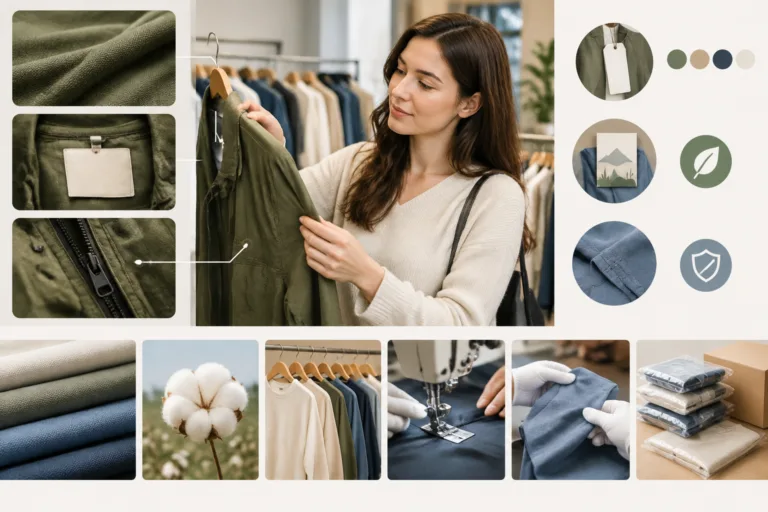
Climate-driven shopping describes clothing choices influenced by a shopper’s concern about climate change or the climate implications they associate with apparel. The term is a useful editorial framing, not a standardized consumer category: people may define climate impact differently, and climate concern can sit alongside other environmental or ethical motivations. Apparel Wiki is an independent educational publication; its sponsorship information does not make it a manufacturer, testing body, or service provider.
These choices can involve whether to buy at all, which garment to choose, where to shop, or whether to buy new or secondhand. The main climate driven shopping drivers are therefore not just personal concern, but how that concern meets practical priorities and the circumstances of a particular purchase. A stated preference or intention is not evidence by itself that someone completed a purchase; wearing a garment and returning it are separate behaviors to examine.
What Is Climate-Driven Shopping in Clothing?
In this article, climate-driven clothing shopping means considering climate change or perceived apparel-related climate impacts when making clothing decisions. That consideration might affect interest in a product, a comparison between options, or the decision to postpone a purchase. It need not be the shopper’s only reason, and the shopper does not have to use the phrase “climate-driven shopping” to make a choice with climate concerns in mind.
Climate concern is also narrower than general sustainable-fashion or ethical-shopping motivations. Someone may focus on climate, while another prioritizes labor conditions, material sourcing, waste, animal welfare, or several issues together. These motives can overlap, but they are not interchangeable. Without a clear question or measure, a report about “sustainable” choices does not establish which concern mattered to the shopper.
Evidence should be described according to what it captures. A survey can record reported concern or purchase intention; transaction data can show a completed purchase in the records examined. Neither alone establishes how often an item is worn, why it was chosen, or whether it was returned. Keeping those measures distinct makes it possible to discuss climate-conscious clothing purchases without treating stated concern as proof of behavior.
Which Consumer Priorities Can Shape Climate-Related Clothing Choices?
Climate concern and a sense that the issue is personally relevant may make climate-related information more salient to a shopper. But concern does not automatically cause a purchase, and a reported priority is not the same as an observed trade-off. To understand climate concerns and apparel purchases, researchers need to ask what happened in a specific decision as well as what people say matters to them in general.
Clothing must also work for its intended use. Comfort, fit, style, durability, price or perceived value, and care requirements can all enter the decision. A shopper choosing workwear may need a garment that fits a dress code and is comfortable through a long shift. For leisure clothing, movement or personal style may take priority. Even the same shopper can weigh these needs differently from one purchase to another.
Maintenance can change how suitable an option seems. A garment that requires care the shopper cannot manage may be a poor fit for their routine, regardless of their stated preferences. Budget limits can also make a preferred option impractical. These are useful possibilities to investigate, not universal explanations: their significance depends on the individual, garment, intended use, and available alternatives.
How Do Price, Access, and Shopping Context Affect the Decision?
For climate-conscious apparel shopping decisions, ask what options were realistically available at the time. A shopper might favor one type of garment but find it outside their budget, unavailable in the needed size, unsuitable in fit, or difficult to access through their usual shopping channel. Time, location, and the availability of repair or care options may also matter. These factors are questions for research, not assumed barriers affecting everyone alike.
Context helps explain why an abstract preference may not translate into a purchase. Someone replacing a worn work garment under time pressure may make a different choice from someone browsing for leisure clothing with more time to compare. In either case, the choice may reflect several constraints at once. Do not turn one person’s trade-off into a claim about a whole market or a demographic group without evidence that supports that broader conclusion.
When investigating factors affecting clothing purchase decisions, ask about a recent, concrete episode: what the shopper needed, which options they considered, what they bought or decided not to buy, and what influenced that outcome. Then record the relevant context, such as garment type, budget, channel, size or fit needs, and care expectations. This approach can reveal which climate-related preferences met a practical constraint, while avoiding the assumption that any single constraint explains the decision.
What Product and Brand Cues Do Shoppers Use?
Shoppers may use several visible or communicated cues when judging whether a clothing option fits their climate concerns. These can include expected garment longevity, care information, repair or resale options, material descriptions, and the way a brand explains its product decisions. The relevance of each cue can depend on the garment, the shopper’s prior knowledge, and the information available during the purchase.
However, a cue is not proof of climate performance. A statement about durability does not by itself establish how long a garment will be worn, and a repair option does not show how often customers will use it. Similarly, a brand message may influence awareness or trust without producing a completed purchase. Climate-conscious clothing choices should therefore be studied at the level of the specific claim and the specific consumer response.
Research should distinguish at least four questions: Did shoppers notice the information? Did they understand or trust it? Did it affect purchase intention? Did it correspond with a transaction, later use, or return decision? These are related but different outcomes. A consumer may remember a claim without believing it, believe it without purchasing, or purchase for reasons that have little to do with the claim.
Product and brand cues should also be considered alongside fit, comfort, price, style, and intended use. Information that matters during an online comparison may receive less attention when someone needs a garment quickly in a physical store. For apparel teams, the useful question is not whether a cue sounds persuasive in isolation, but whether it helps a defined shopper make a particular decision in a particular setting.
How Can Apparel Teams Research Actual Climate-Driven Shopping?
A practical research program begins by stating what the evidence is meant to answer. Interviews can reveal how shoppers describe climate concerns and the trade-offs they remember. Surveys can compare reported priorities when the sample and question design are clearly described. Observed shopping, transaction records, product interaction data, wear reports, and return descriptions can address different parts of behavior. None should automatically stand in for the others.
Questions about a recent purchase are usually more informative than broad requests to describe personal values. Ask what the shopper needed, which garments or alternatives were considered, what information was available, what constraints appeared, and why the final choice was made. Include decisions not to buy when relevant. This approach can expose whether climate considerations were central, secondary, or absent from the actual episode.
Sample boundaries need equal attention. Record how participants were recruited, how many took part, where they were located, when the research occurred, and what type of purchase they were discussing. Current customers may not represent lapsed customers, noncustomers, or people who abandoned a purchase because of price, fit, access, or trust. A self-selected group with strong climate interest may be useful for exploratory interviews, but it should not automatically represent the wider clothing market.
Combining methods can provide a fuller picture, but it does not remove bias by itself. A survey may show stated preference, while transaction data shows a purchase under a particular assortment and price structure. Wear frequency may indicate use, but it may depend on the garment’s purpose and the owner’s routine. Return descriptions may identify dissatisfaction, yet they do not necessarily explain every reason for the original purchase. Report each evidence type separately before interpreting the pattern.

How Should Consumer Findings Inform Apparel Decisions?
Consumer research becomes actionable when a finding is connected to a specific proposed change. For example, a team might test clearer care information, a repair-related service, a product detail intended to support longer use, or a different way of presenting existing information. The proposed change should be stated before the test, along with the outcome that would count as useful evidence.
The outcome must match the decision. Interviews may help determine whether the information is understandable. A controlled comparison or pilot may indicate whether a revised product page changes engagement or purchase behavior. Sales results may show what happened in one commercial setting, but they do not by themselves prove that climate messaging caused the result. Feedback, stated intent, transaction data, use, and returns should remain distinct measures.
Consumer response also cannot establish technical product performance. If a shopper believes a garment will last longer, that belief is evidence about perception, not a validated durability result. Product suitability, care requirements, manufacturing feasibility, and operational capacity require their own evidence. Keeping these questions separate prevents a successful message test from being mistaken for proof of a climate benefit.
Use a clear decision rule after the test: retain the proposal, revise it, or reject it. Explain which result led to that decision and which questions remain open. This makes climate driven shopping drivers useful as research hypotheses rather than as broad assumptions about what every consumer wants or what any single product claim proves.
As a next step, apparel teams can build a small purchase-episode study around one garment category. Compare what shoppers said they valued with the options they considered, the constraints they faced, and what happened after purchase. Then use the findings to choose one product, information, or service change for a defined test, while documenting the sample and the limits of the result.
FAQ
Does climate concern always change what someone buys?
No. Climate concern may influence a decision, but price, fit, comfort, style, availability, timing, and intended use can outweigh it. A stated concern should not be treated as proof of a changed purchase.
How is climate-driven shopping different from general sustainable fashion shopping?
Climate-driven shopping focuses specifically on choices influenced by concern about climate change or the climate implications associated with apparel. Sustainable fashion can include wider environmental, social, ethical, or labor-related concerns.
Can survey responses show that consumers actually buy climate-conscious clothing?
Not by themselves. Surveys can measure reported attitudes, preferences, or purchase intentions. Transaction, observed shopping, use, and return evidence are needed to study different forms of actual behavior.
Which factors should an apparel brand investigate when studying climate-related purchase choices?
Investigate the purchase context, garment type, budget, availability, size and fit access, shopping channel, time pressure, care expectations, product cues, and the shopper’s stated reasons for choosing or rejecting an option.
How can a small consumer sample be reported without overgeneralizing its findings?
Describe the recruitment method, sample size, location, timing, participant characteristics, and research purpose. Present the findings as exploratory evidence for that sample, not as a percentage or conclusion about a national or global population.