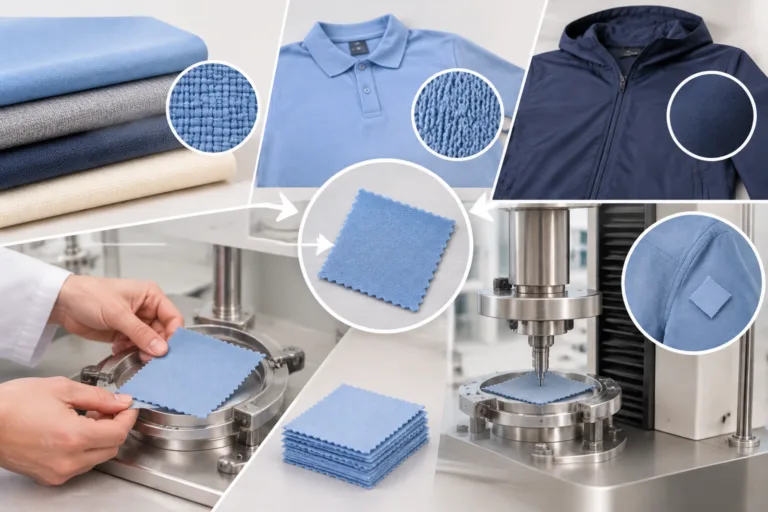
Reliable bursting strength results depend on more than cutting fabric and placing it in an instrument. Bursting strength testing sample preparation is the controlled handling of a selected textile or garment sample before and during testing. It connects sample identity, preparation history, conditioning, test method, instrument setup, and evaluation rules. This independent Apparel Wiki guide explains that workflow; its editorial independence is described on the Sponsor page.
To prepare samples for bursting strength testing, first define the product question, identify the material and test location, record direction and treatment history, and follow the preparation and conditioning instructions for the applicable method. Do not compare two results by number alone when their sample identity, conditioning, pre-treatment, method, or evaluation basis differs.
Why Sample Preparation Controls Bursting Test Results
Sample preparation is the controlled process used to select, identify, handle, condition, and present a textile or garment sample for a bursting test. It is not merely cutting a piece from a roll. The preparation history establishes what the reported result actually represents.
A test method describes how a result is obtained. A product specification states what result a particular product, order, or application may require. A named method does not create one universal pass threshold for every fabric or garment. The requirement source must be identified separately.
Comparability depends on controlling the variables that define the test question. These can include fabric direction, specimen location, knit or woven construction, coatings and finishes, washing or other pre-treatment, conditioning state, instrument setup, units, and evaluation rules. When the applicable method is known, check its instructions for preparation, conditioning, apparatus, and evaluation. Without that method, treat these as items to verify rather than as a universal recipe.
Sample identity should remain traceable from receipt through the report. Record the material or garment identity, color or variant, batch or lot information when available, preparation history, method and version, units, and the source of any product requirement. This record helps separate a material difference from a preparation difference.
Conditioning samples for bursting strength testing also requires a defined comparison basis. A result from untreated material answers a different question from one obtained after washing, drying, aging, or another specified treatment. The treatment may be appropriate, but it must be stated before results are compared.
The practical rule is simple: if two reports used materially different preparation or conditioning conditions, do not rank their numbers by size alone. A larger value is not automatically stronger evidence when the reports describe different samples or test questions.
Build a Traceable Sample Set Before Testing
Begin with a sample record, not an unlabeled cut piece. Identify the material or garment, color or variant, construction type, finish, and relevant production or care history. Add batch, roll, order, or lot information when it is available. If the sample came from a garment, note the panel or component and its relationship to the finished product.
Review the product for locations that may not be interchangeable. These may include relatively uniform fabric panels, knitted areas, bonded or layered zones, printed or finished surfaces, and sections near seams. The applicable method determines which specimen forms and locations are permitted. A selection that seems representative is not automatically evidence that it represents an entire production run.
Before cutting or transferring material, record orientation and location in a way that does not damage the area to be tested. Useful records can include a simple location sketch, photographs, cutting notes, specimen identifiers, and custody information. Mark the surrounding sample or its packaging when marking the test area could alter its condition.
- Link each specimen identifier to the original material or garment.
- Record face and back, direction, panel position, or construction zone when relevant.
- Note finish, treatment, and care history supplied with the sample.
- Keep photographs and cutting notes with the request or report record.
- Record exclusions and their reasons instead of silently replacing specimens.
Separate visibly damaged, folded, contaminated, or otherwise compromised areas from usable specimens. Document the reason for exclusion and preserve the connection between the decision and the original sample. The exact specimen count, dimensions, and allowable locations should come from the governing method, laboratory procedure, or agreed quality plan, not from an invented general rule.
Agree on sample identity and the preparation plan before testing when the result will be compared with a specification or another report. A report normally applies to the specific sample received and measured. It does not automatically extend to every color, size, later batch, or product variation.
Condition, Pre-Treat, and Handle the Specimens Consistently
Conditioning brings specimens into the environmental state required by the selected test method before testing. Pre-treatment intentionally changes the sample through washing, drying, aging, finishing, or another defined process. These are different steps and should not be recorded as if they were interchangeable.
First decide what the test should represent: as-received material, material after a care treatment, or another defined condition. That choice changes the comparison question. A result after washing should not be silently compared with an untreated result, even when the material name and product description appear identical.
Record the conditioning environment, duration or endpoint, specimen state, and any deviations exactly as required by the applicable method. Do not adopt an unverified universal temperature, humidity, or conditioning time. If the governing method is unavailable, create a verification checklist and leave method-specific values for the qualified testing procedure.
Handle specimens consistently during cutting, transfer, and setup. Avoid unnecessary stretching, creasing, moisture contamination, heat exposure, or visible damage. These are practical precautions, not a substitute for the method’s operating instructions. Any exact handling limits, moisture-equilibrium language, or preparation sequence must be checked against the selected method.
Keep the preparation history with the test request and report. Record the treatment applied, the treatment status, the conditioning details required by the method, and any departure from the plan. This gives a later reader enough context to ask whether a difference came from the material or from the way it was prepared.
For a comparison between reports, match the condition first: sample identity, treatment history, conditioning basis, orientation, location, method, and evaluation basis. If one of these is missing, mark the comparison as limited rather than reconstructing the conditions or presenting the result as proof of compliance.
Match Preparation to Fabric Construction and Test Location
Sample preparation should reflect what the test is intended to describe. A relatively uniform fabric area presents a different sampling question from a knitted structure, bonded layer, coated surface, or garment section containing a seam. The applicable method may permit, exclude, or separately classify these forms, so do not assume that one specimen layout applies to every construction.
Record the observable features before cutting or preparing specimens. Note the fabric direction, wale or course orientation where relevant, face and back, panel position, finish, and distance from seams or openings. Pattern direction can also matter because a visually similar area may not have the same construction in every orientation. These records help a later reader understand whether two results describe comparable material locations.
| Observable input | Preparation or location implication | Initial choice | Variable that could change the choice |
|---|---|---|---|
| Uniform fabric area | Identify the panel and intended face, then keep the selected location traceable. | Use a clearly documented area that matches the product question. | Variation across the roll, panel, color, finish, or batch. |
| Directional or patterned material | Mark the direction and pattern position before preparation. | Separate materially different orientations or locations in the sample plan. | The governing method, design intent, or whether direction is relevant to the question. |
| Treated, coated, bonded, or layered area | Record the treatment and whether the test concerns the combined structure or a defined layer. | Keep treated and untreated or structurally different areas distinct. | Method permissions, layer attachment, finish coverage, and the intended product condition. |
| Seam-containing garment section | Record the seam, opening, attached component, and distance from the feature. | Separate garment construction questions from fabric-area questions. | Whether the method allows that section and whether the product requirement concerns fabric or the assembled garment. |
Consider a lightweight knit with visibly different construction zones. The preparation plan should first separate those zones and record wale or course direction where it can be identified. The final selection still depends on the governing method and the product question. A fabric-area result does not automatically describe the bursting behavior of a complete garment section with seams, openings, or attached components.
Check the Test Record Before Comparing Results
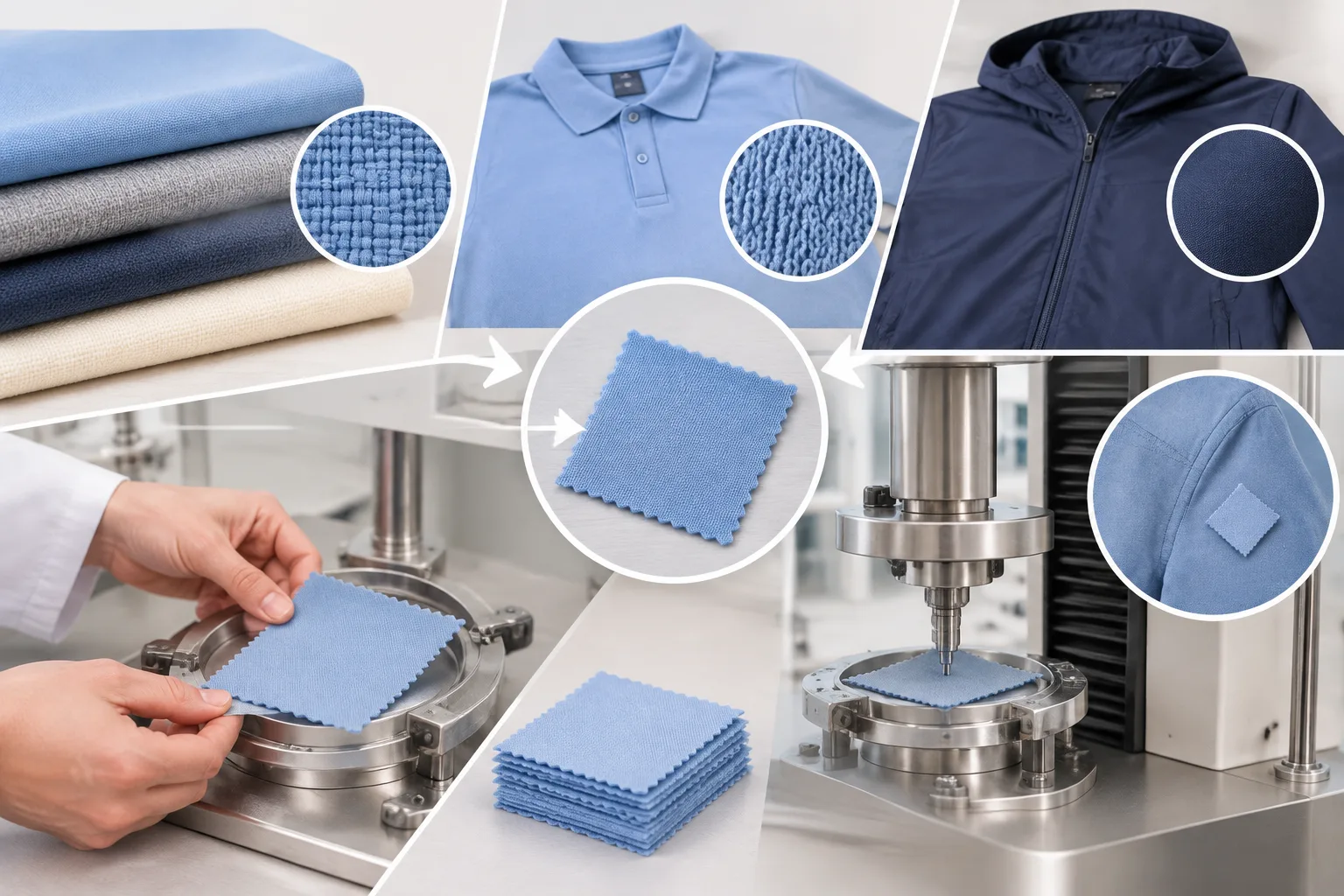
A bursting strength test report is useful only when its result remains connected to the sample and conditions that produced it. Begin by checking the sample description, color or variant, batch or lot information when supplied, test date, method and version, conditioning or pre-treatment history, orientation, location, units, result presentation, and recorded deviations. These details form the comparison context.
- Sample identity: Confirm what material or garment section was received and which items were measured.
- Preparation history: Check treatment status, conditioning basis, location, orientation, and any exclusions or deviations.
- Method basis: Identify the stated test method and version, then check whether the evaluation basis matches the other report.
- Result meaning: Separate measured values from a product requirement and from an editorial interpretation.
- Requirement source: Record the specification, quality plan, buyer requirement, or other source separately from the laboratory method.
Compare two results only after this review. A larger number is not automatically better evidence when the reports use different sample identities, preparation histories, conditioning conditions, methods, or evaluation bases. Results from different methods may answer related questions without being directly interchangeable. A test method describes how a result is obtained; it does not, by itself, create a universal pass threshold for every product.
When preparation details are missing, ask for clarification or mark the comparison as limited. Do not reconstruct an assumed conditioning history, infer the sample location, or treat an incomplete report as proof of compliance. Also check whether the report identifies the facility, its relevant testing scope, and the basis for its claims. This is a verification step, not an assertion of accreditation, regulatory status, or capability.
Keep the report tied to the specific sample received and measured. Testing one color, size, panel, or production batch does not automatically establish the same result for every variation or for later production. The report should support a conclusion only as broad as its sample description, preparation record, method, and requirement source allow.

Use Prepared Samples and Results Responsibly
A useful bursting strength test preparation checklist is simple: define the product question, identify the sample, record location and orientation, document treatment, follow the applicable conditioning instructions, and preserve the complete result context. Before drawing a conclusion, compare the relevant specification and report line by line. Where a preparation detail is unclear, check the applicable method or laboratory procedure rather than filling the gap with an assumption.
Frequently Asked Questions
Why does conditioning matter before bursting strength testing?
Conditioning places the specimen in the environmental state required by the selected method. Recording that state helps distinguish a material difference from a difference in preparation. The exact atmosphere, duration, endpoint, and handling requirements must come from the applicable method.
Should fabric be washed before a bursting strength test?
Not automatically. Washing is a pre-treatment that changes the comparison question, while conditioning prepares the specimen for testing. Test the as-received or treated condition specified by the product question, and record the treatment before comparing results.
Can results from different bursting strength test methods be compared?
Do not compare them by numerical size alone. Different methods may use different preparation, apparatus, evaluation, or reporting bases. Check the method and version, sample identity, conditioning history, units, and requirement source before deciding whether the results are meaningfully comparable.
How should seams, coatings, or different fabric directions be handled in sample preparation?
Identify and document them separately when they create a different construction or product question. Record direction, face and back, panel location, finish, layer, seam, or opening. Whether these areas can be tested depends on the governing method and intended evaluation.
What information should a bursting strength test report include?
Review the sample description, available batch or lot information, test date, method and version, conditioning or treatment history, location and orientation, units, results, evaluation basis, and deviations. The exact report fields depend on the applicable method or laboratory procedure.
Does one bursting strength result represent every color, size, or production batch?
No. A report normally applies to the specific sample and measured items received. Broader conclusions require a suitable sampling plan and supporting evidence. Do not extend one result to other variants or later batches without checking their identity and preparation context.