Apparel damaged shipments prevention requires more than selecting a stronger carton. The practical control system combines packaging and loading checks, documented handoffs, receiving inspection, corrective action, and a deliberate decision about financial recovery. This approach helps reduce the chance of damage, limit its business impact, transfer part of the financial exposure where appropriate, and consciously accept the remaining risk. Apparel Wiki is an independent educational publication; its editorial independence is described on the Sponsor page.
In business terms, shipment exposure is the total effect a damaged or delayed shipment can have on a company. It may include unsaleable or downgraded inventory, delayed availability, rework, customer service effort, claims administration, cash-flow pressure, and missed delivery commitments. The appropriate apparel shipping damage controls depend on the garment construction, packaging format, shipment mode, route, commercial terms, and cost of failure. No single packaging method is suitable for every product or journey.
What controls reduce apparel exposure to damaged shipments?
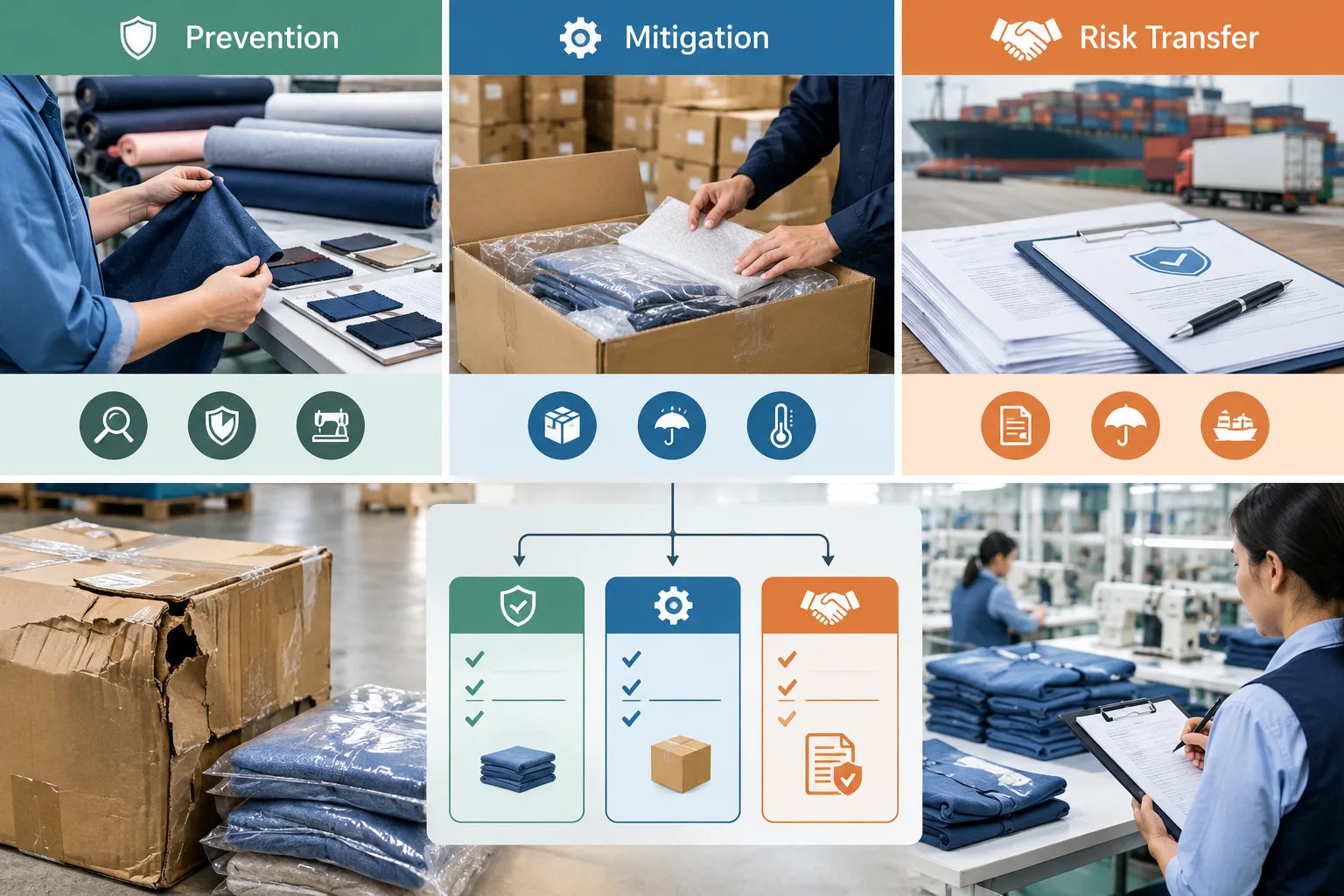
A useful garment shipment risk-management process connects four responses. First, reduce the likelihood of damage through product-appropriate packing, stable loading, clear instructions, and controlled release checks. Second, reduce the impact through contingency inventory, inspection capacity, rework arrangements, alternate fulfillment, or an agreed response process. Third, transfer part of the financial risk through applicable contracts or insurance. Finally, accept residual risk consciously when further control would cost more, slow the operation, or add complexity disproportionate to the exposure.
These responses work as a connected process rather than as isolated tasks. A carton may leave a facility in good condition but still be exposed during a handoff, exception movement, warehouse receipt, or final delivery. The control design should therefore follow the shipment from packing through loading, documentation, transport handoffs, receiving, disposition, and corrective action. Contractual allocation or insurance may support financial recovery, but neither replaces operational controls or timely evidence collection.
Start by identifying the business objective at risk. A routine replenishment shipment may primarily threaten saleable inventory and warehouse capacity. A launch shipment may also threaten a market date, customer commitments, campaign spending, and the credibility of the delivery promise. The decision is not simply whether to spend more on packaging. It is whether the combined prevention, mitigation, and recovery approach is proportionate to the consequences of failure.
Which shipment damage events create the greatest apparel exposure?
Replace broad labels such as “high quality risk” with observable events. Crushing can deform cartons, compress garments, or affect presentation. Puncture and tearing can expose product to dirt or moisture. Water or moisture ingress can affect packaging and garment condition, while contamination may require isolation and a quality decision. Lost cartons, tampering, temperature-related effects where relevant, and damage-related delays can each affect different commercial objectives.
| Event | Potentially affected objective | Useful control question |
|---|---|---|
| Crushing or unstable loading | Saleable inventory, presentation, rework capacity | Was the load released in a documented and stable condition? |
| Puncture, tearing, or moisture ingress | Product condition, quality status, customer orders | Can the team identify when and where the protection failed? |
| Missing cartons or units | Order completeness, launch timing, cash recovery | Do packing and receiving records reconcile by shipment or SKU? |
| Tampering or unexplained delay | Customer confidence, delivery commitments, investigation time | Are exceptions assigned to an owner with a clear escalation trigger? |
The event should be connected to its cause, affected products or orders, existing control, owner, trigger, evidence, and next action. Also examine dependencies beyond the immediate carton. A shared supplier, common material, repeated packaging format, or consolidated shipment may expose multiple SKUs at once. A shipment can therefore appear diversified by product while remaining dependent on one loading point, route, handoff, or downstream delivery commitment.
A simple apparel logistics risk register can record these relationships without pretending to predict the future. An internal rating may help prioritize attention, but it is a decision tool rather than proof of a statistical probability. Review the register when products, routes, suppliers, packaging formats, order timing, or commercial commitments change.
How should apparel packaging and loading controls be designed?
Packaging should match the garment’s vulnerability and the conditions the shipment is expected to encounter. Consider whether the product is folded or hung, how it is arranged in a polybag or carton, and whether decoration, hardware, surface finish, or moisture sensitivity changes the protection need. The same outer format may not suit lightweight garments, structured pieces, embellished products, or shipments that combine different handling requirements.
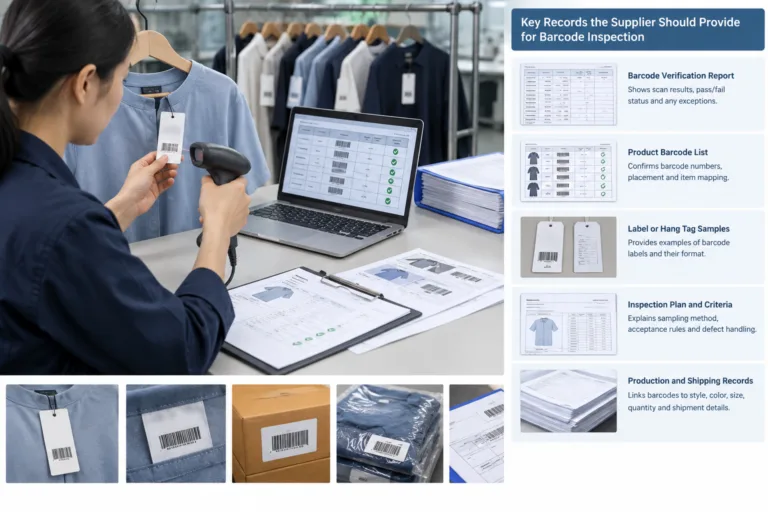
Review protection at several levels: inner separation, outer packaging, closure integrity, carton condition, load stability, identification, and separation from likely contaminants. The release check should confirm the correct SKU and quantity, secure closure, legible labels, documented condition, and photographs or other records when they are appropriate to the risk. These are internal control points, not automatically carrier or regulatory requirements.
Stronger or more complex packaging can reduce exposure, but it may also add material use, labor, dimensional weight, disposal work, or handling difficulty. The lowest packaging cost is not necessarily the lowest total business exposure. When changing a format, use supplier specifications and a controlled shipment review or pilot where practical. A design that performs acceptably on one product, route, or shipment mode should not be treated as universally validated.
Loading controls should address the condition of the outer packaging, the way units are arranged, identification, and the evidence recorded before dispatch. The responsible team should know what must be checked, who releases the shipment, what condition requires escalation, and where the record is stored. Any test method, performance threshold, labeling rule, or carrier requirement must be confirmed against the applicable authoritative source rather than inferred from an internal packing preference.
How can teams control damage risk across shipping handoffs?
Each handoff should have a named responsibility, a condition check, an escalation trigger, and an evidence record. Assign roles for packing, pre-dispatch inspection, transfer to the freight forwarder or carrier, transit exceptions, warehouse receipt, and final delivery. The purpose is not to assign blame in advance. It is to prevent an ownership gap in which visible damage, missing units, seal irregularities, moisture signs, or unexplained delays are noticed but not acted on.
Use shipment identifiers and packing lists to connect physical observations with commercial records. Depending on the operation, the evidence trail may include carton photographs, scan records, seal information, delivery records, and time-stamped communications. Record what was observed, when it was observed, who received the information, and what immediate action followed. Keep observed facts separate from internal judgments, supplier statements, and assumptions about cause.
Suppliers, freight forwarders, carriers, warehouses, brokers, and internal teams may each control a different stage. Coordination should make those boundaries visible. Contract terms, carrier conditions, insurance policies, and applicable trade rules may affect notification, proof, liability, or recovery, so teams should verify the current requirements for the shipment and jurisdiction. A contract or policy can allocate some loss, but it does not guarantee recovery or replace careful operational control.
What receiving and claims procedure should apparel teams use?
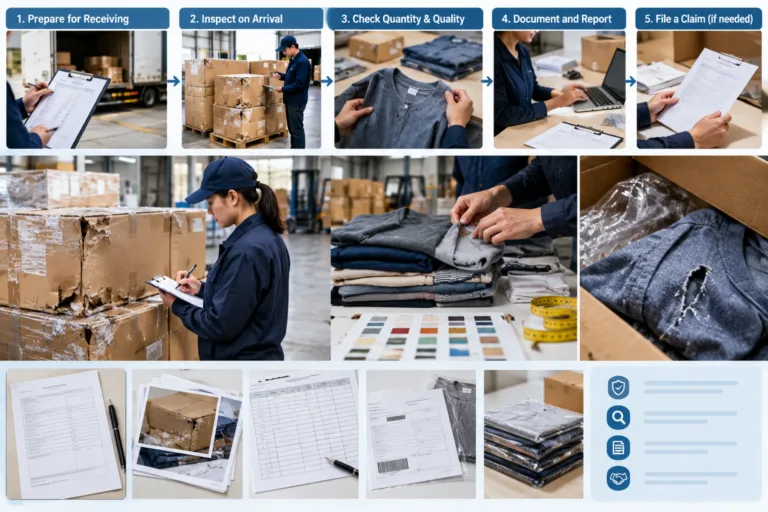
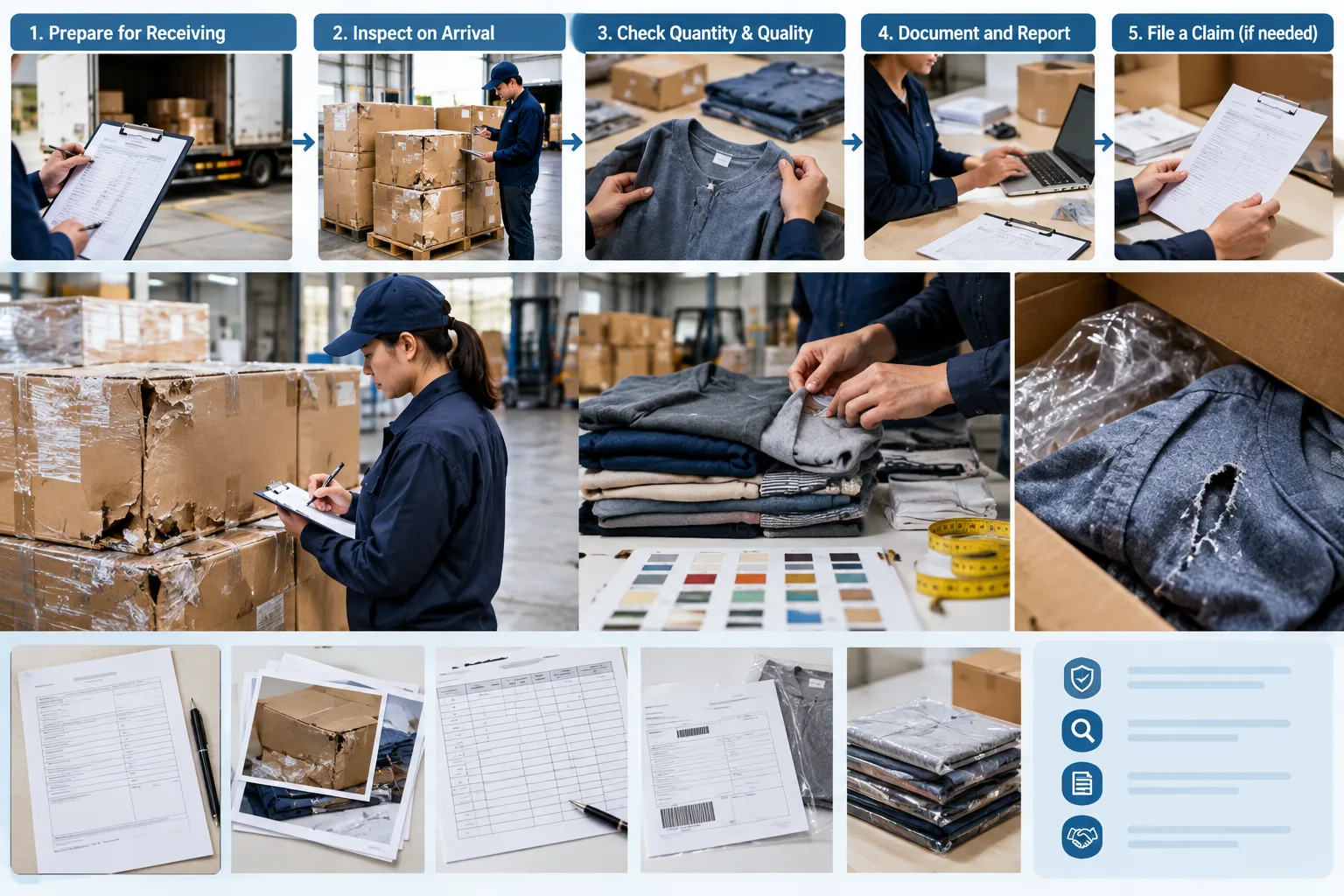
A receiving response should protect the goods, establish what happened, and preserve evidence before the condition changes. When damage is visible, isolate affected cartons or garments when appropriate, record the shipment reference and external carton condition, compare received quantities with the packing documents, and notify the responsible parties through the applicable process. Inspection depth should reflect the product risk and the organization’s quality procedures.
Separate observed facts from conclusions. A photograph may show a torn carton, moisture mark, missing unit, or broken seal; it does not by itself prove when or why the condition occurred. Record the affected SKU, lot or shipment reference, quantity, damage type, apparent cause if clearly supported, photographs, dates, personnel, immediate containment, and final decision. Preserve cartons, labels, seals, and other relevant materials before repair, repacking, or disposal when a claim may be involved.
Concealed damage discovered during unpacking requires the same disciplined approach, but the timing and notice requirements may differ. Follow the current carrier terms, purchase contract, insurance conditions, and applicable jurisdiction rather than relying on a generic checklist. After quality and commercial review, possible dispositions include release, rework, repack, return, claim, discount, replacement, or disposal. The result should be documented, including who approved it and why.
How should a business choose between prevention, mitigation, and risk transfer?
Prevention reduces the chance that damage occurs. Examples include revising packaging, improving closure checks, clarifying handling instructions, or changing a loading practice after a documented incident. Mitigation reduces the effect when an event still occurs. It may involve contingency inventory, alternate fulfillment, inspection capacity, rework arrangements, or a receiving process that identifies affected orders quickly.
Risk transfer allocates part of the financial exposure through contract terms or insurance, but it does not remove the operational problem. Exclusions, deductibles, limits, notice duties, proof requirements, and recovery conditions vary. A contract or policy may support recovery in some circumstances, while still leaving the business with delay, customer-service work, quality decisions, cash-flow pressure, or unrecovered loss.
A practical decision matrix can keep choices visible. Use columns for the damage event, affected objective, control type, owner, trigger, required evidence, residual exposure, and review date. For a hypothetical launch shipment, faster inspection and contingency fulfillment may matter because timing is critical. For routine replenishment, a packaging change may be more practical. A shipment containing dependent SKUs may require attention to shared materials or orders, not only the damaged carton.
Compare likelihood, impact, cost, speed, and recoverability using internal judgment and documented evidence. The lowest packaging cost is not automatically the lowest total exposure. Refresh the decision when routes, order profiles, commercial commitments, technology, cash conditions, or applicable terms change.
How can teams maintain an apparel shipment damage-control program?
Turn individual actions into a short control register. Each entry should connect a material risk to an owner, operating step, trigger, evidence, and review date. A useful entry might state who checks carton condition at receipt, what requires escalation, where photographs are stored, and which team decides whether affected garments can be released.
Review incidents and near misses by event type, product, supplier, route, carrier, packaging format, and handoff. Total claim counts alone can hide repeated problems affecting one decoration, shared material, customer launch, or warehouse process. Record whether a control prevented damage, reduced its impact, accelerated recovery, or failed to operate. This turns an incident record into an input for packaging, supplier instructions, route selection, receiving checks, or contract review.
Before a major launch, new route, supplier change, packaging change, or shift in commercial commitments, revisit the assumptions behind the controls. A control program is a management practice, not a promise of zero damage. Apparel Wiki provides independent educational guidance; binding requirements should be confirmed with the relevant contracts, carriers, insurers, quality teams, and qualified specialists.
For a practical next step, map one recent shipment from packing through final delivery. List the observable damage events, affected business objectives, control owners, escalation triggers, and available evidence. Then select the most consequential gap for a controlled review or pilot, and schedule a date to check whether the change reduced exposure without creating a new handling, labor, material, or commercial problem.
What is the first control to put in place for preventing damaged apparel shipments?
Start with a documented receiving and escalation process. It should identify who checks condition and quantity, what evidence is collected, which events require immediate notification, and who decides on containment or disposition. This creates visibility before a packaging or insurance change is selected.
Should apparel businesses use stronger packaging or buy more shipment insurance?
These address different exposures. Packaging may reduce the likelihood or impact of physical damage, while insurance may support financial recovery subject to its terms. Compare the product vulnerability, route, timing, evidence requirements, exclusions, deductibles, limits, and operational consequences before choosing.
What evidence should a team collect when garments arrive damaged?
Record the shipment and carton identifiers, received quantities, SKU or lot reference, visible condition, damage type, photographs, seals or labels where relevant, dates, personnel, communications, containment, and final disposition. Keep observed facts separate from assumptions about cause, and preserve relevant materials before repair or disposal when appropriate.
How should concealed damage discovered after delivery be handled?
Document the discovery promptly, isolate affected goods when needed, and follow the applicable contract, carrier, insurer, and quality procedures. Do not assume that a general industry deadline or claim method applies. Preserve packaging and product evidence, notify the responsible parties, and record the inspection and disposition decision.
Who should own damaged-shipment prevention: the supplier, carrier, warehouse, or brand?
Ownership should follow the control point. Suppliers may own packing steps, carriers may control transport handling, warehouses may own receipt checks, and the brand or buyer may coordinate requirements and commercial decisions. Assign named owners for each stage so responsibility does not disappear between handoffs.
How often should apparel shipment damage controls be reviewed?
Review them after incidents and near misses, and before major launches, route changes, supplier changes, packaging changes, or new commercial commitments. A scheduled review should also check whether controls operated as intended, whether evidence is usable, and whether the remaining exposure is still acceptable.