Extra long staple cotton is blended with other apparel fibers to combine its cotton-led hand feel and moisture-management characteristics with a specific contribution such as stretch, recovery, durability, faster drying, warmth, drape, or easier-care behavior. The purpose is not to make every fabric better, but to meet a defined garment requirement. Apparel Wiki is an independent educational publication; its Sponsor information explains that editorial content remains separate from sponsorship.
In this context, “extra long staple” describes a cotton fiber-length category. It is not, by itself, a fabric construction, performance guarantee, trademark, or finishing process. The other component should first be identified by its verifiable generic fiber name, such as polyester, elastane, lyocell, wool, linen, or silk. A branded material, proprietary process, or sourcing claim is a separate matter and should not replace the underlying fiber description.
Why Is Extra Long Staple Cotton Blended With Other Apparel Fibers?
The short answer is design flexibility. A product team may value the smooth, cotton-led character of extra long staple cotton but also need a fabric to stretch, recover after wear, dry differently, retain its appearance, provide additional warmth, or meet a particular yarn and manufacturing requirement. Blending creates a way to balance those goals within one yarn or fabric system.
That balance is always conditional. A blend is not inherently better than 100% extra long staple cotton, and a higher cotton percentage does not automatically indicate a better fabric. The appropriate composition depends on the garment’s intended use, the yarn system, knit or woven construction, finishing, pattern requirements, and expected care. A soft next-to-skin jersey and a structured workwear fabric may need very different solutions.
It is also useful to separate fiber identity from product claims. “Cotton,” “polyester,” and “elastane” are generic fiber names. A cotton’s extra-long-staple classification describes one aspect of the cotton fiber, while the origin of the raw material, spinning method, finishing route, and commercial brand describe other aspects. Those categories should be documented separately when a team evaluates an extra long staple cotton blend.
What Blending Can Change in a Cotton-Based Fabric
Blending can change several property categories, but the fiber list is only the starting point. Inherent fiber tendencies may influence comfort, hand, tensile behavior, abrasion response, stretch, recovery, drying, thermal comfort, dyeing, and finishing. The finished fabric’s measured performance can differ substantially because those tendencies interact with the blend percentage, fiber morphology, yarn twist, spinning method, fabric structure, weight, finishing, and garment construction.
For example, an added fiber may support a project that needs controlled stretch or improved recovery, but the final result also depends on yarn arrangement, fabric geometry, and garment fit. Another blend may be considered for drying behavior or appearance retention, yet those outcomes still require comparison under relevant conditions. Elastane percentage alone cannot determine whether a fitted garment will keep its shape during use.
Pilling is another useful example of why broad claims are unreliable. It can be influenced by fiber properties, yarn structure, fabric surface, finishing, laundering, and wear. The same nominal fiber content can therefore produce different pilling behavior in two fabrics. Similar caution applies to shrinkage, colorfastness, abrasion, and dimensional stability.
Product teams should distinguish between a fiber’s typical contribution and a finished fabric’s verified performance. Supplier information, laboratory results, and wear trials are most meaningful when the compared samples have equivalent or closely comparable constructions, weights, finishing details, and test conditions. Without that like-for-like context, a result may describe one fabric rather than prove a universal property of all extra long staple cotton blends.
Common Reasons to Pair Extra Long Staple Cotton With Specific Fibers
These are common development pathways, not universal recommendations. The useful question is what product requirement the second fiber is intended to address and what evidence will confirm the trade-off.
Polyester
An extra long staple cotton polyester blend may be considered when a project prioritizes durability, easier-care behavior, appearance retention, or a different drying profile. The outcome depends on the ratio, yarn and fabric construction, finishing, and use conditions. A fiber-content declaration alone cannot establish wear life, drying speed, or resistance to abrasion.
Elastane
An extra long staple cotton elastane blend is commonly evaluated for controlled stretch and recovery in fitted garments, stretch bottoms, underwear, and other products that need movement. The fabric’s construction, elastane distribution, finishing, pattern, and care conditions all affect fit retention. The percentage is relevant, but it does not settle the performance question by itself.
Modal, lyocell, or viscose
These generic fiber names may be considered when a development brief emphasizes drape, softness, moisture interaction, or a particular surface character. They should remain distinct from branded variants and from claims about the manufacturing process. A published study has examined a blend of extra long staple Pima cotton and Modal fibers, but its findings apply to the specific fibers, ratio, yarn, fabric, and test conditions studied, not to every cotton blend.
Wool
An extra long staple cotton wool blend may be explored for thermal comfort, texture, or seasonal product positioning. The team should account for care expectations, shrinkage control, fabric construction, and the interaction between the two fiber types. Whether the result suits a garment depends on the complete specification rather than on the presence of wool alone.
Linen, silk, and other natural fibers
Pairing cotton with linen, silk, or another natural fiber can create a different texture, drape, visual character, or seasonal feel. These options still require evaluation for consistency, care, dimensional behavior, and manufacturing suitability. Terms such as “natural,” “premium,” or “luxury” do not independently verify comfort, durability, environmental impact, or overall garment quality.
How Blend Ratio, Yarn Design, and Fabric Construction Affect the Result
Blend ratio establishes the starting balance between the component fibers, but it does not predict finished-fabric performance on its own. A small change in ratio may matter in one yarn or construction and matter less in another. The fiber preparation, staple-length compatibility, spinning system, twist, ply structure, and yarn linear density can all change how the fibers work together.
Fabric construction adds another layer. A knit and a woven fabric made from similar fiber percentages will not behave identically. Stitch or weave density, fabric weight, surface structure, mechanical finishing, chemical finishing, and garment pattern requirements can influence handle, stretch, recovery, opacity, appearance retention, and dimensional behavior. The fabric should therefore be evaluated as a system, not as a percentage printed on a specification sheet.
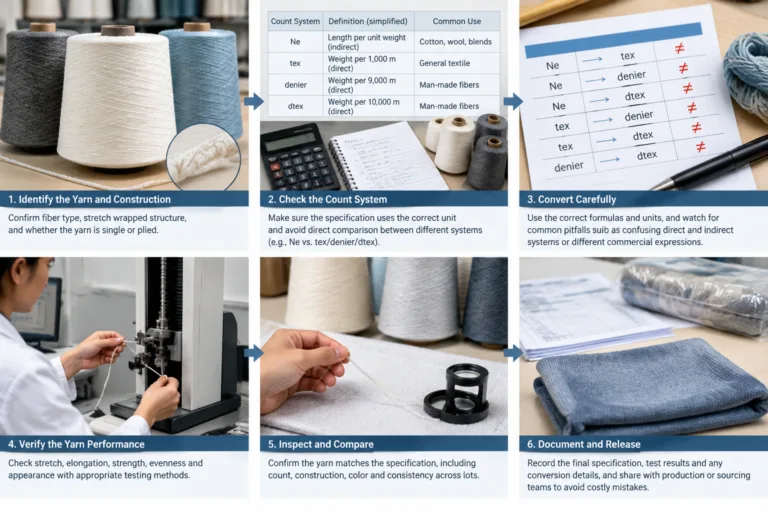
Yarn linear-density units also need careful handling. Tex describes mass in grams per 1,000 meters, denier uses grams per 9,000 meters, and dtex uses grams per 10,000 meters. These are direct systems. Cotton count systems such as indirect count values express length per unit mass, so their numbers should not be compared directly with tex, denier, or dtex without proper context. Even within one system, a single yarn count may not describe a plied yarn unless the notation is understood.
For product teams, the practical lesson is simple: record the blend ratio together with the yarn description, construction, fabric weight, finishing, and intended garment use. Those details make a comparison meaningful and help explain why two extra long staple cotton fiber blends with similar listed content can deliver noticeably different results.
How to Evaluate an Extra Long Staple Cotton Blend for a Garment Program
Evaluating an extra long staple cotton blend should begin with the garment, not the fiber list. Define whether the fabric is intended for a next-to-skin top, shirting, jersey, fleece, workwear, stretch bottom, knitwear, or another specific use. Each category creates different priorities for handle, opacity, movement, drying behavior, appearance retention, care, and manufacturing consistency.
Before reviewing swatches, rank the attributes that matter most. A development brief might prioritize a soft hand, controlled stretch, recovery, low pilling tendency, dimensional stability, colorfastness, durability, easier care, or target cost. These priorities help prevent a broad list of possible benefits from replacing a clear product requirement. A blend is useful only when it addresses a defined need that the selected construction can support.
Request comparable samples and record the details that make comparison meaningful: fiber identities and stated percentages, yarn description where available, fabric construction, fabric weight, finishing details, and intended garment use. Samples should be as similar as practical when the purpose is to compare fiber choices. A fabric with a different weight, knit structure, or finish may produce a different result even when its fiber content looks similar.
Laboratory information can support the decision, but it should be read alongside wear or use samples. A result for one attribute does not settle every question about comfort, appearance, recovery, or production suitability. Test methods, conditions, and acceptance criteria should be selected for the product category and selling market. There is no universal pass or fail threshold for every extra long staple cotton blend.
Finally, document the trade-offs. Select the option that best supports the intended garment rather than the option with the longest list of claimed advantages. This is an editorial decision framework from Apparel Wiki, not a certification protocol or a substitute for product-specific technical review.
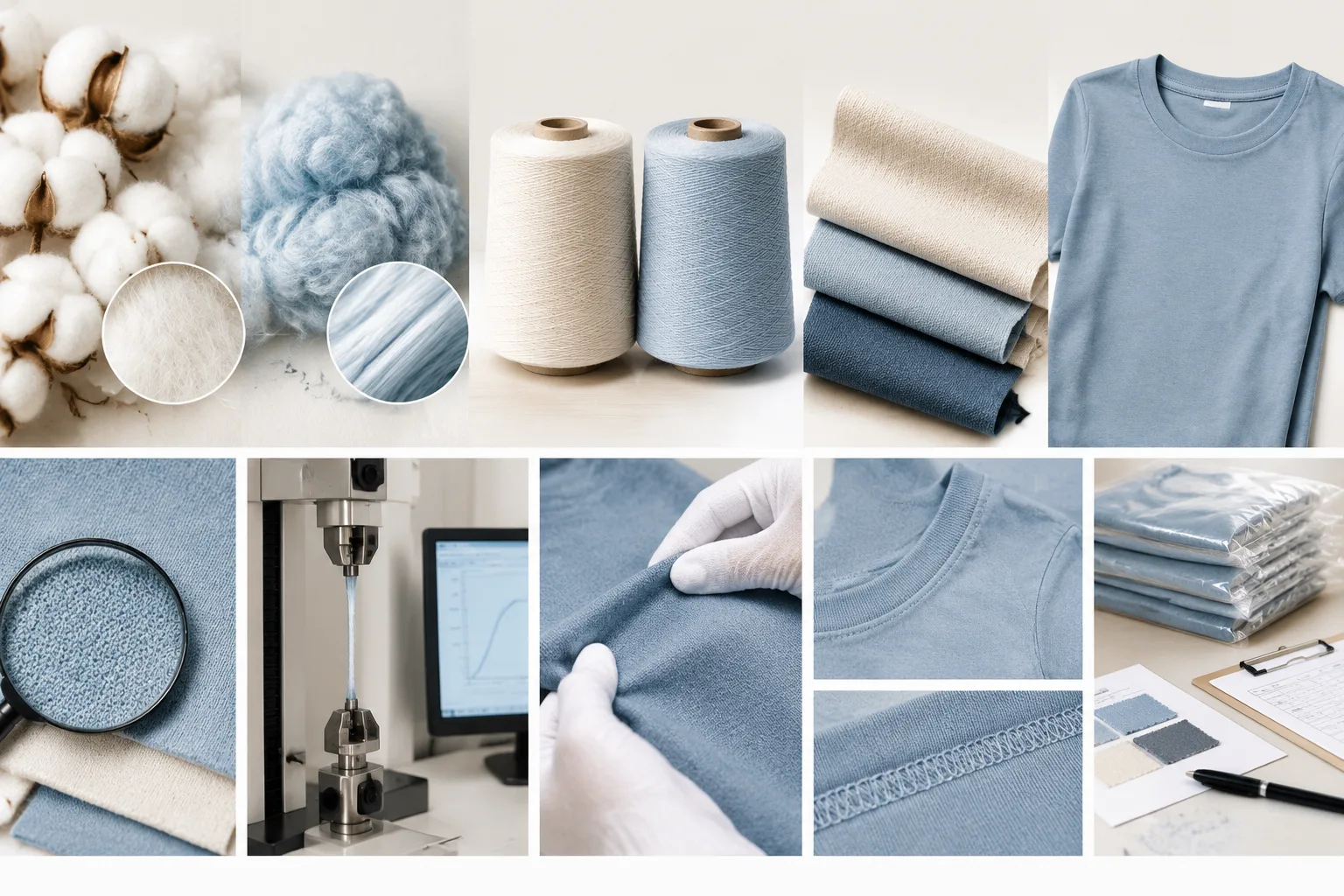
A Practical Comparison Matrix for Common Product Priorities
The matrix below uses hypothetical product-development situations. It is designed to turn a broad objective into questions that can be answered with comparable samples and documented evidence.
| Product priority | Possible blend direction | Questions to ask | Evidence to request |
|---|---|---|---|
| Soft, cotton-led jersey | 100% extra long staple cotton or a cotton blend with a cellulosic fiber | Does the hand feel remain suitable after finishing and laundering? Is the surface character consistent? | Construction details, finishing information, comparable swatches, and use-sample feedback |
| Stretch fitted garment | Extra long staple cotton with elastane | What level of stretch and recovery is needed for the pattern and movement? Does the fabric retain its intended fit? | Blend percentage, fabric construction, recovery evaluation, and garment-level testing |
| Easier-care uniform-style item | Extra long staple cotton with polyester or another selected fiber | How do drying behavior, appearance retention, hand feel, and care instructions balance one another? | Like-for-like fabric data, finishing details, laundering evaluation, and wear samples |
| Drapey seasonal layer | Extra long staple cotton with modal, lyocell, viscose, linen, silk, or wool | Is the desired drape and thermal character compatible with the construction, care expectations, and target garment? | Fiber identity, yarn and fabric description, care review, and dimensional evaluation |
These examples do not identify a universally superior composition. Retain 100% extra long staple cotton when its cotton-led character and test results already meet the use case. Consider a blend when it solves a specific requirement and the resulting fabric remains suitable for the pattern, finishing plan, care instructions, and target market.
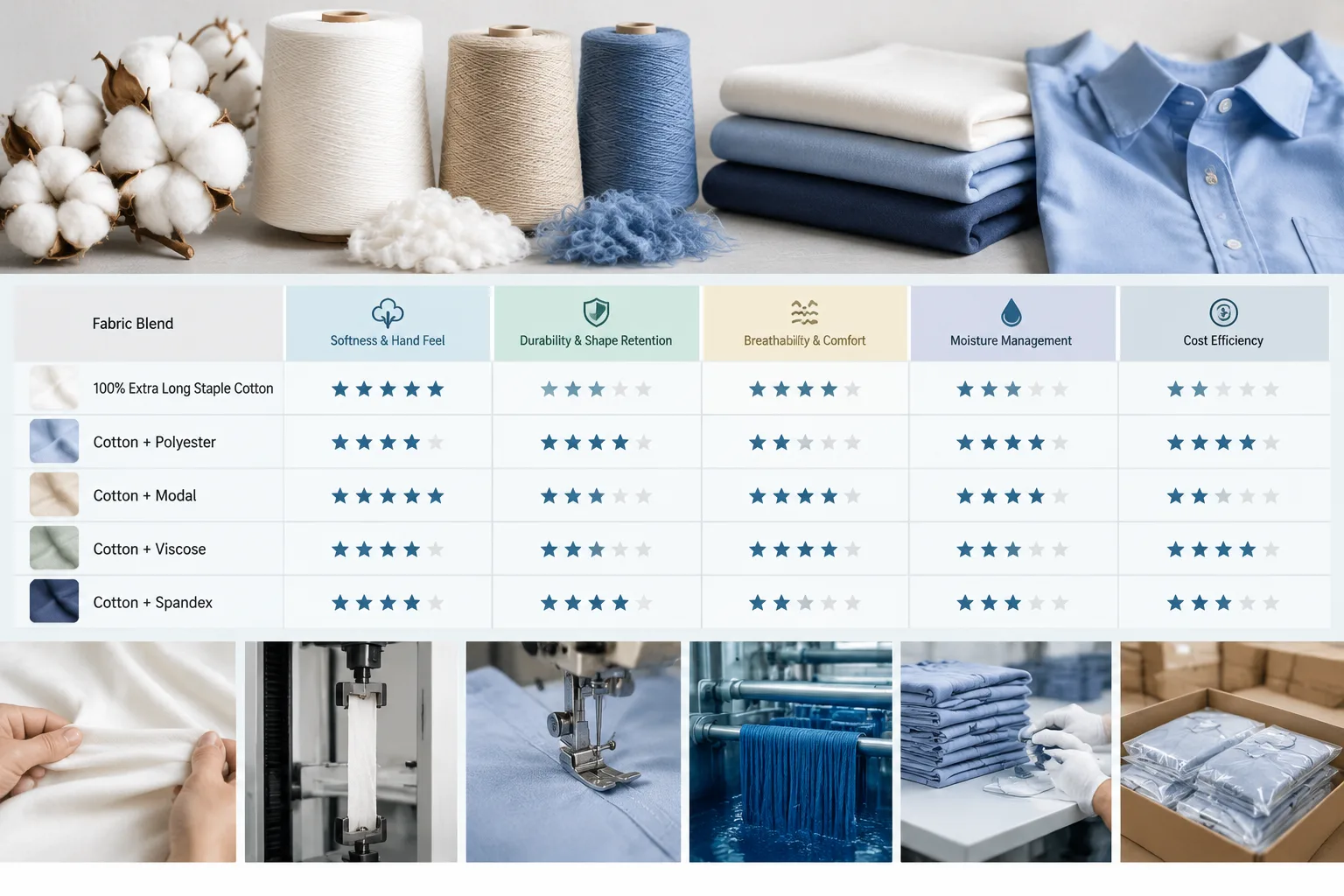
Limits of Fiber-Content Claims and Next Steps for Sourcing Teams
Fiber content is important, but it cannot verify garment quality, comfort, durability, environmental impact, or suitability for every use. The extra long staple cotton status, blend percentage, generic fiber identity, yarn details, fabric construction, finishing, and test results answer different questions. They should be documented separately rather than compressed into one broad quality claim.
Generic fiber names should also be kept distinct from trademarks, production processes, and raw-material sourcing claims. A branded material or proprietary process may have its own scope and evidence requirements, but it does not replace the need to identify the applicable generic fiber name. Any fiber-content or labeling statement should be checked for the market where the garment will be sold.
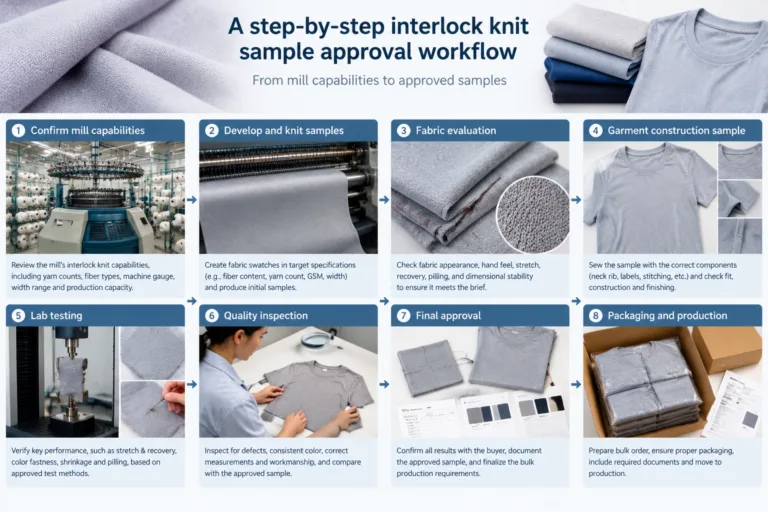
A practical sourcing sequence is straightforward: define the garment use case, shortlist suitable constructions, obtain development samples, compare them under consistent conditions, confirm market-specific labeling and claims, and approve the selected option against written specifications. Apparel Wiki is an independent educational publication, not a manufacturer, factory, laboratory, certifier, or sourcing provider. For broader development context, readers can also consult the Apparel Manufacturing Tools resource.
The next step is to turn the preferred blend concept into a documented fabric brief. Record the intended use, fiber content, yarn information, construction, finishing, priority attributes, comparison conditions, and acceptance criteria before development decisions are finalized.
FAQ
Is extra long staple cotton always better than regular cotton in a blend?
No. Extra long staple cotton may support a particular hand feel or yarn-development objective, but the best choice depends on fiber content, yarn design, fabric construction, finishing, garment use, and documented results.
What fibers are commonly blended with extra long staple cotton?
Common development partners include polyester, elastane, modal, lyocell, viscose, wool, linen, silk, and other natural or manufactured fibers. Each pairing should be evaluated for a defined product requirement rather than treated as a universal recommendation.
Does a higher percentage of extra long staple cotton guarantee a better fabric?
No. A higher percentage does not by itself determine comfort, durability, pilling, recovery, shrinkage, or appearance retention. The yarn, construction, finishing, and garment design can materially change the finished result.
Can extra long staple cotton blends be used for stretch garments?
Yes. Extra long staple cotton may be blended with elastane for garments requiring controlled stretch and recovery. Elastane percentage alone does not determine fit retention, so the complete fabric and garment should be evaluated.
What information should I request when comparing extra long staple cotton blend fabrics?
Request the stated fiber content, generic fiber names, yarn description where available, fabric construction, fabric weight, finishing details, intended use, test conditions, and comparable samples. These details make supplier or laboratory information easier to interpret.
Does fiber content alone tell me whether a fabric will pill, shrink, or hold its shape?
No. Those outcomes can depend on fiber morphology, blend ratio, yarn structure, fabric construction, finishing, laundering, and garment use. Product-specific testing and use samples provide a more reliable basis for evaluation.