
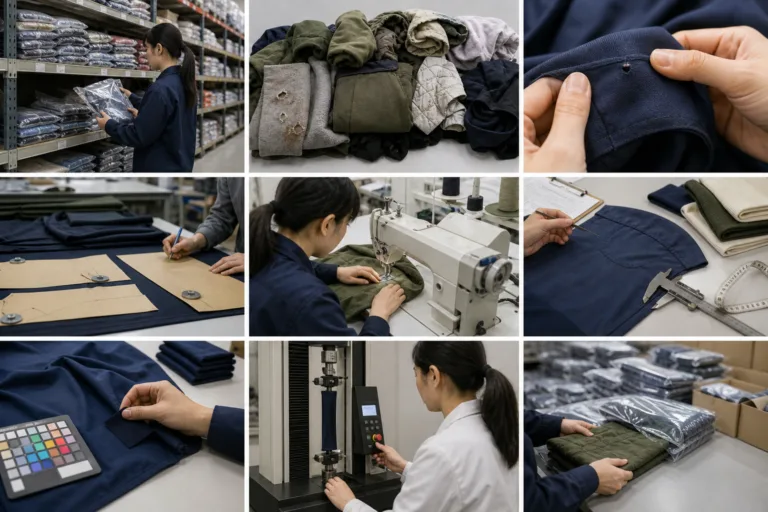
Damaged stock handling problems mislead apparel stock decisions when warehouse-held garments are treated as immediately usable inventory. A garment may still exist physically but be unavailable for sale, allocation, production use, or shipment because it needs inspection, repair, repackaging, return, or another documented disposition. Apparel Wiki is an independent educational publication; its editorial work is separate from sponsorship, as explained on the Sponsor page.
The central distinction is between physical stock, recorded stock, and usable stock. Physical stock is what can be found at a location. Recorded stock is what the inventory record says exists and what status it has. Usable stock is the quantity that meets the relevant product, channel, and fulfillment conditions at that moment. These quantities may differ, and warehouse quantity alone does not establish immediate availability.
Why Damaged Stock Handling Can Mislead Apparel Stock Decisions
A misleading decision can arise in several ways. Damaged apparel inventory may remain in a sellable balance even though customers cannot receive it. It may be removed from the system without a traceable reason, making the change look like ordinary demand or unexplained shrinkage. Or it may be mixed with quarantined, returned, repairable, allocated, and disposed units under one broad “on hand” number.
Each treatment creates a different planning problem. Counting damaged units as sellable can delay replenishment because the apparent quantity looks sufficient. Excluding them without recording the event can make demand, loss, and stock movement harder to interpret. Mixing statuses can cause purchasing, allocation, markdown, and replenishment teams to act on different versions of the same inventory position.
The effect can be especially visible in apparel, where a style-level total may conceal a shortage in a particular size or color. A team may see enough units of a shirt overall while the most requested size is unavailable, damaged, allocated, or awaiting inspection. The result is high apparent stock alongside poor service. This is a stock-state problem, not necessarily a demand problem.
The appropriate response is a documented classification and reconciliation process, not an automatic assumption that every damaged garment should be discarded. A disposition may depend on the product, customer channel, documented acceptance criteria, condition, and available evidence. Accounting, tax, insurance, and legal treatment are separate matters that depend on the organization and applicable jurisdiction; an operational status should not be presented as a universal financial conclusion.
Which Damaged Stock States Must Be Separated in the Records?
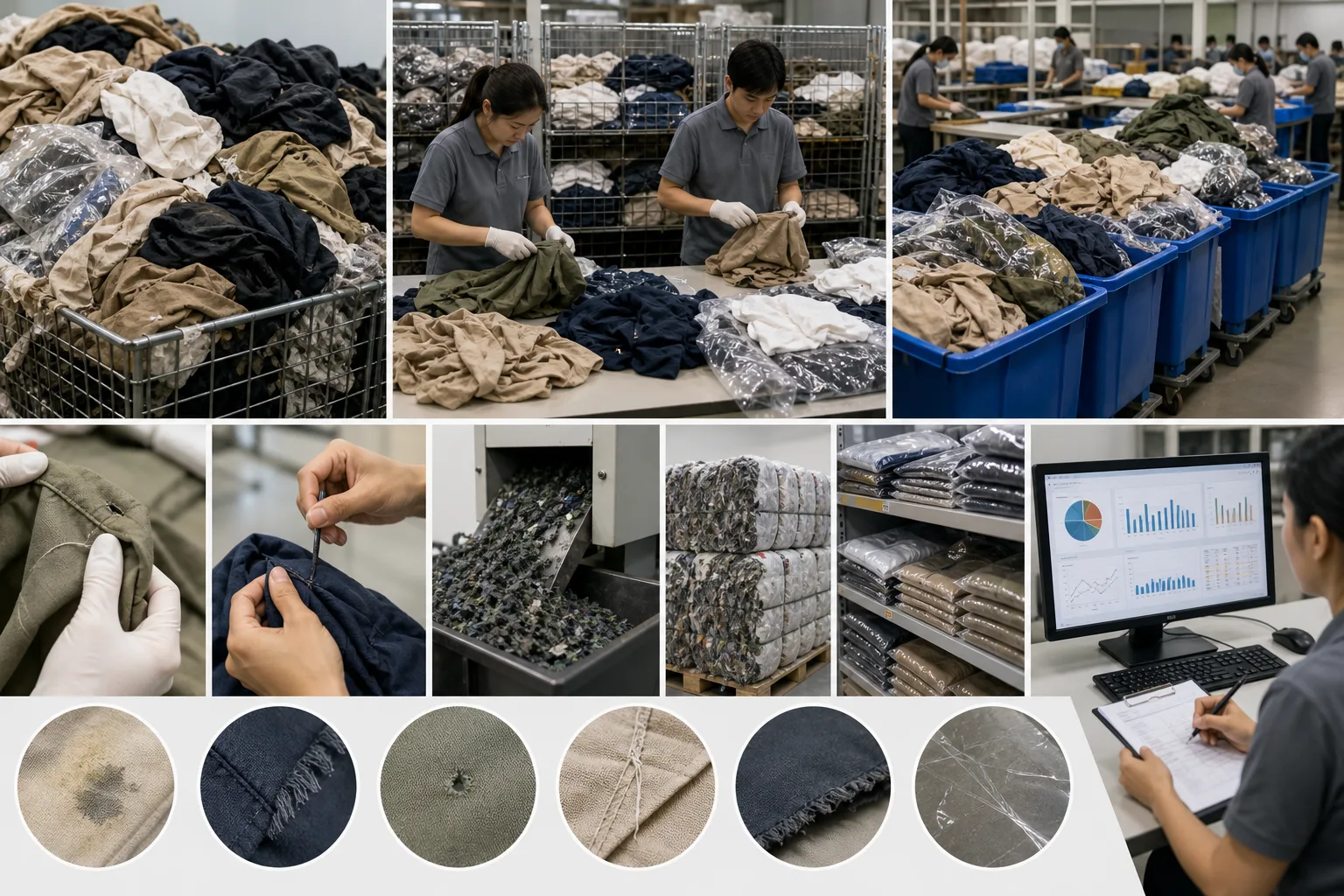
A practical management framework separates stock states before a team uses the data for fulfillment or planning. The exact names depend on the inventory system or controlled spreadsheet, but the underlying distinction should remain visible. At minimum, teams should be able to distinguish the following categories:
| Stock state | What it means operationally |
|---|---|
| Sellable stock | Units currently accepted for the intended sales or fulfillment channel. |
| Allocated stock | Units associated with an order, channel, or planned use and not freely available for another commitment. |
| Quarantined stock | Units held pending inspection or a decision about condition and use. |
| Damaged stock | Units with a recorded condition that prevents normal use until a disposition is made. |
| Repairable stock | Units identified for possible repair or rework, subject to documented verification. |
| Returned stock | Units received back and awaiting assessment rather than automatically returning to sellable stock. |
| Disposed or written-off stock | Units no longer available for the intended operation, where the organization supports this status. |
These are adaptable control categories, not mandatory universal system fields. The important point is that a unit’s physical location and system status should be recorded together. A garment in a warehouse cage, returns area, repair room, or inspection zone is not automatically available to promise simply because it can be counted.
Useful records normally identify the SKU, color, size, quantity, location, discovery date, damage description, owner, and current disposition status. A lot or batch reference may also matter where the organization uses one. Examples of symptoms include stains, holes, broken closures, shade variation, or packaging damage. These descriptions identify what was observed; they do not, by themselves, prove severity, cause, or final disposition.
Size and color detail is essential because fragmentation can make nominal availability operationally unusable. If a style has units remaining but the affected size is concentrated in quarantine, the style total should not be used as though every size were available. The record should also show who is responsible for the next decision and how warehouse, quality, merchandising, procurement, and finance information will be reconciled.
The same physical defect may receive different treatment in different contexts. A packaging issue might be suitable for repackaging in one customer channel, while a garment condition that fails a documented product requirement may remain restricted. A lower price does not automatically change an unacceptable garment into sellable stock. The status should follow the organization’s documented criteria and evidence, rather than an informal assumption.
How Damaged Stock Creates False Signals in Replenishment and Demand Analysis
When damaged units remain in the available quantity, replenishment logic can underestimate the need for replacement stock. The system may show enough inventory to cover expected orders, while the usable quantity is below the planning target. This can delay purchasing or production decisions, leave a size unavailable, and create a service problem that is incorrectly attributed to slow execution or weak demand.
The opposite problem occurs when damaged units disappear through an unrecorded adjustment. The resulting gap may be interpreted as sales, unexplained shrinkage, or an isolated counting error. If similar events are recorded inconsistently, the history can make demand appear stronger, weaker, or more erratic than the underlying customer interest. A damaged-stock record can create a misleading signal, although other causes may also contribute to the observed result.
Low sales during an unavailable period do not necessarily prove low demand. Customers may postpone a purchase, choose another size or color, switch to another product, or leave the channel. For that reason, physical loss, sales loss, replacement demand, customer returns, and unfulfilled demand should be kept distinguishable where records allow. Combining them into one inventory adjustment removes useful context.
Damaged units can therefore distort sell-through, stock cover, reorder decisions, aged-stock analysis, and size-level availability. Stock cover may look comfortable when restricted units are included, while the usable cover is much shorter. Aged inventory may appear to be moving slowly even though the old units are not actually available for sale. A markdown decision may also be based on apparent excess stock that is partly damaged or awaiting assessment.
Historical order, shipment, return, transfer, adjustment, and damage records help test the chain from event to decision. Compare the physical count with the recorded status, then identify what planners could see at the time. Terms such as available-to-sell or available-to-promise may be configured differently across systems, so teams should use their system definitions consistently. No single metric is sufficient on its own; status accuracy and context determine whether the metric is useful.
A Practical Procedure for Investigating Damaged Stock Handling Problems
Begin with the observable discrepancy rather than an assumed cause. Record the SKU, size, color, physical location, quantity, damage description, discovery date, frequency, and condition in which the issue was found. A useful description might note a stain, hole, broken closure, shade variation, or damaged packaging, but it should not claim why the problem occurred before the evidence has been reviewed.
Next, reconcile the physical count with the relevant transactions. Check receipts, picks, shipments, returns, transfers, cycle counts, manual adjustments, and status changes. The objective is to establish where the units entered the record, when their status changed, and whether the physical quantity still agrees with the system. This approach works in a controlled spreadsheet as well as in a larger inventory platform, provided the transaction history is preserved.
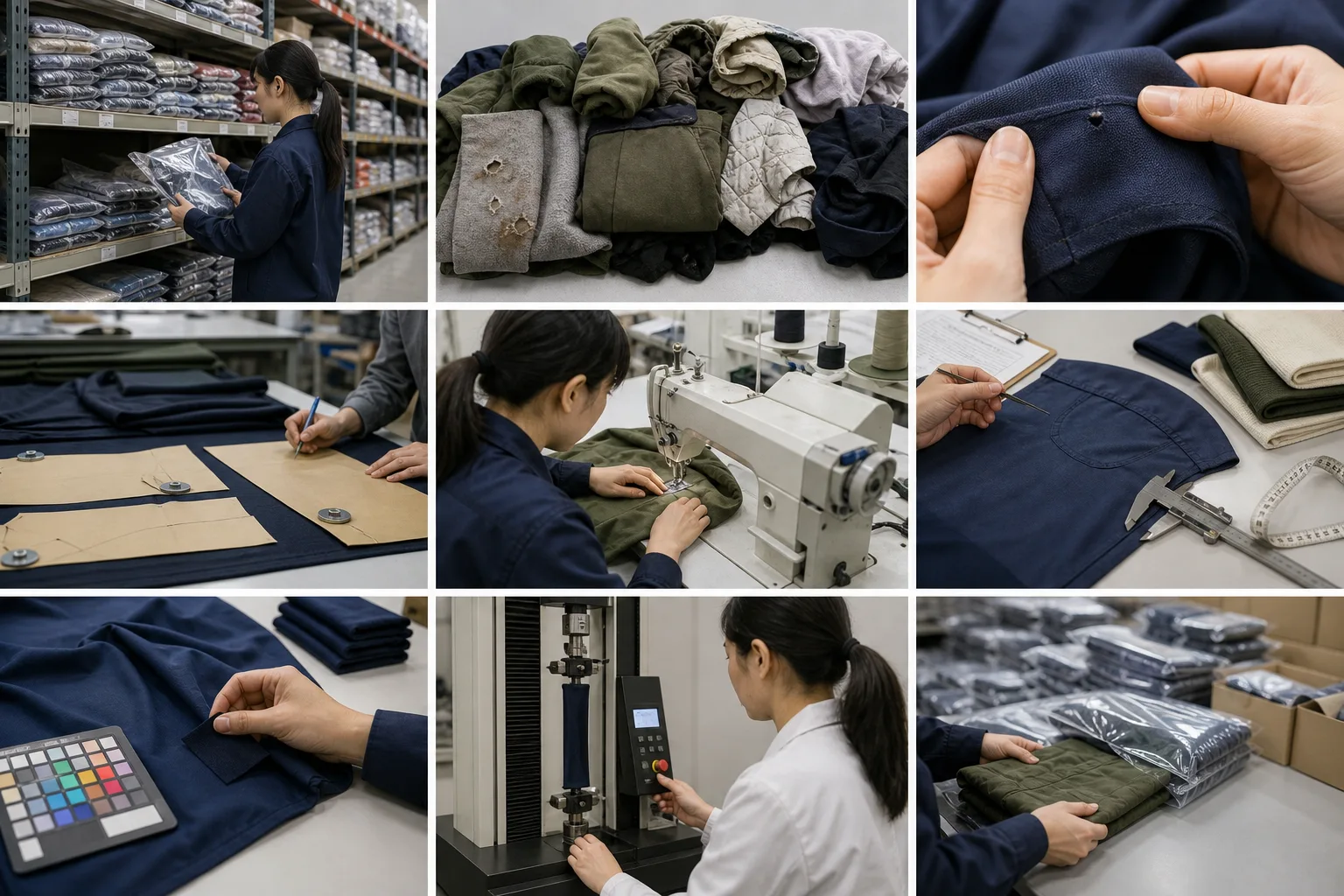
Keep competing explanations open during the investigation. Handling damage, packaging or transit conditions, storage conditions, material or construction weakness, process error, and counting error can produce similar observations. A photograph is useful evidence of a condition at a particular time, but it does not establish the root cause by itself. Compare photographs with inspection notes, measurements, batch information, location records, and targeted checks that can support or challenge each hypothesis.
After the condition is verified, classify the units according to documented product and channel criteria. Possible outcomes include sellable, restricted, repairable, returnable, recyclable, or disposable stock. The appropriate choice may differ by product requirement, customer channel, and the evidence available. Avoid treating a temporary quarantine decision as a final disposition.
Record the decision, responsible owner, approval where applicable, date, and related inventory adjustment. This creates a decision trail that allows later demand and replenishment analysis to explain the event instead of treating it as unexplained shrinkage or ordinary sales behavior. Recheck the affected SKU, size, color, location, and related records after the correction. The investigation is not complete until the physical stock and recorded status agree or the remaining difference has a documented explanation.
How to Evaluate Disposition Without Hiding the Inventory Problem
Disposition should be evaluated as two connected but separate questions: what can happen to the garment operationally, and how should its stock status be represented while that decision is pending? Repair, rework, repackaging, controlled sale, return to a supplier, salvage, recycling, and disposal each have different evidence and ownership requirements. None should be used to make an unresolved inventory discrepancy disappear.
For each option, review the garment’s condition, customer promise, channel requirements, traceability, expected recovery, time involved, and repair or handling effort. Any product-safety, labeling, environmental, resale, or disposal issue depends on the product and jurisdiction and should be checked against the applicable requirement. Financial treatment, including any write-off or valuation decision, should follow the organization’s accounting policy and relevant professional guidance rather than an assumed universal rule.
A recovered unit should return to sellable stock only after the required verification is complete. A repaired seam, replaced closure, or new package may address one observed condition, but the team still needs to confirm that the garment meets the documented acceptance criteria for its intended channel. A lower price or markdown does not automatically make an unacceptable garment suitable for sale.
A compact review table can keep the decision visible:
- Condition: What is observed, and what remains uncertain?
- Evidence required: Which inspection notes, photographs, measurements, or records support the decision?
- Operational action: Will the unit be repaired, repackaged, returned, recovered, or removed?
- Stock status: Is it sellable, restricted, quarantined, or disposed?
- Decision owner: Which warehouse, quality, merchandising, procurement, or finance role records the outcome?
This separation protects both operations and analysis. A repair decision can improve future usable quantity, while the original damage event may still matter for inventory age, margin analysis, supplier review, or replenishment interpretation. Recovery value, repair feasibility, and customer acceptance are project-dependent judgments, not fixed characteristics of all damaged apparel.
Controls That Keep Damaged Stock From Distorting Future Decisions
Use one intake and quarantine path for suspected damaged units before they return to sellable stock or leave through an untracked adjustment. The process should identify the physical location and system status together. This prevents warehouse-held garments from being counted as immediately available simply because they remain somewhere on the premises.
Consistent damage codes make later comparison possible, but the code should not replace a useful description. Capture enough detail to distinguish the observed symptom, suspected cause, and confirmed cause. Review damage by SKU, size, color, supplier or process, location, handling step, and time period when the records support a meaningful comparison. A pattern can guide investigation, but correlation alone does not prove the cause.
Reconcile physical stock and system status on a cadence appropriate to the operation and its risks. High-value, fast-moving, or repeatedly damaged items may need faster review than slow-moving goods. Track the age of unresolved quarantine units and the disposition backlog so restricted inventory does not become invisible inventory. The purpose is decision reliability and traceability, not a claim that any one control guarantees perfect accuracy.
Before making a replenishment, allocation, markdown, or purchasing decision, check the usable quantity, affected sizes and colors, relevant demand period, damage events, pending returns, replacement requirement, and evidence quality. Confirmed recurring causes can then be routed into packaging, storage, inspection, handling, supplier, or product-development corrective actions. These controls should be adapted to the team’s records and responsibilities rather than treated as certification requirements.
The practical next step is to map one recent damaged-stock event from discovery through final disposition. Compare the physical units, system status, transaction history, and decision made at the time. This small review can reveal whether the main weakness is classification, reconciliation, ownership, or follow-up. For broader apparel operations context, consult the relevant Apparel Manufacturing Tools resources while keeping local system definitions and policies as the controlling reference.
FAQ
What is a damaged stock handling problem in apparel inventory?
It is a failure to identify, classify, record, reconcile, or disposition damaged garments consistently. The result can be a difference between physical stock, recorded stock, and stock that is genuinely usable.
Why should damaged garments be separated from ordinary warehouse stock?
Warehouse presence does not prove that a garment is sellable or available for allocation. Separating damaged, quarantined, repairable, returned, allocated, and sellable units gives planners a more reliable usable quantity.
Can damaged stock make replenishment demand look lower than it really is?
Yes. If damaged units are counted as available, replenishment may be delayed despite poor usable availability. If units are removed without a recorded event, demand and stockout history may also become harder to interpret.
What information should be recorded when apparel stock is found damaged?
Record the SKU, size, color, location, quantity, observed condition, discovery date, relevant lot or batch, photographs or inspection notes, current status, owner, and final disposition when known.
Should damaged garments be repaired, discounted, returned, or written off?
There is no universal answer. Compare condition, documented acceptance criteria, customer channel, traceability, recovery effort, supplier arrangements, and applicable organizational policies before choosing a disposition.
How can a team verify that damaged stock has been removed from available inventory?
Compare the physical count with the system status and transaction history, then confirm that the affected SKU, size, color, and location reflect the approved disposition. Any remaining difference should have a documented explanation.