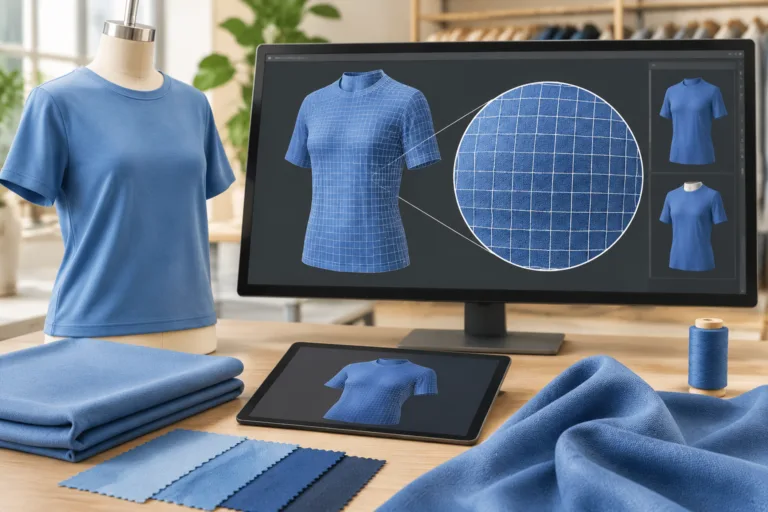
Garment mesh resolution principles help explain why a digital garment can look smooth yet still provide an unreliable fit review. In practical terms, mesh resolution is the level of geometric subdivision used to represent garment panels and their deformation in a digital apparel system. It should be chosen for the feature and decision being reviewed, not treated as a universal polygon-count target. Apparel Wiki is an independent apparel knowledge publication; its Sponsor information does not turn this guidance into software, manufacturing, or testing advice.
A useful resolution must work with the pattern geometry, avatar, material inputs, pose, and solver context. More detail can help represent a small opening or curved area, but it cannot correct an inaccurate pattern or unsuitable material settings. The sections below separate geometric resolution from appearance assets and show how to make a documented, project-specific choice.
What Garment Mesh Resolution Means in Digital Apparel
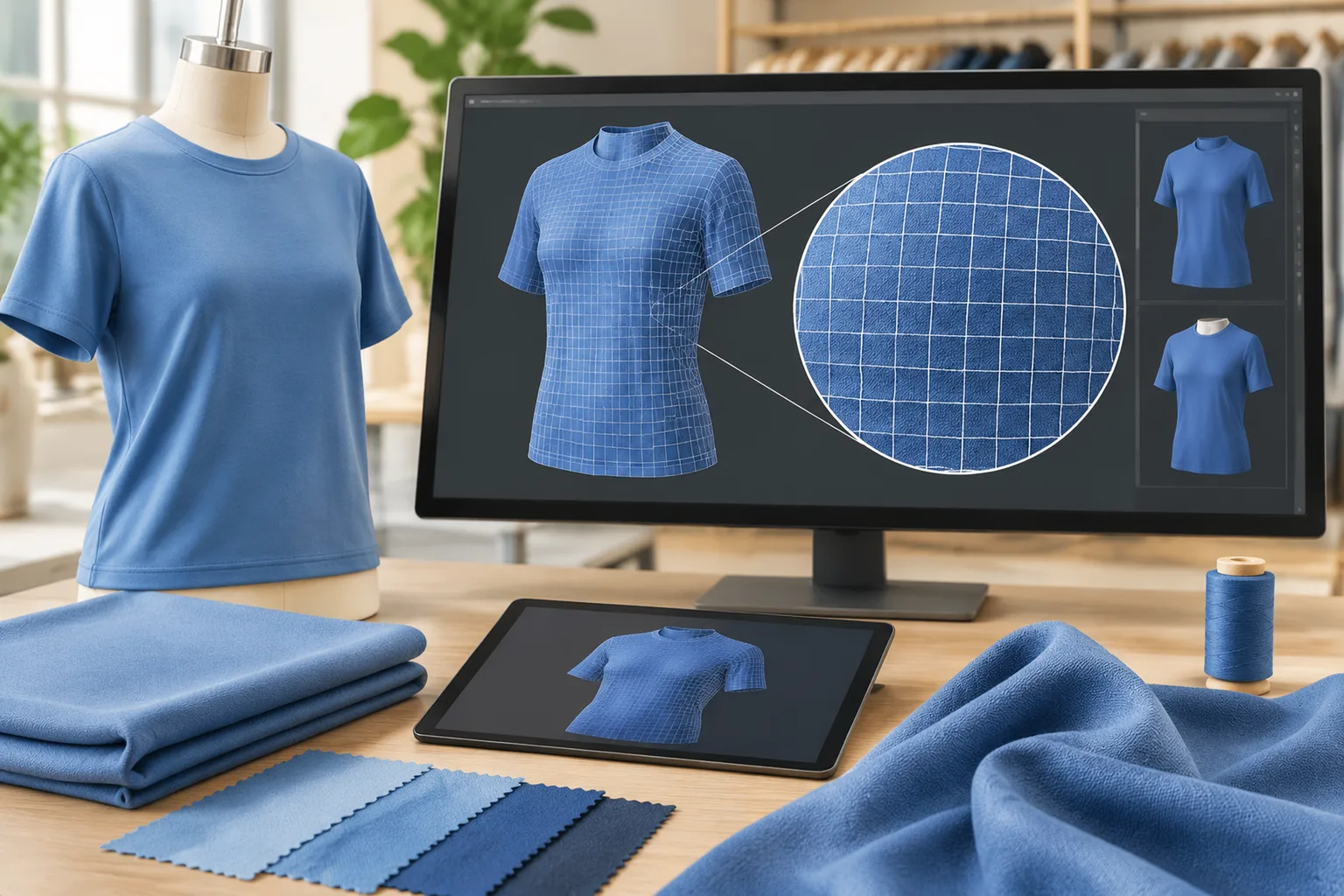
A digital garment surface is built from connected geometric elements that represent the garment panels created from pattern geometry. Mesh resolution describes how finely those panels are subdivided. Smaller elements can give the model more locations at which shape and deformation are represented, while larger elements provide a simpler surface. The exact terminology and behavior can vary between digital apparel systems.
This is why garment mesh resolution is a modeling and simulation setting, not a standalone accuracy score. A coarse mesh may make a narrow feature, curved edge, or local shape difficult to inspect. A very dense mesh may increase computational work within a particular workflow without improving an incorrect pattern, avatar, material description, or solver setup. No universal polygon count applies to every garment or review stage.
Mesh resolution also differs from several related concepts:
- Texture resolution controls the detail of a color, print, weave image, or other visual map. It does not create garment geometry.
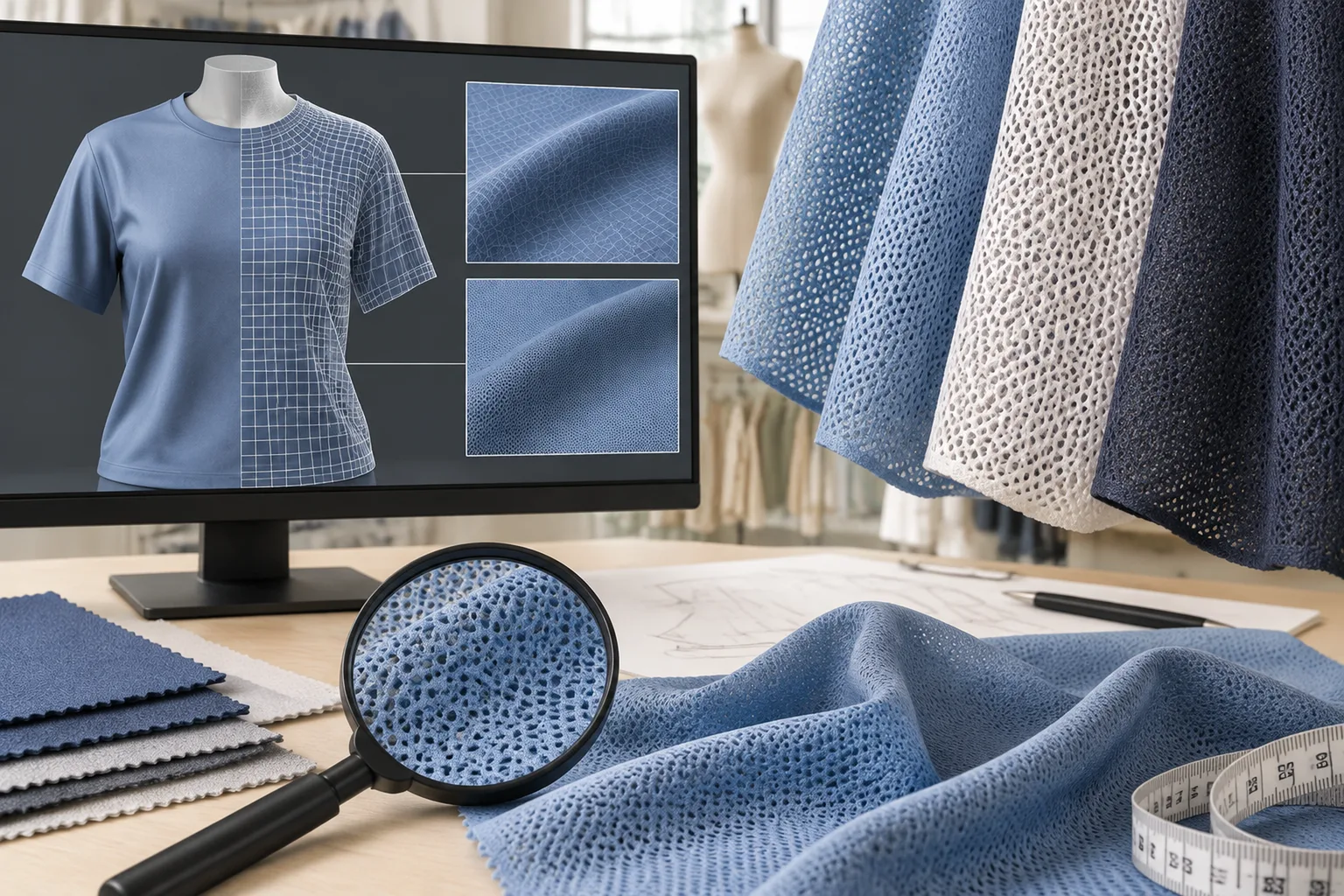
- Fabric visual assets describe appearance, such as color or surface character. They do not replace physical inputs describing responses such as stretching or bending.
- Avatar resolution concerns the digital body representation. A detailed avatar does not make the garment mesh suitable for every body or pose.
- Render quality affects image sharpness, lighting, and smooth display. A polished render is not evidence that the simulated garment behaves physically.
The practical principle is to use enough geometric detail for the smallest meaningful feature and the stated evaluation question. Then qualify that choice against the software’s behavior, available resources, material characterization, pattern revision, avatar, pose, and solver settings.
How Garment Mesh Resolution Principles Affect Digital Fit
Element size influences how a digital garment represents curves, folds, openings, seam neighborhoods, hems, and other local geometry. With insufficient detail, a local shape may be simplified, making it harder to distinguish the intended construction from a geometric artifact. Refinement can give the surface more freedom to represent local deformation, but it does not automatically create realistic folds or correct the inputs driving those folds.
Seams and edges deserve particular attention because they often concentrate the visual or construction question. A broad silhouette review may not require the same geometric attention as an opening, shaped panel, or seam intersection. The relevant issue is not whether the entire garment looks detailed, but whether the mesh can represent the region being judged well enough for that decision.
Fit interpretation also depends on separating mesh effects from other causes. An unexpected result may come from pattern geometry, material parameters, collision settings, avatar posture, or solver configuration. Changing resolution is therefore not a universal fix. Simulation stability and the way refinement affects it can also depend on the software and solver, so conclusions should remain tied to the workflow used.
Evaluation purpose changes the decision. A designer checking proportion and broad balance may focus on the silhouette. A pattern maker examining a shaped opening may need closer attention to the local edge and surrounding deformation. A movement review introduces pose and garment motion as additional conditions. The same digital apparel mesh resolution can be adequate for one question and inadequate for another.
Consider a lightweight knit with a broad, uncomplicated silhouette. Its early review may emphasize overall shape and balance. A structured garment with narrow openings or concentrated seam detail may require more attention around those features. That contrast is a starting distinction, not a garment-type rule. Pattern geometry, material input, avatar pose, and software behavior can change the appropriate choice.
A visually smooth render and a physically credible simulation are separate judgments. Texture quality can make a fabric look convincing while contributing little evidence about its physical response. Likewise, a static avatar can support a bounded pose review without representing every body shape or movement condition. Mesh conclusions should always state the pose and review purpose that produced them.
Choosing a Resolution for Different Garment Features
When choosing garment mesh resolution, start with the smallest feature that must support a decision. Overall garment size alone is less useful than the scale of the curve, opening, seam area, fold, or movement being evaluated. Where a tool supports different levels of attention across a garment, local refinement may be more efficient than making every panel equally dense. That remains a workflow capability to confirm in the selected software, not a universal instruction.
| Observable input | Implication for mesh attention | Initial choice direction | Variables that could change the choice |
|---|---|---|---|
| Broad, uncomplicated panels | Prioritize silhouette, proportion, and broad drape interpretation. | Begin with efficient detail for the review question. | Pattern revision, material behavior, pose, and later construction review. |
| Curved or shaped areas | Inspect whether the surface represents the intended local form. | Give additional attention to the curved or shaped region. | Curve tightness, seam placement, avatar posture, and solver behavior. |
| Narrow openings and detailed construction | Local edges and nearby deformation may be central to the decision. | Prioritize detail around the feature being evaluated. | Opening geometry, seam or hem information, collision settings, and review purpose. |
| Stiff or structured garments | Construction and material response may influence local shape and balance. | Review key structural regions rather than assuming uniform density. | Material inputs, interlining or layer representation, pattern balance, and pose. |
| Movement-focused review | Pose-related deformation and collision behavior become important. | Choose detail that supports the stated movement comparison. | Avatar dimensions, motion range, solver settings, and the garment feature under review. |
Early concept work can prioritize efficient silhouette and proportion checks. Later fit or construction review may require more attention around the specific feature or movement being judged. The choice should be recorded with its reason, rather than described simply as “high” or “low” resolution.
For example, a broad knit top may begin with a review focused on silhouette and general drape, while a structured woven piece may begin with attention to shaped panels, openings, or construction balance. Neither starting direction is guaranteed. Pattern geometry, material characterization, intended movement, avatar, and solver settings can change what the review requires.
Record the pattern revision, seam layout, material behavior, avatar and pose, solver context, review question, and available computational resources alongside the resolution choice. This makes mesh density for digital apparel development a traceable decision rather than an aesthetic preference. It also helps distinguish a genuine need for more geometric detail from a problem that belongs to another input.
A Practical Mesh-Resolution Workflow for Digital Garment Review
A useful mesh decision begins with the question the digital garment must answer. Decide whether the review concerns overall silhouette, fit balance, a construction feature, movement, or another defined observation. Then identify the garment features that need attention. A narrow opening, shaped panel, seam neighborhood, hem, or area likely to collide with the avatar may need different scrutiny from a broad uncomplicated panel.
Record the pattern revision, seam and construction information, avatar dimensions, pose, material appearance asset, physical material inputs, and solver context. These inputs form the comparison context. A resolution change is difficult to interpret when the pattern, pose, material behavior, or collision settings change at the same time.
- Set the comparison. When practical, change mesh resolution while keeping the other relevant inputs stable. Use the same pattern revision, avatar, pose, material inputs, and solver settings for each comparison.
- Inspect the same regions. Review the broad silhouette first, then examine the feature connected to the question. Depending on the purpose, this may include local folds, seams, openings, hems, collision behavior, or tension and strain indications when the software provides them.
- Separate observations from causes. A visible artifact may relate to geometric subdivision, but it may also indicate a pattern issue, unsuitable material input, avatar posture, collision setting, or solver behavior. Record the observation before assigning a cause.
- Document the decision. Note the selected resolution, software version or workflow context, input sources and versions, revision date, review pose, observed limitations, and reason the representation was considered sufficient for that stage.
Refinement is most useful when the current representation prevents a decision or creates a material artifact. After refining, reassess the same region and ask whether the issue remains. If it does, check the pattern, avatar, material, and solver inputs before adding further geometric detail. This escalation approach keeps mesh resolution connected to an actual review need.
Important digital judgments may still need comparison with an appropriately defined physical sample or other direct evidence. This is especially relevant when the decision concerns hand, wash-change behavior, critical fit, safety, or production approval. The applicable evaluation method depends on the claim being made, so the digital review should identify that method rather than treating a refined render as sufficient proof.
What Mesh Resolution Cannot Prove
Mesh resolution alone cannot prove fit across a target population. Body shape, posture, movement, grading, garment balance, and the relationship between the garment and avatar remain separate variables. A refined surface can represent a selected garment and pose in greater detail without establishing how every size or body will fit.
Nor can geometric detail compensate for incomplete or unrepresentative material inputs. A color, weave, or surface texture describes appearance; it does not by itself establish stretch, bending, compression, recovery, or other physical responses. When visual material data stands in for physical response data, a realistic image may still support a misleading drape interpretation.
The same boundary applies to simulation output. A digital result is not automatically a test-method result, regulatory determination, safety assessment, wash-change result, or hand-feel evaluation. Those claims require appropriate physical evaluation or authoritative evidence. The needed confirmation should match the claim instead of being treated as a general approval step.
A selected avatar and static pose can support a bounded review. They cannot establish behavior across all movements, sizes, consumers, or use conditions. Solver assumptions and software-specific behavior also limit how broadly a result can be interpreted. Mesh resolution is one input in the review, not a substitute for representative inputs.
Use this compact interpretation checklist:
- State the claim being made, such as silhouette, local construction appearance, or movement behavior.
- Identify the pattern, material, avatar, pose, solver, and mesh inputs supporting that claim.
- Record the revision and pose scope so later reviewers know what the result represents.
- Mark which conclusions still require physical confirmation or another authoritative evaluation.
This framing keeps uncertainty useful. A digital garment is neither automatically reliable nor automatically worthless. Its conclusion becomes more defensible when the claim is narrow, the inputs are traceable, and the limits are visible.
Recording the Decision and Planning the Next Review
Create a short garment mesh resolution record covering the selected resolution, review purpose, relevant features, pattern and material revisions, avatar and pose, observed limitations, and evidence still needed. Compare the specifications and applicable simulation or physical evaluation method, then revisit the choice when the pattern, material, avatar, or intended use changes. The goal is a scope-limited development decision, not the highest possible mesh density.
Frequently Asked Questions
Is higher garment mesh resolution always more accurate?
No. Finer geometry may represent some local features more clearly, but it cannot correct inaccurate patterns, material inputs, avatars, poses, collision settings, or solver assumptions. Its value depends on the review question and garment feature being evaluated.
How is garment mesh resolution different from fabric texture resolution?
Mesh resolution concerns the geometric subdivision used to represent garment shape and deformation. Texture resolution concerns the visual detail of color, weave, or surface appearance. A sharp texture cannot replace suitable garment geometry or representative physical material inputs.
Should mesh resolution change between early concept review and detailed fit review?
It may. Early concept work can focus on efficient silhouette and proportion review, while detailed fit or construction review may require more attention around specific features. The choice should follow the decision being made, not a universal stage rule.
What other inputs should be checked before changing a garment’s mesh resolution?
Check the pattern revision, seam layout, material appearance and physical inputs, avatar dimensions, pose, collision settings, solver context, and review purpose. A visible problem may belong to one of these inputs rather than to mesh density.
Can a high-resolution digital garment replace a physical sample?
Not for every decision. Digital review can support bounded judgments, but hand, wash-change behavior, critical fit, safety, and production approval may require appropriately defined physical evidence or another authoritative evaluation.
How should a mesh-resolution decision be documented for later review?
Record the selected resolution, garment features, review question, pattern and input revisions, avatar and pose, software or workflow context, observed limitations, and follow-up evidence. This makes later comparisons easier when any relevant input changes.