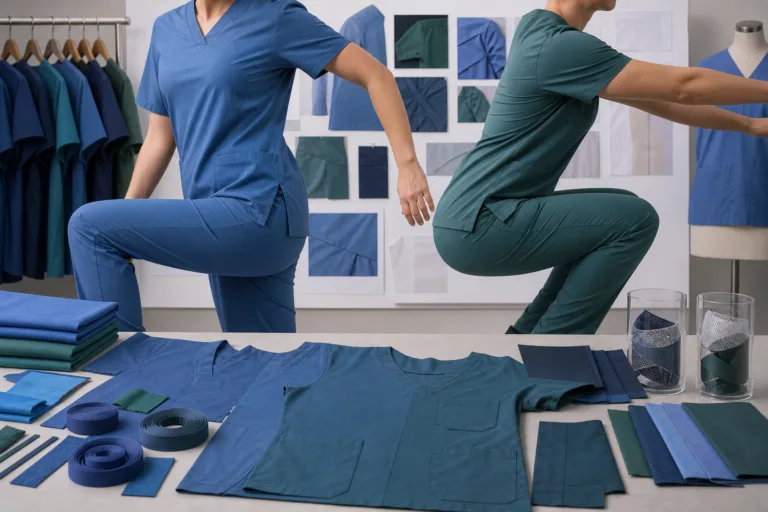
Improving movement ease in medical scrubs starts with the tasks the garment must support, not with a general promise of comfort. Movement ease is the practical freedom to reach, bend, sit, walk, lift, and perform routine clinical actions without unnecessary restriction from the garment. Apparel Wiki is an independent educational publication, separate from manufacturers and service providers; its editorial independence is described on the Sponsor page.
The right amount of ease is not the same as an oversized fit, maximum stretch, or a guaranteed comfort level for every wearer. It depends on the scrub style, intended user, size range, pattern, fabric behavior, construction method, and wearing conditions. A useful development question is therefore: which movement is limited, where does the restriction occur, and what change can address it without creating a new problem?
What Movement Ease Means in Medical Scrubs
In garment development, movement ease describes the room and flexibility available when the body changes position. For medical scrubs, that may include reaching across a patient, raising an arm, leaning forward, stepping, sitting, or carrying a small item. The garment should support the intended task sequence without excessive pulling, pressure, gaping, twisting, or loss of coverage.
This is a task-based definition rather than a category claim. A garment sold as a scrub does not automatically provide a particular level of medical scrub mobility. A top may permit forward reach but restrict overhead movement. Pants may feel comfortable while standing yet pull at the rise when the wearer sits. These outcomes must be considered for the actual garment, wearer group, and use environment.
Movement ease also differs from simply adding width. Extra fabric can improve one posture while causing shifting, excess bulk, or interference with pockets and equipment. Likewise, a stretch fabric can accommodate movement but cannot necessarily correct an unbalanced pattern, inadequate recovery, a restrictive seam, or pressure from a waistband. Design intent should remain separate from validated test results and wearer feedback.
Why Movement Ease Matters During Clinical Work
Clinical work often involves repeated changes in posture and direction. A wearer may reach forward, bend briefly, sit and stand, walk between work areas, raise an arm, or move supplies. The relevant priorities will vary by role and setting, so a scrub fit for mobility should be defined around representative tasks rather than assumptions about all healthcare workers.
Restriction usually results from an interaction of factors. A sleeve may have sufficient circumference but still limit reach because of its shape or the relationship between the sleeve and armhole. Pants may have a comfortable waistband but insufficient rise or seat room for bending. A pocket, closure, seam, or stiff trim may interfere with movement even when the basic measurements appear acceptable.
These observations should be recorded carefully. A wearer saying that a sleeve feels tight is useful user evidence, but it is not universal proof for every size or body shape. A designer observing drag lines has identified a development signal, not necessarily a confirmed cause. Instrumented testing, where used, should be reported separately from visual inspection and wearer feedback.
Involving representative users can help product teams identify movements that are easy to overlook during a fitting-room review. The goal is not to claim that greater mobility automatically improves safety, productivity, or clinical outcomes. The goal is to understand the garment’s practical behavior and make design decisions that fit the intended work context.
Which Scrub Areas Control Mobility
Mobility is controlled by the garment as a connected system. The most restrictive area may differ between a scrub top, pair of pants, jumpsuit, or layered outfit. Reviewing the key body areas helps teams locate likely sources of restriction before changing measurements indiscriminately.
- Armhole and sleeve: Armhole geometry, sleeve shape, sleeve length, and shoulder balance influence reaching, lifting, and forward arm movement. A change to one can alter tension in the other.
- Torso and back: Torso width, back shaping, side seams, and the relationship between front and back sections affect how the top follows the body during bending and arm movement.
- Rise, crotch, and seat: Rise length, crotch shaping, and seat room are relevant when sitting, bending, stepping, or walking. Medical scrub crotch fit should be reviewed in motion rather than judged only while standing.
- Waistband and inseam: Waistband pressure, elastic behavior, inseam length, knee shaping, and hem proportions can affect comfort and stride without being obvious in a static inspection.
- Openings and details: Necklines, zippers, snaps, pocket bags, pocket placement, and other closures may introduce pressure, stiffness, bulk, or interference in high-movement zones.
A practical body-area review can ask four questions: where is high stretch required, where does friction occur, where might pressure develop, and where must coverage be maintained? This framework is a design aid, not a universal measurement chart. Specific dimensions and pattern changes remain dependent on the style, size range, final materials, and intended wearer.
How to Improve Movement Ease in Scrub Design
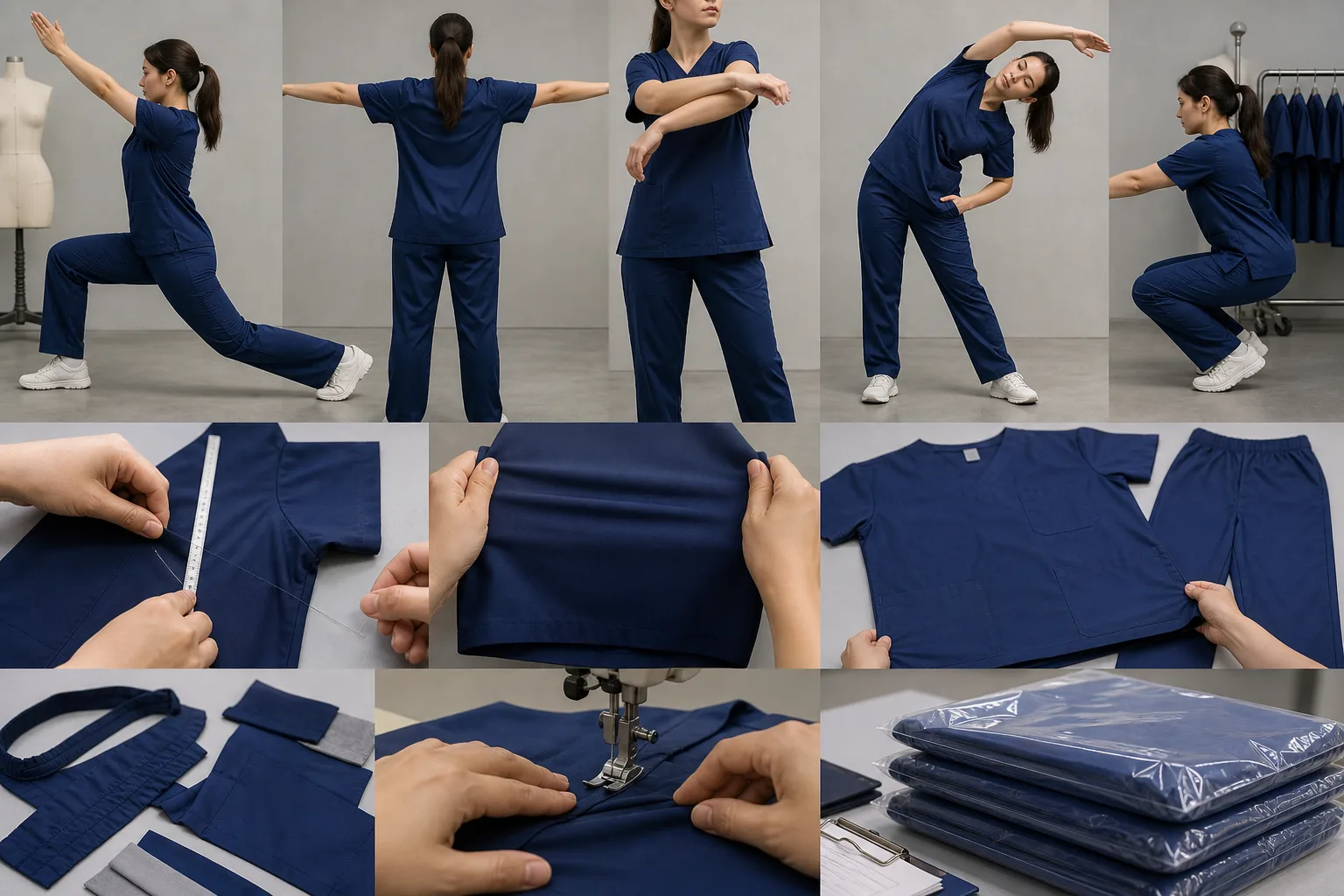
Pattern adjustments are often the first design lever. Depending on the observed problem, a team may review sleeve shape, armhole geometry, back width, torso ease, shoulder balance, rise, crotch shaping, knee shaping, or hem proportions. The correct adjustment should respond to the movement that is restricted. Adding width everywhere can obscure the cause and create a less controlled silhouette.
Material selection is another lever. A product brief may require a particular balance of multidirectional stretch, recovery, drape, breathability, and resistance to repeated laundering. These properties should be considered together. Stretch may support reach, but weak recovery can lead to unwanted movement or shape change. A fabric with useful drape may behave differently once combined with lining, elastic, pockets, closures, and seam allowances.
Construction choices can also influence scrub mobility. Teams can review bulky seam interactions, pocket placement, waistband pressure, closure stiffness, and the location of trims relative to bending or reaching zones. These are design considerations rather than guaranteed solutions. A pocket moved for easier access may affect balance; a lower-pressure waistband may change support; an altered sleeve may improve reach while reducing coverage.
For that reason, the final assembled garment should be evaluated as a whole. The final fabric, lining, elastic, trims, closures, seam construction, and assembly method should be reviewed together rather than approved only as separate components. Product teams can use Apparel Manufacturing Tools as a related Apparel Wiki resource while keeping the movement decision tied to the target task, laundering process, and wearer group.
Balancing Mobility With Fit, Coverage, and Durability
More room is not automatically better. A closer fit may create a controlled appearance but restrict a particular movement, while a relaxed fit can provide space yet allow excess fabric to shift. A shaped mobility fit aims to place ease where the wearer needs it, such as across the back, seat, or knee, without making every part of the garment oversized. The best choice depends on the task, wearer group, silhouette, and brand brief.
Added ease can also affect coverage, pocket stability, layering, and visual consistency. Extra fabric may bunch beneath a coat, move a pocket away from the hand, or create openings when the wearer bends. These are design considerations, not universal outcomes. Pattern balance, shoulder position, rise, and pocket placement should be reviewed together instead of treating width as the only answer to a mobility problem.
Stretch fabric can support movement, but it cannot automatically correct poor pattern balance or uncomfortable pressure points. Recovery also matters because a fabric that extends during movement may not return to the intended shape in the same way after repeated wear or care. Material behavior should therefore be considered with the final seams, elastic, closures, and laundering process.
A useful decision sequence is to ask:
- Which movement is most important for the intended work?
- Where does restriction or pressure appear?
- Would a pattern change, material change, or construction change address the cause?
- What trade-off in coverage, appearance, pocket access, or durability is acceptable?
- How will the revised assembled garment be checked?
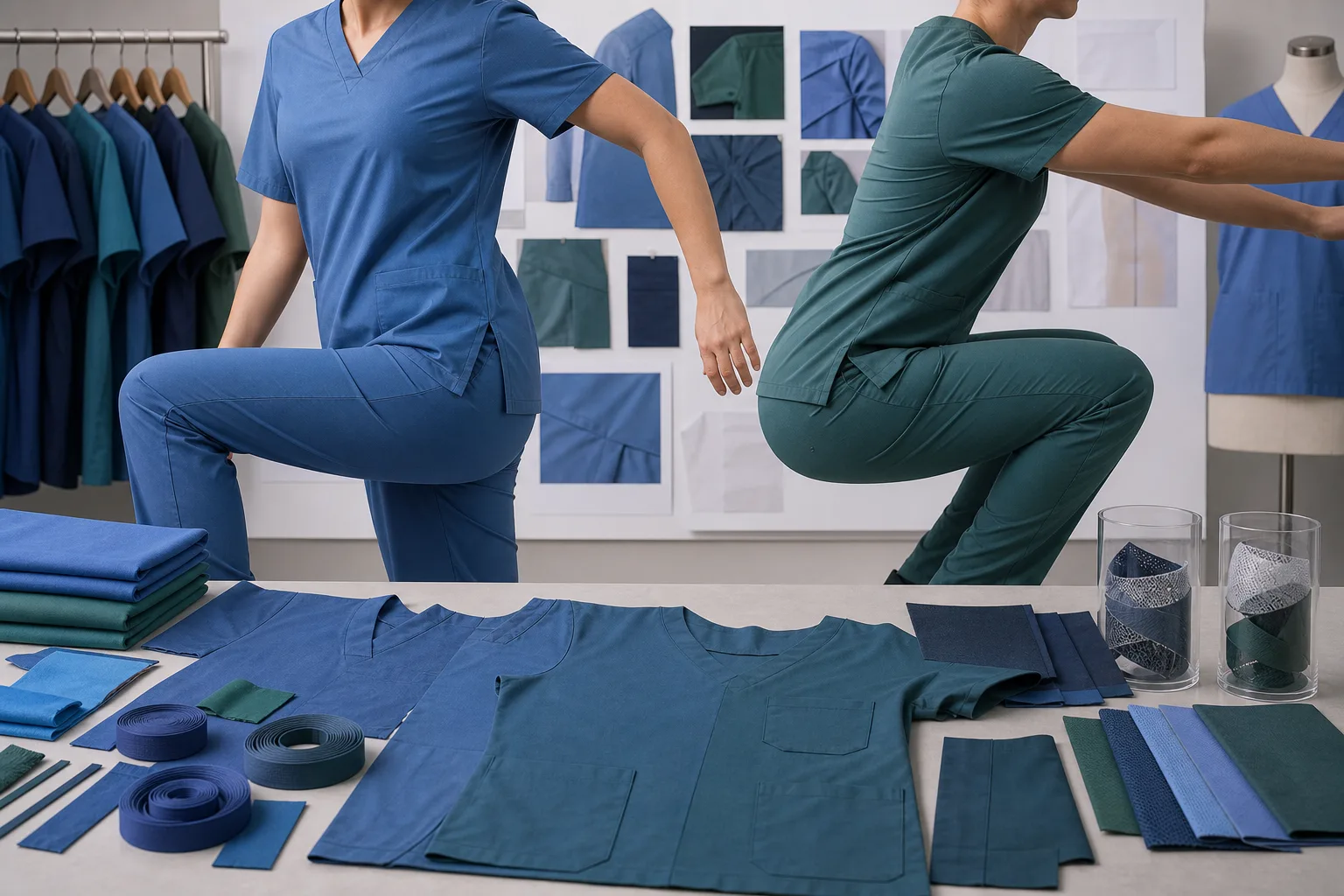
How to Evaluate Movement Ease on Scrub Samples
Begin by defining the sample and the evaluation conditions. Record the target wearer group, size range, final fabric and trims, intended layering, and the clinical tasks the garment must support. A fabric swatch or unfinished sample can reveal useful material behavior, but it cannot show how the complete garment will move.
Inspect the garment at rest before asking the wearer to move. Look for pulling, drag lines, gaping, twisting, uneven hems, pocket interference, bulky seams, and pressure around the armhole, waistband, rise, or closures. Note whether the issue appears on one side or across both sides. These observations can help separate a pattern problem from a fabric or assembly problem.
Use a repeatable movement sequence rather than relying on a general impression of comfort. Depending on the product brief, this may include reaching forward and across the body, raising the arms, bending forward, bending sideways, sitting, walking, stepping, and performing a relevant task with equipment or supplies. The sequence should be consistent enough for different samples, sizes, or wearer sessions to be compared.
Record the location and type of restriction after each movement. Add wearer feedback, but keep it separate from visual inspection and any instrumented result. Note whether the concern is tightness, pressure, exposure, shifting, rubbing, or difficulty accessing a pocket. If a problem appears repeatedly, identify the suspected cause and the proposed change rather than simply marking the garment as comfortable or uncomfortable.
Repeat the review after the expected care process when washing or drying may affect fit, recovery, appearance, or seam behavior. A simple pass-and-revise checklist can support development decisions, but it is not a certification or regulated clinical test. Review the complete garment and relevant sizes before making a production decision.
Limitations, Documentation, and Next Steps
One successful sample does not prove consistent movement ease across every size, body shape, fabric lot, or production garment. A result may also change when the garment is layered, washed, or assembled with different elastic, closures, pockets, or seam details. For that reason, conclusions should identify the sample, conditions, wearer group, and movements that were reviewed.
Document the observed restriction, suspected cause, proposed adjustment, affected component, expected trade-off, and recheck method. Prioritize the change that addresses the actual movement problem instead of adding indiscriminate width or stretch. Keep editorial guidance, wearer feedback, internal design observations, and validated test outcomes clearly separated.
Questions involving required protective performance, medical-device compatibility, safety, or legal compliance should be escalated to the appropriate specialist and authoritative source. Apparel Wiki is an independent educational publication, not a factory, laboratory, certifier, or service provider, so this article provides a development framework rather than a universal approval rule.
As a practical next step, revise the relevant pattern or specification, retest the fully assembled garment, compare the findings with representative wearer feedback, and record the final decision. This creates a traceable development loop without assuming that one fit solution will suit every scrub program.
What does movement ease mean in medical scrubs?
It is the practical freedom to reach, bend, sit, walk, and perform intended tasks without unnecessary garment restriction. It is not the same as an oversized fit or maximum stretch.
How can scrub patterns be adjusted to improve mobility?
Designers may review sleeve shape, armhole geometry, back width, torso ease, rise, crotch shaping, knee shaping, and hem proportions according to the observed restriction.
Does stretch fabric automatically make scrubs easier to move in?
No. Stretch may support movement, but pattern balance, recovery, pressure points, seam construction, and the complete garment still influence the result.
Which parts of scrub tops and pants most often restrict movement?
Common review areas include the armhole, sleeve, shoulder, back, waistband, rise, crotch, seat, knees, pockets, and closures. The restrictive area depends on the garment and task.
How should a team test movement ease on a scrub sample?
Inspect the garment at rest, run repeatable movements, record visual findings and wearer feedback separately, and review the complete garment after expected care conditions.
Can looser scrubs provide better movement than tailored scrubs?
They may provide more room in some movements, but excess fabric can affect coverage, pocket access, layering, and appearance. A shaped mobility fit may be more suitable for a specific brief.