El Salvador apparel supplier capability evaluation should begin with one question: can this specific supplier repeatedly make your specific product to the required quality, quantity, schedule, compliance conditions, and commercial terms? Supplier capability evaluation is a product-specific verification process, not a judgment based on location, reputation, or a low quotation. Use country context for initial screening, then require factory- or sourcing-partner evidence before approval. Apparel Wiki is an independent educational publication; it does not represent a factory or offer manufacturing, OEM, or ODM services. Our Sponsor information explains the publication’s editorial independence.
For founders, product developers, merchandisers, procurement teams, and quality professionals, the evaluation should start with the product rather than with a generic list of apparel suppliers in El Salvador. Define the garment category, construction, materials, target market, order profile, required development stage, and acceptable risk. Then assess whether the supplier’s claims are supported by relevant documents, samples, records, references, or controlled production evidence. Treat verified evidence, supplier-provided claims, typical industry practice, project-dependent choices, and editorial recommendations as different categories.
What Should You Evaluate in an El Salvador Apparel Supplier?
Evaluate the supplier against the complete route from product development to approved shipment. A supplier may understand a garment category but still lack the material controls, specialized finishing, development discipline, or subcontractor management needed for your design. The relevant question is not whether a company says it provides full-package production. It is whether the company can demonstrate the processes and controls required for your product.
Request a capability response built around the same specification you intend to buy. It should identify the proposed production site, development responsibilities, material and trim route, specialized operations, quality controls, testing access, packing process, and any planned subcontracting. A supplier’s stated capacity should remain a claim until it is connected to product-specific available capacity for the proposed period and supported by planning or production evidence.
| Evaluation area | Evidence to request |
|---|---|
| Product fit | Comparable samples, construction examples, process flow, and development history |
| Materials | Approved specifications, sourcing route, alternatives, color controls, and relevant test records |
| Production route | Actual site details, equipment relevant to the product, and controlled subcontractor disclosures |
| Quality | Inspection records, measurement controls, defect classification, and corrective-action examples |
| Commercial execution | A quotation with clear assumptions, inclusions, exclusions, approvals, and separately charged services |
Keep country-level background in one evidence set and supplier-level evidence in another. This separation prevents a general statement about El Salvador’s apparel industry from being mistaken for proof of an individual factory’s quality, labor practices, reliability, capacity, or compliance. It also makes later comparison more defensible because each supplier is assessed against the same product assumptions.
How Does the Country Context Help, and What Can It Not Prove?
Country context is useful for forming questions. Official commercial guidance and trade information can help a buyer investigate possible logistics routes, market-access conditions, trade-facing sectors, and broader supply-chain considerations. The U.S. International Trade Administration’s El Salvador Country Commercial Guide is a suitable starting point for country-level commercial background, while El Salvador trade data can provide broader trade context.
That context cannot prove that a particular supplier has the equipment, skills, materials, available capacity, delivery performance, certifications, or quality systems your project requires. Do not infer quality, ethical performance, reliability, or production capacity from national origin. Avoid national rankings and generalized claims about labor, speed, cost, or manufacturing quality unless a current authoritative source directly supports a narrowly defined statement.
Nearshoring, geographic proximity, or trade access may be relevant advantages, but they are project-dependent. The practical result depends on the product route, destination market, customs requirements, supplier execution, and the location of critical inputs. Production location, shipping location, and legal origin are not automatically the same. Origin qualification must be checked against the applicable product rules and destination-market requirements rather than inferred from the trade term or dispatch point.
Map the route before treating location as an advantage. Ask whether the main fabric, trims, labels, testing services, wash or treatment operations, and packaging are local, imported, or outsourced. Identify customs steps, transport legs, and backup options. A nearby supplier may still depend on imported materials or external operations that create the principal schedule or traceability risks. The supplier should support these statements with a process flow, named controlled subcontractors where relevant, and material documentation.
How Can You Match an El Salvador Supplier to Your Product?
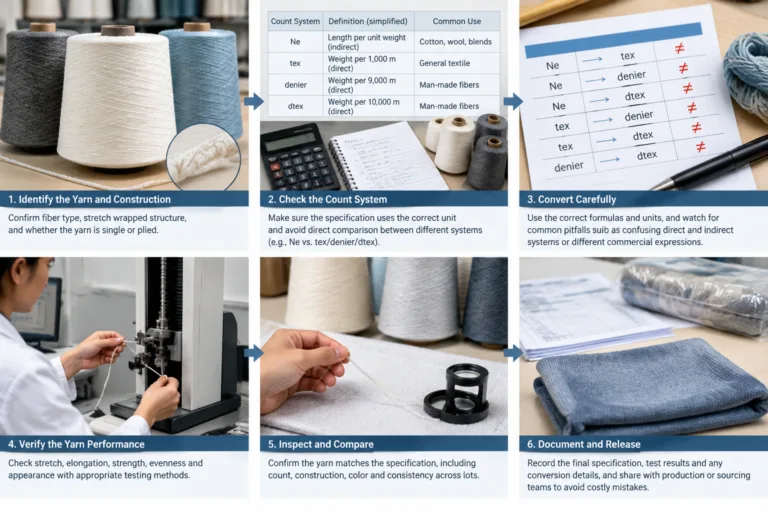
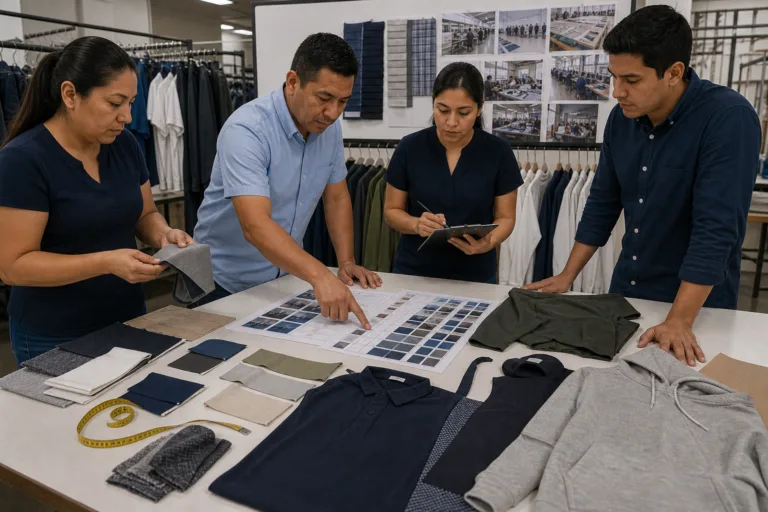
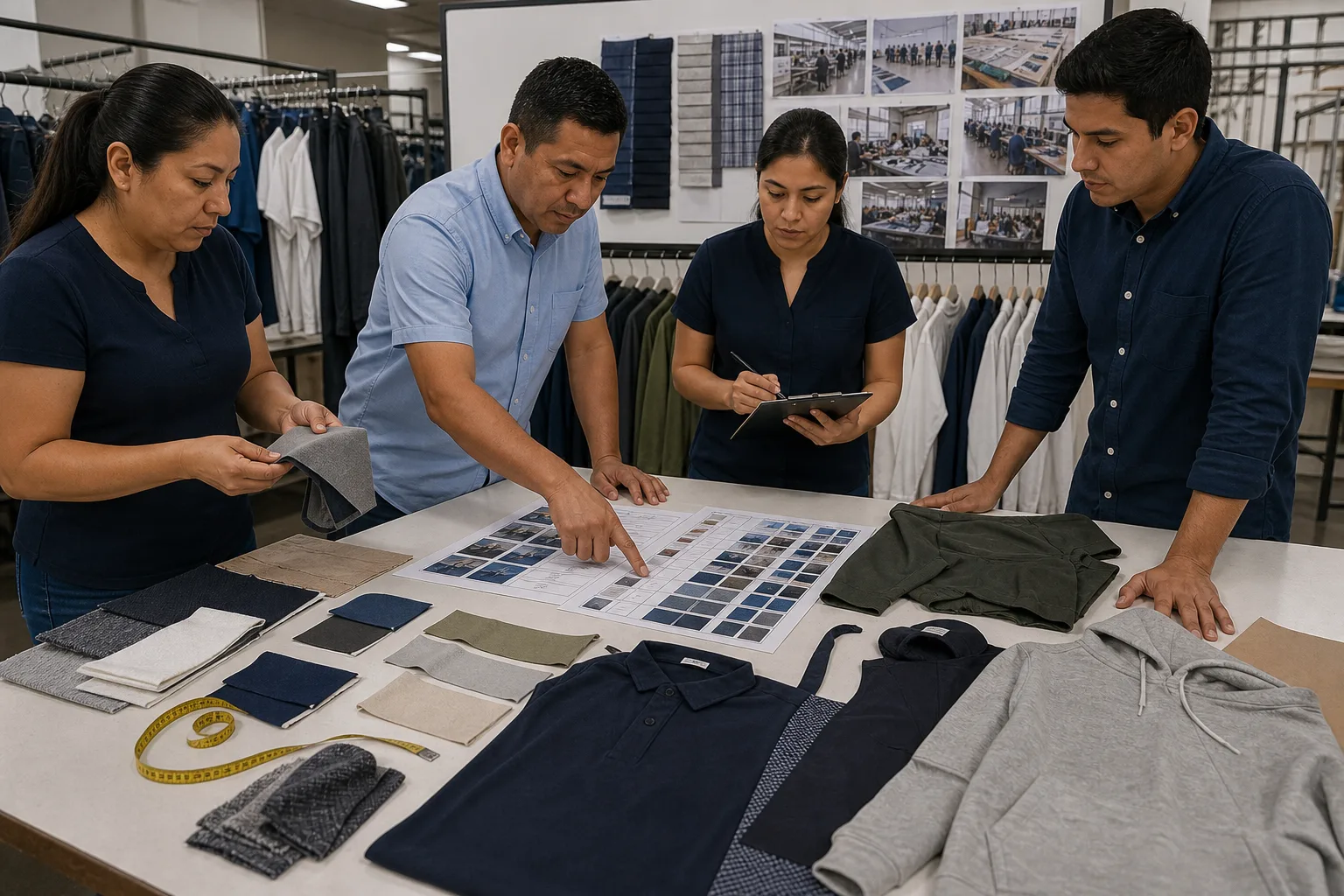
Classify the product in enough detail to make comparison meaningful. Record the fabric type and weight, garment construction, decoration, finishing, wash or treatment process, size range, color requirements, and expected quality level. Include the development stage: for example, whether you need pattern development, grading, fit corrections, a size set, a pre-production sample, or only production against an approved package.
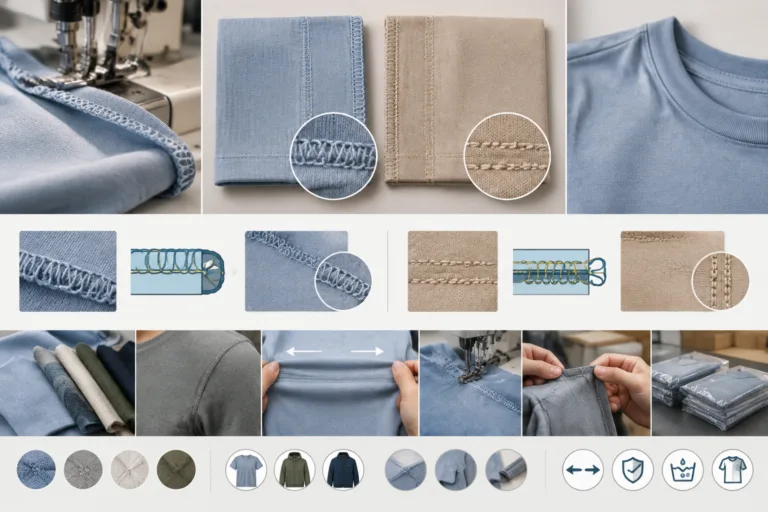
Ask for examples made with comparable materials, construction complexity, finishing requirements, and size coverage. A visually similar garment is not necessarily relevant evidence. Differences in fabric structure, weight, stretch, surface treatment, or finishing can change fit, shade, care performance, dimensional behavior, and test results. A matching fiber-content statement alone does not establish material equivalence.
Review how the supplier handles tech packs, pattern corrections, grading, sample approval, fit comments, and changes between approved samples and production. Confirm who owns each approval and how revisions are recorded. Specialized operations should be identified as in-house or outsourced, with the route controlled through named parties and documented approvals where appropriate.
Material substitution requires particular discipline. Ask for the approved fabric and trim specifications, permitted alternatives, testing access, color-control method, and traceability through production. Require written approval before changing a fabric, trim, process, or component. If a substitute differs in weight, construction, finish, shade, or performance, determine whether samples or testing must be repeated before production proceeds.
What Quality and Compliance Evidence Should You Request?
Ask the supplier to explain controls for incoming materials, cutting, sewing, finishing, measurement, packing, and final release. The explanation should connect to records relevant to the proposed product, including measurement control, defect classification, corrective action, and consistency between approved samples and production. A questionnaire or factory presentation is useful for screening, but it is not equivalent to operational evidence.
Confirm which tests and compliance checks apply to the buyer, product type, destination market, and claims made on the label or product page. Requirements may differ by market and product category, so separate legal or regulatory obligations from voluntary standards, buyer codes, and the supplier’s own quality practices. Use official destination-market guidance and recognized standards organizations or accredited laboratories when a named requirement or test method must be confirmed.
Review the scope and status of every claimed audit, certification, laboratory report, or customer reference. Check the issuing organization, date, covered site, product relevance, and corrective-action status. A logo or single audit does not prove overall supplier capability. Evidence is stronger when it applies to the actual production site and proposed product, and when unresolved findings have documented owners and deadlines.
Depending on project risk, define approval gates for fit samples, size sets, pre-production samples, pilot runs, inline checks, and final inspection. These gates are project decisions rather than universal requirements. Record the approval status and the specification version used at each stage so that material, construction, labeling, packaging, and quality decisions remain traceable.
How Should You Compare Capacity, Delivery, Cost, and Supply-Chain Risk?
Begin with a standardized request for quotation (RFQ). Every supplier should receive the same specification version, product images or technical drawings, quantity assumptions, packaging requirements, delivery point, trade terms, payment assumptions, and approval requirements. Without that common basis, a lower quotation may simply exclude development, testing, packaging, transport, or other necessary work.
Ask each supplier to identify what is included, excluded, assumed, or separately charged. The response should make substitutions, minimum order conditions, development charges, testing charges, packaging details, and outsourced operations visible. This creates a more useful comparison than placing headline prices in a spreadsheet without recording the assumptions behind them.
Capacity should also be evaluated against the proposed product and production period. A factory-wide maximum, if one is supplied, does not establish available capacity for a particular garment, fabric, construction, order profile, or delivery window. Request a product-specific production plan and ask which steps could become bottlenecks. Treat stated lead times as planning estimates until materials, samples, approvals, and production scheduling have been validated.
Map the complete route for critical materials, trims, testing, decoration, washing, finishing, and packing. Identify which steps are performed at the proposed site, which are imported or outsourced, and whether backup options exist. Shipping location and trade terms should be recorded separately from legal origin qualification, because the place of dispatch does not by itself determine origin or destination-market treatment.
Finally, compare delivery implications rather than unit price alone. Where evidence is available, include rework, additional testing, packaging, logistics, duties, and delay exposure in the commercial review. Mark unknowns clearly instead of filling them with assumptions. A comparison matrix with identical inputs, explicit exclusions, and named evidence sources helps buyers compare El Salvador apparel suppliers without creating false precision.
What Verification Process Should Buyers Follow Before Approval?
Set the decision requirements before contacting suppliers. Define the product category, construction, material standards, destination market, quality expectations, order profile, required documentation, and acceptable delivery conditions. Separate non-negotiable requirements from items that can be resolved during development. This prevents a persuasive presentation or low quotation from redefining the project after evaluation has begun.
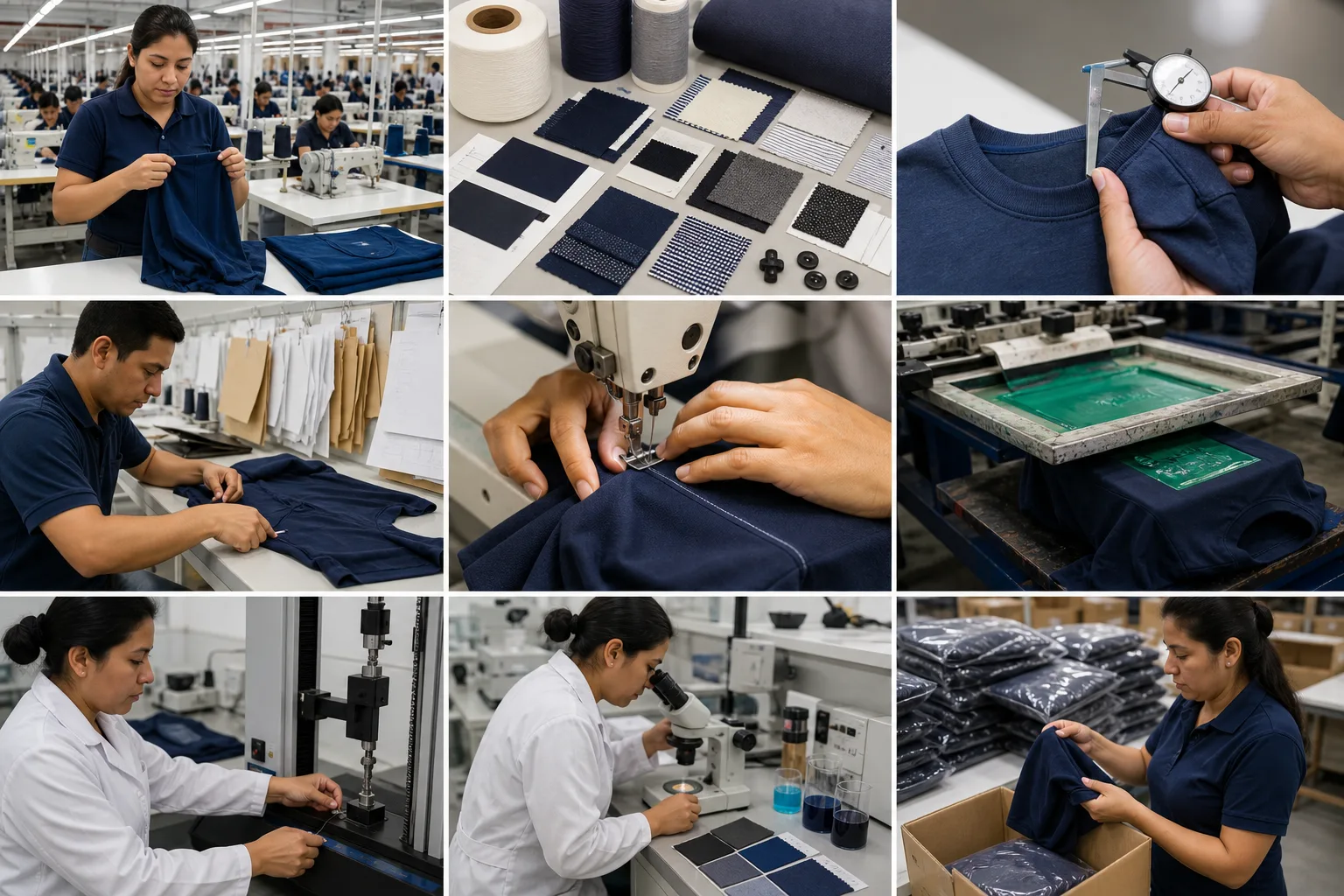
Use the same capability questionnaire and RFQ for each shortlisted supplier. Request relevant product examples, development procedures, process-flow information, equipment details, material and trim sources, subcontractor disclosures, quality records, and applicable compliance evidence. Supplier statements should remain claims until they are supported by documents, samples, records, references, site evidence, or appropriately scoped independent verification.
Review the actual production site when feasible, or use an independent verification process suited to the project risk. The purpose is not simply to confirm that a building exists. Buyers should connect the identified site to the proposed production route, responsible personnel, equipment, material controls, subcontracting arrangements, and record-keeping practices.
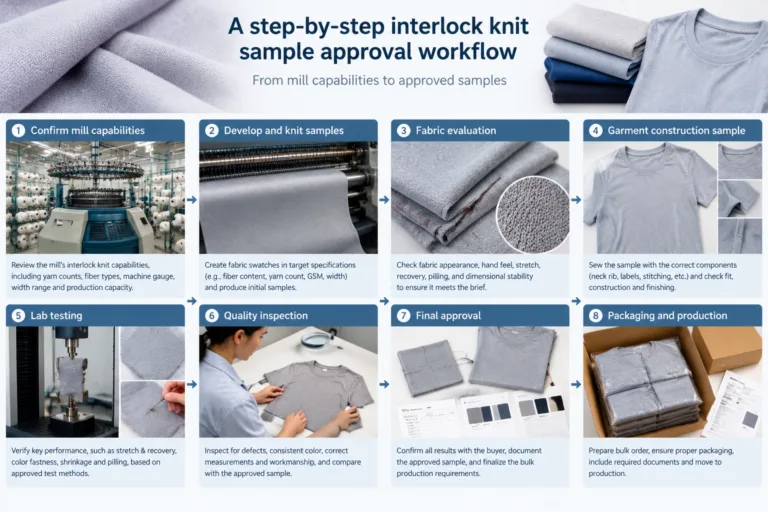
Develop samples against the approved specification and record fit, construction, measurements, materials, color, labeling, and packaging decisions. Depending on the order risk, approval gates may include a fit sample, size set, pre-production sample, pilot run, inline review, and final inspection. These are project decisions rather than universal requirements, but each gate should have a named approval status and specification version.
Use three practical outcomes. Pass means the evidence and samples support the proposed product and route. Conditional approval means specific gaps remain, but each gap has an owner, deadline, and control such as testing, a revised sample, or a pilot. Do not proceed means material risks cannot be verified or controlled. Re-evaluate the supplier when the product, material, destination, volume, production site, or subcontracting route changes.
When Is an El Salvador Supplier a Good Fit?
An El Salvador supplier is a stronger candidate when its demonstrated product experience, development process, material route, quality evidence, commercial response, and delivery plan match the project. The conclusion should be based on the buyer’s product, market, volume, timing, and risk tolerance, not on national origin alone. Country context can guide a shortlist, but factory-specific evidence must support the approval decision.
Pause or reject the supplier when it cannot identify the actual production site, changes materials without written approval, avoids disclosure of critical subcontracting, or makes quality and compliance claims without relevant support. Missing evidence is an unresolved risk; it is not automatic proof of poor performance. Conversely, a supplier with incomplete documentation may receive conditional approval when the gaps are narrow, testable, and controlled through samples, testing, a pilot, or documented corrective action.
Record the final decision with the approved specification, evidence reviewed, assumptions, open risks, required approvals, responsible owners, deadlines, and review triggers. This record makes supplier capability evaluation repeatable and gives the buyer a basis for checking whether the original decision remains valid.
Next step: Finalize one product-specific RFQ, send it to comparable candidates, and evaluate their responses against the same evidence checklist. Then verify the production route through samples, records, site evidence, and defined approval gates before committing to broader production.
What does apparel supplier capability evaluation include?
It includes product fit, development controls, materials, construction, quality practices, compliance evidence, capacity, delivery assumptions, commercial terms, subcontracting, and supply-chain risks. The evaluation should use evidence relevant to the proposed product and destination market.
Can a supplier’s location in El Salvador prove that it is suitable for my apparel product?
No. Location can provide useful country-level context, but it cannot prove a specific supplier’s quality, capacity, ethical performance, reliability, material access, or compliance. Those points require supplier-specific verification.
What documents should I request from an El Salvador apparel supplier?
Request a capability response, relevant sample history, process flow, equipment information, material and trim details, subcontractor disclosures, quality records, applicable test reports, audit or certification scope, corrective actions, and a quotation based on the same RFQ.
How should I compare quotations from apparel suppliers in El Salvador?
Compare quotations only after standardizing specifications, quantities, packaging, delivery point, trade terms, payment assumptions, approvals, and included services. Record exclusions, substitutions, testing, development, logistics, and other separately quoted items.
How do I verify whether a supplier uses subcontractors or substitute materials?
Request the production flow and names or roles of critical subcontractors, then connect them to samples, records, and approval controls. Require written approval for substitute fabrics, trims, processes, or components and assess whether new testing or sample approval is needed.
What should I do when a supplier cannot provide complete capacity, quality, or compliance evidence?
Classify the missing information as an unresolved risk. Request the specific evidence, set an owner and deadline, and use a sample, pilot, inspection, or independent verification where appropriate. Do not grant full approval while material gaps remain uncontrolled.