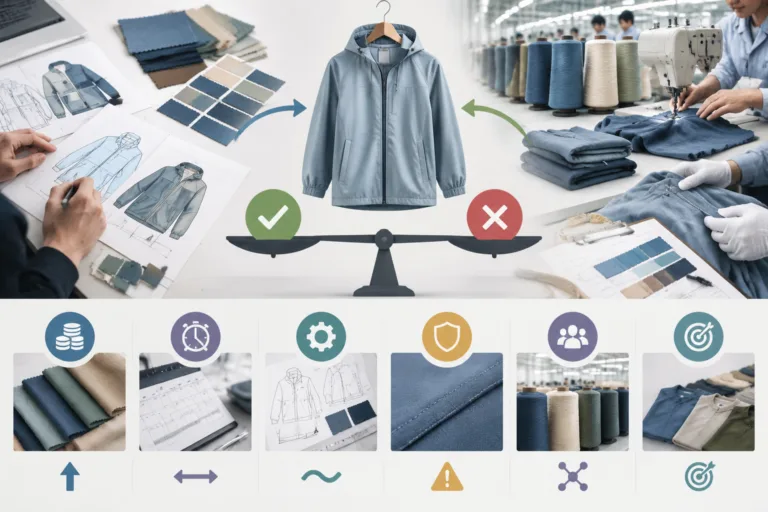
ODM design adaptation means modifying an existing garment design developed by a supplier or manufacturer so it fits a brand’s intended product, market, identity, or specification. The changes may include fabric, color, trims, labels, measurements, fit, construction details, packaging, or branding. The brand is adapting a starting design rather than creating every product element from scratch. Apparel Wiki is an independent educational publication; its Sponsor information does not turn the site into an ODM provider, manufacturer, testing laboratory, or sourcing service.
What Is ODM Design Adaptation in Clothing?
In practical apparel work, ODM design adaptation is the process of selecting a supplier-developed base style and defining controlled changes to make it suitable for a particular brand or sales context. The base product might be a garment already shown in a supplier portfolio, a design developed for an earlier customer, or a style that the supplier can produce using an established pattern and construction method. The exact arrangement must be confirmed with the responsible supplier because “ODM,” “OEM,” and “private label” do not have one universally applied commercial meaning.
An adapted ODM clothing design can retain the original silhouette while changing the color, material, logo application, label, or packaging. It can also involve more substantial work, such as revising the measurement chart, changing the fit, replacing a closure, moving a pocket, altering a seam, adding a lining, or developing new artwork. These are not equivalent changes. Each may affect the pattern, sample, sewing method, material approval, inspection points, or information required for the destination market.
The important question is not simply whether a product is called ODM. Before development begins, the buyer should confirm who created the base design, which elements may be changed, who approves revisions, whether development costs apply, and who is responsible for final quality. The buyer should also establish whether the supplier is the actual producer or is coordinating another production party. These commercial details belong in the quotation, specification, purchase terms, or other governing documents rather than being inferred from a label.
ODM adaptation is also different from merely adding a private label. A label, hangtag, or package can identify a brand, but it does not by itself explain who owns the pattern, artwork, photographs, or other design assets. Nor does limited design development eliminate the need to review the finished product. The adapted garment still needs appropriate checks for fit, materials, construction, labeling, claims, and market requirements. Apparel Wiki presents this as a neutral working definition and editorial framework, not as a universal industry rule.
How Does the ODM Adaptation Process Work?
A useful ODM apparel development process begins with the base style, not with a vague request to “customize” it. Record the style reference, available size range, proposed materials, construction method, existing sample information, and the changes the supplier permits. Ask which details are fixed and which are open to revision. If existing test information is offered, identify the product, material, construction, and version to which it relates before treating it as relevant to the adapted garment.
Next, translate the brand brief into a written change list. It may cover silhouette, measurements, fabric, color, trims, closures, labels, artwork, packaging, care information, and other required market information. A measurement chart and technical specification should identify the relevant points of measure and construction details. Artwork should be supplied in an approved file version. Clear records reduce the chance that a supplier interprets a visual reference, message, or verbal comment differently from the brand’s intent.
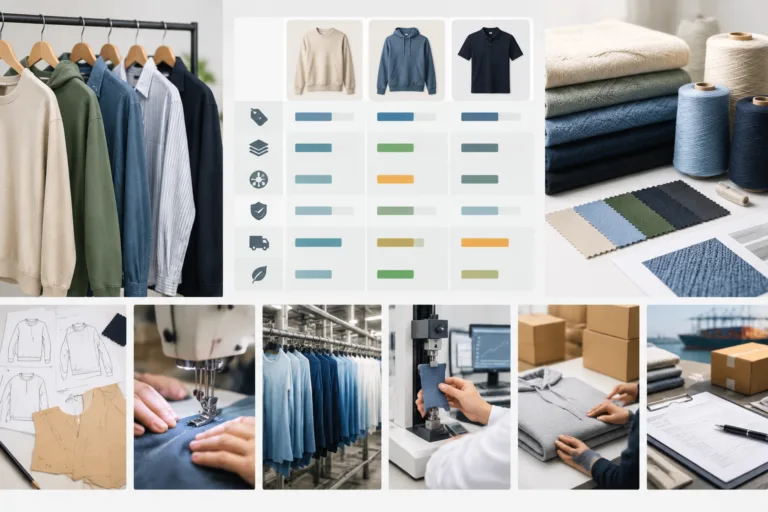
The practical procedure is: select the base style, map the requested changes, assess their likely impact, make a sample, test where relevant, approve the result, and preserve the records. This is an editorial framework rather than a guaranteed supplier process. The number and type of sample rounds depend on the complexity of the changes and the supplier’s capabilities. A color adjustment may need a different review from a fabric substitution or a new fit, so no universal development schedule should be assumed.
Sample review should be systematic. Compare the sample with the current specification and measurement chart, then record comments by version, component, and responsible approver. Note whether a comment requires a pattern revision, material change, artwork correction, or construction instruction. Keep approval status visible so an earlier sample cannot be mistaken for the final version. Before bulk production, confirm the final specification, approved sample, production responsibility, inspection approach, and change-control process. Any later change should be evaluated and documented rather than silently substituted.
Which Changes Affect Fit, Materials, and Construction?
Some adaptations appear relatively limited, while others can change how the garment fits, looks, performs, or can be manufactured. A color change or certain branding application may leave the pattern and construction largely unchanged, although the colorant, application method, or artwork may still require review. Fabric substitution, grading changes, fit alteration, seam changes, pocket placement, closures, lining, and structural support generally deserve closer technical attention because they can affect several connected components.
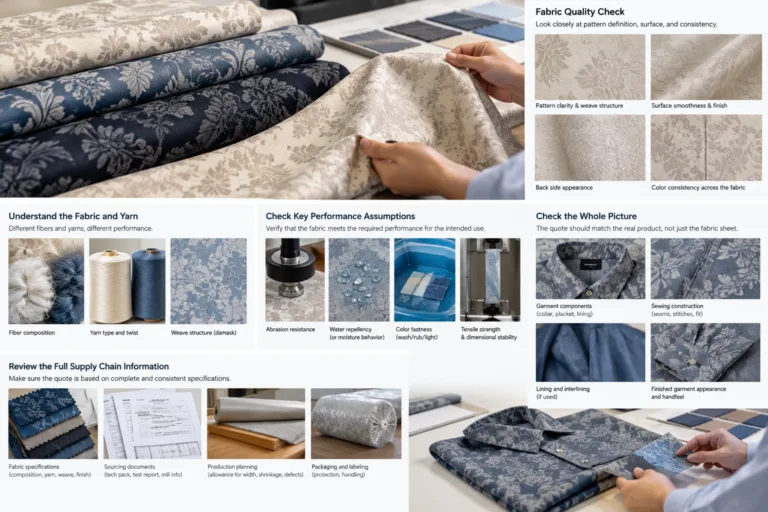
Fabric properties can influence the result even when the pattern is unchanged. Weight, stretch, recovery, shrinkage, drape, colorfastness, and finishing may affect measurements, comfort, appearance, pressing, cutting, sewing, and care instructions. The effect depends on the specific material, pattern, supplier process, and intended use. For that reason, an existing base sample or prior test result should not automatically be treated as representative after the material, construction, or finishing has changed.
Map every requested change to the documents and checks it may affect. A new fabric may require updated material information and a new sample. A fit change may require revised measurements and a broader review of balance, ease, and grading. A closure or pocket change may affect reinforcement, seam construction, appearance, and inspection points. The purpose is not to assign a universal risk score, but to make the consequences of each adaptation visible before approval.
| Requested change | Possible affected area | Review record |
|---|---|---|
| Fabric substitution | Fit, drape, shrinkage, sewing, appearance | Material information, sample, and relevant test review |
| Measurement or fit revision | Pattern, grading, balance, comfort | Updated measurement chart and approval comments |
| Seam, closure, or pocket change | Construction, reinforcement, usability, inspection | Construction detail, sample check, and responsible approver |
| Label, artwork, or packaging change | Brand presentation and required product information | Versioned artwork and market-specific information review |
Use the table as a change-impact framework, not as a substitute for technical judgment or product-specific evidence. For each change, record the affected component, potential concern, required sample or test, approver, and final decision. Material substitution should trigger review rather than automatic acceptance of the original specification. A garment can still look similar to its base style while requiring different checks because its materials, fit, construction, or finishing are no longer the same.
What Are the Main Trade-Offs of ODM Design Adaptation?
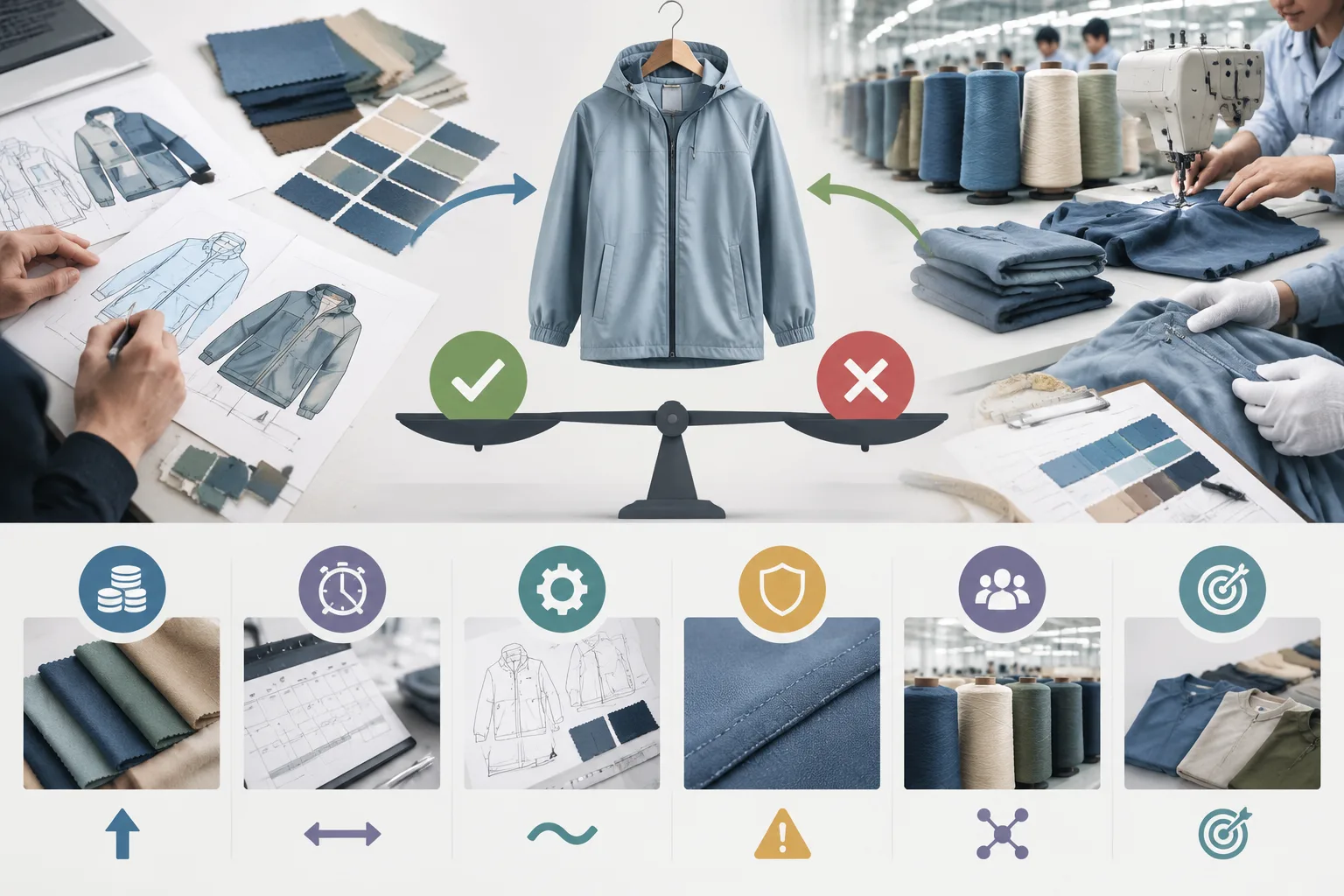
ODM design adaptation can provide a practical starting point, but it should not be treated as automatically faster, cheaper, or lower risk than original development. The starting design may reduce some early design work while also limiting control over the original pattern logic, material choices, construction decisions, and production history. The actual balance depends on the supplier, the garment, and the scope of the requested changes.
A light adaptation might involve color, selected trims, labeling, artwork, or packaging. Moderate adaptation may change fabric, measurements, fit, closures, or pocket details. Substantial redevelopment can affect the pattern, grading, construction, materials, and approval requirements so deeply that the practical distinction from developing a new product becomes less important.
| Adaptation level | Design control | Development work | Documentation and uncertainty |
|---|---|---|---|
| Light adaptation | More limited | Focused changes and sample review | Confirm affected branding, materials, and product information |
| Moderate adaptation | Shared with the base design | Several technical areas may need revision | More detailed specifications and change records are needed |
| Substantial redevelopment | Greater potential control | New or heavily revised patterns, samples, and approvals | Uncertainty may approach a new product-development project |
This editorial comparison is a decision aid, not a fixed industry classification. Order quantity, customization scope, development charges, material availability, and production feasibility are usually connected, but their commercial treatment must be confirmed in the supplier’s quotation and agreement. A label change alone may not create meaningful product distinction, while deeper changes may create new technical, quality, and commercial responsibilities.
How Should a Brand Evaluate an Adapted ODM Product?
Begin by identifying every party involved. The quoting entity, contracting entity, payment recipient, actual producer, and disclosed subcontractor may not be the same organization. This does not automatically indicate a problem, but the relationship and responsibility for the adapted product should be clear in the commercial documents.
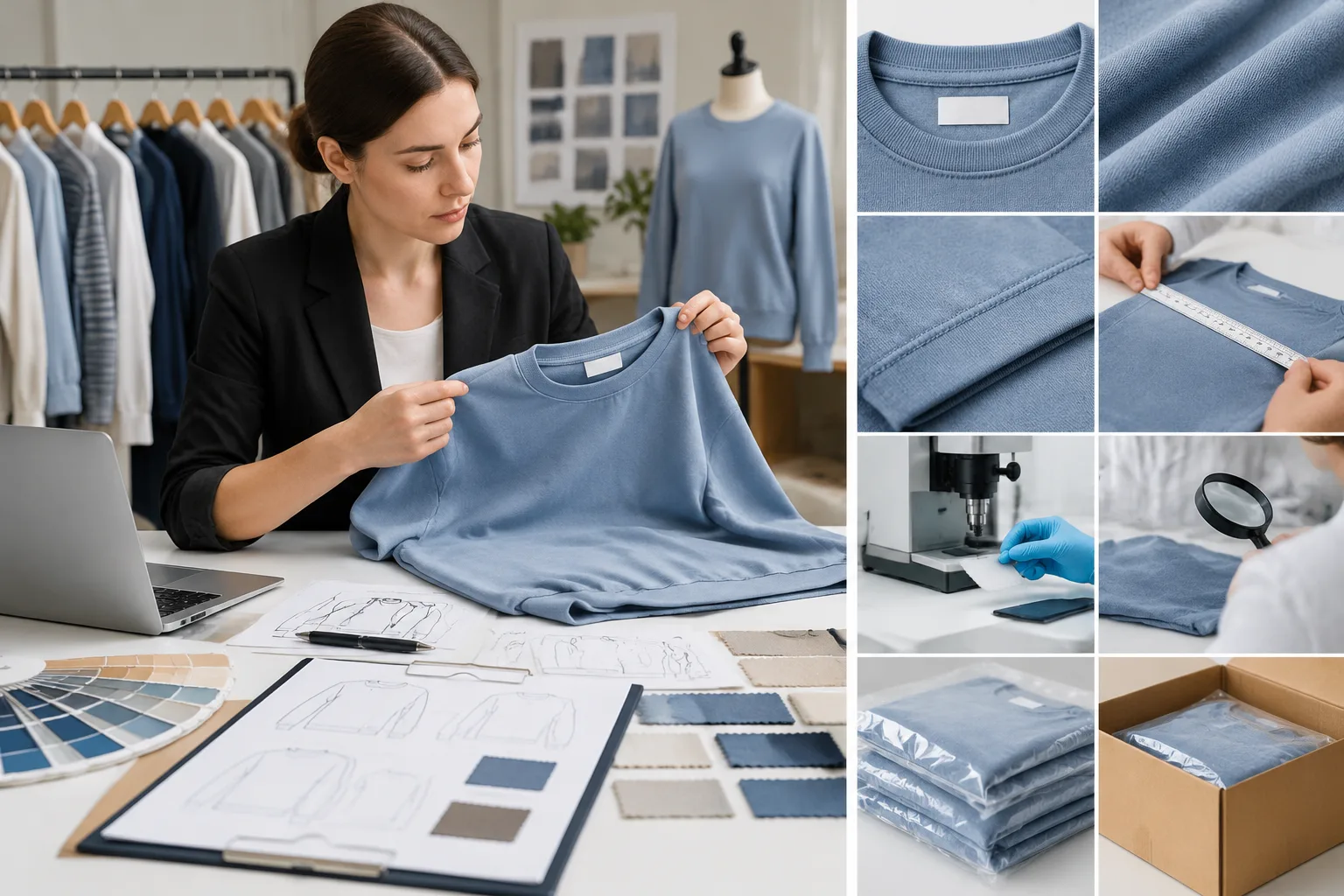
Next, compare the proposed or finished garment with the approved technical record. Review the base style, adaptation brief, measurement chart, material information, trims, branding, packaging, care instructions, and artwork versions. The sample should be assessed against defined acceptance criteria for fit, workmanship, appearance, color, component consistency, labeling, and construction rather than against general impressions alone.
- Confirm the supplier’s stated role and any permitted subcontracting arrangement.
- Match the physical sample to the current specification and artwork version.
- Check that material and component information describes the adapted product.
- Record comments, corrections, approvals, and unresolved deviations.
- Clarify who owns final quality decisions and production release.
- Retain the approved sample and versioned technical records.
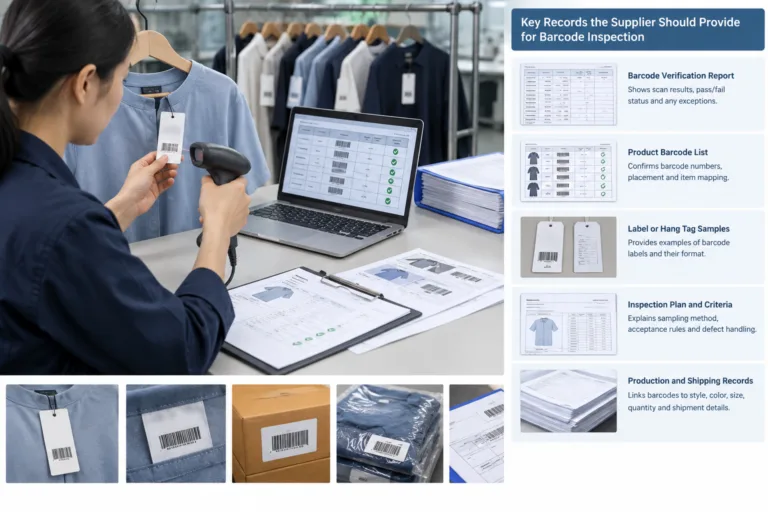
Prior reports, certifications, or supplier claims should be examined for relevance to the adapted garment. A document connected to an earlier material, construction, colorway, or product version may not automatically describe the current one. Product-specific evidence should carry more weight than factory photographs, a low quotation, country of origin, or a general statement about capability.
What Are the Ownership, Branding, and Compliance Limits?
Buying finished garments does not automatically transfer ownership of the base pattern, artwork, photographs, design, or exclusive sales territory. Before approving an adapted ODM product, document which assets the brand may use and modify, where they may be sold, for how long, through which channels, and whether exclusivity applies. Restrictions on resale, reproduction, photography, or further modification should also be addressed.
Branding changes do not resolve every product responsibility. Replacing a label, package, or promotional claim does not by itself establish that the adapted garment meets the requirements of its destination market. The relevant obligations depend on factors such as the market, product category, materials, claims, and sales model. The responsible parties should therefore be identified before the product is marketed.
Subcontracting deserves the same practical attention. Ask which entity controls material selection, production, inspection, and corrective action, and whether the agreed production arrangement permits changes without notice. A trading or sourcing entity is not automatically good or bad; the important question is whether the commercial and manufacturing responsibilities are transparent enough to verify.
These questions cannot be settled from a general ODM label. Ownership and compliance depend on the governing contract, applicable jurisdiction, supplier declarations, and product-specific evidence. Apparel Wiki provides educational guidance, not legal, regulatory, laboratory, or manufacturing services.
Educational next step: Turn the intended product into a documented adaptation brief. List each requested change, identify its affected component, request relevant supplier evidence, and obtain professional legal, regulatory, or quality review where the project requires it. Approve only a clearly identified product version with recorded responsibilities and change history.
Is ODM design adaptation the same as private label clothing?
Not necessarily. Private label describes how a product is presented or sold under a brand, while ODM describes a development or supply relationship. Commercial definitions vary, so confirm who designed the base product, who controls changes, and who carries the relevant responsibilities.
What kinds of changes can a brand usually request in an ODM garment?
Possible requests include changes to color, fabric, trims, labels, artwork, packaging, measurements, fit, closures, pockets, lining, and construction. The available scope depends on the supplier’s capability and the base design’s technical limits.
Does changing the fabric require a new sample or product review?
It should trigger a review because fabric substitution can affect fit, drape, shrinkage, appearance, comfort, and sewing performance. Whether a new sample or additional testing is appropriate depends on the material, construction, intended use, and market requirements.
Who owns the original ODM design, pattern, artwork, and adapted version?
Ownership is not determined by the ODM label alone or by purchasing finished goods. Review the contract, license, purchase terms, and applicable law to confirm permitted use, modification rights, territory, exclusivity, and ownership of each asset.
Can an existing ODM test report be used for an adapted garment?
Only after confirming that it remains relevant to the adapted product and the intended market. Changes to materials, construction, finishing, or claims may affect whether earlier evidence describes the current garment.
How can a brand evaluate whether an ODM supplier can produce the adapted design?
Review comparable samples, technical explanations, material records, sample capabilities, subcontracting arrangements, approval procedures, and product-specific evidence. Keep a versioned specification and evaluate the approved sample before production release.