
Shirt boards specifications describe the support component placed with a folded shirt to help it retain its intended shape and presentation during packing and handling. A shirt board is not the folding method itself, and it is not the same as the bag, carton, or shipping case around the garment. A useful specification identifies the board’s dimensions, material, construction, finish, performance needs, and packaging context. Apparel Wiki is an independent educational publication; learn more through our Sponsor information without treating the site as a manufacturer, testing laboratory, or sourcing provider.
The right shirt board specification depends on the garment, folding method, packing process, presentation expectations, and distribution conditions. The board is one part of a packaging system, so its presence alone does not guarantee protection from bending, abrasion, moisture, compression, or contamination. Define the job first, then confirm the design with representative samples and the rest of the intended packaging.
What is a shirt board, and what does its specification cover?
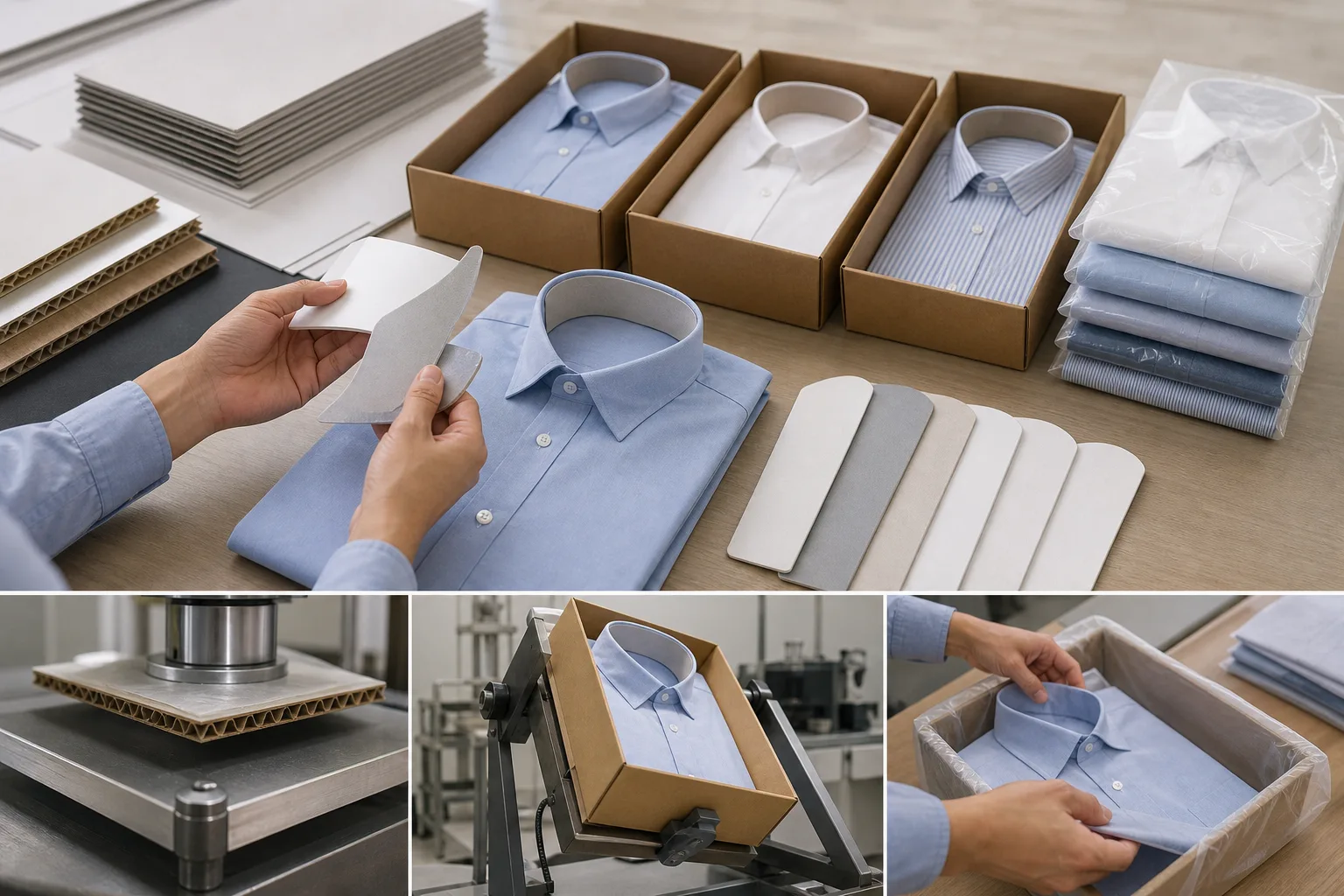
In apparel packaging, a shirt board is a shaped support placed behind or within a folded shirt. It can help the packed garment maintain a consistent profile, make folding and insertion more repeatable, and present the shirt neatly inside its immediate package. The exact construction may vary by product and process, so the term should be treated as a functional description rather than proof of one universal material or size.
That distinction matters when teams discuss shirt board packaging. The board supports a folded garment, while the folding method determines how the shirt is arranged. A bag may provide containment or visibility, an inner carton may group products, and a shipping case may support distribution. These components can interact, but they should remain separately identifiable in the specification and purchasing documents.
A complete shirt board specification normally covers several connected areas:
- Dimensions: finished length, width, thickness or caliper where relevant, shape, and any dimensional tolerances.
- Material and construction: board type, composition, layers or folds where applicable, surface, and edge condition.
- Finish and appearance: details that affect handling, visibility, staining risk, or presentation.
- Performance needs: the conditions under which the board must support packing, storage, handling, and transport.
- Packaging context: the garment version, folding sequence, bag or closure, equipment, distribution route, and storage conditions used for approval.
These fields should describe a project requirement, not imply that every shirt needs the same board. A lightweight folded shirt, a structured shirt, and a garment with delicate surface details may create different fit and handling concerns. Likewise, a manual packing operation and an automated or tightly controlled process may require different construction details.
Which dimensions should a shirt board specification include?
Start with the finished board dimensions that determine fit: length, width, and, where relevant, thickness or caliper. State the measurement units clearly and identify whether each dimension refers to the finished board or to a flat blank before folding, creasing, or other construction. This distinction prevents a drawing from appearing precise while describing a different physical object than the one used in packing.
Measurement points also belong in a reproducible shirt board size specification. If the board has shaped corners, folds, tabs, slots, or other non-rectangular features, describe where length and width are taken. Record orientation when it affects insertion or presentation. A board with the correct overall dimensions can still fit poorly if its corners, folds, or edge features interfere with the garment, closure, or packing equipment.
Do not assume a universal shirt board size. The useful dimensions are the ones that fit the representative folded garment and the intended package without creating avoidable distortion, excess movement, or insertion difficulty. Check the board against the actual shirt style, size range, folding sequence, bag or closure, and equipment involved. A sample review is more informative than selecting a nominal size without testing the complete packing sequence.
Minimum dimensional record
- Finished length and width, with units.
- Thickness or caliper, if it affects fit, stiffness, or equipment clearance.
- Measurement locations and the reference orientation.
- Whether dimensions describe a blank, folded component, or finished board.
- Shape details such as corners, folds, tabs, or openings when they affect use.
- Applicable tolerances, provided they are based on the project, supplier capability, or a validated measurement requirement.
Tolerances should not be invented simply to make a drawing look complete. Agree how dimensions will be measured and what variation the garment and packing process can accept. If a supplier drawing is used, compare the drawing with a physical sample and resolve differences before approval. Keep the sample reference tied to the specification so purchasing and quality teams are checking the same version.
How should you choose shirt board material and construction?
Choose shirt board material by connecting composition and construction to the board’s job. The specification should identify the material and board type clearly enough for purchasing and quality teams to review incoming product. If the board is paperboard, record the relevant supplier-declared composition and construction rather than relying on a broad label such as “paper” or “eco board.” Any claim should remain traceable to current supplier documentation or another appropriate source.
Material selection involves trade-offs. Consider stiffness, surface feel, edge condition, foldability if the design uses folds, and compatibility with the shirt and packing method. A board that appears strong may be difficult to fold or insert efficiently. A very smooth surface may behave differently during packing than a textured one. Edges and corners can also influence garment contact, snagging concerns, visible presentation, and operator handling.
Review the board with the garment, not in isolation. Check whether the material transfers marks, creates unwanted pressure points, sheds particles, or changes the appearance of the folded shirt. Also consider storage and distribution conditions that could affect the board or its contact with the garment. These are project checks, not universal claims about one material being best.
Environmental descriptions require the same precision. Recycled-content and recyclability claims apply to the board specifically and should identify the relevant region, available facility or recovery pathway, and evidence basis. A paper-based material label alone does not establish an overall environmental benefit. Keep supplier claims, verified composition, and local recovery conditions distinct in the purchasing and quality records.
What performance should a shirt board deliver in packing and distribution?
Begin with the practical job: the board should help the folded shirt retain its intended presentation during packing, handling, storage, and transport. Translate that goal into observable outcomes for the actual route. For example, the team may need to investigate unwanted bending, compression marks, abrasion, moisture exposure, staining, contamination, or movement inside the package. Which risks matter depends on the garment, package, handling sequence, storage environment, and distribution conditions.
Assess the board as part of the complete packaging system. The garment, bag, closure, inner packaging, and outer case all influence the result. Adding a thicker or stiffer component does not automatically improve protection, and it may make folding, insertion, recovery, or disposal less efficient. The specification should therefore state the conditions being considered and describe acceptable outcomes in observable terms, such as maintaining the approved folded presentation and avoiding unacceptable garment or board damage.
Use representative garments and packaging components when reviewing performance. Record the packing sequence, handling relevant to the intended route, storage assumptions, and observations after review. Where formal testing is necessary, identify an appropriate validated method before naming it or assigning a threshold. A sample check can support a packaging decision, but it should not be presented as universal evidence for every garment, supplier, market, or distribution route.
How can teams evaluate a shirt board specification before approval?
A written specification becomes useful when a representative sample works with the shirt and packaging it is meant to support. Before approval, bring together the folded garment, board, bag or other inner packaging, and any relevant packing equipment. This lets the team assess fit and handling in context instead of relying on a board sample alone.
Review the specification for finished dimensions, material and construction, finish, any project-defined tolerances, and intended packing conditions. Where a distinction between a blank and a finished board affects fit, state which dimensions are being recorded. Resolve unclear supplier descriptions or material claims before approval rather than treating them as confirmed facts.
Pack the sample using the intended sequence. Check whether the shirt folds and inserts smoothly, whether the board sits as intended, and whether the finished package presents consistently. After handling relevant to the planned route, inspect for board damage and changes to the garment, such as unwanted marks or distortion. The observations should reflect the actual review conditions, not imply performance in conditions that were not considered.
Record the sample version, garment and packaging components reviewed, observations, open questions, and decision owner. Keep the approved sample identifiable and make sure the purchasing specification describes the same version. A sample review informs a decision; where the project or customer requires validated testing, it does not replace that testing.

What trade-offs and limitations belong in the specification?
Board stiffness, garment presentation, material use, and packing efficiency can pull in different directions. A stiffer or larger board may suit one presentation or handling need but make folding, insertion, or disposal less convenient. A lighter construction may reduce material use, yet its suitability still depends on the garment, package, handling sequence, and distribution conditions.
Consider disposal and recovery pathways alongside material descriptions. A paper-based label alone does not establish that a particular board is recyclable in every place or facility. For recycled-content or recyclability claims, identify what component the claim concerns and what evidence and region it applies to. Do not infer an overall environmental benefit from a material name alone.
Do not treat the shirt board as a guarantee against all shipping or storage damage. The bag, inner packaging, outer case, storage environment, and handling all contribute to the outcome. Requirements may also vary with garment design, packing line, market, distribution route, and customer instructions. Separate mandatory requirements applicable to the project from internal preferences and supplier suggestions, and verify any legal or environmental obligations for the relevant market.
If evaluating a material reduction, compare options under comparable conditions. Consider packaging use, product condition, and handling effort together; less packaging is not automatically a better result if it changes product damage or process demands.
What should happen after the shirt board specification is approved?
Keep the approved specification or drawing, sample reference, material declaration, and revision status aligned. Give each document or sample a clear identifier so teams can tell which version is current. In purchasing and logistics records, map the packaging component to the relevant order and quantities, while keeping retail product identifiers distinct from logistics-unit identifiers.
Review the specification when a relevant input changes, such as the garment, board supplier, packing method, packaging components, or distribution conditions. A change that appears minor on paper can alter fit or packing steps, so decide whether a new sample review or other validation is needed. Record the decision and retain the updated approval trail; supplier approval alone is not proof of performance in every use condition.
Apparel Wiki is an independent educational publication, not a manufacturer, factory, or sourcing provider. Use this guide as a starting point for documenting project requirements and evaluating them with the teams and suppliers responsible for the actual packaging.
For related apparel-development references, explore Apparel Manufacturing Tools or learn more About Apparel Wiki.

Frequently asked questions
Are shirt boards available in one standard size?
There is no single size that should be assumed to fit every shirt and packing setup. Choose dimensions based on the folded garment, packaging, presentation needs, and process, then confirm fit with representative samples.
Which dimensions should I include in a shirt board specification?
Record finished length and width, units, and thickness or caliper when relevant. State measurement points and applicable tolerances, and clarify whether dimensions refer to the blank or finished board if that distinction affects fit.
Is paperboard always the best material for a shirt board?
No material is best for every project. Consider the required presentation, stiffness, surface and edge condition, packing method, supply, and disposal or recovery context. Confirm composition and environmental claims with appropriate documentation.
How can I check whether a shirt board protects a folded shirt during shipping?
Review a representative sample with the garment and complete packaging under handling and storage conditions relevant to the intended route. Inspect the board and garment for the outcomes that matter to the project. Use validated testing where required; a sample review alone does not establish universal shipping performance.
Can a shirt board be described as recyclable based on its material alone?
No. A material label by itself does not establish recyclability for every region or facility. Check the board’s composition, the basis for the claim, and the recovery options relevant to the intended market.
Should shirt boards be tested with the garment and the rest of the packaging?
Yes. Fit and performance depend on how the board interacts with the folded shirt, bag, other packaging, and packing process. Evaluate those components together in conditions relevant to their intended use.