

Singeing process control starts with the fabric, the equipment, and the intended result: there is no universal setting that can be assumed to suit every combination. A useful trial defines what should change, what will be observed, and which conditions will remain comparable. Apparel Wiki is an independent educational publication; its Sponsor page describes the site’s editorial independence.
For apparel product and quality teams, the practical goal is to connect recorded process settings to observable fabric changes, then limit conclusions to the material and conditions actually examined. The guidance below helps frame that comparison without prescribing equipment-specific setpoints or claiming a trial proves production performance.
Define the Singeing Trial Before Changing Settings
Singeing is a fabric-finishing operation intended to remove protruding surface fibers. Before starting singeing trials, define the question they should answer. The objective might be to assess whether a fabric’s visible surface changes under a documented setup. That is an appearance objective, not by itself proof of improved performance or suitability for a particular product.
Describe the material and its condition so comparisons have context. Record available fabric identity, fiber content, structure, visible surface characteristics, and relevant prior processing. These are variables to consider, not a formula for predicting an outcome. Similar-looking fabrics may differ in construction or processing history, while a change in incoming material can complicate interpretation of a setting comparison.
Set the observation approach before changing a setting. Identify the area or sample to inspect, the agreed appearance criterion, and the conditions under which observations will be made. If the question concerns more than appearance, identify the relevant evaluation method separately; visual observations alone do not establish an unmeasured performance result.
Also record the equipment and process context, including the setup and other conditions that could affect the comparison. A result supports a conclusion about the tested fabric under the recorded conditions. Applying it to another material, machine, or process configuration requires further evidence. This bounded approach keeps a fabric singeing process trial useful without turning it into a general recipe.
Which Singeing Process Settings Should Be Validated?
Start with the applicable machine documentation. Depending on equipment design, relevant singeing process settings may include heat-source or burner controls, the relationship between fabric and heat source, fabric travel or exposure, and line speed. These are categories to check, not controls that every machine necessarily provides or labels in the same way.
Record the full relevant setup rather than a single number. Settings can interact: changing travel speed, for example, may change the fabric’s exposure to a heat source. The effect of a setting cannot be interpreted independently if other relevant conditions also changed. Use the equipment’s terminology and note how each recorded value or position was established.
Keep process settings distinct from incoming fabric variables and equipment condition. Fiber content, structure, surface state, and prior processing describe the material; they are not machine settings. Equipment condition and setup should also be documented, since a difference there could offer another explanation for an observed change. Avoid attributing a result to one adjustment when the fabric or machine context also differs.
There is no supported universal setpoint, tolerance, or preferred adjustment sequence for all singeing machines and fabrics. Identify which controls exist on the equipment, then select the variables relevant to the trial question. Check the applicable instructions before making changes, and record the complete comparison conditions so a later reader can understand what the trial actually tested.
How to Compare Settings in a Controlled Trial
A comparison matrix can make a singeing trial procedure easier to review. Treat it as a practical recordkeeping aid, not as a validated test method. Give each sample or run an identifier and capture enough detail to distinguish direct observations from interpretations.
| Record field | What to capture |
|---|---|
| Fabric identity and condition | Material identifier, known construction details, visible starting condition, and relevant processing context. |
| Equipment and setup | Machine identification and the relevant setup as described in its documentation. |
| Changed and held conditions | The setting changed, other relevant settings held constant, and any unavoidable differences. |
| Observation and decision | Inspection conditions, observed changes, interpretation, decision, and follow-up question. |
Where feasible, change one factor while holding other relevant conditions steady. This can make an observed difference easier to associate with that change, but it does not guarantee that other influences have been eliminated. If settings interact or the question concerns their combination, plan a comparison that records the combined changes instead of treating each result as isolated.
For fabric with visible surface fuzz, compare documented setups against the agreed appearance criterion. Record what was seen separately from an interpretation such as “closer to the target.” Fabric structure or equipment condition could affect what setup is appropriate, so this scenario does not establish a preferred setting. Use identifiable samples and retain the record alongside the decision, including uncertainty or conditions that limit the comparison.
Evaluate Fabric Appearance and Process Trade-Offs
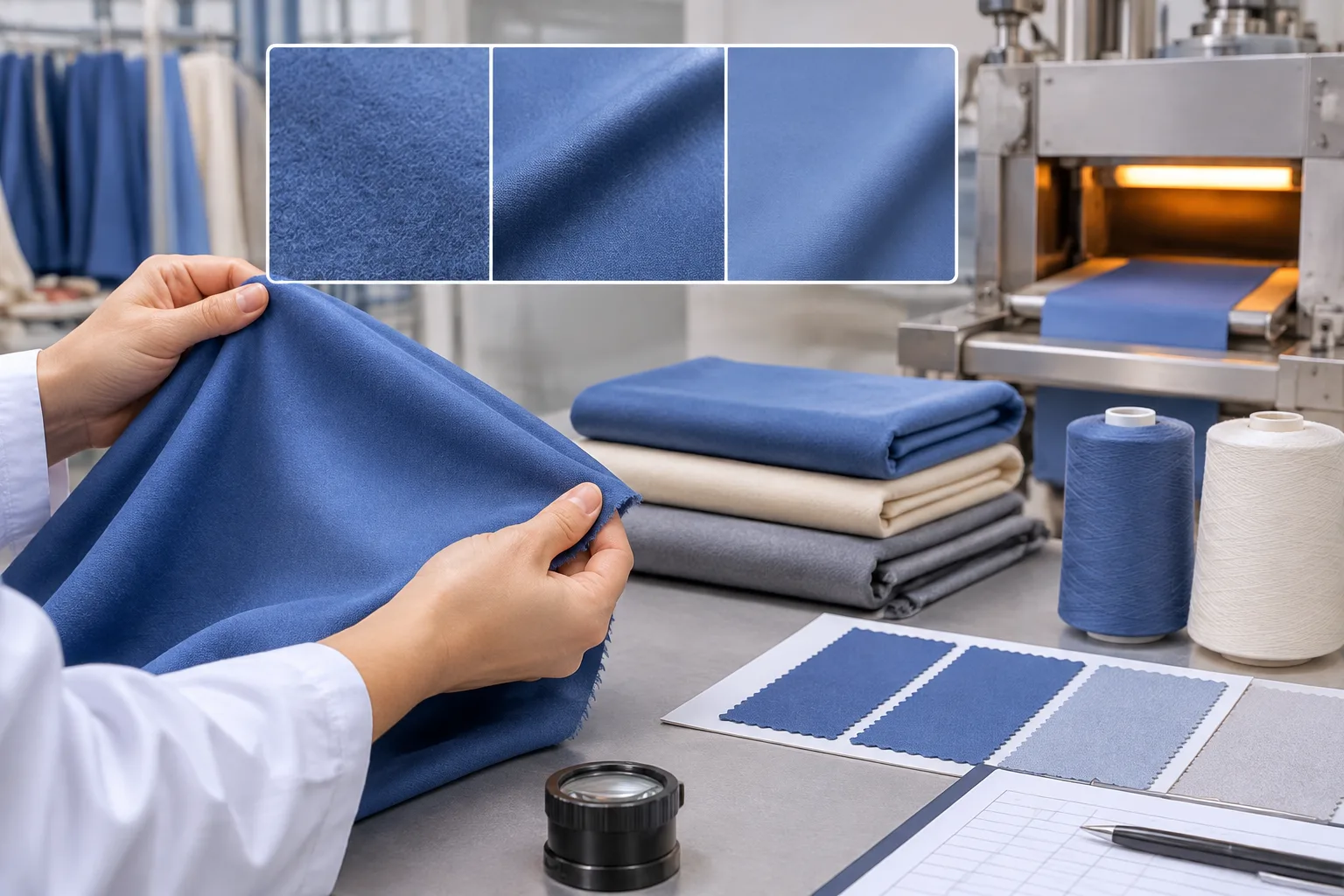
Evaluate singeing trial results against an agreed objective, not a general impression that the fabric looks better. Before comparing samples, define the viewing conditions and reference: use the same lighting, viewing distance, fabric orientation, and handling approach where practical. Keep an identified before-trial sample available. If samples are viewed under different conditions, apparent differences may reflect the inspection setup as well as the fabric.
Record visible changes separately from conclusions. For example, note whether surface fuzz appears reduced, whether the result looks even across the inspected area, and whether any other visible change needs attention. These are observations, not proof of a specific performance outcome. Appearance alone does not establish that the fabric has no damage or that it will meet requirements in later processing or use.
Consider the fabric’s place in the finishing sequence. The desired appearance may matter differently depending on the product and what comes next. Where the trial raises a question about material integrity or downstream performance, identify the outcome that needs evaluation and use an appropriate method or the responsible technical team’s guidance. Do not infer that singeing alone determines the quality of later processes.
There is no universal visual acceptance limit established here. Compare the observed result with the project’s agreed criterion, document unevenness or unintended changes, and distinguish a match to the appearance target from evidence about other properties. This keeps fabric inspection useful without turning a visual check into a broader claim of suitability.
Decide What the Trial Supports and Record Next Steps
A useful singeing process control record lets another reader understand what was compared and why a decision followed. Capture the fabric identity and known condition, equipment identification and setup, relevant settings, the conditions changed or held, inspection conditions, and direct observations. Add the interpretation separately, along with the decision, open questions, and any limits on the comparison.
Describe the conclusion at the same scope as the evidence. A trial may show that one documented setup produced an appearance closer to the agreed objective on the material examined. That is a useful observation, but it does not by itself establish a validated production setting, guarantee a result, or show that other fabrics will respond the same way.
Consider further evaluation when a relevant input changes: for example, fabric construction or condition, equipment setup, or another process condition that could affect the comparison. The record should make clear what changed and why the earlier finding may not transfer. No fixed retest threshold is implied; the responsible technical team should determine whether the difference matters to the intended result.
Before applying a finding beyond the tested conditions, compare the record with the applicable equipment instructions and the evaluation method agreed for the product. Keep assumptions visible rather than treating them as observations. Documentation is a practical aid to review, not a substitute for equipment-specific guidance or evidence needed to assess other outcomes.
Use Trial Evidence Within Its Limits
Singeing process control connects documented settings and fabric conditions to defined observations; it does not produce a universal recipe. Trial conclusions remain bounded by what was examined. As an educational next step, compare the trial record with the relevant equipment guidance and agreed evaluation method before extending its conclusions to another fabric or setup.
Frequently Asked Questions
Does one singeing setting work for every fabric?
No universal setting is established here. The relevant controls depend on the equipment, fabric, and intended result. Treat a trial finding as specific to its recorded conditions unless further evaluation supports applying it more broadly.
Which process settings should be recorded during a singeing trial?
Record the relevant equipment setup and settings described in its documentation, including applicable heat-source controls, fabric-to-source relationship, travel or exposure, and line speed. Also note fabric condition and which conditions changed or stayed constant.
How can a trial show whether a setting change affected the fabric?
Compare identifiable samples under consistent inspection conditions, changing one relevant factor where feasible and recording other conditions. Separate what was directly observed from your interpretation; interacting settings may require a planned comparison of combined changes.
Can visual inspection alone establish that a singeing setting is suitable?
No. Visual inspection can address an agreed appearance objective, but it does not establish unmeasured performance or suitability for later processing and use. Evaluate those outcomes separately using an appropriate method when they matter.
When should singeing trials be repeated for a different fabric or setup?
Consider further evaluation when fabric inputs, equipment setup, or process conditions differ in ways that could affect the result. Document the difference and assess whether the existing evidence still applies to the new conditions.


